
Reviewed · MUSEUMS
Santiago de Compostela Cathedral and Museum Guided Tour
The most meaningful part of this tour is not simply stepping into Santiago de Compostela Cathedral. It is understanding why pilgrims have crossed Europe to reach this place, then seeing the tomb of Saint James the Great, the crypt, chapels, and sacred art with that story in mind. A guide such as Carmen, Maria, Laura, Miriam, Betty, or Elena can turn a grand church into a readable place.
I like the two-part plan: the museum comes first, so you get the art and background before entering the cathedral, and the separate entrance can save time when queues build. The one drawback is that two hours moves quickly, especially if you want to linger over every artwork or explore the exterior facades at length.
Key points at a glance
- Saint James’s tomb and crypt: See the spiritual heart of the cathedral, not just its grand interior.
- Museum before church: Start with art, documents, and context, then recognize what you are seeing inside.
- Codex Calixtinus: Learn about one of the most important texts linked with the pilgrimage to Santiago.
- Treasury and Chapter House: Visit areas many independent visitors might pass without understanding.
- Botafumeiro and balconies: Look for the famous incense vessel and views from the cathedral’s upper levels.
- Small-group option: Choose it if available and you prefer easier questions and closer contact with your guide.
Why the museum is the right place to begin
I like that this is not a quick march into the cathedral, followed by a list of dates and saints. The tour begins at the Cathedral Museum, where the guide introduces the building’s story and key works of sacred art before taking you inside.
That order matters. A cathedral in Santiago can feel like a flood of stone, gold, painted panels, chapels, and religious symbols. Once you know what to watch for, the details begin to connect. The museum gives you a frame for the picture.
You can expect attention to the cathedral’s history, its role in Santiago, and its importance to the pilgrimage route. Guides have also been praised for explaining the wider religious and cultural meaning of the city, rather than treating the cathedral as an isolated monument.
The museum portion should be especially useful if you enjoy art but do not already know how to read religious images. A guide with art-history training, such as Alberto on one past tour, can explain why a particular work matters, what it depicts, and how it fits the period. That kind of help is worth more than simply being told that an object is old.
The Codex Calixtinus is another major reason to pay attention here. It is closely connected with the pilgrimage tradition and helps explain how Santiago became such an important destination. Do not expect to study every page in detail during a two-hour visit, but the guide can show you why this manuscript matters.
A few more things to do in Santiago De Compostela worth a look
- Santiago: Cathedral & Museum Tour + Pórtico of Glory Option
★ 4.7 · 2,116 reviews - Santiago de Compostela: Cathedral, Museum, and Old Town Tour
★ 4.8 · 382 reviews - Madrid: Prado Museum Entry Ticket
★ 4.6 · 17,509 reviews
Inside Santiago de Compostela Cathedral
After the museum, the group enters the cathedral. The building has recently undergone restoration, so the exact visual experience can vary by area and date. That restoration is part of the story, too, since maintaining a monument of this scale requires constant work.
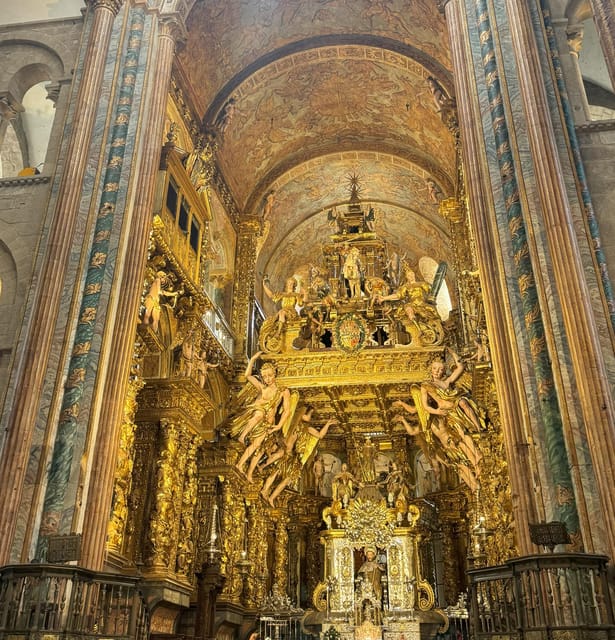
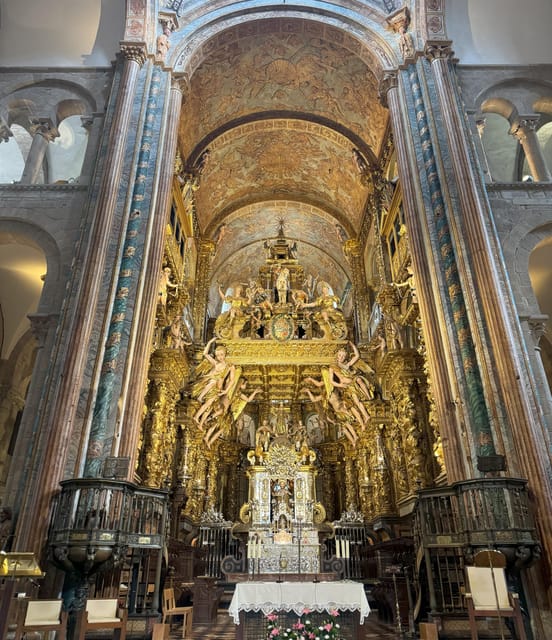
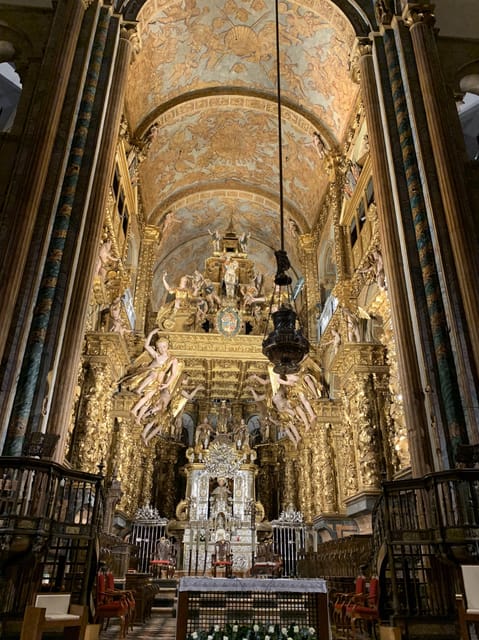
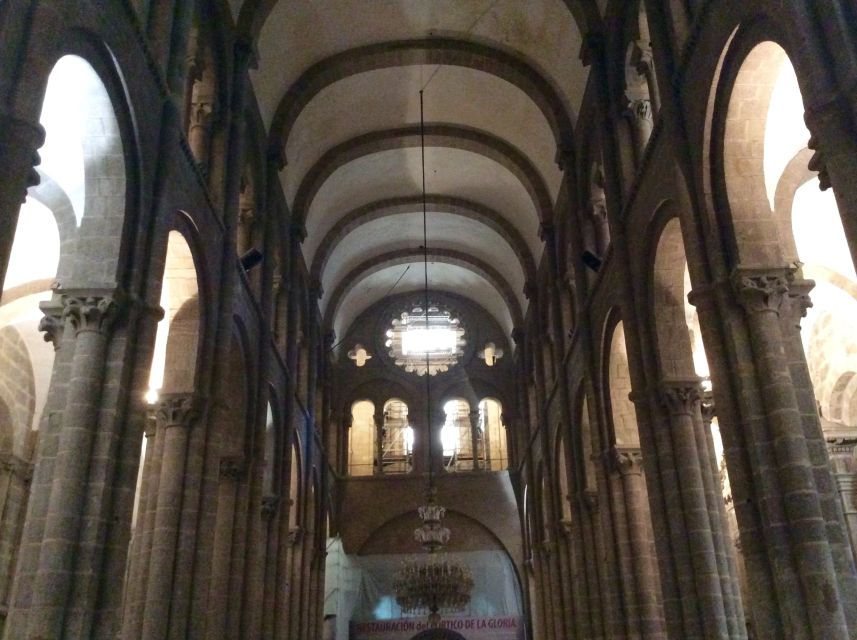
The first impression is architectural. You move through the naves and see how the building gathers people toward the main altar and the shrine of Saint James. Even if you are not religious, the purpose of the space is clear: this is a church designed for pilgrimage, ceremony, movement, and arrival.
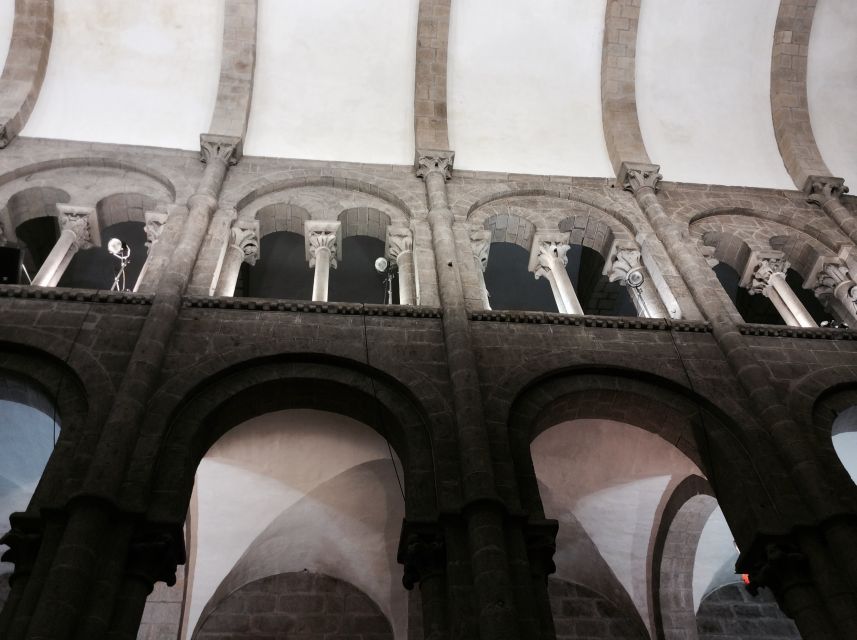
The guide helps you read the building in layers. There is the Romanesque core, later decoration, devotional chapels, and centuries of additions. You will also learn how the cathedral became tied to the identity of Santiago de Compostela and to the many pilgrims who arrive at the end of the Camino.
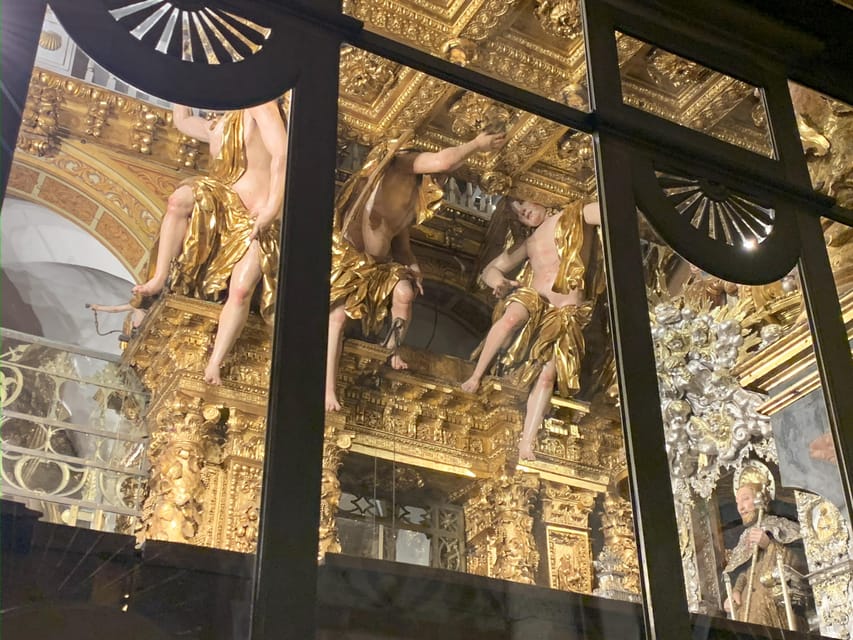
I especially value the explanation of the main altar and surrounding chapels. It is easy to walk through a cathedral and see only a large central space. Here, you have time to look at the smaller chapels around the altar, each with its own decoration and purpose.
The pace appears to be steady rather than hurried. One past participant noted that there was enough time at each stage and good interaction with the guide. That is important because the cathedral rewards pauses. You need a moment to look upward, compare chapels, and notice how light changes across the interior.
Saint James’s tomb and the crypt
The tomb of Saint James the Great is the emotional center of the visit. For pilgrims, reaching this shrine can mark the end of a long walk. For you, even a short city visit can become more meaningful once you understand the devotion attached to it.
The tour includes a visit to the crypt, where the connection between the cathedral, the apostle, and pilgrimage becomes especially direct. Your guide can explain the religious tradition and the place this shrine holds in Spanish Christianity.
You may also hear about the ritual of embracing the Apostle Santiago. The tour description includes this as part of the cathedral experience, along with the crypt and the main devotional areas. Customs and access can be affected by cathedral operations, so follow the guide’s instructions on the day.
This is one point where the guide’s role matters more than an audio recording. The meaning of the tomb is not obvious from architecture alone. A good explanation puts the site in context without asking you to share the faith behind it.
Chapels, sacred art, and the cathedral’s details
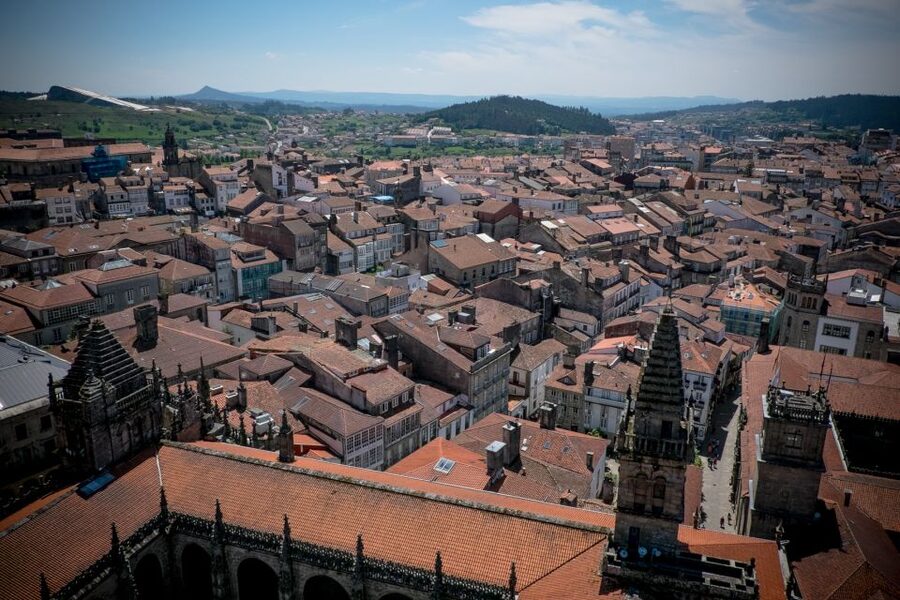
The cathedral contains far more art than you can absorb in one visit. That is both its pleasure and its problem. In two hours, your guide must choose what deserves your attention.
Expect a selection of major works and decorative features rather than a close study of every object. The museum and cathedral together include sacred art, chapels, sculpture, architectural details, and devotional pieces. The guide’s choices help keep the tour manageable.
I would ask questions as you go. Past guides such as Elena and Miriam were praised for answering detailed questions, including questions about dates, architecture, and the wider city. If you see a figure, symbol, or painting that catches your eye, ask about it instead of waiting for the formal commentary to continue.
The tour can also help you avoid a common mistake: judging the cathedral only by its size. The real pleasure comes from noticing the smaller details around the grand spaces. Look at the chapels, altar decoration, carved features, and the way different periods sit beside one another.
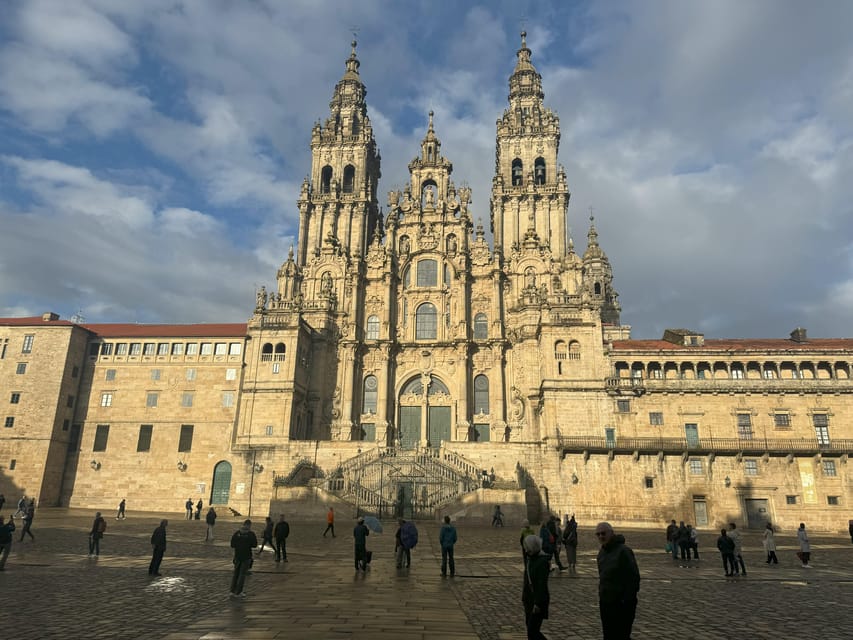
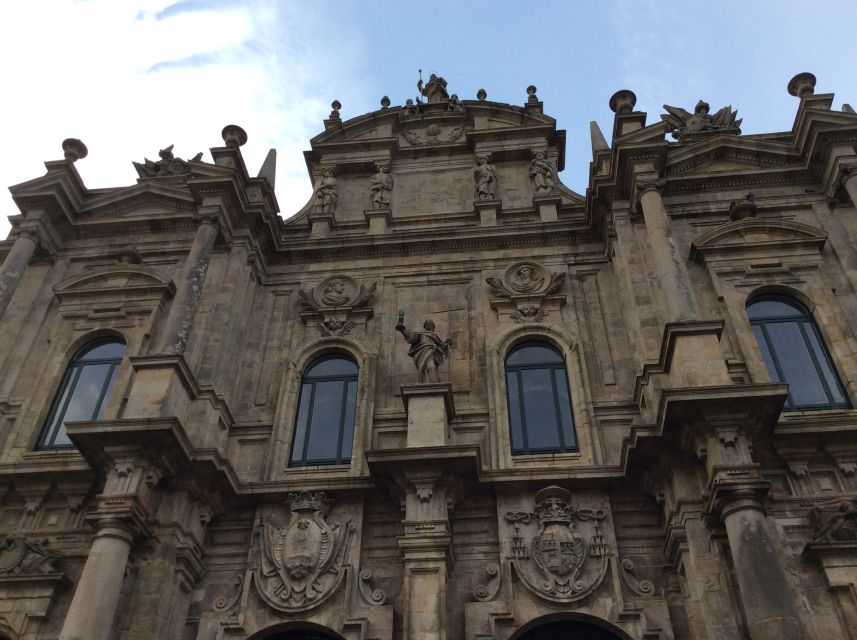
One earlier visitor felt the tour did not include enough attention to the symbolic exterior facades. That is a useful warning. This experience focuses on the museum and interior, with additional cathedral areas such as the cloister and balconies included in the advertised plan. If the facades are your priority, set aside separate time to study them from the square.
Same base, a different kind of day out:
- From Santiago: Finisterre, Muxia & Costa da Morte Excursion
★ 4.7 · 1,481 reviews - Excursion to Finisterre + Muxia + Costa da Morte (7 stops)
★ 5.0 · 1,367 reviews - Finisterre and Costa da Morte: The Most Complete Tour of Santiago
★ 5.0 · 733 reviews - From Santiago: Finisterre, Muxia, Ézaro – 7 stops day tour
★ 4.6 · 553 reviews
The Codex, Treasury, and Chapter House
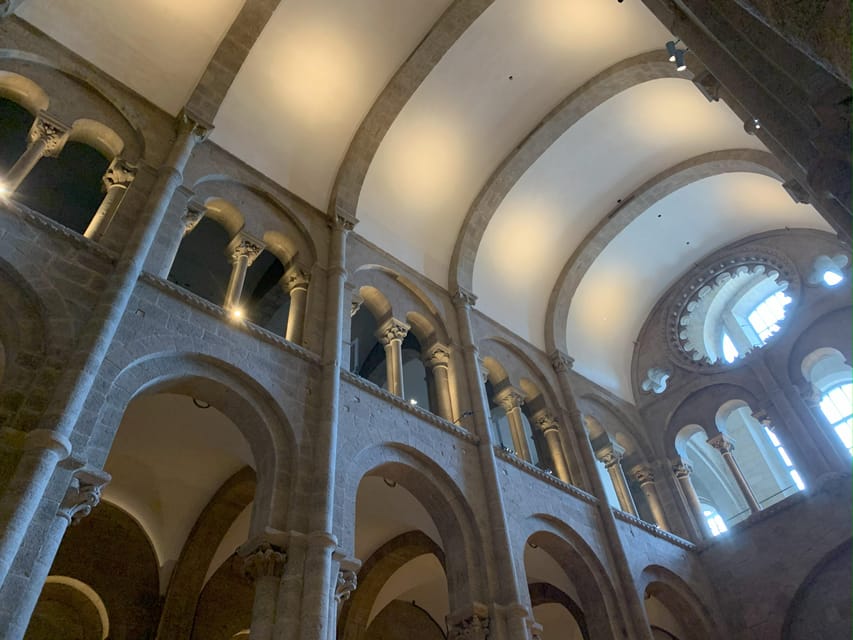
The tour includes access to areas that give the cathedral a more complete identity. The Treasury shows the institution’s ceremonial and artistic wealth. The Chapter House offers another view of how the cathedral operates as a religious institution, not just as a monument open to the public.
These rooms can be easy to skim if you visit alone. A guide explains why they exist and how they relate to the cathedral’s religious life. You may not remember every name or date, but you will leave with a clearer sense of how worship, pilgrimage, art, and administration fit together.
The Codex Calixtinus adds a different kind of interest. Unlike the stone walls and chapels, it connects Santiago to written accounts, travel, ritual, and the growth of the pilgrimage tradition. This is a particularly good stop for anyone walking, planning, or simply curious about the Camino de Santiago.
One past participant said the visit helped spark interest in walking the Camino in the future. That makes sense. The cathedral is easier to appreciate when you understand it as the destination of a long route, not merely a famous church in an attractive Spanish city.
Botafumeiro, balconies, and the cloister
The famous Botafumeiro is one of Santiago Cathedral’s best-known features. This enormous incense vessel is associated with major religious ceremonies and the practical history of managing large numbers of pilgrims. The tour includes it in the cathedral visit, although its operation is tied to scheduled services and occasions, so do not assume you will see it swinging during your time there.
The advertised experience also includes views from the balconies. These upper positions can help you understand the scale of the cathedral in a way that ground-level viewing cannot. You may find the perspective useful for seeing the naves, altar, and layers of architecture together.
The cloister provides yet another change of mood. Its enclosed design and architectural details offer a quieter counterpoint to the main church. If the group reaches it during your visit, take a moment to notice how different it feels from the open, ceremonial center of the cathedral.
Because access to specific areas can depend on the cathedral’s schedule and operating conditions, listen closely to the meeting instructions for your chosen option. The meeting point may vary, and the guide will direct the group through the correct route.
The guides make the difference
The strongest part of this experience is the live commentary. The tour is offered in English, Spanish, Italian, Portuguese, and French, and the guide roster varies.
Carmen receives repeated praise for clear explanations, warmth, patience, and strong English. She has also handled commentary in both English and Spanish. Maria has been praised for excellent Portuguese, while Laura, Miriam, Betty, and Elena have also been described as engaging and well prepared.
That does not mean you can request a particular guide or expect one specific person. It does mean the company has a record of placing guides who can explain both the art and the religious meaning of the cathedral.
A good guide will also help with the human side of the visit. One past participant appreciated being given time to keep up with the group. Another enjoyed a guide’s humor. Those small things matter in a cathedral tour, where too much formal speech can make a visit feel like school.
If you are comfortable asking questions, do so. This is not the best tour for silently following at the back. The value rises when you ask about a saint, a chapel, a date, or a pilgrimage custom that puzzles you.
Is two hours enough?
Two hours is a sensible length for a first visit. It gives you a structured introduction without consuming half a day, and it works well if you are in Santiago for only one day.
Still, two hours is not enough for every detail. You will see the museum, cathedral, tomb, crypt, chapels, and selected special areas, but you cannot study every artwork at leisure. Think of this as a guided foundation. You can return afterward to the parts that caught your attention.
The duration also suits pilgrims who have already walked the Camino and want help understanding the destination. After many days on the road, you may appreciate a clear explanation rather than another long scheduled activity.
Price, access, and practical limits
At $29 per person, the tour is good value if you want the museum and cathedral explained rather than simply entered. The fee includes the guided tour and museum admission. It also offers a separate entrance to help you avoid the main queue, which can be useful during busy periods.
A small-group option is available. Choose it if you value easier conversation and more chances to ask questions. A larger group may still work well if the guide uses a clear headset or strong speaking voice, but that equipment is not specified here, so do not count on it.
Bring a small day bag. Large backpacks are not allowed, so avoid arriving with your full walking pack. This is especially important if you are visiting Santiago at the end of a Camino stage.
The activity is not suitable for wheelchair users. The meeting point can vary according to the option you book, so check the exact instructions before setting out. You can cancel up to 24 hours before the tour for a full refund, and the reserve-now, pay-later option gives you some flexibility while planning.
Who should book this cathedral tour?
I would choose this experience if you want the cathedral’s story, not just a photograph of its interior. It suits first-time visitors, art lovers, people interested in Spanish religious history, and anyone who has walked or hopes to walk the Camino de Santiago.
It is also a smart choice if you have only one day in Santiago. The guide puts the city and cathedral into context quickly, and the two-hour format leaves time for the old town, a meal, or a return visit to a favorite chapel.
I would hesitate only if you prefer to explore at your own speed, want a long architectural study, or mainly care about the cathedral’s exterior facades. In that case, visit the cathedral independently as well, and give yourself extra time outside.
Should you book the Santiago Cathedral and Museum Guided Tour?
For $29, I think this is a worthwhile introduction to one of Spain’s most important pilgrimage sites. The museum-first route, access to the cathedral’s key religious spaces, multilingual guides, and separate entrance make it more useful than a simple admission ticket.
Book it if you want someone to explain Saint James, the Camino, the sacred art, the Codex Calixtinus, the Botafumeiro, and the cathedral’s many layers in plain language. Skip it only if you already know the building well and prefer complete freedom to linger. For most first visits, a good guide will help you see far more than you would on your own.
FAQ
How long does the Santiago Cathedral and Museum Guided Tour last?
The tour lasts two hours. Starting times vary, so check availability for the date you want.
What does the tour include?
It includes a live guided tour and entrance to the cathedral museum. The experience also takes you inside Santiago de Compostela Cathedral and covers its major religious and artistic areas.
Does the tour include Saint James’s tomb?
Yes. The highlights include the tomb of Saint James the Great and a visit to the crypt.
Can I see the Codex Calixtinus?
The tour description includes the Codex Calixtinus among the museum and cathedral sights covered during the visit.
Which languages are available?
Guiding is available in English, Spanish, Italian, Portuguese, and French.
Is a small group available?
Yes, a small-group option is available. The exact group arrangement depends on the option you book.
Are large backpacks allowed?
No. Large backpacks are not allowed, so bring only a smaller bag.
Is the tour suitable for wheelchair users?
No. The activity is listed as not suitable for wheelchair users.
Just added in Santiago De Compostela
- Santiago: Guided Foodie Tour with Drinks, Tapas & Live Music★ 4.7 · 153 reviews
- Santiago Complete Tour: City, Portico and Cathedral Tickets★ 4.7 · 108 reviews
- Santiago de Compostela: Massage Treatment★ 4.8 · 170 reviews
- Santiago de Compostela: Cathedral, Museum, and Old Town Tour★ 4.8 · 382 reviews
- Santiago de Compostela: Finisterre, Muxia & Costa da Morte★ 4.7 · 526 reviews
- From Santiago: Rías Baixas Galicia Seafood & Wine Day Tour★ 4.6 · 209 reviews
- Old town walking tour in a small group★ 4.8 · 149 reviews
- From Santiago: Finisterre, Muxia, Ézaro – 7 stops day tour★ 4.6 · 553 reviews
Museums, compared.

FC Barcelona Museum “Barça Immersive Tour” Ticket
Read our review →
Park Güell and Gaudí House Museum Entry Ticket
Read our review →
Puro Flamenco Show with Optional Museum Ticket
Read our review →

Girona & Dali Museum Small Group Tour with Pick-up from Barcelona
Read our review →
Oceanogràfic, Hemisfèric & Science Museum Combo
Read our review →Browse the lists this tour appears in