
Reviewed · TOURS IN SANTIAGO DE COMPOSTELA
Santiago de Compostela: Finisterre, Muxia & Costa da Morte
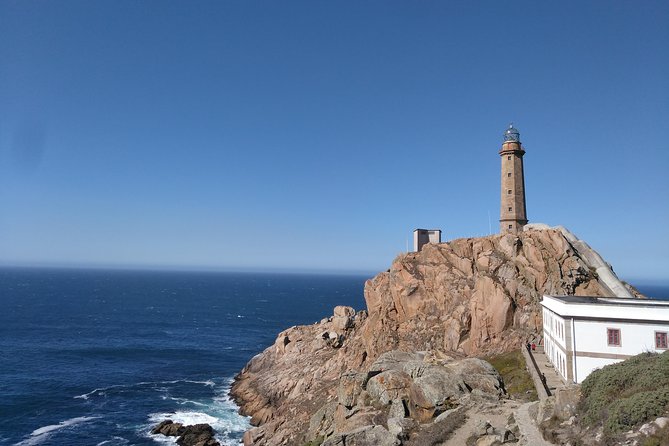
The most memorable part of this day is the meeting of Camino legend and Atlantic drama. You follow the road toward Finisterre, once called the End of the World, then continue to Muxía, where a seaside sanctuary and sacred stones connect local belief with the pilgrimage tradition.
I like the easy access to places that are awkward to link by public transport, especially Ézaro Waterfall and Ponte Maceira. I also like the relaxed timing, comfortable coach, and guides such as Andrea and Pablo, who have been praised for clear explanations and a friendly approach. The tradeoff is a long day on the road, and some stops, especially Muros and Cape Finisterre, may feel short if you want to linger.
Key points to know before booking
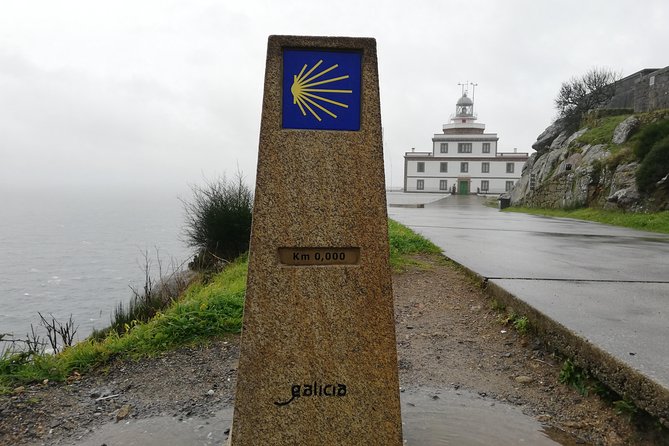
- Cape Finisterre links directly to the Camino: See the lighthouse and kilometer-zero marker connected with the pilgrimage route beyond Santiago.
- Ézaro Waterfall drops into the sea: This is one of Galicia’s most unusual natural sights, though road conditions can occasionally affect the stop.
- Muxía brings the strongest sense of place: The sanctuary, Atlantic shore, and three sacred stones give this stop a more spiritual feel than a standard coastal viewpoint.
- Ponte Maceira adds medieval charm: Its 14th-century bridge and old mills offer a calm contrast to the open ocean.
- Fisterra is the main lunch break: You get about 90 minutes for food, the harbor, and a walk through town.
- The $58 price is strong value: Transport, a guide, and several distant sights are included, but you pay separately for lunch and drinks.
A full day at Galicia’s Atlantic edge
This is a bus tour for seeing a broad slice of Galicia in one go. The route covers fishing towns, river scenery, pilgrimage sites, a waterfall, sandy beaches, and rugged headlands. You will not have hours at each location, but you will reach places that are difficult to combine without your own car.
The tour runs for about nine hours and begins at the TOXO TRAVEL office on Rúa dos Bautizados, 12, in Santiago de Compostela. Transportation is by air-conditioned vehicle. Several recent departures have run roughly from 9 in the morning to 6 in the evening, though you should check the available start time for your date.
The day works best if you treat the coach ride as part of the experience. Galicia is spread out, and the roads between Santiago, the coast, and Finisterre take time. The reward is variety. You are not simply driven to one famous cape, but shown how inland villages, estuaries, fishing ports, and pilgrimage traditions fit together.
Other trips people book in Santiago De Compostela:
- Santiago: Cathedral & Museum Tour + Pórtico of Glory Option
★ 4.7 · 2,116 reviews - From Santiago: Finisterre, Muxia & Costa da Morte Excursion
★ 4.7 · 1,481 reviews - Excursion to Finisterre + Muxia + Costa da Morte (7 stops)
★ 5.0 · 1,367 reviews
Ponte Maceira and the medieval Tambre crossing
Ponte Maceira is a small, photogenic village built around the Tambre River. Its stone bridge dates from the 14th century, and the nearby medieval mills give the place a quieter, more rural character than the big coastal stops.
This is an especially good stop for anyone who has walked the Camino. Pilgrims heading beyond Santiago toward Finisterre pass through the area, so the bridge feels like part of the pilgrimage story rather than a random photo stop. You get about 25 minutes here, enough to cross the bridge, see the mills, and take photographs.
There is a small point to watch: the supplied route information gives Ponte Maceira two different positions. The general description presents it as the first stop, while the detailed timed itinerary places it near the end, after Muxía. The order may vary by departure, so listen for the guide’s plan at the start of the day.
Muros and the Muros e Noia estuary
The road follows the Muros e Noia estuary toward Muros, a historic coastal town with old streets, harbor views, and a strong connection to fishing. The stop lasts about 30 minutes and includes free time, scenic views, and a coffee tasting.
Muros works as an introduction to the coast. You can stretch your legs, look around the waterfront, and get your first sense of Galicia’s Atlantic weather. If the day is clear, the views across the estuary are a fine reward. If you prefer major monuments or long walks, this will feel more like a brief orientation than a full town visit.
That short timing matters. One practical criticism of the route is that Muros may receive more attention than some passengers want, particularly if their main goal is Finisterre or Muxía. The benefit is that the stop breaks up the drive early in the day.
Carnota, Lira, and the long coastal views
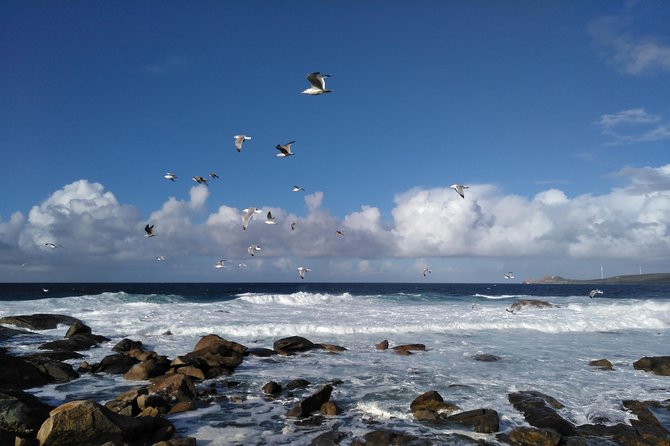
Between the estuary and Ézaro, the coach passes a sequence of coastal landmarks, including Lira, Carnota Beach, Boca do Río, Mount Pindo, and Cape Fisterra. Much of the value here comes from looking out of the window rather than getting off at every point.
Carnota Beach gives you a sense of the broad Atlantic shore, while Mount Pindo adds a more rugged profile to the route. These views help explain why the Costa da Morte has such a strong identity. This is not a polished resort coast. It feels exposed, weather-shaped, and tied to fishing, pilgrimage, and old stories.
You should sit where you can see out, but do not expect a guaranteed view from every seat. The road trip is part of the day, yet a long stretch in the coach can feel tiring. A few people have found the bus ride longer than expected, so this tour suits you best if you enjoy moving through scenery rather than staying in one town.
Same base, a different kind of day out:
- Finisterre and Costa da Morte: The Most Complete Tour of Santiago
★ 5.0 · 733 reviews - From Santiago: Finisterre, Muxia, Ézaro – 7 stops day tour
★ 4.6 · 553 reviews - Santiago de Compostela Cathedral and Museum Guided Tour
★ 4.6 · 511 reviews - From Santiago: Tour to Rias Baixas with Boat Trip and Winery
★ 4.7 · 400 reviews
Ézaro Waterfall where the Xallas meets the sea
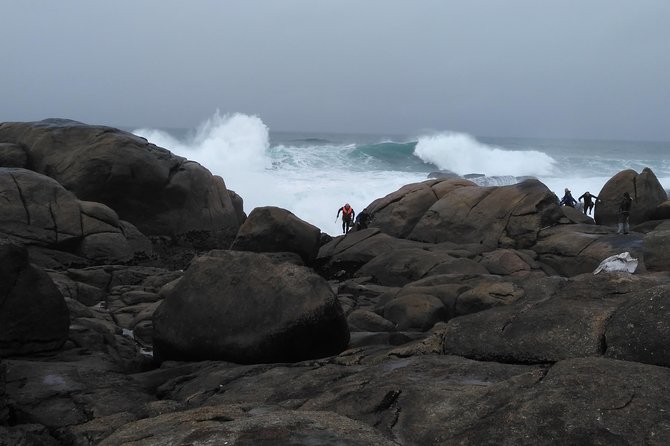
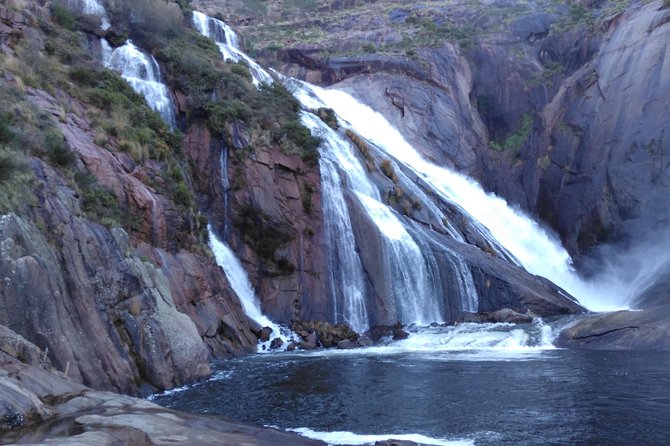
At Ézaro, the River Xallas drops into the sea at the Ézaro Waterfall. The setting is unusual because the water reaches the Atlantic after a dramatic fall, rather than simply flowing into a low estuary. The waterfall is described as the most famous in Galicia and unique in continental Europe.
You get about 35 minutes for the visit. That gives you time to see the fall, enjoy the surrounding views, and take photographs without turning the stop into a rushed five-minute pull-over.
The waterfall is also one reason a guided coach trip makes sense. It is one of several sights spread along the coast, and fitting it into a private day by public transport would be difficult. Still, conditions can matter. A past departure could not visit because of road problems, so do not treat this stop as an absolute guarantee in every circumstance.
Cape Finisterre and the end of the Camino
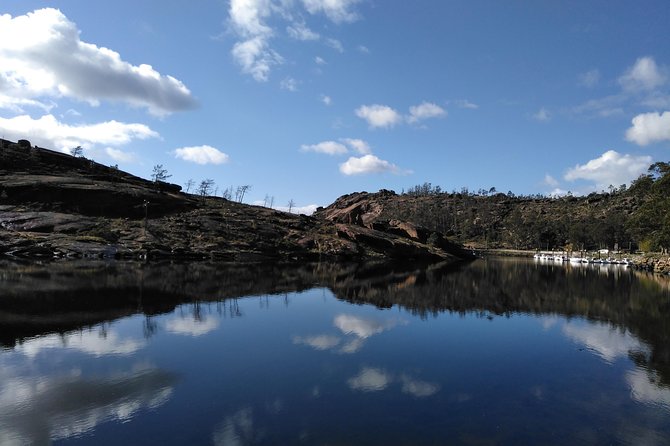
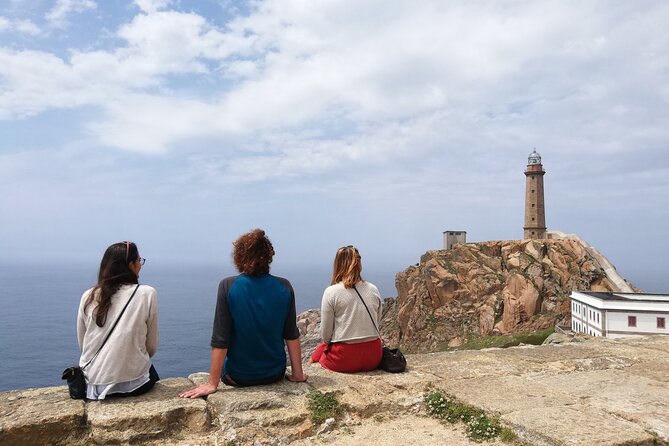
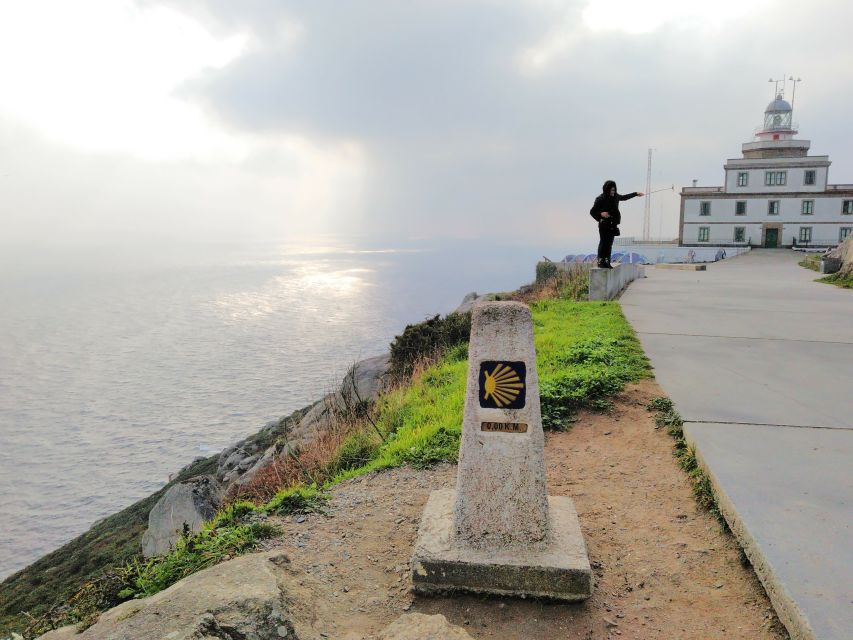
Cape Finisterre is the emotional center of the trip for many people, particularly if you have just completed the Camino de Santiago. The cape was once regarded as the westernmost point in Europe, and the lighthouse remains the main landmark. Nearby, the kilometer-zero marker connects the headland with the pilgrimage route beyond Santiago.
You get about 45 minutes at Cape Finisterre. That is enough to walk around the lighthouse area, take in the open ocean, and mark the moment, but it may not satisfy you if you want a long cliff walk or quiet time at the viewpoint.
This is the stop where the schedule feels tightest. If Finisterre is your main reason for booking, pay close attention to the timing. Some visitors would prefer taking minutes from Muros or the lunch break and adding them here. The tour gives you access and context, but not the freedom of a private car and an entire afternoon at the cape.
The guide’s commentary is useful here. The best guides add the local legends and Camino meaning that a quick taxi ride would miss. Andrea has been praised for explaining history, geography, culture, and traditions clearly, while Pablo has been described as both informative and good fun. Guides vary by date, but the live commentary is a major part of what you are paying for.
Fisterra town, fishing harbor, and lunch
After the cape, you continue into Fisterra for about 90 minutes. This is the main meal break, and lunch is not included in the price. You have time to choose a restaurant, eat at your own pace, walk around the fishing port, and see the town beyond the lighthouse.
The 90-minute stop is helpful because it avoids turning lunch into a rushed sandwich eaten beside the coach. It also gives you a chance to see the working side of Finisterre, not just its famous viewpoint.
The drawback is simple: if you would rather spend that time at Cape Finisterre or Muxía, the long lunch break may feel generous. You can make it work by eating efficiently and using the remaining time for the harbor and town. Bring money for food and drinks, since neither is included.
Muxía and the sacred stones by the Atlantic
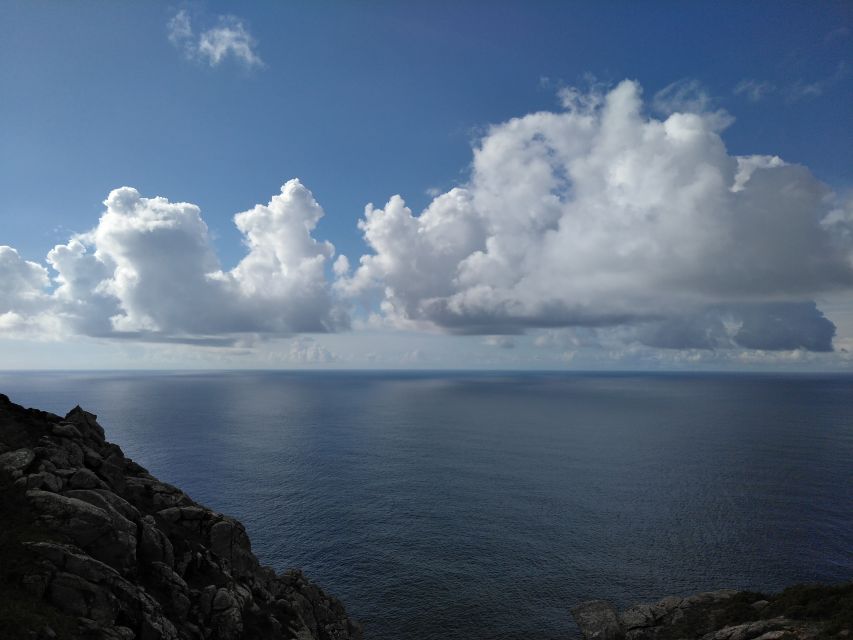
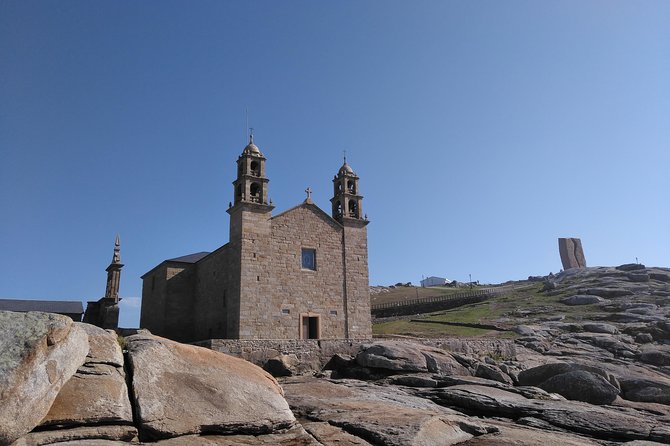
Muxía is the other major pilgrimage stop, and for many people it becomes the favorite. The town sits beside the Atlantic, with a sanctuary at the foot of the sea and three stones considered sacred by Galicians.
You spend about 40 minutes here with a guided visit and free time. The stop is short, but the setting has a strong visual and spiritual pull. Wind, surf, stone, and the sanctuary create a very different mood from Finisterre’s lighthouse and fishing port.
If you have walked the Camino, Muxía gives the journey a fitting extension. It feels less like a geographic endpoint and more like a place of ritual and legend. Even if you are not interested in pilgrimage, you will find the shore and stone formations striking.
Some route versions have included an additional grainery stop after Muxía, but the detailed schedule provided for this experience ends with the return toward Ponte Maceira. The important point is that Muxía should not be treated as a quick drive-by. Listen carefully to the meeting instructions, since the coach needs to leave on time.
What the guide and coach add
A strong guide makes a real difference on this route. You are crossing a region filled with local stories, Camino references, place names, and cultural details that can blur together without explanation. The best commentary gives each stop a purpose.
Guides named in recent departures include Andrea, Pablo, Christian, Ruben, and Dani Lati Valinho. Andrea has been praised for her explanations of culture and geography. Pablo has been described as professional, entertaining, and clear even on a rainy day. Christian has received similar praise for friendly, informative guiding, while Dani was singled out for careful attention to the group and detailed explanations.
The tour is offered with a live guide in Spanish, English, and Galician. Audio support is listed in French, Korean, and German. One useful caution is that sound quality can be less clear at the back of the bus, so sit nearer the front if the commentary matters greatly to you.
The driver also affects a long day. The coach has been described as clean and comfortable, and the driving as smooth. Guides have made a point of checking that everyone is back before departure. That small habit matters when you are stopping several times and exploring on your own.
Is $58 good value?
At $58 per person, this is good value if you want to see the coast without hiring a car. The price covers the air-conditioned vehicle and guide, while the route reaches six distinct areas or viewpoints in one day. You would spend far more effort arranging separate transport to Muros, Ézaro, Finisterre, Muxía, and Ponte Maceira.
The price does not cover food or drinks. Budget separately for lunch in Fisterra and any coffee or snacks during the day. Since the lunch stop lasts about 90 minutes, you have room to choose your own meal rather than being locked into a group menu.
The value is less clear if you want slow travel. A rental car or private tour would give you more control over how long you stay at the cape, the waterfall, or Muxía. This coach trip wins on convenience and breadth, not complete flexibility.
Who should book this Costa da Morte day trip?
I would choose this tour after walking the Camino, especially if you want to reach Finisterre and Muxía without adding several nights to your trip. It also suits first-time visitors to Galicia who want a broad introduction to the Atlantic coast.
It is a good fit for you if:
- You want transport between scattered coastal sights.
- You enjoy history, local legends, and Camino connections.
- You prefer a guided day rather than arranging roads and parking yourself.
- You are comfortable spending part of the day on a coach.
- You want both famous sights and smaller places such as Ponte Maceira.
You may want another option if your priority is a long walk at Finisterre, extended time in Muxía, or a slow lunch-free route. Bring comfortable shoes, a light layer, and patience for changing coastal weather. Rain does not cancel the scenery, but it can limit how long you want to stay outside.
Free cancellation is available up to 24 hours before departure, and you can reserve now and pay later. Those terms help if your Santiago plans are still shifting, but the main decision is about pace: this is a full, varied day, not a leisurely visit to one cape.
Should you book it?
Book this tour if you want the widest possible coastal introduction from Santiago for a reasonable price. The combination of Finisterre, Muxía, Ézaro, Muros, and Ponte Maceira is hard to match without your own transport, and the guides add useful context along the way.
I would book it with one expectation: Cape Finisterre and Muxía may leave you wishing for more time. If that sounds frustrating, choose a slower private outing. If you want a well-run day that covers the major sights, includes a comfortable ride, and lets you leave the driving to someone else, this is a practical choice.
FAQ
How long does the tour last?
The tour lasts about nine hours. One recent departure ran from approximately 9 a.m. to 6 p.m., but starting times can vary by date.
Where does the tour begin?
Meet at the TOXO TRAVEL office at Rúa dos Bautizados, 12, in Santiago de Compostela.
What places does the tour visit?
The route includes Muros, Ézaro Waterfall, Cape Finisterre, Fisterra, Muxía, and Ponte Maceira.
Is lunch included?
No. Lunch and drinks are not included. You have about 90 minutes in Fisterra for lunch and free time.
Is transportation included?
Yes. Transportation is provided in an air-conditioned vehicle.
What languages are available?
The live guide speaks Spanish, English, and Galician. Audio guide support is listed in French, Korean, and German.
How much free time do I get at each stop?
The listed timings include about 30 minutes in Muros, 35 minutes at Ézaro Waterfall, 45 minutes at Cape Finisterre, 90 minutes in Fisterra, 40 minutes in Muxía, and 25 minutes at Ponte Maceira.
What should I bring?
Bring comfortable shoes. You should also plan for outdoor stops along the Atlantic coast.
Can I cancel the booking?
Yes. You can cancel up to 24 hours in advance for a full refund. Reserve now and pay later is also available.
Just added in Santiago De Compostela
- Santiago: Guided Foodie Tour with Drinks, Tapas & Live Music★ 4.7 · 153 reviews
- Santiago Complete Tour: City, Portico and Cathedral Tickets★ 4.7 · 108 reviews
- Santiago de Compostela: Massage Treatment★ 4.8 · 170 reviews
- Santiago de Compostela: Cathedral, Museum, and Old Town Tour★ 4.8 · 382 reviews
- Santiago de Compostela Cathedral and Museum Guided Tour★ 4.6 · 511 reviews
- From Santiago: Rías Baixas Galicia Seafood & Wine Day Tour★ 4.6 · 209 reviews
- Old town walking tour in a small group★ 4.8 · 149 reviews
- From Santiago: Finisterre, Muxia, Ézaro – 7 stops day tour★ 4.6 · 553 reviews
Tours in Santiago De Compostela, compared.
Santiago: Cathedral & Museum Tour + Pórtico of Glory Option
Read our review →
From Santiago: Finisterre, Muxia & Costa da Morte Excursion
Read our review →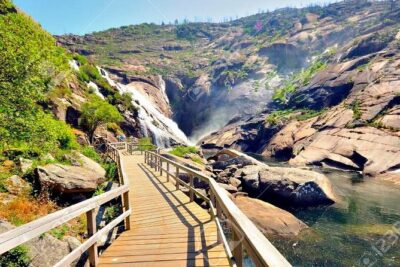
Excursion to Finisterre + Muxia + Costa da Morte (7 stops)
Read our review →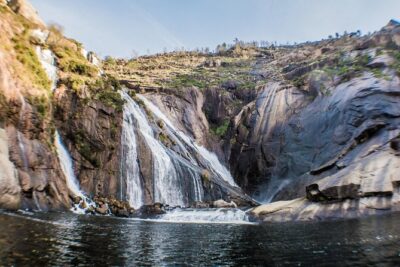
Finisterre and Costa da Morte: The Most Complete Tour of Santiago
Read our review →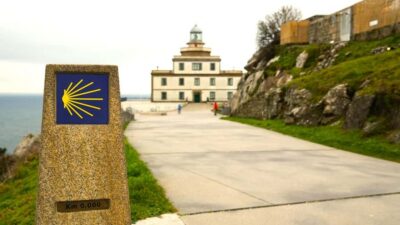
From Santiago: Finisterre, Muxia, Ézaro – 7 stops day tour
Read our review →
Santiago de Compostela Cathedral and Museum Guided Tour
Read our review →
From Santiago: Tour to Rias Baixas with Boat Trip and Winery
Read our review →
Browse the lists this tour appears in