
Reviewed · TOURS IN SANTIAGO DE COMPOSTELA
From Santiago: Finisterre, Muxia, Ézaro – 7 stops day tour
The best part of this day is its range. In one long sweep from Santiago, you get a medieval Camino bridge, a fishing port, a powerful waterfall, Atlantic cliffs, a shrine wrapped in legend, and the old idea of Finisterre as the end of the known world. It is a lot of Galicia in one day, but the route has a pleasing rhythm.
I like the easy access to places that are awkward by public bus, and I like the generous 90 minutes in Fisterra for lunch and a walk. Guides such as Maria, Alexis, Ana, and Paloma have been praised for clear explanations and warm, multilingual service. The tradeoff is simple: seven stops mean fixed times, and some stops can feel short if you want a slow, quiet visit.
Key things to know before you go
- Seven stops cover a wide slice of Galicia: Muros, Carnota, Ézaro, Cape Finisterre, Fisterra village, Muxía, and Ponte Maceira.
- The 90-minute Fisterra break is your best chance for lunch: Food and drinks are not included, so use this pause wisely.
- Ézaro is the natural highlight: The Xallas River drops directly into the Atlantic, a rare sight with good photo views.
- The tour works well after the Camino: Ponte Maceira and Finisterre connect naturally with the pilgrimage route.
- Coastal weather can change fast: Bring a raincoat, jacket, sunglasses, and comfortable shoes.
- The price is strong for the coverage: At $56 per person, transport, guiding, and insurance are included.
Why this Costa da Morte day works
This is not a short excursion to one famous lighthouse. It is a full circuit through the western part of Galicia, with stops that show different sides of the region. You move from sea-facing towns to rural stone architecture, then to pilgrimage sites and dramatic Atlantic viewpoints.
The air-conditioned coach matters here. The route is spread across the coast, and public transport would make it hard to visit all seven places in a single day. You can watch the scenery through the window instead of concentrating on unfamiliar roads, and the driver handles the narrow coastal connections.
The tour lasts about 9.5 hours. That makes it a full day, not a casual half-day outing. I would plan nothing demanding for the evening. The schedule is described as relaxed and unhurried, but the number of stops still means you need to watch the clock.
The guide is an important part of the experience. Commentary is available in Spanish, English, Italian, Portuguese, and French, with audio guide options listed for German, Italian, French, Korean, Chinese, and other languages on request. Named guides connected with this experience include Maria, Alexis, Ana, Paloma, and Joanna. Their strengths, according to the available feedback, include clear explanations, friendly communication, and the ability to switch between languages.
Other trips people book in Santiago De Compostela:
- Santiago: Cathedral & Museum Tour + Pórtico of Glory Option
★ 4.7 · 2,116 reviews - From Santiago: Finisterre, Muxia & Costa da Morte Excursion
★ 4.7 · 1,481 reviews - Excursion to Finisterre + Muxia + Costa da Morte (7 stops)
★ 5.0 · 1,367 reviews
Muros begins the coastal story
The first main stop is Muros, a seaside town on the Ría de Muros. You get about 30 minutes here, enough for a short walk through the old streets, a look at the waterfront, and a quick sense of the town’s fishing culture.
Muros is a good opening stop because it eases you into Galicia. It is not just a viewpoint where you step off, take one photo, and climb back aboard. Its stone houses, harbor setting, and traditional character give context to the coast you will follow for the rest of the day.
Thirty minutes is not enough for a full town visit. I would focus on the harbor and the nearest old streets rather than trying to cover every corner. If you enjoy lingering over coffee or browsing shops, this stop may feel rushed.
Carnota and the long stone hórreo
Next comes the Hórreo de Carnota, visited for about 30 minutes. A hórreo is a traditional Galician granary, raised above the ground to store agricultural goods. The Carnota example is among the largest and most impressive in the region.
This stop adds a rural note to a day otherwise dominated by the ocean. The structure is practical, but its size and stone construction also make it visually striking. Your guide can explain how these buildings fit into Galician farm life, which helps you see more than an old stone structure beside the road.
You do not need special preparation here. Comfortable shoes are enough, and the short stop allows time for photographs and a brief look around. If your interest is mainly cliffs and sea views, Carnota may feel less dramatic than Ézaro or Finisterre, but it gives the day useful variety.
Ézaro Waterfall meets the Atlantic
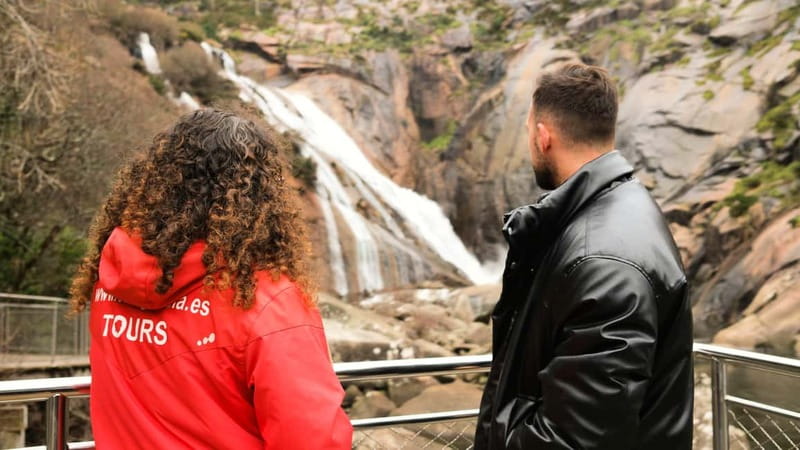
At Xallas, the tour visits Ézaro Waterfall for about 45 minutes. This is one of the day’s strongest stops. The Xallas River runs directly into the Atlantic, creating a rare meeting of freshwater and sea at the base of the cascade.
Boardwalks and viewing areas make it possible to see the fall without a long hike. You will have time for photographs, but the site also rewards simply pausing to watch the water and the coastal setting. The combination of river, rock, and ocean gives Ézaro more impact than a standard roadside waterfall.
This is the point where weather matters most. Sun can bring out the color of the water and the sea, while rain and wind add a wilder feel. The tour runs in all weather, so bring a raincoat even if Santiago is dry when you leave.
Same base, a different kind of day out:
- Finisterre and Costa da Morte: The Most Complete Tour of Santiago
★ 5.0 · 733 reviews - Santiago de Compostela: Finisterre, Muxia & Costa da Morte
★ 4.7 · 526 reviews - Santiago de Compostela Cathedral and Museum Guided Tour
★ 4.6 · 511 reviews - From Santiago: Tour to Rias Baixas with Boat Trip and Winery
★ 4.7 · 400 reviews
Cape Finisterre reaches the edge of the map
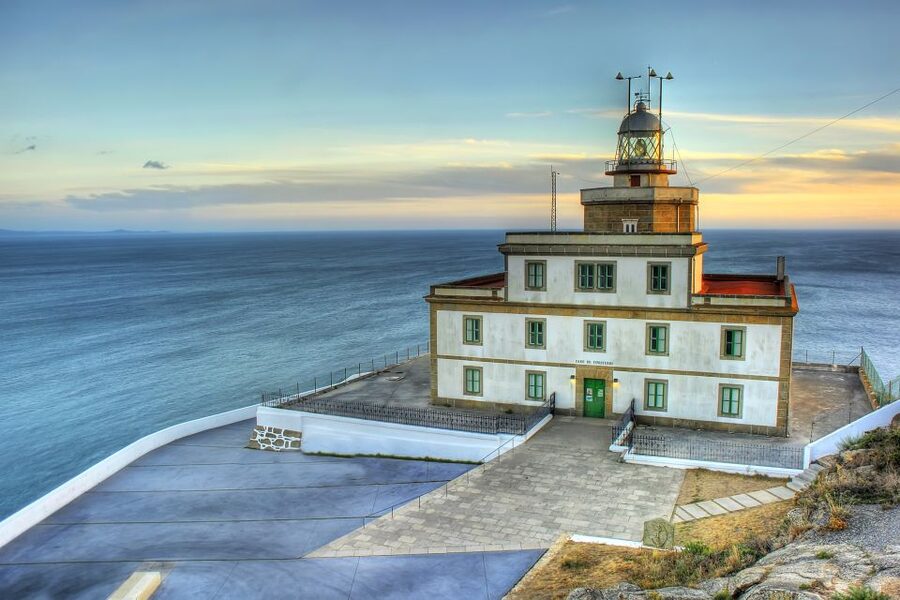
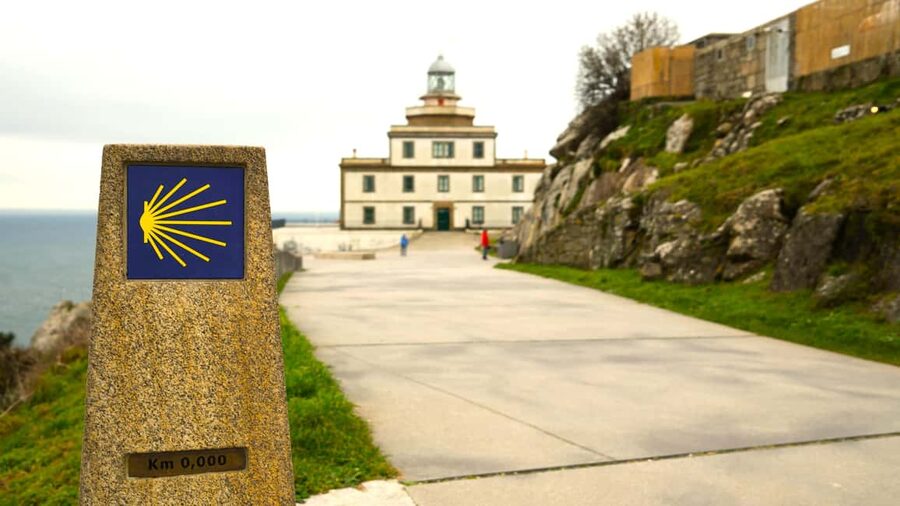
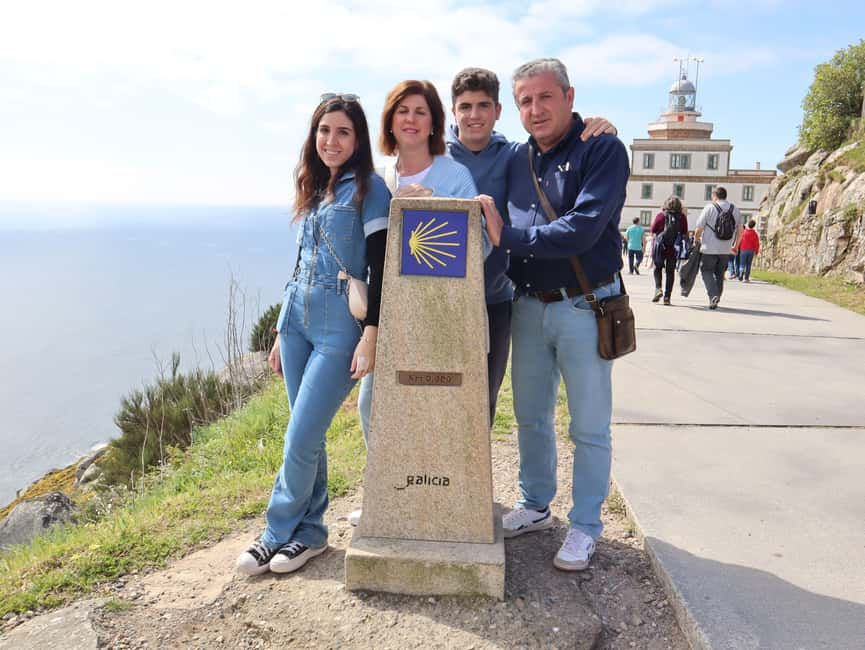
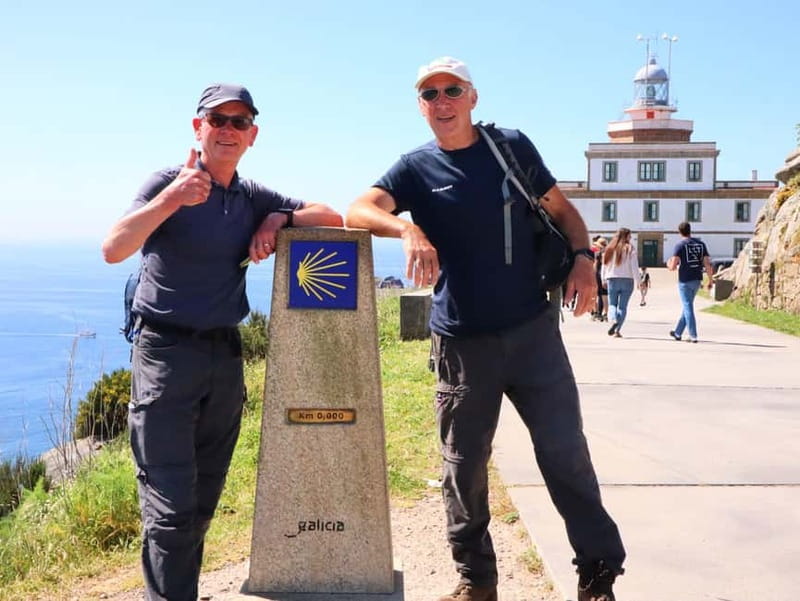
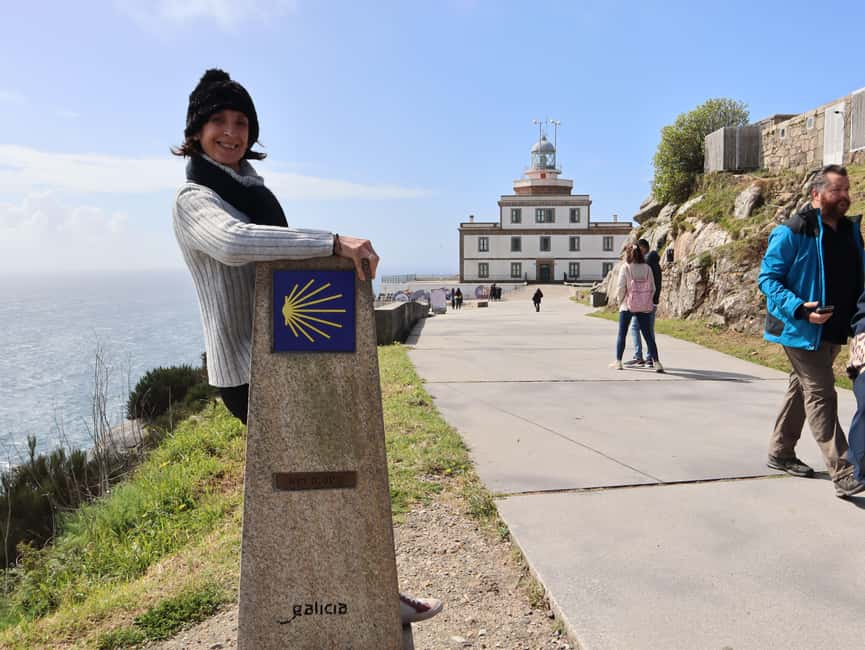
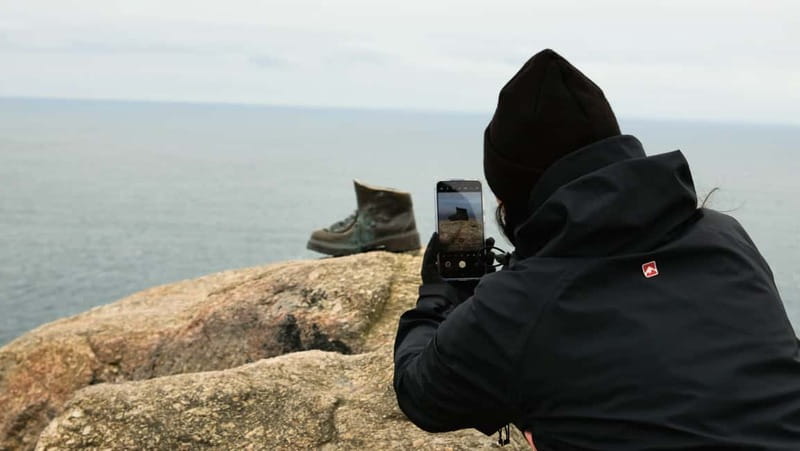
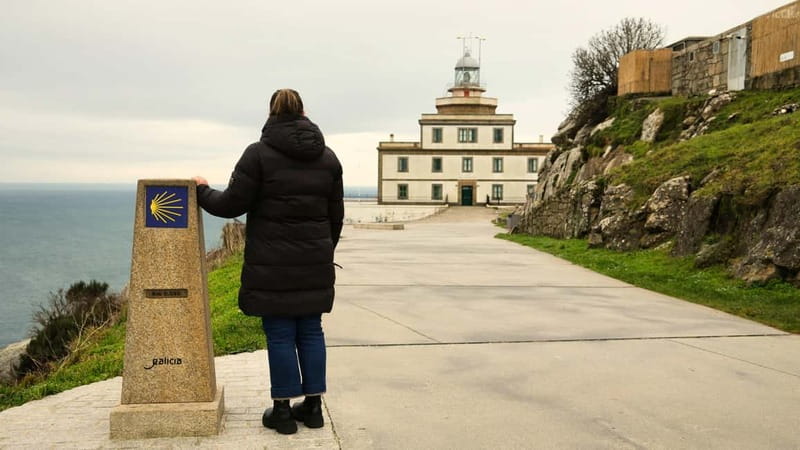
The coach then heads to Cape Finisterre, with about 50 minutes at the cape itself. The name comes from the old idea of finis terrae, the end of the earth. For pilgrims who have reached Santiago, this western headland offers a natural continuation of the journey.
The lighthouse and the cliff-top views are the main attractions. You get open Atlantic horizons, strong coastal wind, and a clear sense of why this point has held such symbolic power for centuries. It is not a museum visit or a guided indoor attraction. The reward is the setting itself, along with the stories your guide gives you.
Bring a jacket, even in good weather. The exposed position can feel much cooler than Santiago, and the wind may be strong. Sunglasses are useful too, both for glare and for the bright sea views.
Fifty minutes is a fair amount of time for the cape. You should be able to walk to the main viewpoint, take photographs, and listen to the explanation without feeling completely hurried. Still, this is not enough time for a long coastal walk, so keep your plans modest.
Fisterra gives you time to eat
A five-minute drive brings you to Fisterra village, where you have about 90 minutes of free time. This is the practical center of the day. You can walk through the fishing port, browse local shops, and choose lunch near the water.
Food and drinks are not included. That is worth remembering when comparing the price with tours that sell a fixed meal. Here, you control the spending and the pace. Fresh seafood is the obvious choice, but you should allow enough time for ordering and eating before meeting the group again.
I like this break because it prevents the tour from becoming a string of quick photo stops. You get a chance to sit down, breathe, and experience Fisterra as a working coastal village rather than only as the place below the cape.
The main risk is timing. Ninety minutes sounds generous, but it disappears quickly if you want lunch, a harbor walk, and shopping. Keep an eye on your watch, and confirm the meeting point before wandering far from the port.
Muxía brings myth and sea together
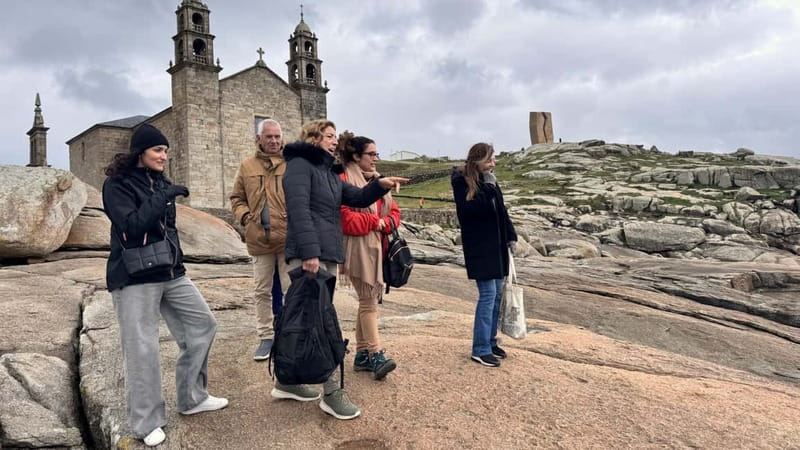
After Fisterra, the coach continues to Muxía, with about 45 minutes at the Sanctuary of the Virgin of the Boat. This is one of the most atmospheric stops on the route. The sanctuary sits beside the Atlantic, where waves strike the rocks and local religious traditions blend with older coastal legends.
The setting is the reason to visit. You can look around the sanctuary, walk near the shore, and hear the stories that have made Muxía an important place for pilgrims and local communities. The ocean gives the stop a raw, dramatic feel, especially when the wind is up.
Forty-five minutes gives you enough time to see the main site and take in the coast. It does not allow for a broad exploration of Muxía beyond the sanctuary area. I would treat this as a focused visit, not a free afternoon in town.
Muxía also helps explain why this tour appeals to people finishing the Camino. The day connects Santiago with places that carry their own pilgrim meaning, rather than stopping at scenery alone.
Ponte Maceira closes with the Camino
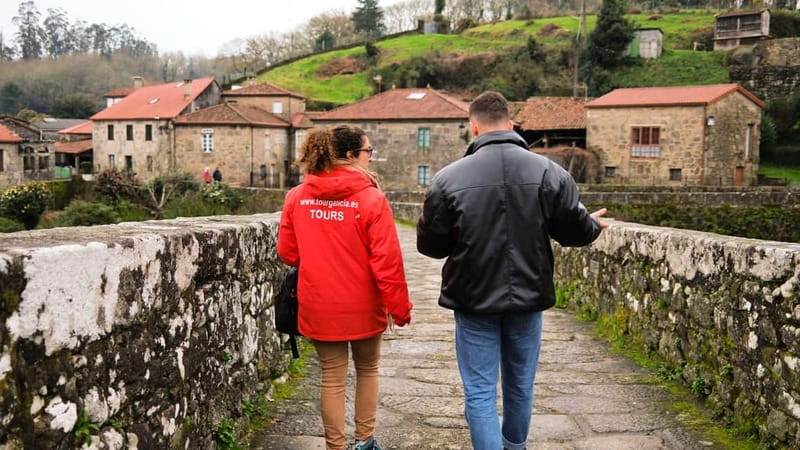
The final visit is Ponte Maceira, a rural village with a medieval stone bridge over the Tambre River. You have about 30 minutes to cross the bridge and look around the peaceful village.
This is a gentle ending after the exposed coast. The bridge gives you a direct Camino connection, and the surrounding village has a slower rhythm than the busy viewpoints earlier in the day. I like the contrast: the tour begins its final chapter with moving water, old stone, and quiet countryside rather than one last crowded lookout.
Again, half an hour is enough for the bridge and a short walk. It is not enough for a long village exploration. Wear shoes with a firm sole, since you will be walking on historic stone surfaces and moving between the coach and the bridge.
What the coach, guide, and schedule mean
There are four pickup points in Santiago: Rúa do Hórreo 23, Hotel Hesperia Peregrino, Continental Aparcadoiro La Salle, and Capela do Pilar. The same four locations are used for drop-off. Check your exact meeting point and arrive early, since there may be more than one coach or tour group nearby.
Most of the driving legs are short to moderate, but they add up. The route includes approximately 40 minutes to Muros, 15 minutes to Carnota, 20 minutes to Ézaro, 30 minutes to Cape Finisterre, five minutes to Fisterra village, 40 minutes to Muxía, and 30 minutes to Ponte Maceira. The return to Santiago takes about 30 minutes after the final stop.
The coach is air-conditioned, and several people specifically praised the clean, comfortable vehicle and careful driving. One practical issue to keep in mind is that pickup organization can be confusing at first. Arrive at the correct point, look for the operator’s staff, and do not assume the first waiting group is yours.
The live guide speaks Spanish and English. Audio support is available in several other languages, but confirm the options when booking if language access is important to you. If you have hearing difficulty, ask about written information or audio alternatives before departure, since outdoor commentary can be hard to catch when the wind is loud or the group is spread out.
Price, food, and overall value
At $56 per person, this is a strong value if you want to cover the western coast from Santiago without renting a car. The price includes the coach, guide, commentary, and insurance. It does not include lunch, drinks, or other personal spending.
I would compare this with the cost and effort of arranging separate buses, especially for Ézaro, Muxía, and Ponte Maceira. Seeing all seven stops independently in one day would be difficult, and the guided explanations add useful context to the places that might otherwise pass quickly.
The value depends on your preferred pace. If you want to spend half a day at Finisterre alone, this tour is too packed. If you want a broad introduction to the Costa da Morte and prefer someone else to manage the roads, timing, and connections, the price makes good sense.
Free cancellation is available up to 24 hours before departure, and you can reserve while paying later. The tour runs rain or shine, so the flexible cancellation policy does not replace a weather plan. Bring a jacket and raincoat.
Who should book this day trip
I would recommend it most strongly if you are staying in Santiago and want to see Finisterre and Muxía in one day. It is also a smart choice after walking the Camino, when your legs may not want another long stage but you still want to reach the coast.
It suits people who enjoy a mix of nature, pilgrimage stories, fishing towns, and local architecture. Families can use the coach and fixed schedule to keep the day simple, though unaccompanied minors are not permitted.
I would hesitate only if you dislike group touring or need long, unstructured time at each stop. The route is packed by design. You will see many places, but you must accept the group’s timetable.
FAQ
How long does the Finisterre and Costa da Morte tour last?
The tour lasts approximately 9.5 hours. Check the available dates for the exact departure time.
Where can I be picked up in Santiago?
Pickup is available at Rúa do Hórreo 23, Hotel Hesperia Peregrino, Continental Aparcadoiro La Salle, and Capela do Pilar.
Which places does the tour visit?
The route includes Muros, Hórreo de Carnota, Ézaro Waterfall at Xallas, Cape Finisterre, Fisterra village, Muxía, and Ponte Maceira.
Is lunch included?
No. Food and drinks are not included, but you have about 1.5 hours of free time in Fisterra to choose and pay for lunch.
What languages are available?
The live guide provides commentary in Spanish and English. Commentary or audio guide support is also listed for Italian, Portuguese, French, German, Korean, and Chinese, depending on availability.
What should I bring?
Bring comfortable shoes, sunglasses, a sun hat, and a jacket. A raincoat is wise because the tour operates in wet weather as well as sunshine.
Can I cancel the booking?
You can cancel up to 24 hours before departure for a full refund. Reserve now and pay later is also available.
Should you book it?
Book this tour if you want the broadest practical introduction to Galicia’s western coast from Santiago. The waterfall, Finisterre cliffs, Muxía sanctuary, and Ponte Maceira bridge give the day real variety, while the long Fisterra break lets you eat and wander without being rushed every minute.
Skip it if your ideal day means choosing one village and staying there for hours. For everyone else, $56 buys a well-filled day, comfortable transport, local stories, and access to places that are not easy to link by public bus. Bring good shoes, allow for wind and rain, and keep your camera ready at Ézaro and the cape.
Just added in Santiago De Compostela
- Santiago: Guided Foodie Tour with Drinks, Tapas & Live Music★ 4.7 · 153 reviews
- Santiago Complete Tour: City, Portico and Cathedral Tickets★ 4.7 · 108 reviews
- Santiago de Compostela: Massage Treatment★ 4.8 · 170 reviews
- Santiago de Compostela: Cathedral, Museum, and Old Town Tour★ 4.8 · 382 reviews
- Santiago de Compostela: Finisterre, Muxia & Costa da Morte★ 4.7 · 526 reviews
- Santiago de Compostela Cathedral and Museum Guided Tour★ 4.6 · 511 reviews
- From Santiago: Rías Baixas Galicia Seafood & Wine Day Tour★ 4.6 · 209 reviews
- Old town walking tour in a small group★ 4.8 · 149 reviews
Tours in Santiago De Compostela, compared.

Santiago: Cathedral & Museum Tour + Pórtico of Glory Option
Read our review →
From Santiago: Finisterre, Muxia & Costa da Morte Excursion
Read our review →
Excursion to Finisterre + Muxia + Costa da Morte (7 stops)
Read our review →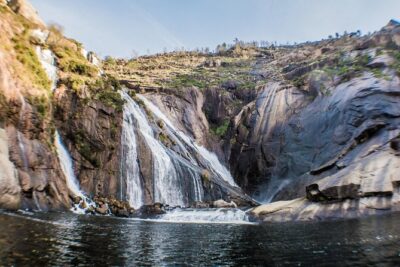
Finisterre and Costa da Morte: The Most Complete Tour of Santiago
Read our review →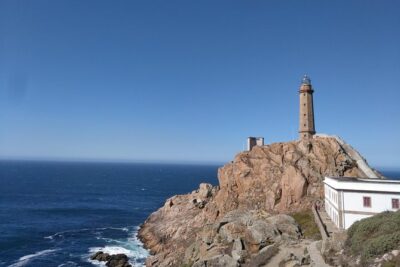
Santiago de Compostela Cathedral and Museum Guided Tour
Read our review →
From Santiago: Tour to Rias Baixas with Boat Trip and Winery
Read our review →
Browse the lists this tour appears in