Reviewed · TOURS IN SANTIAGO DE COMPOSTELA
From Santiago: Finisterre, Muxia & Costa da Morte Excursion
Cape Finisterre is the star, but the real pleasure of this day is how many different corners of Galicia you reach without wrestling with regional buses. You cross a Roman bridge, hear the legends of Muxía, look out from the so-called end of the earth, and finish among the stone lanes of Muros. I especially like the seven-stop route and the chance to see the Ezaro Waterfall, which drops directly into the sea.
I also like the practical setup: an air-conditioned coach, hotel pickup and return, and a guide who explains each stop rather than simply pointing at it. Guides including Alexis, Ana, David, Maria, and Martin have been praised for clear storytelling and helpful restaurant advice. The trade-off is simple: this is a busy day, and several stops offer only 15 to 45 minutes. If you want long, quiet walks at Muxía or Finisterre, you may find the schedule tight.
At a glance: what makes this coastal day worthwhile
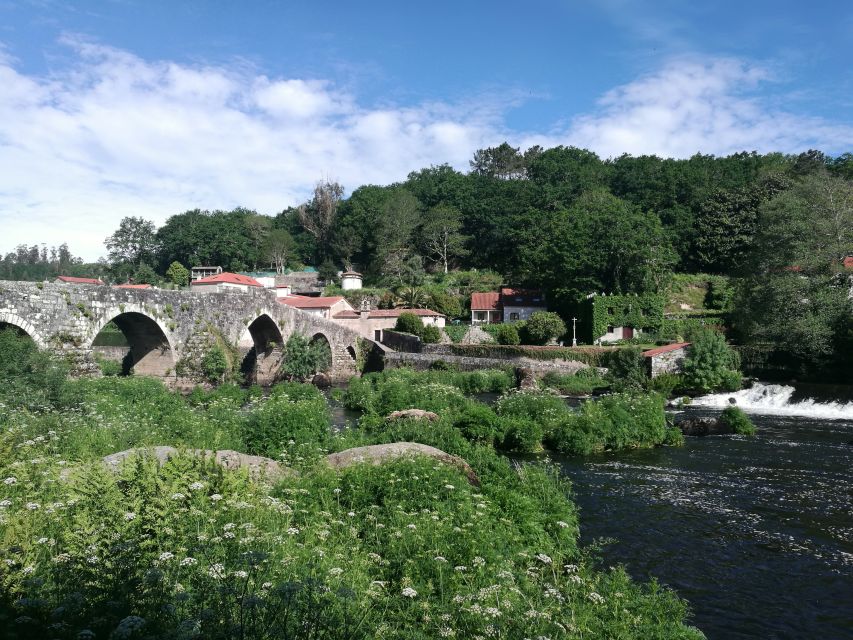
- Ponte Maceira opens with a Roman bridge: See a traditional village and river views before the Atlantic coast takes over.
- Muxía combines a lighthouse, sanctuary, and legend: You get scenery and Galician tradition in one compact stop.
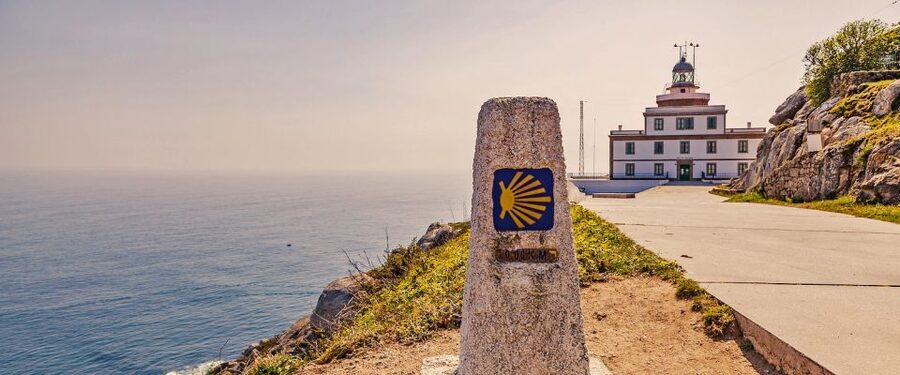
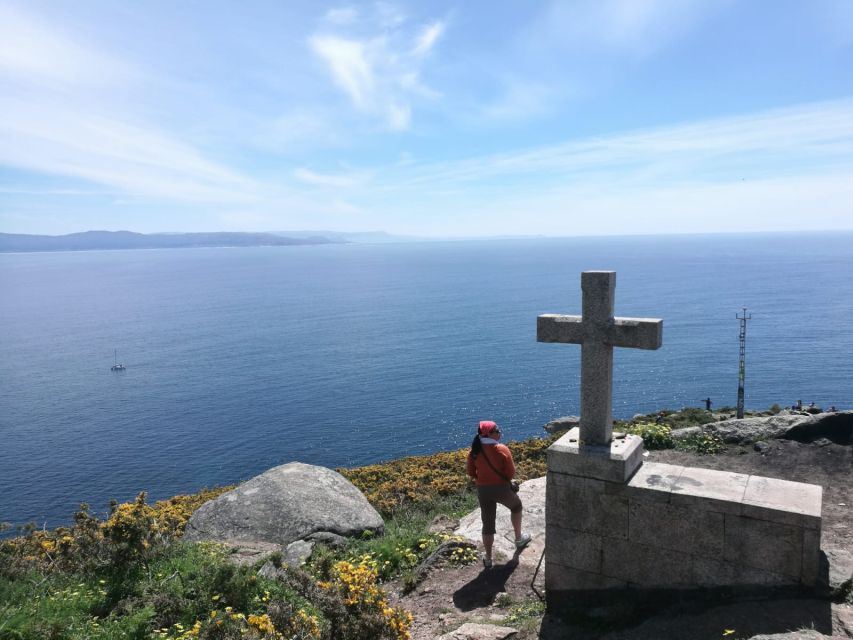
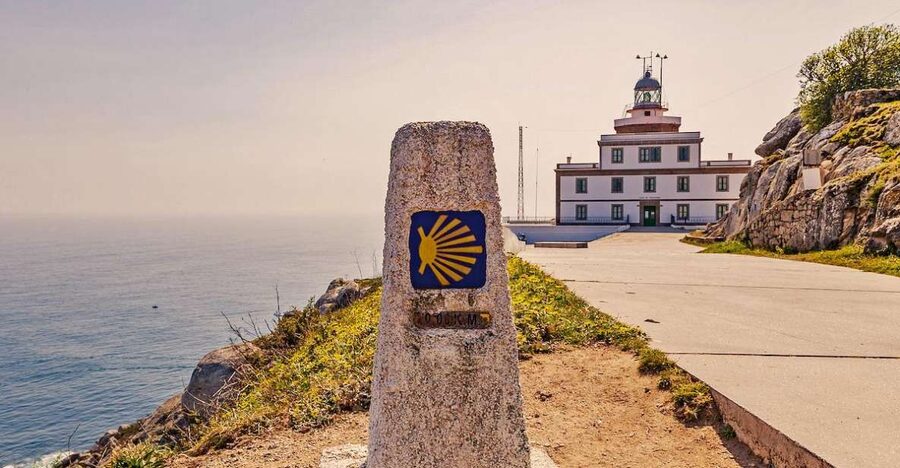
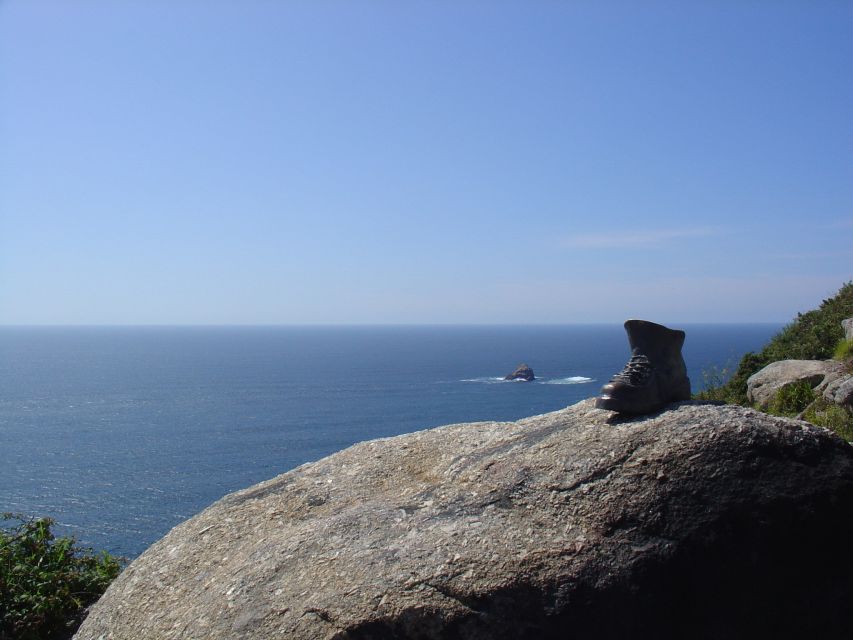
- Cape Finisterre supplies the big view: Look toward the ocean from a place Roman writers considered the end of the known world.
- Fisterra gives you a proper lunch break: With 100 minutes, you have time to eat, browse, and enjoy the town.
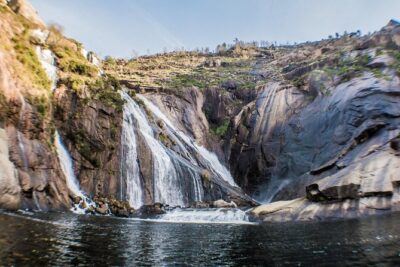
- Ezaro Waterfall reaches the ocean: This unusual natural feature is one of the day’s most memorable surprises.
- Carnota and Muros add local character: See a huge stone hórreo, then finish in a traditional fishing town.
Why this is a smart way to reach Costa da Morte
The Costa da Morte is scattered along Galicia’s western edge. That is part of its appeal, but it also makes independent sightseeing awkward in a single day. This excursion links seven major stops by coach, with the longest return drive saved for the end, when you can rest after a full day outside.
At $56 per person, the price is strong for a 9.5-hour outing that includes transportation, a live guide, insurance, and pickup and drop-off. Food and drinks cost extra, but you are given a substantial lunch break in Fisterra rather than being rushed through a sandwich between photo stops.
The value is especially clear if you are short on time after visiting Santiago or finishing the Camino. A public bus might get you to Finisterre, but it would not easily connect you with Ponte Maceira, Muxía, Ezaro, Carnota, and Muros on the same day. You also gain explanations about local customs, saints, sea legends, and the meaning of the places you are seeing.
This is not a small private tour. You travel by coach, and the group moves on a firm schedule. Still, the coach is air-conditioned and described as comfortable and clean, while drivers such as Manolo, Vicente, Jose, and Fran have earned praise for smooth, careful driving.
Other trips people book in Spain:
- Barcelona: Sagrada Familia Entry Ticket with Audio Guide
★ 4.6 · 105,312 reviews - Barcelona: Park Güell Admission Ticket
★ 4.4 · 76,534 reviews - Seville: Royal Alcázar Entry Ticket
★ 4.6 · 28,378 reviews
Starting in Santiago at 8:45 or 9:00
The main departure point is the Galicia Travels office at Rua das Casas Reais 31, about five minutes on foot from Santiago Cathedral. You should arrive 10 minutes early. A second departure point is Capilla do Pilar near Alameda Natural Park at 9:00 a.m.
Hotel pickup and drop-off are included in the tour details, but the specific meeting instructions emphasize these Santiago departure points. Confirm your assigned location when booking, and do not cut it close in the morning. The day starts early and the coach will not want to delay the entire group for a late arrival.
English and Spanish live guiding is available. Audio guides can be requested in Chinese, French, German, Italian, Korean, Portuguese, and Polish. That gives you a useful fallback if you are more comfortable hearing details in another language, though the live commentary itself is listed in English and Spanish.
Ponte Maceira: a quiet first look at Galicia
After about 30 minutes on the road, the first stop is Ponte Maceira. This traditional Galician village is centered on a Roman bridge, and the main activity is a short walk to the top for river views.
The stop lasts about 25 minutes, so think of it as a gentle introduction rather than a full village visit. The river setting and old stonework offer a welcome change from Santiago’s city streets, and the guide helps place the bridge and village within the wider route.
This is also a useful early pause. You can stretch your legs, take photographs, and settle into the rhythm of the day before the longer coastal sections. If you prefer extended walks or time to explore side streets, you will not get that here. The appeal is a quick, well-chosen glimpse.
Muxía: lighthouse, sanctuary, and sea stories
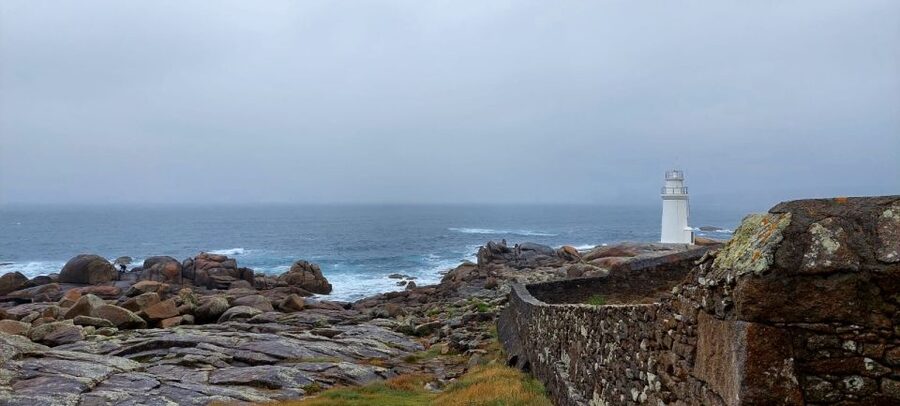
After roughly 40 minutes by coach, you reach Muxía for about 45 minutes. This is one of the most meaningful stops on the route because it joins several things Galicia does well: dramatic sea views, religious tradition, and old coastal legends.
The Muxía Lighthouse is the main visual focus. You can visit the famous sanctuary and head toward the top of the lighthouse area for a distinctive view of the coast. The guide explains the legends and history connected with Muxía, which adds much more than a quick photograph from the roadside.
The stop includes guided time and free time. Use the guided portion to understand what you are looking at, then keep a few minutes for your own photographs and quiet viewing. The coast can be misty, windy, or rainy, so bring a waterproof layer even if Santiago begins under clear skies. Several people have wished for more time here, and I understand why. Forty-five minutes is enough to see the main points, but not enough for a slow, unhurried visit.
Same base, a different kind of day out:
- Barcelona: Casa Batlló Entry with Self-Audioguide Tour
★ 4.7 · 25,359 reviews - Seville: Cathedral and La Giralda Entry Ticket
★ 4.5 · 24,592 reviews - Madrid: Tour Bernabéu Entry Ticket
★ 4.5 · 21,573 reviews - Barcelona: 24 or 48-Hour Hop-On Hop-Off Bus Tour
★ 4.4 · 20,872 reviews
Cape Finisterre: the day’s great viewpoint
The coach then takes you to Cape Finisterre, the most famous stop of the excursion. The Romans considered this far western point the end of the earth, and the name still carries that old sense of distance and mystery.
You have about 45 minutes for a guided visit, photographs, free time, and a little shopping. From the cape, you look across a wide sweep of Atlantic water and the rocky coast. The view is the reason many people make the trip from Santiago, and the guide’s explanation gives the place context beyond its familiar name.
Do not expect a long cliff walk. The schedule is designed to bring you to the important viewpoint, explain the site, and leave room for independent photos before moving on. Some departures have felt that this stop deserved more time. If you are set on lingering at the cape, the timetable may frustrate you, but the advantage is that you also see six other places in the same day.
Weather matters here. Fog can hide the horizon, and rain can turn the cape into a gray, windswept experience. Even so, the stop retains its atmosphere, and the guide can bring the stories of Finisterre to life when the view is not at its best.
Fisterra: lunch and a little breathing room
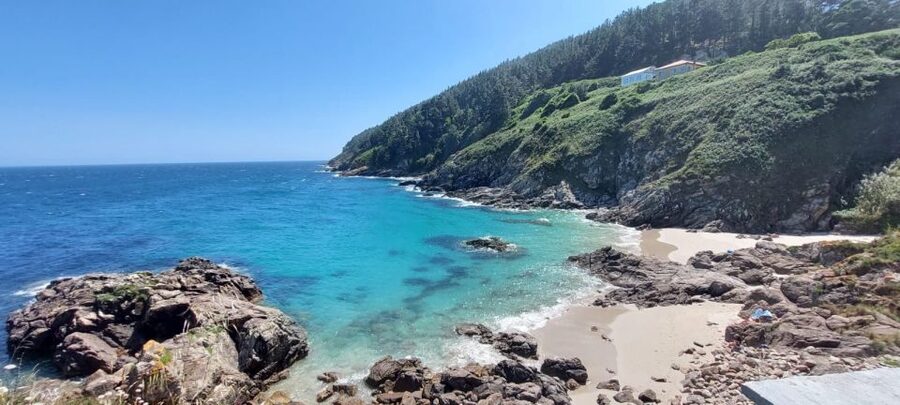
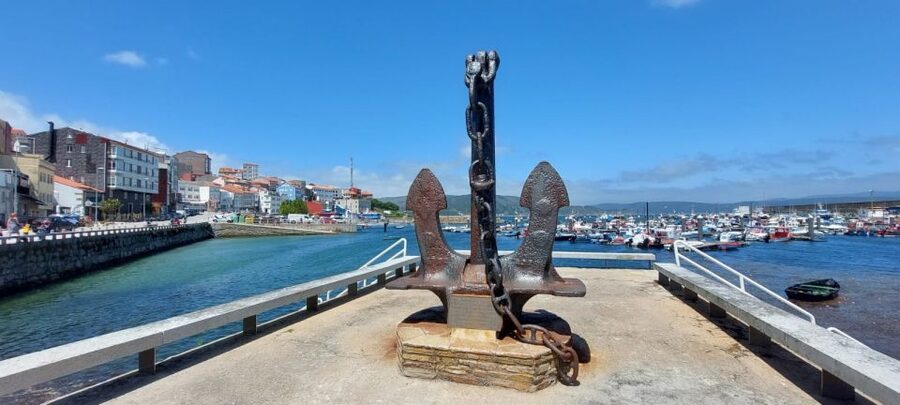
Only about five minutes by coach separates the cape from the town of Fisterra, often called Finisterre in English. This is your longest stop, at roughly 100 minutes, and it is where the schedule finally slows down.
You have time for lunch, coffee, shopping, and a walk. Food and drinks are not included, but the guides can recommend restaurants and help with reservations. That is useful on a tightly organized day, particularly if you want to avoid spending half your break searching for a table.
A recommended restaurant has received praise, but you are not required to use it. You can choose another place or simply enjoy a coffee and explore the main streets. I would use this stop to eat first, then walk. Waiting until the last few minutes for lunch is risky because the coach must leave on time.
Fisterra is also a good place to reset. The first half of the day includes several short stops and plenty of commentary. Here, you can put the notebook away, enjoy Galician seafood or another local dish, and take in the atmosphere at your own pace.
Ezaro Waterfall: water running straight to the sea
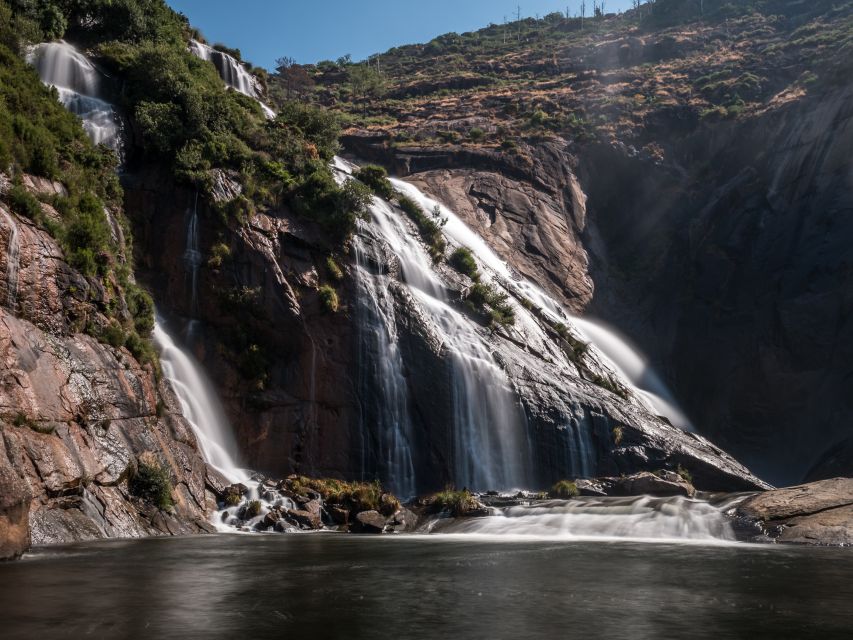
After lunch, you travel for about 30 minutes to Fervenza do Xallas, better known as Ezaro Waterfall. The tour describes it as the only waterfall in the area that reaches directly into the ocean, making it an unusual natural stop rather than just another viewpoint.
You have around 40 minutes here, including a guided visit, photographs, free time, and a chance to browse. The extra time matters because the waterfall needs a little patience. You can look, listen, and take photos without the hurried feeling of a 15-minute roadside stop.
The guide’s explanation helps you understand why this place is included in the route. It breaks up the sequence of lighthouses and coastal villages with a different kind of scenery. If the weather has been poor, this may be one of the easier stops to enjoy because the attraction is compact and clearly defined.
Carnota: an enormous Galician hórreo
The visit to Carnota is short, about 15 minutes, but it introduces one of Galicia’s most recognizable rural structures: the hórreo. This old granary is raised on pillars to keep stored food dry and away from animals. The hórreo in Carnota is described as the largest in existence.
You will have time for a guided explanation, photographs, and a quick look around. Do not expect a full village tour. Carnota works as a focused cultural stop, showing how practical farm buildings can also become symbols of local identity.
The short timing is reasonable for the attraction, though anyone interested in architecture may wish for longer. Bring your camera and listen closely while the guide explains what makes this hórreo important. It is easy to see the structure, but the details make the stop more rewarding.
Muros: a gentle finish by the water
The final stop is Muros, a traditional coastal village. You have about 40 minutes for a guided visit, a stroll, photographs, shopping, or a coffee before the 50-minute return journey to Santiago.
Muros is not presented as a major sightseeing block. It is more of a pleasant closing pause, with time to wander around the main square and get one last feel for a Galician coastal town. Some people may find it too brief or too modest after the drama of Finisterre and Muxía. Others will appreciate the chance to sit down and enjoy a drink before the long ride back.
I would treat Muros as a bonus rather than the reason to book the excursion. The larger value lies in the complete chain of stops. Muros gives the day a calmer finish and keeps the return drive from feeling like a sudden dash back to Santiago.
The guide makes the packed schedule work
The strongest feature of this excursion is the guiding. Names vary by departure, but Ana, David, Alexis, Maria, Martin, and other guides have been praised for clear explanations, friendly manner, and strong organization. Maria, for example, has been noted for delivering information fluently in both Spanish and English, while Alexis has been described as helpful and enthusiastic.
That matters because several stops are brief. A good guide gives you the essential story before you walk off to take photographs. You do not have to arrive knowing the difference between a lighthouse, a sanctuary, a hórreo, and a cape. The commentary also gives meaning to local myths and the traditions tied to Muxía and Finisterre.
The driver is equally important on a long coastal day. The route includes many winding stretches and nearly an hour on the road at the end. Drivers including Manolo, Vicente, Jose, and Fran have been praised for smooth driving and helpful service, which makes the coach time much easier.
What to bring and how to use your time
Pack for changeable Atlantic weather. Rain has affected some departures, and fog can reduce the grand views at the capes. A waterproof jacket and comfortable shoes are sensible, even though the tour does not require strenuous walking.
A few practical habits will improve the day:
- Arrive at the meeting point 10 minutes early.
- Keep your watch visible because every stop has a fixed departure time.
- Use the guided explanation first, then take photographs.
- Save your main meal for the 100-minute Fisterra stop.
- Ask the guide about restaurant choices before free time begins.
- Sit on the left side of the coach if you want to improve your chances of coastal views, a tip that has proved useful on this route.
The tour is wheelchair accessible and does not involve large amounts of walking. Still, you should confirm your needs when booking, since the route includes bridges, viewpoints, village streets, and outdoor coastal sites.
Who should book this excursion?
I would recommend it to you if you want to see the Costa da Morte in one day, prefer organized transportation, or have limited time after Santiago. It is also a good choice after the Camino, when your legs may appreciate a comfortable coach instead of another long walk.
Families, older visitors, and anyone who prefers a moderate pace can benefit from the limited walking and frequent pauses. The live commentary is useful if you want more than a series of attractive views.
I would hesitate if your priority is solitude, long hikes, or extended time at one site. The route is ambitious. Muxía and Cape Finisterre can feel short, and Muros is mainly a coffee and strolling stop. But at $56, the combination of transport, guiding, seven stops, lunch time, and hotel return makes the packed schedule a fair exchange.
Should you book the Finisterre and Muxía day trip?
Book it if you want a broad, well-organized introduction to Galicia’s western coast. You will see the major sights, learn the stories behind them, and avoid the hassle of connecting remote places by public transportation.
Skip it only if you already plan to spend several days along the coast or want to explore Finisterre and Muxía at a slow pace. For most people based in Santiago, this is a practical and good-value day out, especially when guides such as Alexis, Maria, Martin, or David are leading the group. Just bring weatherproof clothing, accept the brisk timetable, and save your appetite for Fisterra.
FAQ
Where does the tour leave from in Santiago?
The main meeting point is the Galicia Travels office at Rua das Casas Reais 31, about five minutes on foot from Santiago Cathedral. A second departure point is Capilla do Pilar near Alameda Natural Park at 9:00 a.m. You should arrive 10 minutes before departure.
How long does the excursion last?
The excursion lasts about 9.5 hours and ends back at the meeting point in Santiago.
Is lunch included?
No. Food and drinks are not included, but the tour gives you about 100 minutes in Fisterra for lunch. Guides can recommend restaurants and help with food choices.
What languages are available?
Live guiding is available in English and Spanish. Audio guides can be requested in Chinese, French, German, Italian, Korean, Portuguese, and Polish.
Does the tour involve a lot of walking?
No. The activity does not require strenuous effort or large amounts of walking. You will walk during sightseeing stops in villages, at viewpoints, around lighthouses, and near the waterfall.
Is the excursion wheelchair accessible?
Yes, the activity is listed as wheelchair accessible. It is still sensible to confirm your specific needs when booking because the route includes outdoor viewpoints and village streets.
Just added in Spain
- Bizkaia Bridge, Gaztelugatxe, Bermeo and Gernika from Bilbao★ 4.5 · 299 reviews
- Benalmadena: City Sightseeing Hop-On Hop-Off Bus Tour★ 3.5 · 379 reviews
- Welcome to Barcelona: Private Tour with a Local★ 4.6 · 200 reviews
- Barcelona: White Rabbit Catalonia’s Top Immersive Experience★ 4.7 · 359 reviews
- Bean to Bar Chocolate Workshop in Barcelona★ 5.0 · 172 reviews
- Barcelona: Walking tour with Montjuic Castle & Cable Car★ 4.7 · 832 reviews
- Barcelona: Welcome to Barcelona Segway Tour★ 4.9 · 153 reviews
- Barcelona: Helicopter Flight with Optional Yacht Cruise★ 4.7 · 224 reviews
Tours in Santiago De Compostela, compared.
Santiago: Cathedral & Museum Tour + Pórtico of Glory Option
Read our review →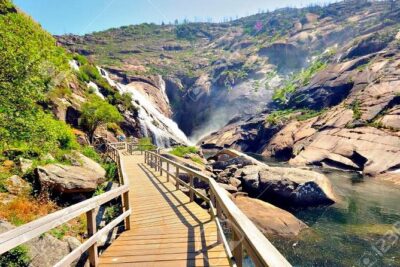
Excursion to Finisterre + Muxia + Costa da Morte (7 stops)
Read our review →