Reviewed · TOURS IN SANTIAGO DE COMPOSTELA
Excursion to Finisterre + Muxia + Costa da Morte (7 stops)
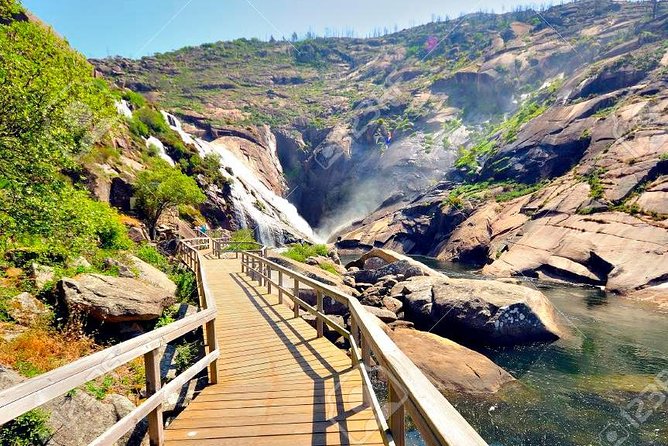
The best reason to take this day trip is simple: in about nine hours, you reach the Atlantic edge of Galicia, where the Camino de Santiago meets cliffs, fishing towns, ancient stones, and the famous lighthouse at Finisterre. You also see places that are awkward to connect by public transport, including Muxía, Ézaro, Carnota, and Muros.
I like the mix of big scenery and small cultural stops. Ponte Maceira gives the day a calm start, while Muxía and Finisterre deliver the strongest coastal views. I also like that lunch is built into a full 90-minute stop in Finisterre, so you are not forced to eat quickly.
The main catch is the pace. This is a long coach day, and the group may be large, with as many as 50 people and, on busy departures, several buses. The itinerary is productive, but it leaves limited time in each place.
Key points to know before booking
- Finisterre and Muxía are the day’s highlights, with lighthouse views, Camino traditions, legends, and open Atlantic scenery.
- Seven stops cover a lot of ground, including Ézaro Waterfall, Carnota’s famous granary, and the old port of Muros.
- Lunch is not included, but the 90-minute break in Finisterre gives you time to choose a restaurant at a reasonable pace.
- Private transportation does not mean a private tour. You ride in a tour coach with a group of up to 50 people.
- English and Spanish guiding is included, though the balance between languages can vary by departure.
- The tour works especially well after walking the Camino, when you want to reach the coast without spending several extra days on foot.
Why this is a useful end to the Camino
Finisterre, or Fisterra in Galician, was once described by the Romans as the end of the known world. For modern pilgrims, it is also the natural extension of the Camino de Santiago. Many people finish in Santiago but still want to walk or visit the coast. This excursion lets you make that connection in one packed day.
I like the way the route combines the symbolic endpoint with places that are less famous. You do not simply drive to a lighthouse, take one photo, and return. The day includes a medieval bridge, a sanctuary tied to Jacobean tradition, a waterfall flowing toward the ocean, a traditional grain store, and a historic port.
That variety gives the trip real value at $59.26 per person. The price includes private group transportation, an air-conditioned vehicle, an English and Spanish guide, and an audio guide. It does not include lunch or tips. If you tried to connect these seven places independently by public transport, you would need far more time and careful planning.
The cost is especially fair for anyone with only a short stay in Santiago. You see in one day what could take several days to reach on foot. The tradeoff is that you exchange freedom and a slow pace for efficiency.
Other trips people book in Spain:
- Barcelona: Sagrada Familia Entry Ticket with Audio Guide
★ 4.6 · 105,312 reviews - Barcelona: Park Güell Admission Ticket
★ 4.4 · 76,534 reviews - Seville: Royal Alcázar Entry Ticket
★ 4.6 · 28,378 reviews
Starting in Santiago: meeting points and timing
The official start time is 9:00 a.m., but the first pickup at the Galicia Travels office on Rúa das Casas Reais 31 is at 8:45 a.m. Other listed pickups are the Chapel of the Pillar at 9:00 and in front of the Exe Peregrino Hotel at 9:05.
Galicia Travels contacts you through WhatsApp one or two days before departure to confirm the time and pickup point. Pay attention to that message. If you do not select or communicate a pickup point, the office on Rúa das Casas Reais is the default, and you need to arrive before 8:45 a.m.
The meeting point is central and easy to reach, but do not treat the departure as casual. With several stops and a long drive ahead, a late arrival can disrupt the whole group. The activity ends back at the meeting point in Santiago.
Ponte Maceira gives the morning a gentle start
The first stop is Ponte Maceira, about 25 minutes from Santiago. This stone bridge and riverside setting have a close connection with the Camino route to Finisterre. It is a pleasant opening because it gives you a short walk and a chance to get settled before the Atlantic portion of the day.
You receive a brief introduction to the bridge and its place in the pilgrimage tradition. The stop is free, and 25 minutes is enough for photographs and a quick look around.
Do not expect a long village visit here. This is a short orientation stop, not a full morning excursion. Still, I like its calm character. After the crowds and stone streets of Santiago, the river setting feels like a change of gear.
Muxía and the stones of Virxe da Barca
The Sanctuary of Virxe da Barca in Muxía is one of the most atmospheric stops. The church sits beside the Atlantic, surrounded by legends connected with the Apostle, pre-Christian traditions, and several unusual stones.
The site is also associated with the film The Way, which makes it familiar to many people who have walked or followed the Camino story. The guide explains the sanctuary’s Jacobean importance and the local legends tied to the rocks.
You get about 35 minutes here. That is enough to take in the setting, hear the explanation, and photograph the church and sea. It is not enough for a slow, private exploration, so keep your expectations realistic.
Muxía often feels more meaningful than a standard scenic stop because the religious tradition and the sea are closely linked. You are not only looking at a church by the water. You are seeing one of the places where Galicia’s pilgrimage culture, older beliefs, and Atlantic setting meet.
Same base, a different kind of day out:
- Barcelona: Casa Batlló Entry with Self-Audioguide Tour
★ 4.7 · 25,359 reviews - Seville: Cathedral and La Giralda Entry Ticket
★ 4.5 · 24,592 reviews - Madrid: Tour Bernabéu Entry Ticket
★ 4.5 · 21,573 reviews - Barcelona: 24 or 48-Hour Hop-On Hop-Off Bus Tour
★ 4.4 · 20,872 reviews
Cape Finisterre is the emotional center
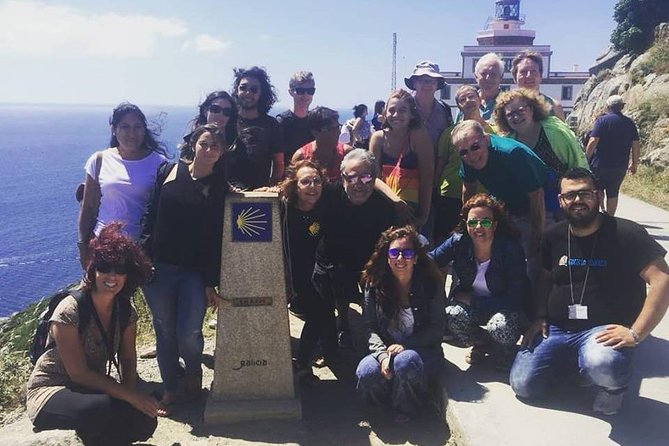
Cape Finisterre is the point many people have been waiting for. The lighthouse marks Kilometer 0 of the Camino to the coast, and the open views stretch across the Costa da Morte.
The stop lasts about 40 minutes. That gives you time to walk around the lighthouse area, take photographs, and look toward the sea. On a clear day, the scale of the coast is impressive. On a cloudy or foggy day, the cape takes on a more solemn mood, and visibility may be limited.
This is where the tour feels most connected to the Camino. If you have just completed a long pilgrimage, reaching the lighthouse by coach can still feel like a proper final chapter. You have arrived at the edge without asking your legs for several more days of walking.
The site can be exposed to Atlantic weather, so bring a layer even if Santiago is mild. The tour requires good weather, and poor conditions may lead to a new date or a full refund.
Lunch in Finisterre town
After the lighthouse, the group stops in Finisterre town for about 90 minutes. This is the longest free period of the day and your chance to eat lunch.
Lunch is not included. You choose from the restaurants in town, and the stop is long enough for a proper meal rather than a hurried snack. If you want to swim or spend time by the water, keep lunch modest. A full restaurant meal can use most of the available break.
This arrangement gives you some freedom, but it also means the final cost depends on what you order. Budget for lunch separately, and do not assume the tour price covers drinks or food.
Finisterre town is also a useful pause after the exposed cape. You can sit down, use local facilities, and recharge before the afternoon stops. Some people may find 90 minutes longer than needed if they are focused only on sightseeing, but most will appreciate the break during a nine-hour excursion.
Ézaro Waterfall brings a different kind of scenery
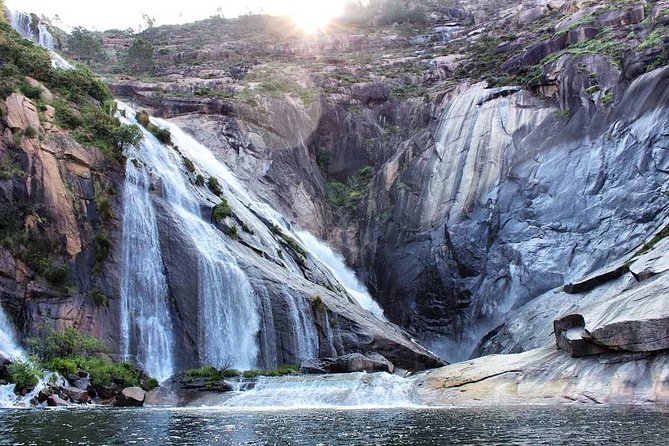
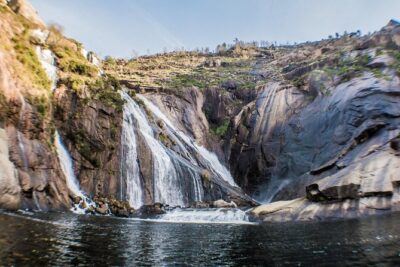
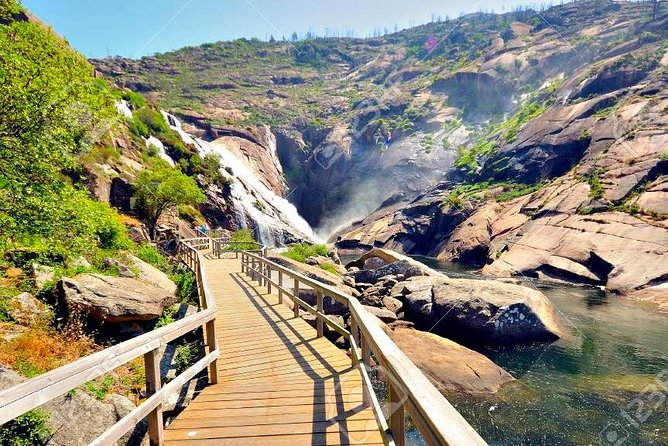
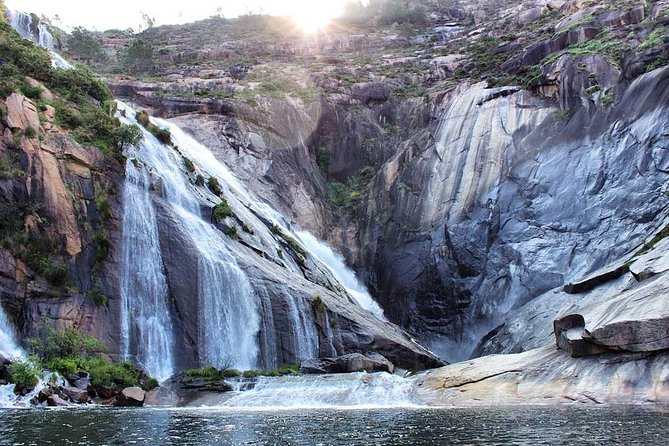
The next stop is the Ézaro Waterfall, with about 35 minutes to enjoy the site. The waterfall is presented as the only one in continental Europe that flows directly into the ocean. It lies beside Mount Pindo, a mountain tied to old Galician legends and pre-Roman traditions.
The appeal here is the combination of water, rock, and sea. After the broad views at Finisterre, Ézaro gives you a more contained natural setting. It also makes a good photo stop because the waterfall creates a clear focal point.
The visit is short, so you will not have time for an extended walk. The value comes from seeing a distinctive natural feature that would be difficult to add to a self-guided coastal drive without your own vehicle.
Carnota explains Galician rural life
The Horreo de Carnota is a quick 15-minute stop, but it adds important cultural context. An hórreo is a traditional Galician granary, raised above the ground to protect stored grain. Carnota’s example is famous for its length and is described as the longest granary in Galicia.
The guide explains how this type of construction worked and why it mattered in rural life. The stop is not about entering a major museum or spending an hour in a village. It is a compact lesson in local architecture.
Fifteen minutes is enough for an explanation and photographs. It can feel brief, especially after the larger coastal stops, but the visit helps you understand that Galicia is more than pilgrimage routes and ocean views. The agricultural side of the region is part of the story too.
Muros closes the route with a quieter port
The final stop is Muros, a former port of Santiago during the Middle Ages. You have about 25 minutes to rest and look around the historic center before returning to Santiago.
Muros is a good closing stop because the pace slows down. After the lighthouse, waterfall, and repeated photo stops, you can wander through the old port area without needing a major activity. The time is limited, so you will only get a taste of the town rather than a full visit.
This is also the stop most likely to divide opinion. I appreciate the chance to see another Galician coastal town, but anyone wanting more time at Muxía or Finisterre may see Muros as an extra stop added to an already full day.
What the coach ride is really like
The vehicle is air-conditioned, clean, and described as comfortable by many people who have taken the trip. The guide provides information in English and Spanish, and an audio guide is included.
The language format matters. On some departures, the guide may speak Spanish for a few minutes and then give a shorter English version. The quality of spoken English can also vary by guide. Guides named in accounts of the tour include Ash, David, Noelle, Christian, Ana, and José, but you cannot assume a particular person will lead your departure.
The tour can hold up to 50 people, and busy days may involve three large coaches. This is not a quiet minibus outing or a private guide experience. The phrase private transportation means the group has its own tour vehicle instead of taking a public bus.
If you are tall, seat space may be a concern during the long stretches between stops. One account describes cramped seating and fixed seat backs. Water and use of the bathroom on the bus may also cost extra, so carry a small amount of money and consider using facilities during the town stop.
The guide’s role is important here. Strong guides such as Ash, David, Noelle, and Christian have been praised for humor, clear explanations, attention to questions, and good English. Still, a group of 50 requires firm timing. You need to return to the coach when asked, even if you would prefer another ten minutes at the viewpoint.
Who gets the most from this excursion
This tour suits you if you have limited time in Galicia and want to see the coast without renting a car. It is also a strong choice after completing the Camino, especially if your legs are tired but you still want to reach Muxía and Finisterre.
It works well for people who value context. The guide connects the bridge, sanctuary, lighthouse, granary, and port to Galicia’s pilgrimage, religious, rural, and maritime traditions. You get more than a driver pointing out viewpoints.
You should think twice if you dislike coaches, fixed schedules, or bilingual narration. The day is long, the group may be large, and some stops are short. Independent visitors who want to linger at one place would do better with a private tour, though that would cost more.
The excursion is also weather-sensitive. Rain does not necessarily ruin the day, but cloud and fog can reduce the views at Finisterre. If the operator cancels because of poor weather or too few bookings, you are offered another date or a full refund.
Is the $59.26 price worth it?
For the number of places covered, yes. Transportation alone would be useful, since the route links seven locations spread along the coast and inland roads. Add the bilingual guide, air-conditioning, and the convenience of returning to Santiago, and the price is strong.
The value is not in spending a long time at any one attraction. It comes from connecting many places efficiently. You pay for access, transport, explanations, and a broad view of the region in a single day.
Remember to add lunch and a tip to your budget. Also weigh the comfort issue. If a full coach and several hours of sitting sound tiring, the low price may not feel like a bargain. If you see the tour as a practical way to complete your Camino experience, it is easier to justify.
Should you book it?
Book this excursion if you want maximum coastal coverage in one day, especially after walking the Camino or during a short stay in Santiago. Finisterre and Muxía are the strongest reasons to go, while Ézaro, Carnota, Ponte Maceira, and Muros add useful variety.
Skip it if your priority is solitude, flexible timing, or a deep visit to one town. You will spend much of the day on a coach, and the group format requires patience.
For most people with one free day, the balance is favorable. The tour has a 4.8 rating from 1,367 reviews and is recommended by 96 percent of people who booked it, which fits the experience’s main strength: it is an efficient, scenic, and well-priced way to reach the end of the world without walking there.
FAQ
How long is the Finisterre and Muxía tour?
The excursion lasts approximately 9 hours and 15 minutes. It starts in the morning and returns to the meeting point in Santiago de Compostela.
Where does the tour start?
The default meeting point is the Galicia Travels office at Rúa das Casas Reais 31 in Santiago de Compostela. The first listed pickup is at 8:45 a.m.
Are other pickup points available?
Yes. Pickup is also listed at the Chapel of the Pillar on Avenida de Xoán Carlos I at 9:00 a.m., and in front of the Exe Peregrino Hotel on Avenida de Rosalia de Castro at 9:05 a.m.
Is lunch included?
No. Lunch is not included. You have about 90 minutes in Finisterre town to choose and pay for a meal at a local restaurant.
Is this a private tour?
No. The transportation is private for the tour group, but the excursion is not a private experience. It can include up to 50 people and may use several large coaches on busy days.
Is the tour offered in English?
Yes. The tour is offered in English, and the guide provides information in English and Spanish. An audio guide is also included.
What places does the tour visit?
The route includes Ponte Maceira, the Santuario da Virxe da Barca in Muxía, Cape Finisterre, Finisterre town, Ézaro Waterfall, the Hórreo de Carnota, and Muros.
Can I cancel for a refund?
You can cancel at least 24 hours before the experience starts for a full refund. Changes or cancellations made less than 24 hours before departure are not accepted for a refund.
Just added in Spain
- Bizkaia Bridge, Gaztelugatxe, Bermeo and Gernika from Bilbao★ 4.5 · 299 reviews
- Benalmadena: City Sightseeing Hop-On Hop-Off Bus Tour★ 3.5 · 379 reviews
- Welcome to Barcelona: Private Tour with a Local★ 4.6 · 200 reviews
- Barcelona: White Rabbit Catalonia’s Top Immersive Experience★ 4.7 · 359 reviews
- Bean to Bar Chocolate Workshop in Barcelona★ 5.0 · 172 reviews
- Barcelona: Welcome to Barcelona Segway Tour★ 4.9 · 153 reviews
- Barcelona: Walking tour with Montjuic Castle & Cable Car★ 4.7 · 832 reviews
- Barcelona: Helicopter Flight with Optional Yacht Cruise★ 4.7 · 224 reviews
Tours in Santiago De Compostela, compared.
Santiago: Cathedral & Museum Tour + Pórtico of Glory Option
Read our review →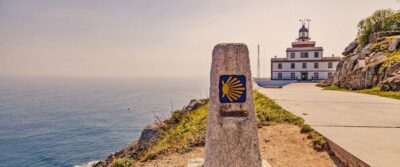
From Santiago: Finisterre, Muxia & Costa da Morte Excursion
Read our review →