
Reviewed · MUSEUMS
Malaga: Tour of Malagueta Bullring & Immersive Exhibition
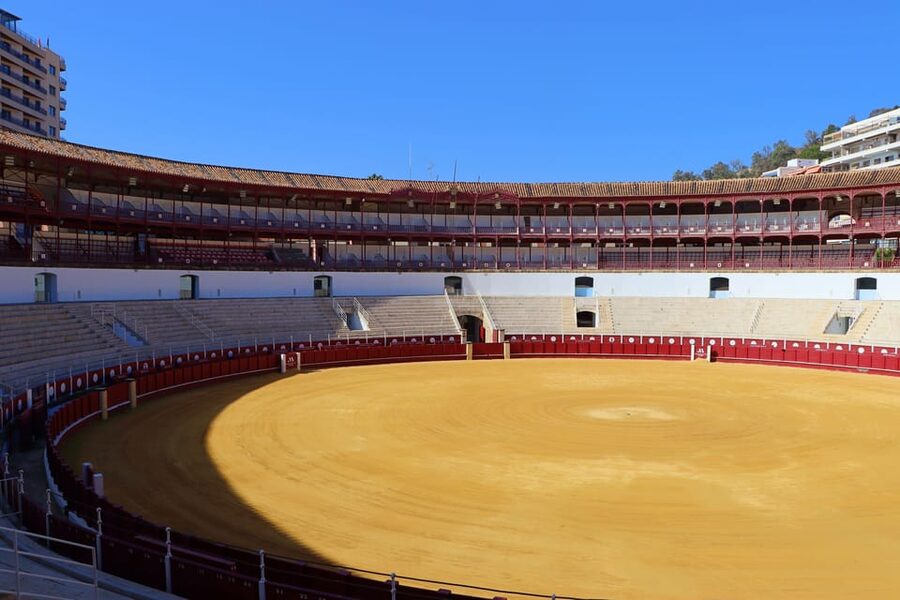
The best part of this visit is that you do not simply look at the Malagueta Bullring from the outside. You can step onto the arena floor, pass through working parts of the building, and see places such as the chapel, infirmary, and Gate of Triumph. The audio guide fills in what you are seeing, while virtual reality and projected scenes bring the spectacle to life.
I like the freedom to move at your own pace, and I like the mix of old objects with modern games and video. At $16 per person, this is a fair-value cultural stop, especially if you want to understand bullfighting rather than attend a live event. The main consideration is that concert setups can partly block the ring, and the exit signage may not be as clear as the rest of the visit.
Key points to know before you go
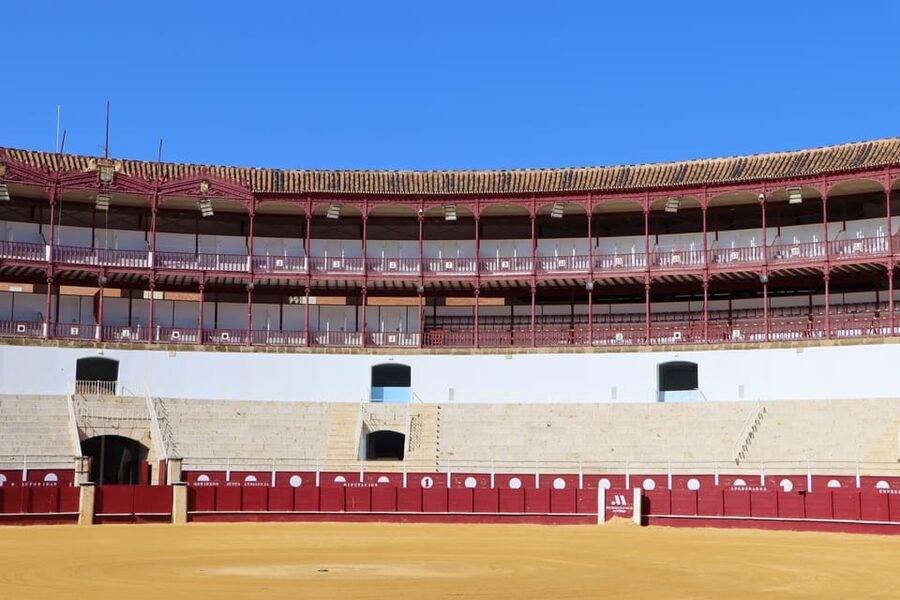
- Step onto the arena floor: You get closer to the bullring than a standard exterior photo stop allows.
- Explore beyond the seats: The route includes the Gate of Triumph, chapel, infirmary, ring, and other less visible areas.
- Listen in six languages: The audio guide is available in Spanish, English, French, German, Italian, and Russian.
- Try the modern exhibits: Virtual reality, projected videos, sensory effects, and a bullfighting simulator add an interactive layer.
- Allow for changing arena views: Concert equipment may remain in place and affect how much of the ring you can see.
- Use the correct entrance: Go to Calle Maestranza, door 8, rather than waiting at another part of the bullring.
Entering the Malagueta through Calle Maestranza
Your first practical task is finding the right door. The entrance is on Calle Maestranza, at door 8 of the bullring. Arriving at the correct spot matters, since the building has several visible access points and the tour does not begin with a street-side guide gathering everyone together.
The doors may open at the stated starting time rather than well before it. One morning, access began exactly at 10 a.m., so do not be alarmed if you arrive a little early and find the entrance closed. Once inside, you receive the audio guide and can begin the route.
This is a self-paced visit rather than a traditional walking tour led by a person. That has two clear benefits. You are not tied to a group, and you can stay longer at an object, video, or viewpoint that catches your attention. Families can also move at different speeds, though younger children may spend more time with the games than with the historical displays.
The tradeoff is that you must create your own rhythm. If you prefer a guide who explains every room and answers questions as you go, this format may feel less personal. The audio guide supplies structure, but no named live guide is provided for the full route.
A few more things to do in Malaga worth a look
- Malaga: Picasso Museum Guided Tour with Skip-the-Line Ticket
★ 4.8 · 485 reviews - Málaga: Carmen Thyssen Museum Ticket
★ 4.6 · 245 reviews - Málaga: Picasso Birthplace Museum Ticket & City Audio Guide
★ 4.1 · 158 reviews
Standing on the sand inside the arena
The arena floor is the emotional center of the visit. From the seats, a bullring can seem like a grand architectural circle. From the sand, its proportions change. You can look up at the tiers, imagine the movement across the ring, and understand why the Gate of Triumph carries such importance in bullfighting tradition.
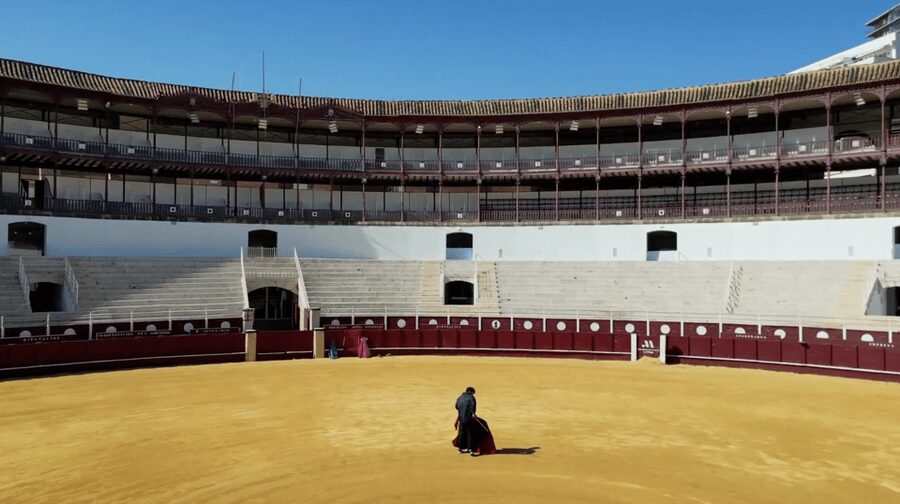
This is also the place for photographs, although flash photography is not allowed. You may get the chance to handle or try the fighting drapes, an especially useful feature if you want more than a passive museum visit. The audio guide explains what the contest involves, so you can connect the physical space with the roles, rituals, and movements associated with a bullfight.
Sound plays a major part here. Recorded effects accompany parts of the route and can make the arena feel active even when no event is taking place. The effect is theatrical, but it helps explain the atmosphere that a quiet, empty ring cannot provide on its own.
Your view may not always be perfect. The bullring hosts other events, including a summer concert series, and stage equipment may still be in the arena or under removal after a concert. That can limit the full sweep of the ring. If the building is your main reason for booking, this is worth keeping in mind.
The Gate of Triumph, chapel, and infirmary
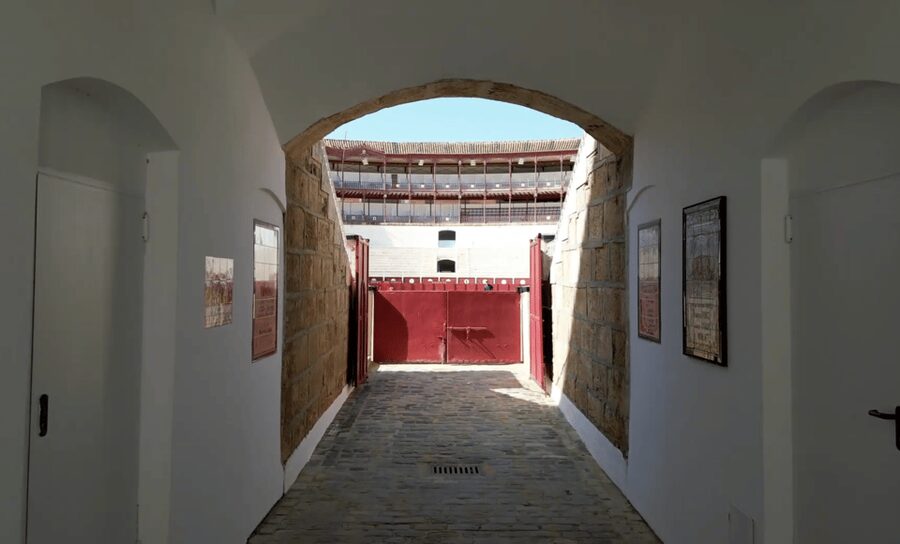
The route gives you access to more than the public seating and central ring. The Gate of Triumph is one of the most meaningful stops because it connects the physical architecture with the ceremony of a successful performance. The audio guide helps explain why this gateway matters within the bullfighting tradition.
The chapel offers a different mood. It is a quiet, private space within a venue often associated with noise, crowds, and spectacle. Seeing it makes the building feel less like an arena designed only for entertainment and more like a working cultural institution with its own customs.
The infirmary is another revealing stop. You may not spend long there, but it shows the risks behind the pageantry. This is one reason I prefer the route through the less public areas. You gain a fuller picture of bullfighting, not just the colorful side presented in posters and performances.
The tour also points out places that are easy to miss on a normal visit. You can take your time at each stop and replay information as needed. That flexibility is useful if you are unfamiliar with Spanish bullfighting terms or if one member of your group wants more explanation than another.
The audio guide and the history of bullfighting
The audio guide is available in six languages: Spanish, English, French, German, Italian, and Russian. It is operated with a handheld device that you point toward marked stops, then listen to the relevant explanation.
This setup is simple, but it gives you control. You can pause at an exhibit, move on when a section feels familiar, or spend extra time with an object that raises questions. I would choose this format over a rushed group explanation if I wanted to study the displays carefully.
The content covers the history of bullfighting and explains what happens during the contest. The permanent exhibition adds physical evidence to the narration, with historical objects and relics connected to the tradition. These items help ground the subject in real practice rather than leaving it as a series of dramatic images.
The visit presents bullfighting as part of Spain’s cultural life, but it is still useful to keep your own perspective. You can appreciate the architecture, rituals, costumes, tools, and social history without needing to approve of every part of the tradition. That makes this a suitable stop for people who are curious about Spain’s past and present, including those who do not plan to attend a live bullfight.
Same base, a different kind of day out:
- Málaga: Alcazaba and Roman Theatre Guided Tour With Entry
★ 4.8 · 5,792 reviews - Malaga: Teatro Flamenco Malaga Live Flamenco Show
★ 4.7 · 4,254 reviews - From Málaga: Ronda+Setenil de las Bodegas with Little Train
★ 4.6 · 4,115 reviews - From Malaga: Granada Full-Day Trip with Alhambra
★ 4.6 · 3,235 reviews
Inside the permanent exhibition center
The exhibition center is the most explanatory part of the visit. The ring gives you scale and atmosphere; the displays provide context. Videos expand on the material, and the audio guide helps tie the objects together.
You may see relics and objects that have witnessed generations of bullfighting history. The exact appeal will depend on your interests. If you enjoy material culture, you will likely spend time studying how equipment, clothing, and ceremonial items relate to the event. If you are mainly interested in architecture, the exhibition may feel slower than the arena section.
The presentation is not limited to glass cases and written labels. Projected videos and other visual elements make the exhibition easier to follow, especially for children or visitors who do not already know the sequence of a bullfight. The modern presentation also keeps the visit from feeling like a static museum tour.
One small disappointment is the lack of an obvious souvenir option for some visitors. A poster or similar bullfighting item would make a natural keepsake, but you should not count on finding one as part of this activity.
Virtual reality, projections, and the simulator
The modern technology is what separates this visit from a basic bullring admission. Virtual reality experiences place you closer to the action, while projected scenes add sound and movement to the building. The bullfighting simulator gives you a chance to try the role of a matador in a playful, low-pressure way.
The VR section is particularly useful for families and anyone who wants an activity rather than a purely historical visit. You can also take pictures in the middle of the arena during the experience, adding a memorable visual record of the stop.
The technology does not replace the building. It works best after you have seen the arena, chapel, and exhibition, because then the virtual scenes have a real setting to build on. I would treat the digital features as an extra layer, not the sole reason to pay admission.
There is one point to check before booking if the VR simulator is your top priority. The advertised program includes virtual reality and a bullfighting game, but one visit found that a virtual bullfighting feature was unavailable. Equipment and individual stations can change, so keep your expectations flexible.
How long should you allow?
The activity is valid for one day, with starting times subject to availability, but no fixed visit length is given. Since the tour is self-guided, your timing depends on how closely you listen and how long you spend with the interactive exhibits.
I would avoid squeezing it into a rushed gap between major appointments. You need time to find door 8, collect the audio guide, walk through the arena, listen at the main stops, and try the digital features. The freedom to move at your own pace is one of the best parts of the experience, and rushing would cancel out that benefit.
Comfortable shoes are a sensible choice. You will move through several parts of a large building, and the route includes stairs. The exit has been confusing for some people, and a stair descent was noted as having incomplete handrails. Wheelchair access is listed, but anyone who needs specific support should consider the route and ask staff on arrival.
Is $16 a good value?
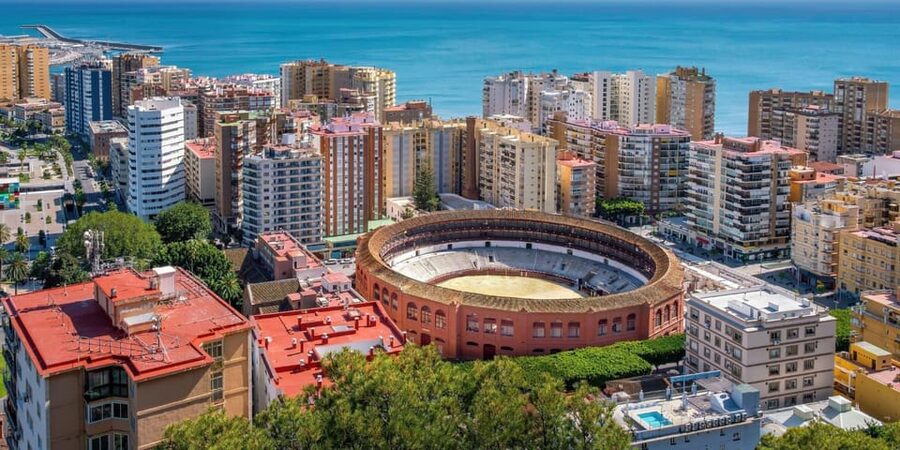
At $16, I consider this a reasonably priced Malaga activity. You are paying for more than a view from the stands: admission includes the ring, Gate of Triumph, chapel, infirmary, permanent exhibition, audio guide, VR experiences, simulator, and sensory features.
The value is strongest if you are interested in culture, architecture, or Spanish traditions. A quick photo outside the bullring costs nothing, but it tells you little about how the building functions or what the rituals mean. This ticket gives you access to the parts that make the place more than a recognizable facade.
The price is less compelling if you have no interest in bullfighting and mainly want a conventional museum. The subject shapes the entire visit, even though the presentation is modern. You should also remember that transportation, meals, and drinks are not included.
The audio guide in six languages adds useful value, particularly for independent visitors. You do not need to pay extra for a separate language option, and you can proceed at a comfortable speed. Free cancellation up to 24 hours before the visit and the reserve-now, pay-later option also make it easier to fit into a changing Malaga schedule.
Who will enjoy this Malaga bullring visit?
I would recommend it to first-time visitors who want cultural background without committing to a live bullfight. It suits couples, families, history fans, and anyone drawn to unusual buildings and local traditions.
Children may enjoy the simulator, VR, sound effects, and chance to stand in the arena. The exhibition also gives them a visual way to learn, rather than relying only on long written descriptions. Parents should be ready for some parts of the subject to be serious, especially when the infirmary and risks of the spectacle are explained.
You will get the most from it if you use the audio guide instead of simply walking through for photographs. Listen at the Gate of Triumph, chapel, and infirmary, then give yourself time with the videos and objects. The technology is fun, but the building and its rituals are the real reason to visit.
Should you book the Malagueta Bullring tour?
Book it if you want a flexible, moderately priced introduction to bullfighting culture and Malaga architecture. The chance to stand on the arena floor, visit the chapel and infirmary, and explore at your own pace gives the tour more substance than a simple stadium entry.
Think twice if you need a live guide, a perfectly unobstructed ring, or guaranteed access to every advertised digital feature. Concert equipment can affect the view, and at least one visit found a virtual feature unavailable. For most culturally curious visitors, though, the combination of historic spaces, six-language audio, and interactive exhibits makes this a useful stop in Malaga.
FAQ
Where is the entrance to the Malagueta Bullring tour?
The entrance is on Calle Maestranza, at door 8 of the bullring.
What languages are available for the audio guide?
The audio guide is available in Spanish, English, French, German, Italian, and Russian.
What areas of the bullring can I visit?
Admission includes the arena, Gate of Triumph, chapel, infirmary, and other areas of the bullring included in the route.
Are virtual reality experiences included?
Yes. Virtual reality experiences and a bullfighting simulator are included, along with immersive videos, projections, and sensory features. Availability of individual digital features may vary.
Is the tour wheelchair accessible?
The activity is listed as wheelchair accessible. The route also includes a stair descent at the exit, so you should discuss any specific access needs with staff on arrival.
Can I take photographs inside?
Photography is allowed, but flash photography is not permitted.
What should I bring?
Bring comfortable shoes, since the visit covers several areas of the bullring.
Can I cancel the booking?
You can cancel up to 24 hours in advance for a full refund. A reserve-now, pay-later option is also available.
Just added in Malaga
- Tour to Gibralfaro★ 4.7 · 182 reviews
- Málaga: Picasso Birthplace Museum Ticket & City Audio Guide★ 4.1 · 158 reviews
- From Costa del Sol: Mijas, Marbella and Puerto Banús Tour★ 4.3 · 234 reviews
- Málaga: Traditional Andalusian Tapas and Wine Tour★ 4.7 · 167 reviews
- Malaga: Wine and Tapas Tour with Tastings and Drinks★ 4.8 · 217 reviews
- Malaga: Tuk tuk tour★ 4.8 · 402 reviews
- Malaga: The Ultimate Tapas Workshop with Market Visit★ 4.9 · 108 reviews
- Malaga: Tapas Tasting Tour★ 4.9 · 133 reviews
Museums, compared.


FC Barcelona Museum “Barça Immersive Tour” Ticket
Read our review →

Park Güell and Gaudí House Museum Entry Ticket
Read our review →
Puro Flamenco Show with Optional Museum Ticket
Read our review →
Girona & Dali Museum Small Group Tour with Pick-up from Barcelona
Read our review →
Oceanogràfic, Hemisfèric & Science Museum Combo
Read our review →Browse the lists this tour appears in