
Reviewed · TOURS IN CORDOBA
Córdoba: Medina Azahara 3-Hour Guided Tour
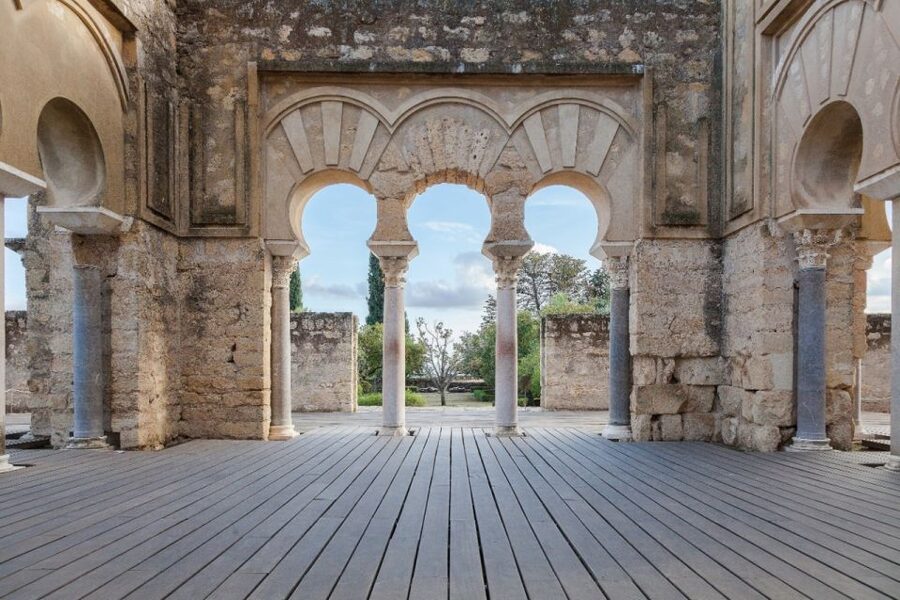
Medina Azahara is the kind of place that rewards a guide. These hillside ruins once formed a palace-city for the Umayyad caliphate, and the three-hour visit helps you picture how Córdoba’s rulers received guests, managed court life, and displayed power. I especially like the archaeologist guide and the chance to see the House of Ja’far, Pórtico, and exterior of the Salón Rico in one well-planned visit.
I also like the choice between a Córdoba shuttle and making your own way to the site, which sits 8 kilometers outside the city. The main drawback is that the tour is conducted in Spanish, and the meeting time can change, so confirm your arrangements before setting out.
Key points to know before booking
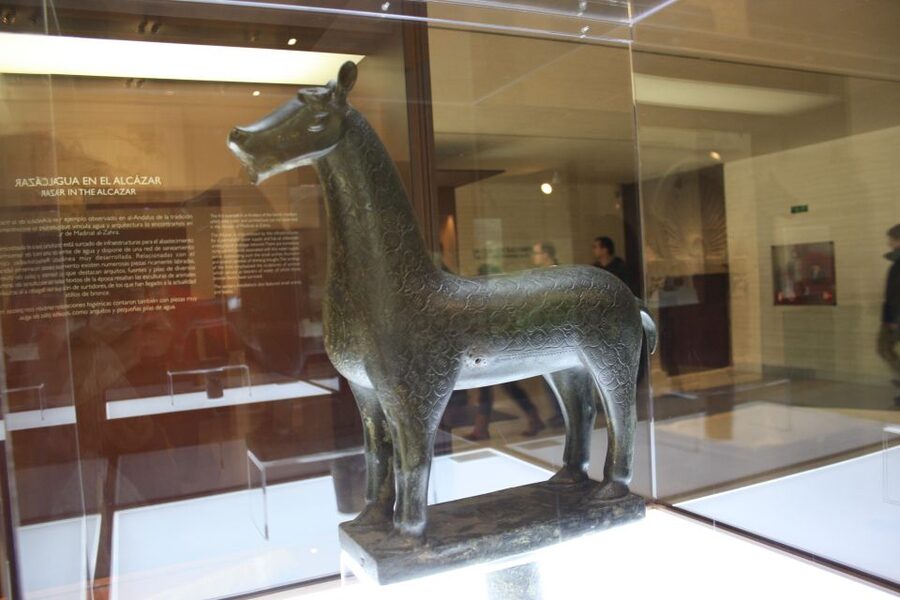
- The palace-city sits outside Córdoba: Medina Azahara is about 8 kilometers from the center, so transport matters.
- An archaeology specialist leads the visit: The guide explains the site through its buildings, rulers, and excavated remains.
- The House of Ja’far is a major stop: This important residence was built over the remains of three earlier houses.
- The Salón Rico is viewed from outside: You see the place where Abd-ar-Rahman III received guests, but this tour does not promise an interior visit.
- The tour lasts three hours: That includes the journey from Córdoba if you choose the shuttle option.
- The experience is in Spanish: Headsets may help you follow the guide, and a 3D video can provide useful visual context.
Why Medina Azahara deserves three hours
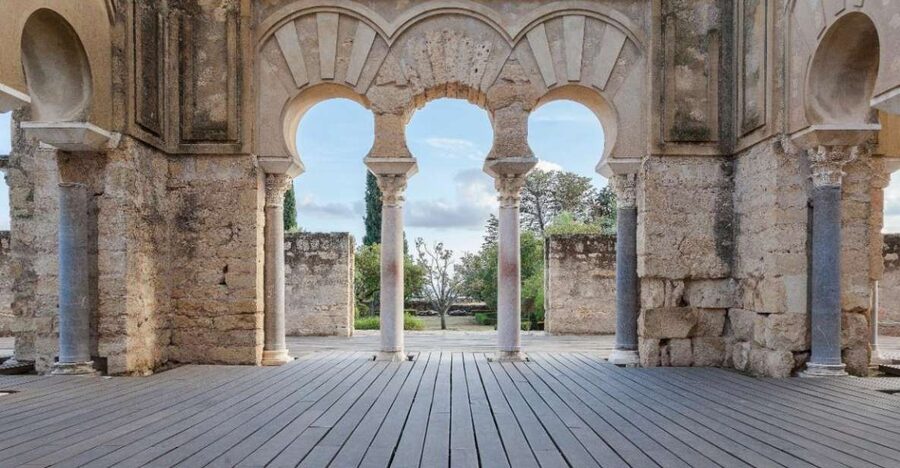
Medina Azahara is not simply a pile of scattered stones outside Córdoba. It was a planned palace-city connected with the Umayyad caliphate and the first Umayyad caliph of Al-Andalus, Abd-ar-Rahman III, also known as Abderraman III.
The scale is part of the story. You move through a site that once had formal entrances, residences, reception spaces, and public areas arranged to reflect rank and authority. The surviving walls and foundations require some imagination, but a good guide gives those remains a clear purpose.
That is where this tour earns its price. Instead of walking from one ruin to the next with only a map, you hear why a building mattered and how it fitted into the court. An archaeologist guide can point out changes in construction, earlier structures below later buildings, and the difference between a private residence and an official reception space.
I would not book this as a quick photo stop. Give the site the full three hours, especially if you want the political story behind the stones. The visit is about understanding how the caliph used architecture to show order, wealth, and control.
A few more things to do in Cordoba worth a look
- Ibiza Ocean Club Boat Party with 3 Hours Premium Drinks and DJ
★ 4.5 · 1,473 reviews - Barcelona 3-hour Bike or E-Bike Tour: Highlights and Hidden Gems
★ 5.0 · 1,429 reviews - Best of Madrid: 3-Hour Guided Bike Tour in Small Groups
★ 4.8 · 1,417 reviews
Getting there from Córdoba
You can book the tour with roundtrip transport from Córdoba or choose the option without transport. The shuttle journey takes about 15 minutes by air-conditioned bus or van, and the service brings you back to one of two Córdoba drop-off points: Ctra. Palma del Río, 4P, or Glorieta Cruz Roja.
The transport option is the easier choice if you are staying in Córdoba without a car. It removes the need to work out your own route to a site 8 kilometers away, and it keeps the visit tied to one schedule. For $19 per person, the combination of entry, guide, and shuttle can be good value if you would otherwise need to arrange transport separately.
The exact meeting point depends on the option you book. The listed Córdoba locations are Glorieta Cruz Roja and Ctra. Palma del Río, 4P, so check your confirmation closely rather than assuming the bus leaves from your hotel or from the historic center.
If you choose the no-transport option, you must drive yourself to the Medina Visitor Center. The guide meets you there, not in Córdoba. This can suit you if you already have a car and want more control over your timing, but it is a poor choice if you have no vehicle and have not arranged the tourist bus in advance.
The Visitor Center sets the scene
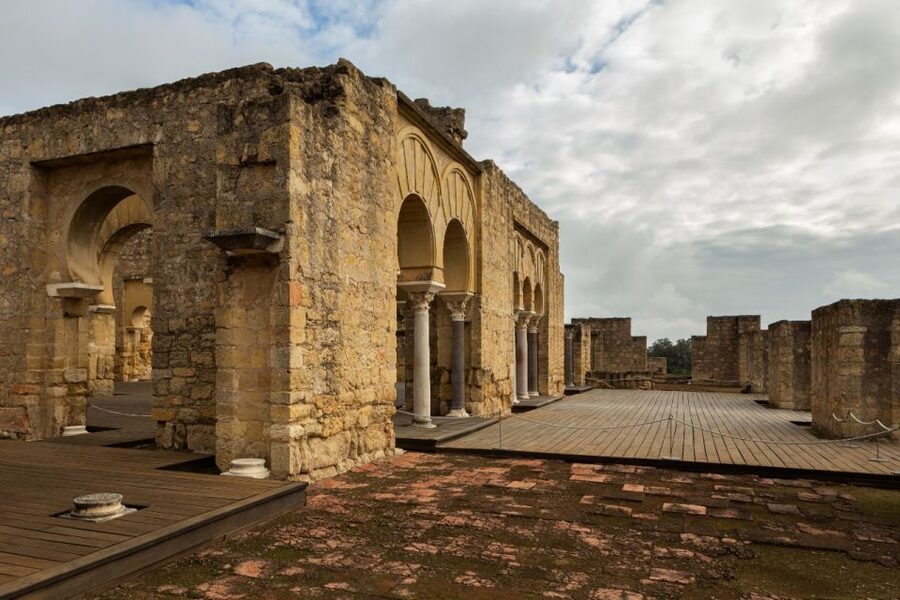
The visit includes a stop at the Medina Azahara Visitor Center before the main ruins. This is useful because the palace-city is easier to understand when you first see how the site is organized and how much has been excavated.
A 3D video may be shown at the start of the visit. This is one of the most practical parts of the experience because it can help you picture the original buildings before you walk among their remains. The ruins make more sense when you have already seen how the complex may have looked as a working royal center.
The available feedback also points to headsets as a helpful feature. With a headset, you can hear the guide while looking around instead of standing shoulder to shoulder near the speaker. This matters at an open archaeological site, where people naturally spread out to examine walls and architectural details.
Do not expect a museum visit packed with refreshments or shopping. Food and drink are not included, so plan that part yourself. The tour is focused on the site and its interpretation.
Walking through the palace-city
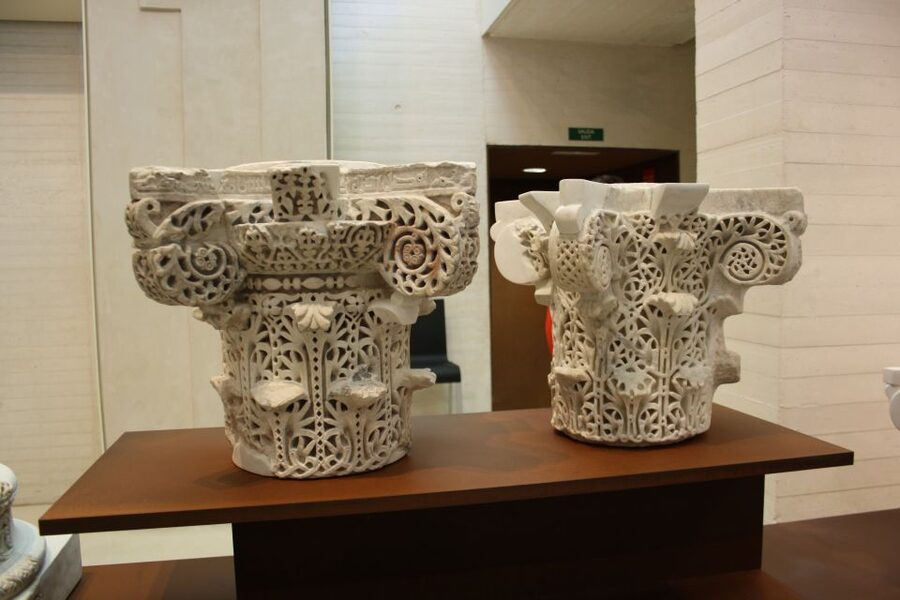
The central part of the tour takes you into Medina Azahara itself. The guide covers the most important surviving areas, with attention to both the buildings and the people who used them.
The setting gives you a sense of why this location was chosen, but the real interest is architectural. You will see foundations, walls, doorways, and fragments that reveal the plan of a formal court complex. Some sections are easy to read, while others need explanation. This is not a place where every ruin announces its original purpose.
The Spanish-speaking guide links the physical remains to the rule of Abd-ar-Rahman III. You learn about the first Umayyad caliph of Al-Andalus and the role of Medina Azahara in the wider story of Córdoba’s caliphate.
A three-hour schedule gives the guide time to explain rather than rush you past each stop. Still, the precise balance between walking, explanation, and time at individual buildings can depend on the group and guide. If you prefer to linger over every carved fragment, a guided group may feel more structured than an independent visit.
Same base, a different kind of day out:
- Córdoba: Skip-the-Ticket-Line Mosque-Cathedral Guided Tour
★ 4.6 · 9,634 reviews - Cordoba Mosque-Cathedral: Skip-the-Line Guided Tour
★ 4.7 · 6,610 reviews - Córdoba: Jewish Quarter, Mosque, and Alcázar Tour
★ 4.7 · 4,279 reviews - Cordoba: Equestrian Show General Entry
★ 4.5 · 2,333 reviews
The House of Ja’far reveals layers of construction
The House of Ja’far is one of the clearest reasons to take the guided tour. It was built over the site of three earlier houses, giving the building an added archaeological interest.
This detail shows that Medina Azahara was not created in one simple burst with every structure untouched afterward. Buildings changed, earlier spaces were replaced, and the site developed as court needs changed. The House of Ja’far lets you see that process in a concrete way.
Your guide can help separate the building’s plan from the remains of what came before it. Without that explanation, the overlapping walls may look confusing. With it, you begin to read the site as a record of construction and redevelopment.
This is the sort of detail I value on an archaeological tour. It moves beyond the broad claim that the site was once grand and shows you how archaeologists work out what happened from the remains.
The Pórtico gives you a sense of ceremony
The remains of the Pórtico de Medina Azahara form another important stop. A portico is not just a decorative walkway in this setting. It helped shape how people approached the palace and how court ceremony unfolded.
The surviving remains do not recreate the original experience on their own, but the guide can explain the portico’s place within the complex. Look for the relationship between open spaces, entrances, and the formal movement toward the palace areas.
This is a good point in the tour to pay attention to scale and alignment. The building fragments may seem modest compared with the original structure, yet their position tells you that arrival and presentation mattered. A caliphate palace was designed to make power visible before a visitor even reached the main reception room.
The Salón Rico is an exterior visit
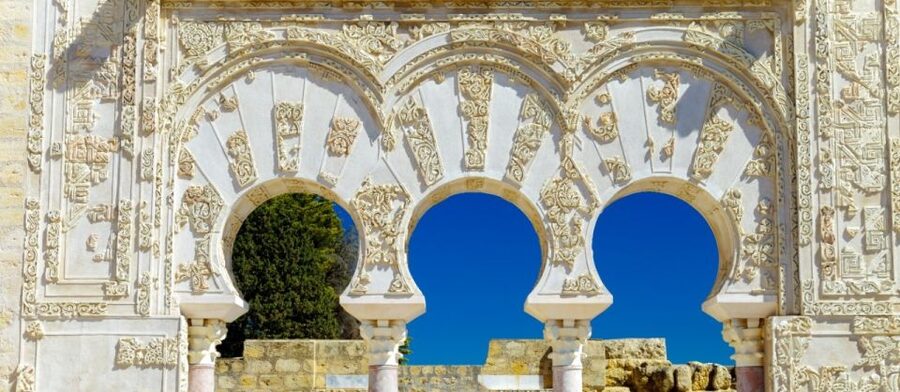
The Salón Rico was the reception hall where Abd-ar-Rahman III would receive guests. It is among the most meaningful places on the tour because it connects the architecture directly to the caliph’s public role.
One important limit is that this experience visits the exterior of the Salón Rico. Do not book it expecting a guaranteed interior tour. You can still learn why the hall mattered and how it functioned as a setting for formal audiences, but the outside view will not provide the same detail as an interior visit.
That distinction is worth checking before you book, especially if the Salón Rico is your main reason for coming. The tour remains worthwhile for the wider site, but the exact access offered here should match your expectations.
The guide’s explanation is especially valuable at this stop. A reception hall can look like another set of walls without context. Once you understand that this was where the caliph received important people, the building becomes part of the court’s political theater.
What the Spanish-speaking guide adds
The tour is conducted in Spanish, and the guide is an official specialist in archaeological history. If you understand Spanish, this is the main reason to choose the guided option instead of simply visiting on your own.
Named guides praised in the booking feedback include Sergio and Cristina. Sergio was described as offering interesting explanations, while Cristina was praised for being prepared, capable, and friendly. Guide assignments can change, so you should not assume one of them will lead your particular departure, but their names give you an idea of the standard people value here.
The guide’s role is not limited to reciting dates. The strongest parts of this visit are the links between building remains, caliphate politics, and the daily structure of a royal complex. You get help understanding why the House of Ja’far was rebuilt, why the Pórtico mattered, and why the Salón Rico carried such weight.
If you do not speak Spanish, the tour may be difficult to follow. The supplied information identifies Spanish as the tour language and does not promise English interpretation, translation, or written materials. In that case, check carefully before booking rather than relying on the presence of headsets.
Is $19 good value?
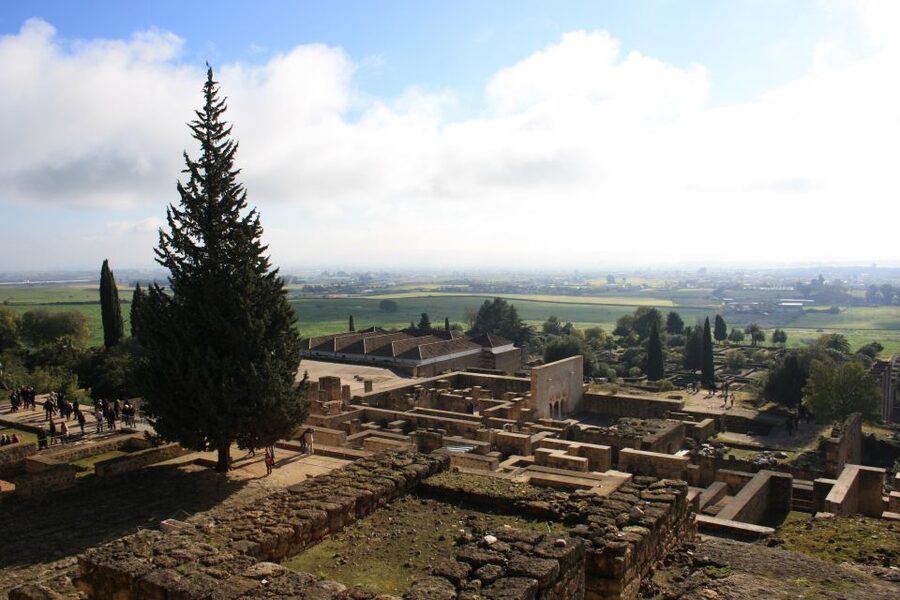
At $19 per person, the tour is reasonably priced for a three-hour visit that includes an entrance ticket, a live guide, and shuttle transport if you select that option.
The value is strongest when you need the Córdoba transfer. You get a planned ride to a site outside the city, a guide with archaeological training, and a structured route through the major areas. That can cost less in time and hassle than arranging each part separately.
The no-transport option may still suit you if you already have a car. In that case, you are paying mainly for the entry and guided interpretation. That is still useful at a site where many remains need explanation, but compare the price with any independent entry arrangement available for your dates.
The tour does not include food or drink. Bring what you need for the three-hour outing, and remember that large bags and luggage are not allowed. Pets are also not permitted.
Timing, changes, and practical planning
The activity lasts three hours, but the starting time depends on availability. Book a departure that gives you enough room around other Córdoba plans, since the tour includes transport if you choose the shuttle.
A change to the assigned time is possible, so check your messages and confirmation before you leave. If the revised time causes a problem, contact the provider promptly rather than waiting until the meeting point.
Bring a passport or identity card. This is a simple requirement, but it is easy to overlook when you are only making a short outing from Córdoba.
Wear practical footwear and prepare for an archaeological site rather than a polished indoor museum. The information provided does not specify the walking surface or accessibility arrangements, so contact the operator if you have mobility concerns or need a precise answer about the route.
Free cancellation is available up to 24 hours before the activity for a full refund, and you can reserve now and pay later. Those terms are useful if your Córdoba schedule is still taking shape, but always check the conditions attached to the exact option you select.
Who should book this Medina Azahara tour?
I would recommend it to you if you want the site explained in Spanish and prefer a clear route through the main buildings. It suits anyone interested in archaeology, the Umayyad caliphate, or the way royal architecture communicates power.
It is also a smart choice for a short Córdoba stay. The shuttle saves you from arranging the 8-kilometer trip, while the three-hour format leaves room for other plans in the city.
You may want a different arrangement if you need an English-language guide, want to explore at your own pace, or mainly want guaranteed access inside the Salón Rico. The tour covers the exterior of that hall, and the language is Spanish.
Should you book it?
Book this tour if you want practical transport, an archaeology-focused guide, and a firm introduction to Medina Azahara for $19. The House of Ja’far, Pórtico, and Salón Rico give the visit a strong route, while the 3D presentation and headsets can make the ruins easier to understand.
Skip it if Spanish is not suitable for you or if you want a flexible, self-guided visit with no fixed schedule. For most Spanish-speaking visitors who want the palace-city explained rather than merely photographed, this is a useful and fairly priced way to see one of Córdoba’s most important archaeological sites.
FAQ
Where is Medina Azahara located?
Medina Azahara is about 8 kilometers from Córdoba.
How long does the tour last?
The guided experience lasts three hours.
Is transportation from Córdoba included?
Transportation is included only if you choose the option with roundtrip shuttle service. The journey from Córdoba takes about 15 minutes.
Can I visit without transportation?
Yes. If you choose the option without transport, you must travel in your own car and meet the guide at the Medina Visitor Center. If you do not have a car, booking the tourist bus in advance is recommended.
What language is the tour conducted in?
The live tour guide speaks Spanish.
Which parts of Medina Azahara are visited?
The route includes the House of Ja’far, the remains of the Pórtico de Medina Azahara, and the exterior of the Salón Rico.
What should I bring and what is not allowed?
Bring a passport or identity card. Pets, luggage, and large bags are not allowed. Food and drink are not included.
Just added in Cordoba
- Alcazar of Cordoba Entry Ticket and Guided Tour★ 4.3 · 372 reviews
- Cordoba: Jewish Quarter and Mosque-Cathedral Guided Tour★ 4.6 · 996 reviews
- Córdoba: Guided Tour of Azahara Medina★ 4.5 · 1,042 reviews
- Córdoba: Mosque-Cathedral, Jewish Quarter and Alcázar Tour★ 4.7 · 1,426 reviews
- Mosque-Cathedral of Córdoba Guided Tour with Tickets★ 4.5 · 1,649 reviews
- Córdoba: Skip-the-Line Great Mosque-Cathedral History Tour★ 4.7 · 1,690 reviews
- Cordoba: Alcazar Guided Tour and Skip-the-Line Ticket★ 4.2 · 1,792 reviews
- Cordoba Mosque & Jewish Quarter Tour with Tickets★ 4.6 · 1,996 reviews
Tours in Cordoba, compared.
Skip-the-Ticket-Line Mosque-Cathedral Guided Tour
Read our review →

Cordoba Mosque & Jewish Quarter Tour with Tickets
Read our review →
Skip-the-Line Great Mosque-Cathedral History Tour
Read our review →
Mosque-Cathedral of Córdoba Guided Tour with Tickets
Read our review →Browse the lists this tour appears in