
Reviewed · TOURS IN CORDOBA
Medina Azahara Guided Tour
Medina Azahara is Córdoba’s great out-of-town surprise: a ruined 10th-century palace-city spread across the foothills, built as the seat of the Caliphate of Córdoba. The stones are quiet now, but with a good guide such as Maria, Alejandro, Joaquin, or Almudena, the broken walls begin to make sense.
I like the expert-led explanation and the simple transport choice. You can drive yourself and park free, or reserve the bus option from central Córdoba. I also like that the visit includes both the archaeological site and the interpretation center, rather than leaving you to guess what the stones once meant.
The main caution is the outdoor setting. Heat, wind, rain, and uneven walking can affect the experience, and some visitors found the transport arrangements unclear. Bring water, wear comfortable shoes, and confirm exactly where and when to meet.
Key points to know before you book
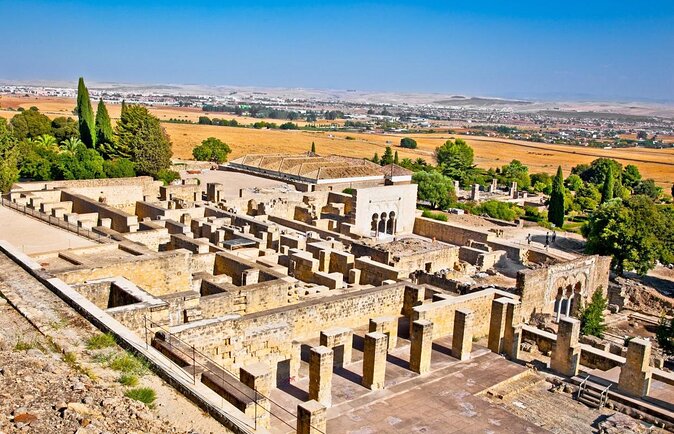
- A 10th-century palace-city outside Córdoba: Medina Azahara was built as the Caliphate of Córdoba’s seat of government.
- Strong guide-dependent experience: Maria, Alejandro, Joaquin, Ana, Almudena, Carlos, Fran, and other guides have been praised for clear explanations and lively storytelling.
- Two ways to arrive: Drive to the site with free parking, or reserve the bus option from Córdoba.
- Three hours well spent: The tour covers the ruins, the museum, and the shuttle ride between the museum and archaeological site.
- Outdoor conditions matter: October can still feel hot, while cold, wind, and rain can make the visit less pleasant.
- Small-group format: The maximum group size is 25 people, though the actual group may be smaller.
Why Medina Azahara deserves time beyond the Mezquita
Córdoba’s Mezquita usually gets the attention, and rightly so. But Medina Azahara gives you a different view of Muslim Córdoba. Instead of entering a finished monument in the city center, you walk through the remains of a planned palace-city that once served political and ceremonial purposes.
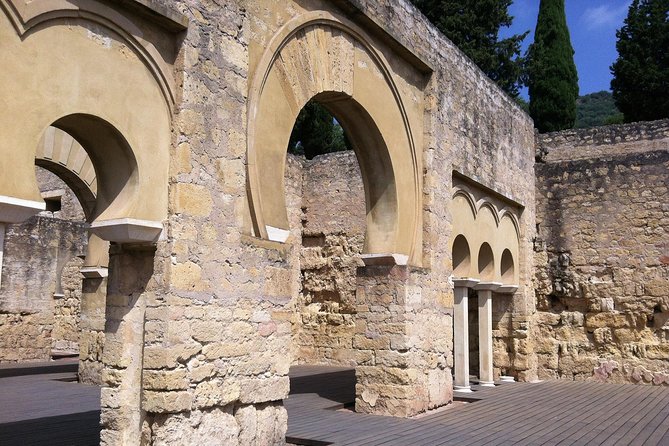
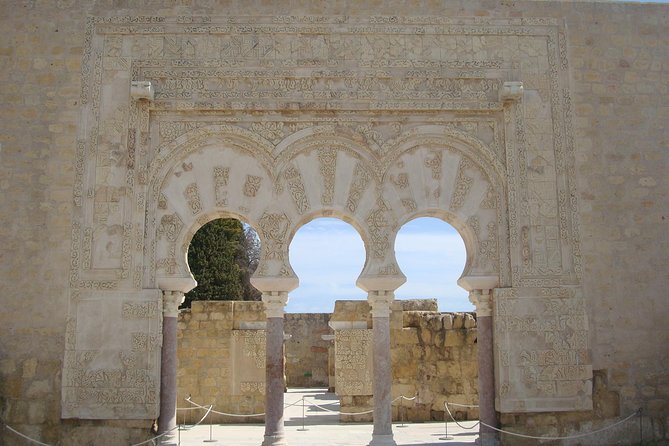
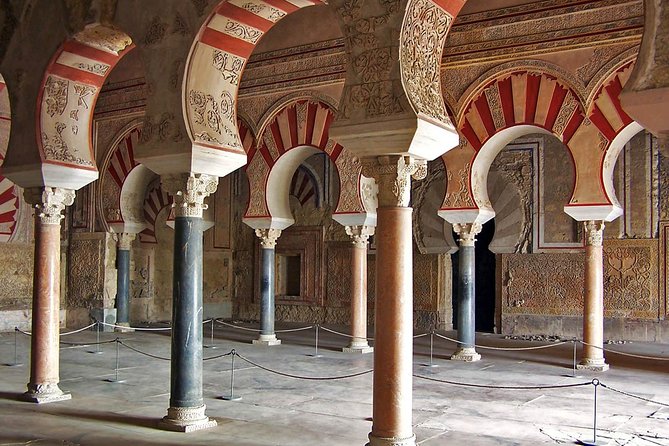
The site was built in the 10th century for the Caliphate of Córdoba. You will see surviving walls, terraces, arches, and fragments of the city’s former layout. Much of the work here is still archaeological. That means you should not expect a fully restored palace with intact rooms at every turn.
That unfinished quality is part of the appeal. You can see archaeology in progress and get a sense of how much remains to be uncovered. At the same time, it means the site requires explanation. Without a guide, several stretches of stone and low walls may be difficult to interpret.
This is where the tour earns its price. A strong guide connects the remains to the political structure, architecture, and daily purpose of the palace-city. Alejandro is especially praised for making the history easy to follow, while Maria is described as friendly, funny, and full of information. Joaquin has also been singled out for clear English and helpful explanations.
A few more things to do in Cordoba worth a look
- Córdoba: Skip-the-Ticket-Line Mosque-Cathedral Guided Tour
★ 4.6 · 9,634 reviews - Cordoba Mosque-Cathedral: Skip-the-Line Guided Tour
★ 4.7 · 6,610 reviews - Cordoba: Mosque-Cathedral E-Ticket with Audio Guide
★ 4.1 · 2,124 reviews
Getting there from Córdoba
You have two practical choices. You can drive to Medina Azahara in your own vehicle and use the free parking. This gives you more control over your arrival and avoids the uncertainty that can come with a group departure.
The other choice is the bus-included option. The meeting point is between the Hotel Eurostars Palace and the Red Cross Hospital, and you need a reservation for the bus. Maria has been praised for meeting the group punctually at the Córdoba stop, but clear instructions are important because the meeting area can feel uncertain if you do not know exactly where to look.
Once the bus reaches the museum area, a shuttle takes you from the interpretation center to the archaeological site. This arrangement matters because the museum and ruins are separate parts of the visit. You do not simply park beside the excavated palace and walk straight in.
If you choose the bus, arrive early and keep your confirmation available on your phone. The tour uses a mobile ticket, and the group needs to move together. One poor experience involved an old bus with a moldy smell, while other comments describe the transport as generally well organized. I would treat the bus as useful rather than luxurious.
Walking through the palace-city
The main visit takes place outdoors, so your first impression will depend partly on the weather. On a hot day, the stone and open terraces can make the site feel exposed. In colder or wet conditions, the same open setting can become uncomfortable.
Wear shoes you can walk in for several hours. The tour requires a moderate level of physical fitness, and comfortable footwear is more important here than stylish footwear. Take water, even outside the hottest months. One visit in October was still described as hot.
Your guide leads you through the remains and explains what the different areas once did. The value is not simply in pointing out old walls. It is in helping you understand the scale and purpose of the complex, and how the surviving pieces fit together.
The site is still being excavated and restored. You may see areas that feel more complete beside sections where only foundations remain. Some people will find this fascinating, especially if they enjoy archaeology. Others may wish for more intact architecture.
A guided visit helps bridge that gap. Ana has been praised for setting a good pace, while Fran made a very hot visit enjoyable by combining historical detail with an easy manner. Those comments point to an important truth: the guide’s approach can shape the whole outing.
The interpretation center adds useful context
After the ruins, the tour continues to the interpretation center. This is not a throwaway museum stop. It holds a collection of ancient objects recovered from the site and gives you a more controlled setting in which to understand what you have just seen.
The center is housed in a modern building, and one visit described it as beautifully designed. Its collection is small but useful. It helps connect the archaeological fragments outdoors with the people, objects, and working systems that once filled the palace-city.
The indoor portion also offers a break from sun, wind, or rain. It is especially useful if you find the open ruins hard to read. You can look at recovered objects and consider the site with more context instead of relying only on the guide’s spoken explanation.
One practical criticism concerned the condition of the bathrooms at the center. It is a minor issue, but worth knowing if you expect polished facilities throughout the visit.
Same base, a different kind of day out:
- Córdoba: Jewish Quarter, Mosque, and Alcázar Tour
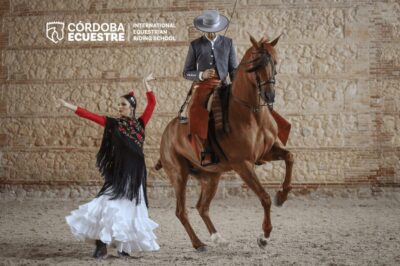
★ 4.7 · 4,279 reviews - Cordoba: Equestrian Show General Entry
★ 4.5 · 2,333 reviews - Cordoba Mosque & Jewish Quarter Tour with Tickets
★ 4.6 · 1,996 reviews - Cordoba: Alcazar Guided Tour and Skip-the-Line Ticket
★ 4.2 · 1,792 reviews
The guides make the biggest difference
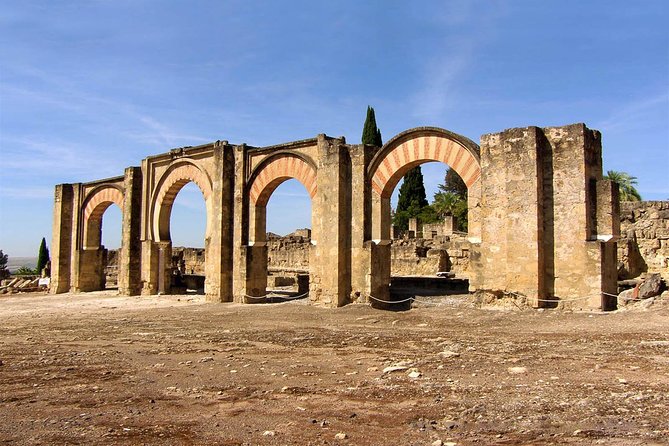
This tour is most successful when the guide is clear, organized, and comfortable speaking English. The named guides praised in the supplied comments include Maria, Alejandro, Joaquin, Almudena, Carlos, Fran, and Ana.
Maria receives repeated praise for her warmth, humor, and command of the subject. Alejandro is credited with making the three hours particularly interesting and with looking after the group carefully. Joaquin is described as easy to understand and generous with information.
Almudena is praised for bringing the site to life and explaining it thoroughly. Carlos made room for questions and helped the group feel at ease. Fran handled a very hot day well, and Ana was praised for her pace and clear presentation.
English pronunciation may vary from one guide to another. One person found Maria’s pronunciation difficult at times, though the visit remained enjoyable. Another found the tour too long because much of the information was given in Spanish. The tour is advertised in English and is described as monolingual, so confirm the language when booking if that point is important to you.
The guide’s role is not just historical. A good guide also helps with pace, meeting points, questions, and the transition between the bus, museum, shuttle, and ruins. That practical leadership matters because the logistics can otherwise feel less clear.
Is three hours the right length?
Three hours is enough for an introduction to Medina Azahara, the shuttle connections, and the interpretation center. It is a sensible length for a half-day addition to a Córdoba visit.
Several people found the time worthwhile, especially because the site would have been harder to understand alone. One person wanted an extra hour to wander independently, while another felt the tour was too long and could be shortened by an hour.
That difference comes down to how you like to travel. If you want a clear route and steady explanation, three hours should work well. If you prefer to linger over photographs, walk slowly, or study every excavated section, you may find the guided schedule a little tight.
You should also allow for the outdoor conditions. A hot day can make three hours feel longer, while a cool, pleasant day may leave you wishing for more time. The tour gives you a structured introduction, not unlimited independent exploration.
What the $30.25 price includes
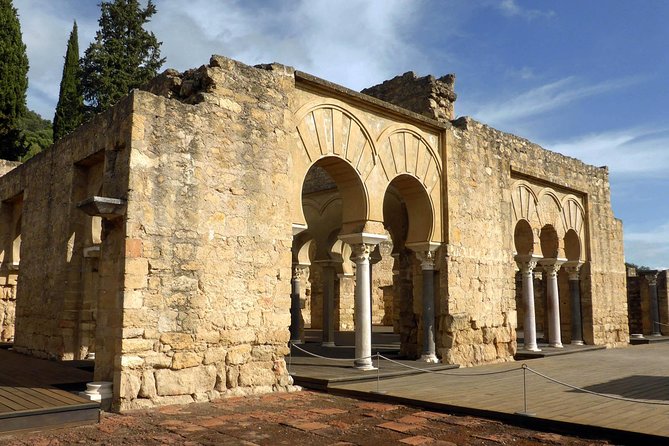
At $30.25 per person, the price is reasonable for a guided half-day outing if you value expert interpretation and do not want to organize the transport yourself. Admission is included, as is the shuttle from the museum to the archaeological site. The professional art historian guide is the main value.
The bus option adds convenience, especially if you are staying in Córdoba without a car. Driving yourself with free parking may be the better choice if you already have a vehicle or want more control over your timing.
The tour information also indicates that a drink and snack are included, but at least one person completed the tour without receiving them. I would not book this primarily for the refreshment. Bring your own water, and confirm the snack and drink arrangements before you go.
The group maximum is 25 people. That is large enough for a proper group tour but small enough to remain manageable if the guide uses an audio system well. One person specifically noted that the audio system worked effectively.
Who should book this tour
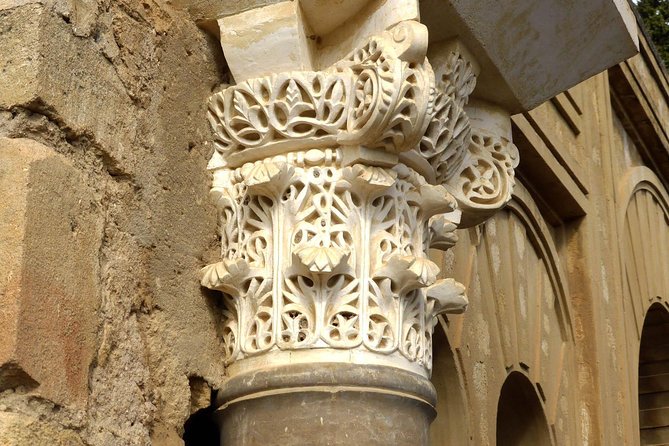
I would recommend it to anyone spending enough time in Córdoba to look beyond the Mezquita. It suits people interested in medieval Islamic history, archaeology, architecture, and the political story of the Iberian Peninsula.
It is also a good choice if you like your historic sites explained rather than simply photographed. The ruins can be difficult to read on your own, and the guides provide the structure that turns scattered foundations into a city.
Families and older visitors should consider the walking, weather, and moderate fitness requirement. The site is not described as inaccessible, and service animals are allowed, but the outdoor setting and uneven archaeological ground still call for sensible footwear.
You may want to skip it if your Córdoba schedule is extremely short, if rain or cold weather is expected, or if you strongly prefer long periods of independent wandering. The tour is not a polished palace visit. It is an archaeological site still being uncovered.
Small details that make the day easier
Bring water, a hat in warm weather, and comfortable shoes. Even October can be hot, and there is limited shelter once you are among the ruins.
If you take the bus, check the meeting point between the Hotel Eurostars Palace and the Red Cross Hospital carefully. Have your mobile ticket ready and arrive with time to spare.
If you drive, the parking is free. You still need to allow time to reach the museum and join the shuttle to the site.
The tour allows service animals and requires a moderate fitness level. Confirmation is provided at booking. Free cancellation is available until 24 hours before the experience begins, while changes or cancellations inside that period are not accepted.
Should you book the Medina Azahara tour?
Book it if you have three hours to spare and want Medina Azahara to make sense. The ruins alone may leave you guessing, but a strong guide can explain the palace-city’s purpose, point out important remains, and connect the outdoor site with the objects in the interpretation center.
I would choose the bus option if you want the simplest day from Córdoba, but I would confirm the meeting instructions first. Drive yourself if you have a car and prefer control over the start of the visit.
The best reason to go is the combination of an important archaeological site and guides such as Maria, Alejandro, Joaquin, Almudena, Carlos, Fran, and Ana, who have been praised for clear storytelling and personal care. The main reasons to hesitate are weather, occasional transport confusion, and the fact that the site is partly restored rather than fully intact.
For history-minded visitors, the price is fair and the outing adds a valuable second chapter to Córdoba. Just bring water, wear proper shoes, and approach Medina Azahara as a living archaeological project, not a finished palace.
FAQ
Where is Medina Azahara?
Medina Azahara is a short trip from Córdoba, Spain. The tour visits the archaeological site and its interpretation center.
How long does the tour last?
The experience lasts approximately three hours, including the guided visit and the shuttle between the museum area and archaeological site.
Is transportation from Córdoba included?
You can choose an option with bus transportation from Córdoba. The meeting point is between the Hotel Eurostars Palace and the Red Cross Hospital, and advance reservation is required.
Can I drive to Medina Azahara?
Yes. You can go directly to the settlement in your own vehicle, and free parking is available.
What does the tour include?
The tour includes admission, a professional art historian guide, and the shuttle bus from the museum to the archaeological site. The tour information also indicates a drink and snack, though you should confirm those arrangements before booking.
Is the tour offered in English?
The experience is offered in English and is described as a monolingual tour. English clarity may vary by guide, so confirm the language details if needed.
How large can the group be?
The maximum group size is 25 people. Some departures may have fewer participants.
What happens if I need to cancel?
You can cancel up to 24 hours before the start time for a full refund. Cancellations or changes made less than 24 hours before the start time are not accepted.
Just added in Cordoba
- Mosque-Cathedral, Alcazar & Jewish Quarter with Tickets★ 4.5 · 793 reviews
- Cordoba Mosque-Cathedral & City Private Tour★ 5.0 · 117 reviews
- Mosque-Cathedral of Córdoba Guided Tour with Priority Tickets★ 4.5 · 378 reviews
- Tour to the Mosque-Cathedral of Córdoba with admission included★ 5.0 · 103 reviews
- Cordoba Mosque and Jewish Quarter Guided Tour★ 4.5 · 452 reviews
- Cordoba Mosque & Jewish Quarter Guided Tour with tickets★ 4.5 · 335 reviews
- Visit in Spanish to the Cathedral Mosque. Does not include entrance ticket★ 5.0 · 165 reviews
- Private Visit Mosque-Cathedral, Jewish quarter, Alcazar and Synagogue★ 5.0 · 236 reviews
Tours in Cordoba, compared.
Skip-the-Ticket-Line Mosque-Cathedral Guided Tour
Read our review →
Cordoba Mosque & Jewish Quarter Tour with Tickets
Read our review →
Skip-the-Line Great Mosque-Cathedral History Tour
Read our review →
Mosque-Cathedral of Córdoba Guided Tour with Tickets
Read our review →Browse the lists this tour appears in