

Reviewed · MUSEUMS
Bilbao: San Mamés Museum and Stadium Tour
San Mamés gives you something many stadium tours miss: a real sense of the building at pitch level. You walk through the players’ tunnel, enter the home changing room, sit in the dugout, and visit the press room before exploring Athletic Club’s modern museum. I like the freedom to move at your own pace, and I like that the museum works for non-football fans as well as devoted supporters.
The main drawback is the phone-based audio guide. You must bring your own charged smartphone and headphones, and the audio setup can be confusing. Expect plenty of walking and stairs, too. Match days and special events can change access, so check the schedule before you set out.
Key points at a glance
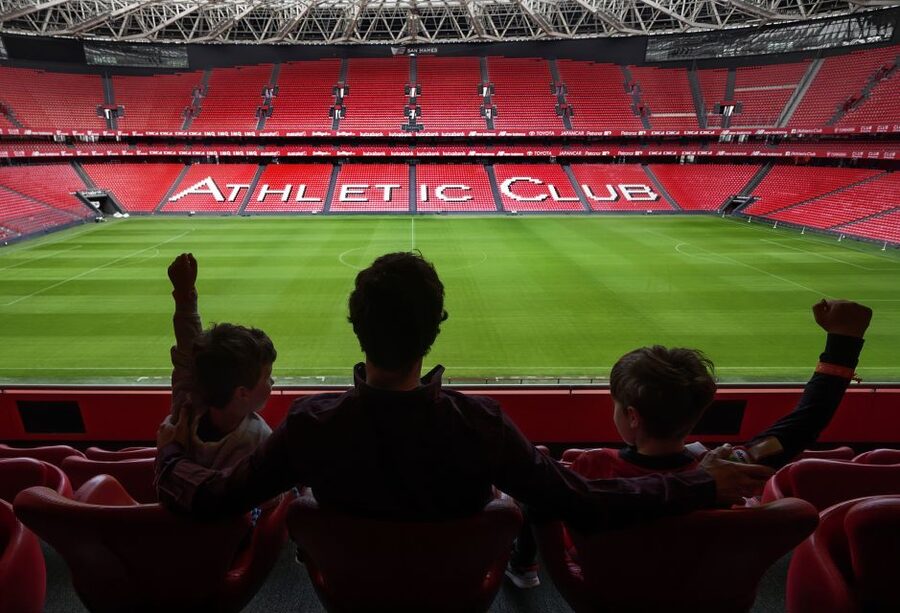
- Pitchside access: Walk out from the tunnel, visit the dugouts, and get close to the field rather than viewing the stadium only from the stands.
- A museum with plenty to do: See 500 original objects, 600 videos, four audiovisual productions, interactive systems, and an immersive video wall.
- Self-guided freedom: Stop where you like and spend extra time in the exhibits that interest you most.
- Good value at $19: The ticket combines the museum and stadium areas, with enough material for an hour or several hours.
- Bring your own audio kit: You need a charged smartphone and headphones or earphones. The venue does not provide the complete setup.
- Useful for mixed groups: Children, teenagers, football fans, and curious visitors who do not follow the sport can all find something to enjoy.
Why San Mamés feels like more than a museum

San Mamés is Athletic Club’s home in Bilbao, and the club carries unusual importance in the Basque Country. The museum does not simply display old shirts and trophies. It uses films, graphics, sound, and interactive stations to explain how the club developed and why it matters to local identity.
That context gives the visit more weight. Even if you cannot name many Spanish footballers, you can still follow the story through the objects and audiovisual material. One of the useful features here is the way the museum connects the club’s past and present instead of treating its history as a row of dusty cases.
I especially like that the experience begins with the museum and then takes you into the working areas of the stadium. The order helps you understand what you are seeing. By the time you reach the locker room and tunnel, the shirts, trophies, and old images have given the club a face.
The visit is called an audio guided tour, but it is not a traditional guided group walk led throughout by a person. You generally move independently, listening on your own device. That means you can pause, replay, or skip material, though the audio instructions are not perfectly clear for everyone.
A few more things to do in Spain worth a look
- Madrid: Prado Museum Entry Ticket
★ 4.6 · 17,509 reviews - Barcelona: FC Barcelona Museum “Barça Immersive Tour” Ticket
★ 4.4 · 10,944 reviews - Madrid: Reina Sofía Museum Entrance Ticket
★ 4.5 · 6,889 reviews
Finding the entrance between Gates 19 and 20
Your starting point is at San Mamés Stadium, between Gates 19 and 20. This detail matters because a large stadium can have several entrances, and finding the correct one saves time before your visit.
Once inside, expect a self-guided route through the museum and stadium. Directions within the building are generally workable, but they could be clearer in places. I would allow a few extra minutes to get oriented rather than arriving at the last possible moment.
The stadium is wheelchair accessible, which makes this a practical choice for many visitors. Still, the route includes a fair amount of walking and climbing steps, so anyone concerned about mobility should check the current access arrangements at the entrance.
Use the bathroom before starting if needed and bring water for your own comfort. The visit is not just a quick look at the trophy cabinet. Families have spent several hours here, while a focused visit can take about an hour.
The Athletic Club Museum: 500 objects and a lot of screen time
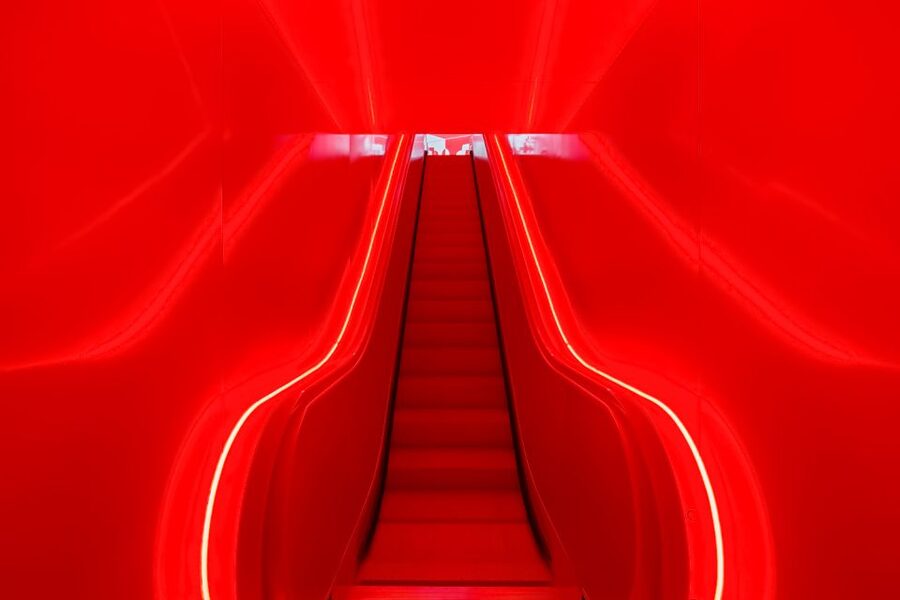
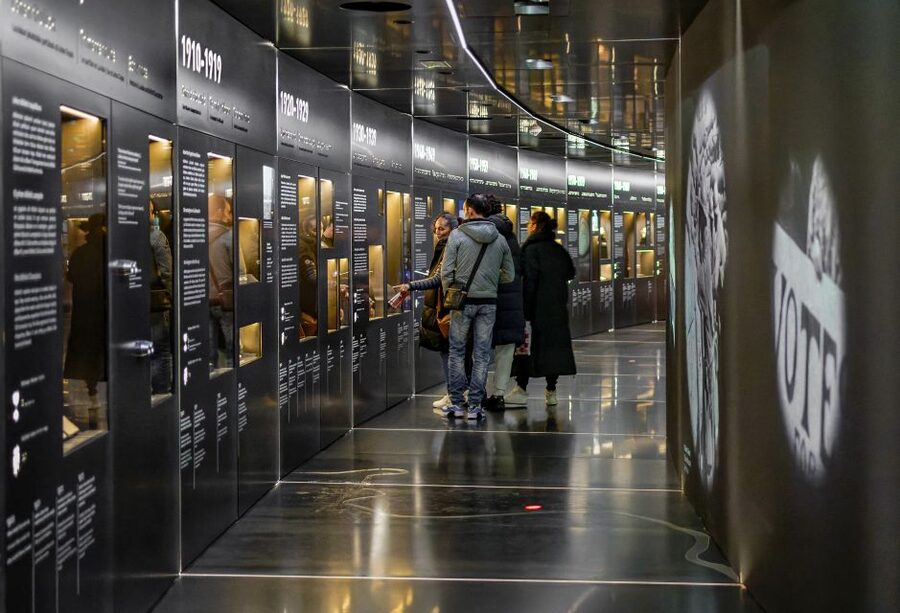
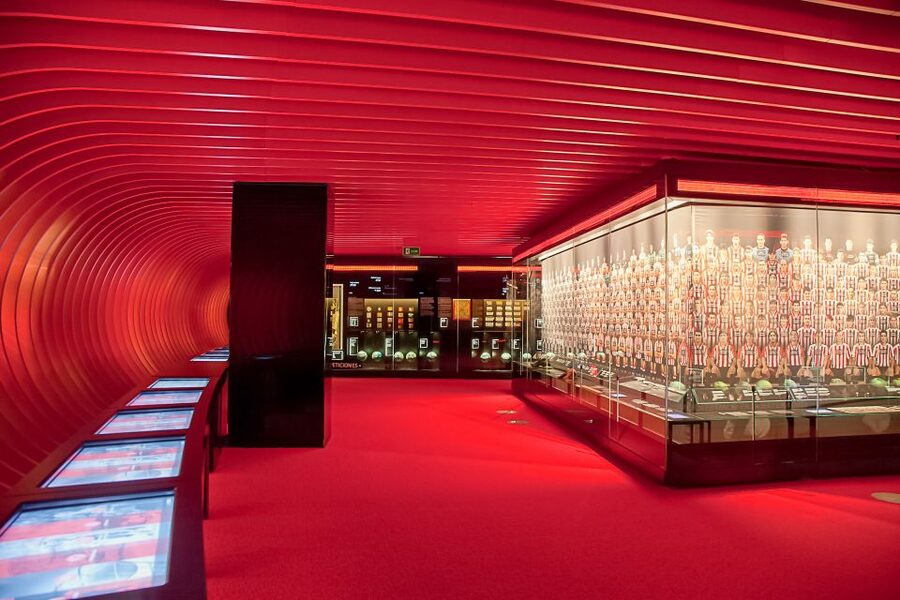
The museum is the strongest part of the experience for many visitors. Its collection includes 500 original football-related objects gathered over more than a century. You will see trophies, clothing, graphics, photographs, and audiovisual material connected with Athletic Club.
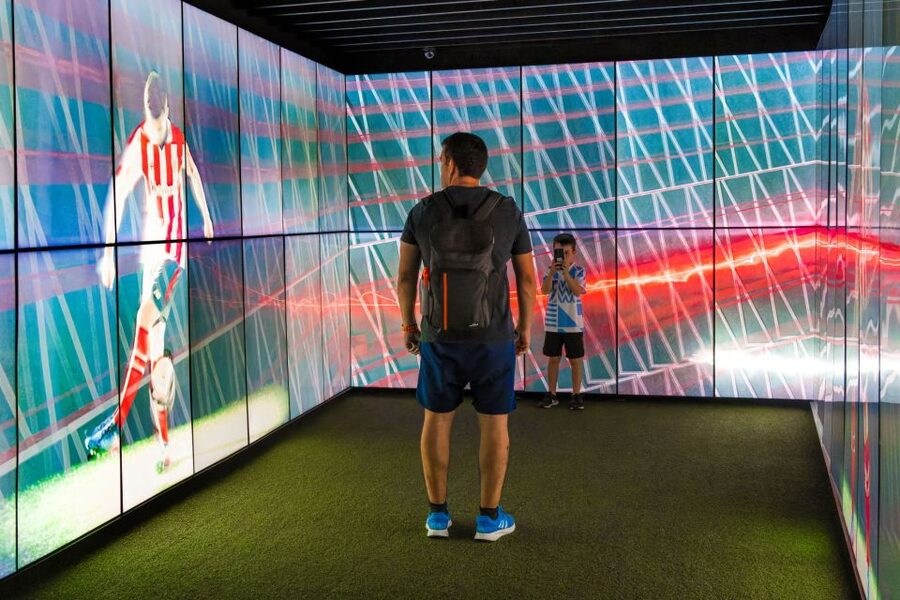
The museum also includes four audiovisual productions, 13 interactive systems, 600 videos, an immersive video wall, and a playroom. Those numbers translate into a visit with plenty of variety. You are not forced to read long panels from beginning to end, and younger visitors have more ways to stay involved.
I would not rush through the first displays. They explain the club’s origins, key moments, and visual identity. The graphics help make the story easier to follow, especially if you are not already familiar with Athletic Club.
The interactive sections are useful for families and teenagers. A child may care more about a video, game, or penalty challenge than an old jersey, while an adult may want to study the historical material. The museum gives both kinds of visitor room to enjoy the visit in their own way.
There is one practical point to remember: screen-based attractions are only as useful as your audio connection and attention span. If your phone battery is low, you may spend less time with the audio and video material than planned. Charge your phone fully before arriving.
Into the changing room and down the players’ tunnel
The stadium section is where the visit becomes physical. You can enter Athletic Club’s home changing room, walk through the players’ tunnel, and head toward the field as the players do.
The tunnel is the emotional center of the route. It is a simple space, but knowing that it leads directly to the pitch gives it a different feel. You can picture the noise and pressure of a match without needing a live game around you.
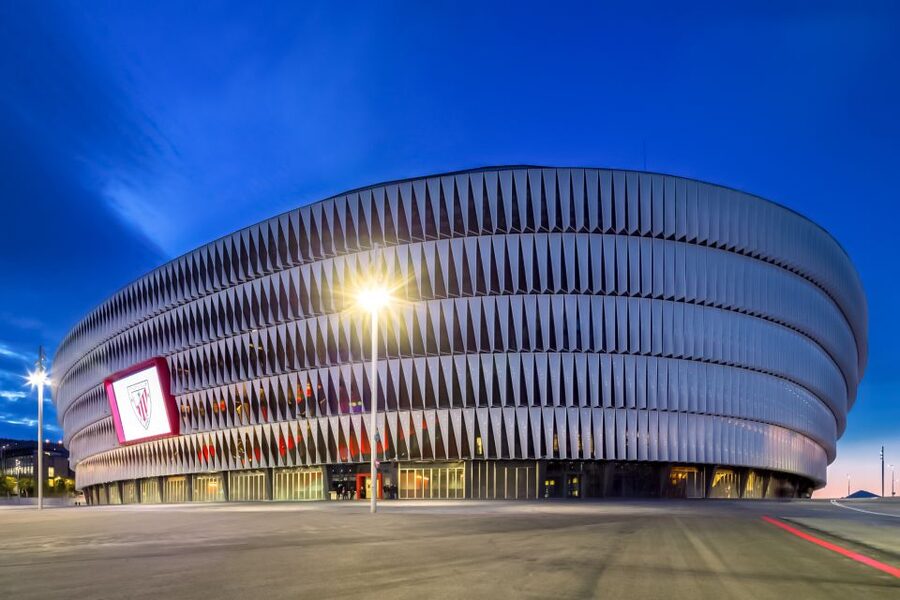
At pitch level, you get a much better sense of the stadium’s size and design than you would from a high seat. You can look toward the stands, inspect the dugouts, and imagine the movement of players and staff around the field.
The chance to sit in or visit the dugout is another welcome detail. It gives you a place to pause and consider the match from the team’s point of view. The route also includes the press room, where you can picture post-match interviews and media events.
You should expect restrictions if the stadium is preparing for a match or another event. The museum closes two hours before kickoff when a match falls during opening hours, and stadium access ends four hours before kickoff. On match days, opening times can vary. Check before booking if your Bilbao schedule is tight.
Same base, a different kind of day out:
- Barcelona: Sagrada Familia Entry Ticket with Audio Guide
★ 4.6 · 105,312 reviews - Barcelona: Park Güell Admission Ticket
★ 4.4 · 76,534 reviews - Seville: Royal Alcázar Entry Ticket
★ 4.6 · 28,378 reviews - Barcelona: Casa Batlló Entry with Self-Audioguide Tour
★ 4.7 · 25,359 reviews
A self-guided visit that lets you set the pace
The flexible format is one of San Mamés’s best features. You can spend extra time with the club history, move faster through material that interests you less, and stop for photographs in the stadium areas where permitted.
A guided tour may sound more personal, but the self-guided format has clear advantages here. You do not have to keep up with a group, and you can allow children to explore the interactive displays without holding everyone back.
The audio guide is available in English, Spanish, Basque, and French. That gives international visitors a useful choice, though you need to bring your own headphones and smartphone. Wired or wireless earphones should be charged and ready to use.
Some visitors have found the audio instructions confusing, and one practical issue is especially important: you need to scan a QR code on your phone. Do not assume the stadium will provide free Wi-Fi for this purpose. Arrange mobile data in advance or prepare as much as you can before entering.
If you use an iPhone, bring the headphones that work with your model. A past visitor found the audio setup difficult without the right Apple earphones. The safest plan is to arrive with your preferred headphones already connected and your phone battery above half.
How long should you allow?
The official information gives the ticket a one-day validity, but it does not set a fixed visit length. In practice, your timing depends on how much museum material you watch and how many interactive displays you use.
For a quick visit, allow about an hour. That should give you time to see the principal museum areas and complete the main stadium route. If you read carefully, watch the videos, and stop at the interactive systems, plan on two or three hours.
Families with older children and teenagers may want the longer visit. The playroom and interactive material add useful breaks from historical displays. Younger children may enjoy the stadium access most, especially the tunnel, pitchside area, and dugout.
I would schedule San Mamés when you do not have a train, meal, or timed attraction immediately afterward. The museum is easy to hurry through, but the point of paying for stadium access is to have time to look around.
The museum closes at 7:00 PM from November through February and at 8:00 PM from March through October. These are closing times, not a promise that every stadium area will be available right up to the minute, so do not arrive at the end of the day.
Is $19 good value?

At $19 per person, the ticket is good value if you plan to use both parts of the experience. You get the museum, the audio guide, and access to several behind-the-scenes stadium spaces, including the changing room, tunnel, press room, dugout, and pitchside areas.
The value improves if you spend two or three hours inside. A short visit still works, but you may feel you have paid mostly for the stadium access. The museum adds substance and makes the ticket more worthwhile for people who are not committed football followers.
Compared with a simple stadium photo stop, this is a fuller visit. You see how the club presents its identity, how the stadium functions behind the scenes, and how technology can make a large collection easier to follow.
There is also practical booking flexibility. You can reserve and pay later, and cancellation is free up to 24 hours before the visit for a full refund. Those terms are useful if your Bilbao plans may shift, especially around football fixtures and stadium events.
Who will enjoy San Mamés most?

This is an obvious choice for Athletic Club supporters and football fans who collect stadium visits. The pitchside access is generous, and the route reaches the areas you usually hope to see: changing rooms, tunnel, dugouts, and press room.
It is also a good pick for families. Children and teenagers have interactive screens, videos, and a playroom to break up the historical displays. The visit is easy to enjoy as a group because each person can move at a comfortable pace.
You do not need to be a football expert. The displays explain the club’s story through objects and media, and the building itself supplies much of the interest. Someone who normally skips football museums can still appreciate the design, organization, and behind-the-scenes access.
The less suitable visitor is anyone who dislikes screens, stairs, or self-guided sightseeing. The museum relies heavily on audiovisual material, the route can involve plenty of walking and climbing, and you must manage the audio guide yourself.
Small details that make the visit better
Bring headphones, a charged smartphone, and a little patience with the audio setup. Test your headphones before you enter, and make sure you have mobile data available for the QR code.
Check the Athletic Club fixture schedule before selecting your time. Matches, closed-door training, and other events can alter the route or opening hours. A tour booked without checking the calendar may not deliver the full stadium access you expected.
If directions matter to you, save the entrance detail before leaving your hotel: Gates 19 and 20. The stadium is large, and clearer wayfinding would make the start less fussy.
Allow more time than you think you need if you are visiting with children or if you enjoy football history. The museum has enough video and interactive material to keep you occupied well beyond a quick circuit.
Should you book the San Mamés Stadium Tour?
Book it if you want a hands-on stadium visit rather than a museum alone. The best parts are the tunnel, changing room, dugout, and pitchside access, while the museum adds a solid explanation of Athletic Club and Basque football culture.
I would also recommend it for mixed groups, since non-fans can enjoy the building and interactive displays without knowing the club’s full story. At $19, the combination is hard to fault if you have at least an hour and preferably two.
Skip it only if your schedule falls close to a match and you cannot accept possible changes, or if bringing your own phone and headphones is a nuisance. For most visitors to Bilbao, San Mamés offers a well-priced, flexible look at one of the city’s most important sporting institutions.
FAQ
Where does the San Mamés Museum and Stadium Tour begin?
The visit begins at San Mamés Stadium, between Gates 19 and 20.
How much does the tour cost?
The listed price is $19 per person.
Is an audio guide included?
Yes. The museum and stadium ticket includes an audio guide in English, Spanish, Basque, or French.
What do I need to bring for the audio guide?
Bring your own smartphone and headphones or earphones. Your phone should be charged, and you may need to scan a QR code to use the audio guide.
What areas of the stadium can I visit?
The route includes the home changing room, players’ tunnel, press room, dugouts, and pitchside areas.
How long does the visit take?
There is no fixed visit length. A focused visit can take about an hour, while visitors who watch the videos and use the interactive displays may spend several hours.
Is the experience wheelchair accessible?
Yes, the activity is listed as wheelchair accessible. The route can also involve considerable walking and climbing steps.
Can I visit on a match day?
You can visit on a match day only if the changing schedule allows it. The museum may close two hours before kickoff, and stadium access may end four hours before kickoff. Opening times can also change for training or other events.
Just added in Spain
- Bizkaia Bridge, Gaztelugatxe, Bermeo and Gernika from Bilbao★ 4.5 · 299 reviews
- Benalmadena: City Sightseeing Hop-On Hop-Off Bus Tour★ 3.5 · 379 reviews
- Welcome to Barcelona: Private Tour with a Local★ 4.6 · 200 reviews
- Barcelona: White Rabbit Catalonia’s Top Immersive Experience★ 4.7 · 359 reviews
- Bean to Bar Chocolate Workshop in Barcelona★ 5.0 · 172 reviews
- Barcelona: Walking tour with Montjuic Castle & Cable Car★ 4.7 · 832 reviews
- Barcelona: Welcome to Barcelona Segway Tour★ 4.9 · 153 reviews
- Barcelona: Helicopter Flight with Optional Yacht Cruise★ 4.7 · 224 reviews
Museums, compared.


FC Barcelona Museum “Barça Immersive Tour” Ticket
Read our review →

Park Güell and Gaudí House Museum Entry Ticket
Read our review →
Puro Flamenco Show with Optional Museum Ticket
Read our review →

Girona & Dali Museum Small Group Tour with Pick-up from Barcelona
Read our review →
Oceanogràfic, Hemisfèric & Science Museum Combo
Read our review →Browse the lists this tour appears in