
Reviewed · MUSEUMS
Barcelona: Casa Batlló Tour and Optional White Rabbit Museum
Casa Batlló is less a house than a Gaudí daydream made solid. The façade ripples like water, the balconies suggest masks or bones, and the dragon roof turns an ordinary Barcelona roofline into a storybook scene. Inside, you follow the Batlló family’s early-20th-century home through rooms shaped by light, color, curved wood, and marine forms.
I like the 75-minute length, which gives you the main rooms, roof, and Gaudí Cube without taking half a day. I also like the live guide, especially when you get someone as warm and detailed as Olga, who has been praised for explaining Gaudí’s ideas and taking photos for visitors. The catch is that the group may be larger than expected, and bilingual commentary can slow the pace. Headsets have also caused static for some people.
Key points to know before booking
- Gaudí’s dragon roof is the visual prize: You get a short period there for photos and views down Passeig de Gràcia.
- The tour covers the home, not just the façade: Expect the main floor, great hall, dining room, modernist courtyard, inner courtyard, and roof.
- The Gaudí Cube adds a short 360-degree finale: It uses visual effects to suggest the architect’s creative world.
- A bilingual guide leads the visit: Tours are offered in English and Spanish, with a radio system and audio support.
- Fast-track entry matters in central Barcelona: You skip the ticket line, though the interior can still feel crowded.
- The White Rabbit Museum is an optional extra: At Passeig de Gràcia 55, it focuses on Catalan customs through art and technology.
Why Casa Batlló deserves your time
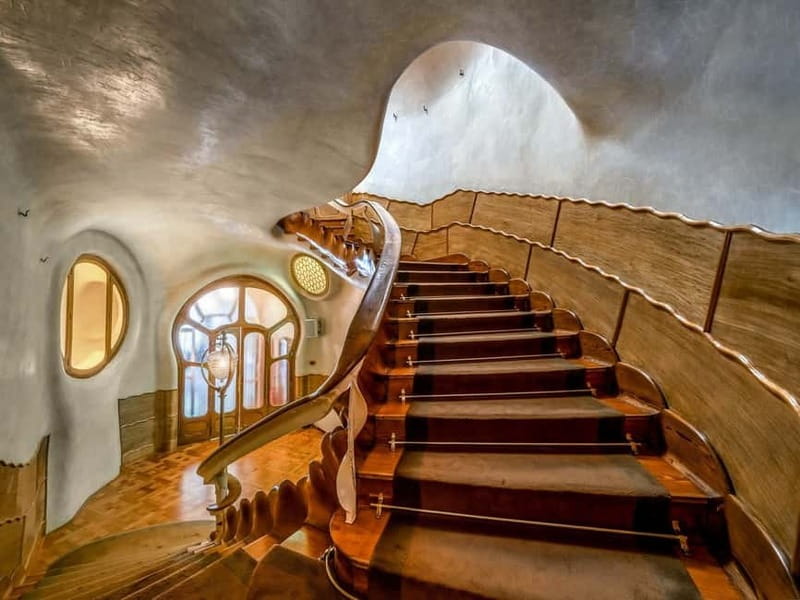
Barcelona has no shortage of Gaudí buildings, but Casa Batlló gives you a particularly clear look at how he joined structure, decoration, and fantasy. The building does not rely on straight lines or plain surfaces. Its façade moves, bends, and changes color as you look across it.
That makes a guided visit useful. Without context, you can admire the balconies and tiles but miss the thinking behind them. A guide can point out the natural forms, explain the family’s place in the house, and show how Gaudí treated small features, such as chimneys and door details, as part of the whole design.
I would not choose this tour only for a quick photo outside. The street view is impressive, but the interior is where the building makes sense. You see how the rooms were arranged for a wealthy Barcelona family at the start of the 20th century, then watch Gaudí turn practical spaces into something theatrical.
The experience has a rating of 3.9 from 126 reviews, which suggests a good but not flawless outing. The strongest pattern is clear: guides often make the difference. Olga receives especially warm praise for her energy, storytelling, and careful explanations of Gaudí’s life, art, and building methods.
A few more things to do in Barcelona worth a look
- Barcelona: FC Barcelona Museum “Barça Immersive Tour” Ticket
★ 4.4 · 10,944 reviews - Barcelona: Park Güell and Gaudí House Museum Entry Ticket
★ 4.5 · 6,326 reviews - Barcelona: Picasso Museum Skip-the-Line Guided Tour
★ 4.5 · 3,355 reviews
Meeting at White Rabbit Museum
The meeting instructions need your attention. The guide waits inside White Rabbit Museum with a Julià Travel sign or umbrella. That is not the same as simply meeting on the sidewalk outside Casa Batlló, so give yourself enough time to identify the correct entrance and staff member.
The arrangement can feel slightly confusing if you have booked only the Casa Batlló visit. Read the meeting information closely before leaving your hotel, and keep the provider name, Julià Travel, in mind. You do not receive hotel pickup or drop-off, so you handle your own way to the starting point.
The tour ends back at the meeting point. If you select the White Rabbit option, this location is also convenient because the museum is at Passeig de Gràcia 55. The supplied information does not give exact starting times, so check availability for the date you want.
The façade: a dragon, waves, and bone-like balconies
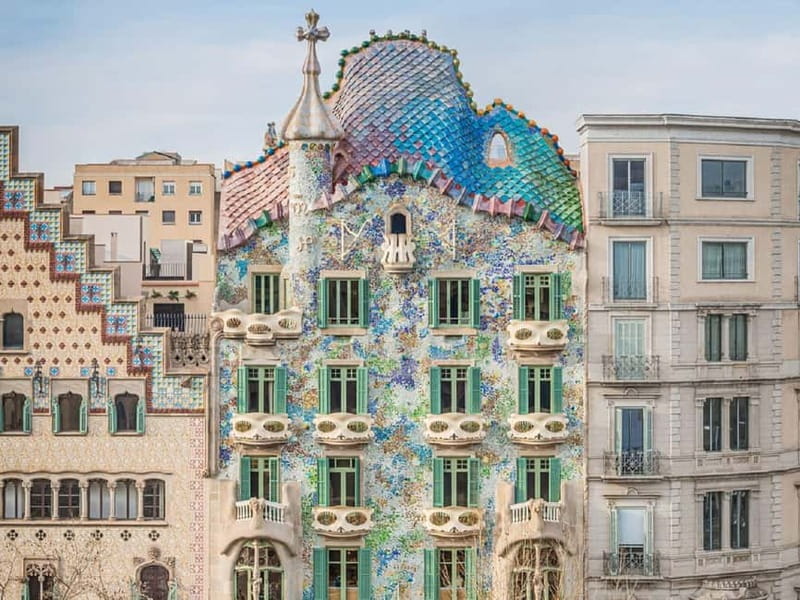
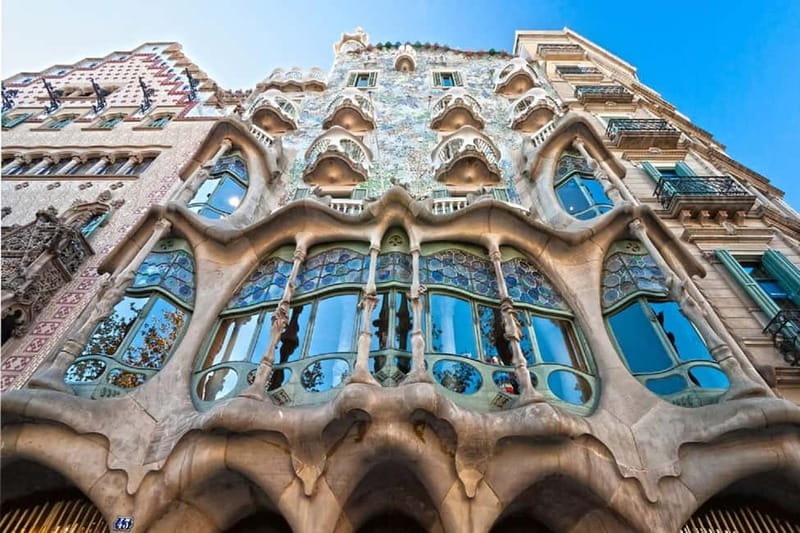
Before you go inside, take a moment to study Casa Batlló from across the street. The façade is covered in irregular color and curved shapes. Its balconies have a mask-like or skeletal look, while the surface around them seems to ripple like the sea.
This is the best place to understand why Casa Batlló is linked with nature. Gaudí avoided a rigid, machine-like appearance. Instead, he used forms that recall shells, bones, scales, water, and living creatures. The effect is playful, but it is not random. The building’s curves, light, ventilation, and decoration work together.
Your guide sets the historical frame here, then leads the group indoors. The explanation is given in English or Spanish, and bilingual tours may repeat the same information in both languages. That is helpful for mixed-language groups, but it can make the tour feel slower if you need only one language.
The main floor and the Batlló family home
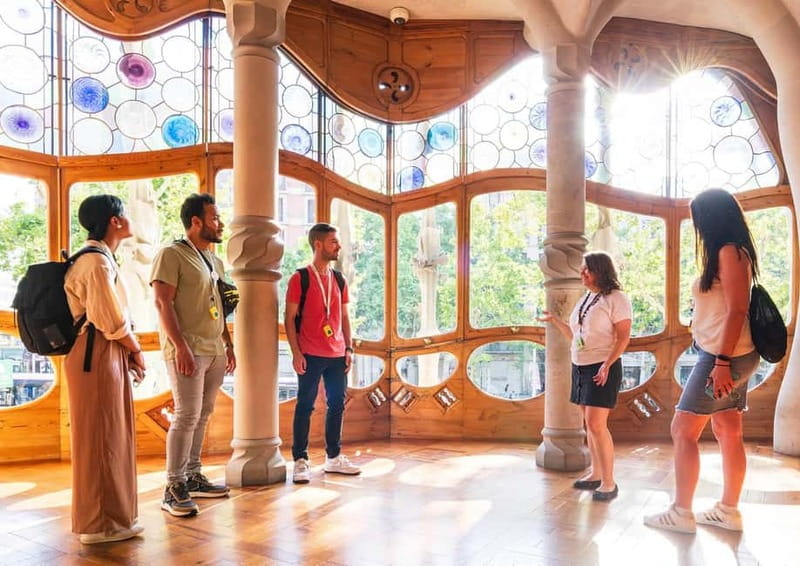
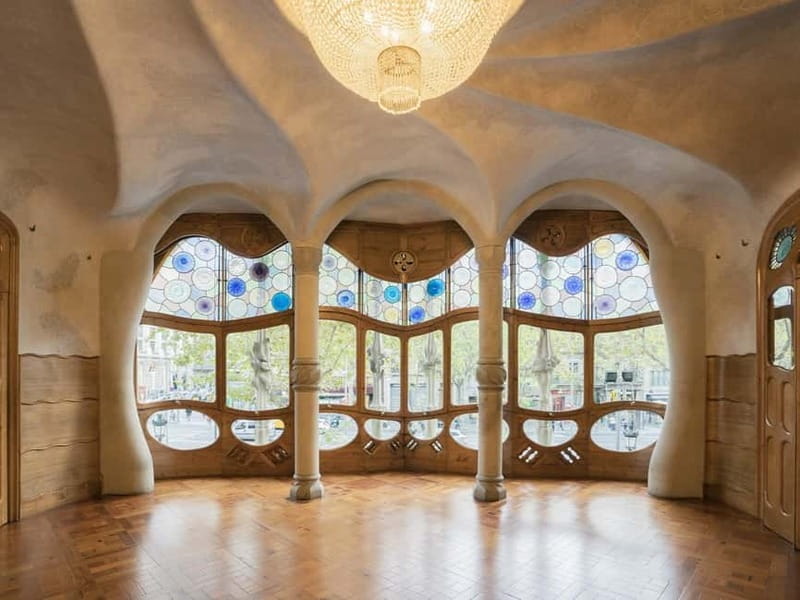
The main floor is one of the most important sections because it shows Casa Batlló as a residence rather than a famous monument. You see the great hall, the main dining room, and other domestic spaces connected with the Batlló family.
The great hall has distinctive views toward Passeig de Gràcia. That visual link matters. The house was not sealed off from the city. Its large windows and carefully shaped openings connect private life with one of Barcelona’s grandest streets.
I like this part of the route because it gives Gaudí’s decoration a human scale. You are not simply staring at an extravagant exterior. You are looking at rooms intended for daily life, entertaining, and family use. The tour helps you consider how the house worked, not just how it photographed.
Pay attention to the guide’s explanation of techniques and materials. The most useful guides do more than point at curves and say they resemble nature. They explain how Gaudí controlled light, color, air, and movement within the building. Several visitors specifically praised guides for answering questions and explaining Gaudí’s construction methods.
Same base, a different kind of day out:
- Barcelona: Sagrada Familia Entry Ticket with Audio Guide
★ 4.6 · 105,312 reviews - Barcelona: Park Güell Admission Ticket
★ 4.4 · 76,534 reviews - Barcelona: Casa Batlló Entry with Self-Audioguide Tour
★ 4.7 · 25,359 reviews - Barcelona: 24 or 48-Hour Hop-On Hop-Off Bus Tour
★ 4.4 · 20,872 reviews
The courtyard and blue-tiled ascent
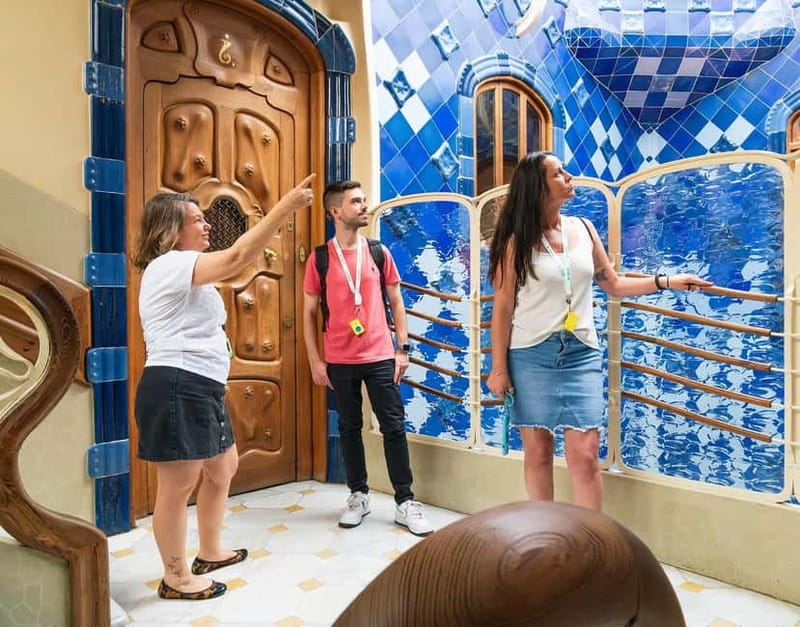
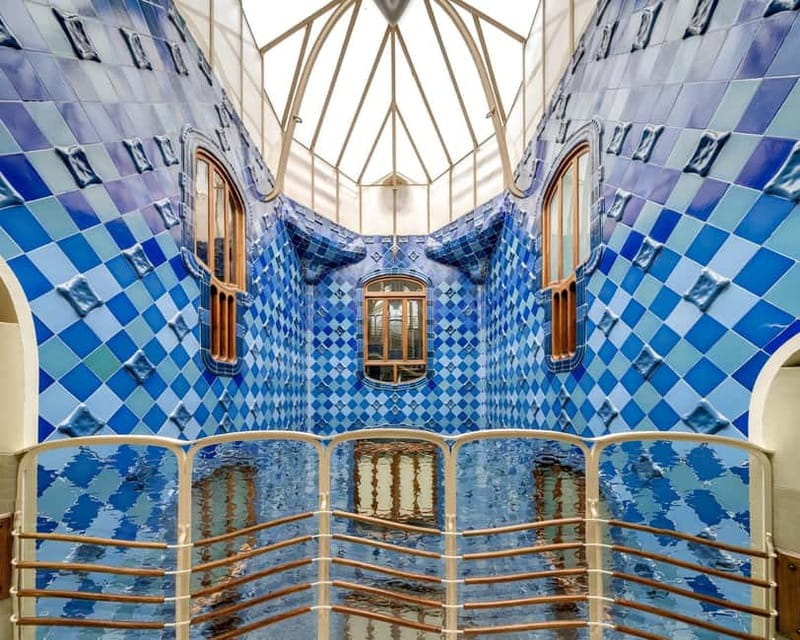
The route continues through the modernist courtyard and then toward the roof. The inner courtyard is an important transition because it changes the mood of the visit. Blue tones dominate, and looking through the glass gives you the sensation of being below the surface of the sea.
This is a quieter, more enclosed part of the house. It also shows that Gaudí’s imagination was not reserved for grand rooms. A passage or courtyard could receive the same care as a reception space.
The blue tilework is more than decoration. It contributes to the feeling of light and water, while the narrowing and widening of color help create visual balance. Your guide can point out details that are easy to miss when you are moving with a group.
The route includes stairs, although the activity is listed as wheelchair accessible. If you have specific mobility needs, confirm the arrangements before booking, since the information does not explain how every part of the route is handled.
The dragon roof and Barcelona views
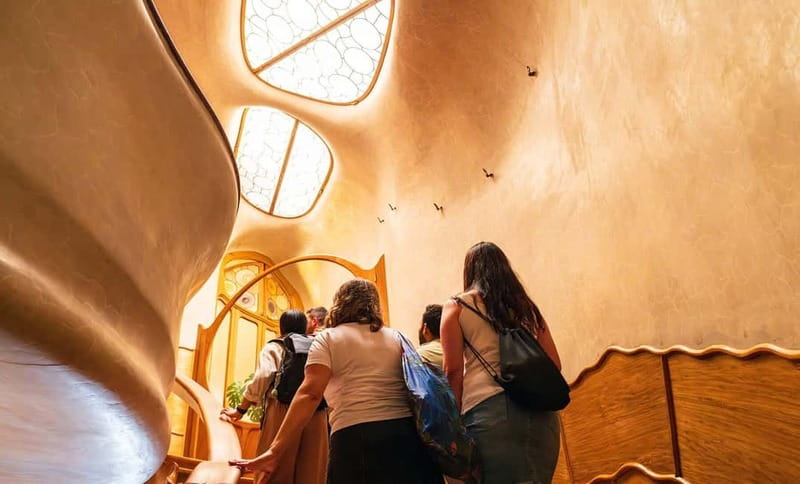
The rooftop is the tour’s big payoff. Gaudí shaped the chimneys with the same care he gave the main rooms, using trencadís, a mosaic technique made from broken ceramic pieces. The pieces create a bright, irregular surface rather than a smooth wall of identical tiles.
A dragon is part of the roof design. The guide may invite you to search for it, which gives the stop a little fun without turning it into a children’s attraction. The dragon connects the roof’s color and texture with one of the most familiar stories associated with Catalan identity.
You get a short period here to take photos and look over Passeig de Gràcia. This is not an unlimited rooftop visit, so use the time well. Take your wide view first, then look at the chimneys and mosaic work up close. The street below gives you a strong sense of Casa Batlló’s place in central Barcelona.
The roof can also be the busiest part of the route. Even with fast-track entry, you are entering a popular attraction that may contain other visitors. The experience is at its best when the guide keeps the group moving without rushing the explanations.
The Gaudí Cube and the final 360-degree experience
At the end of the Casa Batlló visit, you enter the Gaudí Cube. This is a short, multi-sensory presentation designed to suggest Gaudí’s mind and creative process through a 360-degree visual experience.
I would treat it as an extra visual coda, not as a replacement for the building itself. The real value of Casa Batlló is in the materials, rooms, roof, and physical details around you. The cube adds a modern presentation that may appeal to visitors who enjoy digital art and atmospheric effects.
It also gives the tour a clear finish. After the guide has explained the house and its techniques, the cube shifts from architecture to sensation. You get a final impression of Gaudí as an artist who drew inspiration from the natural world and then reshaped it through architecture.
Adding the White Rabbit Museum
The White Rabbit Museum is optional, and it is a different kind of experience from Casa Batlló. Rather than focusing on one historic building, it uses art and technology to present Catalan culture and local traditions.
The museum covers subjects such as neighborhood festivals, Gaudí’s trencadís, the Montjuïc fountains, Sant Joan fireworks, correfoc performances, and ou com balla. These references connect the modern exhibition to customs and public celebrations across Catalonia.
I would add this option if you want more cultural context after the architecture visit. It can help you see that Catalan identity is not limited to Gaudí and monumental buildings. The focus is interactive and contemporary, so it may suit you if you enjoy visual installations more than traditional museum displays.
The museum is at Passeig de Gràcia 55, and the meeting point is inside. Since the Casa Batlló tour ends back at that location, the combination is practical. Still, the supplied information does not state how long the White Rabbit visit takes, so check the booking details if you have another appointment afterward.
Is $64 a fair price?
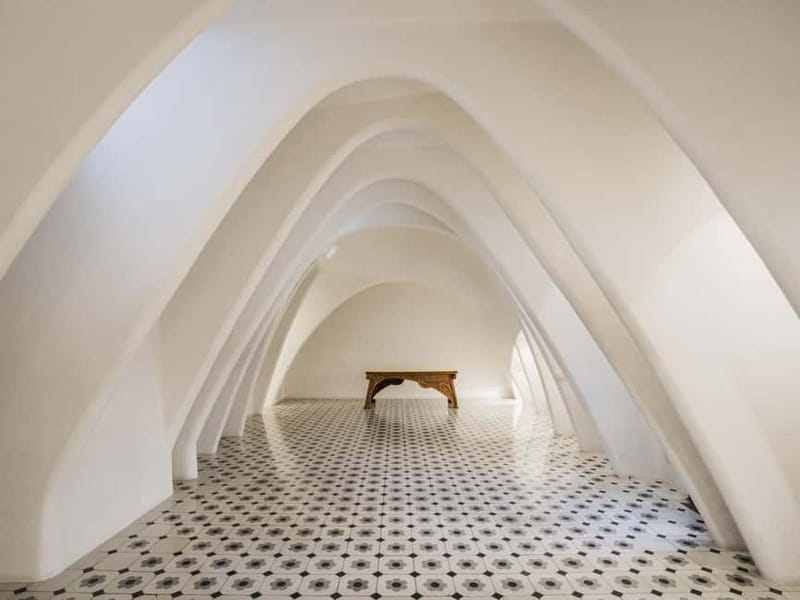
At $64 per person, this is not the cheapest way to see Casa Batlló. You are paying for fast-track entry, a live bilingual guide, the radio system, and access to the Gaudí Cube. If you select the White Rabbit option, that admission is included too.
The value depends on how much explanation you want. If you are happy to move through the building with only an audio guide, a self-guided ticket may cost less and let you set your own pace. If you want help reading the design, understanding the family home, and connecting the rooms to Gaudí’s methods, the guide can justify the added cost.
The strongest value comes when you receive a guide who tells the story well. Olga has been praised for her passion, detail, and willingness to take photos. Other guides have been described as clear, energetic, and good at answering questions. That kind of human explanation can make Casa Batlló more than a sequence of pretty rooms.
The weaker value appears when the group grows large or the headset works poorly. One account describes more than 24 people, static in the radio system, and limited information because the guide repeated everything in English and Spanish. The tour provider lists a live guide and audio support, but equipment quality and group size can affect how much you hear.
Who should book this Casa Batlló tour?
I would recommend it to first-time visitors who want a focused introduction to Gaudí without committing several hours. The 75-minute schedule fits neatly into a day of sightseeing, and the route includes the parts most people want: the main rooms, courtyard, rooftop, views, and Gaudí Cube.
It also suits you if architecture is new territory. A good guide gives you a way into the building’s odd shapes and rich decoration. Families may appreciate the dragon search and visual effects, though the experience is still an art and architecture visit rather than a dedicated children’s tour.
You may prefer another format if you want silence, slow photography, or a completely flexible schedule. The group moves together, bilingual explanations can take extra time, and the rooftop visit is brief. Visitors who dislike headsets should also be prepared for the possibility of static.
Wear comfortable shoes and comfortable clothes. Bring official documentation if you have booked a child ticket, since admission staff may ask for proof of age and can charge the adult difference if you cannot provide it.
Should you book it?
Book this tour if you want fast-track access plus a real explanation of Casa Batlló, especially if you are visiting Barcelona for the first time. The dragon roof, blue courtyard, family rooms, and Gaudí Cube give you a well-shaped 75-minute introduction.
I would add White Rabbit if you want a second, more modern look at Catalan culture and have room in your schedule. I would skip the add-on if your main goal is Gaudí’s architecture or if you prefer to spend more time at the house itself.
The best booking choice is also the one that fits your language and group preference. English and Spanish are available, but confirm the meeting point, arrive ready for a potentially busy group, and do not expect hotel transport. With those limits in mind, this is a useful, visually memorable way to understand why Casa Batlló is one of Barcelona’s essential modernist buildings.
FAQ
How long does the Casa Batlló tour last?
The Casa Batlló visit lasts 75 minutes. Check availability for the starting times offered on your chosen date.
What languages are available?
The live guide and audio support are available in English and Spanish. On bilingual tours, the guide may repeat information in both languages.
Is fast-track entry included?
Yes. The Casa Batlló ticket includes fast-track entry, so you can skip the ticket line.
Does the tour include the Gaudí Cube?
Yes. Access to the Gaudí Cube is included after the main Casa Batlló visit.
Where does the tour meet?
The guide waits inside the White Rabbit Museum with a Julià Travel sign or umbrella. The activity ends back at the meeting point.
Is the White Rabbit Museum included?
It is included only if you select the option with museum admission. The museum is at Passeig de Gràcia 55.
Is the activity wheelchair accessible?
The activity is listed as wheelchair accessible. If you have specific mobility requirements, confirm the arrangements before booking.
Just added in Barcelona
- Welcome to Barcelona: Private Tour with a Local★ 4.6 · 200 reviews
- Barcelona: White Rabbit Catalonia’s Top Immersive Experience★ 4.7 · 359 reviews
- Bean to Bar Chocolate Workshop in Barcelona★ 5.0 · 172 reviews
- Barcelona: Walking tour with Montjuic Castle & Cable Car★ 4.7 · 832 reviews
- Barcelona: Welcome to Barcelona Segway Tour★ 4.9 · 153 reviews
- Barcelona: Helicopter Flight with Optional Yacht Cruise★ 4.7 · 224 reviews
- Barcelona: The Original Barcelona Boat Party★ 3.9 · 254 reviews
- Barcelona: Banksy Museum, Permanent Exhibition Ticket★ 4.7 · 392 reviews
Museums, compared.

FC Barcelona Museum “Barça Immersive Tour” Ticket
Read our review →

Park Güell and Gaudí House Museum Entry Ticket
Read our review →
Puro Flamenco Show with Optional Museum Ticket
Read our review →
Girona & Dali Museum Small Group Tour with Pick-up from Barcelona
Read our review →
Oceanogràfic, Hemisfèric & Science Museum Combo
Read our review →Browse the lists this tour appears in