
Reviewed · MUSEUMS
Seville: Museum of Fine Arts Guided Tour
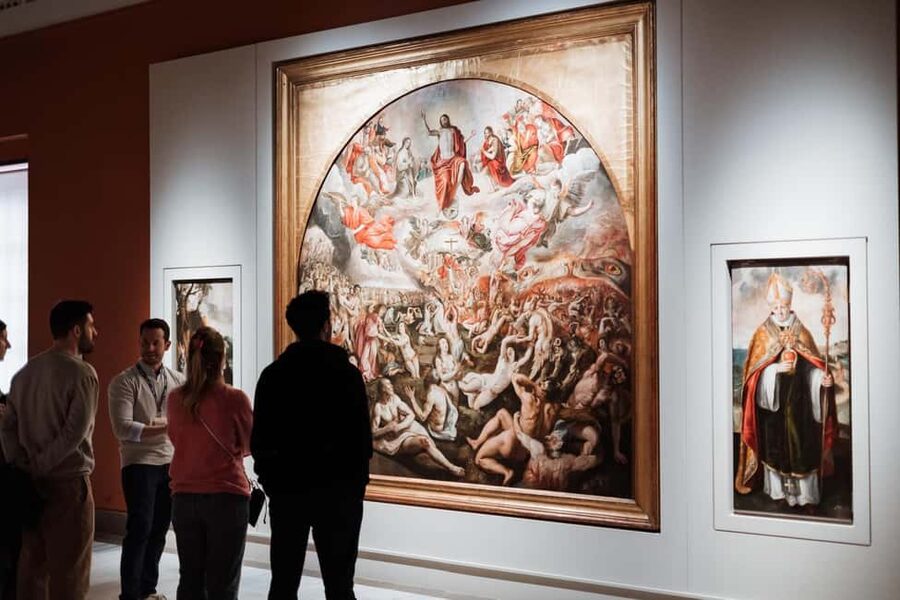
Seville’s Museum of Fine Arts is not just a string of paintings on white walls. It occupies the former Convent of La Merced, where Renaissance courtyards and Baroque rooms give the art a fitting setting. A good guide helps you read the symbols, understand the religious subjects, and see how Seville shaped the work on display.
I like the small group, limited to eight, and the way the tour connects paintings to Spanish history rather than treating each work as an isolated object. I also like that the guide can make a large collection manageable in two hours. The main consideration is time: you will see selected highlights, not every room, though you can remain in the museum afterward.
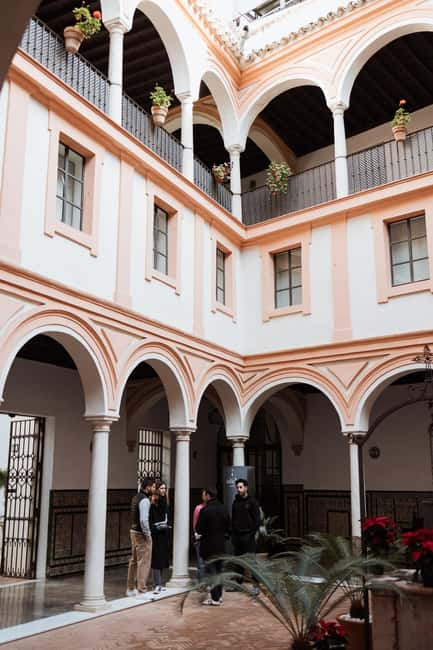
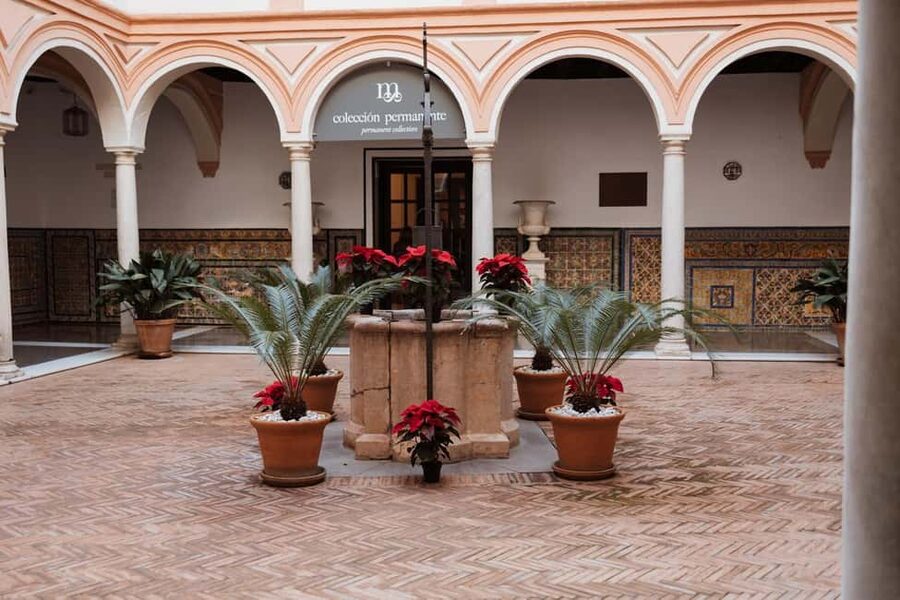
- The former La Merced convent: Walk through the Claustro de los Bojes and Claustro Mayor, two peaceful courtyards that are part of the experience.
- Murillo’s Seville: Spend time in the room devoted to Bartolomé Esteban Murillo, one of the city’s most important painters.
- A compact group: With no more than eight participants, it is easier to hear explanations and ask questions.
- Context instead of labels alone: Your guide explains symbolism, artists, periods, and the link between art and Sevillian society.
- A strong two-hour format: You get a clear introduction without giving up an entire day indoors.
- Useful flexibility: The tour includes admission and express security access, and you may stay inside after the guided portion.
Entering the Museum at Plaza del Museo
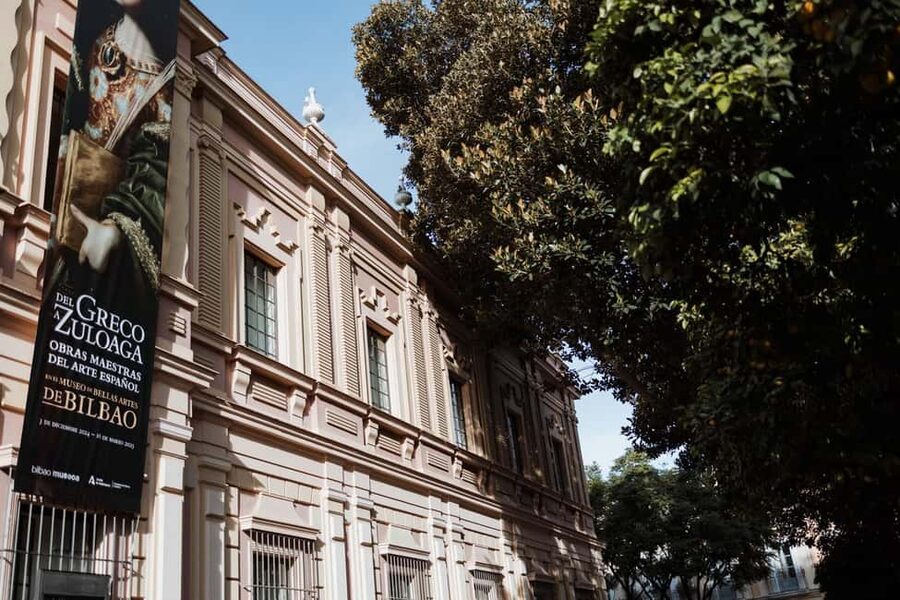
Your meeting point is the Asociación Amigos del Museo de Bellas Artes, at Plaza del Museo beside the statue of Murillo. Look for a blue umbrella or a name tag marked Sevilla Guías & Tours.
This is a simple place to meet, but give yourself enough time to locate the statue and guide before the start. Transportation to the plaza is not included, so you make your own way there. Food and drinks are also not part of the tour.
The meeting point has a useful bit of symbolism. Murillo is not only a famous Sevillian artist represented inside the museum, but also a figure who helps introduce the city’s artistic identity. Once you enter, the setting quickly changes from an open city square to a former religious complex.
The tour includes an express security check, which is useful when you want to keep your morning or afternoon moving. The museum is in Seville’s historic center, so this visit fits well beside other sightseeing in the old town.
La Merced and the Two Cloisters
The building is one of the tour’s main attractions. The Museum of Fine Arts occupies the old Convent of La Merced, and the architecture gives the visit a sense of place that a modern gallery cannot provide.
You pass through the Claustro de los Bojes and the Claustro Mayor, peaceful cloister spaces surrounded by the lines and proportions of Renaissance and Baroque design. These courtyards create a pause between galleries. You are not simply moving from one framed work to the next; you are seeing art in a building that once served a religious community.
I find this especially useful if you are not an art specialist. The building offers a clear visual introduction before the paintings begin to demand your attention. You can notice the rhythm of the arches, the open courtyards, and the contrast between quiet interior spaces and Seville’s lively streets outside.
The drawback is that the building itself can compete with the collection. If your sole aim is to race through famous paintings, the cloisters may feel like a detour. I think that would be the wrong approach here. The former convent is part of why this museum feels distinct.
A few more things to do in Seville worth a look
- Seville: Puro Flamenco Show with Optional Museum Ticket
★ 4.8 · 6,088 reviews - Seville: Museum of Illusions Entry Ticket
★ 4.2 · 1,196 reviews - Seville: Museum of Flamenco Dance Admission Ticket
★ 4.4 · 197 reviews
From Gothic Seville to Renaissance Italy
The collection traces several stages of artistic change in Seville and Andalusia. You begin with Gothic works and then encounter Renaissance pieces that show shifts in technique, subject, and visual style.
One named highlight is Torrigiano’s Saint Jerome Penitent. It gives the guide a chance to explain how Renaissance sculpture brought greater attention to the human body, emotion, and physical presence. The work also helps show that Seville’s art was connected to wider European developments, not sealed off from them.
Your guide can explain what you are looking at in plain terms: the period, the subject, the artist, and the visual clues that help you interpret the work. Several visitors specifically valued explanations of iconography and symbolism, details that are easy to miss when you walk through alone.
That matters because religious art can seem repetitive at first glance. Saints, angels, biblical scenes, and devotional figures appear again and again. With context, you begin to see differences in expression, gesture, composition, and purpose. A guide can also explain why a painting looked the way it did in its own period, rather than judging it only by modern taste.
The museum includes art from Seville and elsewhere in Andalusia, so the tour is not limited to one narrow local style. You get a broad introduction to the region’s artistic development while keeping Seville at the center.
Murillo’s Room and the Art of Seville
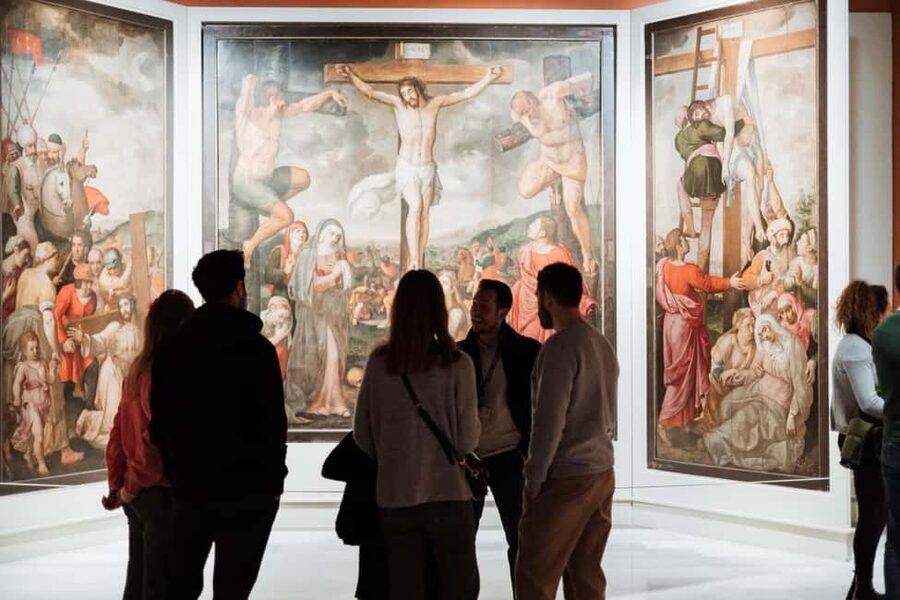
The room devoted to Bartolomé Esteban Murillo is one of the clearest reasons to choose this tour. Murillo is closely tied to Seville, and his work gives you a stronger sense of the city’s religious and artistic culture.
A guide can help you look beyond the surface appeal of Murillo’s paintings. His works are often remembered for their beauty and warmth, but the tour places them within the society that produced and valued them. You learn how art related to public devotion, local identity, and the people of Seville.
The guide also selects works by other important Sevillian artists. That selection is useful because two hours passes quickly. Instead of trying to cover the entire museum, you spend time with pieces that explain a period, a technique, or an artist’s place in Seville.
Julio Dean Del Junco is frequently the guide for this experience. His background in history and art history comes through in the way he links paintings to their period and setting. He has also been praised for adjusting his explanations to people with little art background, while still giving enough detail to satisfy people who already know something about Spanish art.
Lorraine has also led the tour and was noted for an engaging style and good humor. If your guide is Julio, you may find that he welcomes questions and adds practical suggestions about Seville when asked. The important point is not memorizing a guide’s name, but having someone who can make a complicated collection easy to follow.
Why a Guide Changes the Visit
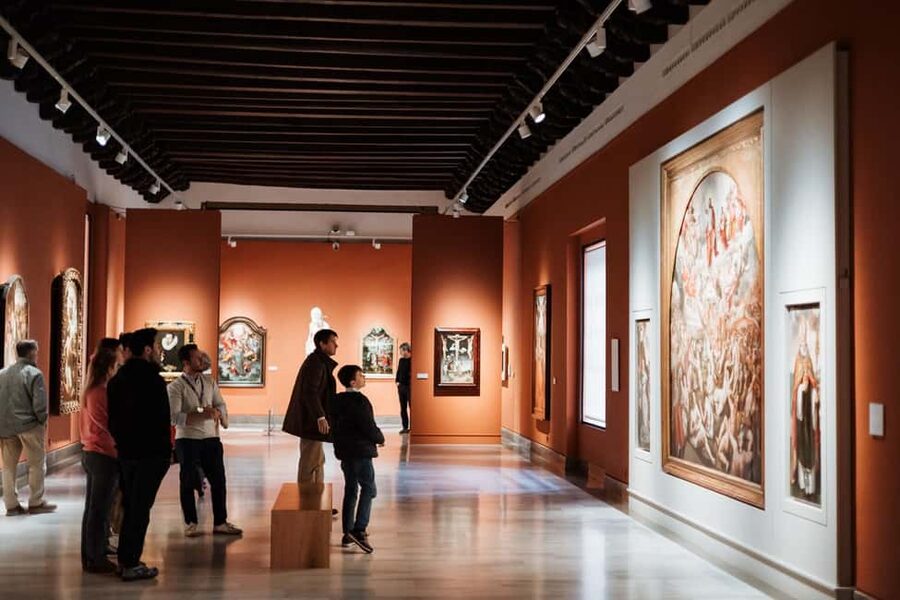
I can enjoy an art museum alone, but the first visit to a large collection often turns into a slow walk past labels. You recognize a few names, read fragments of information, and leave with a general impression but little sense of how the works connect.
This tour gives you a route through the collection. The guide explains why selected pieces matter and places them in a sequence, from Gothic works through Renaissance and Baroque art and into Sevillian Costumbrismo.
Costumbrismo focuses on local life and customs. Its inclusion helps widen the visit beyond grand religious scenes and courtly subjects. You get a sense of how artists also looked at everyday Sevillian society and the people around them.
The strongest part of the guiding style is the use of stories and context. You might hear about an artist’s background, the meaning of an object in a painting, or the social setting behind a work. The aim is not to recite every label. It is to give you enough information to notice more.
A small group makes this practical. With up to eight people, the guide can answer questions without turning the visit into a private tour price. Several participants also valued being able to hear clearly, and one earlier experience included an earpiece. The supplied details do not promise an audio device on every departure, so do not book solely for that feature, but a small group should make the explanations easier to follow.
Same base, a different kind of day out:
- Seville: Live Flamenco Dancing Show Ticket at the Theater
★ 4.7 · 16,396 reviews - Seville: 1-Hour Guadalquivir River Sightseeing Eco Cruise
★ 4.2 · 10,281 reviews - Seville: Cathedral, Giralda, and Royal Alcázar Guided Tour
★ 4.7 · 9,165 reviews - Seville: Setas de Sevilla Entry Ticket
★ 4.6 · 8,901 reviews
What Two Hours Really Covers
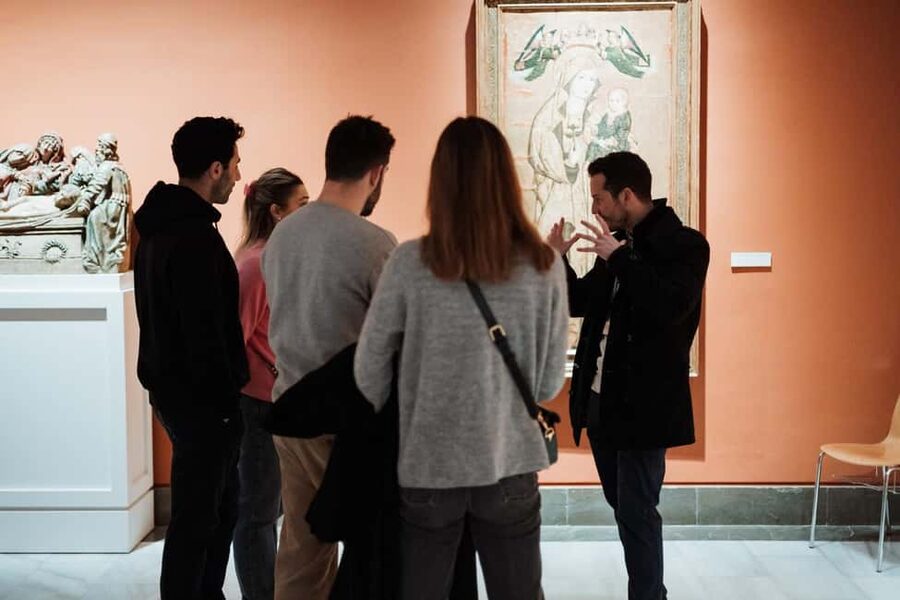
Two hours is a sensible length for this museum. It is long enough to introduce the building, explain the main artistic periods, and spend time with selected works. It is short enough that you are unlikely to feel trapped indoors, especially during a full day of Seville sightseeing.
You should not expect a room-by-room survey. The guide will choose works and themes, so some paintings will receive little or no attention. That is a normal tradeoff in a guided overview and, for a first visit, usually a useful one.
The pace should suit people who want substance without an academic lecture. Explanations have been described as detailed but easy to follow, with a balance between historical background and close attention to paintings and sculptures.
At the end, you return to the starting point at the Asociación Amigos del Museo de Bellas Artes. The visit itself takes place inside the museum, and you can stay longer afterward. That flexibility is one of the better features of the arrangement. If a particular room catches your attention, you can revisit it after the guide leaves rather than trying to remember everything during the tour.
Price, Group Size, and Practical Value
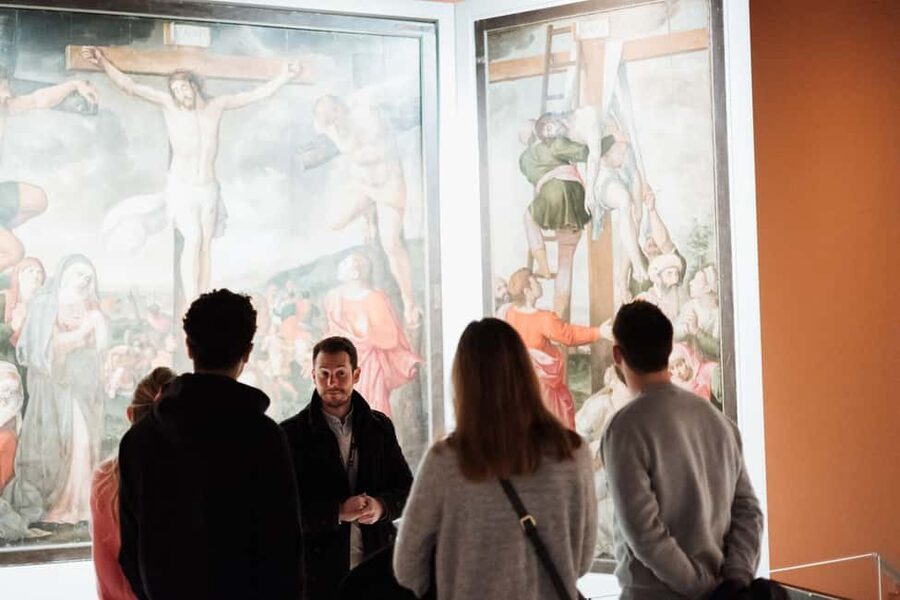
At $23 per person, this is a reasonable price for a two-hour guided museum visit that includes admission. The value depends on how you like to see art.
If you already know the collection well and prefer to read labels at your own pace, you may get more from a self-guided visit. If you are new to Spanish art, the fee pays for a clear path through a large museum and the chance to ask questions as you go.
The group limit of eight is important. A much larger party can make a museum explanation feel distant, especially in rooms where other visitors are present. Here, the guide can keep the group together and respond to different levels of interest.
Admission is included, as is the express security check. You do not receive food, drinks, or transportation, but those omissions make sense for a short museum visit. Plan your own route to Plaza del Museo and eat before or after.
You can reserve now and pay later, and cancellation is free up to 24 hours before the start time. That gives you some useful flexibility if your Seville plans are still changing.
The museum is listed as wheelchair accessible. Pets are not allowed. The tour is available in English or Spanish, so choose the language that lets you follow art-historical explanations comfortably.
Who Will Get the Most from This Tour?
This visit suits you if you want more than a quick look at Murillo but do not want to spend half a day studying the collection alone. It is also a good choice if terms such as Baroque, iconography, and Sevillian Costumbrismo are unfamiliar.
Families with older children or teenagers may find the story-based approach easier than a silent audio guide. The tour also works well for couples or solo visitors who want an introduction to Seville’s art without arranging a private guide.
Art students and experienced museum visitors can still benefit from the historical links, though you should understand that this is an overview. It will not provide a specialist lecture on every artist or movement.
If you dislike fixed routes, group pacing, or explanations of selected works, visit independently. The museum’s architecture and collection reward a slow personal look, and some people prefer to discover details without a guide nearby.
For most first-time visitors, I would take the guided tour early in a Seville stay. It gives you a framework for understanding the city’s art, churches, and public monuments later. You may also want to stay after the tour and return to the paintings that interested you most.
Should You Book the Museum of Fine Arts Tour?
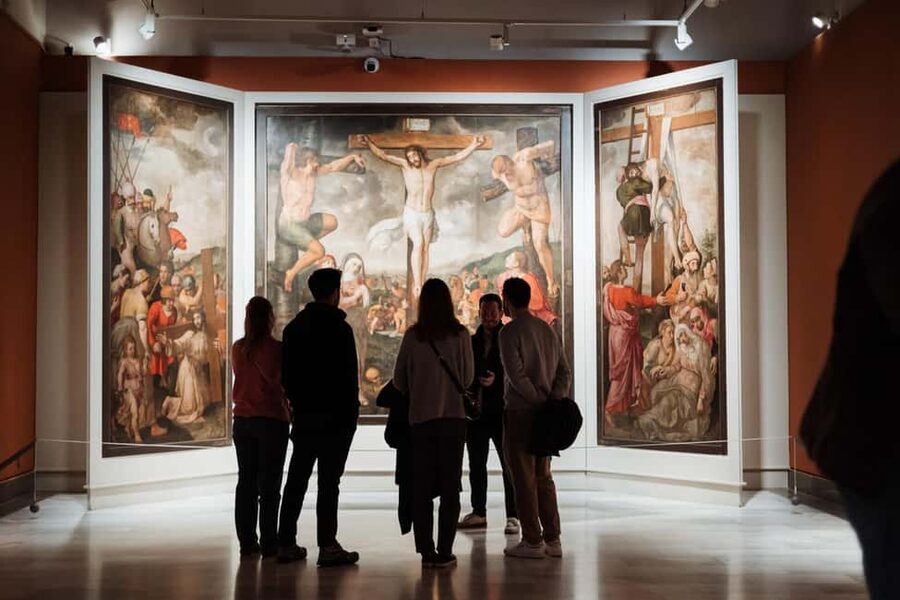
Book it if you want the former convent, the cloisters, Murillo, and Seville’s art explained as one connected story. The strongest reason to go with this small group is the guide’s ability to explain symbolism and historical setting without making the visit feel like an art exam.
The $23 price is fair for admission, a two-hour English or Spanish tour, and a group capped at eight. Julio Dean Del Junco receives the most praise in the supplied experience details, while Lorraine has also led engaging visits.
Skip it if you want complete freedom or already have a strong plan for studying every gallery. Otherwise, this is a practical first visit to one of Seville’s most important museums, with enough time left afterward to explore at your own pace.
FAQ
How long does the Museum of Fine Arts tour last?
The guided tour lasts two hours.
What is the price?
The experience costs $23 per person.
What is included in the price?
Admission to the Museum of Fine Arts of Seville, an expert licensed guide, and the small-group guided visit are included.
Is the tour available in English?
Yes. The live guide is available in English or Spanish.
How large is the group?
The group is limited to eight participants.
Where do I meet the guide?
Meet at the Asociación Amigos del Museo de Bellas Artes in Plaza del Museo, beside the statue of Murillo. The guide will have a blue umbrella or a Sevilla Guías & Tours name tag.
Is transportation included?
No. You are responsible for reaching the meeting point.
Can I stay in the museum after the tour?
Yes. After the guided portion, you may remain in the museum as long as you wish.
Is the museum wheelchair accessible?
Yes, the activity is listed as wheelchair accessible.
Can I cancel for a refund?
Yes. You can cancel up to 24 hours in advance for a full refund. You can also reserve now and pay later.
Just added in Seville
- Seville: Sunset Roof Top Walking Tour★ 4.5 · 122 reviews
- Seville: Authentic and Romantic Horse-Drawn Carriage Ride★ 4.5 · 341 reviews
- Seville: VIP Exclusive Early Access Tour of The Alcazar★ 4.8 · 276 reviews
- Seville: Flamenco Show at Tablao Almoraima in Triana★ 4.6 · 483 reviews
- Seville: Tapas, Taverns and History Guided Walking Tour★ 4.9 · 515 reviews
- Seville: Tapas, Taverns, and History Walking Tour★ 4.9 · 676 reviews
- Seville: Stand Up Paddle Board Rental★ 4.6 · 134 reviews
- Seville: Small-Group Cathedral and Giralda Tour with Tickets★ 4.9 · 203 reviews
Museums, compared.

FC Barcelona Museum “Barça Immersive Tour” Ticket
Read our review →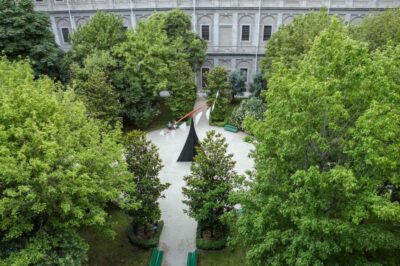
Park Güell and Gaudí House Museum Entry Ticket
Read our review →
Puro Flamenco Show with Optional Museum Ticket
Read our review →
Girona & Dali Museum Small Group Tour with Pick-up from Barcelona
Read our review →
Oceanogràfic, Hemisfèric & Science Museum Combo
Read our review →Browse the lists this tour appears in