

Reviewed · PRADO MUSEUM TOURS
Madrid: Prado Museum Ticket with In-App Audio Guide
The Prado’s greatest pleasure is seeing famous paintings in the rooms where they belong, especially Velázquez’s Las Meninas and major works by Goya, El Greco, Rubens, and Caravaggio. I like the reserved entry and the freedom to move at your own speed, rather than being tied to a guide’s route.
I also like the 90-minute format. It gives you a useful first look without taking over your day. The main drawback is the audio app, which some visitors find limited or awkward to navigate. You may prefer the paintings alone, especially if you have your own plan.
Key points to know before you go
- Meet by the Goya statue: Collect your entry ticket from Naturanda staff at the Monumento a Goya.
- Plan for 90 minutes: That is enough for key masterpieces, but not the whole museum.
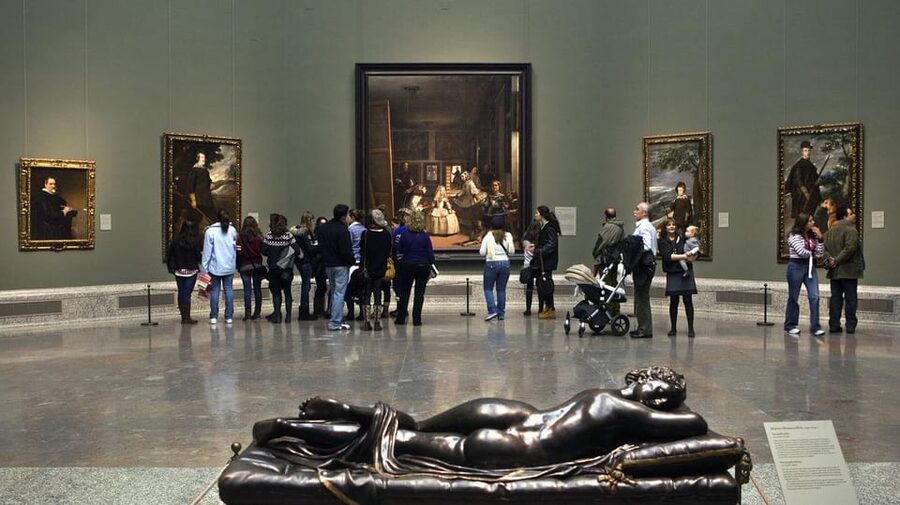
- See Las Meninas: Velázquez’s famous royal scene is one of the essential stops.
- Bring headphones: They are not included with the digital audio guide.
- Choose from six languages: The app is available in Spanish, English, French, Italian, German, and Chinese.
- Expect a self-guided visit: There is no live guide, so you set the pace and choose the rooms.
Why the Prado deserves your time
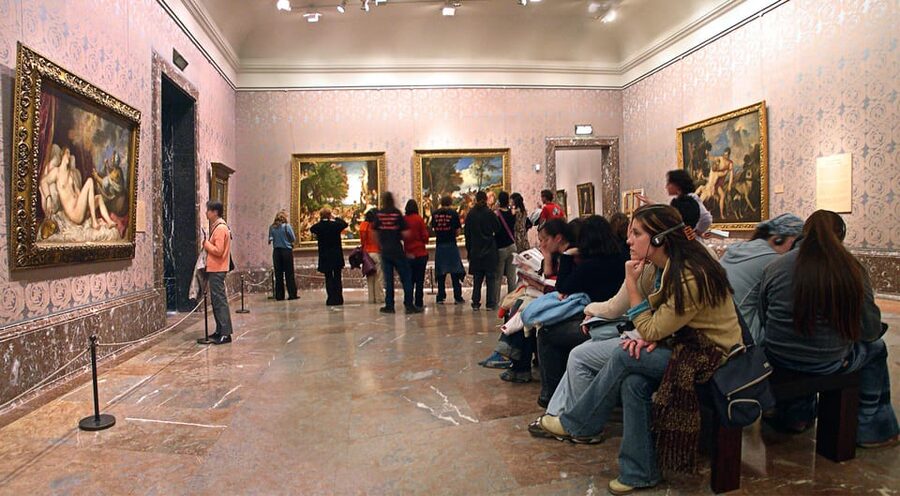
Madrid’s Prado Museum is not a quick gallery of famous names. It is a large collection covering European painting from the 12th century to the present, with a particularly strong focus on Spanish art and royal patronage.
That matters because the museum gives you more than isolated masterpieces. You can trace changing ideas about power, faith, family, war, beauty, and daily life from one room to the next. The paintings are not simply decorations. They show how Spain saw itself and how its artists responded to the wider European art world.
You do not need to be an art specialist to enjoy the Prado. A reserved ticket and audio guide can help you make sense of a large building and a long list of celebrated painters. But you should arrive with a simple plan. Ninety minutes passes quickly when every room offers another work worth stopping for.
Other galleries worth booking in Madrid:
- Madrid: Prado Museum Entry Ticket
★ 4.6 · 17,509 reviews - Madrid: Small Group of Prado Museum Tour & Optional Tapas
★ 4.6 · 2,437 reviews - Madrid: Prado Museum Guided Tour with Skip-the-Line Ticket
★ 4.5 · 2,018 reviews
Meeting Naturanda by the Goya statue
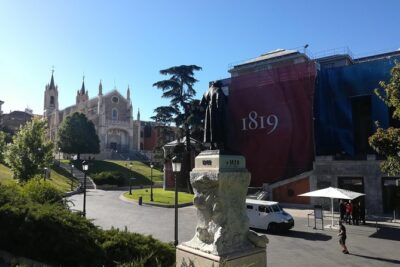
Your visit begins outside at the Goya statue, also called the Monumento a Goya. This is the designated point for collecting your ticket, and Naturanda staff are meant to be waiting there.
Give yourself enough time to locate the statue before your chosen start time. The ticket collection is an important detail. You are not simply showing up at the museum entrance with only a booking confirmation. The entry ticket is collected on the day from the staff at the meeting point.
There has been at least one report of the ticket representative not appearing promptly, although museum staff still allowed entry after recognizing the company name. I would not count on that solution. Keep your reservation details available on your phone, arrive early, and do not wander away from the Goya statue if you do not immediately see the representative.
Once you have the ticket, you can proceed into the museum. The reserved entry is useful because it avoids spending your limited sightseeing time waiting in the general ticket line. It is not a private entrance or a personal escort, though. After you enter, the visit is yours.
The first 20 minutes: get your bearings

The Prado can feel like a lot at first. You are entering a major national collection, not a small specialist gallery with a single route through it.
Use the first few minutes to get oriented. Check the museum layout, confirm where the main works are located, and open the audio guide app before you become absorbed in the paintings. The digital guide is included, but the phone, app download, and headphones are your responsibility.
The app is available in six languages: English, Spanish, French, Italian, German, and Chinese. That range is helpful for international visitors, though the quality of the experience depends on how comfortably you can use the app. Some people find it useful for focusing on selected paintings. Others find the navigation confusing, and one visitor simply stopped using it because the works were difficult to locate on the list.
I suggest treating the audio guide as a tool, not as the main event. If it helps you understand a painting, listen. If it slows you down, close it and look.
Velázquez and Las Meninas
Velázquez is one of the essential names at the Prado, and Las Meninas is the painting most visitors have in mind before entering.
The work shows a moment in the royal household, with the young Infanta Margarita surrounded by attendants, a dog, and the painter himself. Velázquez also appears within the scene, which makes the picture feel like a puzzle about looking, being watched, and making art.
The painting rewards time. Do not rush past it after checking off the famous title. Look at the figures, the open doorway in the background, the mirror, and the way the room seems to extend beyond the canvas. The audio guide can provide useful context here, but you can also appreciate the basic drama without technical art vocabulary.
This is one place where the self-guided format works well. You can stand back, move closer, and return to the painting without needing to keep pace with a group. The downside is that a popular masterpiece can attract school groups and crowds, particularly when you visit during a busy period.
A few more things to do in Madrid worth a look
- Madrid: Reina Sofía Museum Entrance Ticket
★ 4.5 · 6,889 reviews - Madrid: Prado Museum Guided Tour With Fast Access
★ 4.8 · 1,785 reviews - Prado Museum Small Group Tour with Skip the Line Ticket
★ 5.0 · 1,738 reviews - Royal Palace & Prado Museum Skip the Line Guided Tour
★ 4.5 · 1,347 reviews
Goya’s Spain, from court life to conflict
Goya gives the Prado much of its emotional force. His work ranges from portraits of royalty to scenes shaped by violence, suffering, and political upheaval.
You might begin with his formal portraits, where clothing, posture, and expression reveal the pressures of court life. Then look for works that feel darker and more personal. Goya’s art can be elegant, funny, unsettling, or grim, sometimes within the same broad period of his career.
The collection also reflects a strong Spanish point of view. One visitor found the museum too focused on Spanish nationalism. That is a fair consideration, especially if you are expecting an evenly balanced survey of all European art. The museum’s strength is precisely its Spanish focus, but that focus may not suit every taste.
For me, Goya is one reason to spend time here even if you know little about painting. His subjects feel human and direct. You do not need to understand every political reference to recognize fear, vanity, sorrow, or pride.
El Greco, Rubens, and Caravaggio
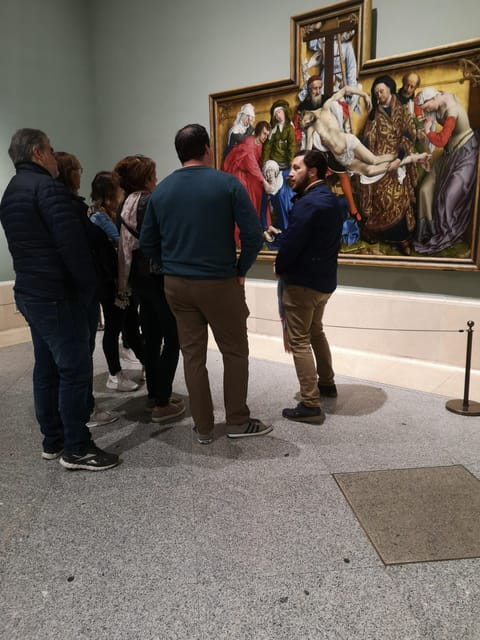
After Velázquez and Goya, use your remaining time to seek out the other names included in this visit: El Greco, Rubens, and Caravaggio.
El Greco’s paintings are immediately recognizable for their stretched forms, intense expressions, and spiritual drama. The figures can seem pulled upward, as if ordinary physical rules have loosened. His style is useful to compare with Velázquez, whose observation of faces, fabrics, and space is more grounded and measured.
Rubens offers another change of mood. His paintings are often energetic and full of movement, with strong bodies, sweeping gestures, and grand arrangements. Even when you do not know the subject, you can usually sense the scale and ambition of the work.
Caravaggio brings sharp light and dark contrasts, direct human presence, and a feeling that sacred stories are happening close to you. His paintings can look theatrical, but they also feel physical and immediate.
You will not see every important work in the museum in 90 minutes. That is not a flaw in the ticket. It is simply the reality of visiting a collection this large. Choose a handful of artists and let yourself look properly rather than racing through every room.
What the audio guide is really like
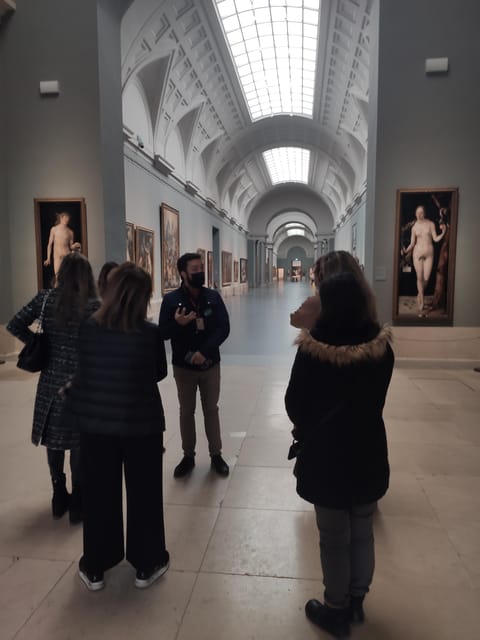
The included guide is digital, not a live person walking beside you. You download an app and use your own phone. Headphones are not provided, so bring a pair that you know works well with your device.
The best use of the app is selective. Listen to the entries for Las Meninas, a Goya painting, or another work that catches your eye. Then put the phone away for a few minutes and look without commentary. Constant audio can turn a museum visit into a checklist.
The app may be referred to as Pop Guide, and its practical weakness is navigation. Finding the matching painting on the list can take time, and some descriptions appear in both Spanish and English. That bilingual presentation may be useful for some people, but it can make the screen feel busier than expected.
The guide is available in English, Spanish, French, Italian, German, and Chinese. If you want detailed explanations for every room, it may feel limited. If you want a short introduction to selected masterpieces, it can be enough, particularly when you have only 90 minutes.
A live guide is not included. That keeps the price lower and leaves you free to choose your route, but it also means you must solve questions on your own.
How much value do you get for $35?
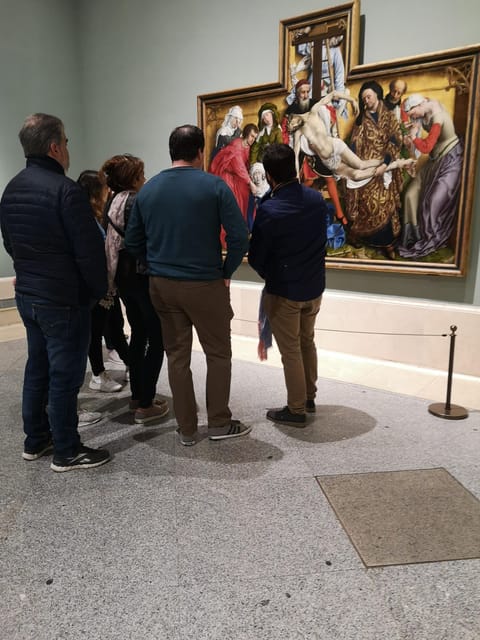
At $35 per person, this is not the cheapest way to enter a museum. The value depends on what you want from the visit.
You are paying for a reserved ticket, ticket collection assistance at the Goya statue, and the digital guide. The main financial benefit is convenience. If the alternative is wasting part of your Madrid day in a ticket queue, the reserved entry can make sense.
The format also suits a short visit. If you have one afternoon for the Prado and want to see the major names without building your own research list, the app gives you a starting point. It is more useful for a first-time visitor who wants direction than for someone already familiar with the collection.
The value is weaker if you already know exactly which rooms you want to see and can buy direct admission at a lower cost. It is also weaker if you dislike phone-based guides or want a full explanation from a live art historian.
Think of the $35 as a convenience price, not a bargain admission price. You are paying to reduce planning and line time, not to receive a private tour.
School groups, photography, and the pace inside
The museum can be busy with school groups. One visitor found the number of children distracting, though the collection still made the visit worthwhile. That is a useful warning for anyone seeking a quiet, slow museum experience.
Your best defense is to keep moving. If one room is crowded, continue to another and return later if time allows. The self-guided structure makes this easy because nobody is waiting for you to finish a fixed route.
Be prepared for photography restrictions. One visitor was surprised that photography was not allowed at all, and this affected expectations even though it did not spoil the visit. Do not plan on photographing every painting for later reference. Check the current rules when you enter and keep your attention on the art rather than your camera.
Food and drinks are not allowed inside, and pets are not permitted. Plan accordingly before entering, especially if you are combining the museum with a long day of sightseeing.
Who should book this Prado visit?
I would consider this experience a good fit for:
- First-time Prado visitors who want reserved entry and a simple route
- People with about 90 minutes rather than half a day
- Independent visitors who prefer to set their own pace
- Families or friends who do not want to stay together every minute
- Anyone who wants basic explanations in one of six languages
I would be more cautious if you want a detailed art lecture, personal recommendations from a live guide, or a perfectly smooth app. The digital guide has uneven usability, and the lack of included headphones means you need to prepare your own setup.
It also may not satisfy someone who wants to see the entire collection. The Prado is too large for that in 90 minutes. Treat this as a focused introduction, not a complete museum tour.
Booking details worth remembering
The experience is wheelchair accessible. You can cancel up to 24 hours before the visit for a full refund, and the reserve-now, pay-later option keeps your plans flexible.
Check the available starting times before booking, since the exact time depends on availability. Meet at the Goya statue to collect the ticket, and allow a little extra time for finding the statue and connecting with the Naturanda staff.
Your ticket covers museum entrance and the digital audio guide. It does not cover a live guide or headphones. Download the app as instructed, charge your phone, and bring headphones if you want to use the commentary.
Should you book the Prado ticket with audio guide?
Book it if you want a convenient first visit, need reserved entry, and like having a little structure without joining a live group. The freedom to move at your own speed is a real advantage, and the chance to see Las Meninas, Goya, El Greco, Rubens, and Caravaggio in one visit is excellent.
Skip it if you prefer a live expert, dislike app navigation, or already know the Prado well. For most first-time visitors with limited time, the ticket is useful, but the audio guide is optional in practice. I would book for the reserved entry and museum access, then use the app selectively rather than allowing it to control the whole visit.
FAQ
Where do I collect my Prado ticket?
Collect your entry ticket from Naturanda staff by the Goya statue, also called the Monumento a Goya, on the day of your visit.
How long does the experience last?
The stated duration is 1.5 hours, or about 90 minutes.
Is a live guide included?
No. The experience includes a digital audio guide through an app, but no live guide.
Which languages are available in the audio guide?
The digital guide is available in Spanish, English, French, Italian, German, and Chinese.
Do I need to bring headphones?
Yes. Headphones are not included, so bring your own if you plan to listen to the audio guide.
Is the Prado visit wheelchair accessible?
Yes, the activity is listed as wheelchair accessible.
More Audio Tours in Madrid
- Casa Batllo Admission Ticket with Intelligent Audio Guide
★ 4.5 · 3,168 reviews - Cordoba: Mosque-Cathedral E-Ticket with Audio Guide
★ 4.1 · 2,124 reviews - Nerja: Caves of Nerja Entry Ticket with Audio Guide
★ 4.6 · 1,616 reviews - Barcelona: Mies van der Rohe Pavilion Ticket and Audio Guide
★ 4.6 · 380 reviews
More Self-Guided Tours in Madrid
- Madrid: Las Ventas Bullring Tour with Audio Guide
★ 4.6 · 3,154 reviews - Barcelona: Sagrada Familia Entry Ticket with Audio Guide
★ 4.6 · 105,312 reviews - Granada: Alhambra Entry Ticket with Audio Guide
★ 4.1 · 5,950 reviews - Barcelona: Palau de la Música Self-Guided Tour
★ 4.6 · 3,603 reviews
Just added in Madrid
- Banksy Museum Madrid: Entrance Ticket★ 4.7 · 335 reviews
- From Madrid: Day Trip to Ávila and Salamanca w/ Guided Tour★ 4.5 · 456 reviews
- Madrid Countryside Wineries Guided Tour with Wine Tasting★ 5.0 · 740 reviews
- Madrid Segway Private Tour in Retiro Park★ 5.0 · 336 reviews
- Madrid Private Segway tour. Retiro Park – Centro Historico★ 4.9 · 636 reviews
- Madrid Segway Tour★ 4.5 · 364 reviews
- Madrid: Iconic Retiro Park Segway Tour★ 4.9 · 848 reviews
- Madrid: Entry Ticket to Legends The Home of Football Museum★ 4.7 · 563 reviews
Prado Museum Tours, compared.

Small Group of Prado Museum Tour & Optional Tapas
Read our review →
Prado Museum Guided Tour with Skip-the-Line Ticket
Read our review →
Prado Museum Small Group Tour with Skip the Line Ticket
Read our review →
Royal Palace & Prado Museum Skip the Line Guided Tour
Read our review →Browse the lists this tour appears in