
Reviewed · TOURS IN CORDOBA
Córdoba: Guided Tour of Azahara Medina
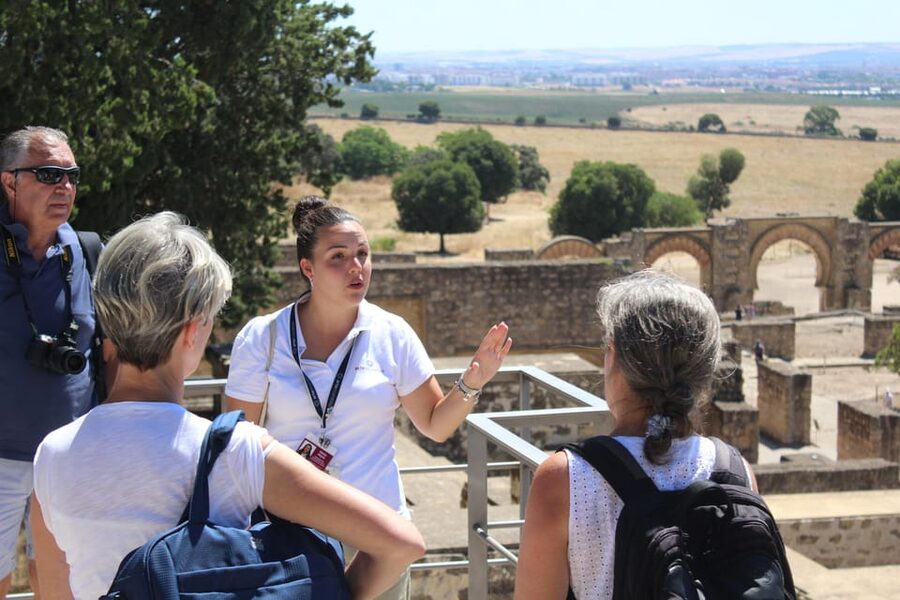
The most surprising thing about Medina Azahara is its scale. Just 8 kilometers from Córdoba, this was not simply a palace but a planned palace-city built by Caliph Abd al-Rahman III in the 10th century. Government buildings, grand halls, homes, and service areas once spread across the hillside.
I like the way this tour pairs the ruins with the visitor center’s reconstruction film, which helps you picture a city now reduced to stone foundations. I also like the guides’ use of stories, architecture, and daily life to make the remains easier to understand. The main drawback is the heat and limited shade, especially in summer, and the bus meeting point can take a little care to find.
Key points to know before booking
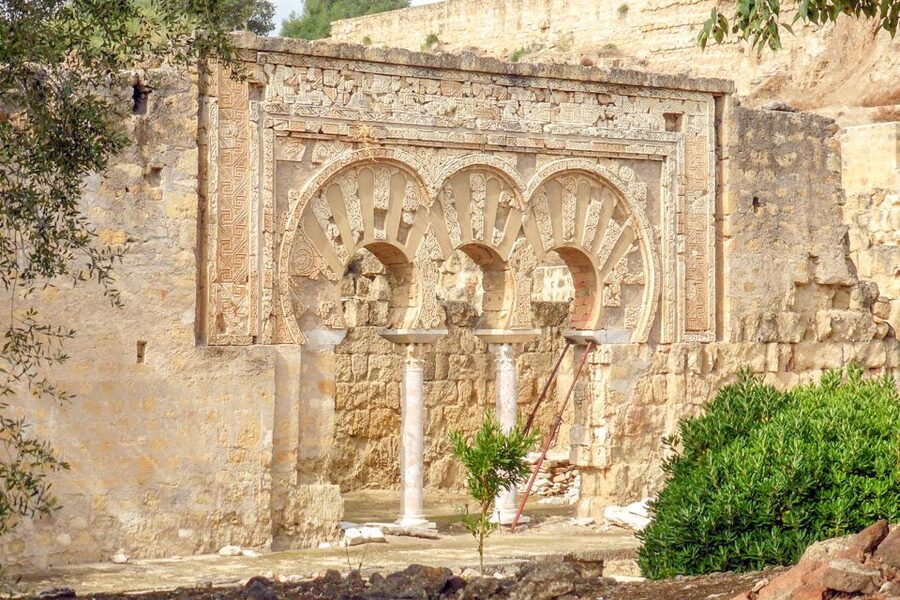
- A palace-city beyond Córdoba: See the remains of the Umayyad caliphate’s seat of government, about 8 kilometers outside the city.
- The visitor center comes first: Allow about an hour for the museum and film before walking through the archaeological site.
- Choose your transport carefully: The bus option includes transport from Córdoba and then from the visitor center to the main monuments.
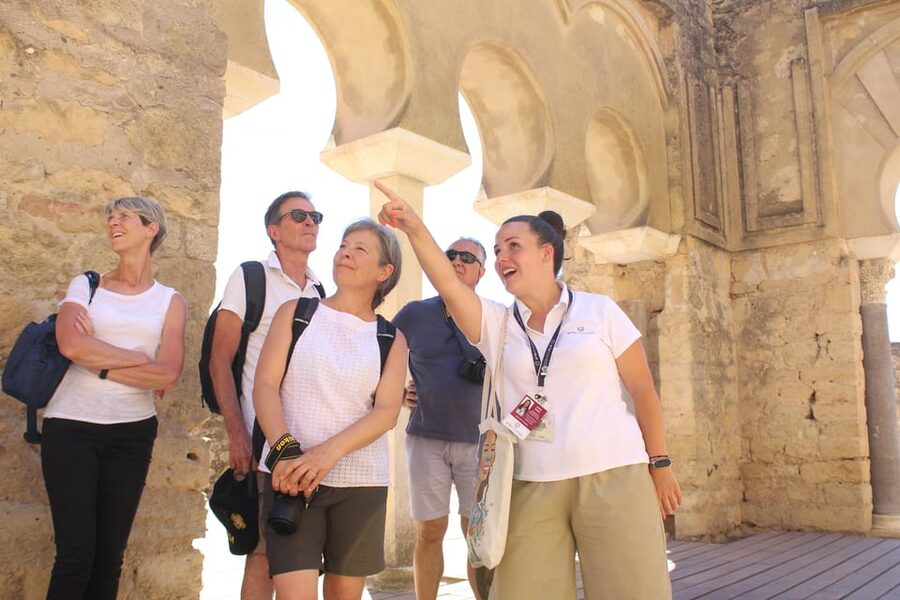
- Guides bring the ruins to life: Emilio, Almudena, Maria, Alejandro, and others have been praised for clear English, humor, and strong storytelling.
- Only part of the city is excavated: One long-standing estimate puts the exposed area at roughly 12 percent, so you are seeing an important but incomplete portion.
- Prepare for sun: Bring comfortable shoes, a hat, drinks, and light, comfortable clothing.
Why Medina Azahara matters to Córdoba
Córdoba’s Mezquita is the city’s famous historical centerpiece, but Medina Azahara explains the political power behind much of medieval Córdoba. Abd al-Rahman III ordered the palace-city in the early 10th century as a symbol of caliphal authority and as the working seat of government.
The Arabic name, Madinat al-Zahra, means brilliant city. That name makes sense when you consider the original purpose. This was designed to impress visiting officials, rivals, and subjects, while also providing offices and formal spaces for the administration of the Caliphate of Córdoba.
You will not see a complete medieval city here. Archaeological work is still continuing, and much of the site remains underground. That unfinished quality is part of the appeal, but it also shapes your expectations. You are reading a city through walls, terraces, columns, fragments, and carefully laid-out foundations rather than walking through intact rooms.
I find that a guide matters greatly at Medina Azahara. Without context, a low wall can look like just another low wall. With an explanation of its likely role, position, or relationship to another building, the remains begin to form a picture of court life and government.
A few more things to do in Cordoba worth a look
- Córdoba: Skip-the-Ticket-Line Mosque-Cathedral Guided Tour
★ 4.6 · 9,634 reviews - Cordoba Mosque-Cathedral: Skip-the-Line Guided Tour
★ 4.7 · 6,610 reviews - Cordoba: Mosque-Cathedral E-Ticket with Audio Guide
★ 4.1 · 2,124 reviews
The visitor center gives you the missing pieces
The tour begins with about an hour at the visitor center. Do not treat this as a quick ticket stop. It is one of the most useful parts of the visit because it introduces the history and shows how the palace-city may have looked in the 10th century.
A film uses a virtual reconstruction to present the city as a functioning place rather than a collection of ruins. This matters because the archaeological site itself is open and partial. The film helps you imagine buildings that no longer survive and understand the position of the sections you will see later.
The museum also displays finds connected with the site and offers a broad introduction to Moorish history in Spain. The beginning of the tour can feel information-heavy, especially if you have already spent several days visiting Córdoba’s historic center. Still, I would stay with it. The film and displays give you a useful mental map before you reach the exposed buildings.
The visitor center is also where the transport arrangement becomes important. If you choose the bus option, a tourist bus takes you from the center to the main archaeological area. If you choose the option without the Córdoba bus, the visit still begins at the visitor center, but you arrange your own way to the site.
Exploring the palace-city with a guide
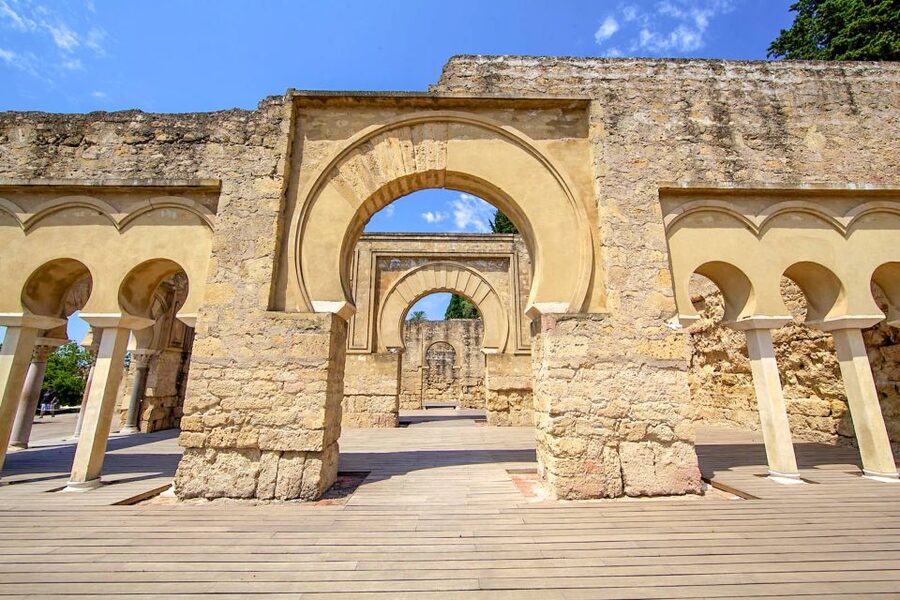
After the visitor center, the group heads north to explore the principal sections of Medina Azahara one by one. The guide’s job is not simply to name buildings. The better guides connect the site’s layout with the people who worked, governed, served, and lived here.
Guides such as Emilio have been praised for combining history with likely scenes from daily life. Almudena is known for maintaining a good pace and helping visitors picture what the remains once meant. Maria has been described as friendly, funny, and careful about explaining what is certain and what is based on historical interpretation. Alejandro has also received praise for clear English and detailed answers.
That range of guide styles is useful because Medina Azahara needs explanation from several angles. You may hear about architecture, art, engineering, politics, religion, and the organization of a medieval court. The strongest presentations avoid turning the visit into a list of dates. They show how the palace-city worked as a symbol of power and as a practical center of administration.
You should feel free to ask questions. The tour is designed around a live English or Spanish guide, and several guides have been specifically praised for welcoming questions and explaining different interpretations. If you have a particular interest in Islamic architecture, medieval government, or archaeological methods, this is a good place to speak up.
What you see in the exposed ruins
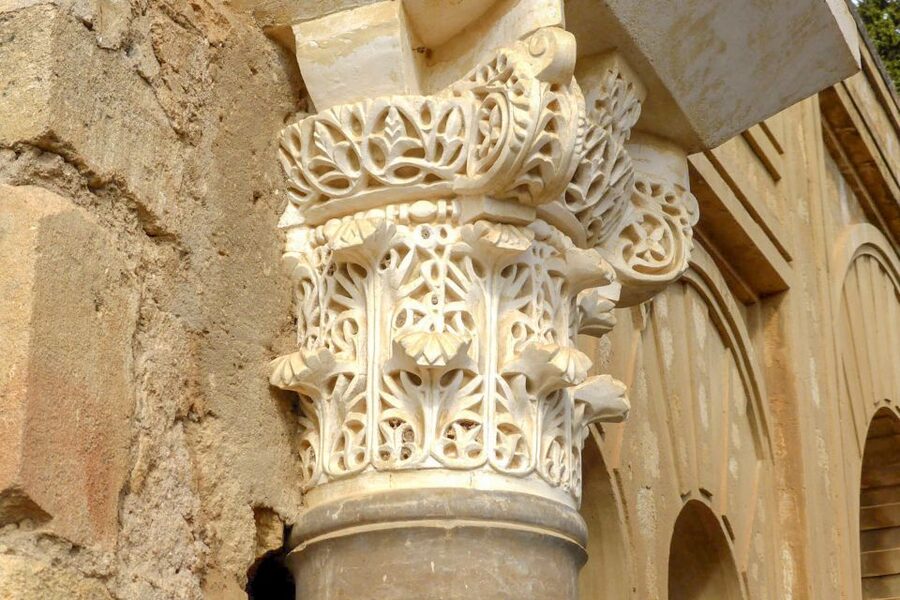
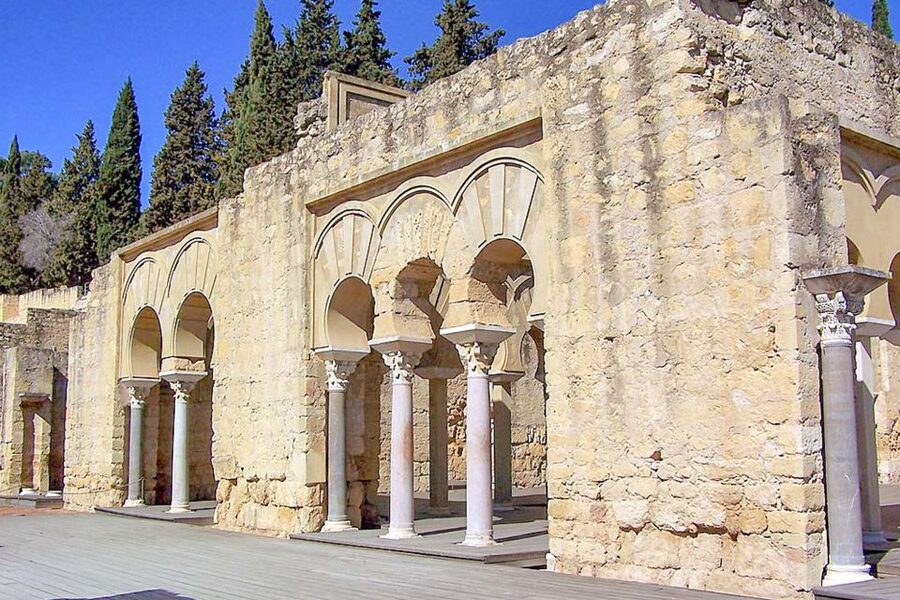
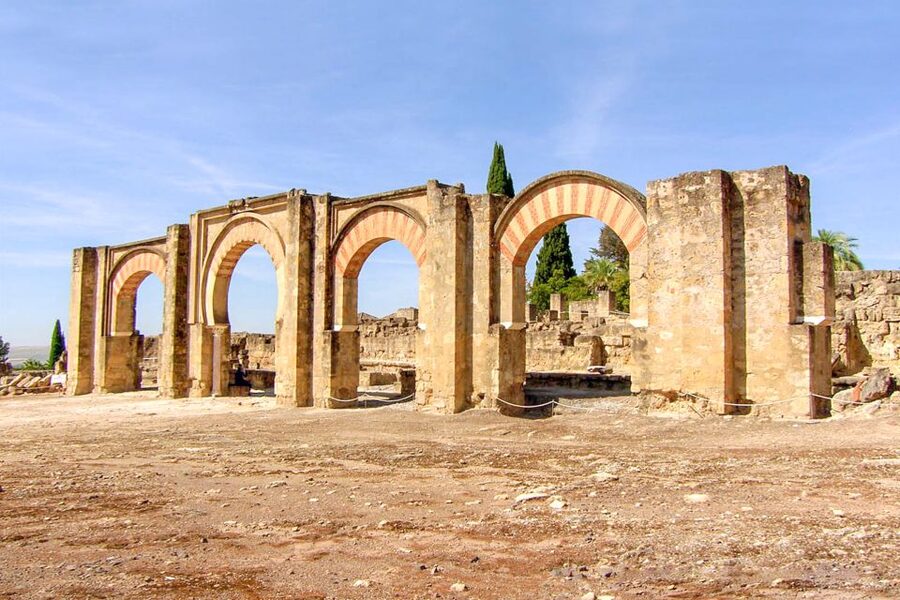
The site’s appeal comes from the contrast between its former importance and its present condition. You walk among foundations and partial structures that once formed an ornate ceremonial and administrative center. Decorative details and the arrangement of the buildings hint at the care that went into the city’s design.
The archaeological work is ongoing, so the site does not offer a finished picture. One visitor described only about 12 percent as excavated. That figure helps explain why the visit can feel both impressive and incomplete. The visible area is enough to show the city’s ambition, but not enough to reveal every neighborhood or building.
For me, that is a reason to visit with a guide rather than alone. You need help understanding what the excavated area represents within the larger city. A guide can also point out less obvious corners and explain how the parts fit together.
Do not expect the same kind of preserved interiors found in some of Córdoba’s major monuments. Medina Azahara is primarily an archaeological site. Its rewards come from scale, planning, fragments, and imagination. If you enjoy seeing how archaeologists reconstruct the past from limited evidence, you will get more from this visit.
Same base, a different kind of day out:
- Córdoba: Jewish Quarter, Mosque, and Alcázar Tour
★ 4.7 · 4,279 reviews - Cordoba: Equestrian Show General Entry
★ 4.5 · 2,333 reviews - Cordoba Mosque & Jewish Quarter Tour with Tickets
★ 4.6 · 1,996 reviews - Cordoba: Alcazar Guided Tour and Skip-the-Line Ticket
★ 4.2 · 1,792 reviews
The bus option makes the outing easier
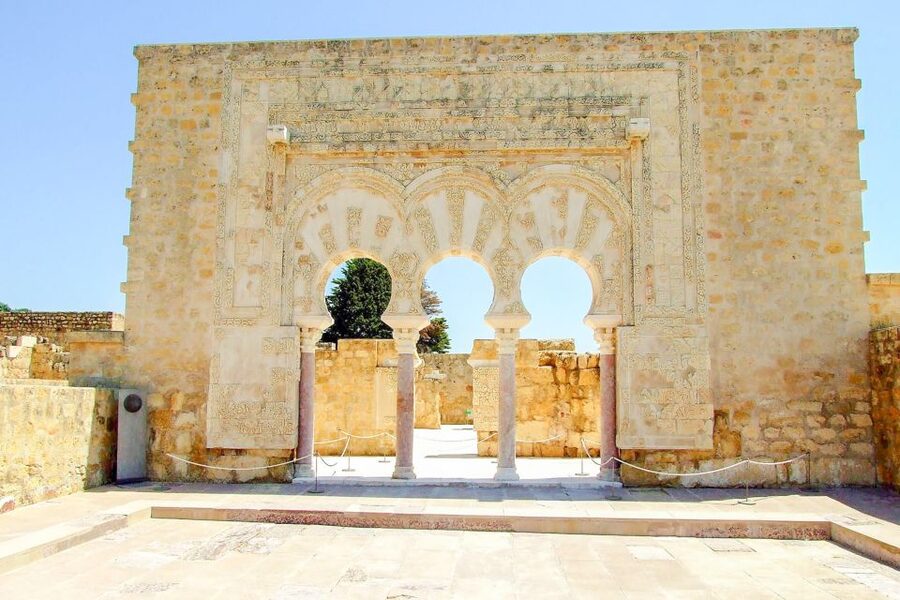
You can book the guided visit with or without a tourist bus. The bus option includes travel from Córdoba to Medina Azahara and return transport, plus the short transfer from the visitor center to the main monuments.
That arrangement can save effort. Medina Azahara sits outside Córdoba, so the bus provides a straightforward connection for visitors who do not want to organize separate transport. It also keeps the excursion within the advertised three-hour period more easily.
The main practical issue is finding the meeting point in Córdoba. A specific departure point described by one visitor is the semicircular bus stop across from the Eurostars Hotel, behind the regular bus stops. It may be marked as Parada Bus, and the sign can be small. The yellow bus with red lettering is used for the departure.
Because the meeting point can vary by the option you book, check your confirmation carefully. Arrive with time to spare, especially if you are unfamiliar with Córdoba’s bus stops. This is the one part of the outing that has caused some confusion, while the actual transport and site organization have generally been described as efficient.
The option without the Córdoba bus may suit you if you already have transport or are staying near the site. It still includes the guide, entrance, and the transfer at Medina Azahara from the visitor center to the main monuments. Compare the two choices before booking rather than assuming the cheaper or simpler-looking option is best.
Heat, walking, and what to bring
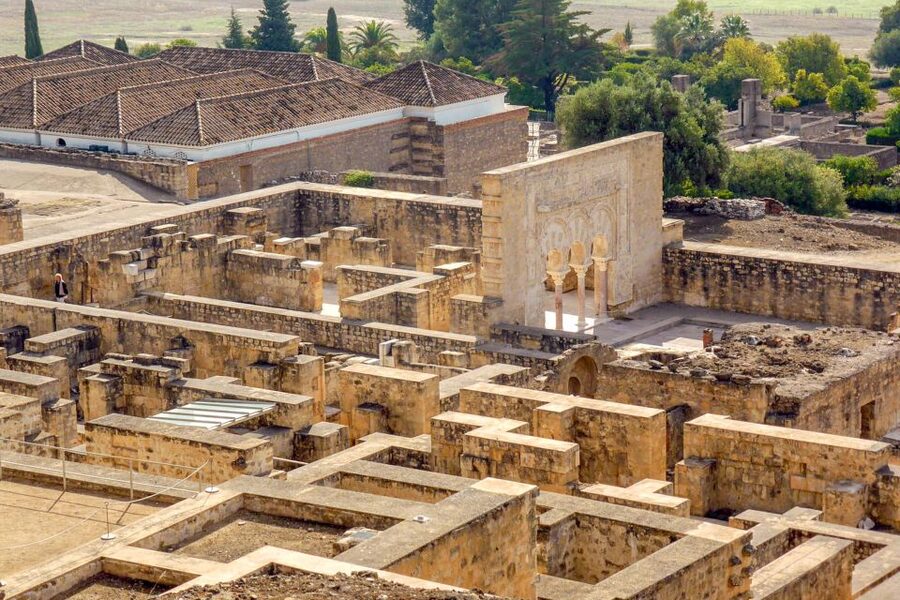
The site is exposed, and summer can be very hot. One July visit was described as difficult because the sun was intense, while another visitor noted that the guide tried to find shade and keep the group engaged during a very hot day.
Bring a hat, drinks, comfortable shoes, and comfortable clothing. These are not minor suggestions. You will spend time outdoors on an archaeological site, and the ground may not feel as easy as a paved city street.
The three-hour schedule includes the visitor center and the ruins, so wear shoes that you can walk in comfortably. Water is especially important in warmer months. If you visit in summer, sunglasses and extra sun protection are sensible additions, even though they are not specifically listed among the required items.
The length is one of the tour’s strengths. Three hours gives you enough time to understand the site without turning the visit into an all-day commitment. Keep a little flexibility afterward, since guided visits can run slightly longer than the posted time.
Is $23 a good value?
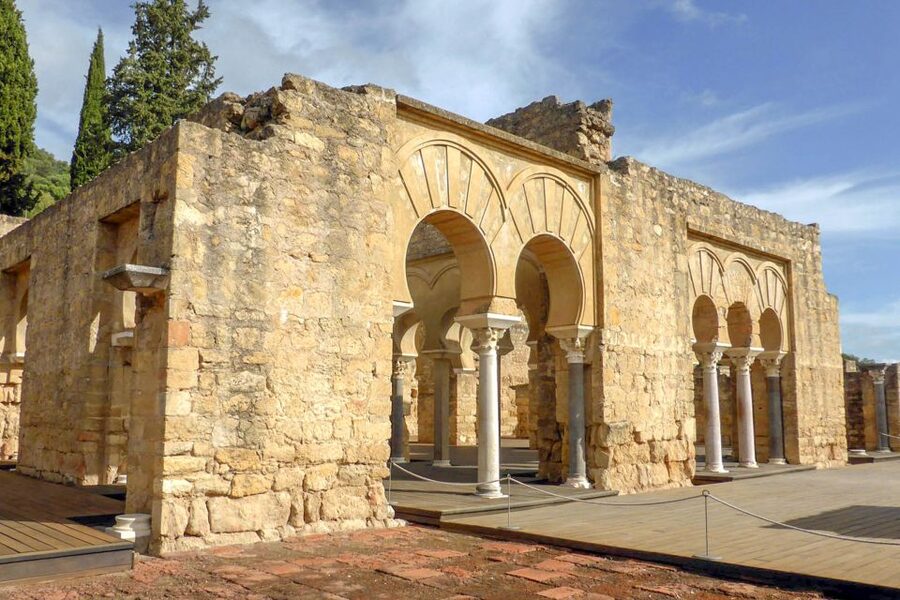
At $23 per person, this is a reasonable price for a guided archaeological outing, particularly if you choose the option that includes transport from Córdoba. The price covers the guide, entrance, and the relevant tourist-bus transfers. Food and drinks are not included, so bring your own water and plan any meal separately.
The value comes from the interpretation as much as the admission. Medina Azahara is not the easiest site to understand from signs alone. A strong guide can explain the political purpose of the city, identify architectural features, and help you picture life in a place that is now only partly exposed.
If you already have transport and prefer to explore quietly at your own pace, the no-bus option may be a better match. If you want the least planning and a clear introduction to the site, the bus option makes more sense.
The flexibility also helps. You can reserve now and pay later, and cancellation is free up to 24 hours before the activity for a full refund. Those terms are useful when you are arranging several Córdoba sights around changing schedules.
Who will enjoy this tour most?
I would recommend this tour to anyone who wants more than Córdoba’s central monuments. It is particularly useful after visiting the historic city, because Medina Azahara adds political and architectural context to what you have already seen.
History fans will appreciate the focus on the Caliphate of Córdoba and the 10th-century government center. Architecture enthusiasts will enjoy studying the plan, decoration, and surviving structures. The tour also suits visitors who prefer a clear narrative rather than trying to interpret archaeological remains alone.
Families can benefit from the virtual reconstruction film and the guides’ stories about daily life. Still, the open setting and walking may be less comfortable for young children on a hot afternoon. The activity is also a good fit for visitors who speak English or Spanish, since those are the available guide languages.
You may be less satisfied if you expect fully restored palaces or long stretches of intact rooms. The site is partly excavated, and its power comes from what you can infer as much as what you can see. Go with curiosity, not with the expectation of another Mezquita.
Final verdict: should you book it?
Book this tour if you want to understand how Córdoba became the center of a powerful medieval caliphate. The visitor center film, bus connection, and live guide solve the main problems of visiting an incomplete archaeological site: getting there, knowing what you are seeing, and picturing what has disappeared.
I especially like the combination of archaeology and storytelling. Guides including Emilio, Almudena, Maria, and Alejandro have been praised for clear English, humor, patience, and the ability to answer questions. The most important caution is practical: find the meeting point carefully, bring water, and avoid arriving unprepared for strong sun.
At $23, the tour offers good value for a three-hour visit, particularly with transport included. If Medina Azahara is on your Córdoba list, I would choose the guided option rather than visiting without context.
FAQ
How long does the Medina Azahara tour last?
The activity lasts about three hours. This includes time at the visitor center, the guided visit to the archaeological site, and transport if you choose the bus option.
How far is Medina Azahara from Córdoba?
The site is about 5 miles, or 8 kilometers, from Córdoba.
What languages are available?
The live tour guide is available in English or Spanish.
Is transportation from Córdoba included?
Transportation from Córdoba to Medina Azahara and back is included if you choose the tourist-bus option. The meeting point may vary depending on the option booked.
Is transport provided at Medina Azahara?
Yes. The included site transport takes visitors from the visitor center to the main monuments at Medina Azahara.
What happens at the visitor center?
You spend about one hour at the visitor center, where you learn about Moorish history in Spain, see displays, and watch a film that virtually reconstructs Medina Azahara in the 10th century.
Is entrance to Medina Azahara included?
Yes. Entrance to the site is included.
Are food and drinks included?
No. Food and drinks are not included. You should bring drinks, especially during the warmer months.
What should I bring?
Bring comfortable shoes, a hat, drinks, and comfortable clothing. Sunglasses and additional sun protection may also be useful in summer.
Can I cancel the booking?
You can cancel up to 24 hours in advance for a full refund. You can also reserve now and pay later.
Just added in Cordoba
- Alcazar of Cordoba Entry Ticket and Guided Tour★ 4.3 · 372 reviews
- Córdoba: Medina Azahara 3-Hour Guided Tour★ 4.6 · 969 reviews
- Cordoba: Jewish Quarter and Mosque-Cathedral Guided Tour★ 4.6 · 996 reviews
- Córdoba: Mosque-Cathedral, Jewish Quarter and Alcázar Tour★ 4.7 · 1,426 reviews
- Córdoba: Skip-the-Line Great Mosque-Cathedral History Tour★ 4.7 · 1,690 reviews
- Mosque-Cathedral of Córdoba Guided Tour with Tickets★ 4.5 · 1,649 reviews
- Cordoba: Alcazar Guided Tour and Skip-the-Line Ticket★ 4.2 · 1,792 reviews
- Cordoba Mosque & Jewish Quarter Tour with Tickets★ 4.6 · 1,996 reviews
Tours in Cordoba, compared.
Skip-the-Ticket-Line Mosque-Cathedral Guided Tour
Read our review →

Cordoba Mosque & Jewish Quarter Tour with Tickets
Read our review →
Skip-the-Line Great Mosque-Cathedral History Tour
Read our review →
Mosque-Cathedral of Córdoba Guided Tour with Tickets
Read our review →Browse the lists this tour appears in