
Reviewed · SPAIN
Seville: Bullring Guided Tour with a Skip-the-Line Ticket
The most revealing part of this Seville tour is not simply seeing the golden bullring. It is learning what happens before a bullfight: the roles of the matador and supporting team, the prayers in the chapel, the horses’ courtyard, and the meaning of each gate and seating section. Margarita is one guide often named for her energy and detailed explanations.
I like the small, focused route through the museum and working spaces, followed by the dramatic walk toward the arena. I also like the included headset, which lets you hear the guide clearly even when the building is busy. The main consideration is that access to the arena floor can change during bullfighting season. At those times, you may view it from the seats instead.
Key points at a glance
- Four-part bullfight museum: See costumes, capes, and displays explaining the event from start to finish.
- A glimpse behind the arena: Visit the horses’ courtyard and the small chapel where bullfighters pray before a fight.
- The main gate entrance: Hear the wooden doors open and enter toward the arena in the same direction as a bullfighter.
- Useful historical context: Learn about the people involved, the purpose of each stage, and how the tradition has changed.
- Skip-the-line entry: At $32, the ticket saves waiting time and adds a live guide rather than leaving you with displays alone.
- A respectful introduction: You can learn about bullfighting without agreeing with the modern event or attending a fight.
Why the Real Maestranza is worth seeing
Seville’s Plaza de Toros de la Real Maestranza is one of the city’s most recognizable buildings, but the outside tells you little about how the place works. The tour gives you the setting, the vocabulary, and the sequence of a bullfight so the arena becomes more than a photogenic circle of seats.
You begin with the cultural background. That matters because bullfighting can seem baffling, theatrical, or troubling if you encounter it without context. The guide explains its purpose, the different parts of a corrida, and the many people who take part. You can then decide how you feel about the tradition with a clearer understanding of what you are seeing.
The tour does not require you to attend a bullfight. Several guests have appreciated being able to study the culture and history while still feeling uneasy about the modern event. That makes this a useful choice if you want cultural context, not a ticket to a spectacle.
The experience lasts about one hour to 75 minutes. That is long enough for a guided introduction without taking over half your day. You can pair it with nearby sights in central Seville, and the bullring is within easy walking distance of the city center.
A few more things to do in Spain worth a look
- Barcelona: Park Guell Guided Tour with Skip The Line Entry
★ 4.7 · 17,563 reviews - Palma: Cathedral of Mallorca Skip-the-Line Entry Ticket
★ 4.6 · 14,386 reviews - Barcelona: Sagrada Familia Skip-the-Line Entry Ticket & Tour
★ 4.8 · 12,789 reviews
The four sections of the Bullfight Museum
The museum is divided into four sections, giving the visit a clear structure. Rather than sending you through a room of disconnected objects, the guide uses the exhibits to explain how bullfighting developed and how a fight is organized.
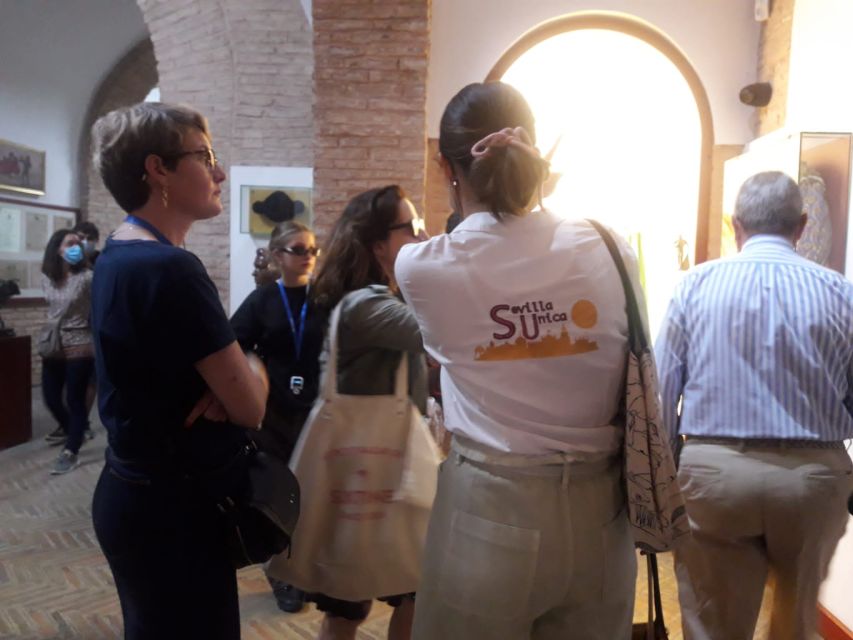
You will see original bullfighter costumes and capes, objects that make the tradition easier to understand as a trained performance with strict roles and visual signals. The clothing is not just decoration. It helps show the status and identity of the people in the ring, while the capes connect to the movements you later hear about in the arena.
The guide also explains the aim of bullfighting and the parts of a typical event. You learn who does what, from the matador to the other members of the team, and how the bullring is arranged for the action. If you know little about the subject, this section gives you the basic map before you step into the larger spaces.
I would pay close attention to the guide here rather than rushing toward the arena. The museum is where the facts fit together best, and the explanations are what separate this visit from a quick, self-guided look at the building.
The quality of the experience depends heavily on the guide. English tours are generally praised for clear, lively explanations, and guides such as Margarita have been singled out for their passion, humor, and willingness to answer detailed questions. A few people have found a guide’s English difficult to follow at moments, so the headset is useful and the selected tour language matters.
Horses, prayers, and the spaces before the fight
After the museum, the route continues into the horses’ courtyard. This is a less polished and more functional part of the bullring, which is exactly why it adds something useful. You see a space connected to the preparation of the event rather than only the grand public arena.
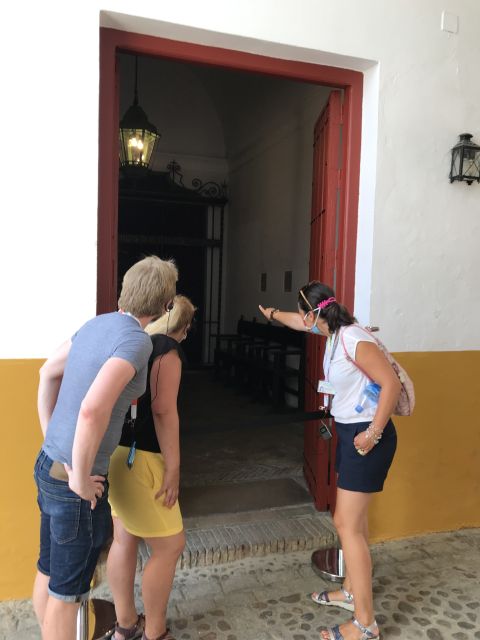
The tour also visits the chapel. Bullfighters pray here before entering the ring, and that small stop gives the tradition a personal and solemn side. It is easy to focus on the costumes, crowds, and ceremony, but the chapel shows that the event has also carried private fear, faith, and ritual for the people taking part.
Your guide can explain how these spaces fit into the wider sequence. That kind of detail is hard to pick up from a sign or an audio track alone. You are not simply looking into rooms. You are learning why they are there and who used them.
Entering through the main gate
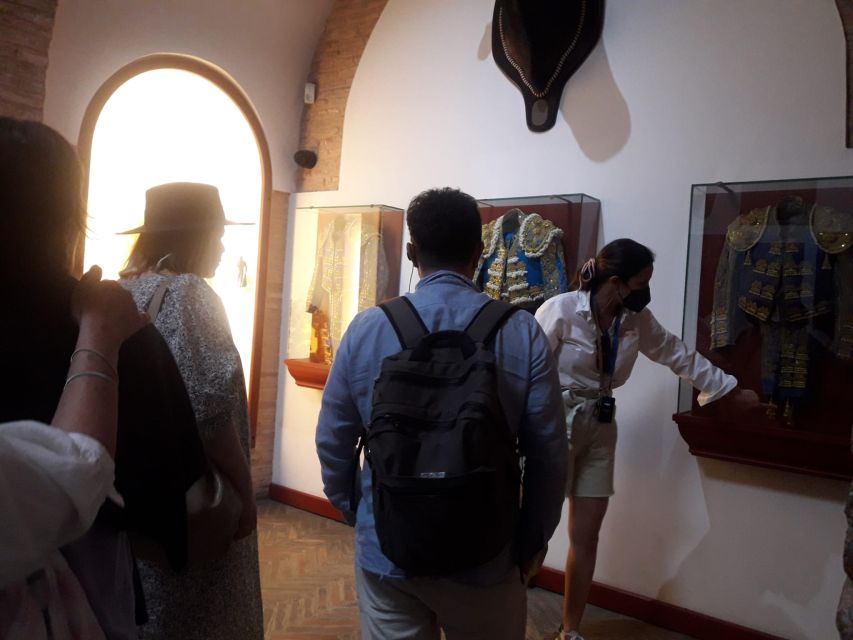
One of the tour’s most memorable moments comes before you reach the arena. You pause near the main gate and hear the wooden door open. Then you pass through as a bullfighter would.
It is a simple bit of theater, but it gives the building a sense of movement. From the outside, a bullring can seem like a static monument. Walking through the gate makes you think about the direction of arrival, the noise of the crowd, and the pressure of stepping into the ring.
I like this part because it turns historical information into a physical experience. You are not asked to pretend you are a matador, but the route lets you understand the symbolism of the entrance. It also makes for a stronger memory than simply viewing the arena from a corridor.
The pace is brisk but not rushed. The guide continues explaining what you are seeing, and the headset helps you keep up while moving between spaces. If you want a slow, private museum visit, this is not that. If you want a compact guided introduction with a strong sense of place, the pace works well.
Same base, a different kind of day out:
- Barcelona: Sagrada Familia Entry Ticket with Audio Guide
★ 4.6 · 105,312 reviews - Barcelona: Park Güell Admission Ticket
★ 4.4 · 76,534 reviews - Seville: Royal Alcázar Entry Ticket
★ 4.6 · 28,378 reviews - Barcelona: Casa Batlló Entry with Self-Audioguide Tour
★ 4.7 · 25,359 reviews
Looking across the arena from the center
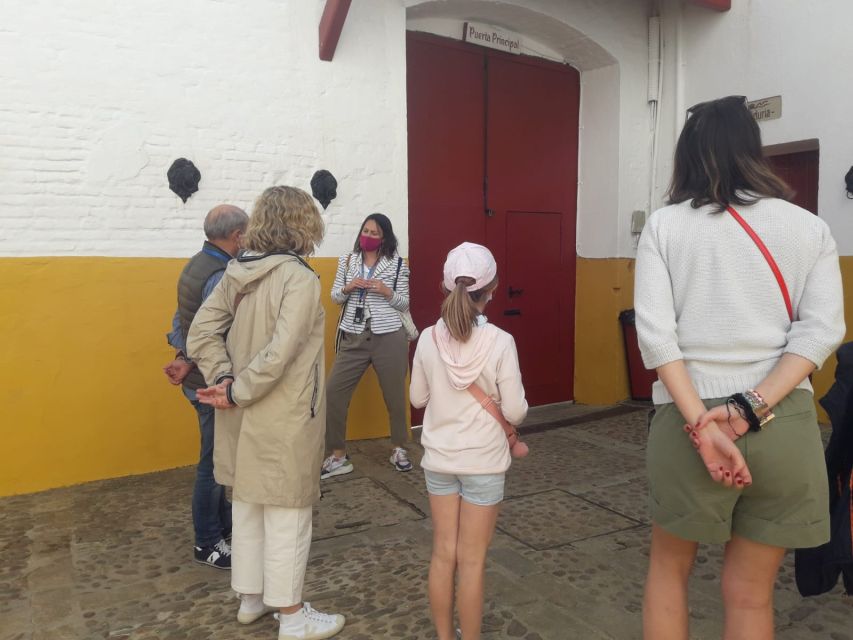
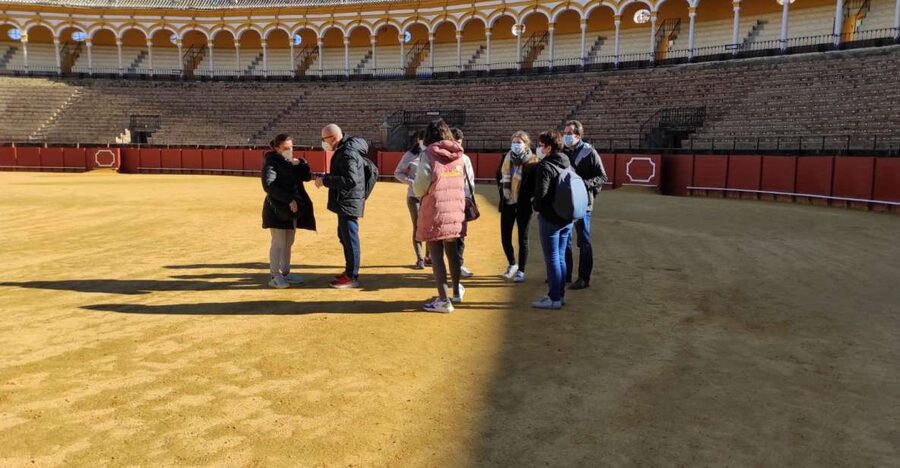
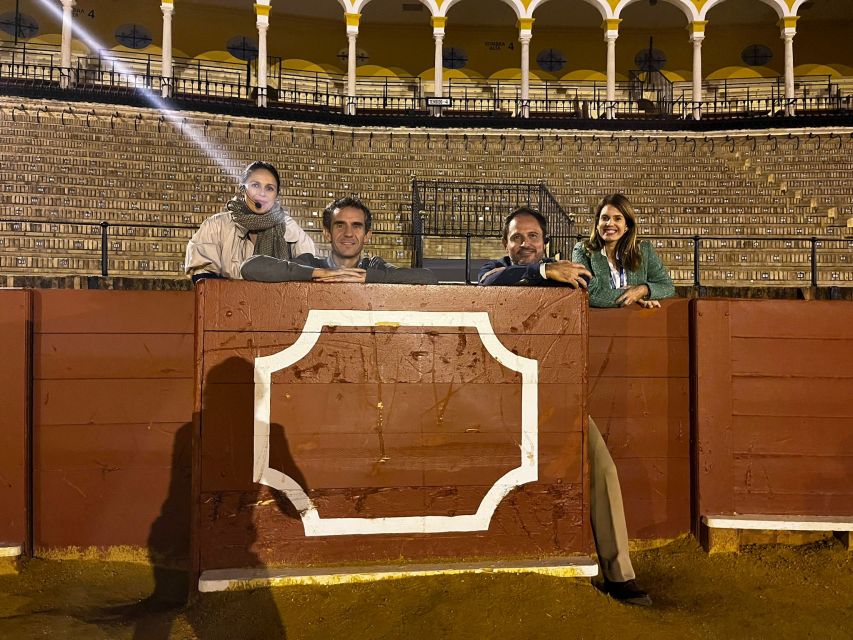
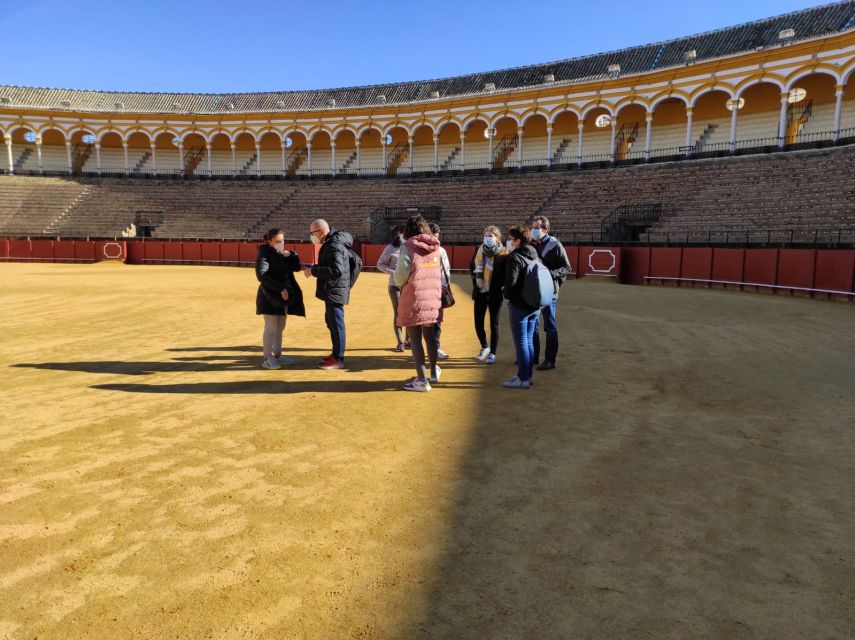
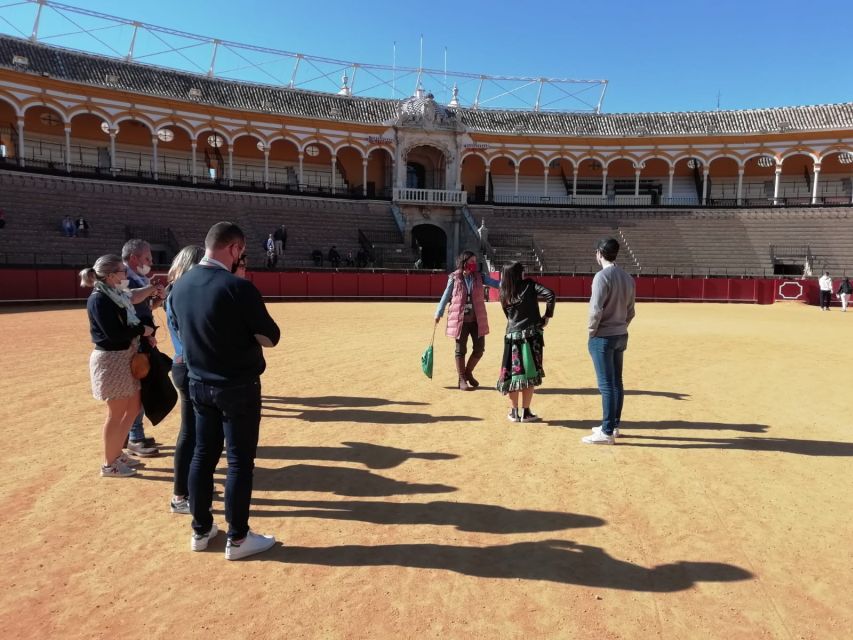
When conditions allow, the group enters the arena and pauses in the middle. From there, you can look up at the tendidos, the front seating sections, and study the circular design from the viewpoint that matters most during a fight.
You also look toward the toriles, the bull pens, and the Prince’s Gate. The guide explains why this gate is important: if a matador crosses it after a successful performance, the reception is especially favorable. Even without watching a fight, these details help you understand how the architecture and ceremony work together.
The arena floor is a highlight, but do not assume it is guaranteed at every time of year. During bullfighting season, access may be restricted and the group may admire the arena from the seats instead. This is an important difference from promotional photographs that show people standing on the sand.
That limitation does not ruin the visit, since the seats provide a good view of the layout. Still, if walking onto the arena floor is your main reason for booking, check the current conditions before you pay. Some people have found the difference disappointing, while others still considered the museum and guided explanation worthwhile.
What the guide adds beyond an audio visit
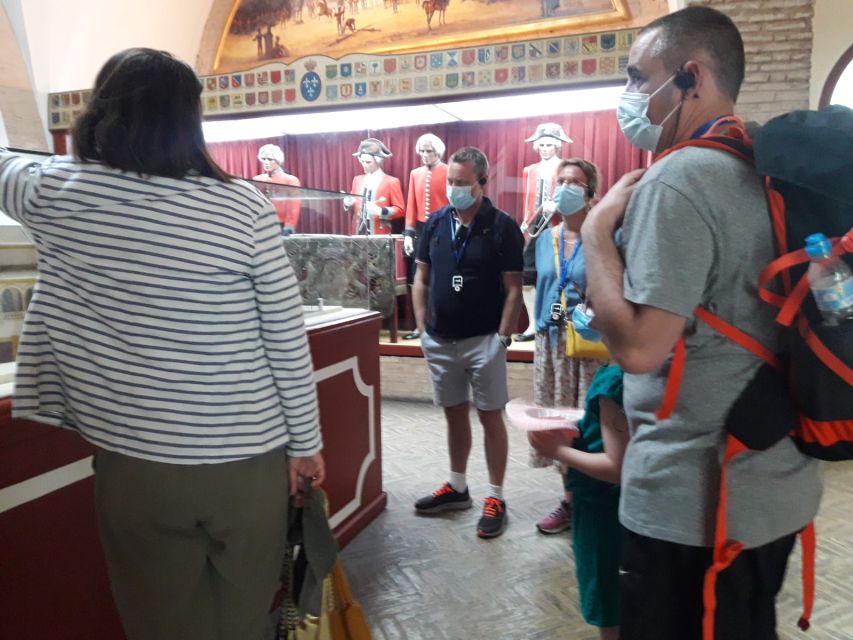
The bullring can be visited without this guided option, but the guide adds the human layer. You hear stories about specific bulls and bullfighters, explanations of customs, and answers to questions that a fixed recording cannot adjust to.
The strongest guides do more than recite dates. They explain why the tradition matters in Seville, how the event is organized, and which parts are often misunderstood. Margarita is repeatedly praised for giving detailed answers and making the subject approachable. Other guides have also been described as friendly, clear, and enthusiastic.
The headset is a practical bonus. You can stand at the back of a group, move through echoing rooms, and still follow the commentary. That is especially helpful if the guide speaks softly or if other groups are nearby.
Language is limited to English and Spanish, with the tour conducted in the language selected at booking. If your English comprehension is not strong, choose carefully. A few participants have found regional pronunciation or a guide’s delivery difficult at times, although the overall content remained useful.
Is $32 a fair price?
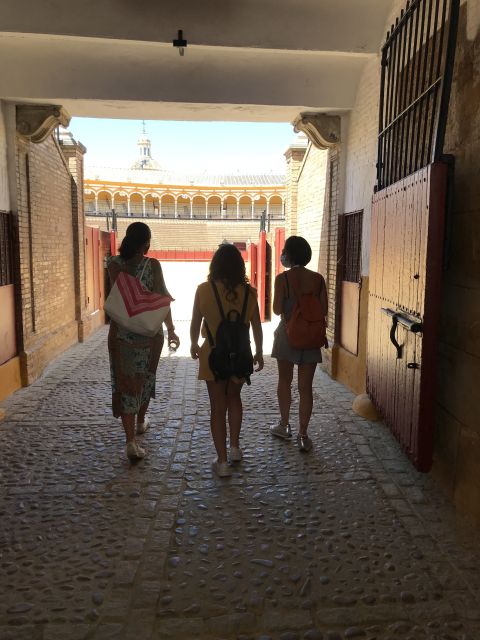
At $32 per person, this is not the cheapest way to enter a historic building in Seville. The price is easier to justify if you value a live explanation, skip-the-line access, and a short route through areas you might not fully understand alone.
A self-guided visit may suit you if you prefer to read at your own pace or want to spend a long time examining museum objects. The guided ticket makes more sense if you have only an hour, want the bullfighting basics explained plainly, or would rather ask questions than decode displays.
The included headset, official guide, and skip-the-line ticket add practical value. You are paying for time saved and for interpretation, not just admission. At a duration of one hour to 75 minutes, it also fits neatly into a busy day of sightseeing.
The value drops if you mainly want a quiet museum visit or if your booking falls during a period when the arena floor is closed. In that case, make the decision based on the guide and museum, not on the promise of walking across the sand.
Who will enjoy this Seville tour?
I would recommend it to first-time visitors who want to understand one of Andalusia’s most debated traditions. It suits couples, families with older children, and curious solo visitors who want a clear introduction without committing to a full bullfight.
It is also a good choice if you are unsure how you feel about bullfighting. You can learn about the practice, see the ritual spaces, and ask questions without attending an event. The tour presents the tradition as part of Spanish culture, but you remain free to judge the modern practice for yourself.
People with a strong interest in architecture will enjoy the arena’s layout and ceremonial entrances. Museum fans will appreciate the costumes and capes. History-minded visitors will get the most from the guide’s explanation of how the event and its roles developed over time.
I would be more cautious about booking it for very young children. The subject concerns a live animal event and may not suit every family. The provided information does not set a child age limit, so consider your child’s interest and comfort before reserving.
Practical details before you go
There are two possible starting points: P.º de Cristóbal Colón, 12, or Calle Circo, 7. Your meeting point depends on the option booked, so check it closely before leaving your hotel.
Arrive early. Access is not permitted once the tour has started, and a late arrival could mean missing the group. Bring your passport or ID card, including for children. If you book a senior, student, or child fare, you must carry proof of eligibility. Students also need a valid student card.
A reusable water bottle is recommended, which is sensible in Seville’s warm weather. The activity is wheelchair accessible, but the route and current access arrangements can still be affected by venue restrictions or security rules.
You can cancel up to 24 hours before the activity for a full refund, and the reserve-now, pay-later option keeps your plans flexible. Starting times vary, so check availability for the date you want.
Should you book the Real Maestranza tour?
Book it if you want more than a quick photograph of Seville’s bullring. The museum, chapel, horses’ courtyard, main gate, and arena create a well-shaped hour, while a strong guide can make the customs and vocabulary much easier to understand.
I especially recommend it if you feel uncertain about bullfighting. You can gain cultural and historical context without watching a fight, and the visit leaves room for your own opinion. Just check whether the arena floor is open during your dates, and remember that the guide’s language and delivery will shape the experience.
At $32, the ticket is fair for a short guided visit with skip-the-line entry and a headset. It is a good use of time for curious visitors who want Seville explained through one of its most distinctive traditions.
FAQ
How long does the bullring tour last?
The tour lasts between one hour and 75 minutes.
What languages are available?
The live guide is available in English or Spanish. The tour is conducted in the language selected when booking.
Is skip-the-line admission included?
Yes. The ticket includes skip-the-line entry to the Plaza de Toros de la Real Maestranza.
Can I enter the arena floor?
Arena-floor access depends on the season and current restrictions. During bullfighting season, the arena may be viewed from the seats instead.
What places are included in the tour?
The route includes the Bullfight Museum, the horses’ courtyard, the chapel, the main gate, and views of the arena, including the tendidos, toriles, and Prince’s Gate.
Are headsets provided?
Yes. Headsets are included so you can hear the guide clearly during the tour.
What identification should I bring?
Bring a passport or ID card. Children need identification as well. Senior, student, and child fare holders must bring proof of age, and students must also carry a valid student ID card.
Is the tour wheelchair accessible?
Yes, the activity is listed as wheelchair accessible.
What happens if I need to cancel?
You can cancel up to 24 hours in advance for a full refund. A reserve-now, pay-later option is also available.
Just added in Spain
- Bizkaia Bridge, Gaztelugatxe, Bermeo and Gernika from Bilbao★ 4.5 · 299 reviews
- Benalmadena: City Sightseeing Hop-On Hop-Off Bus Tour★ 3.5 · 379 reviews
- Welcome to Barcelona: Private Tour with a Local★ 4.6 · 200 reviews
- Barcelona: White Rabbit Catalonia’s Top Immersive Experience★ 4.7 · 359 reviews
- Bean to Bar Chocolate Workshop in Barcelona★ 5.0 · 172 reviews
- Barcelona: Walking tour with Montjuic Castle & Cable Car★ 4.7 · 832 reviews
- Barcelona: Welcome to Barcelona Segway Tour★ 4.9 · 153 reviews
- Barcelona: Helicopter Flight with Optional Yacht Cruise★ 4.7 · 224 reviews