
Reviewed · SPAIN
Royal Site of San Lorenzo de El Escorial Entrance Ticket
The monastery of San Lorenzo de El Escorial is one of Spain’s great surprises: a stern granite complex outside Madrid that opens into grand chapels, royal rooms, painted ceilings, gardens, and a crypt filled with monarchs. I like the chance to explore it at my own pace, and I like that one $21 ticket covers the main historic complex for the day.
I also like the easy day-trip format and the views toward the Sierra de Guadarrama and Valley of the Fallen. The catch is that this is admission only, not a guided tour, and unclear meeting directions have caused serious trouble for some buyers. Check the entrance details carefully before you go.
Key points to know before visiting
- The monastery is both palace and religious complex: You’ll move through the royal residence, monastery, basilica, library, chapels, gardens, and royal crypt.
- Philip II is central to the story: The building expresses the political and religious ambitions of Spain’s Golden Age.
- The outside is austere, the inside more decorative: The plain granite exterior gives way to frescoes, royal decoration, and major works of art.
- This is a self-guided visit: Your ticket includes admission, not a personal guide or a narrated tour.
- Madrid is less than an hour away by train: From the station, expect a pleasant but uphill walk of about 25 to 30 minutes.
- The ticket costs $21: That can be fair for a major royal monument, but poor directions or a second payment at the door can erase the value.
Why El Escorial is worth the trip from Madrid
San Lorenzo de El Escorial was built to be much more than a monastery. It served as a royal residence, a religious center, a burial place, a library, and a statement about Spain’s power during the reign of Philip II.
That mixture gives the visit its character. You are not simply walking through a church or palace. You are moving through a carefully planned complex where royal authority, Catholic devotion, scholarship, and art all share the same walls.
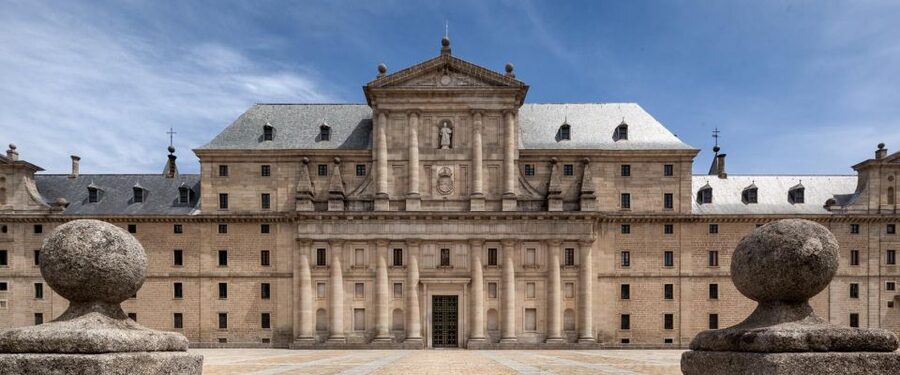
The building also helps explain the mood of Philip II’s Spain. Its design links Italian Renaissance ideas with Italian and Flemish artistic traditions, while its scale reflects the ambitions of the Spanish monarchy. The result is grand without being soft or playful. Much of the exterior feels severe, even fortress-like.
That plain outer shell can be misleading. Inside, the decoration becomes more varied. You may find frescoes, royal rooms, chapels, painted surfaces, and formal spaces that show the artistic goals of the period. The contrast is part of the appeal. The building’s stern exterior prepares you for a place built around duty and authority, while the interior gives you the art and ceremony.
A few more things to do in Spain worth a look
- Barcelona: Sagrada Familia Entry Ticket with Audio Guide
★ 4.6 · 105,312 reviews - Barcelona: Park Güell Admission Ticket
★ 4.4 · 76,534 reviews - Seville: Royal Alcázar Entry Ticket
★ 4.6 · 28,378 reviews
Entering a royal monastery built for many purposes
The original monastery of San Lorenzo el Real was created for monks of the Order of St. Jerome. It later functioned as a royal home and a place connected with Spanish rulers, including Emperor Charles V and his wife.
The building’s layout has remained largely unaltered. That matters because you can still read the original plan rather than walking through a modern reconstruction or a palace rearranged for tourism. The rooms and corridors retain a strong sense of order.
As you explore, keep asking what each area was designed to do. The monastery was meant to support prayer and religious life. The palace represented royal power. The library gathered learning. The basilica provided a grand setting for worship. The royal burial spaces connected the living monarchy with earlier generations.
This is why I would allow plenty of time rather than treating the ticket as a quick photo stop. The ticket is valid for one day, and the complex rewards a slower visit. You do not need to rush from room to room simply to check off the main sights.
Because there is no guide included, it helps to arrive with a basic idea of the building’s purpose. Even a short look at Philip II, Charles V, and the Spanish Golden Age will make the rooms more meaningful. Without that preparation, you can still admire the architecture, but the visit may feel like a long succession of grand spaces.
The basilica and the artistic heart of the complex
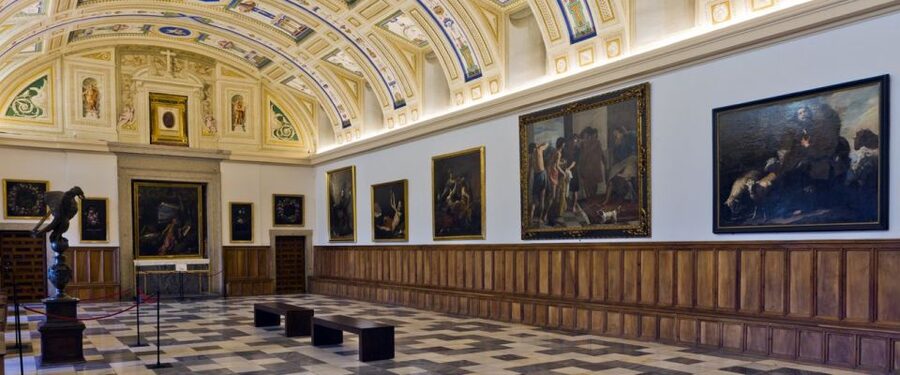
The basilica, erected in 1574, is one of the key stops inside El Escorial. It gives the complex its strongest ceremonial focus and shows how architecture and art were used to express royal devotion.
Look beyond the size of the church. The important point is the relationship between the basilica and the rest of El Escorial. It was not built as a separate attraction. It forms part of the larger plan, linking the monastery, palace, and royal purpose.
You can expect artwork that took years to complete, along with the formal decoration typical of a major royal religious building. The exact experience will depend on which areas are open during your visit, but the basilica is central to understanding why this place was built on such a large scale.
The chapels add another layer. They show the religious side of the complex in smaller, more focused spaces. After the broad ceremonial setting of the basilica, these rooms can feel more intimate and help you notice details that are easy to miss in the main church.
The royal palace and the story of Spain’s rulers
The palace sections show that El Escorial was not only a home for monks. They connect the complex to the Spanish monarchy and to the people who shaped the period.
You will find rooms associated with royal life, but do not expect the light, polished feel of a later European palace. El Escorial was built around Philip II’s particular combination of piety, control, and political purpose. Its rooms feel connected to administration and belief as much as comfort.
The mention of Emperor Charles V and his wife is especially useful because it places the complex within a longer family story. El Escorial is tied not only to Philip II but also to the Habsburg dynasty and the rulers who came before him.
I find this part most rewarding when you focus on the building’s function. Ask how a king could use one complex to pray, govern, preserve family memory, and present Spain as a leading Catholic power. That question turns a visit from room viewing into a clearer picture of the age.
Same base, a different kind of day out:
- Barcelona: Casa Batlló Entry with Self-Audioguide Tour
★ 4.7 · 25,359 reviews - Seville: Cathedral and La Giralda Entry Ticket
★ 4.5 · 24,592 reviews - Madrid: Tour Bernabéu Entry Ticket
★ 4.5 · 21,573 reviews - Barcelona: 24 or 48-Hour Hop-On Hop-Off Bus Tour
★ 4.4 · 20,872 reviews
The library, chapels, and works by Juan de Villanueva
The library is one of the most appealing stops for anyone who likes the connection between learning and power. A royal monastery needed books, records, and scholarship, and the library shows that Spain’s cultural ambitions went beyond military and religious authority.
The visit also includes works associated with architect and artist Juan de Villanueva. His name is important in Spanish architectural history, and seeing his work within a site already shaped by Renaissance ideas gives you a useful comparison between different periods and styles.
The supplied information does not promise a dedicated explanation of each artwork. That is another reason to consider reading a little before arrival or using your own guidebook. The ticket gets you inside, but it does not provide the story behind every room.
Still, self-guided visits have one advantage: you can stay with the details that interest you. If the library catches your attention, you can linger. If the palace feels more important to you than the art, you can adjust your pace without following a group.
Gardens, mountain views, and the Valley of the Fallen
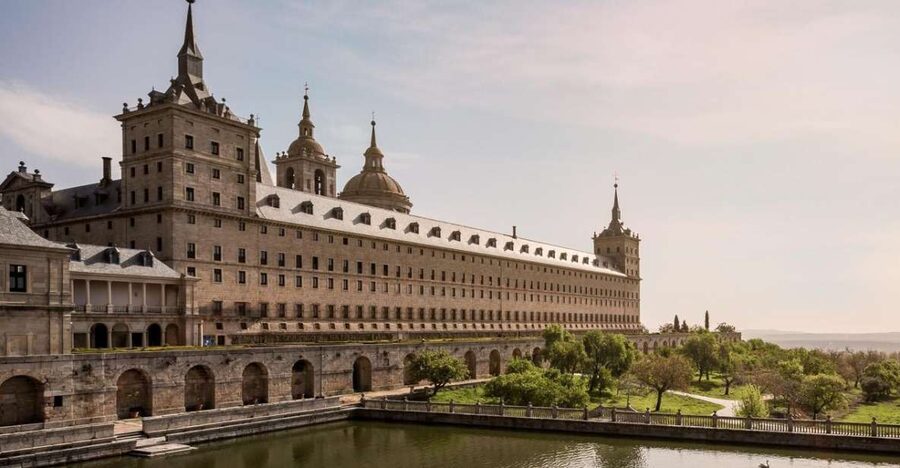
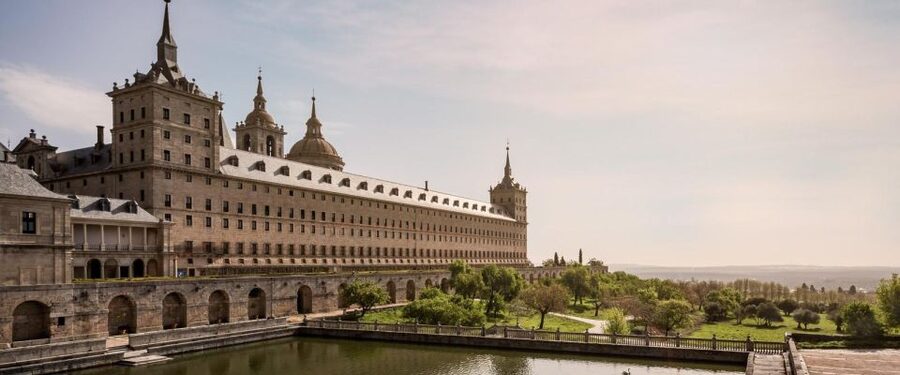
The gardens provide a break from the heavy interiors. They are maintained in a formal style and help you understand how the monastery relates to its setting.
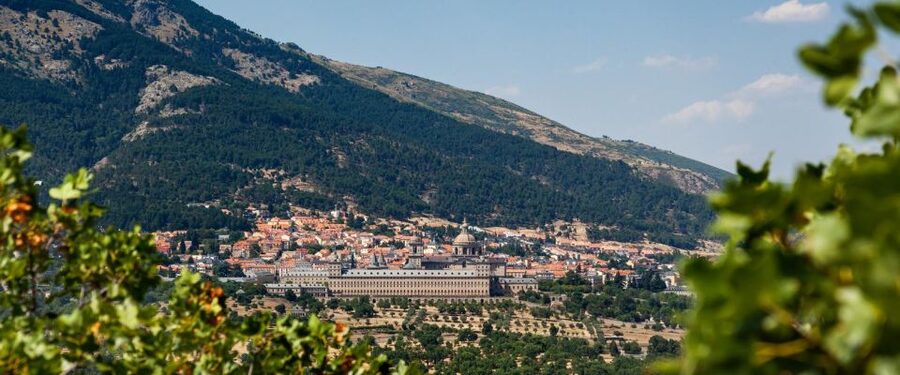
On a clear day, you may see toward the Sierra de Guadarrama and the Valley of the Fallen’s basilica. These views are an important part of the visit because they place the huge building within the wider area chosen for it.
Weather matters here. Fog and cold can soften or hide the distant views, but they do not ruin the interior. On a clear day, the gardens and surrounding scenery should be a larger part of your experience. If the weather is poor, simply give more attention to the rooms, art, and architecture inside.
Do not assume the gardens are just a quick finishing point. They give you a chance to look back at El Escorial as a whole. From outside, the building’s plain lines make more sense when you see the scale and the carefully ordered grounds.
The royal crypt and the human side of the monument
The crypt is one of the most memorable parts of the complex. It holds the remains of royals who once lived within the world represented by El Escorial.
This changes the mood of the visit. The palace rooms can feel distant and ceremonial, while the crypt makes the royal story physical. The people connected with the building are not simply names from a textbook. Their remains are part of the place.
The crypt also reinforces the original purpose of El Escorial. This was intended to preserve royal memory as well as serve religious and political needs. If you visit only the basilica and palace, you miss part of the building’s role as a monument to Spain’s ruling family.
Getting there from Madrid by train
The journey from Madrid to El Escorial takes under an hour by train, according to the practical experience provided with this activity. Once you reach the station, the walk to the monastery takes about 25 to 30 minutes and goes uphill.
That walk is manageable for many people, but it matters when planning your day. You are not stepping off the train at the entrance. Allow time for the uphill route, especially if you are carrying luggage or prefer not to walk far.
The activity does not include transport, so you must arrange the train separately. It also does not include a guide. The ticket is best understood as a way to secure entry, not as a complete excursion from Madrid.
If you are using a different route to reach the site, pay close attention to the exact entrance information. Some people have arrived at the wrong place, waited in a long line, or been asked to pay again. That is a major practical concern, particularly since this ticket is non-refundable.
Is the $21 ticket good value?
At $21 per person, the ticket can be good value if you want to see the full complex and prefer to explore independently. You are paying for access to a major royal and religious site with a basilica, palace areas, library, gardens, chapels, art, and crypt.
The value is weaker if you expect a guide, transport, or a carefully managed meeting point. None of those are included. You are buying admission, and the benefit is freedom rather than personal explanation.
The express security check is a useful feature on paper. It may help you avoid the standard security queue, but you still need to use the correct entrance and present the right confirmation. A fast security route does not protect you from bad directions.
The ticket confirmation can arrive within 48 hours after purchase. I would not leave this until the last moment if your plans are tight. Check your confirmation, confirm the entrance location, and keep the booking details easy to access.
Who should book this experience?
I would choose this ticket if you enjoy architecture, royal history, religious art, or self-guided sightseeing. It also suits a Madrid itinerary with a spare day and anyone who wants a major historic site without joining a full group excursion.
It is less suitable if you need step-by-step assistance or want every room explained. The absence of a guide means you must set your own context. You may get more from the visit with a guidebook, an audio resource, or some preparation about Philip II and the Spanish Golden Age.
The activity is not suitable for people with mobility impairments. The uphill walk from the station is another practical issue, although the supplied information does not provide alternative transport arrangements.
Cold or foggy weather should not automatically stop you. The interiors remain the main attraction, and poor visibility mainly affects the gardens and distant views.
A few smart ways to plan the visit
- Read the confirmation closely and verify the entrance address before leaving Madrid.
- Allow time for the 25 to 30-minute uphill walk from the train station.
- Plan for an unhurried visit, since the complex contains several different types of spaces.
- Bring background information on Philip II, Charles V, and the Spanish Golden Age.
- Treat the gardens and distant views as weather-dependent extras.
- Do not expect a guide to meet you, since admission is self-guided.
- Keep your ticket available at the entrance to avoid confusion over payment.
Should you book the El Escorial ticket?
Book it if you want a flexible, self-guided look at one of Spain’s most important royal buildings and you are comfortable arranging your own transport. The $21 price is reasonable for the range of spaces included, especially if you take time with the basilica, library, palace, gardens, and crypt.
I would be cautious if you need perfect directions, a personal guide, or mobility support. The strongest version of this visit is simple: confirm the entrance, travel from Madrid with time to spare, arrive prepared, and let the building’s unusual mix of monastery, palace, library, and royal tombs tell its story.
FAQ
What does the San Lorenzo de El Escorial ticket include?
It includes admission to the Royal Site of San Lorenzo de El Escorial.
How much does the ticket cost?
The listed price is $21 per person.
How long is the ticket valid?
The activity is described as lasting one day.
Is a guide included?
No. The ticket includes admission only, and a guide is not included.
Does the ticket include transport from Madrid?
No. Transport is not included.
How far is El Escorial from Madrid by train?
The train journey from Madrid takes under an hour.
How long is the walk from the train station?
The walk takes about 25 to 30 minutes and goes uphill.
What can I see inside El Escorial?
You can see the monastery, palace areas, basilica, library, chapels, royal crypt, gardens, and works associated with Juan de Villanueva.
Can I see the Valley of the Fallen from El Escorial?
The site provides views toward the Valley of the Fallen’s basilica and the Sierra de Guadarrama mountain range.
Is the activity suitable for people with mobility impairments?
No. The activity is listed as unsuitable for people with mobility impairments.
Is the ticket refundable?
No. The activity has a non-refundable cancellation policy.
When will I receive my booking confirmation?
The booking confirmation may arrive within 48 hours after purchase.
Just added in Spain
- The Red Canyon Tour – Small Group Trip with Local Food Tasting ツ★ 5.0 · 798 reviews
- Full Day Rainforest Tour with Tasting and Swimming Time ツ★ 5.0 · 607 reviews
- Full Day Ticket at Perchel Beach Club with Lunch★ 5.0 · 316 reviews
- 3 Wheel Motorcycle like Quad/Buggy Tour Gran Canaria (Maspalomas)★ 5.0 · 237 reviews
- Arucas, Teror, Viewpoint Roque Nublo – Highlights Gran Canaria★ 4.5 · 170 reviews
- Gran Canaria Highlights Private Tour VIP★ 5.0 · 106 reviews
- Full day Hiking Gran Canaria Peaks of Gran Canaria★ 5.0 · 130 reviews
- Coastering in Gran Canaria (Aquatic Route in the ocean cliffs)★ 5.0 · 135 reviews