
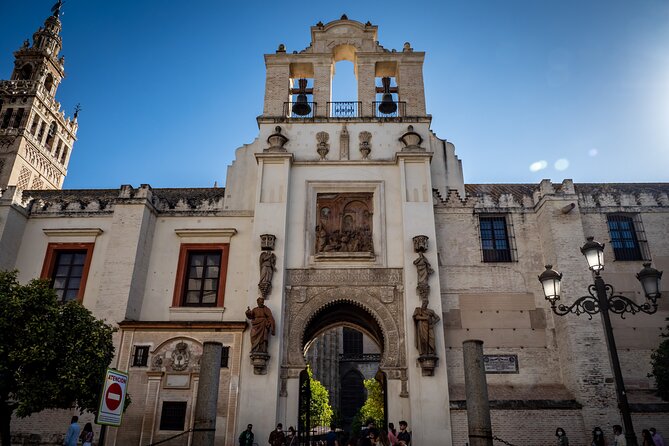
Reviewed · GOTHIC & JEWISH QUARTER WALKING TOURS
Private Tour Jewish Quarter, center and Plaza de España
Seville’s old Jewish Quarter is more than a maze of pretty lanes. It is where this tour does its best work, connecting synagogue, mosque, and church, then tying those layers to Murillo, Don Juan, Carmen, and the dramatic story of Seville’s Sephardic community. The walk finishes at Plaza de España, so you get both intimate Santa Cruz and the city’s grandest public setting.
I like the private format, which lets Víctor Fernández adjust the pace and explain details without a large group slowing every corner. I also like the route’s range: you see courtyards, walls, a former synagogue, the Royal Tobacco Factory, María Luisa Park, and the view toward the Cathedral and Giralda in one compact outing.
The main limitation is time. Two hours is enough for an excellent introduction, but not for long interior visits or a detailed tour of every monument. The walk also ends away from the starting point, and the listed schedule is limited to 10 a.m. to noon, so plan your morning carefully.
Key points to know before booking
- A private walk for up to 12 people: The $189.87 group price can be sensible for a family or small party, especially when divided among several people.
- A strong Sephardic focus: You’ll hear about the Jewish quarter, its walls and gates, the 1391 pogrom, and the expulsion under the Catholic Monarchs.
- Santa Maria la Blanca is included: The former synagogue is now a church, with Murillo works inside and free admission.
- The route links history with literature: Don Juan, Rosina, Figaro, Mérimée’s Carmen, and the city’s opera tradition all appear along the way.
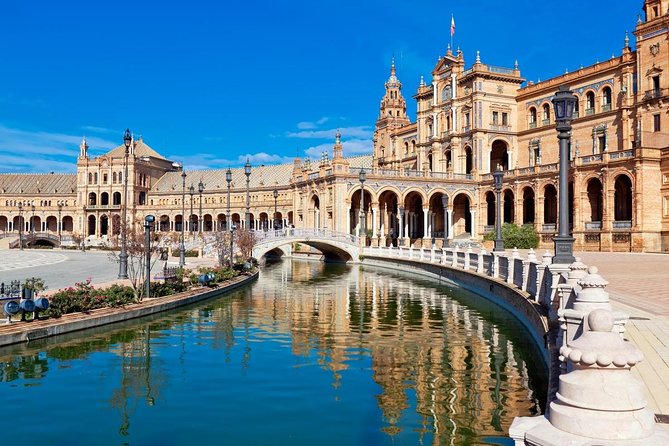
- The finish is Plaza de España: The route continues through the Royal Tobacco Factory and María Luisa Park before ending at one of Seville’s most memorable squares.
- Víctor leads in English: His style is conversational, story-based, and useful for food advice and wider Andalusia planning.
Starting among three faiths in Santa Cruz
Meet at Plaza de Santa Cruz, in the old center. This is a good place to begin because the tour does not treat Seville as a single-story city. The opening explanation places Jewish, Muslim, and Christian life side by side, including the striking fact that one square represented a mosque, a synagogue, and a church.
That framing matters. You are not just collecting pretty buildings. You are learning how Seville changed hands, faiths, and political systems over time. The guide also points out the remains of Murillo, one of Spain’s major painters, giving you an early link between the city’s religious buildings and its art.
I appreciate this kind of introduction because it gives you a map for the rest of the morning. As you walk, you can see how older structures were reused, renamed, or absorbed into later Seville.
More Old Town Walking Tours in Seville
- Seville: Small-Group Jewish Quarter Discovery Walking Tour
★ 4.9 · 499 reviews - VIP Guided Seville Alcazar Pre-Opening, Cathedral & Old Town
★ 5.0 · 191 reviews - Seville: Small Group Jewish Quarter Tour with Tapas & Drinks
★ 5.0 · 119 reviews
Walls, gates, and the world of Don Juan
The route then turns to Seville’s defensive walls and gates. You learn what the Jewish enclosure was like and where its necropolis was located. These details help explain that the Jewish quarter was not simply a loose collection of homes. It was a defined part of the city, shaped by law, security, religion, and changing political power.
The stop at the statue of Don Juan adds a different flavor. Here the guide shifts to Spain’s Golden Age and the famous figure associated with seduction, honor, and calculated rebellion. It is a small but clever pause, since Seville’s old streets have long served as a stage for legends and theatrical characters.
This blend of fact and story is one of the tour’s strengths. You get dates and political context, but you also get the characters who made Seville part of Europe’s literary imagination.
Santa Maria la Blanca and Murillo’s Seville
Santa Maria la Blanca occupies the site of an old synagogue. Inside the current church, you can see works by Murillo, and the guide explains plaques tied to Caminos de Sefarad, a network marking Jewish heritage sites across Spain. Admission is listed as free.
Allow about 10 minutes here. That is enough for an introduction, but not a long art visit. If Murillo is a major reason for your trip, you may want a separate museum or church visit with more time. On this walk, the paintings matter as part of the larger story: a former synagogue became a Christian church, and the building later received art shaped by Seville’s Catholic culture.
The stop is especially useful if you want to understand how religious change affected real buildings. The walls are not abstract history. They are the evidence.
Courtyards, narrow lanes, and the Barber of Seville
From Santa Maria la Blanca, the route threads through the neighborhood’s alleys and courtyards. You’ll see a very narrow street and look toward Rosina’s balcony, tied to The Barber of Seville. The guide also points out the old aqueduct.
This is where the walk becomes distinctly local in feel. The main monuments are important, but Santa Cruz is best understood at walking speed, through small passages and enclosed courtyards. You get a sense of how the neighborhood works as a physical place, not just a backdrop for photographs.
The opera references may appeal to you if you enjoy literary and musical connections. If you prefer only political history, these stories may feel like a side path. I think they earn their place because Seville’s identity has been built partly through the way artists imagined its streets.
More old-quarter walks in Seville:
- Barcelona in 1 Day: Sagrada Familia, Park Guell,Old Town & Pickup
★ 5.0 · 13,541 reviews - Córdoba: Jewish Quarter, Mosque, and Alcázar Tour
★ 4.7 · 4,279 reviews - Valencia Old Town Tour with Wine & Tapas in 11th Century Historic Monument
★ 5.0 · 3,234 reviews - Cordoba Mosque & Jewish Quarter Tour with Tickets
★ 4.6 · 1,996 reviews
The pogrom, expulsion, and the story of Susona
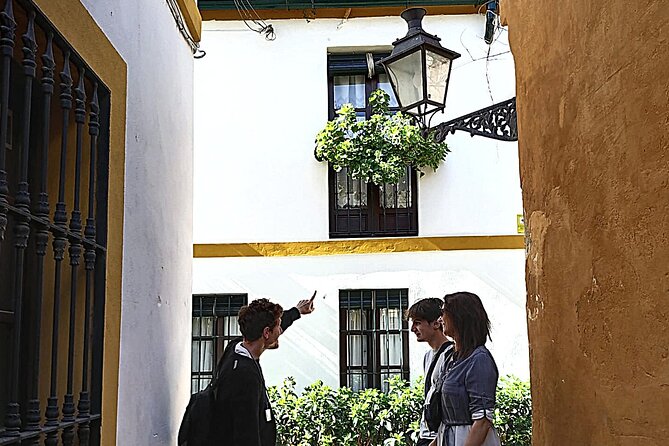
The most serious portion of the tour covers the 14th and 15th centuries. You hear about the hardships faced by Jewish communities, including the pogrom and the final expulsion ordered by the Catholic Monarchs.
This section gives needed weight to the beauty of Santa Cruz. Whitewashed lanes and flower-filled courtyards can make the old quarter seem like a harmless romantic set. The history was not harmless. Religious tension, violence, forced conversion, and expulsion shaped the people who lived here.
The guide also tells the legend of Susona, known as the beautiful Susona. It is a story connected to betrayal and memory, and it adds the kind of human detail that helps you remember a difficult period. Treat it as legend rather than a substitute for documented history, but enjoy the way it shows how Seville preserved its past through storytelling.
Seville as a city of opera
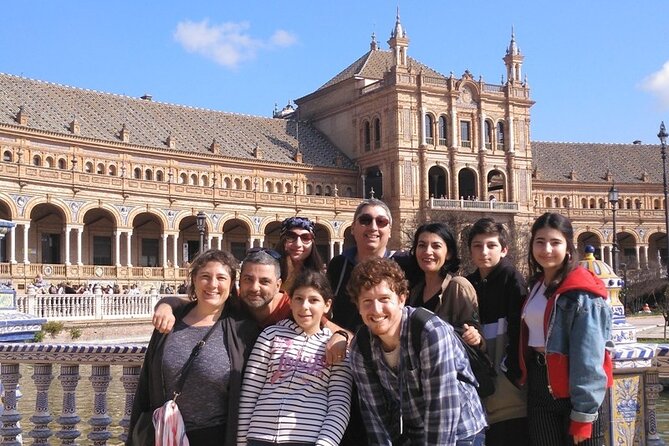
The walk continues through the old Jewish quarter, a neighborhood that became a setting for novels, plays, and operas. The route’s references to Rosina, Figaro, Don Juan, and Carmen build a clear picture of Seville as a European City of Opera.
This is more than a string of literary name checks. The streets, balconies, courtyards, and old walls explain why artists found Seville so useful as a stage. The city could suggest romance, danger, comedy, social tension, and mystery without changing its physical setting.
You’ll get the most from this part if you enjoy seeing how real places become fictional places. It also gives you a fresh way to look at familiar sights. A balcony is not just an architectural detail; it may be part of a long chain of performances and stories.
The great World Heritage view
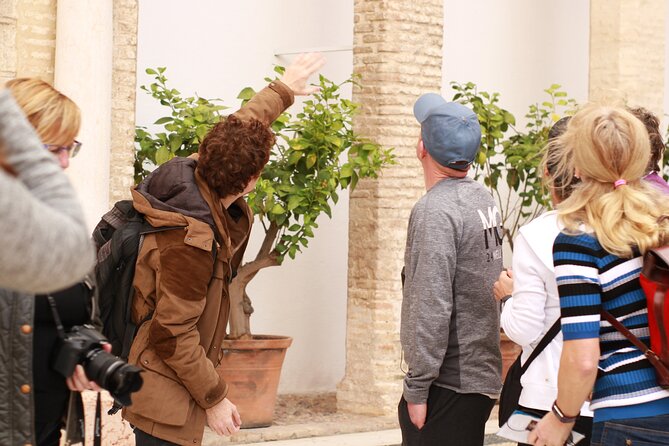
At one point, the route opens to a broad view framed by the Cathedral, Giralda, Royal Alcázar, and Archivo de Indias. These buildings form Seville’s World Heritage center, and seeing them together helps you understand the scale of the city’s historic core.
This is one of the best photo moments of the walk, but it is also a useful geography lesson. You can place the major monuments in relation to one another before deciding which ones deserve a longer visit.
Keep your expectations clear: this experience does not list interior admission to the Alcázar, Cathedral, or Archivo de Indias. It gives you context and exterior views. If you want to tour those buildings inside, arrange separate tickets and time.
The Torre del Oro and a changing city
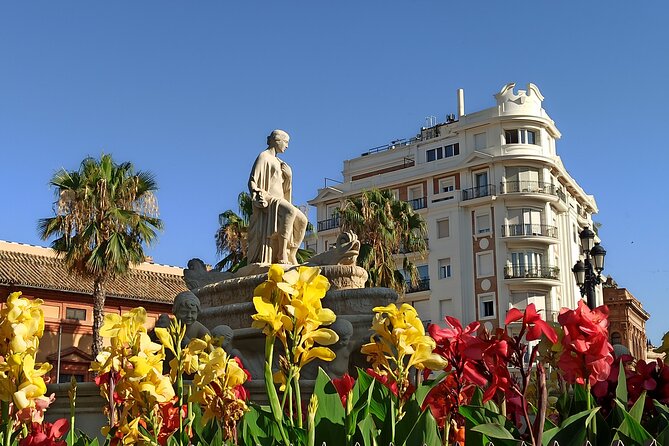
The route leaves the tight streets of the old center and turns toward the Torre del Oro. The tower helps explain Seville’s relationship with the river and its wider commercial past. The tour then shifts to the city’s modern configuration around the Ibero-American Exposition.
This change of subject is useful. Seville was not frozen in the medieval period. A century ago, the city reshaped important avenues and built major landmarks for international display. You’ll hear about the Alfonso XIII hotel and the route along the Constitution area, connecting older Seville with the city that developed for the exposition.
The transition also gives your legs a break from the narrow lanes. Still, the itinerary is a continuous walk, so comfortable shoes make sense. The exact distance is not provided, but you should expect steady movement rather than a series of short transfers.
The Royal Tobacco Factory and Mérimée’s Carmen
The University of Seville occupies the former Royal Tobacco Factory. The tour spends about 15 minutes here, with free admission listed. This is one of the route’s most interesting buildings because its history links trade, manufacturing, Bourbon-era policy, French influence, and literature.
The factory inspired Prosper Mérimée’s creation of Carmen. That connection gives the building an extra layer. You are not just looking at an old industrial complex; you are standing where a place helped shape one of Europe’s best-known Spanish characters.
The guide also discusses tobacco production and the spread of such factories across Spain. This is a practical history lesson about commerce and state power. It explains how goods, taxes, government policy, and foreign ideas helped reshape Spanish cities.
Because the stop is short, you will receive an overview rather than a full architectural study. That suits the tour’s purpose, which is to connect the building to Seville’s wider story.
María Luisa Park and Plaza de España
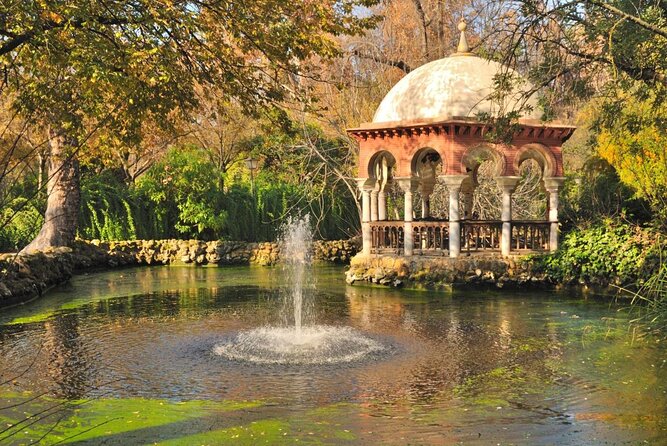
The final section moves through María Luisa Park, designed by the French garden architect Forestier. The park leads to the Ibero-American Exposition buildings, including the pavilion that gave Plaza de España its name.
You finish in the Plaza de España, surrounded by tiled details, bridges, water, and the curved sweep of the square. The listed time in the park is about 15 minutes, so the stop offers a focused introduction rather than a leisurely park visit.
This ending works well because it changes the mood. Santa Cruz is tight, shaded, and full of small clues. Plaza de España is open, ceremonial, and built to impress. You finish with a clear picture of how Seville moved from medieval quarter to modern showcase city.
The endpoint is in the gardens of María Luisa, not back at Plaza de Santa Cruz. That is convenient if you plan to continue around the park, but less convenient if you need to return to a hotel in the old center right away. Factor in your next stop before booking the morning slot.
What Víctor adds to the walk
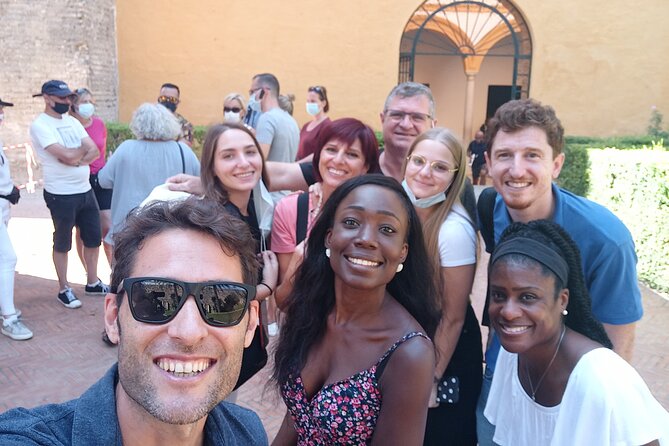
The experience is offered in English by Víctor Fernández. His approach, based on the way he handles related Seville walks, is warm and story-led rather than stiff or academic. He is also praised for replying quickly before tours and for adapting explanations to individual interests.
You can ask him about Seville’s history, but you can also use the time for practical planning. He has given advice on tapas bars, local food, and places to visit in Granada and other Andalusian towns. That kind of conversation can be valuable early in your trip, when you still have time to use the suggestions.
Víctor has also guided larger bike groups and longer private visits, but do not assume this walking tour includes bicycles, a four-hour schedule, or monument tickets beyond the free-entry stops listed here. The advertised experience is a two-hour private walk.
Is $189.87 good value?
The price is $189.87 per group, with up to 12 people. For one or two people, that is a substantial price for a two-hour walk. For a family or group of friends, the calculation changes quickly. At six people, it works out to about $31.65 each, before any taxes or booking charges that may apply.
The real value is the private attention. You are paying for a route that combines Jewish history, art, literature, architecture, the Tobacco Factory, María Luisa Park, and Plaza de España without joining a large group. You also avoid spending your own time figuring out how the sites connect.
I would book it if you want orientation on your first morning, care about context, and have several people sharing the cost. I would hesitate if you want long monument interiors, a slow art tour, or the lowest possible price.
Who should book this walk?
This suits first-time visitors who want a strong overview of Seville’s central districts. It also fits families and small groups with mixed interests, since the route offers history, art, architecture, opera, legends, and practical city advice.
It is a good choice if you want to visit major interiors separately. The walk gives you the context to make those later visits more rewarding. It is less suited to anyone with limited mobility unless the walking demands are confirmed directly with the operator, since the route runs through old lanes and several parts of the center.
The tour is offered Monday through Sunday from 10 a.m. to noon during the stated operating period. Confirmation is normally sent at booking, though bookings made within seven days may take up to 48 hours and remain subject to availability. Service animals are allowed, and the activity is near public transportation.
Free cancellation is available up to 24 hours before the start time. After that point, the payment is not refunded and late changes are not accepted.
Should you book the Jewish Quarter to Plaza de España tour?
Book it if you want Seville explained as a meeting point of Jewish, Muslim, and Christian cultures, with literature and art woven into the route. Víctor’s personal style and local suggestions add value, especially for a first morning in town.
Skip it if your priority is entering the Alcázar, Cathedral, or major museums during the same two hours. This is an orientation walk with strong storytelling, not a substitute for full monument visits. For a small group that wants a private English guide and a smart route from Santa Cruz to Plaza de España, it is a well-focused way to begin understanding Seville.
FAQ
How long is the tour?
The tour lasts approximately two hours.
How much does the private tour cost?
The listed price is $189.87 per group, for up to 12 people.
What language is offered?
The tour is offered in English.
Where does the tour begin and end?
It begins at Plaza de Santa Cruz in Seville’s old center and ends at Plaza de España in the gardens of María Luisa.
Are admission tickets included?
The listed stops at Santa Maria la Blanca, the University of Seville, and Parque de María Luisa have free admission. The experience provides views and context for other landmarks, but no paid entry to the Alcázar, Cathedral, or Archivo de Indias is listed.
Can I cancel the booking?
Yes. You can cancel up to 24 hours before the start time for a full refund. Cancellations or changes made less than 24 hours before the tour are not accepted.
Just added in Seville
- Seville: Alcázar Guided Palace Tour with Priority Access★ 4.4 · 994 reviews
- Seville City Tour: 1-Hour Panoramic Segway Tour★ 4.9 · 365 reviews
- Seville Segway Guided Tour★ 5.0 · 367 reviews
- Seville City Tour 2 Hour Monumental Segway Tour★ 5.0 · 472 reviews
- Seville: Small-Group Jewish Quarter Discovery Walking Tour★ 4.9 · 499 reviews
- VIP Guided Seville Alcazar Pre-Opening, Cathedral & Old Town★ 5.0 · 191 reviews
- Seville: 1, 2 or 3 Hour Segway Tour★ 4.9 · 674 reviews
- Seville: Small Group Jewish Quarter Tour with Tapas & Drinks★ 5.0 · 119 reviews
Gothic & Jewish Quarter Walking Tours, compared.
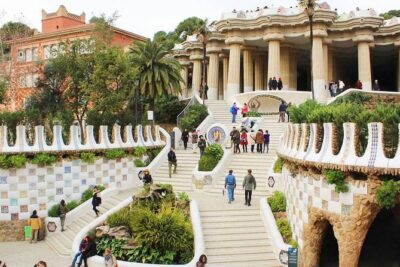
Barcelona in 1 Day: Sagrada Familia, Park Guell,Old Town & Pickup
Read our review →
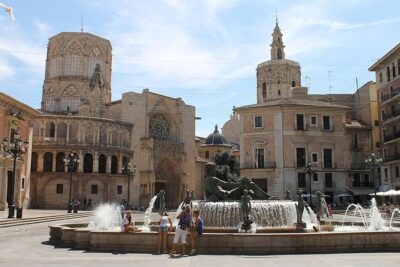
Valencia Old Town Tour with Wine & Tapas in 11th Century Historic Monument
Read our review →
Cordoba Mosque & Jewish Quarter Tour with Tickets
Read our review →
Madrid Old Town & Royal Palace Walking Tour Skip the Line Ticket
Read our review →
Old Town Tour, Wine & Tapas in an 11th c. Monument
Read our review →
Sagrada Familia, Modernism, and Old Town Tour
Read our review →
Barcelona Gothic Quarter Tapas & Taverns Food & Wine Tour
Read our review →Browse the lists this tour appears in