
Reviewed · SPAIN
Málaga: Museo Picasso Málaga Entry Ticket
Picasso’s birthplace gives this museum its special pull. Inside the Palacio de Buenavista, you follow his art from academic beginnings through Cubism, ceramics, Old Master studies, and his late work. The underground remains add a surprising second story: Phoenician, Roman, and Arabic traces beneath the gallery.
I like the clear timeline of Picasso’s life and work, which helps you make sense of sudden changes in style. I also like the chance to move at your own pace, pause at the paintings that interest you, then finish in the courtyard café. The main drawback is that the audio guide covers only selected works, and its QR code is easy to miss at the entrance.
Key points to know before you go
- Picasso from youth to the 1970s: See paintings, drawings, sculpture, ceramics, and graphic work across the artist’s long career.
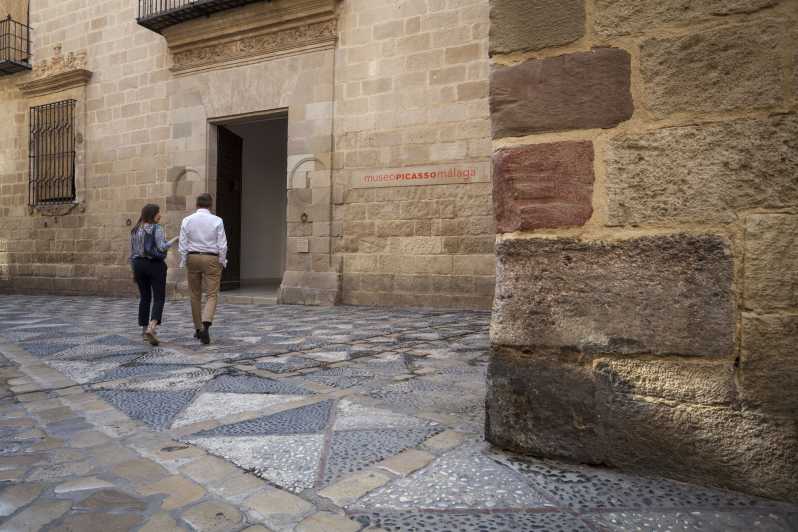
- A palace above ancient Málaga: The Renaissance and Mudéjar building is part of the visit, while archaeological remains sit below it.
- Book a timed entry: The museum can sell out, and advance tickets help you avoid a long queue, especially in summer.
- Use the audio guide before entering: Scan the QR code at the start, since there may not be another clear chance later.
- Allow about one to two hours: The museum is manageable in size, but serious art lovers will want time with the timeline and temporary displays.
- A good heat break: The air-conditioned galleries and shaded courtyard café make this a useful stop during Málaga’s hot months.
Why Picasso’s birthplace matters here
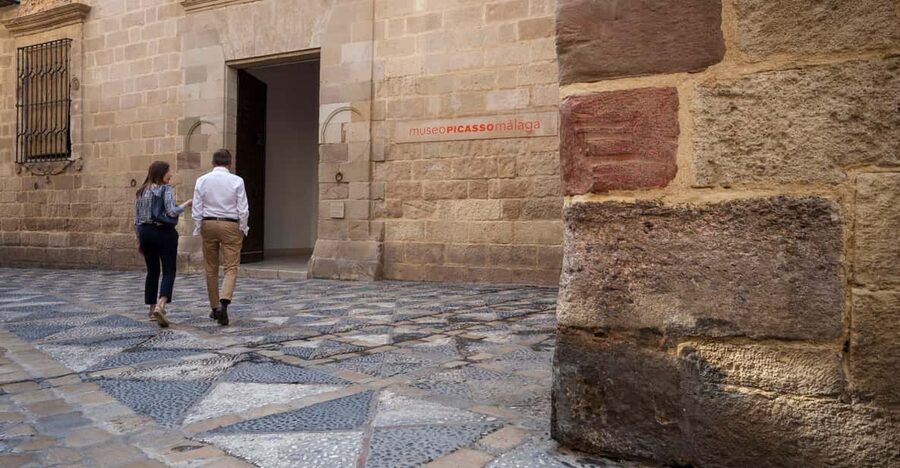
Málaga is not simply displaying Picasso because his name draws a crowd. He was born in the city in 1881, and the museum grew from his wish to have his work shown here. His daughter-in-law and grandson helped form the collection through major donations, while the Junta de Andalucía developed the wider project.
That background gives the museum a personal purpose. You are not walking through a random selection of famous pictures. You are seeing a collection designed to explain Picasso’s development in the city where his life began.
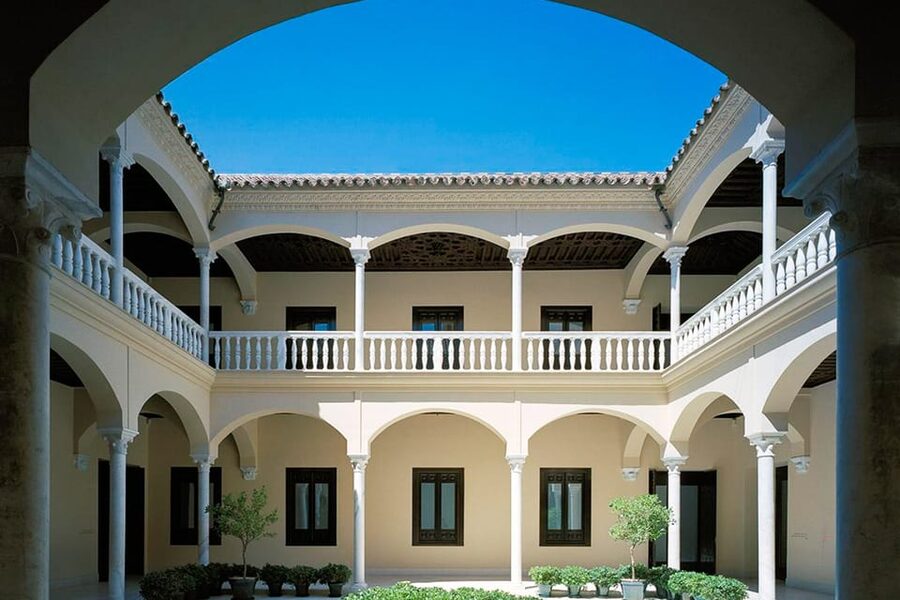
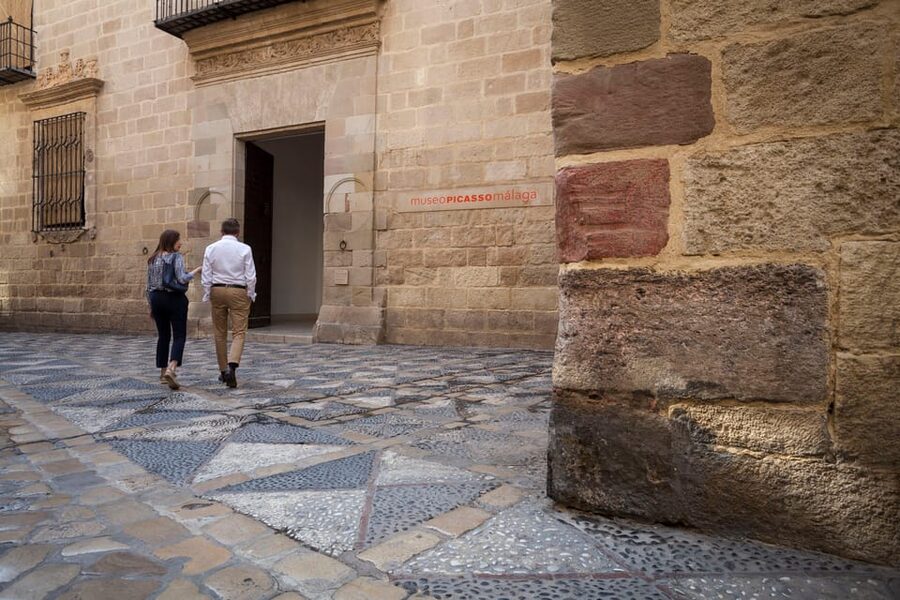
The museum opened in 2003 in the Palacio de Buenavista, a National Monument since 1939. The building combines Renaissance features, Mudéjar details, and quieter modern additions. I find that mix more successful than a plain white gallery would have been. The palace gives the visit a sense of place before you even start studying the art.
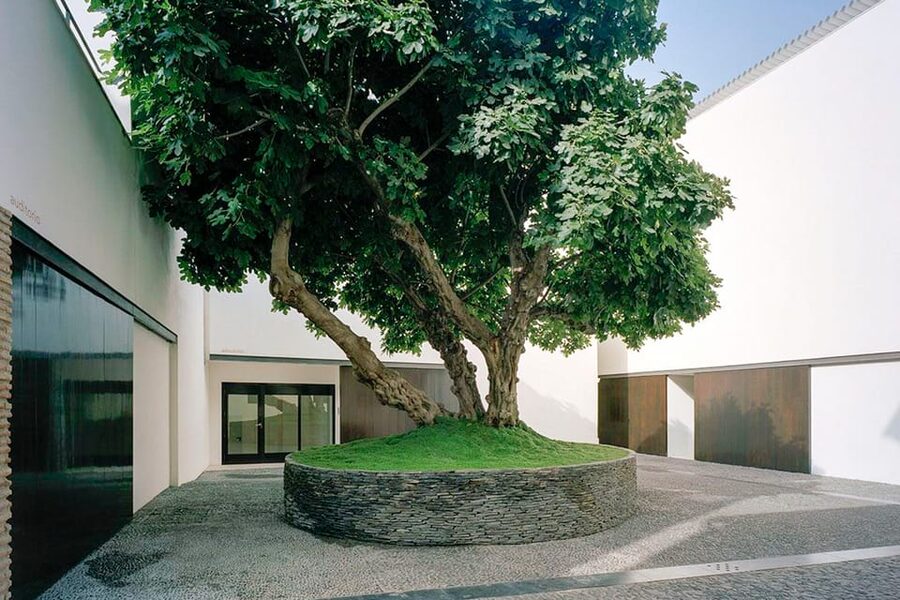
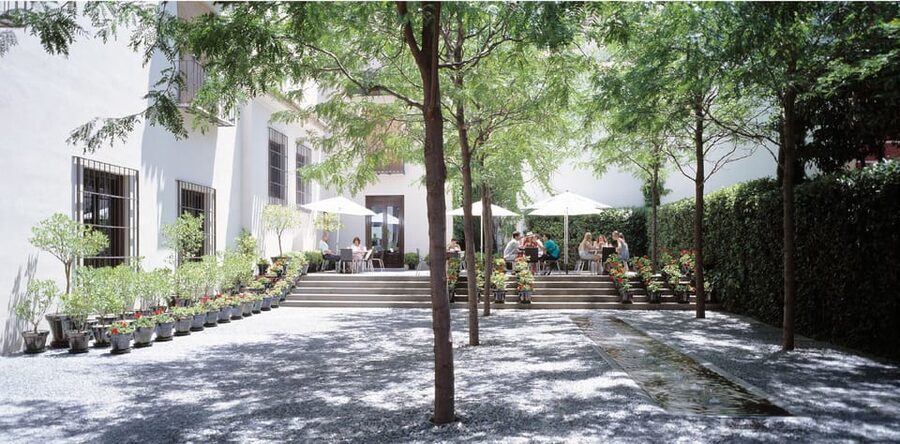
Do not rush through the entrance courtyard. The calm architectural details help you shift from Málaga’s busy historic center to the more focused pace of the museum.
A few more things to do in Spain worth a look
- Barcelona: Sagrada Familia Entry Ticket with Audio Guide
★ 4.6 · 105,312 reviews - Barcelona: Park Güell Admission Ticket
★ 4.4 · 76,534 reviews - Seville: Royal Alcázar Entry Ticket
★ 4.6 · 28,378 reviews
The Palacio de Buenavista sets the tone
The palace is one of the best reasons to choose this museum instead of treating it as just another art stop. Its historic structure, inner spaces, and contemporary gallery areas create a useful contrast with Picasso’s constantly changing styles.
The galleries are organized to show different stages of his work. You may begin with early academic studies, where the training is fairly traditional, then move into more personal approaches to form and composition. Later rooms show the fractured shapes linked with Cubism, followed by work in ceramics, sculpture, prints, and paintings.
The sequence helps if Picasso usually feels difficult to understand. You can see that Cubism did not appear from nowhere. His style shifts over time, and the arrangement gives you a basic path through those changes.
Still, the signage between areas could be clearer. I would keep the museum map or display plan in mind and pay attention to the timeline rather than simply following the nearest doorway. A little orientation at the start makes the rest of the visit much easier.
Following Picasso from student studies to late paintings
The permanent collection contains 141 works by Picasso, with examples across several media. That variety matters. If you only see his Cubist paintings, you can leave with a narrow idea of the artist. Here, you also encounter drawings, sculptures, ceramics, graphic work, and paintings from his early years through the 1970s.
The early academic pieces show technical control before his more radical experiments. They are useful reference points, even if your main reason for coming is the famous Cubist work.
The Cubist rooms are likely to be the emotional high point for many people. Overlapping forms and broken viewpoints ask you to look longer than you might at a straightforward portrait. You do not need a degree in art to get something from them. Start with the basic question of what has been split apart, then notice how Picasso rebuilds the subject from several angles.
The collection also includes his interpretations of Old Masters. These works show that Picasso was not rejecting the past so much as arguing with it. Seeing those pieces beside his own inventions makes his approach easier to place.
The later paintings from the 1970s bring the visit to a different close. They do not simply repeat the ideas from his youth. You can watch the style keep changing, sometimes boldly and sometimes in ways that may feel harder to read.
The timeline makes a short visit more useful
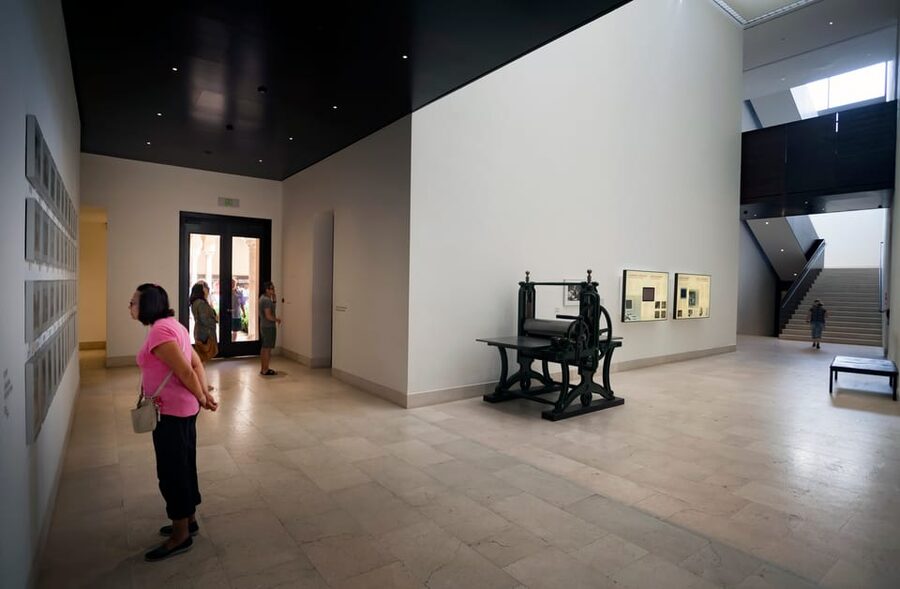
A timeline with photographs and biographical details helps connect the art to Picasso’s life. I recommend stopping here even if you are eager to reach the paintings. It gives you a simple framework for the galleries that follow.
The timeline is especially useful for families and visitors who know Picasso mainly through a few famous images. It shows the artist as a person working across decades, not as a single Cubist style frozen in time.
You can spend about an hour if you want a brisk overview. I would allow closer to two hours if you plan to read the displays, use the audio guide, and visit the temporary exhibitions. The museum is not so large that it becomes exhausting, but there is enough variety to reward a slower pace.
One practical advantage is freedom. You are not tied to a group moving from room to room. Stop for a few minutes at one drawing, skip a work that does not speak to you, and return to a painting later if the first look leaves you puzzled.
Same base, a different kind of day out:
- Barcelona: Casa Batlló Entry with Self-Audioguide Tour
★ 4.7 · 25,359 reviews - Seville: Cathedral and La Giralda Entry Ticket
★ 4.5 · 24,592 reviews - Madrid: Tour Bernabéu Entry Ticket
★ 4.5 · 21,573 reviews - Barcelona: 24 or 48-Hour Hop-On Hop-Off Bus Tour
★ 4.4 · 20,872 reviews
Do not miss the archaeological remains below
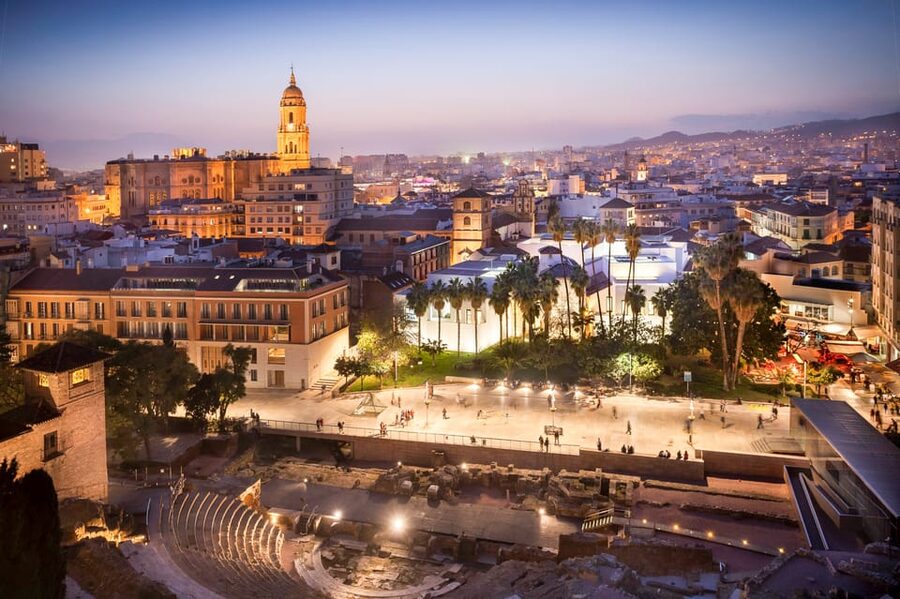
The underground archaeological area changes the mood of the visit. Beneath the museum, you can see remains linked with Phoenician, Roman, and Arabic Málaga. These are not an optional extra requiring a separate ticket. Any museum entry ticket allows access.
I like this part because it connects the palace and museum to the much older city beneath them. After looking at Picasso’s modern experiments, you are suddenly considering the layers of Málaga that came long before him.
The archaeological area is not the main reason to buy the ticket, and it is smaller than the art collection. Still, it would be a mistake to leave without looking. The remains add value to a ticket that already covers the permanent collection and temporary displays.
If you are short on time, see the main Picasso rooms first, then go below before leaving. If you have already visited the Alcazaba or Roman Theatre, this underground section gives you another way to think about Málaga’s long past.
Temporary exhibitions add variety
The ticket includes temporary exhibitions as well as the permanent collection. The specific displays change, so check the current program before booking. The supplied ticket information includes William Kentridge’s More Sweetly Play the Dance from November 21, 2024, through April 27, 2025, and Picasso: The Royan Sketchbooks from January 31 through May 5, 2025.
Those dates have passed, so do not assume those same exhibitions are still available. The useful point is that a standard museum ticket can include more than the Picasso collection, and a temporary show may become the unexpected highlight of your visit.
Past displays have included work connected with artists such as Oscar Domínguez and Farah Atassi. That kind of programming gives you a wider view of Picasso’s circle, influence, and continuing relevance. It also means two visits in different seasons may feel quite different.
Give the temporary galleries enough time. It is easy to treat them as an afterthought after seeing Picasso, but a well-made guest exhibition can provide a welcome change of pace.
The audio guide is useful, with one important catch
The ticket includes a web-based audio guide in Spanish, Chinese, English, French, German, Italian, Japanese, Arabic, Portuguese, Russian, Basque, Catalan, Galician, and Korean. Additional language access includes the same broad set listed for the activity, including Korean.
You use your own mobile device by scanning a QR code. This is convenient because you do not need to collect and return a separate handset, but it places more responsibility on you. Scan the code before you get absorbed in the first room, and make sure you understand how the guide is organized.
The audio content covers only selected works, not every painting. That is fine if you want a few anchor points, but it may disappoint you if you expect a full commentary on the entire collection. One useful approach is to listen to the highlighted pieces, then use the timeline and labels to fill in the gaps.
Bring your phone charged. Food and drinks must remain in your bag, and you cannot take drinks into the galleries, so plan to use the café after your visit rather than during it.
Timing, queues, and the best hour to arrive
Your timed entry includes a 15-minute margin, but I would still arrive about 10 minutes before the assigned time. Early entry can make a large difference. People arriving without tickets may find the day sold out, and queues can grow sharply later in the morning or afternoon.
The first time slot is a sensible choice, especially in summer. You avoid some of the heat outside and have a better chance of moving through the opening rooms without heavy crowding. The building has air conditioning, which makes the museum a welcome break from Málaga’s midday sun.
At the entrance, you may need to show identification if you bought a reduced or free ticket. Keep that document handy rather than buried in a bag.
Large bags, luggage, bicycles, scooters, tricycles, and pets are not allowed inside. A cloakroom accepts suitcases and backpacks up to 55 by 35 by 20 centimeters, and stored items must be collected the same day. Umbrellas and objects considered potentially dangerous also go into storage.
Is $15 good value?
At $15 per person, this is a fair price for a central Málaga museum visit that includes the permanent collection, temporary exhibitions, archaeological remains, and an audio guide. The value improves if you take time with the timeline and visit the underground remains rather than racing through the main rooms.
It is less compelling if you only want to see a few famous paintings in 30 minutes. The museum is compact enough for a short visit, but the ticket makes more sense when you give it at least an hour.
The booking flexibility also helps. You can reserve now and pay later, and cancellation is available up to 24 hours before the visit for a full refund. Those terms are useful when your Málaga plans are still shifting.
The strongest value comes from combining the museum with the surrounding historic center. The Palacio de Buenavista is on Calle San Agustín, near other churches, streets, and cultural sights. You can make this a focused art visit or part of a larger walk through central Málaga.
Who will enjoy it most
I would recommend this museum first to anyone who has even a mild interest in Picasso. You do not need to be an art specialist. The timeline, range of media, and chronological development give you enough support to follow the story.
It also suits visitors who want a manageable cultural stop rather than an enormous museum that takes half a day. The galleries are substantial but not overwhelming, and you can set your own pace.
Families with older children may find the changing shapes and materials engaging, especially if you ask them to compare Picasso’s early and late work. Very young children may struggle with the quiet galleries and the rule against touching objects. The museum is wheelchair accessible, and equipment is available for people who are blind or visually impaired, including audio-written guides in Spanish and Spanish sign language for a named exhibition.
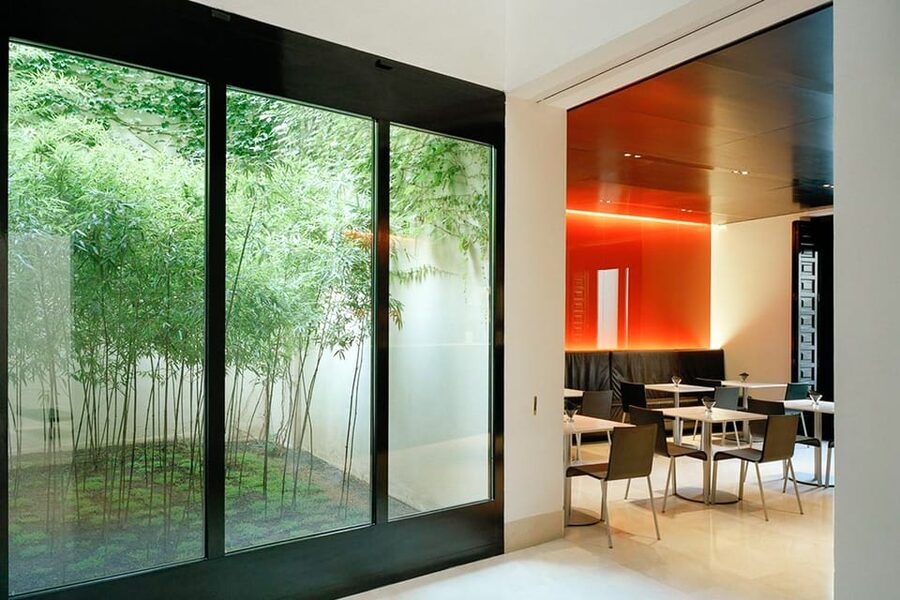
Afterward, use the courtyard café for a snack, lunch, or drink. It is an easy way to finish without immediately returning to the heat and noise of the city.
Should you book the Museo Picasso Málaga ticket?
Yes, if you want a clear introduction to Picasso, a beautiful historic setting, and a cultural stop that fits easily into a day in Málaga. The collection is varied enough to show more than Cubism, and the archaeological remains make the visit feel tied to the city rather than placed in an anonymous gallery.
Book ahead if your schedule matters. Sold-out dates and long queues are real possibilities, especially in summer and later in the day. Choose an early time, scan the audio-guide QR code before entering, and allow two hours if you want to see every section without rushing.
I would skip it only if you have no interest in modern art or have very little time in Málaga. For most visitors, $15 buys a well-sized, well-located museum visit with enough context to make Picasso’s changes easier to understand.
FAQ
Where is Museo Picasso Málaga?
The museum is at the Palacio de Buenavista, Calle San Agustín, 8, Málaga 29015.
How much does the entry ticket cost?
The listed price is $15 per person.
How long is the ticket valid?
The ticket is valid for one day.
What does the ticket include?
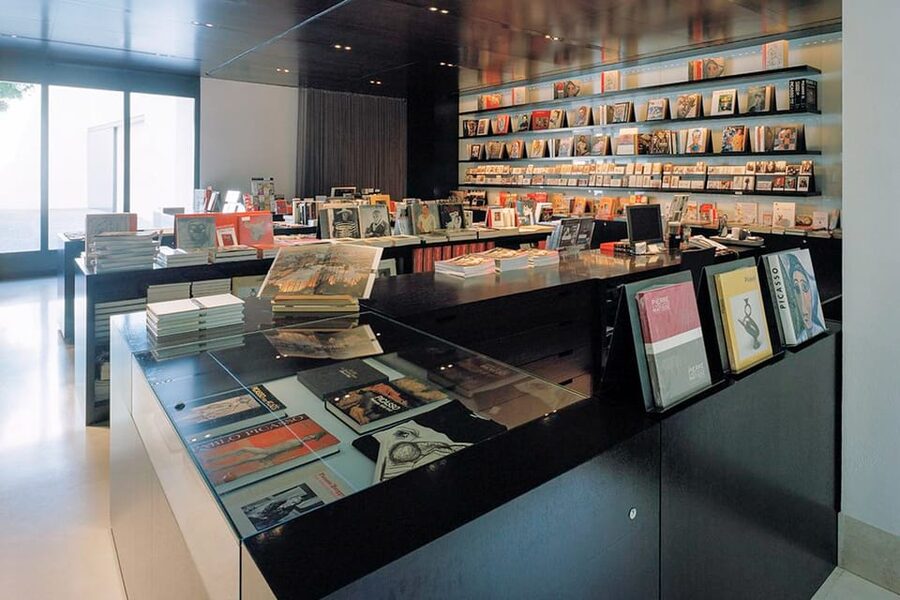
It includes access to the permanent Picasso collection, temporary exhibitions included with the ticket, the archaeological remains, the bookshop, and the café. A multilingual web-based audio guide is also included.
Is an audio guide available?
Yes. You access it on your mobile device by scanning a QR code. Languages include Spanish, Chinese, English, French, German, Italian, Japanese, Arabic, Portuguese, Russian, Basque, Catalan, Galician, and Korean.
Can I visit the archaeological remains with the same ticket?
Yes. The Phoenician, Roman, and Arabic archaeological site can be entered with any museum entry ticket.
Do I need to book in advance?
Advance booking is wise because the museum can sell out, and timed entry helps you avoid a longer queue. Arrive around 10 minutes before your assigned time.
Is the museum wheelchair accessible?
Yes, the museum is wheelchair accessible. Equipment is also available for people who are blind or visually impaired, including audio-written guides in Spanish.
Can I cancel my booking?
Yes. You can cancel up to 24 hours in advance for a full refund. You can also reserve and pay later, subject to the booking terms.
Just added in Spain
- Bizkaia Bridge, Gaztelugatxe, Bermeo and Gernika from Bilbao★ 4.5 · 299 reviews
- Benalmadena: City Sightseeing Hop-On Hop-Off Bus Tour★ 3.5 · 379 reviews
- Bean to Bar Chocolate Workshop in Barcelona★ 5.0 · 172 reviews
- Welcome to Barcelona: Private Tour with a Local★ 4.6 · 200 reviews
- Barcelona: White Rabbit Catalonia’s Top Immersive Experience★ 4.7 · 359 reviews
- Barcelona: Walking tour with Montjuic Castle & Cable Car★ 4.7 · 832 reviews
- Barcelona: Welcome to Barcelona Segway Tour★ 4.9 · 153 reviews
- Barcelona: Helicopter Flight with Optional Yacht Cruise★ 4.7 · 224 reviews