
Reviewed · SPAIN
La Herradura Coffee Farm: tour in Europe’s only plantation
Europe’s only coffee plantation is not where you might expect it: it sits near La Herradura, a short distance from Nerja, with sea views and a warm Mediterranean microclimate. The farm mixes coffee with up to 30 kinds of exotic fruit, making this much more than a quick look at a few coffee bushes.
I like the personal feel, especially when Manuel leads the walk and explains his family’s work with humor and plain good sense. I also like the chance to see unusual crops, from dragon fruit to lychees, while learning how water use and soil care shape a working organic farm. The main drawback is the terrain: two steep sections and uneven ground make this unsuitable for wheelchair users, people with limited fitness, and some visitors with heart or mobility concerns.
Key points to know before you go
- Europe’s only coffee farm: See productive coffee plants growing in southern Spain, an unusual sight for a Costa del Sol outing.
- A family-run tour: Manuel, the owner and guide, brings the farm’s story to life with humor, practical knowledge, and plenty of enthusiasm.
- More than coffee: Expect mangoes, avocados, bananas, papayas, chirimoyas, dragon fruit, sugar cane, lychees, and other unusual crops.
- A useful farming lesson: Learn how organic cultivation, permaculture, water optimization, and soil regeneration work in a dry Mediterranean climate.
- A scenic finish: The walk ends at a 300-year-old Andalusian cortijo, where you can buy seasonal fruit, local goods, and farm-roasted coffee.
- Bring proper shoes: The route includes two steep areas, with pauses and chairs available, but it is not a flat garden stroll.
Why this coffee farm is such an unusual Costa del Sol stop

Most Costa del Sol excursions focus on beaches, white villages, viewpoints, or historic monuments. La Herradura Coffee Farm offers something different: a look at how tropical crops can grow in southern Spain.
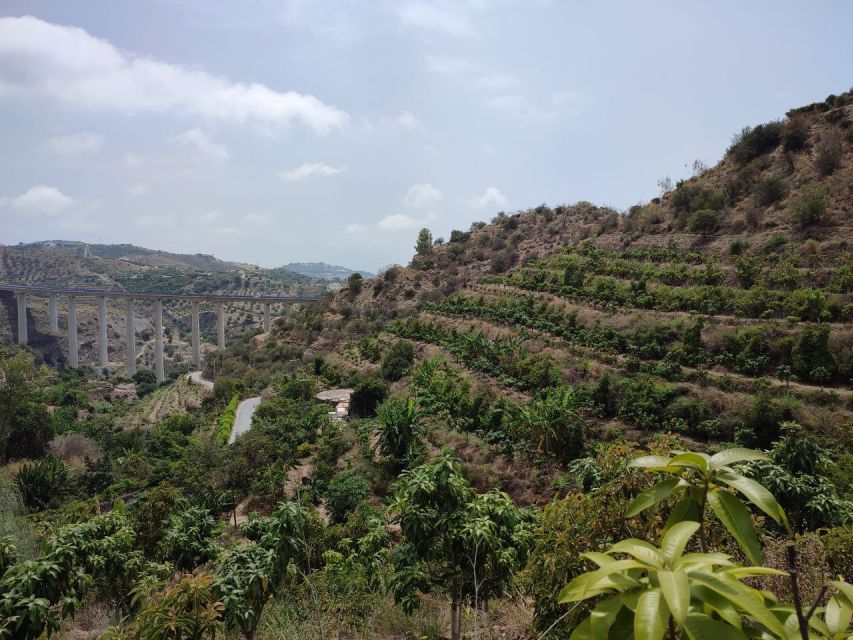
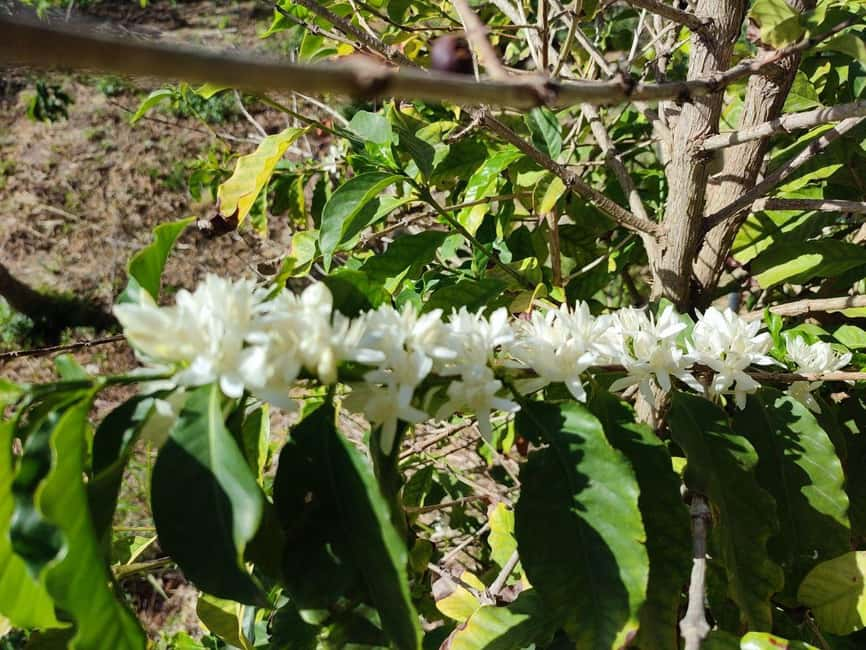
The farm sits near La Herradura beach and within easy reach of Nerja. Its mild conditions allow coffee plants and exotic fruit trees to grow side by side. You will see coffee bushes with their developing fruit, but the plantation is also a mixed farm with a strong focus on variety.
That variety matters. Instead of walking through a single-crop field, you move among mangoes, avocados, bananas, papayas, lychees, chirimoyas, dragon fruit, and sugar cane. The farm includes Spain’s oldest mango tree, according to the information provided, along with centennial chirimoyas and a low-water avocado plantation.
I find the mixed approach more interesting than a simple coffee tasting. You see how one crop fits into a larger farm system, and you get a better sense of the work required to grow food in a region where water is precious.
The setting adds to the appeal. From parts of the farm, you have views toward the sea, with hills and Mediterranean air around you. This is a working agricultural site, not a polished theme park, so expect practical paths, growing plants, and the occasional rough edge.
A few more things to do in Spain worth a look
- Barcelona: Sunrise Standup Paddle Tour w/ 4K Video & Coffee
★ 4.9 · 112 reviews
Meeting Manuel and hearing the farm’s story
The guide can make or break a small agricultural tour, and Manuel is a major part of this one. He is the farm owner as well as a guide, which gives the walk a personal focus. You are not simply hearing a standard script about coffee production. You are hearing about a family farm, its past, its experiments, and the effort required to make the project work.
His style is friendly, funny, and direct. He explains plants and farming methods in a way that works for adults and children, and the available languages include English, Spanish, French, and German. Some tours have also been led by family members such as Manolo or Sonia, so the exact guide can vary.
I like this kind of ownership-led experience because you can ask practical questions and get a sense of the person behind the produce. Manuel’s humor also helps keep the tour moving when the subject turns technical, such as soil conditions, irrigation, or the challenges of growing coffee outside the crop’s usual regions.
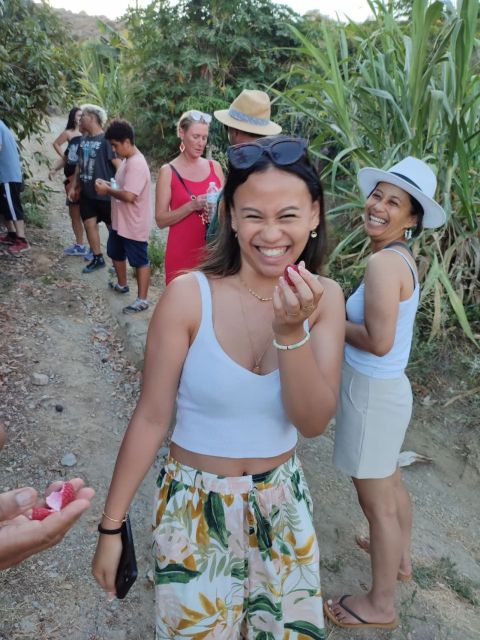
Families should find plenty to hold a child’s attention. Younger visitors can see unusual fruit, smell leaves, look closely at coffee plants, and take part in questions along the way. One child even won a mango by answering a question, though fruit availability depends on the season.
Walking among coffee, mangoes, and dragon fruit
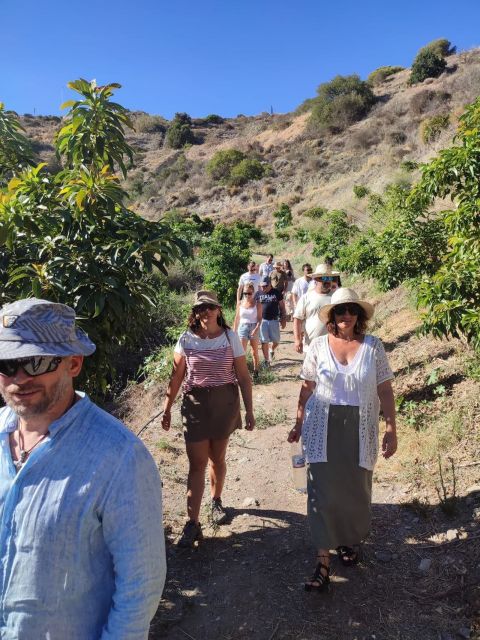
The main part of the experience is a guided walk through the plantation. The advertised duration is 70 minutes, while the detailed tour outline allows about an hour and a half. Plan for roughly one to one and a half hours, depending on the pace, questions, pauses, and conditions on the day.
The first surprise is likely to be the coffee itself. Many people associate coffee farming with Central or South America, Africa, or parts of Asia. Here, you see coffee growing in Andalusia and learn about the work involved in planting, tending, harvesting, and roasting it.
The farm’s coffee crop is still a working agricultural project, not a giant commercial plantation. That makes the visit more useful if you want to understand the process rather than simply take a few attractive photographs. You can see the plants in their growing environment and hear about the steps needed before the beans become coffee in your cup.
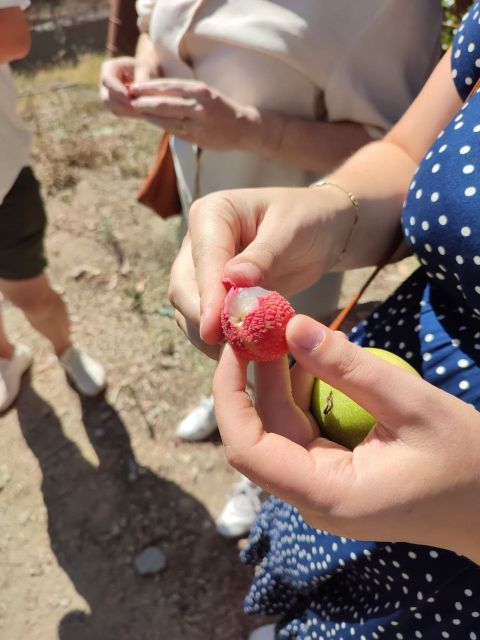
The fruit trees add color, scent, and variety to the walk. Depending on the season, you may encounter mangoes, avocados, bananas, papayas, lychees, chirimoyas, sugar cane, and dragon fruit. The tour information says you may sample fresh fruit, and several visitors have enjoyed tasting fruit or leaves directly from the farm.
Do not plan the visit around one particular fruit. Mangoes may not be ripe, and the available produce changes through the year. That is part of visiting a real farm rather than a shop. You may get a taste of something fresh, but the exact selection depends on harvest timing.
Dragon fruit is one of the more unusual crops here. The farm’s work includes night-time pollination, a detail that gives you a glimpse of how much hands-on care some plants need. You may not see this process during a daytime tour, but hearing about it helps explain why farming is more than planting and waiting.
What organic farming means here

The farm’s organic approach is not presented as a vague slogan. The tour addresses the practical problems of growing crops without relying on heavy chemical treatment, especially in a warm area where water and soil health require careful attention.
You will hear about permaculture, water optimization, and soil regeneration. These subjects are useful even if you are not a gardening enthusiast because they connect the farm to wider concerns in Andalusia. The region can be hot and dry, and growing tropical fruit in such conditions requires careful decisions about irrigation and ground care.
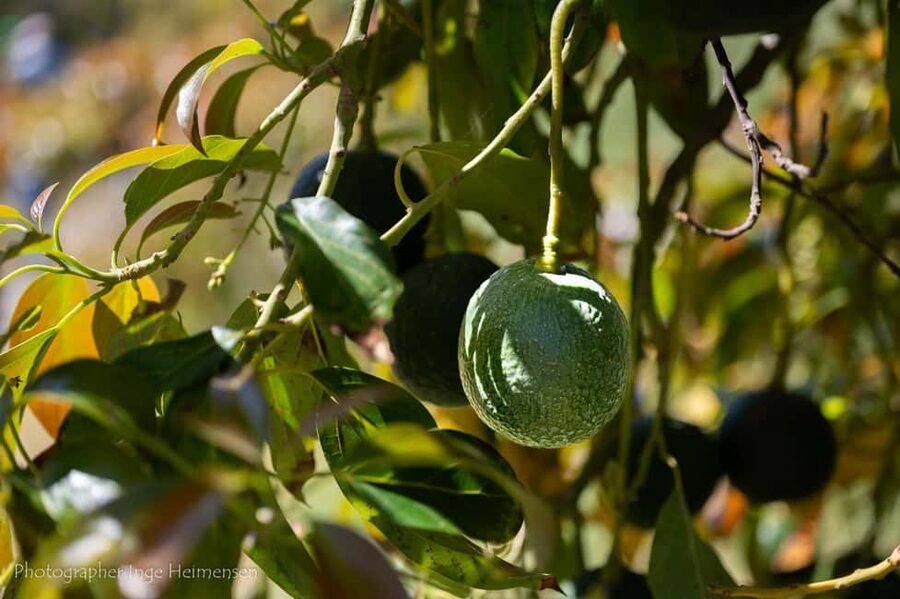
The low-water avocado area is a good example of this practical focus. Avocados can require significant water, so the farm’s efforts to reduce consumption are worth understanding. You are shown how the owners try to balance productive crops with responsible use of local resources.
The farm also experiments with crop diversity instead of relying on one plant. That reduces the monotony of the walk and creates a richer lesson in small-scale agriculture. It also reflects the reality of the business: Manuel and his family are testing what can grow, how it can be managed, and how the farm can remain productive over time.
I appreciate that the tour does not pretend farming is easy. The discussion includes the challenges of building an organic farm in this environment. You come away with a better respect for the work behind a mango, avocado, coffee bean, or piece of dragon fruit.
Same base, a different kind of day out:
- Barcelona: Sagrada Familia Entry Ticket with Audio Guide
★ 4.6 · 105,312 reviews - Barcelona: Park Güell Admission Ticket
★ 4.4 · 76,534 reviews - Seville: Royal Alcázar Entry Ticket
★ 4.6 · 28,378 reviews - Barcelona: Casa Batlló Entry with Self-Audioguide Tour
★ 4.7 · 25,359 reviews
The steep sections and practical comfort
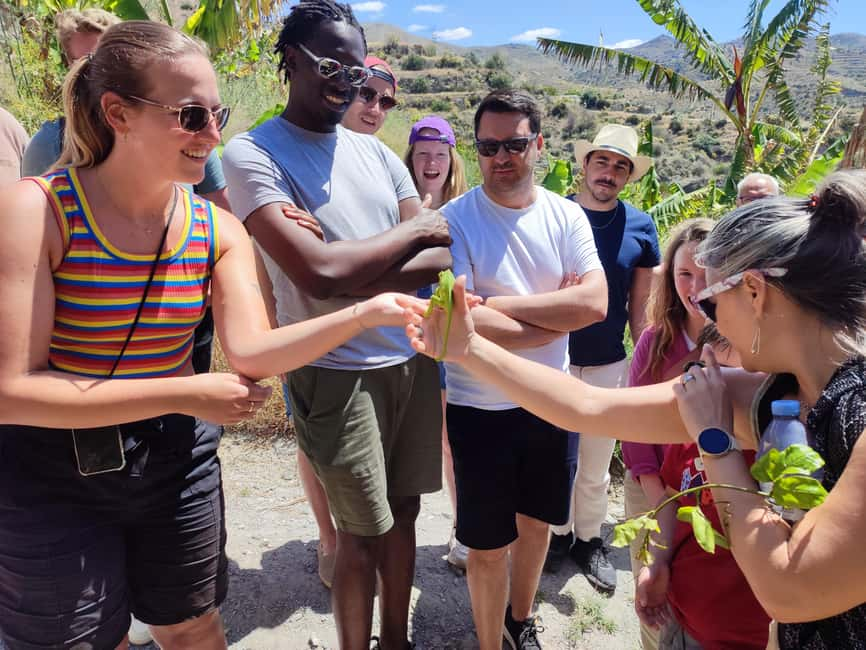
This is a walking tour, but it is not a flat promenade. There are two steep areas, and the ground can require care. The guide allows pauses, and chairs are available, but you should still arrive ready for a modest physical effort.
Comfortable shoes are essential. Sandals with poor grip are not a good choice, especially if the path is damp or uneven. Bring sun protection in warmer months, since the farm is outdoors and parts of the walk may have limited shade.
The activity is specifically not suitable for wheelchair users, people with mobility impairments, people with a low level of fitness, people with insect allergies, or people with heart problems. That is important information, not a minor footnote. If you have doubts about the slopes or outdoor conditions, ask before booking.
The tour is close to La Herradura beach and can be reached from the town on foot. One visitor walked from La Herradura in about 30 to 35 minutes in the cool of the morning. You can also reach the farm from the Nerja area, but hotel pickup and return are not included.
Pay attention to the meeting point. The starting location can differ from the ending location, and the final stop is at Herradura Coffee and Fruit Farm, Finca La Herradura. If you use a taxi or ride service, arrange the return before setting out. Uber may take you there but may not be able to bring you back, so a local taxi is the safer plan.
Ending at the old Andalusian cortijo
The walk finishes at a 300-year-old Andalusian cortijo. This gives the tour a satisfying final stop and connects the modern farming project with the older rural character of the area.
At the cortijo, you can buy seasonal fruit, local products, and coffee roasted by the farm. This is also the place to pick up something tangible from the visit. Farm coffee makes a particularly fitting purchase, since you have just seen the plants and heard about the work behind the beans.
Food and drinks are not included as a formal part of the tour. Some visitors have enjoyed small samples, fresh produce, jam, oil, or smoothies on particular visits, but you should not book expecting a full meal or a guaranteed tasting menu. A paella workshop is also not included.
The ending is better suited to browsing and conversation than a formal restaurant stop. If you want lunch afterward, plan it separately in La Herradura, Nerja, or Almuñécar.
Is $17 a fair price?
At $17 per person, I consider this a strong-value outing if you are staying nearby and enjoy local food, farming, or small family businesses. You get a guided walk, access to a rare coffee-growing site, views, explanations of sustainable farming, and the chance to buy products directly from the source.
The price is especially reasonable compared with a standard sightseeing attraction because the experience offers something difficult to find elsewhere in Europe. It is not just a photo stop beside a coffee plant. The visit covers cultivation, harvesting, roasting, fruit production, soil, water, and the farm’s family story.
Still, set the right expectations. This is not a large plantation with extensive visitor facilities, a long coffee laboratory session, or a guaranteed coffee-and-fruit tasting. You are paying for a personal walk through a working farm, led by people closely involved in its daily life.
The value is highest for visitors who want an authentic local activity and are happy to spend time listening and walking. If you only want a quick coffee sample or a completely flat route, the price may feel less compelling.
Who should book this experience?
I would recommend the farm to couples, families with older children, food lovers, gardeners, and anyone looking for a change from the beach. The mix of tropical fruit and coffee gives children plenty to see, while the farming discussion gives adults something more substantial than a simple orchard visit.
It also suits visitors who enjoy meeting local producers. Manuel’s personal story and hands-on approach are central to the experience, so you should expect conversation and explanation rather than a silent self-guided walk.
This is less suitable for anyone with serious mobility limitations, heart problems, insect allergies, or poor fitness. It is also not ideal if hot weather makes outdoor walking uncomfortable for you.
Book with seasonal expectations. If you visit when mangoes or another fruit are not ready, the farm still offers plenty to see, but you may not taste the crop you had in mind. The coffee plants, diverse trees, views, and farming lessons remain the main reason to come.
My verdict on La Herradura Coffee Farm
I would book this tour if I were based in Nerja, La Herradura, or Almuñécar and wanted a thoughtful half-day activity away from the usual coastal sights. The strongest reasons are the rare coffee crop, the wide mix of fruit trees, the owner-led storytelling, and the chance to see organic farming under real Mediterranean conditions.
Go for the farm’s character, not for a polished attraction. Wear proper shoes, confirm the meeting point, arrange your return transport, and allow enough time for slopes and questions. If you do that, $17 buys a memorable look at a determined family project, with coffee, sea views, and a good lesson in how much work goes into the food on your table.
FAQ
How long does the La Herradura Coffee Farm tour last?
The activity is advertised as a 70-minute walking tour. The detailed tour outline allows about one and a half hours, so you should allow roughly 70 to 90 minutes.
Where is the coffee farm located?
The farm is in La Herradura, in Andalusia, near La Herradura beach and about 10 minutes from Nerja by the stated tour description.
What can I see at the farm?
You can see coffee plants, Spain’s oldest mango tree, centennial chirimoyas, dragon fruit, sugar cane, lychees, avocados, and other tropical fruit trees. The farm has up to 30 types of exotic fruit.
Is the tour available in English?
Yes. The activity is available in English and Spanish, and the guide language information also lists French and German.
Is food included?
Food and drinks are not included. You may have the opportunity to sample seasonal fruit or other farm products, but a full meal is not part of the stated tour. A paella workshop is also excluded.
Can I buy coffee or fruit after the walk?
Yes. The tour ends at a 300-year-old Andalusian cortijo where you can buy seasonal fruit, local products, and coffee roasted by the farm.
Is the route suitable for people with limited mobility?
No. The route includes two steep sections and is not suitable for wheelchair users, people with mobility impairments, or people with a low level of fitness. Chairs and pauses are available during the steep sections.
What should I bring?
Bring comfortable shoes. Sun protection is also a practical choice for this outdoor walking activity, and you should not smoke, make fires, or leave litter on the farm.
More Farms in Spain
- Ría de Arousa: Boat Ride to Mussel Farm with Tasting
★ 4.7 · 845 reviews - Alicante : E-Bike Coast Tour, Roman Fish Farm and Snorkeling
★ 4.8 · 250 reviews
Just added in Spain
- The Red Canyon Tour – Small Group Trip with Local Food Tasting ツ★ 5.0 · 798 reviews
- Full Day Rainforest Tour with Tasting and Swimming Time ツ★ 5.0 · 607 reviews
- Full Day Ticket at Perchel Beach Club with Lunch★ 5.0 · 316 reviews
- 3 Wheel Motorcycle like Quad/Buggy Tour Gran Canaria (Maspalomas)★ 5.0 · 237 reviews
- Arucas, Teror, Viewpoint Roque Nublo – Highlights Gran Canaria★ 4.5 · 170 reviews
- Gran Canaria Highlights Private Tour VIP★ 5.0 · 106 reviews
- Full day Hiking Gran Canaria Peaks of Gran Canaria★ 5.0 · 130 reviews
- Coastering in Gran Canaria (Aquatic Route in the ocean cliffs)★ 5.0 · 135 reviews