
Reviewed · SPAIN
Jerez: Royal Andalusian School of Equestrian Art Admission
The best part of this Jerez visit is seeing the Andalusian horses at work, not just watching a polished performance. You move from the palace and gardens into the stables, tack room, saddlery, and exercise rings, where the daily craft behind the famous shows becomes clear.
I like the combination of beautiful architecture and working horse facilities. I also like the price: at $18 per person, you get far more than a museum visit, including the school grounds, guided access, and chances to watch training. The main catch is timing. Horse training and saddlery work are not shown on Saturdays, and some parts of the program may change.
- Watch training in the outdoor rings and indoor arena, except Saturdays.
- See the octagonal stables and central tack room, where daily equipment is kept.
- Visit the Charles Garnier-designed palace, with its original 19th-century rooms.
- Explore 11 rooms in the Museum of Equestrian Art, plus the carriage museum.
- Choose your language carefully, with tours offered in Spanish, English, French, and German.
- Allow more than two hours if you want to see everything slowly, especially the museums and gardens.
Why This Jerez Horse Visit Is Worth Your Morning
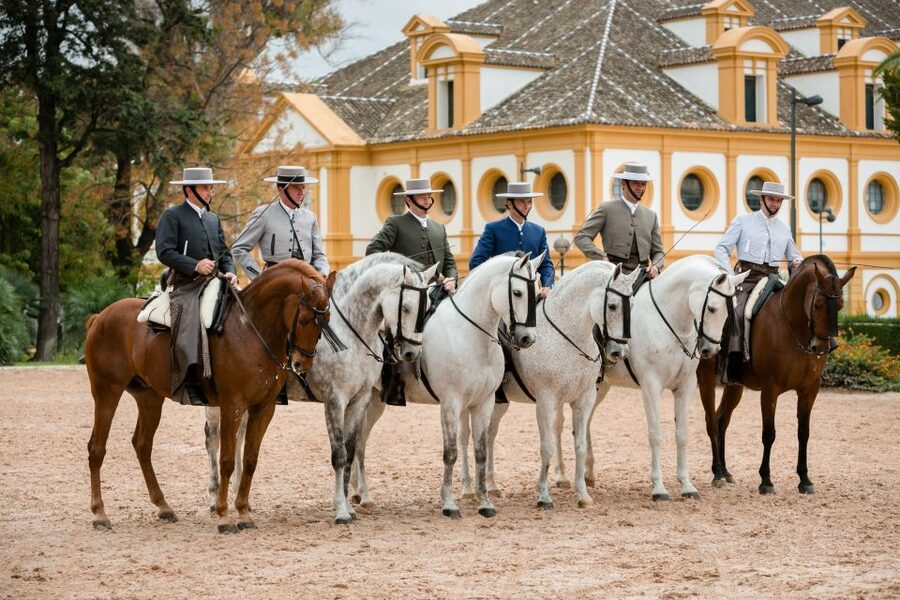
Jerez is famous for sherry, flamenco, and horses. At the Royal Andalusian School of Equestrian Art, those horses are not decorative extras. This is a working school devoted to classical riding, training, saddlery, carriages, and the long Andalusian equestrian tradition.
The admission visit gives you a behind-the-scenes look without requiring you to buy a ticket for the larger horse show. You can see where the animals live, how equipment is maintained, and how riders practice. The famous performance, often known as the dancing horses show, is a separate experience, so check your ticket carefully before booking.
At roughly two hours, the visit fits well into a morning in Jerez. The price of $18 is especially fair if you care about horses, riding, design, or local culture. You are not paying only for an exhibition. You are entering a functioning school with stables, training rings, a saddlery, an arena, gardens, and several museums.
Starting at the Reception Center
Your visit begins at the reception center, where you present your printed receipt or mobile ticket. Discounted tickets require proof of eligibility, so bring the required document if you booked at a reduced rate. Without proof, you may need to pay the difference to the standard price if tickets remain available.
An audio-visual presentation about Andalusian equestrian art is available until 11:00 in the morning. This introduction helps explain what you are about to see, especially if you do not know the difference between ordinary stable work and the precise training used in classical riding.
The presentation has not always run exactly as expected. On some visits, it has been delayed or unavailable, so do not let it determine your whole schedule. The school itself provides plenty to see even if the film is not showing.
Other trips people book in Spain:
- Barcelona: Sagrada Familia Entry Ticket with Audio Guide
★ 4.6 · 105,312 reviews - Barcelona: Park Güell Admission Ticket
★ 4.4 · 76,534 reviews - Seville: Royal Alcázar Entry Ticket
★ 4.6 · 28,378 reviews
Walking Through the Gardens to the Palace
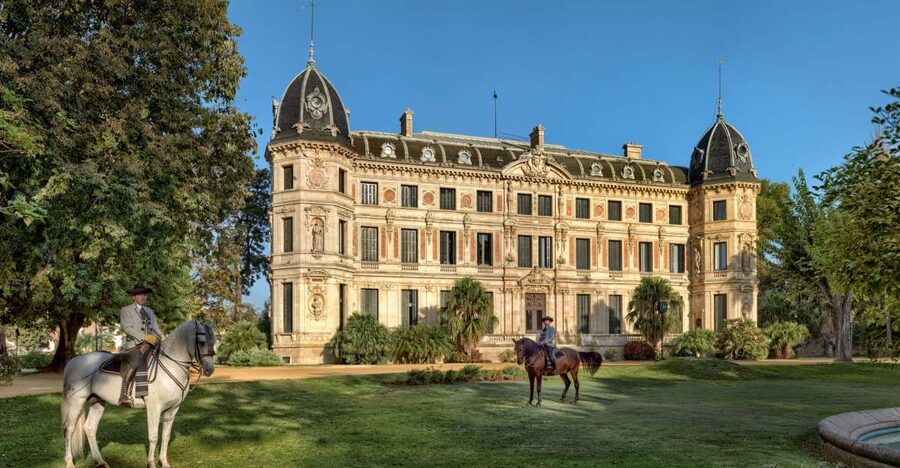
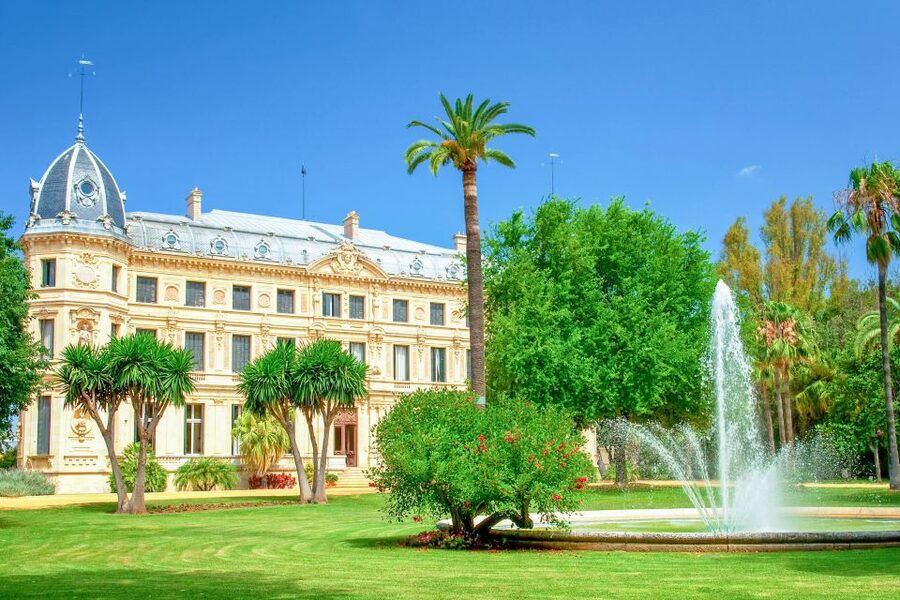
From reception, you enter the gardens. The grounds include exotic plants and a large central fountain, which gives the approach a ceremonial feel without becoming too grand for a working school.
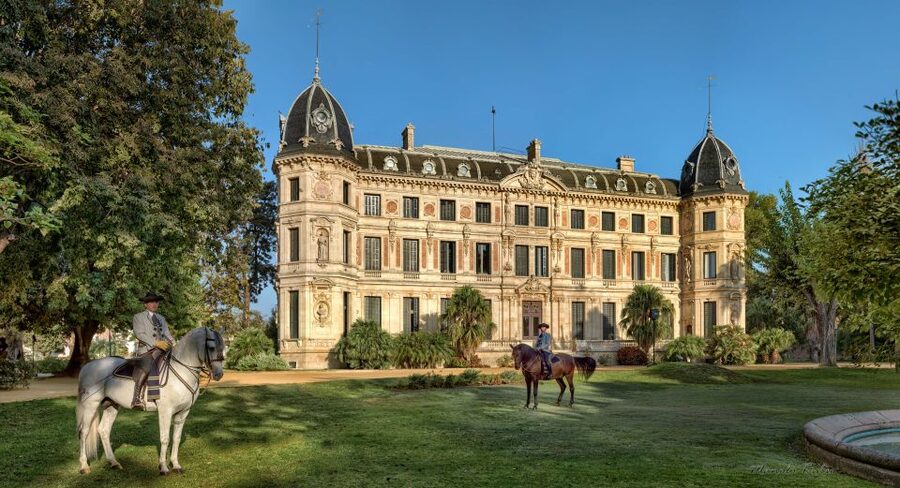
Across the fountain is the palace, designed by Charles Garnier, the architect associated with the Paris Opera. Its 19th-century style gives the school a refined setting, but the building does not replace the horses as the main attraction.
Inside, you can see ground-floor rooms decorated in their original style. This is a quieter part of the visit, useful for understanding the institution’s formal side. If you are mainly interested in horses, you may move through these rooms quickly. If you enjoy architecture and interiors, give them time.
The grounds are well kept, and the setting is pleasant even before you reach the stables. In hot weather, though, the outdoor sections can be tiring. Bring your attention to the program and consider the heat when deciding how long to spend in the carriage museum and gardens.
Eleven Rooms on the History of Equestrian Art
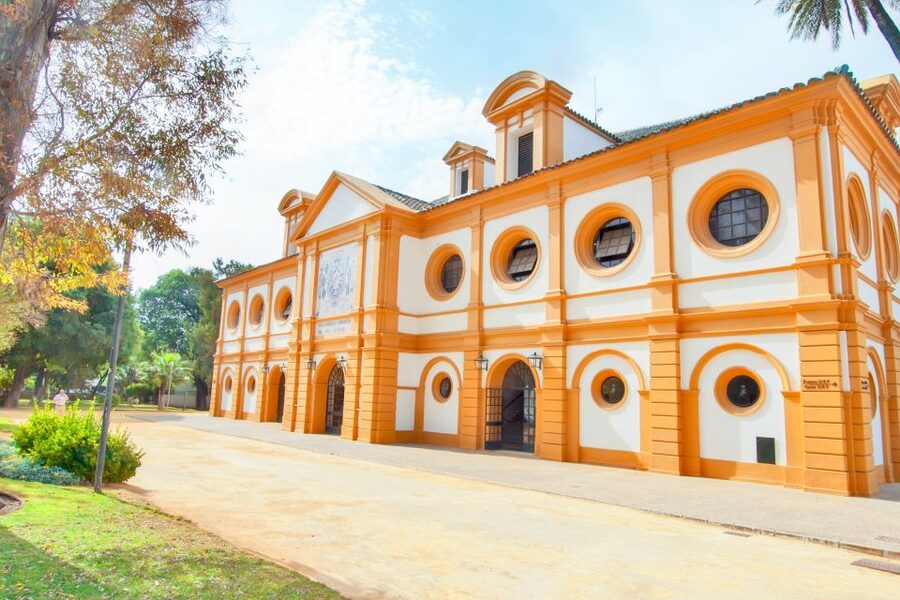
The Museum of Equestrian Art is in the basement and occupies 11 rooms. It explains the origins of equestrian art in Andalusia, the role of the horse in the region, the school’s development, and the riding movements associated with its tradition.
This museum gives the visit useful context. Without it, you might see a beautiful horse perform a complicated movement without understanding the training, equipment, or cultural background behind it.
The exhibits are interactive, with video displays and other material intended to show the techniques and history of the school. Some video screens may not be working on a particular day, but the museum still covers a lot of ground.
I would visit the museum either before the stable tour, if you want background first, or afterward, if you prefer to meet the horses before reading about them. Families and first-time visitors may find the displays more approachable than a formal art museum, while serious horse lovers may wish for even more detail about training methods.
The Saddlery and the Work Behind the Show
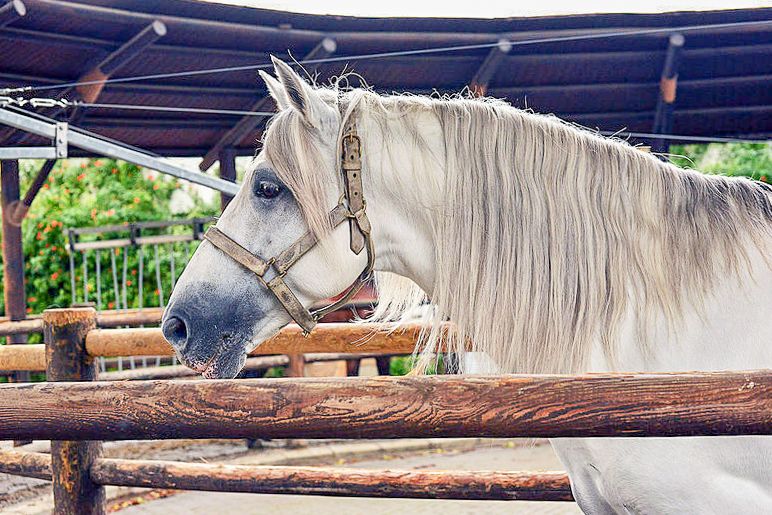
One of the most useful stops is the saddlery. Here, a master harness maker and apprentices make and repair the equipment used by the school.
This room helps you understand that the horses’ appearance and performance depend on much more than riding skill. Saddles, bridles, harnesses, and carriage equipment must fit correctly, work reliably, and be maintained constantly.
The craft is labor-intensive, and it adds a human scale to the visit. You are not only looking at finished costumes and polished tack. You are seeing the upkeep that allows the riders and horses to train safely and consistently.
Saddlery work is generally shown except on Saturdays. If this part matters to you, check the day of your visit before booking. The management can also alter the program, so the exact order of stops is not guaranteed.
Same base, a different kind of day out:
- Barcelona: Casa Batlló Entry with Self-Audioguide Tour
★ 4.7 · 25,359 reviews - Seville: Cathedral and La Giralda Entry Ticket
★ 4.5 · 24,592 reviews - Madrid: Tour Bernabéu Entry Ticket
★ 4.5 · 21,573 reviews - Barcelona: 24 or 48-Hour Hop-On Hop-Off Bus Tour
★ 4.4 · 20,872 reviews
Seeing the Horses in the Stables
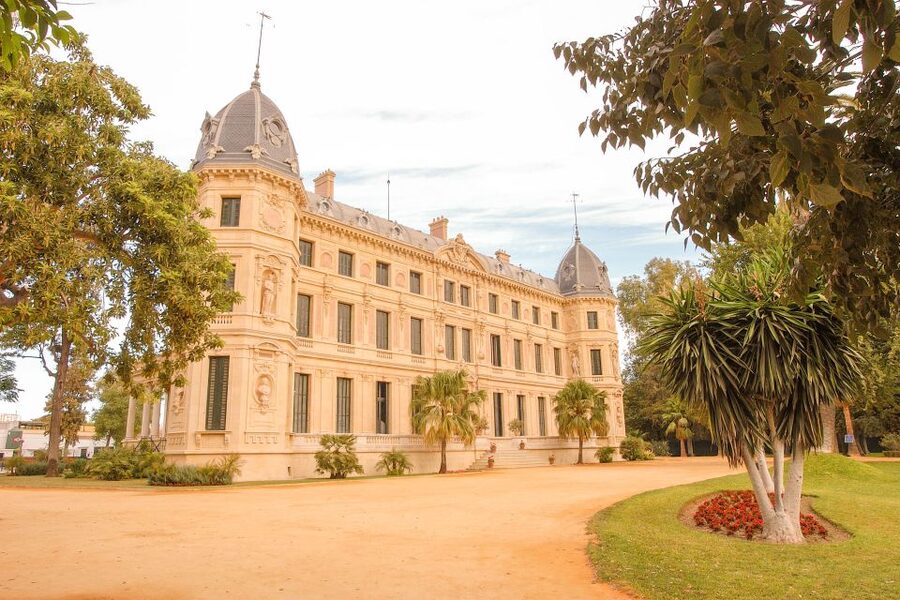
The school’s stables form an octagonal complex. This is where you see some of the school’s most emblematic horses, usually from close range but not necessarily with the chance to touch them.
That distinction matters. Some visits allow a close look at the horses and occasional contact, while others involve viewing them through their stall areas. You should treat this as an observation visit, not an animal-petting experience.
The central tack room holds the harnesses used for regular training and shows. A guide can explain how the equipment is organized and how it supports both riding and carriage work.
Guides have included people named Javi, Elena, and Harry on past visits, and the quality of the explanation can shape the whole morning. A good guide makes the stable layout, horse care, tack, and training easier to understand. The available guided languages are Spanish, English, French, and German.
Watching Training in the Rings and Arena
For many people, the outdoor exercise rings are the high point. You may see riders and horses working through training exercises rather than performing a finished show. That is valuable because practice reveals the patience and repetition behind the polished public display.
The indoor arena is built in an Andalusian style and holds about 1,600 people. During training, you can watch from the seating area and see how the horses respond to their riders in a formal setting.
One practical point: photography may be restricted inside the arena. Follow the staff’s instructions rather than assuming you can photograph every exercise.
Training and saddlery demonstrations are generally not available on Saturdays. On other days, the schedule still depends on the school’s needs. The management reserves the right to change the program, and horses may not be working in exactly the place or sequence you expect.
That uncertainty is part of visiting a working school rather than a staged attraction. You get a real look at daily practice, but you should not expect every session to feel like a performance.
Finishing in the Carriage Museum
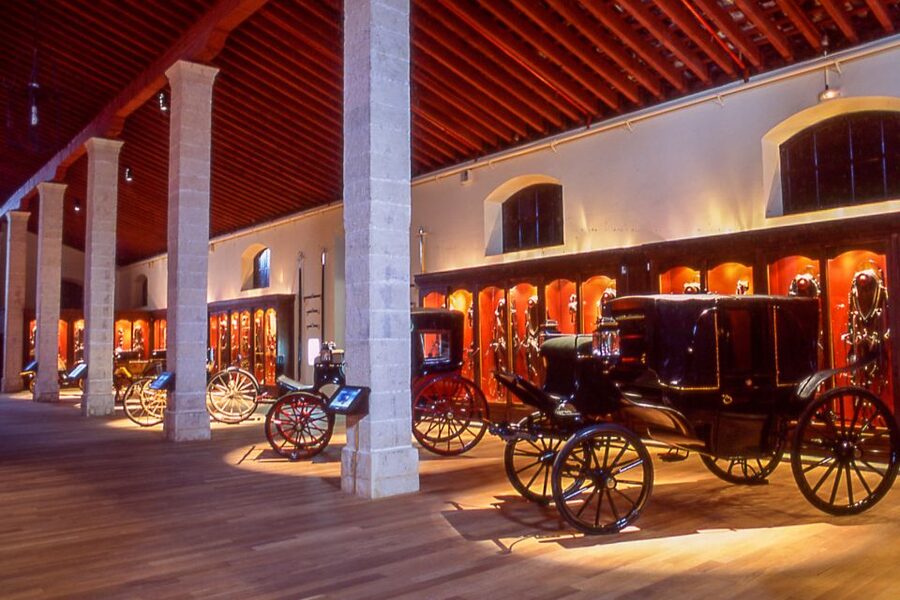
The carriage museum closes the visit with vehicles, harnesses, horses, and equestrian costumes. It broadens the story beyond dressage and shows how horses were used in formal transport and public display.
The collection is worth seeing, but it is easy to underestimate the time needed for the whole complex. The carriage museum may be farther from the stables, and hot weather can make the walk less appealing. If you are visiting during a warm part of the day, plan your energy rather than rushing through the stable areas.
The museum also helps connect the working tack room with the finished spectacle. The harnesses you see in use have a place in a larger tradition of carriage travel, ceremony, and equestrian presentation.
Timing, Languages, and Practical Details
The advertised duration is two hours, but you may spend longer if you take your time in the museums, gardens, and carriage collection. One past visit lasted close to four hours, which is possible when training is taking place and you explore the full grounds.
The visit is wheelchair accessible. Live guided tours are offered in Spanish, English, French, and German. Meeting arrangements can vary by the option you book, so read the confirmation carefully.
Do not bring bottles, cans, animals, or objects that management may consider unsuitable inside the grounds. Keep your mobile ticket ready, and print it if you prefer a paper backup.
The site has had a cafeteria, though opening times and available food can be limited. It is safer to think of the café as a bonus rather than the reason to schedule your visit.
You can cancel up to 24 hours ahead for a full refund, and the reserve-now, pay-later option gives you some flexibility while planning a trip around Jerez.
What You Get for $18
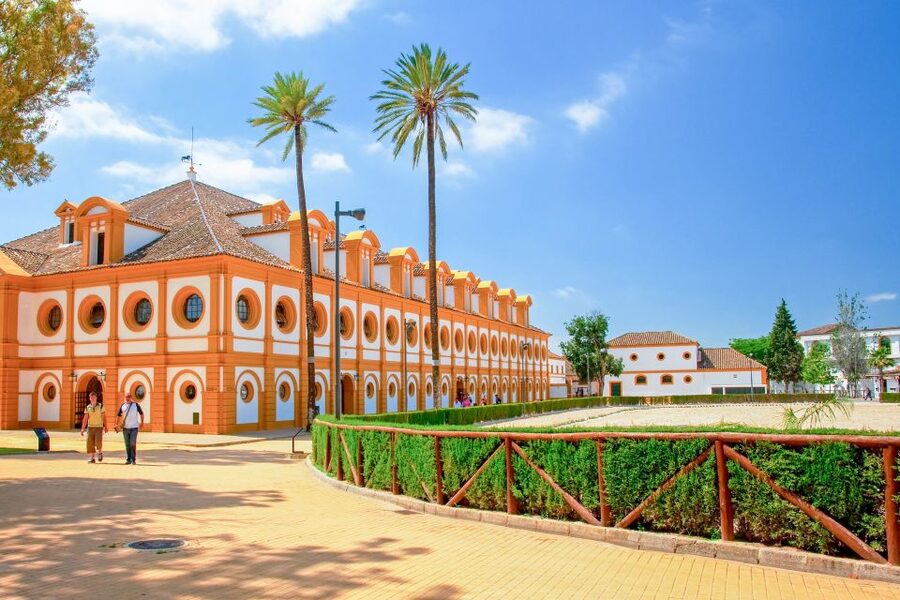
At $18, this is strong value if you have even a passing interest in horses. You receive access to the school facilities, the palace rooms, the Museum of Equestrian Art, the carriage museum, the gardens, and guided areas such as the stables and tack room.
The price is less compelling if you expect the full theatrical horse show. This ticket is for the school visit and training access, not automatically for the performance. The show requires its own booking, so read the product name and inclusions closely.
I would also compare the value based on your day. If you visit when training is available, you get the most complete picture. On a Saturday, the museums, gardens, palace, and stables still offer plenty, but you may miss the working demonstrations that make the school feel alive.
Who Should Book This Experience?
I recommend it most strongly to horse lovers, riders, families, and anyone curious about traditional Andalusian culture. You do not need to know much about dressage to enjoy the horses, though some background makes the training easier to appreciate.
It also suits visitors who prefer working institutions to simple displays. You see staff, trainers, equipment, horses, and buildings used for a real purpose. The visit feels more substantial than a quick photo stop.
You may want to skip it if you have very little time in Jerez and only want the formal horse performance. In that case, book the show instead, if available. You should also reconsider a Saturday visit if watching training and seeing saddlery work are priorities.
Should You Book the Royal Andalusian School?
Yes, especially if you can visit on a non-Saturday morning and care about seeing the horses outside a performance setting. The best parts are the stable tour, the tack room, the training rings, and the chance to see how much work supports a graceful display.
Book with realistic expectations. The schedule can shift, the introductory presentation may not run, café service may be limited, and the horse viewing does not guarantee hands-on contact. Still, the $18 admission gives you a well-rounded look at Jerez’s equestrian culture, with enough variety to suit both serious horse fans and curious first-time visitors.
FAQ
How long does the visit to the Royal Andalusian School take?
The stated duration is two hours. You may spend longer if you explore the museums, gardens, carriage collection, and training areas at a slower pace.
Does the ticket include the horse show?
The admission described here includes the school facilities, museums, gardens, stables, tack room, and access to training areas. It does not state that the formal horse show is included, so check the exact ticket before booking.
Can I watch the horses train?
Training takes place in the outdoor exercise rings and indoor arena, generally except on Saturdays. The management may change the program.
Is the visit available in English?
Yes. Guided visits are offered in Spanish, English, French, and German.
Can I see the saddlery?
Yes. The visit includes the area where harnesses are made and repaired, generally except on Saturdays.
Is the school wheelchair accessible?
Yes, the activity is listed as wheelchair accessible.
Is the Museum of Equestrian Art included?
Yes. Admission includes the museum, which has 11 rooms about equestrian art and the horse in Andalusia.
Do I need to bring a printed ticket?
You must present either a printed receipt or the receipt on your mobile at the ticket office.
Can I cancel the booking?
You can cancel up to 24 hours in advance for a full refund. A reserve-now, pay-later option is also available.
Just added in Spain
- Granada: Alhambra and Sierra Nevada Sunset Views by E-Bike★ 5.0 · 107 reviews
- Alhambra: Skip-the-Line to Nasrid Palaces & Generalife★ 4.0 · 108 reviews
- Alhambra Experience – Explore Nasrid Palaces & Generalife Gardens★ 3.5 · 363 reviews
- Alhambra and Nasrid Palaces Ticket with Audioguide★ 4.0 · 762 reviews
- Alhambra Complete: Ticket Skip-the-Line Nasrid Palace and Generalife with Guide★ 4.0 · 689 reviews
- Alhambra and Nasrid Palaces: Skip-the-line Ticket and Local Guide★ 4.5 · 154 reviews
- Granada : Private Alhambra Tour + Nazaries Palaces (VIP)★ 4.5 · 279 reviews
- Alhambra, Nasrid Palaces, Generalife & Alcazaba Private Tour★ 5.0 · 190 reviews