
Reviewed · TOURS IN GRAN CANARIA
Guided tour of the Banana World
Gran Canaria’s banana story comes alive on this short farm visit. You walk among banana plants, learn how the fruit is grown, and step into a restored Canarian house from 1804 that now serves as an interpretation center and shop. The final tasting includes banana wines, jams, sauces, and small snacks.
I like the friendly guides, including John, Dani, Maria, Ismael, and others who bring humor and clear explanations to the visit. I also like the tasting, especially the banana jam, banana wine, banana with cactus, and banana with aloe vera. The main drawback is the group size, which can reach 40 people and make it hard to hear or see everything.
Key points to know before you go
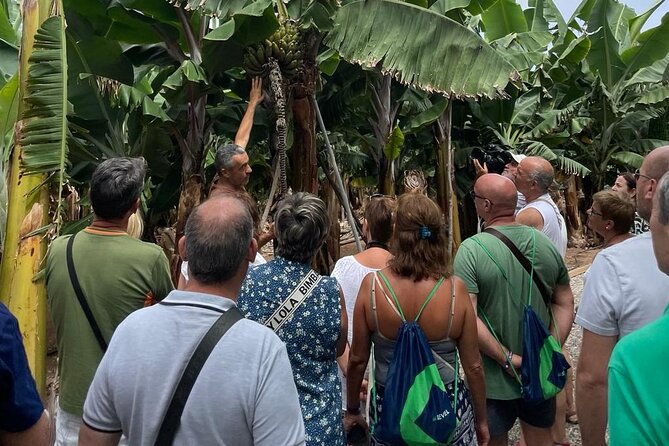
- A real banana farm near Arucas: You walk through part of an active plantation rather than viewing only displays indoors.
- A restored 1804 Canarian house: The old house holds the interpretation center and the shop.
- A generous tasting: Banana wines, jams, sauces, and small banana-based snacks are included.
- Guides make the difference: John, Dani, Maria, Ismael, Steve, Fatima, and other English-speaking guides have received strong praise for their humor and clear explanations.
- Allow more time for transport: The tour itself is short, but reaching the farm by bus can take much longer than the visit.
- Good value at $18.14: The price covers the guided visit, tasting, and parking, but not transport or coffee and tea.
What the Banana World visit is really like
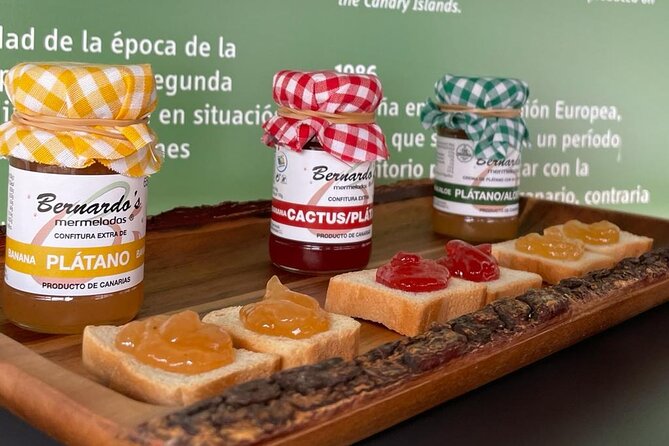
The Banana World experience, operated by Mundo Del Plátano Gran Canaria, is built around one simple idea: take a familiar fruit and show you how much there is to learn about it.
You begin near Trasmontaña, in the Arucas area of Gran Canaria. The visit lasts about 50 minutes to an hour, though some groups finish closer to 40 or 45 minutes. That makes it easy to fit into a morning or afternoon of sightseeing, but it is not a full-day farm outing.
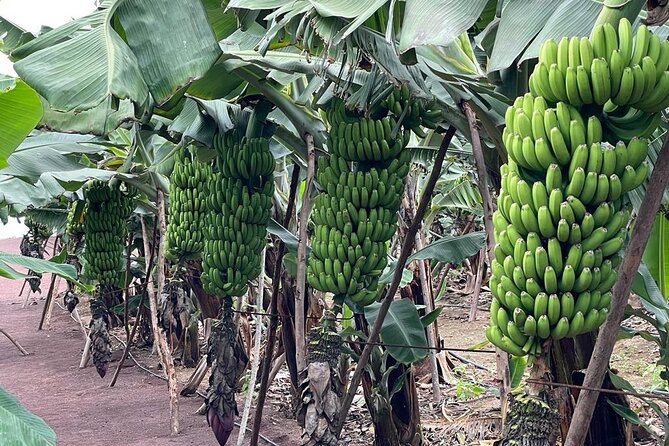
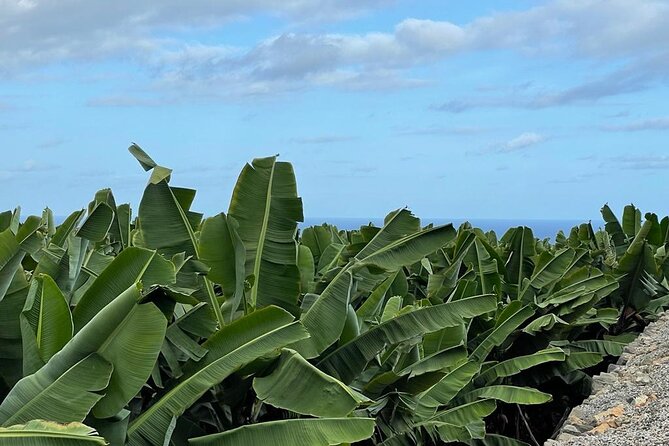
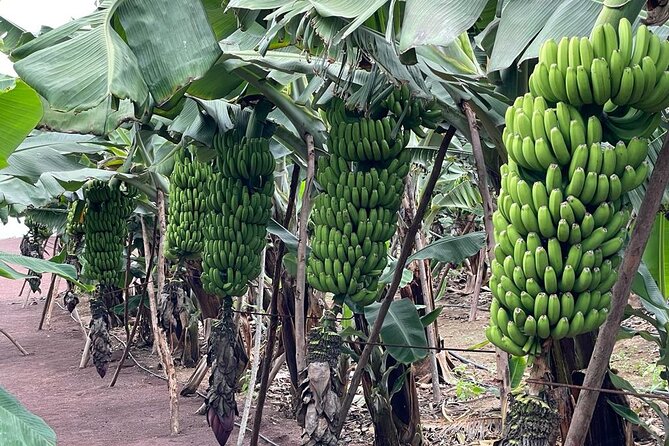
The farm setting gives the tour its appeal. You are not simply standing in front of a poster about bananas. You walk through part of the plantation and see the plants where the fruit is grown. The guide explains cultivation, plant care, varieties, and the way bananas are produced in the Canary Islands.
I would set your expectations correctly. This is a compact guided visit, not a long agricultural expedition. You see a small portion of the plantation with the guide, then have access to more of the property afterward. The focus is on clear facts, a pleasant walk, and a tasting at the end.
A few more things to do in Gran Canaria worth a look
- Maspalomas: Guided Camel Ride in the Maspalomas Sand Dunes
★ 4.4 · 3,690 reviews - Gran Canaria Guided Buggy Tour
★ 4.7 · 1,743 reviews - Barcelona: Sagrada Familia Entry Ticket with Audio Guide
★ 4.6 · 105,312 reviews
Walking through the banana plantation
The farm is the heart of the experience. Guides explain how banana plants grow and what makes cultivation in the Canary Islands different from what you may have seen elsewhere.
The best part is the chance to ask questions as you go. Guides such as John and Ismael have been praised for explaining plant growth in a way that works for people who know little about bananas. Other guides, including Dani, Maria, Steve, Fatima, and JC, have also been singled out for friendly, lively presentations.
The visit can be especially good for families. A three-year-old has enjoyed the experience, and children around five and older can usually follow the short format more easily. A nine-year-old received special attention during one visit, which gives you an idea of the relaxed tone. This is not a silent museum tour where children must simply stand still.
You may learn details you never considered before, including how banana plants are cultivated and how different varieties are used. The tour also introduces products made from bananas, so the farm visit connects directly with the tasting and shop.
The main limitation is visibility. A group of up to 40 people is allowed, and that is a lot of people around one guide. If you are near the back, you may struggle to hear every explanation or see exactly what the guide is pointing out. Arriving early can help you choose a better position, but it cannot solve a crowded group completely.
Inside the 1804 Canarian house
The restored house is more than a pretty old building. It gives the visit a sense of place and provides the indoor portion of the experience.
The house dates from 1804 and has been restored according to its original architecture. Inside, you find the interpretation center, where the banana story continues through explanations about cultivation and local production. The building also contains the shop, so the tour ends in the same place where you can browse and buy island-made products.
I like this change of setting. After walking among the plants, you step into a historic Canarian home and see how the farm experience connects with local food and craft products. The house adds character that a modern visitor center would not provide.
Some visitors have wished for more about the history of banana cultivation in the Canary Islands. The tour focuses strongly on how bananas are grown, so if you are hoping for a long historical account, you may find that part brief. Still, the restored house helps place the subject in a local setting rather than treating bananas as a generic supermarket product.
The tasting is the best value in the visit
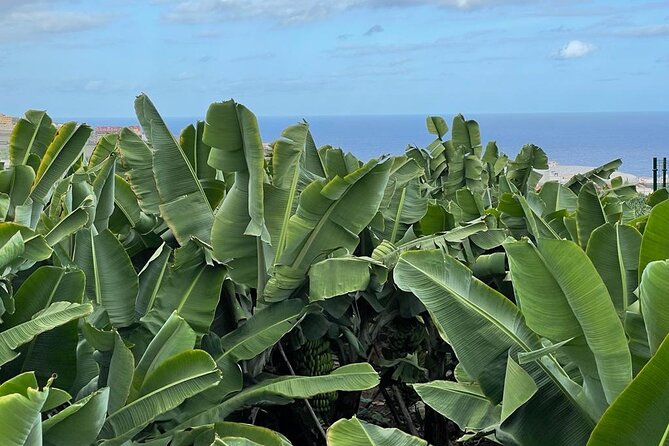
The tasting gives the tour a satisfying finish. Included samples can feature different types of banana-based wine made in the Canary Islands, along with small snacks such as montaditos with banana jam, banana with cactus, and banana with aloe vera.
You may also taste jams, sauces, and other banana products. Banana jam is a favorite, and it is easy to see why the shop attracts attention after the tasting. Banana wine and banana liqueur offer a more unusual souvenir than the usual island postcard.
The tasting is not just a token sample of one product. There is enough variety to show how bananas can move from a breakfast fruit into drinks, preserves, sauces, snacks, and cosmetics. The shop also sells banana-based cosmetic lines, including hand cream, which gives you a few practical gift choices.
Coffee and tea are not included. Alcoholic tastings are part of the experience, so if you do not drink, you can still enjoy the food samples and the farm visit. Families should also keep an eye on the tasting table before the guide begins. One table may contain items intended for the formal tasting, and it may not always be clear what is available to eat immediately.
Same base, a different kind of day out:
- Poema del Mar Skip-the-Line Ticket
★ 4.8 · 3,856 reviews - Puerto de Mogán: Submarine Tour
★ 4.4 · 3,792 reviews - From Puerto Rico de Gran Canaria: Dolphin Watching Cruise
★ 4.3 · 2,520 reviews - Gran Canaria: Dolphin and Whale Watching Cruise
★ 4.3 · 1,855 reviews
The guides shape the experience
The content is straightforward, but the guide makes a major difference. This is a small subject presented in a short time, so a warm and lively guide keeps it from feeling like a basic plantation walk.
John has been praised for sharing plenty of information about banana plants and growing methods. Dani has been described as friendly and attentive, while Maria has received praise for combining facts, local background, and a good sense of humor. Ismael has been noted for excellent English and for encouraging questions.
Steve’s presentation uses gentle humor, and JC has been praised for making the walk both informative and fun. Fatima has also been singled out for leading an enjoyable visit. Guide assignments can change, so you should not book on the assumption that one particular person will lead your group.
The repeated strength here is the chance to ask questions. If you are curious about varieties, cultivation, or banana-based products, speak up during the visit. The format allows time for questions, even though a large group may make it harder to hear every answer.
English is offered. The clear, conversational style works well if English is not your first language, though the size of the group can affect how easily you follow the guide.
Getting there from Las Palmas and the cruise port
The farm is at Cam. del Laurel in the Arucas area. The booking information gives number 7, while on-site directions identify the building as number 10. This small address mismatch matters, especially if you use a map pin.
My practical advice is simple: go directly to the entrance and into the shop to register. Do not wait outside for someone to collect you. The map pin may not land at the shop, and the meeting-point wording has caused confusion.
Driving is the easiest option, and parking fees are included. If you have a rental car, the visit is a simple addition to a day around Arucas and northern Gran Canaria.
Public transport works, but you need patience. From Las Palmas, the blue Global 210 bus can take you to El Lomito. From there, the walk to the farm takes about 10 to 15 minutes. Some of the walking routes are not especially comfortable, so wear practical shoes.
From the cruise port, you can walk to the outbound 210 stop at Ambulatorio de Alcaravaneras and take the bus to El Lomito. The ride costs about 1.50 euros per person, payable by cash or card. Returning to the port involves using the 210 stop across the street from where you got off.
A second option is to walk to Santa Catalina bus station, take a bus to Mesa y López, then transfer to the 210. This reduces some walking in one section but adds a connection. If your cruise departure time is tight, check the return bus schedule carefully. The tour is short, but infrequent buses can leave you with little spare time.
Is $18.14 a fair price?
At $18.14 per person, I consider this a good-value short outing. The price includes the guided plantation visit, the restored house, tasting samples, and parking. It does not include private transport, coffee, or tea.
The value is strongest if you are already in northern Gran Canaria or have a car. You receive a local food experience, a short cultural visit, and several samples for less than the price of many larger attractions.
The calculation changes if you rely on buses from the south of the island. One visit from Puerto Rico took about an hour and a half to reach Las Palmas, followed by another bus and a walk. The tour itself was worthwhile, but the transport took far longer than the activity.
That does not make the experience poor value. It means you should combine it with other plans in Las Palmas or Arucas instead of making a long journey only for a 45-minute visit.
Group size, timing, and comfort
The official maximum is 40 people. That is manageable for a strong guide in an open plantation, but it can feel crowded around the interpretation center or during explanations.
If clear audio is important to you, try to stay close to the guide. Ask questions when the group pauses rather than waiting until the end. The tour is not physically demanding, and most people can participate, but good walking shoes still make sense because part of the experience takes place outdoors.
Weather matters. The activity requires good conditions, and poor weather can lead to a different date or a full refund. Bring light protection from the sun if the day is bright, though the provided information does not specify a required dress code.
You should plan for roughly one hour at the farm, then add time if you want to browse the shop or walk around the property afterward. Some people stay longer, while bus users may need to leave promptly for the return connection.
Who should book this experience?
I would recommend it to anyone curious about local food, small-scale agriculture, or unusual tastings. It suits families, couples, solo visitors, and anyone looking for a short activity near Las Palmas.
It is particularly useful if you have already seen the main city sights and want something tied to the island’s countryside. The restored house and farm setting give the visit more character than a standard product tasting.
You may want to skip it if you dislike group tours, have limited mobility for outdoor walking, or expect a long historical presentation. A group of 40 can feel too large, and the visit is brief. If you are staying in southern Gran Canaria without a car, the transport time may outweigh the short tour.
Book ahead if your schedule is fixed. The experience is often reserved about eight days in advance, and mobile tickets make booking simple. Free cancellation is available until 24 hours before the start time. Inside 24 hours, changes and refunds are not accepted unless the operator cancels because of poor weather.
Should you book Banana World?
Yes, if you want a friendly, low-cost introduction to Gran Canaria’s banana culture and you can reach Arucas without a major transport struggle. The banana wine and jam tasting, restored 1804 house, and relaxed guides make the short visit feel worthwhile.
I would not build an entire day around it. Treat it as a one-hour stop, combine it with nearby plans, and go straight into the shop at the correct entrance rather than relying on the map pin. If you do that, the tour offers a pleasant look at a major island crop, with enough samples to make the $18.14 price easy to justify.
FAQ
How long does the Banana World tour take?
The visit lasts about 50 minutes to one hour. Some groups may finish in about 40 to 45 minutes.
Where does the tour begin?
It begins at Cam. del Laurel in the Trasmontaña area near Arucas, Gran Canaria. The booking information gives number 7, while on-site directions identify the building as number 10, so go directly to the entrance and shop to register.
Is the tour offered in English?
Yes. English is one of the languages offered.
What is included in the price?
The price includes the guided farm visit, banana-based wine tastings, snacks, and parking fees.
Are coffee and tea included?
No. Coffee and tea are not included.
Can I reach the farm by public transport?
Yes. The blue Global 210 bus serves the area, with a stop at El Lomito. From there, the walk to the farm takes about 10 to 15 minutes.
How many people can join the tour?
The maximum group size is 40 people.
What is the cancellation policy?
You can cancel at least 24 hours before the start time for a full refund. Cancellations or changes made less than 24 hours before the start time are not accepted, unless the activity is canceled because of poor weather.
Just added in Gran Canaria
- Las Palmas: City Sightseeing Hop-On Hop-Off Bus Tour★ 3.7 · 888 reviews
- Puerto de Mogan: Boat and Snorkeling Trip★ 4.9 · 855 reviews
- 3h Boat Trip + Snorkeling in Puerto de Mogan★ 5.0 · 785 reviews
- Scuba Diving Experience for Beginners in Gran Canaria★ 5.0 · 561 reviews
- Gran Canaria: Catamaran Day Trip with Food and Drinks★ 4.8 · 845 reviews
- Dolphin and Whales watching cruise from Puerto Rico de Gran Canaria★ 4.0 · 508 reviews
- Sailing Trip and Snorkeling (max. 8 people)★ 5.0 · 181 reviews
- From Puerto de Mogán: Sailboat Trip with Food and Drinks★ 4.8 · 250 reviews
Tours in Gran Canaria, compared.



Maspalomas: Guided Camel Ride in the Maspalomas Sand Dunes
Read our review →
From Puerto Rico de Gran Canaria: Dolphin Watching Cruise
Read our review →

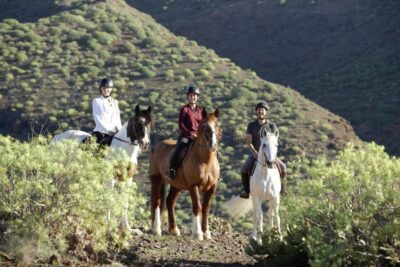
El Salobre: Horse Riding Adventure with Transfer Options
Read our review →
Maspalomas: Palmitos Park Ticket with Dolphin and Bird Shows
Read our review →Browse the lists this tour appears in