
Reviewed · TOURS IN FUERTEVENTURA
Fuerteventura: Guided Stargazing Calderón Hondo Volcano Tour
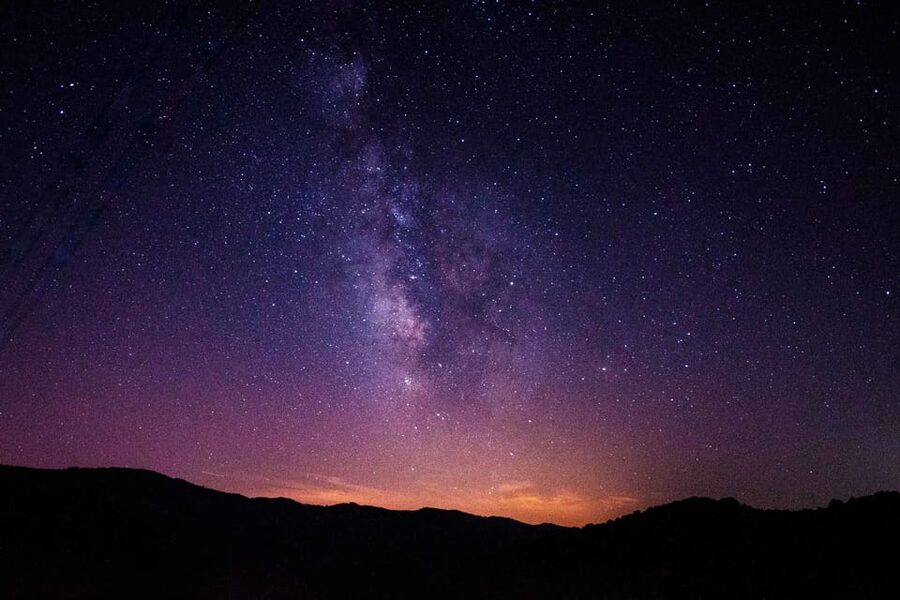
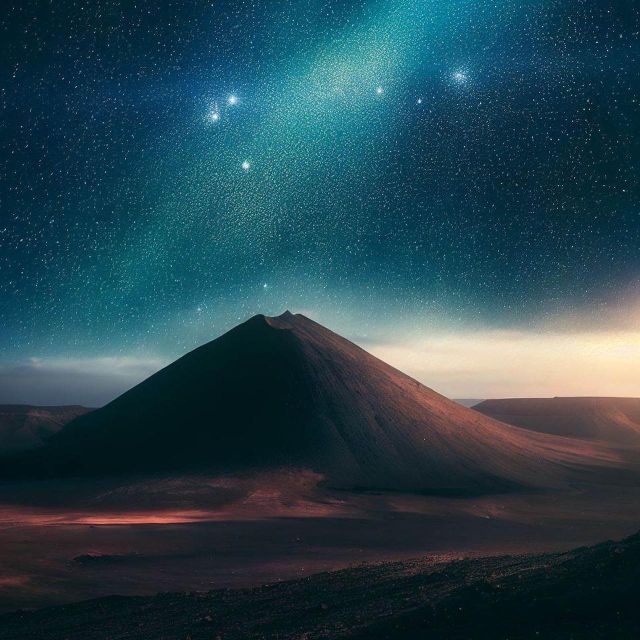
Fuerteventura’s Calderón Hondo volcano gives this stargazing tour a memorable setting: you look up at the Milky Way from inside the crater of the island’s last active volcano. The walk is short but rocky, and the dark volcanic ground feels far removed from the resort towns below.
I like the mix of volcanic geology and astronomy, rather than a night spent simply pointing at stars. I also like the guides’ warm, playful approach, especially Victor, who explains constellations, island folklore, and local history with plenty of humor. The main drawback is simple: clouds can hide the stars, and there is no refund if poor weather blocks the view.
Key points
- Calderón Hondo after dark: Walk to the crater and see Lajares, the dunes of Corralejo, and Lanzarote from above.
- More than stargazing: Learn how fire and the sky shaped native traditions and seasonal knowledge.
- A lively guide matters: Victor is frequently praised for his humor, care, and ability to explain astronomy in English, Italian, and Spanish.
- Bring warm clothing: The crater can be windy and cold, even when the coast feels mild.
- Expect uneven ground: Comfortable, closed-toe shoes are essential, and the walk is not suitable for people with mobility problems or a fear of heights.
- Weather is part of the bargain: You may see the Milky Way, planets, satellites, and several constellations, but clear skies are never guaranteed.
Why stargazing from Calderón Hondo feels different
A normal astronomy outing can feel detached from the place beneath your feet. This one begins with volcanic rock and ends with the night sky, linking Fuerteventura’s ancient geology to the much older story written above it.
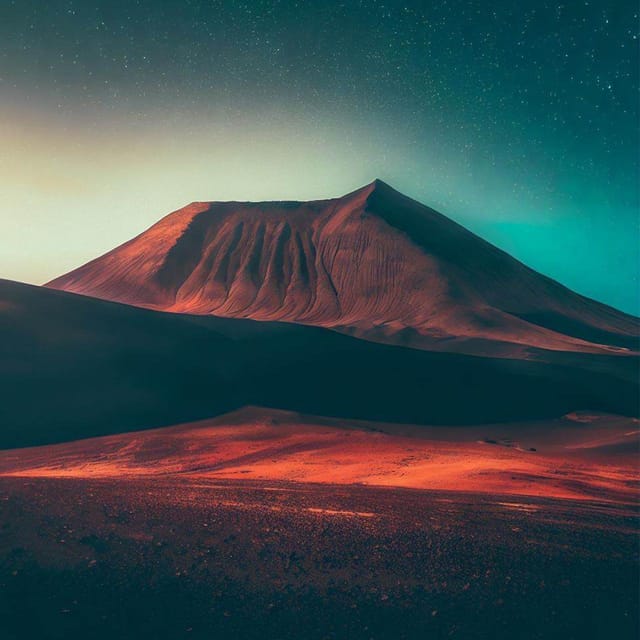
Calderón Hondo is presented as the island’s last active volcano. You climb toward the crater after sunset, when the heat and bright colors of the day have faded. The route gives you a close look at the dark volcanic terrain, then opens to wide views toward Lajares, the Corralejo dunes, and Lanzarote.
That setting gives the astronomy some meaning. The sky is not just a black backdrop. You are standing in a crater, surrounded by open ground and far from much of the island’s artificial light. The quiet is one of the best parts of the outing.
The tour lasts about three hours. That usually gives enough time for transport if you choose the pickup option, the walk to the crater, an explanation of the volcano, and a proper period of stargazing. It is not a rushed photo stop.
A few more things to do in Fuerteventura worth a look
- Fuerteventura: Tapas and Local Life Guided Tour
★ 4.9 · 407 reviews - Fuerteventura: Corralejo Sand Dunes Guided Shore Excursion
★ 4.6 · 335 reviews - Morro Jable: Guided Jet Ski Safari (without license)
★ 4.8 · 247 reviews
The walk to the crater after sunset
The evening begins at the Repsol h2go service station if you are meeting the group directly. Optional bus pickup and drop-off are available from Corralejo, El Cotillo, and Puerto del Rosario. The exact start time changes with the season and your pickup location, so you receive the confirmed time by email 24 hours before the activity.
As daylight fades, the group walks toward Calderón Hondo. The route is described as rocky, with one steeper section near the top. You do not need technical hiking gear, but you do need shoes with a firm sole. Closed-toe shoes are required, and sandals would be a poor choice here.
This is a modest walk rather than a long mountain hike, but do not treat it like a stroll along a paved promenade. In darkness, loose stones and uneven ground demand attention. People with mobility problems may find the route difficult, and the activity is not suitable for anyone afraid of heights.
Your guide supplies headlights, which is important once the sun goes down. Bring your own jacket or coat too. Even in a mild Canary Islands climate, the open crater and exposed summit can feel cold and windy at night.
The crater and the island views
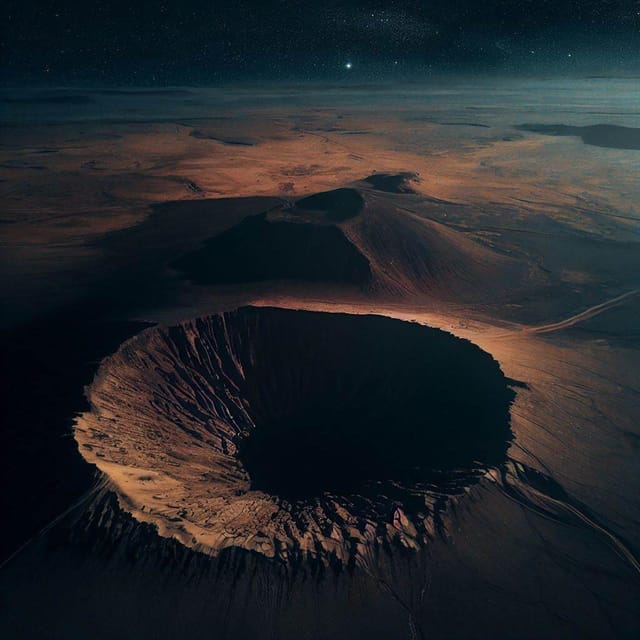
At the crater edge, you get the first major reward before the astronomy begins. Looking down into Calderón Hondo under a darkening sky is striking, especially when the last light catches the volcanic slopes.
From the upper area, the views stretch toward Lajares, the dunes of Corralejo, and Lanzarote. This is a good moment for photographs, although the low light and wind make a small tripod or steady hand useful if you want sharper images. The tour includes headlights, not photography equipment.
The guide uses the stop to explain how the volcano formed and how volcanic activity shaped Fuerteventura. That context helps you read the ground rather than simply admire it. Dark rock, dry slopes, and the crater itself become evidence of the island’s long geological story.
You should also expect the group to spend time at the top before moving to a flatter area for viewing the stars. This makes sense. The crater rim provides the best elevated views, but a level, clear spot is more comfortable for standing quietly and looking upward.
Fire, folklore, and the native sky
The cultural side of this experience keeps it from becoming a basic constellation lesson. The guide talks about the importance of fire and the sky in the traditions of Fuerteventura’s native inhabitants.
You learn how the stars helped people understand seasons and time, and how the sky fitted into local folklore. The exact stories depend on the guide, but the theme is clear: astronomy was once a practical part of life, not only a hobby for modern observers.
I particularly like this part because it gives the sky a human connection. Seeing a constellation is more memorable when you also understand why people watched it and what it meant to them.
The guides are central to the experience. Victor is the name most often associated with the tours, and he brings a lively, social energy. He has been praised for making solo participants feel comfortable, helping families with children, and keeping the group engaged when clouds interrupt the view. He also speaks to mixed groups in several languages.
Other guides, including Alfredo, have used a tablet to show constellations before matching them to the real sky. A laser pointer may help you follow the stars. These tools matter because a dark sky can be confusing at first. Without guidance, you may see thousands of points but have no idea which one is Saturn, which pattern is Orion, or where a particular constellation begins.
Same base, a different kind of day out:
- Morro Jable: Dolphin & Whale Watching Cruise, Drinks & Swim
★ 4.1 · 4,158 reviews - From Morro Jable: Dolphin and Whale Watching and Snorkelling
★ 4.6 · 3,111 reviews - Fuerteventura: Cofete Beach Jeep Safari
★ 4.5 · 1,644 reviews - Fuerteventura: Lobos Island Round-Trip Speedboat Ticket
★ 4.8 · 1,473 reviews
What you may see in the night sky
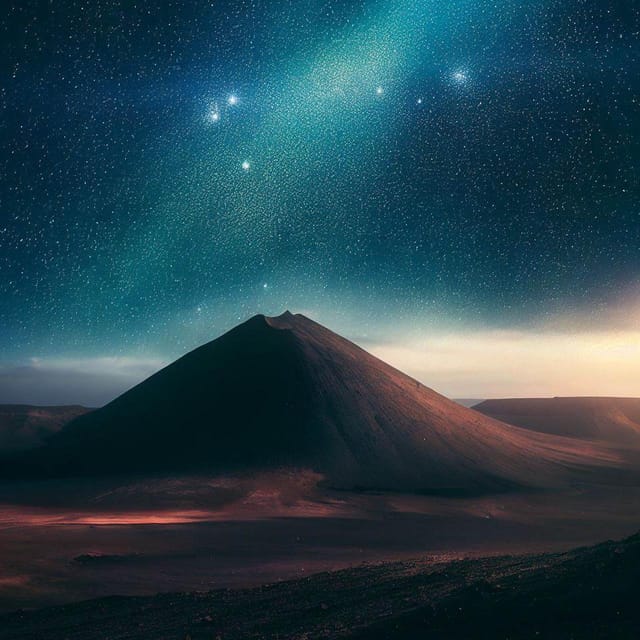
On a clear evening, the main event is the Milky Way. The number of visible stars can be startling if you normally live in a bright town or city. You might also see planets, satellites, and several recognizable constellations.
The exact display depends on the season, cloud cover, and moonlight. Some evenings have produced views of Saturn and its rings, Jupiter, the Moon, and a broad sweep of the Milky Way. On other nights, clouds have allowed only brief gaps or a smaller selection of stars.
Moonlight is another factor. A bright moon can make the volcanic scenery easier to see but wash out some of the fainter stars. A darker night is better for the Milky Way, while a moonlit evening can still be rewarding for the crater and nearby views.
The guide’s honesty about conditions is important. You should book this as a volcano and astronomy experience, not as a guaranteed Milky Way photograph. If the sky is partly cloudy, the guide may adapt the talk, explain the stars visible through breaks, and focus more on the volcano and island culture.
There is no refund if stars are hidden by weather. That policy makes booking at least three days ahead especially important, since the operator needs time to check conditions. It also means you should think carefully about your expectations before paying.
The guide can make or break the night
This tour depends heavily on the person leading it. A flat astronomy lecture would not suit everyone, especially in the cold and dark. The strongest guide reports point to Victor’s humor, enthusiasm, and care for the group as a major part of the evening.
He is described as friendly and entertaining without losing the educational side. That balance works well on a small outdoor tour. He can explain a constellation, make a joke, help someone over rocky ground, and keep the group together.
The minibus journey can also become part of the experience if you choose transport. Victor has entertained groups on the road with stories, island facts, music, and conversation. One useful practical point is that the drive to the volcano can be tricky, so paying for the transfer may be worthwhile even if you have a rental car. You avoid navigating unfamiliar roads at night and get the guide’s commentary along the way.
Pickup details need care. One participant had confusion about the meeting point, although the guide eventually found the group and returned them to their accommodation. Confirm your location clearly and watch for the final timing email.
Is the $53 price good value?
At $53 per person, the price is reasonable if you want several experiences combined into one evening. You are paying for a guided volcano walk, local interpretation, astronomy instruction, equipment such as headlights, water, and possibly transport depending on the option you choose.
The value is strongest for people who would otherwise need to arrange a rental car, find a safe viewpoint, research the stars, and drive back through unfamiliar roads in the dark. The guide adds the part that is hardest to reproduce alone: identifying what you are seeing and connecting it to Fuerteventura.
Transport is not automatically included in every booking. Pickup and drop-off apply only when you select the transfer option, and the transfer may cost extra. Check that detail before comparing the $53 price with other evening activities.
The value is weaker if your only goal is guaranteed stargazing. Clouds, moonlight, and seasonal conditions can all limit the view, and the no-refund weather rule remains in place. You need to be comfortable paying for the whole setting and interpretation, not just the stars.
Who should book this volcano night tour?
This suits couples looking for a quiet evening with something more memorable than a restaurant, families with older children, and solo visitors who want a guided activity rather than an isolated walk. Children aged 8 and 11 have managed the experience, and one family with children aged 11 and 14 enjoyed the combination of walking, volcanoes, and stars.
It is also a good fit if you enjoy learning while you travel. You do not need prior astronomy knowledge. The guide introduces the constellations and planets in an accessible way, using a tablet or laser pointer when helpful.
I would not choose it for anyone who struggles with uneven ground, dislikes heights, or needs a fully accessible path. The stated restrictions also list people over 65, cruise ship guests, and babies under one year as unsuitable for the activity. That age guidance is unusually strict, so check directly before booking if it applies to you.
The tour is not ideal for a late-night luxury outing. You will walk on rough ground, stand in the cold, and depend on the weather. Think outdoor adventure with astronomy, not a polished observatory visit.
Practical advice for a better evening
Book at least three days ahead. The operator needs to check the weather, and the exact start time can change with the season and your location.
Wear layers, even if the afternoon is warm. A jacket or coat is strongly recommended, and the crater can be windy after sunset.
Choose sturdy, closed-toe shoes. Comfortable trainers may work if they have good grip, but open sandals and smooth soles are poor choices for the rocky route.
Bring water if you prefer having extra, although water is included. Food is not included, so eat beforehand if you need a proper meal.
Keep your phone charged. You may want it for photographs, but the real value of the evening comes from looking up rather than trying to record every moment.
Finally, accept some uncertainty. A cloudy sky does not always end the evening. Gaps can appear, and the guide can still explain the volcano, local traditions, and the stars you can see. But if a clear Milky Way is your only reason for going, wait for a forecast that gives you a fair chance.
Should you book Calderón Hondo at night?
I would book this if you want a distinctive Fuerteventura evening built around place, story, and sky. The volcano setting gives the astronomy a strong sense of location, while guides such as Victor add warmth and humor that help the three hours pass quickly.
Book with realistic expectations about the weather and the walking conditions. If you bring a warm jacket, proper shoes, and patience for a few clouds, this is a good-value way to see a quieter side of Fuerteventura. If you need guaranteed stars or easy access, choose another activity.
FAQ
Where does the tour meet?
The meeting point is the Repsol h2go service station. Pickup and drop-off by bus are available from Corralejo, El Cotillo, and Puerto del Rosario when you select the transfer option.
How long does the activity last?
The stated duration is three hours. The total duration can vary depending on your pickup location.
What languages does the guide speak?
The tour is offered in English, Italian, and Spanish.
What does the tour include?
The tour includes a guided experience, water, and headlights. Bus pickup and drop-off are included only when you select the transfer option.
Is food included?
No. Food is not included in the activity.
What should I wear?
Wear comfortable, closed-toe shoes and bring a jacket or coat. The route is rocky, and the crater can be cold and windy at night.
Are the stars guaranteed to be visible?
No. Cloud and other weather conditions may block the stars. Refunds are not provided if the stars are not visible because of the weather.
When will I receive the exact start time?
The guide sends the exact activity time by email 24 hours before the tour. The time shown when booking can vary by season and pickup location.
Who should not take this activity?
The activity is not suitable for people afraid of heights, cruise ship guests, people over 65, babies under one year, or people with mobility problems. The rocky route and steeper section require a reasonable level of mobility.
Just added in Fuerteventura
- Pirate Adventure Boat Tour with Lunch in Fuerteventura★ 5.0 · 243 reviews
- Fuerteventura: Discover Fuerteventura Tour max 8pax★ 5.0 · 106 reviews
- Lezioni di Surf per Beginner e Intermedi (6 persone a istruttore)★ 5.0 · 350 reviews
- OBY Catamaran★ 5.0 · 152 reviews
- Surf Beginner Course★ 5.0 · 196 reviews
- Surf Class at Corralejo★ 4.5 · 122 reviews
- Odyssee 3: The Glass Bottom Boat Tour in Fuerteventura★ 4.5 · 448 reviews
- Fuerteventura: PANORAMA GRAND TOUR 2in1 Historic & photo tour.★ 4.5 · 237 reviews
Tours in Fuerteventura, compared.
Dolphin & Whale Watching Cruise, Drinks & Swim
Read our review →
Browse the lists this tour appears in