
Reviewed · TOURS IN FUENGIROLA
Fuengirola: Bioparc Entrance Ticket
Bioparc Fuengirola gives you something better than a quick row of cages: a carefully designed walk through four wildlife habitats, with animals placed in settings that feel close to their native regions. The lemur walk-through in Madagascar is the star, but orangutans, tigers, gorillas, flamingos, tapirs, and Komodo dragons give the day plenty of weight.
I like the compact size, since you can see the main areas in about four hours without turning the visit into an exhausting march. I also like the clear conservation purpose, with more than 40 breeding programs and other projects aimed at protecting endangered species. The main caution is timing: arrive late and you may miss an animal show, and the non-refundable $35 ticket leaves little room for a change of plans.
Key points to know before you go

- More than 200 species: See animals from Madagascar, Equatorial Africa, Southeast Asia, and the Indo-Pacific in one park.
- Lemurs without a barrier: The Madagascar walk-through brings you unusually close to several types of lemur.
- Compact and shaded: You can cover the park in roughly four hours, with trees offering relief on hot days.
- Animal shows and feedings: Check the schedule early, since late arrival can mean missing a main presentation.
- Useful for families: Interactive activities, expert commentary, and the ocean-plastic VR presentation give children more to do than simply look at animals.
- Practical limits: Food and drinks cost extra, re-entry is not normally allowed, and the ticket cannot be refunded.
A wildlife park built around four habitats
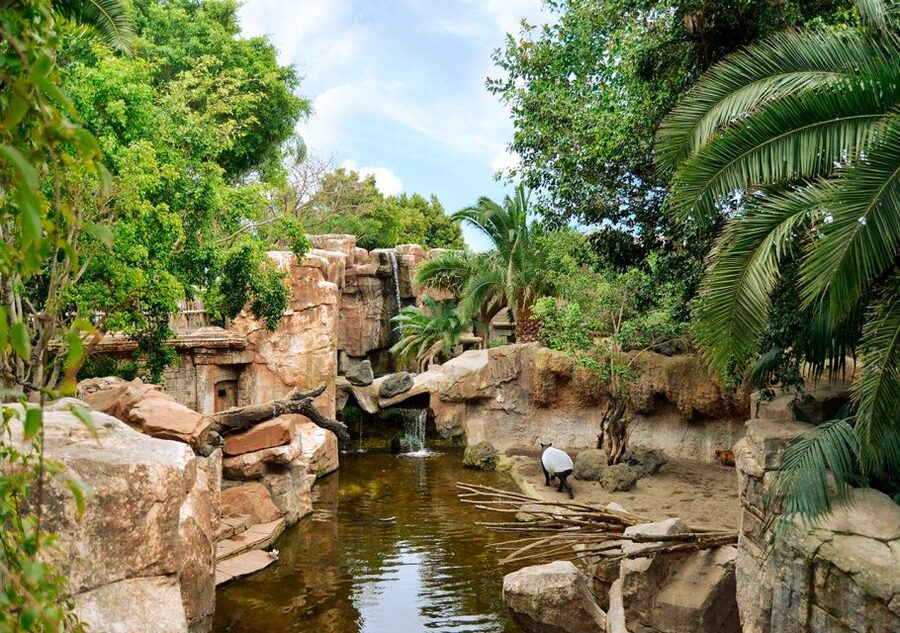
Bioparc Fuengirola is designed as a full-day ticket, but it is not a huge park that demands an all-day march. That balance is one of its strengths. You can take your time at the best enclosures, stop for food, and still see the main sections in around four hours.
The park groups its animals by broad regional habitats rather than placing unrelated species in a simple line. You move through Madagascar, Equatorial Africa, Southeast Asia, and the Indo-Pacific. The effect is more atmospheric than a standard zoo layout, with plants, hidden passages, themed structures, and viewing points helping each area feel distinct.
The setting is also practical for warm Andalusian weather. Trees provide shade along much of the route, which matters if you visit in summer or arrive around midday. One family completed its visit from roughly noon until 5 pm and still found plenty to see. I would allow at least four hours, with extra time if you want lunch, a show, or long stops at the gorillas and lemurs.
A few more things to do in Fuengirola worth a look
- Barcelona: Sagrada Familia Entry Ticket with Audio Guide
★ 4.6 · 105,312 reviews - Barcelona: Park Güell Admission Ticket
★ 4.4 · 76,534 reviews - Seville: Royal Alcázar Entry Ticket
★ 4.6 · 28,378 reviews
Start with Madagascar and the close lemur encounter
The Madagascar section is the part I would make a priority. You can enter a walk-through area where lemurs move nearby without a glass wall or fence separating you from them. This is not a promise that every lemur will pose at eye level, of course, but the lack of a standard barrier changes the experience.
You may see several kinds of lemur, and the close setting lets you notice small details that are easy to miss from a distant viewing platform. Watch their movement, listen for activity around you, and follow the staff instructions carefully. Do not touch or feed the animals.
The walk-through can be popular, so do not leave it until the final few minutes of your visit. If you are visiting with children, this is likely to become the most memorable stop. It also gives adults a good reason to slow down instead of rushing from one enclosure to the next.
Madagascar has another useful quality: it shows how the park mixes education with access. You are not simply being shown an animal. You are given a closer look at how that animal lives and why protecting endangered species matters.
Equatorial Africa brings the biggest animal moments

The Equatorial Africa section is where the park feels most substantial. Gorillas are a major draw, and it is worth sitting quietly for a while rather than moving on after a quick glance. Their behavior can be entertaining even when they are doing very little, and one family particularly enjoyed watching them play.
You can also see other African species in settings designed to resemble their home environments. The park uses hidden doors and passages in places, so the route has a sense of discovery without requiring a large area. These details help keep the walk interesting for children, who may otherwise tire of repeated glass-fronted exhibits.
The bird presentation adds another strong moment. Birds fly close overhead during the mammal show, making it more active than a simple talk beside an enclosure. The exact show schedule matters, so check it when you arrive. One visitor who arrived after 2 pm missed the main presentation and found the next option too late for practical use.
The lesson is simple: plan the show first, then fit the animals around it. You can see most of the park in a few hours, but a missed presentation cannot always be recovered later in the day.
Southeast Asia focuses on orangutans, tigers, and forest life
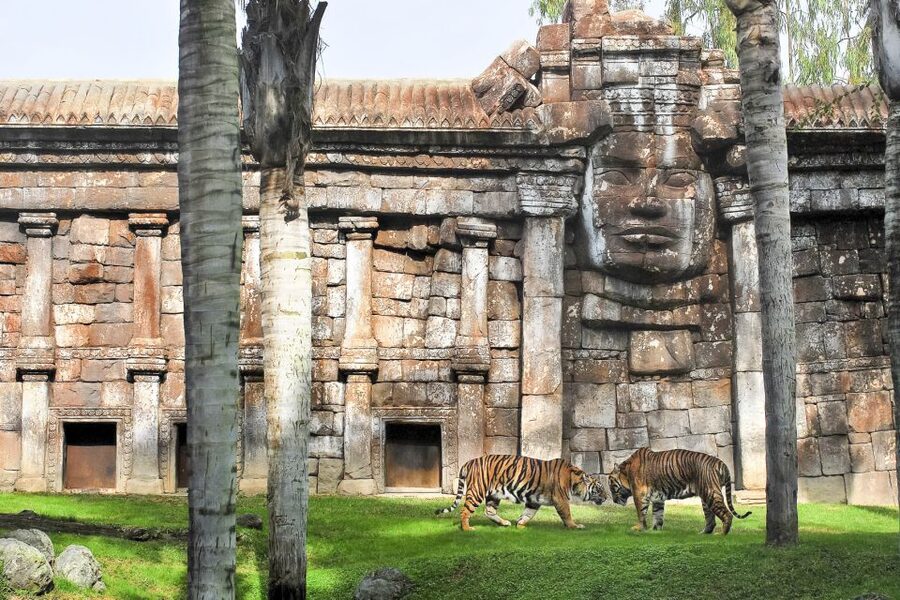
Southeast Asia provides some of the park’s most familiar and visually striking animals. Orangutans and tigers are among the species you may see, and the tropical design helps connect them to a forest setting rather than presenting them as isolated exhibits.
Tigers can be unpredictable in the best sense. You might catch one resting, moving through the enclosure, or pacing along a familiar route. One careful assessment noted pacing in a leopard and a tiger, while also recognizing that the enclosures were suitable. That is a useful reminder to observe animals honestly rather than assuming every movement means the same thing.
The park’s layouts are generally spacious and well maintained, but animals will still behave in different ways from one visit to the next. If you see a tiger pacing, watch for a few minutes, then return later if the animal is not settled. A short visit can give you only one moment in time.
This section may also include the themed Mayan temple area and close glass viewing points. Those structures add visual interest and create viewing spaces that feel more protected without cutting you off from the animals.
Same base, a different kind of day out:
- Fuengirola: Dolphin Watching by Yacht with Snacks and Drinks
★ 4.5 · 1,729 reviews - Fuengirola: Catamaran Tour to Spot Dolphins
★ 4.0 · 1,214 reviews - Fuengirola: Jet Ski Rental
★ 4.1 · 689 reviews - Fuengirola: Best Jet Ski Rental
★ 4.6 · 396 reviews
Indo-Pacific includes Komodo dragons and more surprises
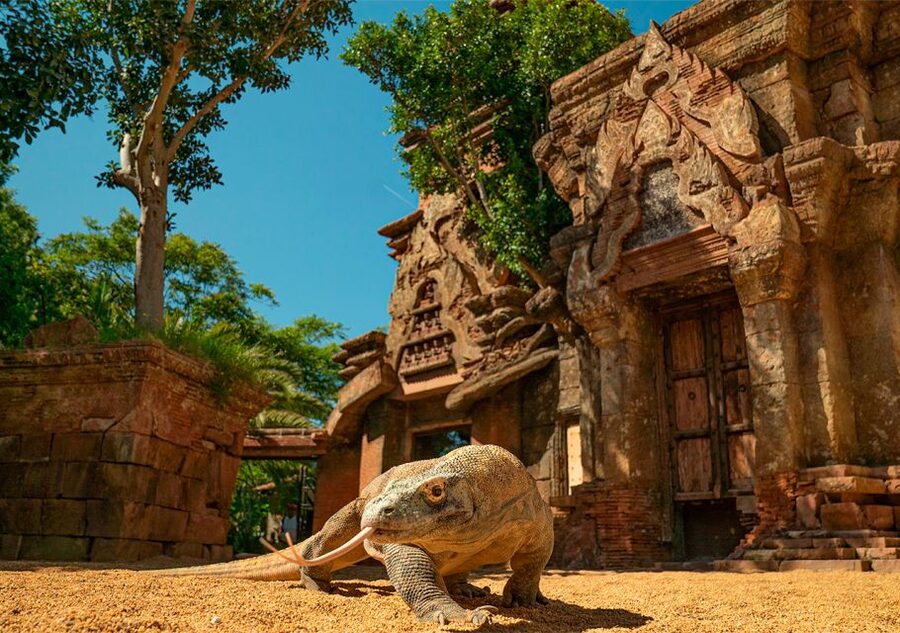
The Indo-Pacific habitat is a good reason to visit even if your main goal is a particular species. One family booked the park to see Komodo dragons and was pleased with the result. These large reptiles are not always high on a child’s list until they see them in person, so this area can be a useful change of pace after the primates and big cats.
The park also includes flamingos, tapirs, and other animals that help keep the route varied. You will not spend the whole day looking at large mammals. Birds, reptiles, and smaller species break up the visit and make the park suitable for different interests within one family.
Some of the viewing points place you close to the animals behind glass. Follow the park’s rules here: no tapping on glass, no flash photography, no throwing objects, and no feeding. These are not fussy rules. They protect the animals from needless stress and help keep the viewing areas calm.
Conservation is more than a sign on the wall
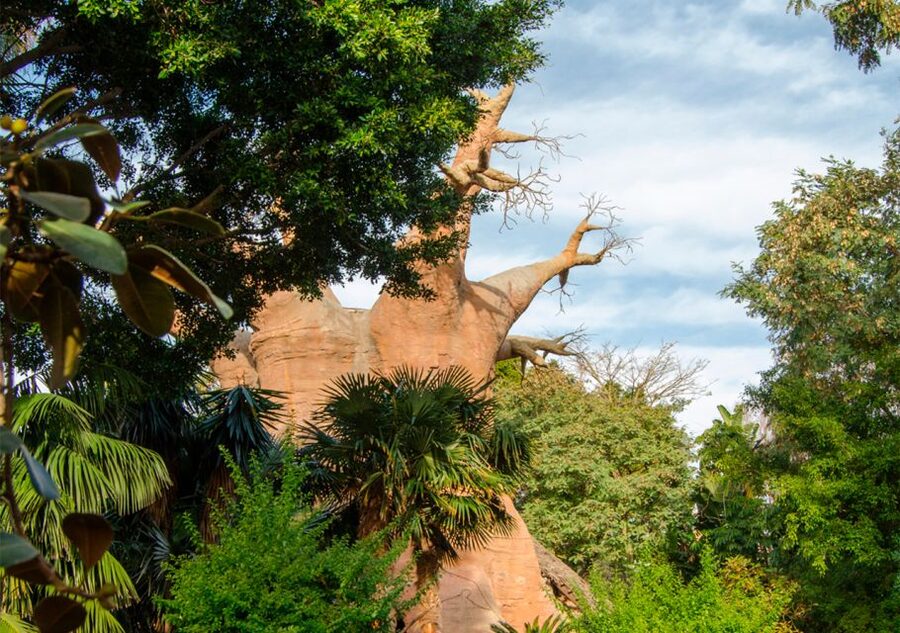
Bioparc Fuengirola takes part in more than 40 breeding programs and several preservation projects. That gives the ticket a purpose beyond entertainment, especially for anyone who wants a zoo visit to support work with endangered species.
You will also find educational activities and expert commentary about the animals’ main traits. The information is useful for children, but it does not have to feel like a classroom lesson. The best teaching often happens when you are already watching an animal and can connect the explanation to what it is doing.
The VR presentation about plastic in the oceans is another strong educational feature for families. It gives children a way to understand a modern conservation problem through an interactive format rather than a long display panel. Activities such as this can make the visit stick after you leave.
The park’s conservation message works best when paired with close observation. Seeing lemurs at short range, watching gorillas for several minutes, or noticing how a bird moves through the air makes the subject personal. You are more likely to remember a point about habitat loss when you have just watched the animal that depends on it.
How long to stay, and when to arrive
The ticket is valid for one day, and I would plan to arrive early enough to check the feeding times and animal presentations. There is no need to sprint through the entrance, but a late start can cost you one of the best scheduled activities.
Four hours is a realistic minimum for a solid visit. You can see the main animals in that time, although you may feel rushed if you stop for every explanation or wait for the lemur walk-through. A half day works well for families who want to combine the park with another activity in Fuengirola.
A longer visit makes sense if you want lunch, repeat favorite areas, or time with the gorillas. The park is compact enough that returning to a particular enclosure does not require a major detour.
Remember that you normally cannot leave and come back on the same ticket. If you exit, you may need to buy a new ticket unless Bioparc staff authorize an exception. Plan meals and breaks inside the park rather than assuming you can step out for lunch and return.
Food, drinks, and the cost of the day
At $35 per person, the ticket is not a bargain-priced quick stop, but it can represent fair value if you use the full half day. You are paying for more than animal viewing: the ticket includes the four themed habitats, educational activities, the walk-through areas, and scheduled presentations when available.
Food and drinks are not included. The park has a restaurant and snack options, and the restaurant setting is attractive. Several people found the food reasonably priced for a park venue, though one meal was described as ordinary fast food. I would set expectations accordingly: eat there for convenience and the setting, not for a destination meal.
The gift shop is large, but it can be expensive. If you are visiting with children, decide in advance how you will handle souvenirs. The entrance photo is optional, and you can choose to buy it at the end rather than committing right away.
Look for combined ticket offers if you are also using local trains, since discounted combinations may be available. The activity itself is non-refundable, so check your schedule before booking. At $35, losing the ticket because of a last-minute change is a noticeable cost.
What families and adults should expect
Families with children around primary school age should find enough variety to keep the day moving. The lemur area gives children a clear highlight, while the VR activity, animal presentations, and close viewing points add structure. The park is not so large that younger children are likely to tire from endless walking.
Adults who enjoy wildlife can also have a good visit, especially if they slow down at the gorilla, tiger, and orangutan areas. The design gives you reasons to pause, and the compact route makes it possible to revisit the animals that interest you most.
The experience suits people who prefer a well-kept zoo with a conservation message. It may be less satisfying if you want a huge safari-style park or a full day of open-country animal viewing. Bioparc is carefully designed and relatively small, not a substitute for seeing animals in the wild.
It is wheelchair accessible, which makes the ticket practical for many visitors with mobility needs. Bicycles, roller skates, and skateboards are not allowed inside. Keep noise down around the animals, and do not use flash photography.
A simple plan for your visit
I would use this order:
- Check the day’s feeding and presentation times at the entrance.
- Visit Madagascar early, especially if the lemur walk-through is a priority.
- Continue through Equatorial Africa and allow quiet time at the gorillas.
- Catch the bird and mammal presentation at its scheduled time.
- Explore Southeast Asia, then finish with the Indo-Pacific habitat.
- Leave time for food, the educational activities, or a second look at your favorite animals.
This plan keeps the fixed-time activities from controlling the whole day. It also avoids the common mistake of arriving late, wandering freely, and discovering that the main show has already finished.
Should you book Bioparc Fuengirola?
I would book it if you are staying in Fuengirola or nearby and want a well-organized wildlife day without committing to a massive zoo. The lemur walk-through, shaded paths, compact route, and strong mix of species make the $35 ticket worthwhile for most families and animal lovers.
Book with more caution if your schedule is uncertain, since the ticket is non-refundable and re-entry is normally not allowed. Also check the presentation times before you go. If you arrive after the main show, the park still offers plenty to see, but you may miss one of its more memorable activities.
For a half-day in Andalusia, this is a practical choice. You can see a surprising range of animals, learn about conservation, and spend time in a setting that feels more thoughtful than a basic animal display.
FAQ
How much does the Bioparc Fuengirola ticket cost?
The listed price is $35 per person.
How long is the ticket valid?
The ticket is valid for one day.
What animals can I see at Bioparc Fuengirola?
The park has more than 200 species across Madagascar, Equatorial Africa, Southeast Asia, and the Indo-Pacific. Animals mentioned include lemurs, orangutans, tigers, gorillas, flamingos, tapirs, Komodo dragons, and various birds.
Can I walk near lemurs?
Yes. The Madagascar habitat includes a walk-through area where you can be near lemurs without a barrier. You must not touch or feed them.
Are food and drinks included?
No. Food and drinks are not included in the entrance ticket. The park has restaurant and snack options.
Can I leave and re-enter the park?
Normally, no. You may not re-enter after leaving unless you buy a new ticket or Bioparc staff authorize an exception.
Is Bioparc Fuengirola wheelchair accessible?
Yes. The activity is listed as wheelchair accessible.
Just added in Fuengirola
- Fuengirola: Spanish Horse Show with Optional Dinner/Flamenco★ 4.1 · 249 reviews
- Málaga: Off-Road Buggy Tour in Mijas★ 4.9 · 109 reviews
- Málaga: Off-Road 2-Hour Tour by 2-Seater Quad in Mijas★ 4.9 · 227 reviews
- Fuengirola: Sunset Boat Tour with a Drink★ 4.4 · 110 reviews
- Fuengirola: Deluxe Parasailing Flight from Fuengirola Port★ 4.7 · 319 reviews
- Fuengirola: Dolphin-Watching Sailing Tour with Drinks★ 4.9 · 155 reviews
- Fuengirola: Dolphin Watching Excursion with Refreshments★ 4.6 · 104 reviews
- Fuengirola: Fantastic Dolphin Watching Yacht Tour with Drink★ 4.3 · 151 reviews
Tours in Fuengirola, compared.

Dolphin Watching by Yacht with Snacks and Drinks
Read our review →



Spanish Horse Show with Optional Dinner/Flamenco
Read our review →


Fantastic Dolphin Watching Yacht Tour with Drink
Read our review →Browse the lists this tour appears in