
Reviewed · TOURS IN SEVILLE
From Seville: Italica Roman City Tour
Italica is where Roman Spain becomes wonderfully easy to picture. In one morning, you can walk old streets, stand inside a 25,000-seat amphitheater, and admire mosaic floors that once decorated wealthy homes. The city was founded in 206 B.C. by Publius Cornelius Scipio Africanus and later produced emperors Trajan and Hadrian.
I like the short ride from Seville and the way a guide gives meaning to scattered walls and columns. I also like the mix of grand public buildings and small details, especially the mosaics, underground amphitheater passages, baths, and statues of Diana, Venus, and Trajan.
The main drawback is pace. Nearly three hours at the site sounds generous, but a large group can make it hard to hear, and there may be little time to wander alone. Some departures also include a monastery, which is a pleasant extra for some people but a distraction if you want every minute at Italica.
Key points to know before you book
- The amphitheater is the star: Its 25,000-seat capacity gives you a strong sense of Roman spectacle and scale.
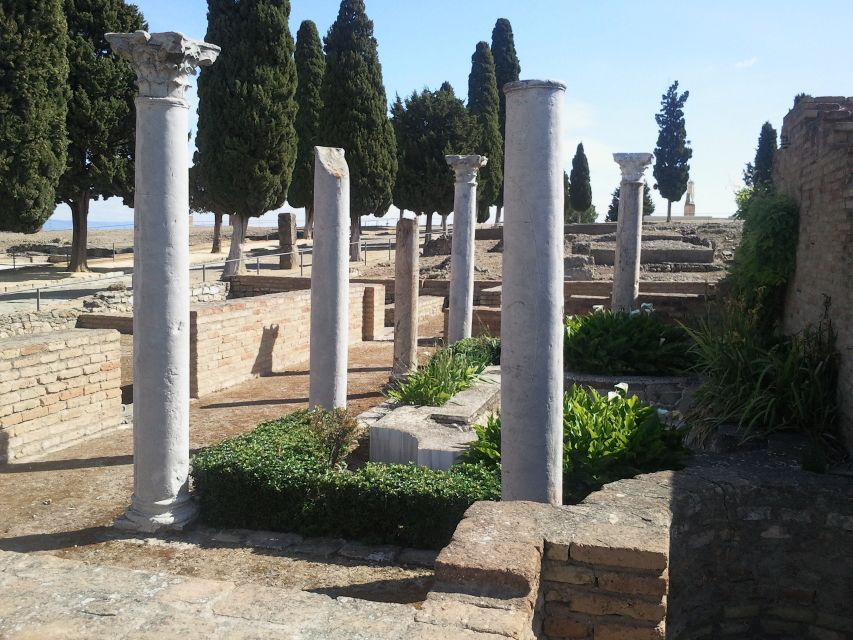
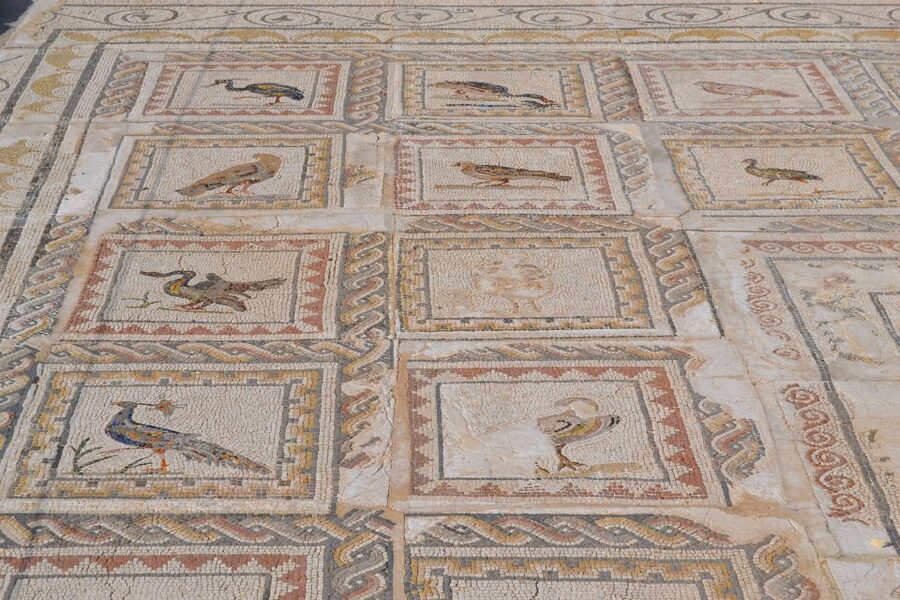
- The mosaics reward a slower look: Floors in the old houses are among the most memorable details at the site.
- You get door-to-door simplicity: Round-trip transport, entrance, and a guide are included from central Seville meeting points.
- The guide makes the ruins readable: José Luis, Alberto, Miguel, Jesus, Nieves, and Sergio are among the guides praised for clear storytelling and humor.
- Expect a walking tour, not a museum visit: Most of the experience takes place among open-air ruins, with limited time for independent exploring.
- A monastery may be added: The order of visits can change, and some departures include a monastery stop or optional lunch.
Why Italica makes a smart half-day from Seville
Seville gives you Moorish palaces, Gothic churches, and lively plazas. Italica adds a different layer: Roman Hispania, viewed not through a museum case but along the original street plan. It is close enough to visit without giving up a full afternoon in Seville.
The city was founded in 206 B.C., after Rome defeated Carthage in the Second Punic War. That date matters because Italica was established long before the Roman emperors most people associate with the site. Trajan and Hadrian were both born here, linking this provincial settlement to the highest levels of Roman power.
I find the site most rewarding when I stop thinking of it as a pile of ruins. The broad streets, house foundations, public baths, temple remains, theater, and amphitheater show a planned Roman city with homes, entertainment, religion, and civic life all close together.
A guide helps connect those pieces. Without one, you can still enjoy the mosaics and scale of the amphitheater, but you may miss why the buildings mattered or how the city fitted into Roman Spain. This is an experience where explanation adds real value.
Other trips people book in Seville:
- Seville: Live Flamenco Dancing Show Ticket at the Theater
★ 4.7 · 16,396 reviews - Seville: 1-Hour Guadalquivir River Sightseeing Eco Cruise
★ 4.2 · 10,281 reviews - Seville: Cathedral, Giralda, and Royal Alcázar Guided Tour
★ 4.7 · 9,165 reviews
Central Seville pickups and the 30-minute ride
Pickup is available at three central points: Calle Rastro 12A at 9:45, Hotel Don Paco at 9:50, and Calle Trajano 6 at 10:00. The meeting points make sense if you are staying in central Seville, though you should check the exact location carefully because the three stops are close enough to cause confusion if you arrive at the wrong one.
The stated transfer is about 30 minutes each way. Italica itself is only around 15 minutes from Seville by location, but the tour schedule allows time for city pickups and the group transfer. That is useful to know if you are planning another activity immediately afterward.
The vehicle is described as a bus, coach, or comfortable van depending on the departure. One past departure used an open-air bus, while another was praised for a comfortable coach. The ride is not the reason to book this trip, but it removes the need to arrange local transport and makes the visit straightforward.
Pickup timing deserves a little patience. One person found the service slightly late, while others praised the transport for going directly from the city center to the ruins and back. I would arrive early at your selected meeting point and leave a buffer after the four-hour program.
Walking into the Archaeological Ensemble of Italica
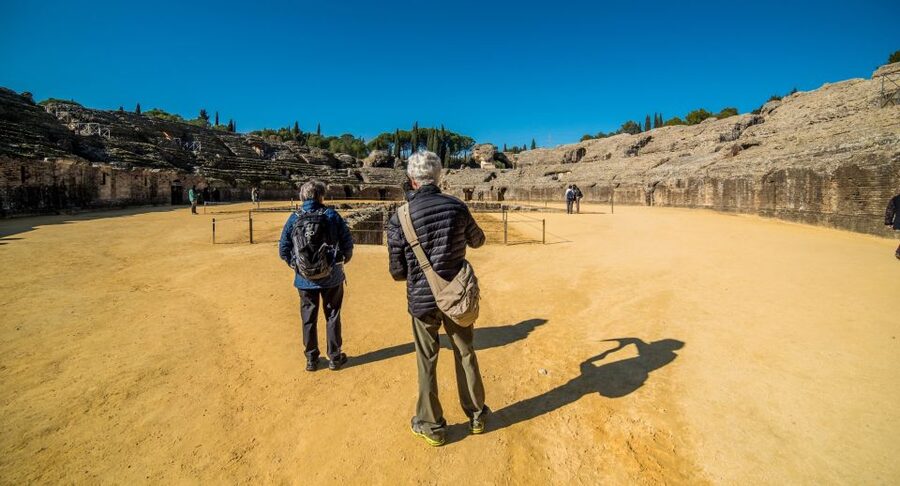
You have about three hours for the guided visit. That is enough time to see the main remains without rushing from one feature to the next, although the exact balance between guided explanation and free time depends on the group and the guide.
The old streets give you the first sense of Italica as a city rather than a single monument. You will see the remains of houses and public buildings laid out across the site, with sections of walls and foundations showing how urban life was organized.
The houses are especially important because they bring the Roman world down to human scale. The mosaics are not just decorative leftovers. They hint at the wealth and taste of the people who lived here, and they give you something precise to focus on among the larger stone remains.
Look for the mosaic floors as carefully as you look at the amphitheater. Their patterns and surviving colors can be more visually striking than a wall fragment, especially when your guide explains which spaces they once decorated.
You will also see the public baths, a reminder that Roman cities were built around shared social spaces as much as private homes. The baths, streets, and public monuments help you picture a working town rather than a ceremonial site used only for grand events.
The amphitheater and its underground passages
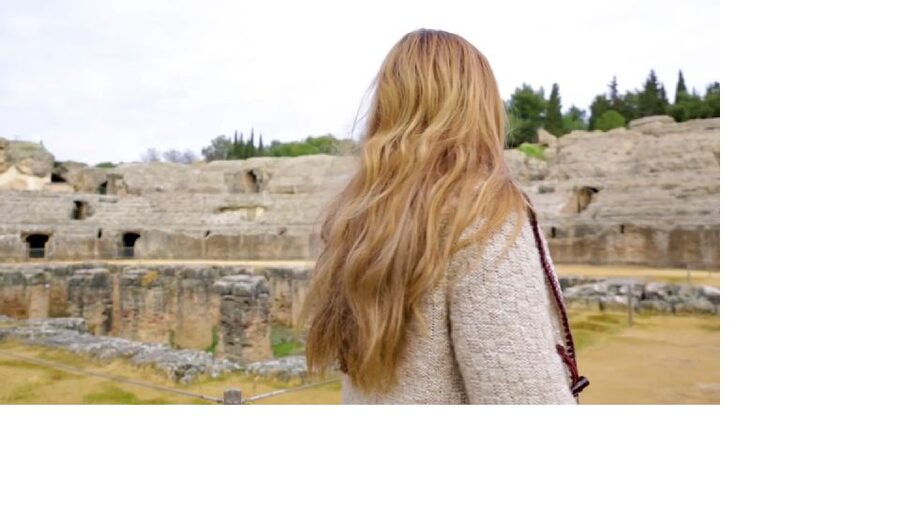
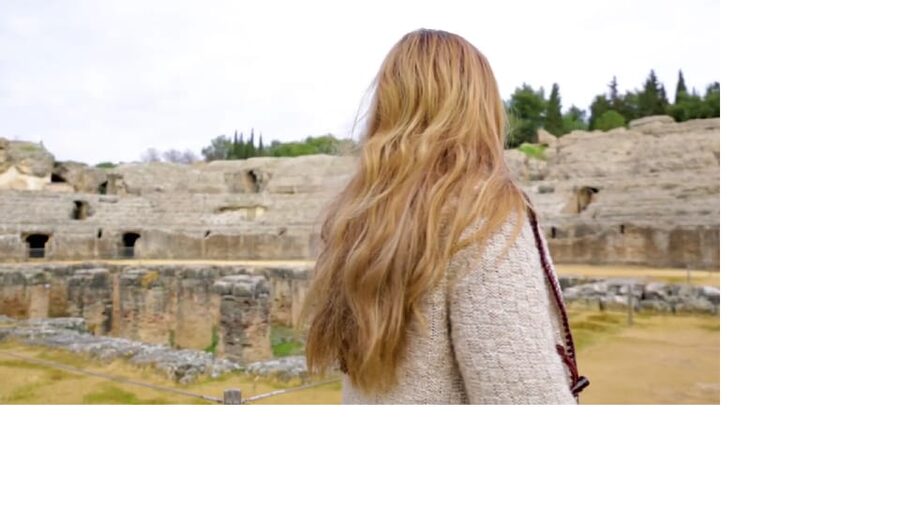
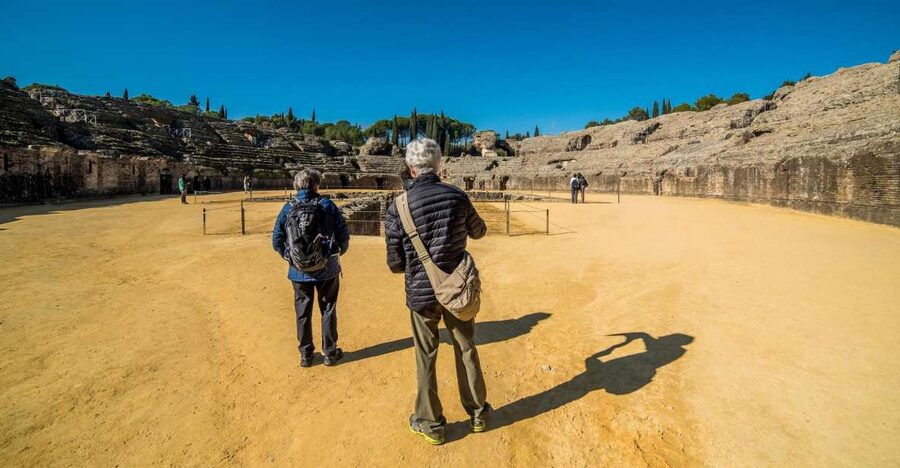
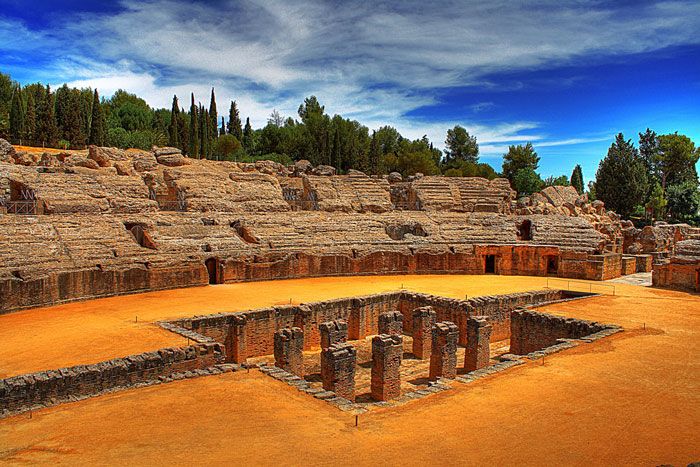
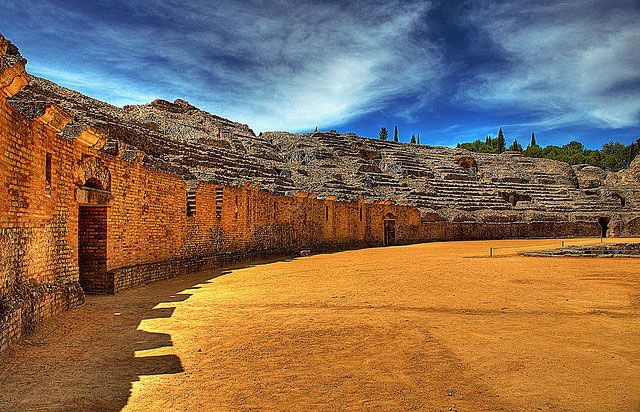
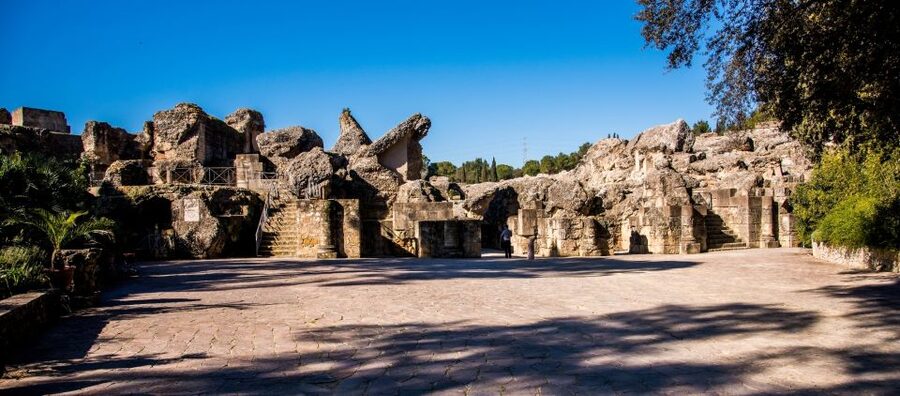
The amphitheater is the emotional high point of the visit. Its seating capacity was about 25,000, and it is described as the third-largest in the Roman Empire. Even in its ruined state, the oval arena makes the scale of Roman entertainment plain.
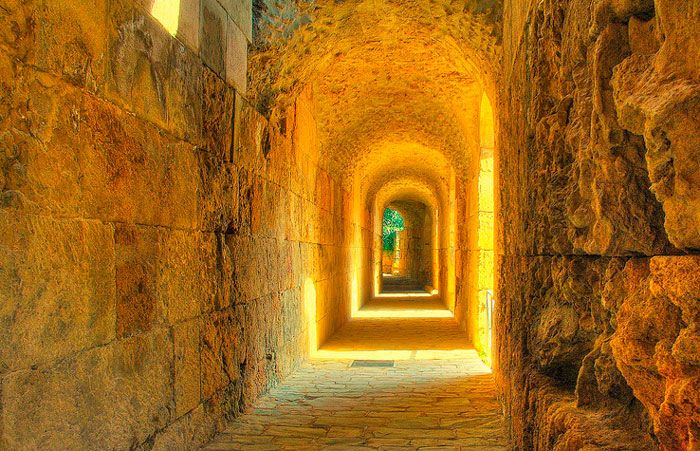
Walk into the seating area and then pay attention to the passages below it. The tunnels under the seats are among the most atmospheric parts of the visit because they show how people and equipment moved through the building without crossing the arena floor.
This is also where a good guide earns the admission price. The stones alone cannot tell you how the building worked, but a clear explanation of the seating, arena, and underground routes makes the structure much easier to understand. Guides including Miguel, Jesus, Nieves, and Alberto have been singled out for combining facts with funny stories and vivid descriptions.
The amphitheater also has a screen connection that attracts some visitors, including people who first heard of Italica through Game of Thrones. That can be a useful reason to add the site to your plans, but the Roman setting is the stronger reason to come. You do not need to know the filming connection to appreciate the building.
Same base, a different kind of day out:
- Seville: Setas de Sevilla Entry Ticket
★ 4.6 · 8,901 reviews - Seville: Cathedral, Giralda & Alcazar Entry With Guided Tour
★ 4.6 · 8,560 reviews - Seville: Priority Access Cathedral, Giralda & Alcázar Tour
★ 4.8 · 7,563 reviews - Seville: Guadalquivir River Cruise
★ 3.9 · 6,921 reviews
Traianeum, statues, baths, and Roman daily life
The Traianeum gives the visit a more formal and political side. Along with the statues of Diana, Venus, and Trajan, it shows how religion, imperial power, and public identity were part of the same Roman world.
I like this part of Italica because it keeps the visit from becoming only an amphitheater outing. The arena supplies the drama, but the temple area, sculpture, baths, and homes explain how people lived and how the city presented itself.
The statues are important even when they are not all complete or in their original setting. Diana and Venus point toward Roman religious life, while Trajan connects the city directly to one of its famous sons. Your guide can turn those names into a story about a local settlement producing an emperor who later ruled a vast realm.
The site is open-air, so your experience depends partly on the weather. In summer, the sun can make three hours of walking tiring. Bring water, wear practical shoes, and prepare for limited shade. In cooler months, the ruins are easier to inspect at length, and the lower sun can make the mosaics pleasant to photograph.
The Roman theater in Santiponce
The Roman theater is located in Santiponce, the modern town associated with Italica. It is described as partially reconstructed, so do not expect the same intact sense of enclosure you get at the amphitheater.
Still, the theater completes the picture of public life. The amphitheater handled mass spectacle, while the theater served a different kind of performance and civic gathering. Seeing both helps you understand that Roman entertainment was not one single format.
The theater may be visited as part of the guided route or alongside the main archaeological area, and the order can change because of local conditions. The tour may also be conducted in two languages if needed, which is practical but can lengthen explanations or make them feel less focused.
English and Spanish are the regular guide languages. French, German, and Italian tours can be requested, though you should check with the operator before booking if language is important to you.
The possible monastery stop and optional lunch
Some departures include a visit to a monastery after Italica. Several people found this a beautiful and worthwhile addition, while others would have preferred to spend that time exploring the Roman ruins. That difference is useful when deciding if this is your ideal format.
If you want a tightly focused archaeological visit, ask about the day’s plan before setting out. The order of visits can change, and the monastery is not the main reason to book the experience. If you enjoy adding a later historic building to a Roman site, it can make the half-day feel more varied.
An optional lunch is available for €18. The lunch is not included in the base price, so treat it as a convenience rather than part of the value calculation. You can book the tour without it if you prefer to eat independently in Seville.
How much value do you get for $51?
At $51 per person, the tour costs more than arranging a simple visit on your own, but the price includes round-trip transport, admission to Italica, and an official guide. Those three pieces matter because the site is outside central Seville and its meaning is much clearer with context.
The value is strongest if you have limited time, prefer not to handle transport, or want a structured explanation of the ruins. You are paying for a smooth half-day and a human guide, not just a bus ride to an archaeological site.
The value is weaker if you want to move at your own pace or spend a long time photographing details. The guided format controls the rhythm, and a large group can make it difficult to hear. One person also felt there was no real time to explore independently.
The overall rating is 4.4 from 139 ratings, with especially strong praise for the guides, transport, amphitheater, mosaics, and clear storytelling. The less favorable comments focus on limited free time, occasional pickup delays, and guides who were friendly but not always detailed enough. That is a fair picture of a group tour: usually rewarding, but dependent on the guide and group size.
Who will enjoy this Italica tour most?
I would recommend it to first-time visitors to Seville who want Roman history without spending a full day away from the city. It also suits families reasonably well. One family brought a four-year-old and a one-and-a-half-year-old, and found the guides sociable and helpful, though a stroller could only be used in some parts of the site.
History fans will appreciate the connection to Trajan and Hadrian, the public baths, the Traianeum, and the theater. Architecture fans will focus on the amphitheater and street plan. Film fans may enjoy the screen connection, but they should come for the ancient city itself.
You may prefer an independent visit if you need quiet time, dislike fixed schedules, or want to study every mosaic at length. You may also want to confirm the monastery plan if your priority is Italica alone.
Cancellation is free up to 24 hours before departure, and you can reserve now and pay later. Those policies help if your Seville plans are still shifting, but the practical questions are still the meeting point, language, and whether the day includes the extra stop.
Should you book the Seville to Italica tour?
Book it if you want an easy, well-explained introduction to Roman Spain and you value transport from central Seville. The amphitheater, mosaic floors, and underground passages give the visit real visual power, while the guide helps you understand the city beyond its best-known monument.
I would choose this tour over a simple transfer if you want the story of Italica, not just access to the ruins. I would skip it, or seek a more private option, if independent exploration matters more than convenience.
For most people with half a day available, $51 is a reasonable price for transport, admission, and live guiding. Arrive early, wear shoes suited to open-air ruins, bring water, and ask whether the monastery is included. That last detail will tell you whether the schedule matches what you want from Italica.
FAQ
How long does the Italica tour from Seville last?
The tour lasts four hours, including transportation between Seville and Italica. The planned guided visit at Italica lasts about three hours.
Where does pickup take place?
Pickup is available at Calle Rastro 12A at 9:45, Hotel Don Paco at 9:50, and Calle Trajano 6 at 10:00.
What is included in the price?
The $51 price includes round-trip transportation between Seville and Italica, entrance fees to Italica, and an official tourist guide.
Which languages are available?
The regular tour languages are English and Spanish. French, German, and Italian tours are available on request through the local tour operator.
Is lunch included?
No. An optional lunch is available for €18, but it is not included in the standard tour price.
Can I cancel the booking?
Yes. You can cancel up to 24 hours in advance for a full refund. You can also reserve now and pay later.
Just added in Seville
- Seville: Authentic and Romantic Horse-Drawn Carriage Ride★ 4.5 · 341 reviews
- Seville: VIP Exclusive Early Access Tour of The Alcazar★ 4.8 · 276 reviews
- Seville: Sunset Roof Top Walking Tour★ 4.5 · 122 reviews
- Seville: Tapas, Taverns and History Guided Walking Tour★ 4.9 · 515 reviews
- Seville: Flamenco Show at Tablao Almoraima in Triana★ 4.6 · 483 reviews
- Seville: Tapas, Taverns, and History Walking Tour★ 4.9 · 676 reviews
- Seville: Stand Up Paddle Board Rental★ 4.6 · 134 reviews
- Seville: Small-Group Cathedral and Giralda Tour with Tickets★ 4.9 · 203 reviews
Tours in Seville, compared.

Live Flamenco Dancing Show Ticket at the Theater
Read our review →
1-Hour Guadalquivir River Sightseeing Eco Cruise
Read our review →
Cathedral, Giralda, and Royal Alcázar Guided Tour
Read our review →
Cathedral, Giralda & Alcazar Entry With Guided Tour
Read our review →
Priority Access Cathedral, Giralda & Alcázar Tour
Read our review →
Puro Flamenco Show with Optional Museum Ticket
Read our review →Browse the lists this tour appears in