
Reviewed · TOURS IN SEVILLE
From Seville: Italica Roman City & Medieval Monastery Tour
Italica is the kind of Roman site that can surprise you: it sits just outside Seville, yet its broad streets, huge amphitheater, and vivid floor mosaics feel far removed from the modern city. This four-hour trip also reaches the birthplace of Emperors Trajan and Hadrian, giving the ruins real historical weight beyond their television fame.
I like the pairing of Italica with San Isidoro del Campo, a medieval monastery that changes the subject from Roman public life to religious architecture and daily devotion. I also like that transport, entry tickets, and a live guide are included for $46, although you should allow extra time after the tour because traffic or a longer visit can push the return beyond the advertised four hours.
Key points before you book
- The amphitheater is the star: Once able to hold about 25,000 people, it includes underground passages and the former lion den.
- The mosaics are remarkably clear: Ancient floor designs are among Italica’s most memorable sights.
- The monastery adds a useful second chapter: San Isidoro del Campo combines Mudejar, Gothic, and Baroque architecture.
- Guides make the ruins readable: Carlos León, Miguel, Jesús, Alberto, José Luis, and others have been praised for lively explanations and strong historical context.
- You can choose your touring style: Shared small-group and private options are available, with hotel pickup offered for private bookings.
- Plan around a flexible finish: The tour is listed at four hours, but traffic and a fuller visit can extend the day.
Why Italica is worth leaving Seville for
Italica was founded in 206 BC by the Roman general Publius Cornelius Scipio. That early date matters. This was not simply a later Roman outpost built after the empire had already taken shape. It was one of Rome’s early footholds in the Iberian Peninsula, and it grew into an important city in what became Roman Spain.
Its most famous sons were Trajan and Hadrian. Trajan ruled from AD 98 to 117, and Hadrian followed him from AD 117 to 138. You do not need to be an ancient-history expert to appreciate the connection. Walking through the city where these emperors were born gives the site a personal link to the wider Roman world.
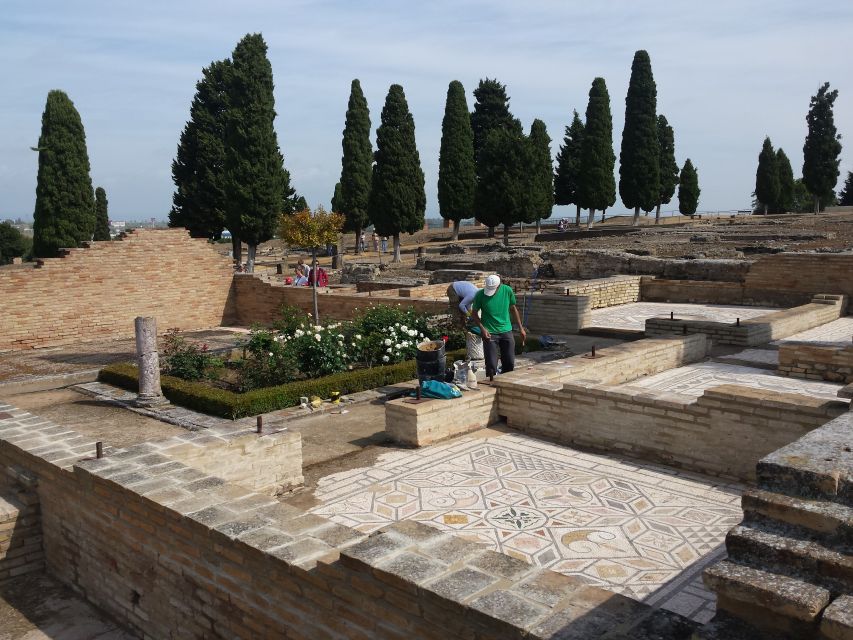
The ruins are especially rewarding because much of what you see is spread across open streets rather than hidden behind museum glass. You can look across ancient avenues, inspect large domestic mosaics, and get a sense of how spacious the planned city was.
The site is still being excavated and restored, so you should not expect a fully reconstructed Roman town. That unfinished quality is part of the appeal, but it also means some areas may feel less polished than major monuments in Rome or Mérida. A guide helps you understand what you are seeing instead of wandering among partial walls without context.
Other trips people book in Seville:
- Seville: Live Flamenco Dancing Show Ticket at the Theater
★ 4.7 · 16,396 reviews - Seville: 1-Hour Guadalquivir River Sightseeing Eco Cruise
★ 4.2 · 10,281 reviews - Seville: Cathedral, Giralda, and Royal Alcázar Guided Tour
★ 4.7 · 9,165 reviews
The 20-minute ride from Seville
The outward bus ride takes about 20 minutes, making this one of the easier archaeological trips from Seville. You avoid arranging a separate bus or taxi and can focus on the visit itself.
Shared tours use one of three meeting points in Seville, depending on the option you select. The exact point matters, so check your booking details carefully rather than relying only on a navigation app. One person found that satellite navigation led slightly away from the correct place, and clearer signs identifying the group would have helped.
The vehicle has been described as comfortable, and one recent journey included USB charging ports. On shared departures, you may ride with several groups before splitting into language groups at Italica. That arrangement keeps the transport efficient, but it means the bus portion may feel larger than the walking group.
Private tours offer hotel pickup within the service area. After booking, you provide your accommodation name and address. If the address is outside the pickup zone, you receive the nearest accessible meeting point instead.
Entering the amphitheater and Dragonpit
The amphitheater is the emotional high point of the visit. It once held around 25,000 spectators, a remarkable capacity for a city outside Rome. Its scale becomes clear as you look down from the seating area toward the arena floor.
You also see the underground passages used by gladiators and the space where lions were kept before combat. These details give the monument more force than a simple photo stop. The building was designed around movement, spectacle, and controlled violence, and the surviving structure still communicates that purpose.
Game of Thrones fans will recognize the amphitheater as the Dragonpit, the setting for the season seven summit. The filming connection is fun, but it does not overwhelm the older story. The Roman structure is impressive even if you have never watched the series.
The guided section at Italica lasts about 105 minutes. Expect most of that time to be spent moving through the Roman city, with the amphitheater forming a major part of the explanation. There is also some time to look around and take photographs, but it may feel short if you want to return to the amphitheater from different levels.
One practical point: facilities at the archaeological site are limited. There is a small exhibition and toilets, but the condition of the toilets has not always been ideal. Use the opportunity when it comes up, especially if you prefer not to rush later.
Mosaics that reward close attention
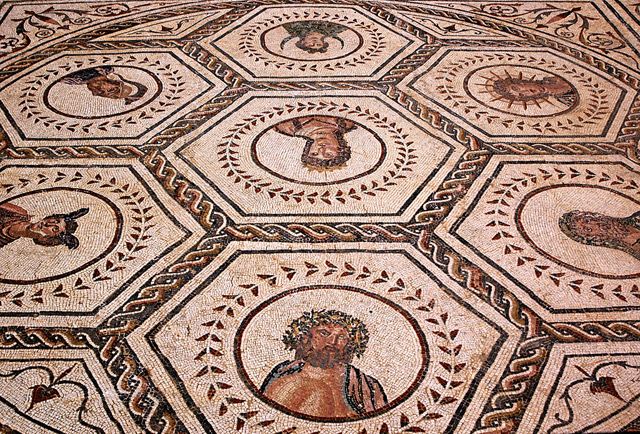
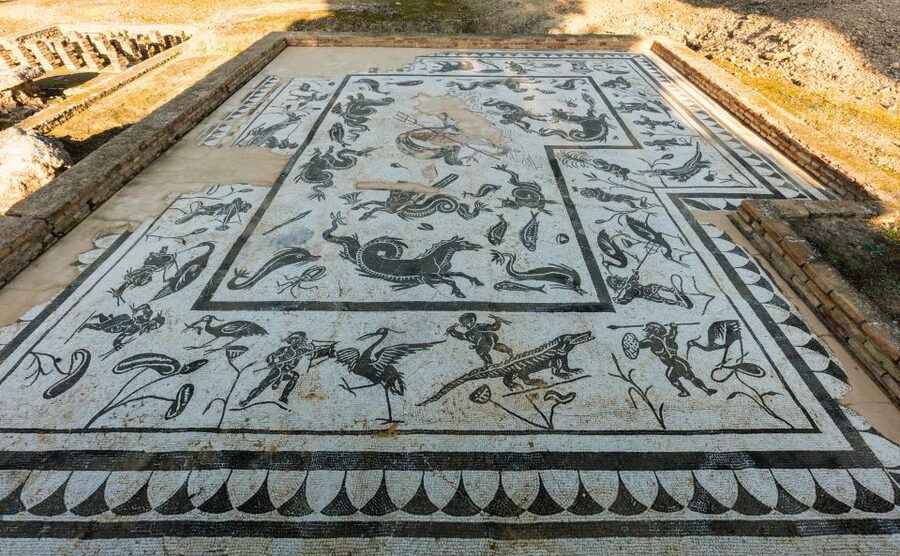
The mosaics are among the best reasons to choose a guided visit instead of treating Italica as a quick walk among ruins. Their patterns remain remarkably visible, and they give you a direct look at Roman taste, craft, and household decoration.
You will see the designs in their original setting, not only as detached pieces in a museum. That makes them easier to connect with the houses, streets, and social world around them. A guide can point out what the patterns reveal and explain how the remains fit into the city plan.
If you have extra time in Seville, the Palacio de la Condesa de Lebrija displays mosaics originally taken from Italica. The palace is not part of this tour, but the connection can help you notice the contrast between mosaics left at the archaeological site and pieces reused in a later grand home.
The site is exposed and includes uneven ancient surfaces. If you use a walking aid, tell the guide early. Carlos León was specifically praised for adjusting his pace and helping a participant keep up. The tour involves walking, standing, and moving through a large open site, so comfortable footwear is a sensible choice.
Same base, a different kind of day out:
- Seville: Setas de Sevilla Entry Ticket
★ 4.6 · 8,901 reviews - Seville: Cathedral, Giralda & Alcazar Entry With Guided Tour
★ 4.6 · 8,560 reviews - Seville: Priority Access Cathedral, Giralda & Alcázar Tour
★ 4.8 · 7,563 reviews - Seville: Guadalquivir River Cruise
★ 3.9 · 6,921 reviews
San Isidoro del Campo: the unexpected second act
After Italica, the bus ride to the monastery takes about 10 minutes. San Isidoro del Campo is a very different experience, and that contrast is exactly why the combination works.
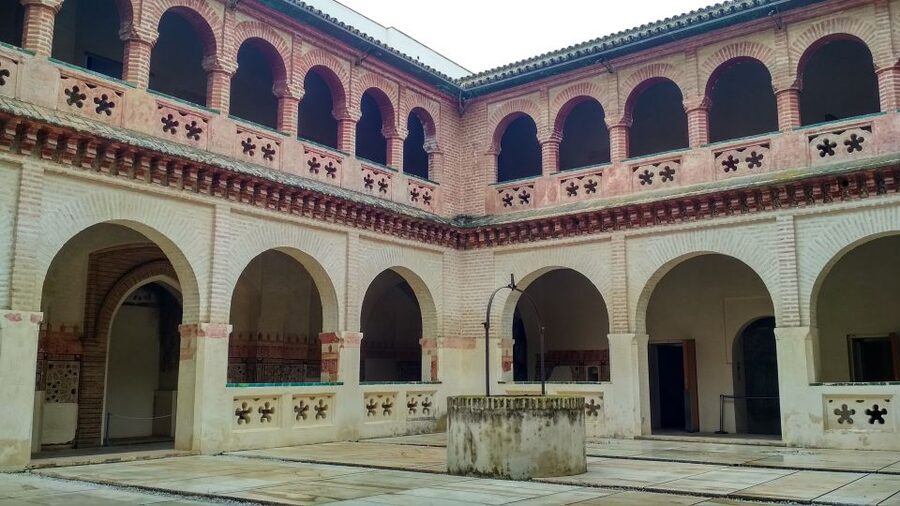
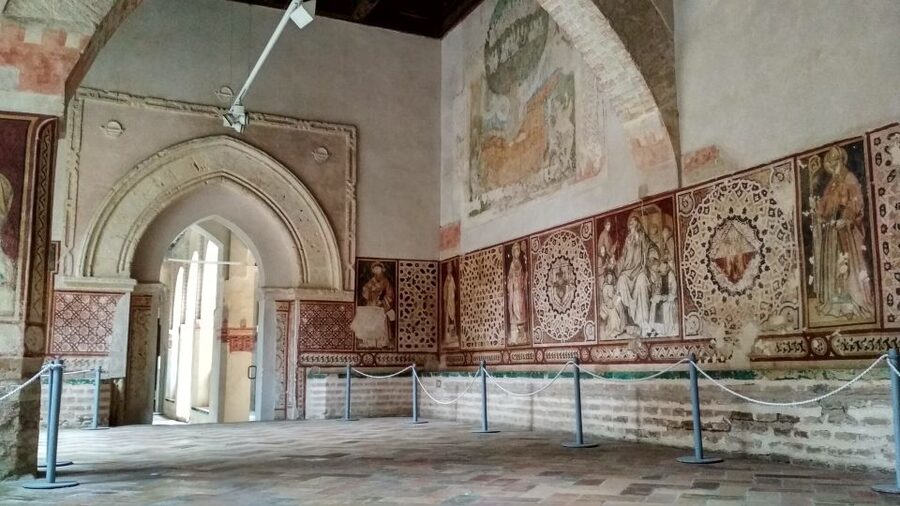
The monastery began as a medieval religious foundation and later acquired features from several periods. Inside, you encounter Mudejar, Gothic, and Baroque elements rather than one consistent architectural style. The result is a layered building that reflects changing tastes, religious practice, and local history.
The monastery is also described as a fortified complex, which makes it more than a quiet church visit. Its walls and overall form suggest a place built for protection as well as worship. Some sections are open while others are affected by funding and restoration limits, so do not expect every corner of the complex to be accessible.
The guided visit lasts about 40 minutes. That is enough time to understand the main spaces and architectural details, but not enough for a slow, independent study of every feature. If Roman archaeology is your main interest, you may see the monastery as an added stop. If you enjoy religious art, interiors, and changing architectural styles, it may become your favorite part.
The monastery also gives the day a useful rhythm. Italica is broad, open, and tied to civic life. San Isidoro del Campo is enclosed, vertical, and tied to religious life. Seeing both in one morning or afternoon gives you a better sense of how southern Spain changed across the centuries.
The guides make the difference
A good guide is particularly useful at Italica because the remains require interpretation. The amphitheater is easy to recognize, but the smaller streets, house plans, and partial walls need explanation.
Several guides have received especially strong praise for their delivery. Miguel is known for clear explanations, humor, and the ability to switch languages. Carlos León has an archaeology background and has been praised for answering detailed questions and placing both sites in context. Jesús is described as funny, energetic, and strong at bringing the Roman era to life.
Alberto has been singled out for his art-history knowledge and thoughtful answers. José Luis has a gift for making the Roman period understandable, while guides including Petra, Rebecca, Nieve, Katherine, Joanna, Jose, and Nacho have also been praised for warmth, organization, and engaging storytelling.
The exact guide is not guaranteed, so book this tour for the structure and access rather than for a particular person. Still, the consistently strong guide feedback is important. At a site like Italica, the difference between simply seeing old stones and understanding an ancient city often comes down to the person leading you.
At least four participants speaking the same language are needed to guarantee that language. If that number is not reached, you may be offered another language, another date, or a full refund. English, French, Italian, and Spanish are available.
Shared or private tour?
The shared option is the better value for most people. At $46 per person, you receive transport from Seville, entry tickets, and a local guide. Organizing the same outing independently would mean arranging transport to Santiponce, buying admission, and finding your way around two separate sites.
The private option costs more, but it can make sense for a family, a group with different walking speeds, or anyone who wants hotel pickup and more direct contact with the guide. Private touring also gives you a better chance to ask detailed questions without competing with a larger group.
Shared does not necessarily mean a huge walking crowd. The transport may include several groups, but language groups separate at the destination. Ask at booking how your selected departure is organized if group size is a major concern.
I would choose the shared tour for a first visit to Seville, especially if you want a reliable half-day plan. I would choose private if your group values flexible pacing or if reaching the meeting point is difficult.
Timing, food, and what to bring
The stated duration is four hours:
- About 20 minutes by bus from Seville to Italica
- About 105 minutes at Italica with the guide
- About 10 minutes by bus to San Isidoro del Campo
- About 40 minutes at the monastery
- About 20 minutes back to Seville
The schedule does not include a meal. Food and drinks are not provided, and there may not be enough time to stop for a proper snack during the sites. One participant felt hungry toward the end and would have liked a little more time at Italica for food.
Bring water and eat before departure. This is simple advice, but it matters when you are walking outdoors and listening for several hours. You should also leave a buffer after the scheduled return. Traffic leaving Seville can delay the start, and the tour may run longer rather than cutting the site visit short.
The bus returns to several Seville drop-off locations, including Calle Rastro 12a, Hotel Don Paco, Calle Trajano 6, and another listed stop. Your specific drop-off depends on the option and departure.
Who will enjoy this tour most?
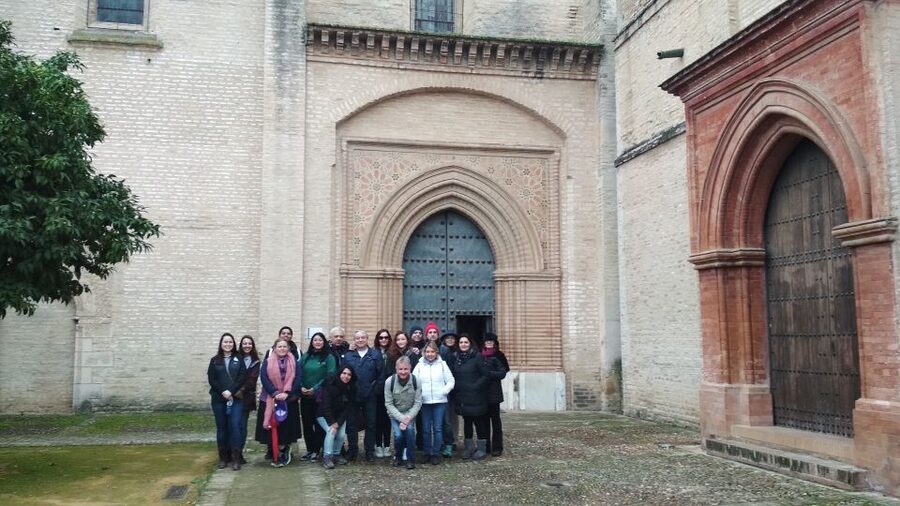
You will get the most from this experience if you enjoy history, archaeology, architecture, or film locations. It also works well for families with older children and teenagers because the amphitheater, gladiator passages, and Dragonpit connection give the ancient site an immediate hook.
It is a strong choice for anyone who prefers guided context. You can walk around Italica independently, but the city makes more sense when someone explains its founding, urban plan, emperors, mosaics, and later excavation.
The tour is less suitable if you want a slow photographic outing. The schedule is planned and the guided route keeps moving. You may have only around 15 minutes of independent time near the amphitheater, and that can feel brief if you need extra time for photographs, a toilet stop, or a slower walking pace.
It is also not the right pick if you need a guaranteed finish at an exact hour. Build in spare time after the tour.
Is $46 good value?
For a four-hour trip, $46 is fair value. The price covers transport, two admission tickets, and a guide who can connect a Roman archaeological site with a medieval monastery. You are paying for convenience as much as for entry.
The strongest value comes from the pairing. A simple Italica visit would be worthwhile, but the monastery adds a second major stop without requiring another day or another transport plan. The short bus rides also keep the half-day compact.
The main limitation is time. You are not buying an unhurried archaeological study tour. You are buying a well-organized introduction to two sites near Seville. If that matches your plans, the cost is sensible.
Should you book it?
Book this tour if you want to see Roman ruins without spending a full day away from Seville. It is especially appealing if the amphitheater, Trajan and Hadrian, ancient mosaics, or Game of Thrones are high on your list.
Choose the private version if pickup and pacing matter more than price. Choose the shared option if you want the practical, lower-cost route.
I would plan a snack before departure, wear shoes suited to uneven ground, confirm the meeting point, and leave several hours free afterward. With those small adjustments, this is a strong half-day addition to a Seville itinerary, and the monastery gives it more substance than a standard Roman ruins excursion.
FAQ
How long does the Italica and monastery tour last?
The advertised duration is four hours. Traffic or a delayed start can make the experience run longer, so leave extra time before your next appointment.
How far is Italica from Seville?
The bus ride from Seville to Italica takes about 20 minutes.
What is included in the price?
The tour includes transport from Seville, entry tickets, and a local guide.
Are food and drinks included?
No. Food and drinks are not included, and the tour does not provide a meal.
What languages are available?
Guides are available in English, French, Italian, and Spanish. At least four participants speaking the same language are needed to guarantee that language.
What happens if there are not enough people for my chosen language?
You may be offered an alternative language, a different date, or a full refund.
Is hotel pickup available?
Hotel pickup is available for the private tour option, depending on your accommodation address in Seville. If the address is outside the pickup area, you will be given the nearest accessible meeting point.
Where does the shared tour meet?
The shared tour uses one of three meeting points in Seville. The exact point depends on the option you book.
Can I book a private tour?
Yes. Private and small-group options are available.
Is cancellation allowed?
You can cancel up to 24 hours in advance for a full refund. You can also reserve now and pay later.
Just added in Seville
- Seville: Alcázar Guided Palace Tour with Priority Access★ 4.4 · 994 reviews
- Seville City Tour: 1-Hour Panoramic Segway Tour★ 4.9 · 365 reviews
- Seville Segway Guided Tour★ 5.0 · 367 reviews
- Seville City Tour 2 Hour Monumental Segway Tour★ 5.0 · 472 reviews
- Private Tour Jewish Quarter, center and Plaza de España★ 5.0 · 127 reviews
- Seville: Small-Group Jewish Quarter Discovery Walking Tour★ 4.9 · 499 reviews
- Seville: 1, 2 or 3 Hour Segway Tour★ 4.9 · 674 reviews
- Seville: Small Group Jewish Quarter Tour with Tapas & Drinks★ 5.0 · 119 reviews
Tours in Seville, compared.

Live Flamenco Dancing Show Ticket at the Theater
Read our review →
1-Hour Guadalquivir River Sightseeing Eco Cruise
Read our review →
Cathedral, Giralda, and Royal Alcázar Guided Tour
Read our review →
Cathedral, Giralda & Alcazar Entry With Guided Tour
Read our review →
Priority Access Cathedral, Giralda & Alcázar Tour
Read our review →
Puro Flamenco Show with Optional Museum Ticket
Read our review →Browse the lists this tour appears in