Reviewed · TOURS IN MARBELLA
From Marbella: Guadalmina River Guided Canyoning Adventure
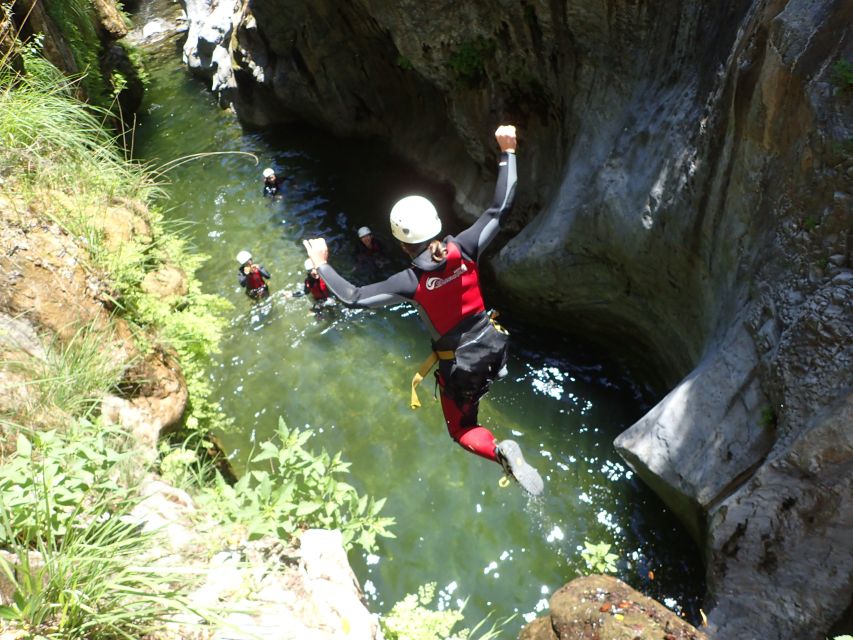
Guadalmina Canyon gives you a proper mountain adventure only 15 to 20 minutes from Marbella. You will swim through clear pools, squeeze through narrow rock passages, slide over smooth stone, and choose whether to jump from ledges up to about 6 meters high. The canyon itself is the star, with water-shaped walls and cool pools that feel far removed from the Costa del Sol beach scene.
I like the small groups and patient guides, especially for families or first-timers. I also like the honest pricing: $47 covers the guide, wetsuit, helmet, harness, rappel equipment, insurance, and a free set of photos. The main catch is that this is a physical activity, not a gentle river float. Rock scrambling can tire you out, and the 2.5 to 3-hour route may feel rushed if your group is large or moving slowly.
The essential details at a glance
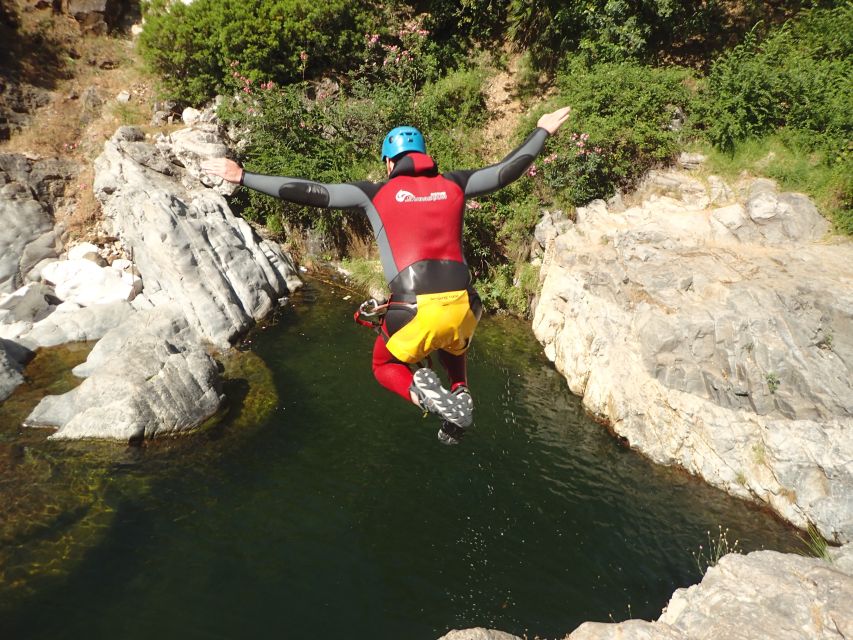
- Optional jumps from roughly 4 to 6 meters: You can take the higher jumps, choose smaller options, or skip them without being pressured.
- One rappel included: The descent adds a different skill from the swimming, climbing, and sliding sections.
- A beginner-friendly route: The Guadalmina course suits first-time canyoners, provided you have basic swimming ability and moderate fitness.
- Professional equipment included: You receive a full-length 5-millimeter wetsuit, canyoning helmet, harness, and rappel gear.
- Free photos afterward: Guides use waterproof cameras and send the photo collection through an online link, often via WhatsApp.
- Easy access from Marbella: The meeting point is by Parque Torre Leonera in Benahavís, with no transfer included.
Starting at Parque Torre Leonera in Benahavís
You meet in the parking area beside Parque Torre Leonera, in Benahavís, a short drive inland from Marbella. The provider may adjust the precise meeting point and sends updated details through WhatsApp after booking, so check your messages before setting out.
You should arrive already wearing your swimsuit. Bring sunscreen, a small bottle of water, high socks, a change of clothes, and dry shoes or sandals for afterward. You will also need closed-toe footwear with a firm, grippy sole.
Do not bring beach water shoes. The soft, slippery soles are not suitable for scrambling over wet rocks and can increase the chance of an injury. You can wear sturdy sports shoes or hiking shoes, or rent professional Bestard Aqua Pro canyoning boots for €8. The rented boots are optional, but I would consider them if you are unsure about the grip on your own footwear.
There is no included shuttle from Marbella, so you arrange your own transport to Benahavís. That is a small extra task, but the short distance makes this much easier than a full-day mountain excursion.
A few more things to do in Spain worth a look
- Barcelona: Sagrada Familia Entry Ticket with Audio Guide
★ 4.6 · 105,312 reviews - Barcelona: Park Guell Guided Tour with Skip The Line Entry
★ 4.7 · 17,563 reviews - Málaga: Caminito del Rey Guided Tour with Transportation
★ 4.8 · 12,183 reviews
The 10-minute walk to the canyon
From the meeting point, you walk for about 10 minutes toward the canyon. This short approach gives the guide time to explain the route, check equipment, and set expectations before the physical work begins.
Your guide will fit you with a 5-millimeter full-length wetsuit, a canyoning helmet, and a harness with protection around the seat area to reduce chafing. The wetsuit is compulsory, not just a comfort extra. Even in warm Andalusian weather, repeated swims and time in shaded water can make you cold.
This is also when you should tell the guide if you are not a confident swimmer. A life jacket can be prepared for you. Basic swimming ability is expected, but the safety vest means weaker swimmers do not have to manage every section unaided.
Groups average about 10 people in high season, with a maximum of 12 participants per guide. That size is reasonable for a canyon tour, though your pace can depend on how many people need help with the jumps, rope work, or rock crossings.
Through the Angosturas Canyon for about 2.5 hours
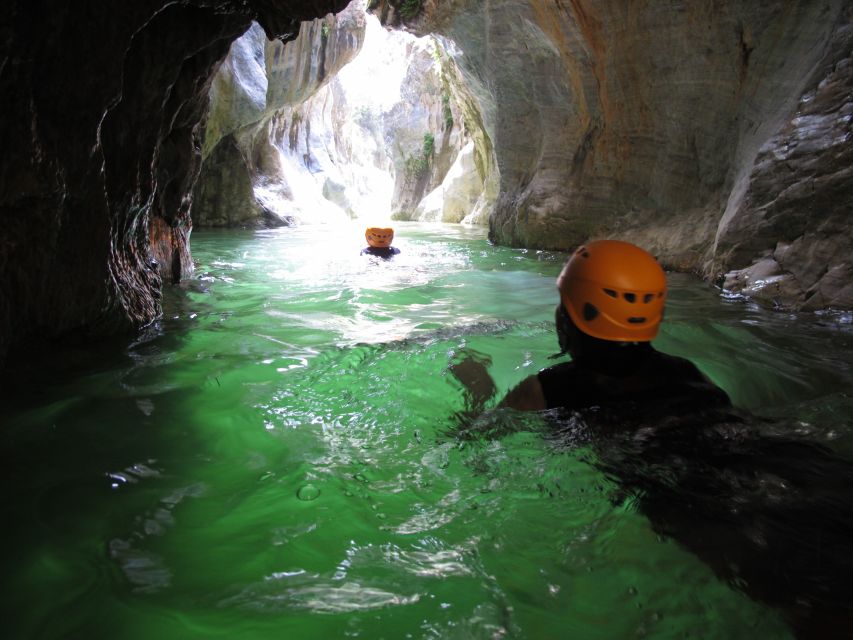
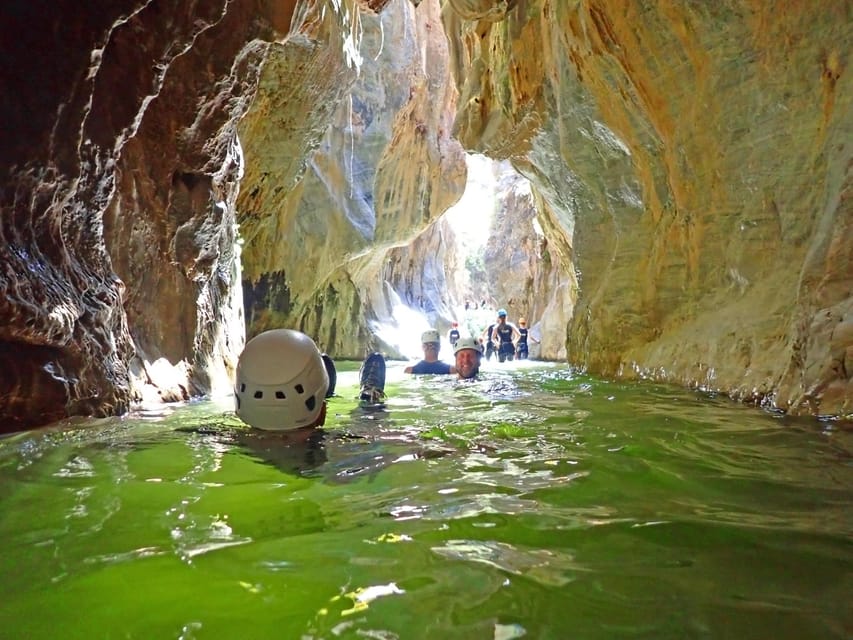
The main route runs through the Canyon of the Angosturas, where water has cut narrow passages through the rock. This is not a sightseeing walk with occasional water. You spend much of the route moving through it: swimming, climbing over rocks, sliding, and making short scrambles along the river.
The scenery changes as the gorge tightens. You pass dramatic rock walls, smooth ledges, and dark blue pools. The enclosed sections provide the most memorable setting, with the water and stone doing all the visual work. There are no elaborate structures or artificial attractions here, just a route shaped by flowing water over a very long time.
The swimming sections are broken up by active movement. You may need to pull yourself over rocks, keep your footing on wet surfaces, and follow instructions about where to place your hands and feet. That is why the right shoes matter. Good grip is more useful than a fashionable pair of trainers, and open-toed shoes are not allowed.
Optional jumps and natural slides
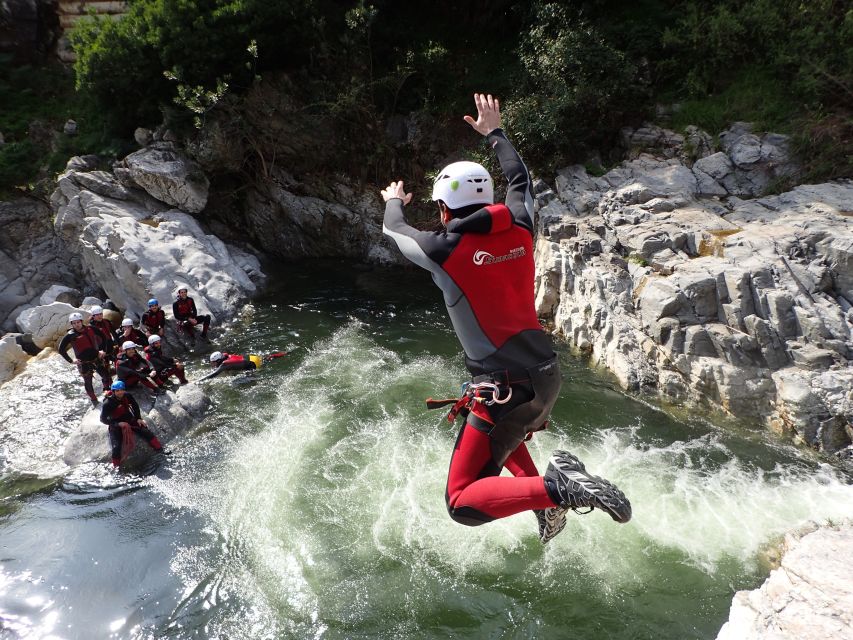
The jumps are a major part of the appeal, but they are not compulsory. The advertised options reach about 4 to 6 meters, while some activity descriptions and participant accounts refer to a range of smaller and higher jumps along the route. Exact options can vary with conditions and the guide’s judgment.
You should expect the guide to check each jump before anyone goes. Guides such as José, Juan, Andrés, Alex, Israel, and others have been praised for explaining the choices clearly, helping nervous people, and offering different options for different comfort levels. The right approach is to treat the jumps as invitations, not tests.
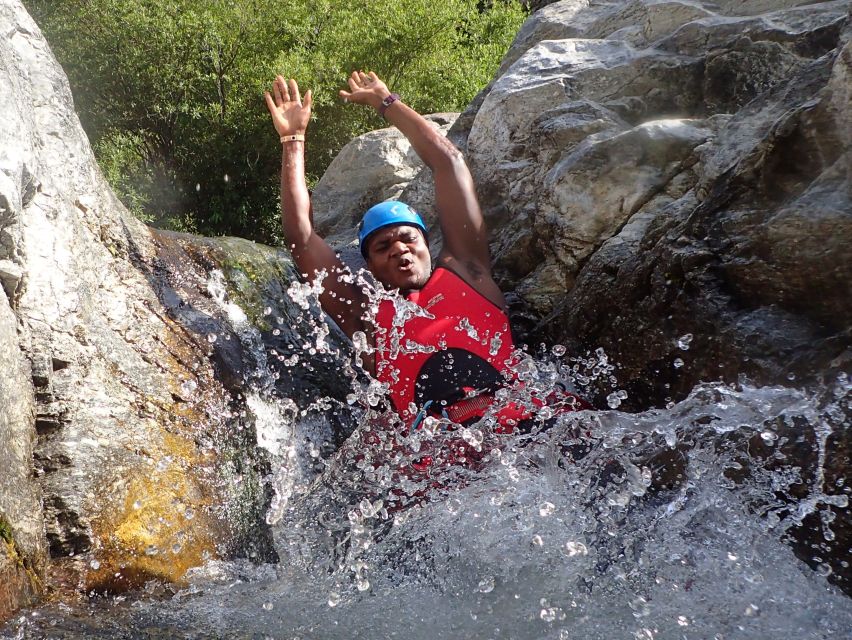
The natural slides are less intimidating for many people. You use smooth rock channels shaped by the river, then enter a pool below. Some sections may require climbing into position or waiting while the guide manages the group, so the experience is active rather than a series of instant thrills.
You can also simply swim through the pools and watch others take the bigger challenges. That flexibility makes the route workable for mixed groups, where one person wants every jump and another prefers to keep both feet closer to the rock.
Same base, a different kind of day out:
- Barcelona: Park Güell Admission Ticket
★ 4.4 · 76,534 reviews - Seville: Royal Alcázar Entry Ticket
★ 4.6 · 28,378 reviews - Barcelona: Casa Batlló Entry with Self-Audioguide Tour
★ 4.7 · 25,359 reviews - Seville: Cathedral and La Giralda Entry Ticket
★ 4.5 · 24,592 reviews
The rappel section
One rappel is included in the route. This is the section where you descend a rock wall using ropes, a harness, and instructions from the guide. It provides a different kind of excitement from jumping, since you control your movement more gradually and must follow the rope technique.
If you like abseiling, this may be your favorite part. If you are hoping for a dedicated rappelling tour, keep your expectations in check: there is one rappel, not a long sequence of rope descents. The rest of the experience focuses on water movement, rock crossings, slides, and jumps.
The guide manages the setup and talks you through the descent. You do not need previous canyoning experience, but you do need to listen carefully and be comfortable with a moderate physical challenge.
Charca de los Tubos and the final walk back
The route reaches Charca de los Tubos, another guided section of the canyon. You continue through the natural pools and rock formations rather than stopping at a formal attraction or viewing platform.
This part helps explain the appeal of Guadalmina. The best moments are not always the highest jump. Sometimes it is the quiet movement through a narrow gorge, a swim in clear water, or the view of the rock above you while the group works its way forward.
After finishing the canyon section, you walk about 20 minutes back to Parque Torre Leonera. You may be ready for dry clothes and a proper drink by then. The return is short, but remember that the activity lasts up to three hours and includes sustained movement, not just time in the water.
What the $47 price really covers
At $47 per person, this is strong value if you want an active half-day experience near Marbella. The price includes certified local guides, insurance, the 5-millimeter wetsuit, canyoning helmet, harness, rappel equipment, and the photo report.
The free photos are more useful than they may sound. Your hands are occupied during the jumps, rope work, and rock crossings, and ordinary phones are a poor match for wet canyon conditions. The guides use professional waterproof cameras and share the pictures afterward, often through a WhatsApp link later that day or within a couple of days.
You may need to budget €8 for the optional canyoning boots. That is fair if you do not own suitable shoes, and the grip can make a real difference. You will also arrange your own transport to Benahavís and bring your own food and water.
The price does not include a meal, transfer, or personal clothing. Still, there are no stated extra charges for the core safety equipment or insurance, which makes the final cost easier to understand.
How difficult is this Guadalmina canyoning trip?
The tour is promoted as suitable for beginners, and that is a reasonable description if you are moderately fit and comfortable in water. You do not need technical canyoning experience, but you should be ready to climb over rocks, swim, push yourself up from pools, and walk in wet shoes.
The route can be tiring. One participant described it as a good beginner tour with enough action for people who do not spend all day doing sports. Another found the difficulty challenging but manageable. That is the right way to think about it: accessible, but not effortless.
Children should be at least 8 years old for the activity. In winter, from December through March, the provider recommends participants be over 12. The general restrictions also exclude pregnant women, people with heart problems, people over 70, and children under 5. If you have a medical concern, ask before booking.
Families can work well here, especially when adults are ready to support younger children. Guides have handled groups with children from 8 to 12, and some kids have taken the jumps eagerly. But do not book this as a passive family outing. Every participant needs to follow instructions and cope with wet, uneven ground.
Guides, group size, and the safety feel
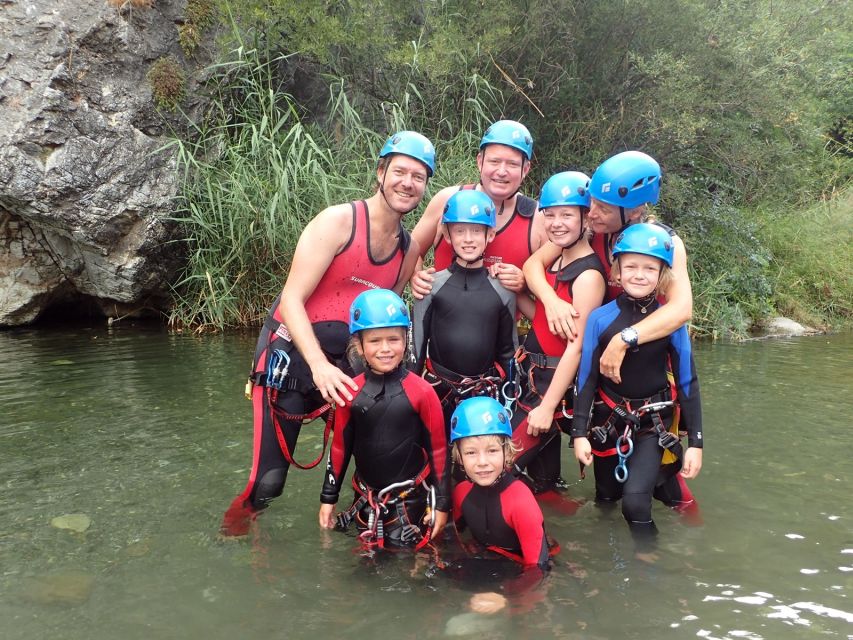
The certified guides are one of the strongest parts of the experience. The guide does more than lead the way. They check jump landings, organize the rope section, monitor tired participants, and adjust the pace.
The named guides include José, Juan, Andrés, Alex, Israel, Benja, Flor, and others. The most useful pattern is not any one personality, but the combination of humor and close attention. Several guides are known for making nervous participants feel comfortable without turning the activity into a forced dare.
A group of 10 is small enough for personal help, while the 12-person maximum per guide gives a clear safety limit. Even so, a larger group may mean waiting at popular jumps or moving at the pace of the least confident person. One participant felt a little rushed, particularly around the rappel, so tell the guide early if you need more time.
English and Spanish are the dependable languages. French may be available, but it is limited and cannot be guaranteed. German is not guaranteed. Private groups are available if you want more control over the pace or are booking for a family or a close group of friends.
Photos, clothing, and smart preparation
Wear your swimsuit under your clothes and bring a dry change for the end. Pack sunscreen, water, high socks, and shoes that can handle slippery rock. Leave jewelry and anything fragile at home, since you will spend much of the route in water.
A small bottle of at least 0.5 liters is recommended. You may not want to carry much more because the route involves climbing and swimming, but hydration matters before and after the activity.
If you cannot swim more than about 20 meters comfortably, tell the provider in advance and ask about a life jacket. The guides can prepare one, and you should not wait until you are already in the canyon to mention it.
You should also expect to get tired and wet. That sounds obvious, but it matters if you have dinner plans, a long drive, or another strenuous activity booked immediately afterward. Leave yourself some recovery time.
Who will enjoy it most?
I would choose this tour for:
- Families with children aged 8 and above who want a shared challenge
- Couples and friends looking for more than a beach day
- First-time canyoners who want professional supervision
- Active visitors staying in Marbella, Benahavís, or nearby areas
- Anyone who likes swimming, climbing, jumps, and a little rope work
I would think twice if you dislike cold water, uneven rock, heights, or group activities. The optional jumps help, but skipping them does not remove all physical demands. You still need to walk, scramble, swim, and follow the canyon route.
It is also not the right choice for someone wanting a relaxed nature stroll. The setting is beautiful, but your attention stays on footing, instructions, and the next obstacle.
Should you book the Guadalmina canyoning adventure?
Book it if you want a compact, well-supported adventure close to Marbella, especially if you are new to canyoning. The mix of clear pools, natural slides, optional jumps, and one rappel gives you several types of activity in one morning or afternoon, while the guides keep the difficulty adjustable.
The $47 cost is sensible because it includes the main equipment, insurance, certified supervision, and photos. Rent the canyoning boots if your own shoes have weak grip, and tell the provider about swimming ability or mobility concerns before arrival.
Skip it if you want a quiet river outing, have limited fitness, or feel strongly uncomfortable with wet rock and heights. For everyone else, Guadalmina offers a memorable way to see the Andalusian countryside from inside the canyon rather than from a road or viewpoint.
FAQ
How long does the canyoning activity last?
The activity lasts about three hours, with roughly 2.5 hours spent on the guided canyon route. The remaining time includes walking to and from the canyon and getting equipped.
Where is the meeting point?
Meet in the parking area next to Parque Torre Leonera in Benahavís, Málaga. The exact point can sometimes change, and the provider will contact you with updated details.
Are the jumps compulsory?
No. The jumps are optional. You can choose which ones to take or skip them and continue with swimming, climbing, sliding, and the other route sections.
What equipment is included?
The tour includes a full-length 5-millimeter wetsuit, canyoning helmet, harness with chafing protection, rappel equipment, insurance, and a free photo report.
Do I need to bring canyoning shoes?
You need suitable closed-toe shoes with a firm, grippy sole. You can bring sturdy sports or hiking shoes, or rent professional canyoning boots for €8. Aqua and water shoes are not allowed.
Is the tour suitable for children?
The activity is suitable from age 8. For winter trips from December through March, participants are recommended to be over 12. Children must also be able to manage the moderate physical demands of the route.
Just added in Spain
- Bizkaia Bridge, Gaztelugatxe, Bermeo and Gernika from Bilbao★ 4.5 · 299 reviews
- Benalmadena: City Sightseeing Hop-On Hop-Off Bus Tour★ 3.5 · 379 reviews
- Welcome to Barcelona: Private Tour with a Local★ 4.6 · 200 reviews
- Barcelona: White Rabbit Catalonia’s Top Immersive Experience★ 4.7 · 359 reviews
- Bean to Bar Chocolate Workshop in Barcelona★ 5.0 · 172 reviews
- Barcelona: Welcome to Barcelona Segway Tour★ 4.9 · 153 reviews
- Barcelona: Walking tour with Montjuic Castle & Cable Car★ 4.7 · 832 reviews
- Barcelona: Helicopter Flight with Optional Yacht Cruise★ 4.7 · 224 reviews
Tours in Marbella, compared.
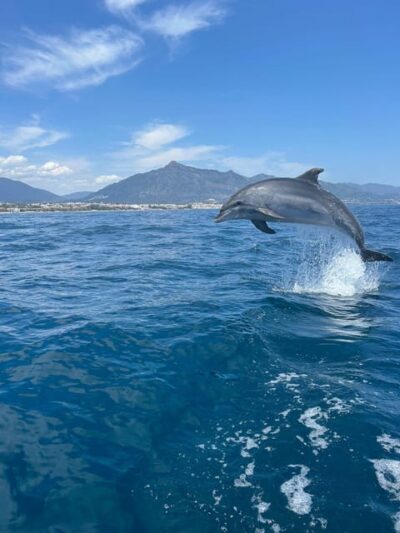
Sailing & Dolphin Watching with Snacks and Drinks
Read our review →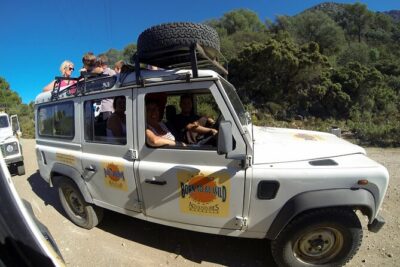
Natural Parck Jeep Eco Tour from Costa del Sol
Read our review →