
Reviewed · SPAIN
From Madrid: Escorial Monastery and the Valley of the Fallen
El Escorial is far more than a royal palace. It is a monastery, basilica, library, burial place, and grand statement of Spain’s Golden Age, all packed into one stern granite complex. The nearby Valley of the Fallen adds a very different chapter, with a basilica carved into rock and a huge cross visible from miles away.
I like the efficient pairing of these two sites, since reaching both by public transport is awkward and a rental car would leave you without the historical explanation. I also like the guides’ strong record, with names such as Cristina, Beatriz, Oscar, Sergio, and Rafael repeatedly praised for clear English, warmth, and good pacing.
The tradeoff is time. You get a useful introduction to both places, but the Valley of the Fallen can feel short, especially if you want extra photographs or quiet time. Expect plenty of walking and steps, and note that this is not suitable for wheelchair users or people with major mobility limits.
Key points at a glance
- Two major sites in one half-day: Visit El Escorial and the Valley of the Fallen without arranging a car.
- Royal Spain in physical form: See the Patio de Reyes, cloisters, chapter rooms, royal rooms, pantheons, paintings, and basilica.
- A basilica inside a mountain: The Valley of the Fallen is an unusual and emotionally weighty Civil War monument.
- Strong guiding is central to the experience: Guides including Cristina, Beatriz, Oscar, Sergio, and Rafael have been praised for history, humor, and clear bilingual commentary.
- Good transport value at $73: Round-trip bus travel, entries, guide, Wi-Fi, and headsets are included.
- Plan for steps and limited free time: Comfortable shoes matter, and independent exploration is brief.
Why this is a useful Madrid half-day
Madrid has enough museums and plazas to fill several days, but these two monuments show a side of Spain that the city itself cannot. El Escorial explains the power and religious outlook of Felipe II. The Valley of the Fallen confronts the memory of the Spanish Civil War through an enormous monument that remains politically and emotionally difficult.
I like the historical range. In one morning, you move from the Spanish monarchy and the Golden Age to the country’s present democracy and its ongoing effort to deal with the past. This is not just a sightseeing trip built around pretty buildings. The buildings are the argument.
At $73 per person, the cost is reasonable if you value convenience and explanation. You receive transport, entry tickets to both sites, a live guide, headsets, and Wi-Fi on the bus. You are not paying for lunch, drinks, or a long stop in a town, so bring water and eat before or after the tour.
The meeting point is outside the Commercial Gallery at San Bernardo Street 7. From there, the bus takes roughly 45 to 50 minutes to San Lorenzo de El Escorial. The air-conditioned coach is a welcome feature, especially in hot weather or on a rainy day. Several guides and drivers have earned praise for keeping the group on schedule and making the ride comfortable.
Other trips people book in Spain:
- Barcelona: Sagrada Familia Entry Ticket with Audio Guide
★ 4.6 · 105,312 reviews - Barcelona: Park Güell Admission Ticket
★ 4.4 · 76,534 reviews - Seville: Royal Alcázar Entry Ticket
★ 4.6 · 28,378 reviews
The ride to San Lorenzo de El Escorial
The journey out of Madrid is short enough to feel easy, but long enough for the guide to set the scene. This is where a good guide makes the difference. Cristina, Beatriz, Sergio, Oscar, and Rafael are among the guides associated with especially strong explanations in English and Spanish.
The tour uses headsets, which matter inside a large stone building. You can hear the commentary without needing to crowd around the guide, though one person noted some background noise from the sound system. The guide usually combines formal explanation with time for questions, so you get more than a memorized list of dates.
On arrival, there is a bathroom stop before the monastery visit. That is practical, since the guided portion lasts about 105 minutes. One useful point: the tour does not include food or drinks, and there is no main meal break. Eat beforehand and carry a small bottle of water if permitted.
El Escorial and the world of Felipe II
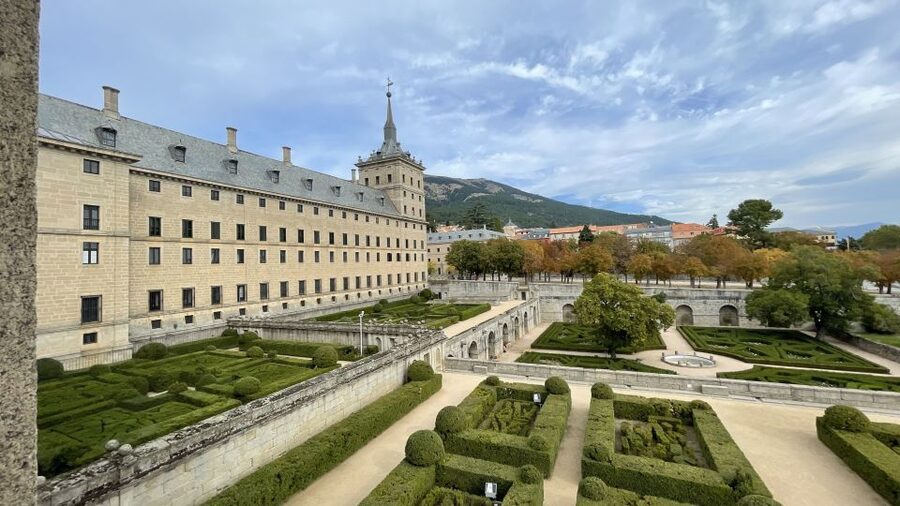
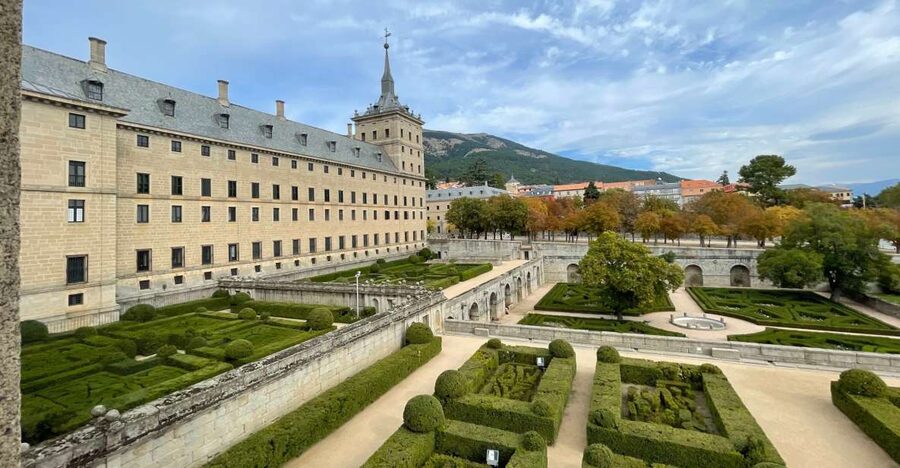
The Royal Monastery of San Lorenzo de El Escorial is the heart of the trip. It was built during the reign of Felipe II and reflects the religious, political, and cultural ambitions of Spain’s Golden Age. The site is recognized as a UNESCO World Heritage Site, and its scale becomes clear as you move from one formal space to another.
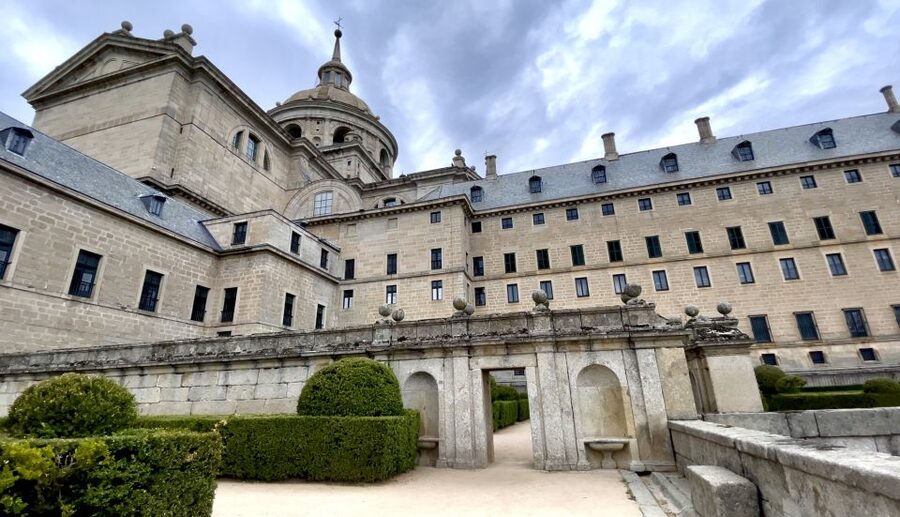
The exterior is imposing rather than delicate. Inside, the building opens into courtyards, corridors, religious rooms, royal spaces, and burial chambers. You see how the complex served several purposes at once: monastery, royal residence, church, school, library, and dynastic memorial.
The Patio de Reyes provides one of the clearest first impressions. Its name refers to the statues of biblical kings on the basilica facade. From here, the building’s symmetry and size make sense, and the guide can explain how the religious and royal functions were tied together.
The cloister gives the tour a calmer change of pace. Its architecture is formal and restrained, and it helps you understand that El Escorial was not designed merely as a comfortable royal home. One useful way to think about it is as a spiritual retreat with royal power built into every wall.
You also visit the chapter rooms, where the monastery’s religious life and administration took shape. The Royal Rooms show the connection between the monarch and the complex. They are not presented as a modern palace filled with casual domestic comforts. The mood is more controlled, solemn, and purposeful.
Paintings, pantheons, and the royal tombs
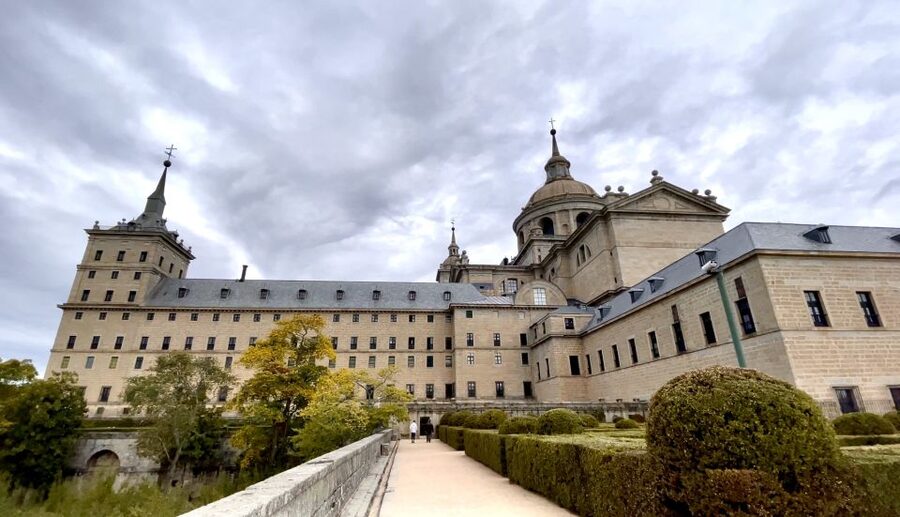
Art is one of El Escorial’s rewards, although this is not primarily an art museum. Paintings appear within a much larger historical setting, and several guides have drawn attention to the works displayed throughout the building. If you have studied Spanish art history, you may wish the schedule allowed more time for individual paintings.
The Pantheon of Kings and Pantheon of Infants are among the most memorable spaces. These burial areas show how the Spanish monarchy used architecture to connect generations of rulers and royal family members. The dark stone, carefully arranged tombs, and ceremonial setting can feel more powerful than a room full of royal furniture.
The basilica is another major highlight, but there is an important exception: the basilica may not be included on Sundays. Check the date of your visit before booking if seeing the church interior is a priority. Even without that section, the monastery offers far more than most visitors can absorb in one pass.
The library and gardens have also been singled out as especially worthwhile. The library reflects the intellectual ambitions of the period, while the gardens offer a little breathing room after the enclosed corridors and ceremonial rooms. You do not get a long independent period here, so keep your camera ready and listen for the guide’s instructions.
The walking pace is generally manageable, but there are lots of steps. One visitor specifically described the tour as a must for understanding more than 600 years of Spanish history, while also warning that the sites are unsuitable for people with walking difficulties. That is a fair assessment.
Same base, a different kind of day out:
- Barcelona: Casa Batlló Entry with Self-Audioguide Tour
★ 4.7 · 25,359 reviews - Seville: Cathedral and La Giralda Entry Ticket
★ 4.5 · 24,592 reviews - Madrid: Tour Bernabéu Entry Ticket
★ 4.5 · 21,573 reviews - Barcelona: 24 or 48-Hour Hop-On Hop-Off Bus Tour
★ 4.4 · 20,872 reviews
The short transfer to the Valley of the Fallen
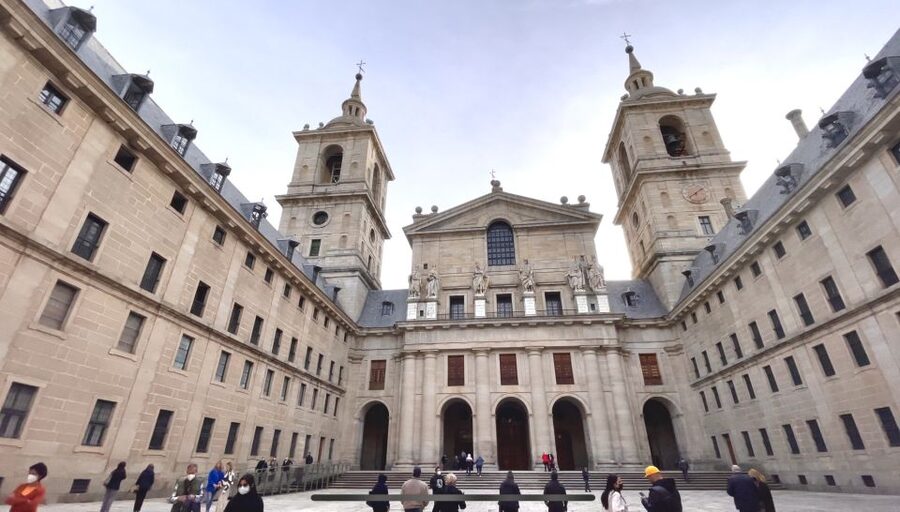
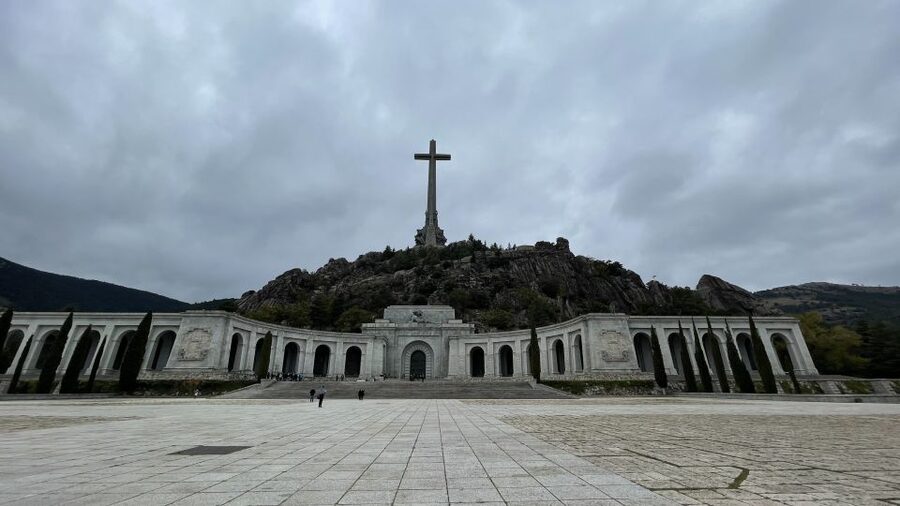
After El Escorial, the bus makes a roughly 15-minute transfer to the Valley of the Fallen, officially located in the Peña de Cuelgamuros. The change in atmosphere is striking. El Escorial is tied to monarchy, faith, and the Spanish Golden Age. The Valley of the Fallen is tied to the Spanish Civil War and the way later generations remember it.
The guide’s tone matters here. This is a controversial site, and the best approach is factual and respectful rather than theatrical. Several guides have been praised for explaining the monument without pushing a partisan position. That makes the visit more useful, especially if you know little about Spain’s twentieth-century history.
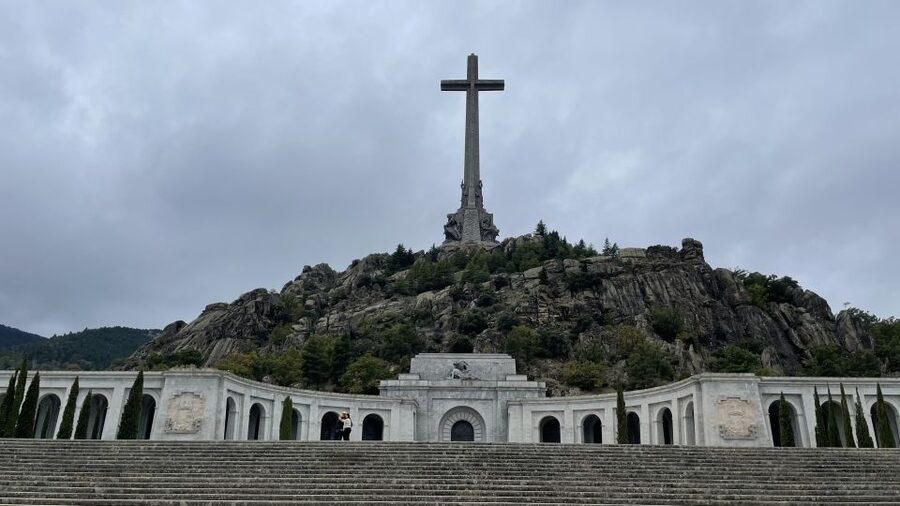
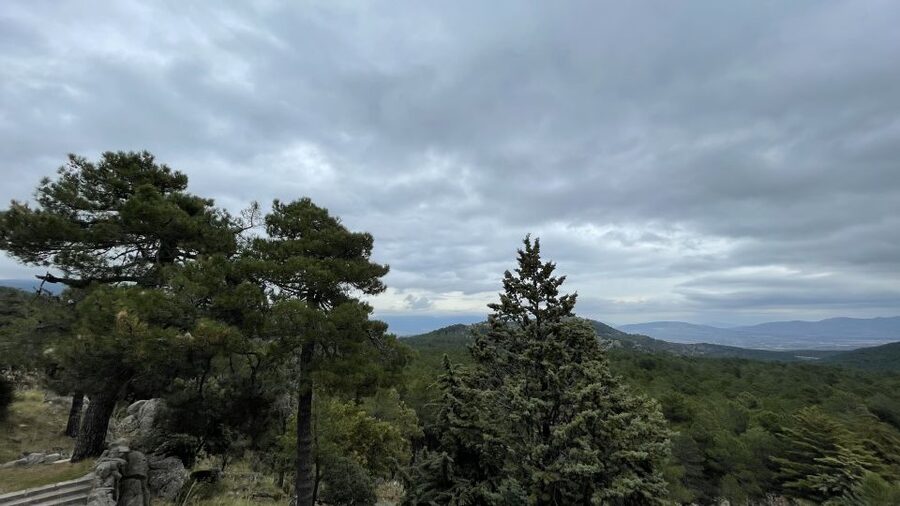
The surrounding hills give the site a powerful setting. The granite cross is visible from a great distance, and it dominates the view before you even enter the basilica. It is a work of enormous scale, designed to be seen across the surrounding countryside.
Inside the rock-cut basilica
The basilica is carved into the mountain, which is the feature most likely to stay with you after the tour. The entrance leads into a church space that feels very different from El Escorial’s ordered courtyards and royal rooms. Here, the mountain itself forms part of the architecture.
The site is also a burial place for 33,847 people who died in the Spanish Civil War. That fact gives the visit a serious weight. You are not simply looking at a large church or a dramatic engineering project. You are entering a monument connected to mass death, memory, and a painful chapter of Spain’s past.
A cross visible for kilometers and a basilica cut into rock can sound grandiose on paper. In person, the combination is difficult to ignore. One guide managed to get the group inside despite a wedding taking place, but access can clearly be affected by events. Your guide will manage the timing when possible.
The guided visit here lasts about an hour. I would like a little more free time at this stop, particularly for photographs and quiet reflection. Several people found the Valley of the Fallen the most striking part of the day but felt the schedule required them to hurry back to the bus.
Pace, group movement, and practical comfort
The full outing takes about five hours, including transport. The basic sequence is a 45-minute bus ride, roughly 105 minutes at El Escorial, a 15-minute transfer, about an hour at the Valley of the Fallen, and the return ride to San Bernardo Street.
That is a well-designed half-day for someone who wants an introduction rather than a private deep examination of either site. The guides generally keep the pace moving without turning it into a race. A number of guide names receive praise for being friendly, organized, and good at answering questions.
The tour is offered in English and Spanish. A live guide provides the commentary, while headsets and audio support are included in those languages. Bilingual guides such as Cristina and Mariasol have been praised for switching between languages clearly, although bilingual touring can naturally take more time than a single-language visit.
Wear comfortable shoes and clothes. You will walk through large interiors, move between rooms, and handle steps at both sites. The trip is not suitable for wheelchair users or people with significant mobility impairments. If you tire easily, a private or slower visit may suit you better.
Weather can affect the experience, especially around the Valley of the Fallen. Rain did not prevent some visitors from enjoying the day, but poor weather can reduce the appeal of the outdoor surroundings and the distant views. Bring a light layer and prepare for conditions beyond Madrid’s city center.
Who gets the most from this tour
I recommend this outing if you want Spanish history explained in place rather than read from a guidebook. It works particularly well for first-time visitors to Madrid who want one serious day trip without giving up an entire day.
You will likely enjoy it if you care about:
- Spanish monarchy and Felipe II
- Religious architecture and royal burial places
- The art and library of El Escorial
- Civil War memory and modern Spanish history
- Dramatic mountain settings
- A guided experience with organized transport
Families with older children and teenagers can also benefit. One parent specifically found the historical explanation engaging for a 17-year-old. The subject is serious, but the tour can make it easier to understand than a museum label or a quick independent visit.
I would be cautious if you want a leisurely day with long café stops and plenty of free wandering. The schedule is fixed, food is not included, and the two monuments demand walking. Art specialists may also want more time with the paintings than this format allows.
Is the $73 price fair?
For $73, the value is strongest in the transport and access. Both sites are outside central Madrid, and reaching them independently requires more planning than their distance suggests. The tour removes that problem and adds a guide who can explain why the buildings matter.
Skip-the-line entry is included for both El Escorial and the Valley of the Fallen. That does not guarantee you will walk straight through every door, since special events or Sunday restrictions can affect access, but it makes the normal visit more efficient.
The price is less attractive if you only want to photograph the exteriors. You are paying for the interiors, the historical framing, and the convenience of seeing both places in one morning. For that purpose, it is a solid use of time.
Should you book it?
Book this tour if you want a clear, guided introduction to two difficult-to-reach monuments and prefer understanding what you see rather than simply seeing it. The strongest part is the combination of El Escorial’s royal and religious grandeur with the Valley of the Fallen’s stark Civil War setting.
Skip it if you need step-free access, long unscheduled breaks, or extensive time alone inside each site. For everyone else, the five-hour format is a practical choice, especially with a guide such as Cristina, Beatriz, Oscar, Sergio, or Rafael leading the historical thread. Bring comfortable shoes, eat before departure, and save a little camera time for the Valley’s monumental cross and rock-cut basilica.
FAQ
Where does the tour meet in Madrid?
Meet your driver outside the Commercial Gallery at San Bernardo Street 7.
How long does the tour last?
The advertised duration is five hours, including transportation, guided visits, and the return to central Madrid.
How long is the bus ride to El Escorial?
The journey from Madrid to San Lorenzo de El Escorial takes about 45 to 50 minutes.
What is included in the price?
The price includes round-trip transportation by air-conditioned bus, Wi-Fi on the bus, a live guide, skip-the-line entry to El Escorial, skip-the-line entry to the Valley of the Fallen, and headsets.
Are food and drinks included?
No. Food and drinks are not included, so eat before the tour and bring anything you need for the half-day outing.
Which languages are available?
The live tour guide and audio support are available in English and Spanish.
Is the tour suitable for wheelchair users?
No. The activity is not suitable for wheelchair users or people with mobility impairments.
Will I visit the basilica at El Escorial?
The itinerary includes the basilica, except on Sundays. Check the date of your visit if this area is important to you.
What should I wear?
Wear comfortable shoes and comfortable clothing. Both sites involve walking and steps.
Just added in Spain
- Bizkaia Bridge, Gaztelugatxe, Bermeo and Gernika from Bilbao★ 4.5 · 299 reviews
- Benalmadena: City Sightseeing Hop-On Hop-Off Bus Tour★ 3.5 · 379 reviews
- Welcome to Barcelona: Private Tour with a Local★ 4.6 · 200 reviews
- Barcelona: White Rabbit Catalonia’s Top Immersive Experience★ 4.7 · 359 reviews
- Bean to Bar Chocolate Workshop in Barcelona★ 5.0 · 172 reviews
- Barcelona: Welcome to Barcelona Segway Tour★ 4.9 · 153 reviews
- Barcelona: Walking tour with Montjuic Castle & Cable Car★ 4.7 · 832 reviews
- Barcelona: Helicopter Flight with Optional Yacht Cruise★ 4.7 · 224 reviews