
Reviewed · TOURS IN BARCELONA
Barcelona: Sant Pau Recinte Modernista Entry Ticket
Barcelona’s Sant Pau Recinte Modernista is far more than a pretty building. It is a former public hospital designed as a garden city, where sunlight, fresh air, art, and humane care were part of the treatment. The result is the world’s largest Art Nouveau complex, and it gives you a rare look at how architecture once tried to improve medical care.
I like the contrast between grand decoration and practical purpose, and I like the calm gardens between the pavilions. You can also see old hospital rooms, medical instruments, underground passages, stained glass, mosaics, and sculpture. The main drawback is simple: the ticket is self-guided, so you may wish you had an audio guide or a person to explain the finer points.
Key points to know before you go
- A former working hospital: Sant Pau served Barcelona’s public for about a century before becoming a cultural site.
- An Art Nouveau garden city: Separate pavilions were linked by underground passages and set among gardens.
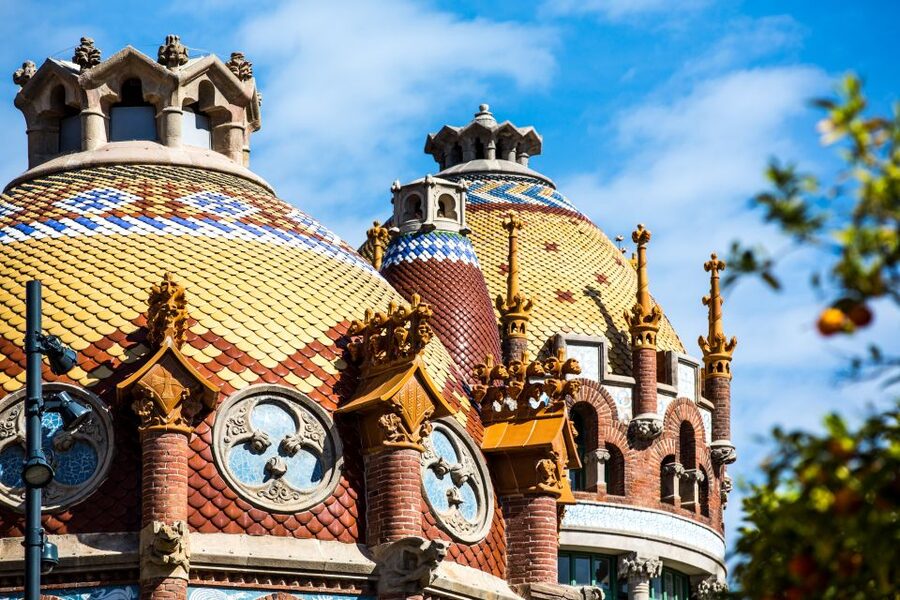
- Look above eye level: Ceilings, stained glass, tilework, sculpture, and colorful details reward slow attention.
- A good companion to Sagrada Família: The complex is a short distance from Gaudí’s basilica, but it is usually calmer.
- Plan on 1.5 to 2 hours: The advertised visit lasts about 1.5 hours, but a slower visit can take longer.
- Self-paced and wheelchair accessible: There is no included guide, and children under 12 enter free with a parent or guardian.
Why Sant Pau deserves time beyond Sagrada Família
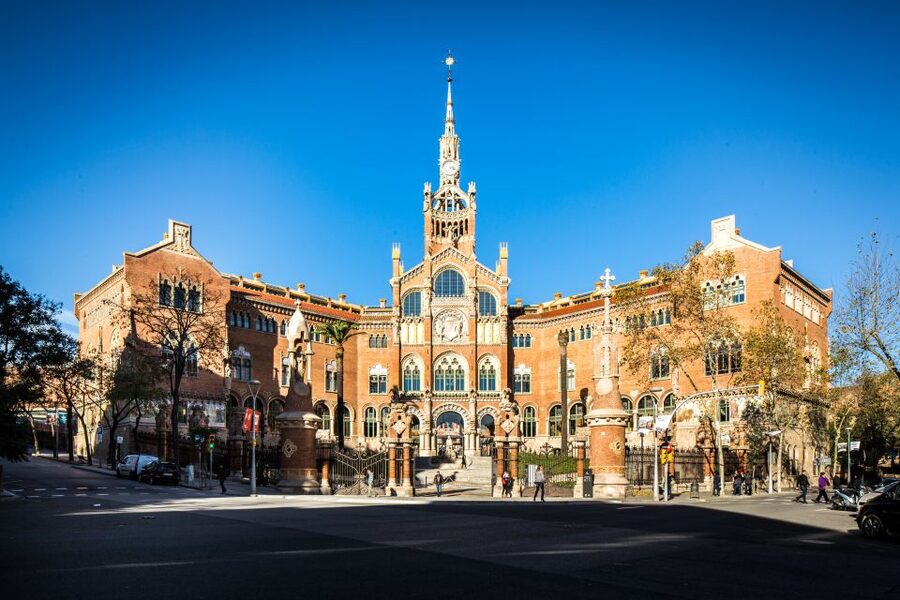
Many visitors race between Barcelona’s biggest names and miss Sant Pau. That is a shame. The site sits on Carrer de Sant Antoni Maria Claret, close to the Sagrada Família area, yet it feels less crowded and less hurried.
The complex was built between 1905 and 1930 by Lluís Domènech i Montaner, one of the major architects of Catalan Modernisme. This was Barcelona’s answer to an urgent problem. The old Hospital de la Santa Creu in El Raval had become too small, so the institution needed a new home.
Domènech i Montaner did not design one giant block. He planned a group of pavilions surrounded by gardens. Patients could receive medical care in buildings with better light and air, while separate structures helped organize hospital life. Underground passages connected the pavilions, allowing staff and supplies to move without crossing the gardens.
That idea matters when you visit. You are not simply looking at decoration. You are seeing a complete medical plan shaped by early ideas about hygiene, recovery, and public welfare.
A few more things to do in Barcelona worth a look
- Barcelona: Sagrada Familia Entry Ticket with Audio Guide
★ 4.6 · 105,312 reviews - Barcelona: Park Güell Admission Ticket
★ 4.4 · 76,534 reviews - Barcelona Aquarium: Entry Ticket
★ 4.3 · 13,335 reviews
Entering the restored pavilions
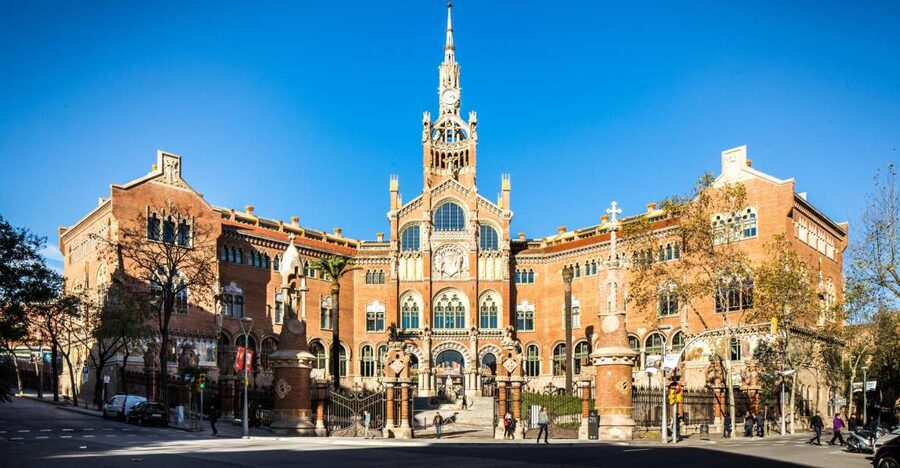
Begin at the main entrance and take a moment before moving inside. The front buildings give you the strongest first impression, with their colorful tilework, sculpted details, patterned surfaces, and carefully balanced forms.
The architecture is ornate, but it does not feel like decoration added after the fact. Domènech i Montaner used brick, stone, ceramic tiles, stained glass, mosaics, and sculpture as part of the building’s identity. Look closely at the surfaces around doors, windows, and corners. Some of the best details are not directly in front of you.
Once inside the grounds, the scale becomes clearer. The pavilions are beautiful individually, but the real achievement is how they work together. The gardens create breathing room between them, giving the site the feel of a small city rather than a single monument.
You can move at your own pace. A pamphlet can be enough if you prefer to read only the main points, but an audio guide is worth considering if you want more context. Several people who enjoy history and architecture find the complex easy to understand visually, while others want more explanation about the hospital system and the symbols built into the design.
The gardens and the hospital’s humane idea
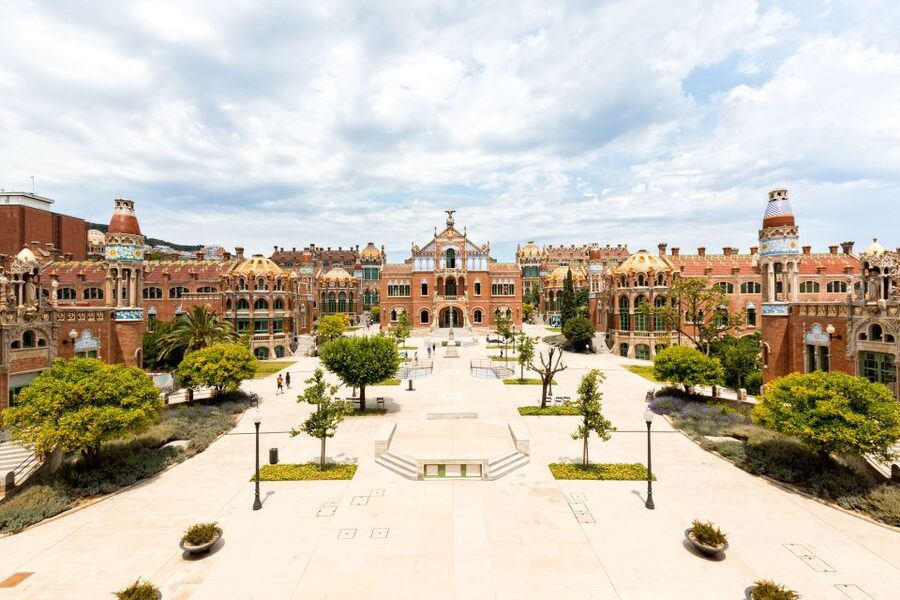
The gardens are not just a pleasant setting for photographs. They help you understand the original plan. The hospital was intended as a garden city for sick people, with greenery, open space, and light forming part of the healing environment.
I especially like the way the gardens interrupt the grand architecture. After studying a richly decorated interior, you can step outside and see the pavilions in relation to one another. The open areas also provide a cooler, quieter pause in Barcelona’s heat.
Bring your attention down to the paths, then back up to the façades. The site rewards this simple habit. You may notice a repeated floral design, a small sculpted figure, or a mosaic that is easy to miss if you walk straight from one building to the next.
The grounds are spacious enough for a quiet break, though this is a historic site rather than a picnic park. One practical complaint is that there is no café on the premises, so plan refreshments before or after your visit.
The underground passages and hidden working side
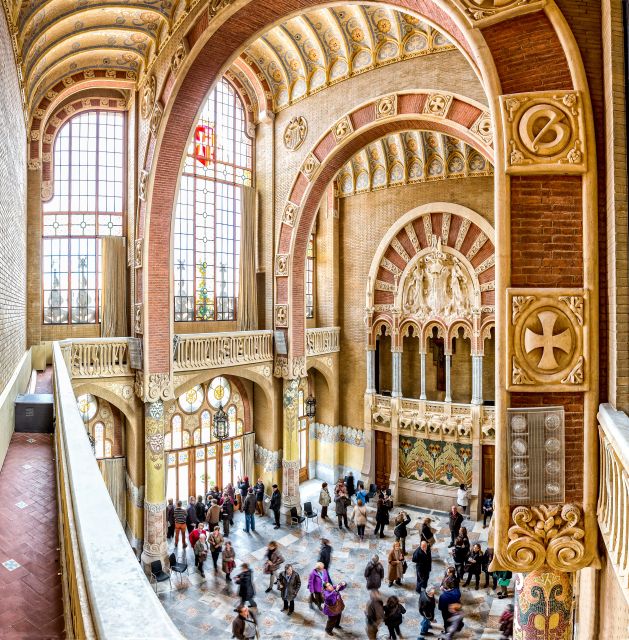
The underground passages are one of Sant Pau’s most interesting features. They show that the complex was designed to function efficiently, not just to impress visitors.
From above, the hospital seems airy and decorative. Below ground, the passages reveal its working side. They connected the pavilions and helped keep movement between buildings organized. This contrast gives the visit more substance: the site combines grand public architecture with the less glamorous systems needed to run a hospital.
Allow time for the passages rather than treating them as a quick link between rooms. They help you picture the original institution as a busy medical center. The building was not a museum when it was created. It was a place where ordinary people received care, often through a charitable institution concerned with the poor.
Signage can sometimes be less clear than you would like, especially when you are deciding where to go next outdoors. I recommend checking the site plan or printed information before setting off so you do not miss an open pavilion.
Same base, a different kind of day out:
- Barcelona: Casa Batlló Entry with Self-Audioguide Tour
★ 4.7 · 25,359 reviews - Barcelona: 24 or 48-Hour Hop-On Hop-Off Bus Tour
★ 4.4 · 20,872 reviews - Barcelona: Park Guell Guided Tour with Skip The Line Entry
★ 4.7 · 17,563 reviews - Barcelona in 1 Day: Sagrada Familia, Park Guell,Old Town & Pickup
★ 5.0 · 13,541 reviews
Medical rooms, instruments, and personal stories
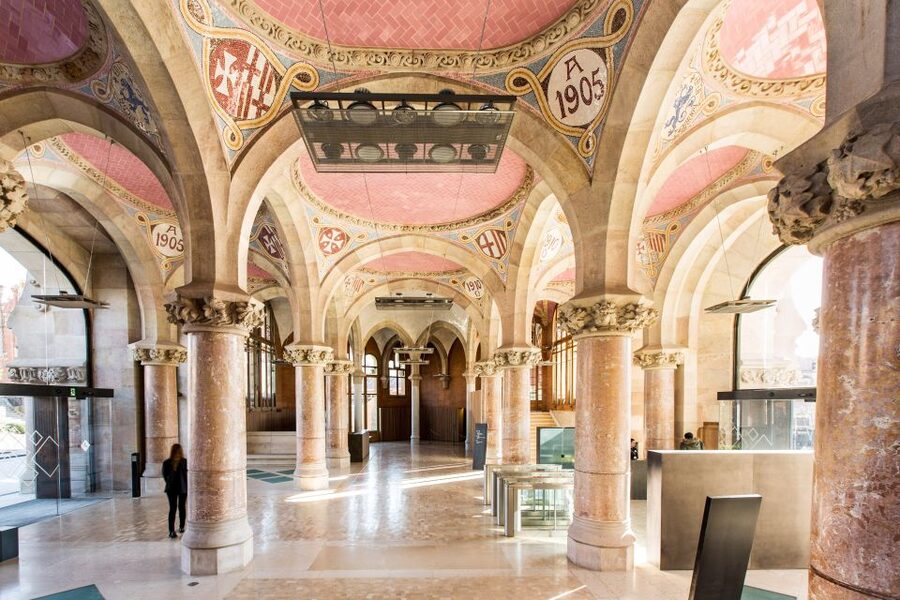
Sant Pau becomes more moving when you remember that it was a working hospital until relatively recently. The restored rooms and medical displays connect the artistic setting with everyday treatment.
You may see hospital rooms arranged to show how they looked in the early twentieth century, including a room set up as it was in 1932. Medical instruments add a direct, physical link to the past. For anyone working in medicine, nursing, or science, these displays can be especially rewarding.
Still, you do not need a medical background to appreciate them. The rooms show how much hospital care has changed, and they remind you that this beautiful place once held patients, nurses, doctors, families, and staff dealing with illness.
A short explanatory film is available in a small room. It may be easy to overlook, so keep an eye out for it. Finding it adds useful context about the site’s later life and its change from hospital to cultural center.
The central building and the view upward
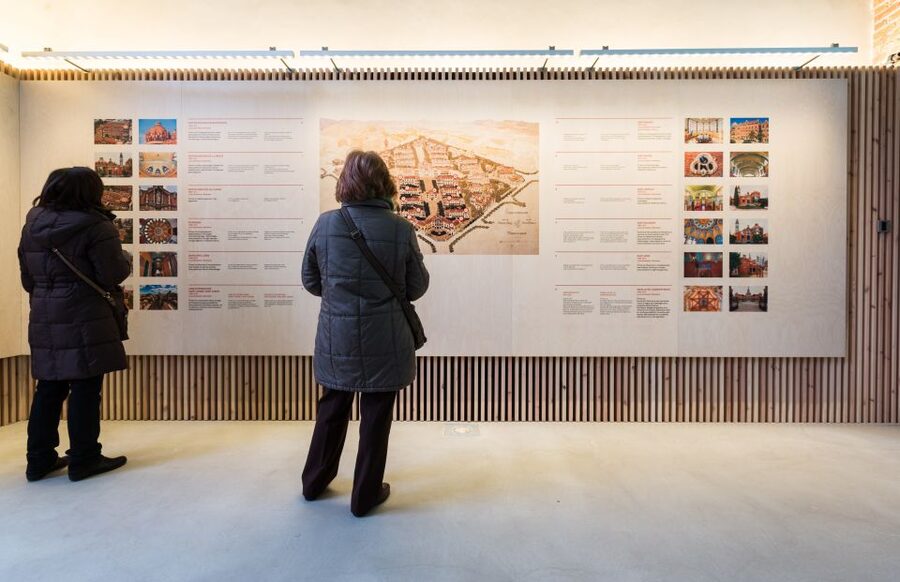
The central building provides one of the visit’s strongest interiors. This is where the decorative program feels most complete, with architecture, color, glass, and sculpture working together.
Do not hurry through the main rooms. Look at the ceiling, the walls, the windows, and the floor in turn. The repeated patterns are not background decoration. They show how Modernisme treated the whole building as one artistic work.
This is also where the advice to look up matters most. Visitors often focus on the floor plan and the large rooms, then miss the ceilings and upper walls. Stained glass changes the quality of the light, while mosaics and ceramic surfaces add color even on a gray day.
The site has been restored with great care, but it does not feel like a theme park. The old hospital purpose remains visible, which gives the beauty some weight. You are not looking at a new building made to appear old. You are looking at a real institution adapted for a new public role.
A self-guided visit, not a guided tour
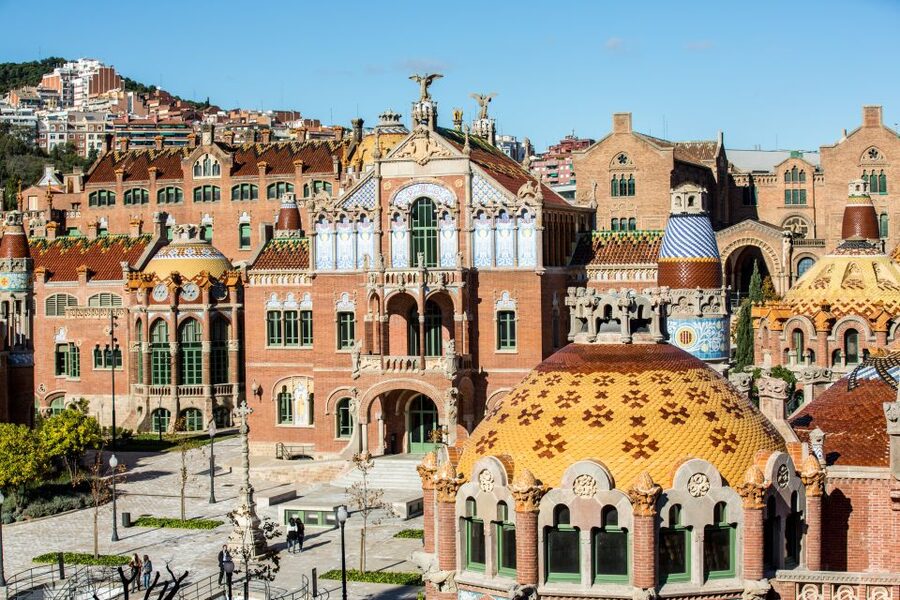
Your ticket covers entry only. It does not include a live guide. That is useful if you want flexibility, but it changes the experience.
A self-guided visit lets you pause wherever you like. You can spend ten minutes studying a façade, sit in a courtyard, or move quickly through a room that interests you less. This works well for independent visitors and for anyone who dislikes being tied to a fixed group.
The tradeoff is that you must supply some of the interpretation yourself. The printed material can help, and an audio guide would give you more background. If architecture is your main interest, you can enjoy the place without a guide. If you want to understand the charitable mission, medical planning, and Modernista symbolism, extra explanation will make the visit stronger.
I would not book this expecting a traditional 1.5-hour walking tour with a guide leading you from stop to stop. Think of the stated duration as a useful planning estimate for an independent visit.
How long to stay and when to visit
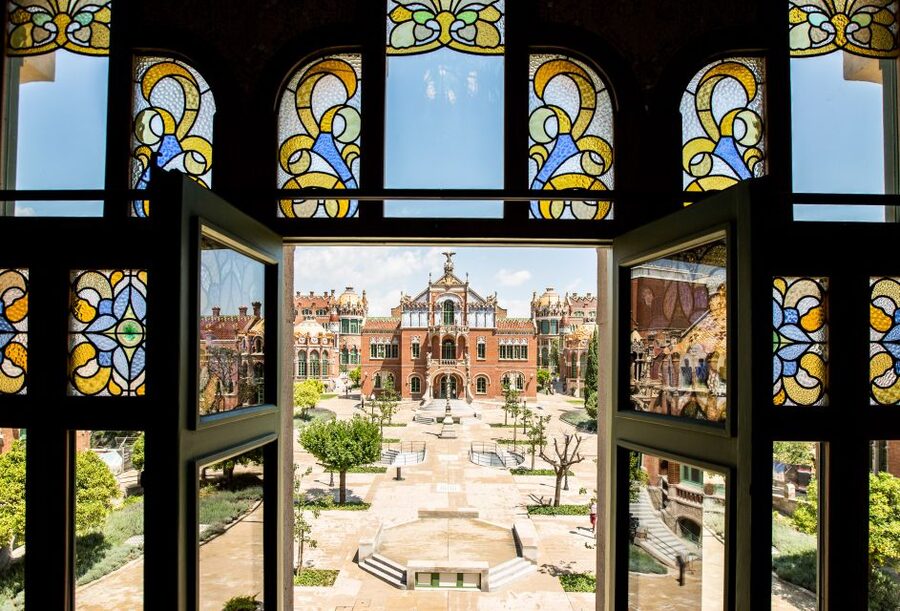
The official duration is about 1.5 hours, but I would allow two hours if you want to see the gardens, passages, rooms, and details without rushing. A quick visit can cover the main buildings, while a slower visit gives the medical history and decorative work time to register.
Early morning can be a smart choice. The complex may feel especially peaceful at opening time, and the outdoor areas are more comfortable before the day becomes hot. Late morning or afternoon can also work if you are pairing Sant Pau with another attraction nearby.
The location is easy to reach by metro, and the site is close enough to Sagrada Família for a natural two-stop plan. Do not assume you need to visit both in one hurried burst. Sagrada Família is more overwhelming in scale, while Sant Pau rewards close looking and a slower pace.
If you are leaving Barcelona later in the day, the location can be practical. Lockers are available, though the storage is suitable for carry-on-sized bags rather than large luggage. Confirm your own transport plan before relying on storage.
Is the $21 ticket good value?
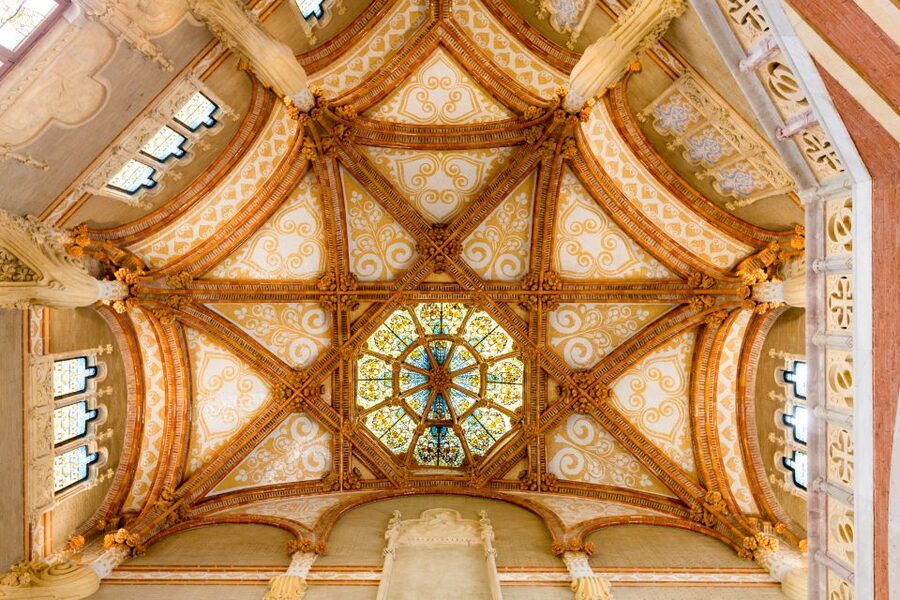
At $21 per person, Sant Pau is not the cheapest short stop in Barcelona, but it offers more than a single decorated room. You get access to an entire architectural complex, gardens, restored interiors, underground passages, and medical displays.
The value is strongest if you care about architecture, hospitals, design, social history, or photography. It is also a good choice if you have already seen the major Gaudí sites and want another side of Catalan Modernisme.
The value is weaker if you want a guide included or if your schedule allows only a rushed half-hour. Since no live tour is included, you should be comfortable reading, using printed information, or paying for an audio guide if available.
Children under 12 enter free, with a parent or guardian present. That makes the visit more attractive for families, particularly if your children enjoy unusual buildings or science-related displays. Wheelchair access is available, and the site’s one-day validity gives you flexibility around your Barcelona schedule.
You can cancel up to 24 hours in advance for a full refund, and the reserve-now, pay-later option can help if your plans are still shifting. Those policies matter less than the quality of the site, but they reduce the risk of fitting it into a busy itinerary.
Who will enjoy Sant Pau most?
I would put Sant Pau high on the list for:
- Architecture fans who want more than Gaudí
- Medical workers, nursing students, and anyone interested in healthcare
- Visitors who appreciate gardens and quiet courtyards
- Families looking for a cultural stop with free admission for children under 12
- Repeat visitors to Barcelona seeking a less obvious major sight
- Photographers who enjoy tile, glass, sculpture, and changing light
It may not suit you if you want a fast, highly social tour with a guide explaining every room. The visit asks you to slow down and pay attention. That is its strength, but it is also the reason some people may prefer an audio guide.
Should you book Sant Pau Recinte Modernista?
Yes, if you have about two hours and want to see Barcelona’s Modernisme from a different angle. Sant Pau combines striking architecture with a serious human story, and the former hospital setting keeps the visit from becoming a simple exercise in admiring pretty façades.
Book it especially if you are already visiting Sagrada Família. Sant Pau is close, calmer, and different enough to justify its own time. Go early if you can, look carefully at the side façades and upper details, and do not skip the underground passages or medical rooms.
Skip it only if your schedule is so tight that you would rush through, or if you strongly prefer a guided experience and do not want to use an audio guide. For most visitors who value thoughtful design, public history, and authentic Barcelona, the $21 ticket earns its place.
FAQ
Where is Sant Pau Recinte Modernista?
The entrance is at Calle Sant Antoni Maria Claret, 167, 08025 Barcelona, in Catalonia, Spain.
How long does a visit to Sant Pau take?
The stated duration is about 1.5 hours. You can allow closer to two hours if you want time for the pavilions, gardens, underground passages, medical rooms, and decorative details.
Is this a guided tour?
No. The ticket includes entrance to Sant Pau Recinte Modernista, but it does not include a guided tour.
What can I see inside the complex?
You can see restored Modernista pavilions, gardens, underground connecting passages, sculptures, stained glass, mosaics, old hospital rooms, and medical instruments.
Is Sant Pau wheelchair accessible?
Yes, the activity is listed as wheelchair accessible.
Are children allowed to visit?
Yes. Children aged 11 and under are permitted to attend, and participants under 12 receive free admission. A parent or guardian must be present.
Is there free entry for older visitors?
Visitors over 65 can enter free on the first Sunday of the month.
Can I cancel my ticket?
Yes. You can cancel up to 24 hours in advance for a full refund. The ticket is valid for one day, with available starting times shown when you check availability.
Just added in Barcelona
- Welcome to Barcelona: Private Tour with a Local★ 4.6 · 200 reviews
- Barcelona: White Rabbit Catalonia’s Top Immersive Experience★ 4.7 · 359 reviews
- Bean to Bar Chocolate Workshop in Barcelona★ 5.0 · 172 reviews
- Barcelona: Walking tour with Montjuic Castle & Cable Car★ 4.7 · 832 reviews
- Barcelona: Welcome to Barcelona Segway Tour★ 4.9 · 153 reviews
- Barcelona: Helicopter Flight with Optional Yacht Cruise★ 4.7 · 224 reviews
- Barcelona: The Original Barcelona Boat Party★ 3.9 · 254 reviews
- Barcelona Wine Tasting: Catalan and Spanish Wines★ 4.8 · 625 reviews
Tours in Barcelona, compared.
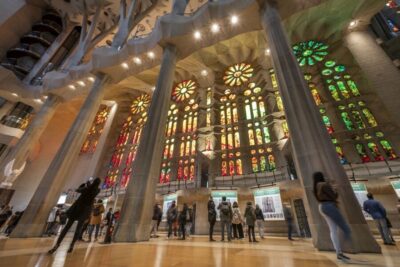
Sagrada Familia Entry Ticket with Audio Guide
Read our review →
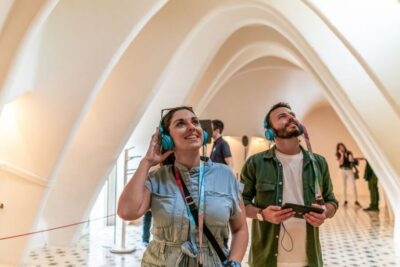

Park Guell Guided Tour with Skip The Line Entry
Read our review →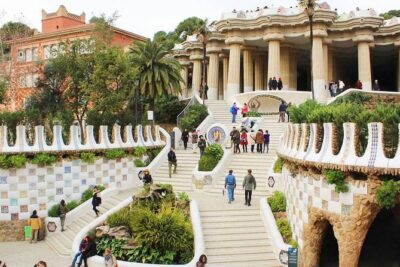
Barcelona in 1 Day: Sagrada Familia, Park Guell,Old Town & Pickup
Read our review →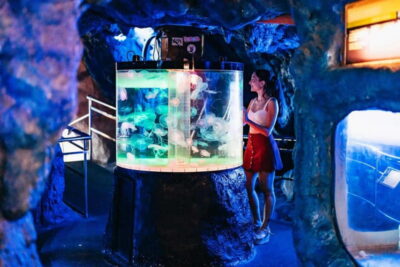
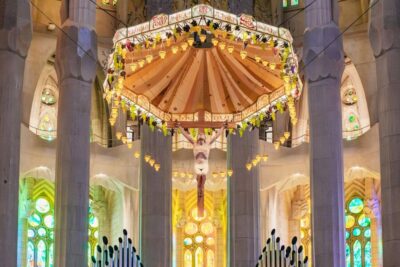
Sagrada Familia Skip-the-Line Entry Ticket & Tour
Read our review →
FC Barcelona Museum “Barça Immersive Tour” Ticket
Read our review →Browse the lists this tour appears in