
Reviewed · GOTHIC & JEWISH QUARTER WALKING TOURS
Barcelona Gothic Quarter’s Deepest Secrets & Sangria
Barcelona’s Gothic Quarter is easiest to enjoy when someone helps you read its crooked streets. This three-hour walk links Roman ruins, medieval churches, Civil War scars, Picasso connections, and small squares that are easy to pass without noticing. It finishes near Port Vell with traditional sangria, giving the evening a relaxed landing.
I like the small group, capped at 15, and the way the route mixes famous sights with less obvious corners. I also like the practical help: guides such as Juliana, Valentina, Sabrina, and Daniel share restaurant ideas, explain how to get around, and adjust the walk to questions or special requests.
The main consideration is the amount of walking. The tour covers a lot of ground, and some stops are brief exterior visits rather than full admissions. At $65.33 per person, the value depends on how much you want context and local direction, not on the number of attractions you enter.
Key points to know before booking
- A story-led route through old Barcelona: Roman walls, Jewish-quarter history, medieval churches, Civil War memories, and modern cultural figures all fit into one walk.
- Small groups make a real difference: With no more than 15 people, you can hear the guide and ask questions without waiting for a large crowd to regroup.
- Guides are a major part of the experience: Juliana and Julianna receive especially warm praise, while Valentina, Daniel, Angelina, and Sabrina are also named as engaging guides.
- The tour ends by the water: The walk travels from Plaça de Catalunya toward Barceloneta and Port Vell, with sangria included at the end.
- Best used early in your stay: The route helps you understand the old city before you return on your own for cathedral visits, shopping, food, or evening walks.
- Expect a history-heavy outing: You will hear about events reaching from ancient Rome to the Spanish Civil War, with plenty of streets and squares between the stops.
Why this Gothic Quarter walk works
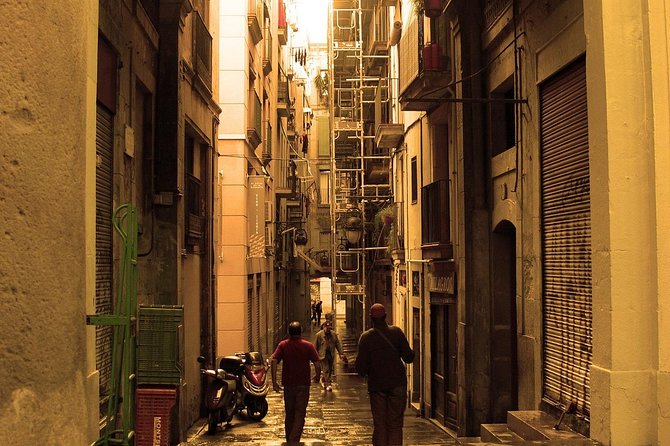
The Gothic Quarter can feel like a maze even when you have a map. Streets bend, lanes narrow, and a major church or Roman wall can appear with little warning. That confusion is part of the charm, but it can also make an independent first visit feel scattered.
This tour gives the district a clear shape. You begin at Plaça de Catalunya, cross Las Ramblas, enter the old quarter, and gradually work toward Port Vell. Along the way, the guide connects buildings and public squares to Barcelona’s past instead of treating each stop as a separate photo opportunity.
That approach suits you if you want more than a quick list of dates. The guides explain political conflicts, religious life, art, architecture, and daily life in the old city. Juliana, in particular, is repeatedly praised for turning history into stories that are easy to follow. Valentina is also singled out for her passion and ability to answer questions.
The group size matters here. A large walking tour can lose the guide’s voice in a crowded square. With a maximum of 15 people, you get more room for questions, and the guide can respond to the group rather than deliver one fixed speech.
More Old Town Walking Tours in Barcelona
- Barcelona in 1 Day: Sagrada Familia, Park Guell,Old Town & Pickup
★ 5.0 · 13,541 reviews - Barcelona: Sagrada Familia, Modernism, and Old Town Tour
★ 4.7 · 1,621 reviews - Barcelona Gothic Quarter Tapas & Taverns Food & Wine Tour
★ 5.0 · 1,470 reviews
Starting at Plaça de Catalunya and Las Ramblas
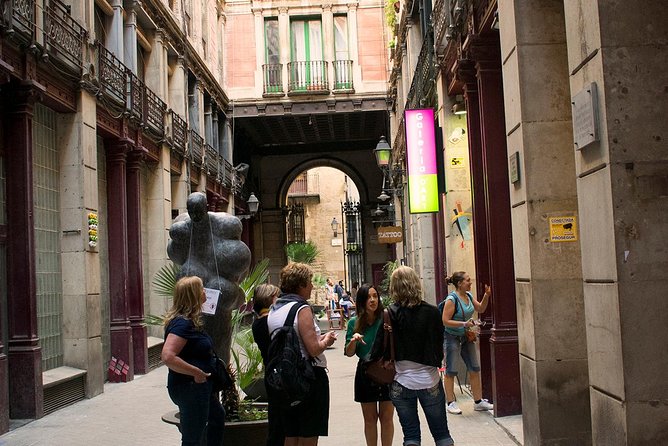
The meeting point is Cafe Zurich at Plaça de Catalunya. This is a practical starting place because the square sits between the newer Eixample district and the old city. The first 15 minutes are used for introductions and an outline of the walk.
From there, you move down Las Ramblas, Barcelona’s best-known boulevard. The stop is short, about 15 minutes, so do not expect a full tour of every market stall, flower stand, or performance area. Instead, this opening gives you a sense of the city’s main pedestrian spine before you turn into the older streets.
The route includes La Boqueria Market in its broad list of sights, although the detailed stop timings do not assign it a separate visit. If the market matters to you, ask your guide when and how it fits into that day’s route. You can also return on your own later, when you have more time to browse.
Carrer Petritxol follows, known here as Barcelona’s sweetest street. The 10-minute stop is a useful introduction to the old quarter’s food culture and narrow lanes. The description does not promise tastings at this point, so think of it as a street-level orientation rather than a food tour.
Churches, Roman walls, and medieval Barcelona
The walk then turns toward Santa Maria del Pi, a Gothic church with a five-minute stop. Admission is not included, and the short timing suggests that the focus is on the exterior and the surrounding square rather than a full interior visit.
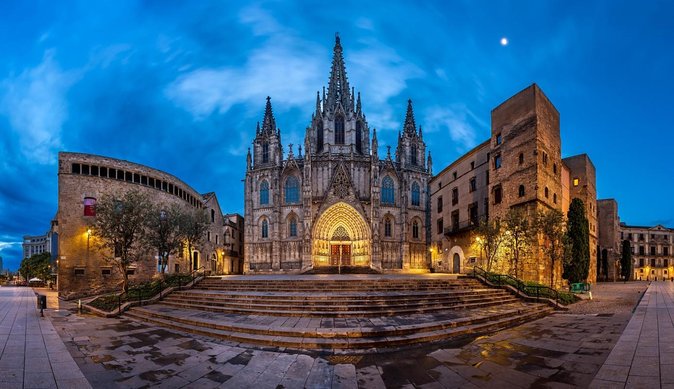
Barcelona Cathedral receives another five-minute stop. This is one of the route’s most important landmarks, but again, admission is not included. If you have booked a separate cathedral visit, taking this tour first can make that later visit more rewarding. One particularly useful detail from the guiding style is the explanation of the cathedral’s shrines and its famous 13 geese, a detail that is easy to miss when walking through alone.
The route also brings you to the Archivo Histórico de la Ciudad de Barcelona, associated with the Crown of Aragon. The stop is short and admission is free. You may find this most useful if you enjoy seeing how political power was organized, rather than simply looking at façades.
Roman remains are another important thread. The route includes ancient Roman ruins and sections of the original Roman wall. These fragments help you picture the earlier city beneath today’s medieval streets. They are not presented as a long museum visit, so the guide’s explanation is what gives them meaning.
This is one reason I would take the tour early in a Barcelona stay. Once you understand the Roman footprint, the medieval lanes feel less random. You begin to recognize that the quarter is not just a cluster of picturesque buildings, but a city built in layers.
Sant Jaume, Sant Felip Neri, and the darker stories

Plaça de Sant Jaume is the government square, with a five-minute stop. The location gives the guide a natural setting for explaining Catalan political life and the continuing importance of the old center.
Plaça Sant Felip Neri is one of the more powerful stops. The visit lasts about eight minutes and focuses on the Spanish Civil War. It is a quiet square, and the subject matter gives the walk a more serious tone. You should not expect the tour to be only architectural sightseeing or light evening entertainment.
The route also includes references to the Jewish quarter and its synagogue. The supplied schedule does not list a separate timed synagogue visit, so you should treat this as part of the guide’s commentary through the streets rather than as a guaranteed interior entry.
The same applies to some of the more unusual claims in the route description, including torture connected with Barcelona’s patron saint. The stop at the Pailebot Santa Eulalia is listed for four minutes. This short pause adds another piece of local tradition and difficult history, but the tour does not promise a long ship visit.
These subjects are where the tour earns its place beyond a basic orientation walk. You get a wider view of Barcelona, including faith, politics, war, art, and public memory. The tone is not described as grim throughout, but you should be ready for stories about the darker side of Spanish history.
More old-quarter walks in Barcelona:
- Barcelona Helicopter, Sailboat & Old Town Private Walking Tour
★ 5.0 · 1,395 reviews - Barcelona: Old Town and Gothic Quarter Walking Tour
★ 4.8 · 1,393 reviews - Barcelona Old Town & Gothic Quarter Small Group Tour
★ 5.0 · 1,308 reviews - Barcelona e-Bike Tour: Gaudí & Old Town Small Group
★ 5.0 · 769 reviews
Picasso, Miró, Dalí, and Barcelona’s art life
The tour gives unusual attention to Barcelona’s artists and art education. It includes the Royal Artistic Circle of Barcelona, described as connected with one of Antoni Gaudí’s first works, and the Escola de Artes Aplicadas y Oficios Artísticos, associated with Picasso’s studies.
The route also points out places connected with Miró’s birth and a school where Picasso, Miró, and Dalí studied. The schedule provides only about five minutes for the art-school stop, so this is not an art-history lecture or gallery visit. It is a quick way to place famous names within Barcelona’s streets.
One of the most appealing details is the possibility of seeing actual Picasso art in a location you might otherwise pass. The exact work or setting is not specified, so do not book this expecting a museum admission. Still, the guide’s local knowledge can show you how much cultural history is sitting outside the main attractions.
For me, this part adds balance. The Gothic Quarter is often presented as medieval stone and church towers. Connecting it to modern art makes the neighborhood feel less like a preserved set and more like a place where different generations of Barcelona life overlap.
George Orwell Square and the city’s modern identity
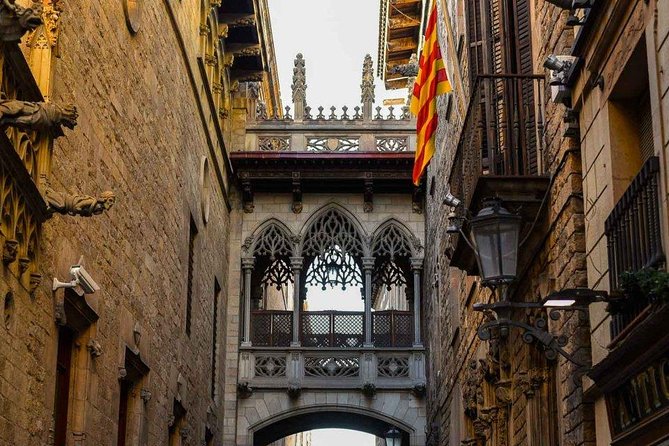
Plaça George Orwell, often called Plaza Tripi, brings the tour into a more recent chapter. The stop links the square with George Orwell and the Spanish Civil War. It is brief, about five minutes, but it gives the guide another chance to explain how Barcelona’s political struggles shaped its public spaces.
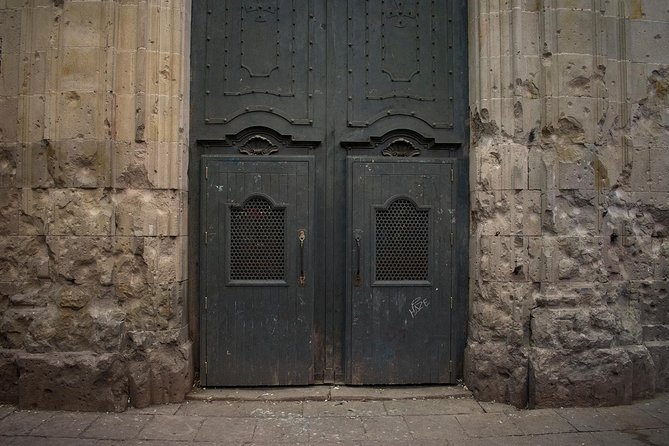
This section works best if you like history told through places rather than dates alone. A name on a square, a damaged wall, or a change in street layout can open a discussion about events that are not obvious from the surface.
The guide’s storytelling style matters a lot here. Juliana and Julianna are praised for making events feel immediate without losing the thread of the walk. Daniel is described as bringing humor to the information, while Valentina is noted for her energy and passion. Your assigned guide may differ, but the experience depends heavily on the person leading it.
From the old quarter to Barceloneta
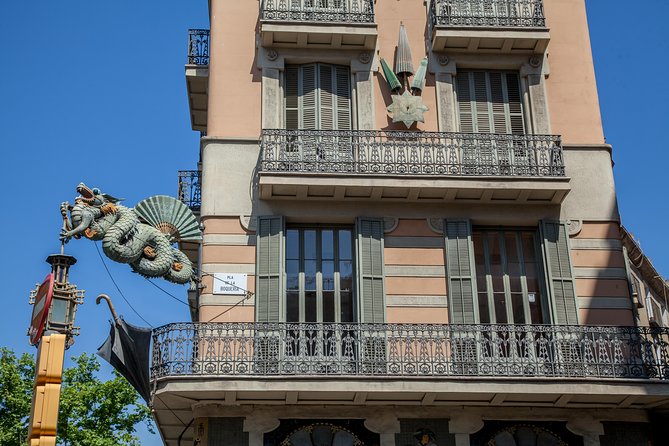
The final part moves toward Barceloneta, Barcelona’s beach district. The route includes a five-minute stop and ends at Port Vell. That finish gives the tour a satisfying change of scenery: narrow medieval streets give way to the harbor and waterfront.
The walk is not limited to the Gothic Quarter in the strictest sense. It connects the old center with the port, the beach, and Barcelona’s maritime side. That broader route is useful if you want to understand how the city faces the water, but it also means you should wear comfortable shoes and allow for steady walking.
One practical benefit is orientation. The old city can be confusing, and reaching Barceloneta with a guide helps you see how the districts connect. Several people found the walk helpful for navigating streets they would not have managed easily alone.
The end point is Port Vell, while some guided outings have finished with a local restaurant stop in the Barceloneta area. One detailed account names Pasa Tapas Barceloneta and praises its sangria, tapas, olives, and paella. Do not assume a full meal is included: the advertised inclusions are the guide, small-group format, and sangria. Food beyond that would be your own expense.
Sangria, questions, and useful Barcelona advice
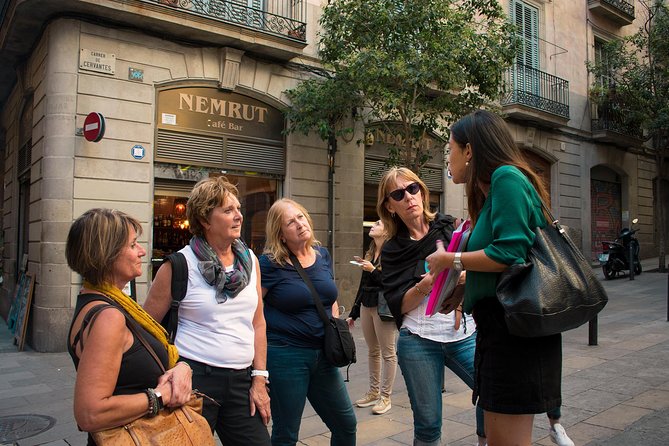
Sangria is more than a final drink here. It gives the group time to sit, talk, and ask follow-up questions after the walking portion. That is a good format for a first evening because you can turn the guide’s local suggestions into plans for the rest of your stay.
The guides are also praised for practical recommendations. Juliana helped visitors with navigation and later activities, while other guides offered restaurant suggestions and ideas for exploring independently. This kind of advice can be worth a great deal in Barcelona, especially when you want to avoid spending your whole visit around the same few famous streets.
The experience does not include a meal, and the details do not specify the exact sangria venue or serving arrangement. If food is important to you, ask your guide what is available at the finish. You may prefer to reserve dinner separately after the tour.
Is $65.33 a fair price?
At $65.33 per person, this is not the cheapest way to walk through the Gothic Quarter. You are paying for a guided experience, a small group, three hours of interpretation, and sangria rather than simply joining a free orientation.
The price makes sense if you value context. You get a route that combines Roman remains, churches, Jewish-quarter references, Civil War sites, art connections, Las Ramblas, Barceloneta, and Port Vell. Recreating that route alone would require research and careful navigation, and you could still miss the stories that make the places matter.
The value is weaker if you prefer to move at your own pace or spend substantial time inside the cathedral, churches, market, or museums. Several stops are only five minutes long, and admission to Santa Maria del Pi and Barcelona Cathedral is not included.
I see this as a good first-day or first-evening purchase. It can save you from wandering without a plan and gives you a mental map for later visits. If you already know Barcelona’s old city well, you may find the broad coverage less useful than a specialist museum or food tour.
Who should book this experience?
I would choose this tour if you want:
- A strong first introduction to Barcelona’s old center
- History that includes politics, religion, war, art, and Roman Barcelona
- A small group instead of a large crowd
- A guide who can answer questions and offer local suggestions
- A walk that ends near the harbor rather than back where it began
- A social finish with sangria
It suits couples, families with older children, and solo visitors who want company without committing to a private tour. One family found the stories engaging enough to hold a child’s attention, while another couple appreciated having the route adapted to a special request.
You should think twice if walking for several hours is difficult, if you want extensive time inside each monument, or if you dislike serious historical subjects. The tour is accessible to most participants and is near public transportation, but the supplied details do not promise a step-free route or seating throughout.
You receive confirmation at booking, and free cancellation is available up to 24 hours before the start time. Changes or cancellations inside that 24-hour window are not accepted, and the experience requires a minimum number of participants. If that minimum is not met, you are offered another date or experience, or a full refund.
Should you book the Gothic Quarter Secrets and Sangria tour?
Book it if this is your first Barcelona visit and you want the old city to make sense quickly. The strongest reason to go is not the checklist of sights. It is the combination of a skilled guide, a manageable group, and stories that connect Roman Barcelona with the medieval quarter, the Civil War, modern art, and today’s waterfront.
I would schedule it near the start of your stay, preferably when you still have time to use the recommendations afterward. Go prepared for a lot of walking and several short exterior stops. At the end, you will have seen far more than the Gothic Quarter’s postcard façades, and you will know which streets and landmarks deserve a second look.
FAQ
How long does the Barcelona Gothic Quarter tour last?
The experience lasts approximately three hours.
Where does the tour begin?
The meeting point is Cafe Zurich at Plaça de Catalunya, 1, in Barcelona.
Where does the tour end?
The tour ends at Port Vell in the Ciutat Vella area.
Is sangria included?
Yes. Traditional sangria is included as part of the experience.
How large is the tour group?
The group has a maximum of 15 participants.
Are admission tickets to the churches included?
No. Admission to Santa Maria del Pi and Barcelona Cathedral is not included. Other listed stops are free, although some are brief exterior visits.
Can I cancel for a full refund?
Yes, if you cancel at least 24 hours before the experience start time. Cancellations or changes made less than 24 hours in advance are not accepted for a refund.
Just added in Barcelona
- E-Bike tour in Barcelona with English Guide★ 5.0 · 128 reviews
- Barcelona: Wine Tasting and 5 Course Tapas Pairing Dinner★ 4.5 · 129 reviews
- Barcelona Gothic Quarter Walking Tour with Tapas★ 5.0 · 248 reviews
- Barcelona Luxury Yacht Cruise – Day or Sunset, Open Bar & Snacks★ 5.0 · 154 reviews
- Andorra Original History and Sightseeing Tour (Private, Pickup)★ 5.0 · 350 reviews
- Wine Tasting Experience in Barcelona★ 5.0 · 172 reviews
- Entrance to the Mirador Torre Glories Barcelona★ 4.5 · 193 reviews
- Barcelona Wax Museum Admission Ticket★ 4.5 · 237 reviews
Gothic & Jewish Quarter Walking Tours, compared.
Barcelona in 1 Day: Sagrada Familia, Park Guell,Old Town & Pickup
Read our review →
Valencia Old Town Tour with Wine & Tapas in 11th Century Historic Monument
Read our review →
Cordoba Mosque & Jewish Quarter Tour with Tickets
Read our review →
Madrid Old Town & Royal Palace Walking Tour Skip the Line Ticket
Read our review →
Old Town Tour, Wine & Tapas in an 11th c. Monument
Read our review →
Sagrada Familia, Modernism, and Old Town Tour
Read our review →
Barcelona Gothic Quarter Tapas & Taverns Food & Wine Tour
Read our review →Browse the lists this tour appears in