Reviewed · TOURS IN BARCELONA
Barcelona: Casa Amatller Priority Entry Ticket
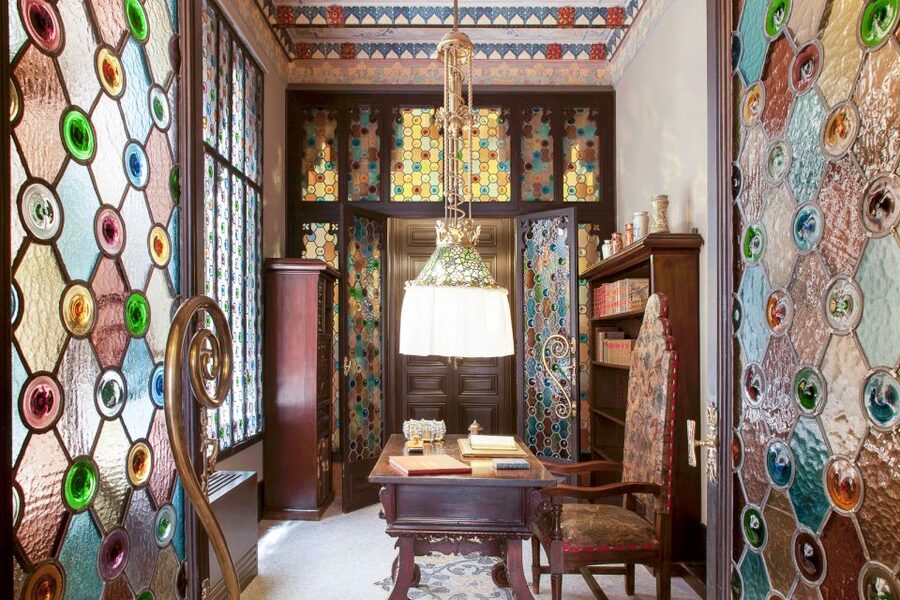
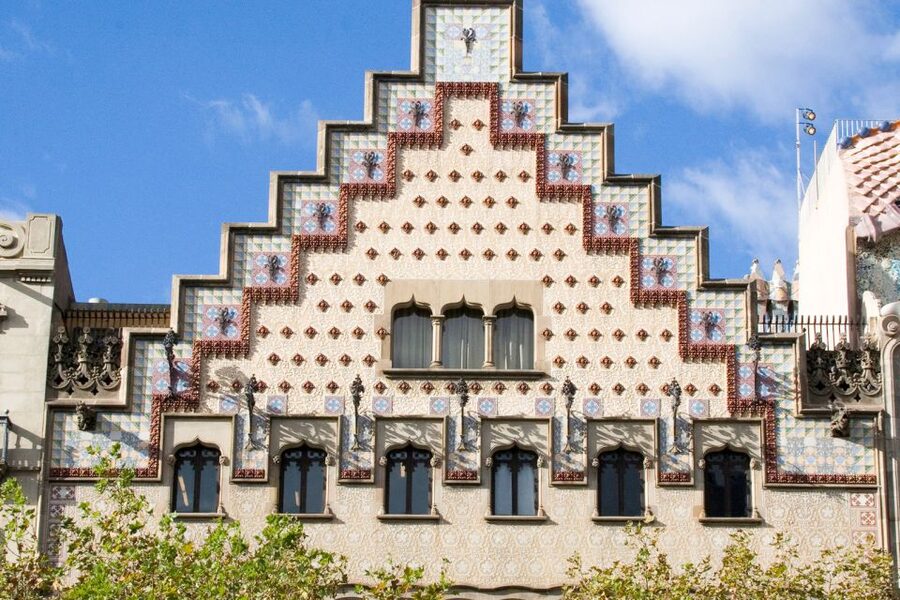
Casa Amatller gives you a quieter, more intimate look at Barcelona’s Modernist style than its famous neighbor, Casa Batlló. Designed by Josep Puig i Cadafalch in 1898, this house still holds its original furniture and decoration, so you see a home rather than only a grand facade.
I like the limited group size and the clear audio tour, which lets you set your own pace. I also like the link to the Amatller chocolate company, a useful reminder that this was the home of an industrialist, not simply an architect’s showpiece. The main consideration is that the visit is shorter and less theatrical than Casa Batlló, so visitors wanting a big visual spectacle may prefer the larger attraction next door.
Key points to know before visiting
- Original interiors: See furniture, decoration, family rooms, and the main staircase in a house preserved in its original form.
- A small-group visit: Each entrance slot is limited to 20 people, helping the rooms feel less crowded.
- Modernist design with a family story: Learn how Puig i Cadafalch designed the home for chocolatier Antoni Amatller and his family.
- Audioguide in eight languages: Choose Spanish, Catalan, English, French, Italian, Chinese, or Dutch.
- Chocolate at the finish: The visit ends in the Amatller chocolate shop, with an exclusive selection to browse.
- A useful alternative to Casa Batlló: Casa Amatller sits next door but offers a calmer, more domestic experience.
Why Casa Amatller deserves time on Passeig de Gràcia
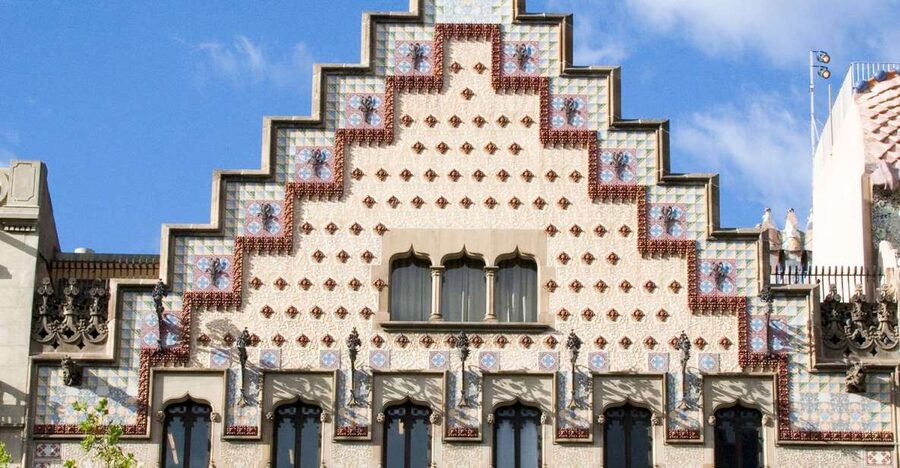
Barcelona’s Passeig de Gràcia is lined with famous Modernist buildings, but Casa Amatller asks you to look beyond the street frontage. Its importance lies in how much of the house remains intact. You are not only admiring an unusual facade. You are entering the home commissioned by Antoni Amatller, an industrialist connected to the Amatller chocolate company.
That distinction changes the visit. Casa Batlló next door is famous for its dramatic shapes and theatrical interiors. Casa Amatller is more grounded in domestic life. You see the rooms where the Amatller family lived, along with the furniture and decorative details chosen for the house. The result feels closer to a carefully preserved home than a staged architectural attraction.
I find that especially useful if you have already seen one of Barcelona’s larger Modernist monuments. Casa Amatller adds another side to the period: the relationship between architecture, business, family life, and industrial wealth.
The house was designed by Puig i Cadafalch in 1898. You can study the building as an architectural work, but the audioguide also helps explain why its rooms and details matter. Photographs and videos show how the house looked in earlier times, giving you a visual reference while you examine the rooms in front of you.
A few more things to do in Barcelona worth a look
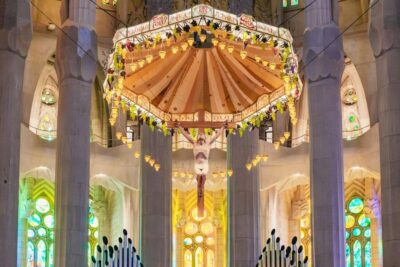
- Barcelona: Sagrada Familia Entry Ticket with Audio Guide
★ 4.6 · 105,312 reviews - Barcelona: Park Güell Admission Ticket
★ 4.4 · 76,534 reviews - Barcelona Aquarium: Entry Ticket
★ 4.3 · 13,335 reviews
Starting at the lobby and main staircase
Your visit begins in the lobby of Casa Amatller at Passeig de Gràcia, 41. This central location makes the house easy to add to a day spent along the boulevard, though the address also puts you beside one of Barcelona’s busiest sightseeing areas.
The lobby and main staircase are among the first details to notice. Rather than rushing straight into the upper rooms, take a moment to look at the entrance sequence. The staircase helps set the tone for the rest of the house, with the design work placed not only in grand rooms but also in the parts of the building used to move from one space to another.
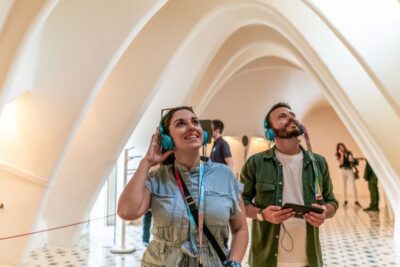
The visit uses a tablet and headphones. The material explains the different parts of the house and places them in their historical setting. You can use the provided visuals to compare the present rooms with historic photographs and films.
That format works well for people who prefer a self-guided visit with structure. You are not tied to a long spoken presentation, and you can give extra attention to details that interest you. At the same time, you should not expect a fully live tour led room by room by a named guide. The experience includes explanations from an art historian through the audio and visual material, with the chance to ask questions during the visit.
Seeing the rooms where the Amatller family lived
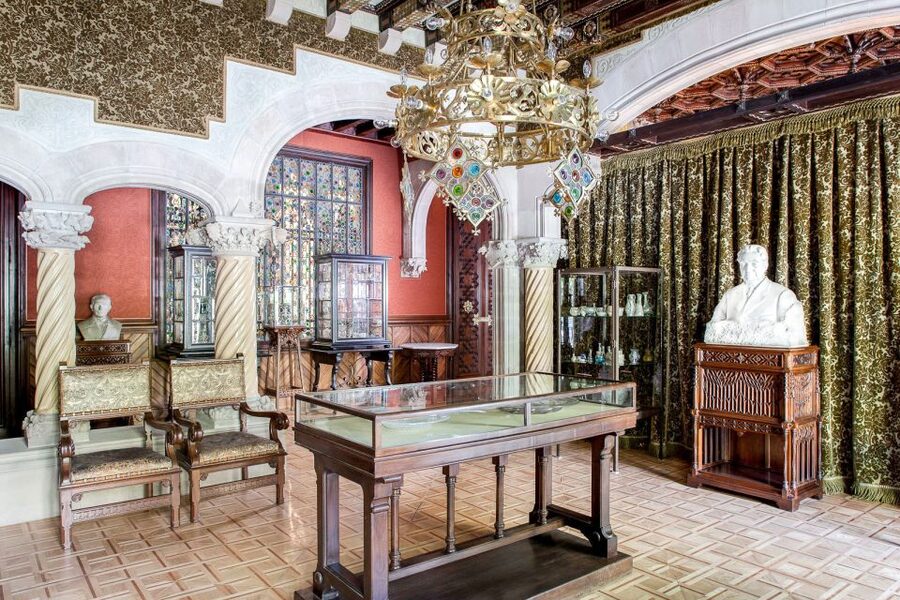
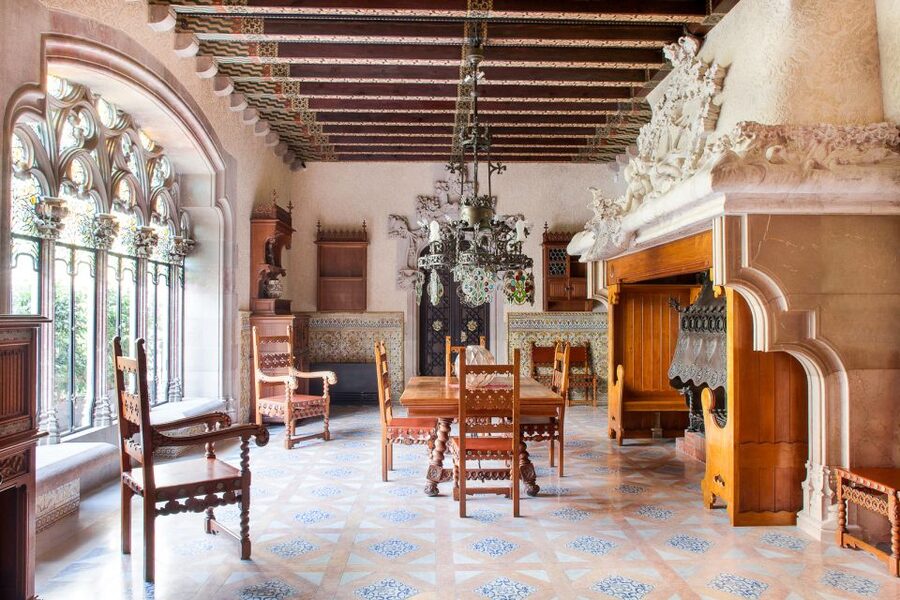
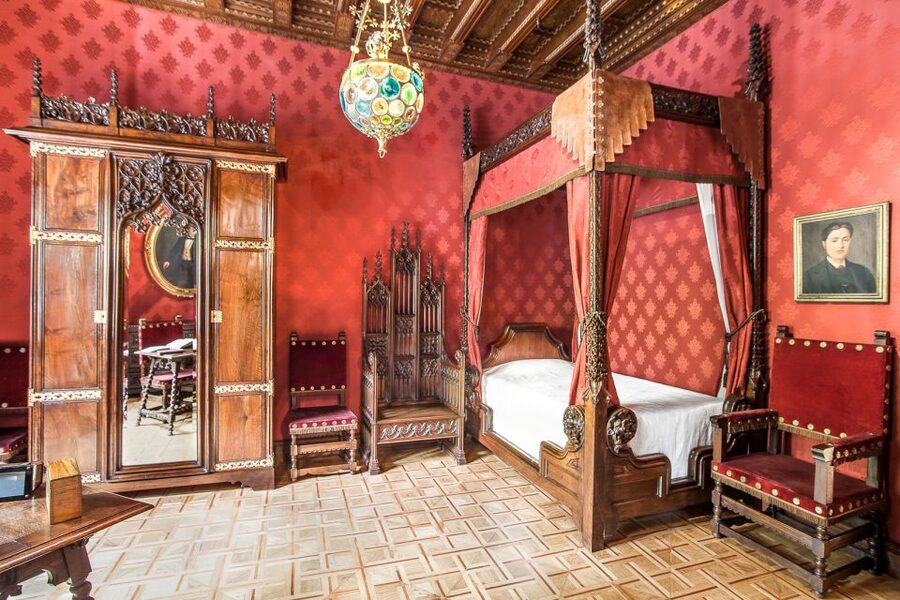
The main appeal comes in the family rooms. Here you see original furniture and decoration instead of a bare architectural shell. The rooms help you understand how the house functioned as a private residence for a wealthy family at the end of the nineteenth century.
Look for the connection between practical domestic space and decorative ambition. The house was made for living, but it was also a statement about taste, status, and the Amatller family’s place in Barcelona’s industrial society. The audioguide helps connect the visible details with that larger story.
This is where the visit differs most from a quick exterior photograph. The facade may first catch your eye, but the interior tells you how the building was used. You can take in the arrangement of rooms, the furniture, and the decorative treatment while learning about the people who commissioned and occupied the house.
The limited attendance matters here. Visits are capped at 20 people, and entrance slots are set every 30 minutes. That does not guarantee complete quiet, but it does give the house a more controlled feel than a major attraction with a constant stream of visitors.
Give yourself time to listen, look, and compare the historical images with what remains. The value is not in rushing through every room. It is in noticing how the original elements work together.
The Amatller chocolate connection
The Amatller family story is tied to chocolate production, and the visit explains the industrial methods used by Chocolates Amatller. This adds substance to the tour. You are not simply learning about an architect and a wealthy client. You are also seeing how an industrial business helped support the lifestyle represented by the house.
The chocolate connection makes Casa Amatller especially approachable for visitors who are less interested in architectural terminology. The audioguide links the building to work, commerce, and manufacturing, giving you a more complete picture of Antoni Amatller.
At the end, you reach the chocolate shop. You can browse an exclusive selection of Amatller chocolates, which makes a natural finish to the visit. A hot milk chocolate may also be available in the cafe at the back, though you should treat that as a separate indulgence rather than assume it is part of the admission.
I like this ending because it connects the museum to something tangible. After looking at the family home and learning about the company, you have the option to explore the product that helped shape the Amatller name.
Same base, a different kind of day out:
- Barcelona: Casa Batlló Entry with Self-Audioguide Tour
★ 4.7 · 25,359 reviews - Barcelona: 24 or 48-Hour Hop-On Hop-Off Bus Tour
★ 4.4 · 20,872 reviews - Barcelona: Park Guell Guided Tour with Skip The Line Entry
★ 4.7 · 17,563 reviews - Barcelona in 1 Day: Sagrada Familia, Park Guell,Old Town & Pickup
★ 5.0 · 13,541 reviews
How the audioguided format works
The included audio guide is available in Spanish, Catalan, English, French, Italian, Chinese, and Dutch. Headphones are provided, and the tour uses a tablet with photographs and videos as well as spoken explanations.
This setup suits independent visitors. You can focus on the room in front of you instead of trying to keep up with a moving group. The historical images are also useful because they show the house in earlier periods, helping you understand which details are original and how the rooms once looked.
The tradeoff is simple: you get flexibility, but less personal interaction than on a fully live tour. The activity information says you can ask the art historian guide questions, so there is an opportunity for clarification. Still, the core experience is built around the tablet and headphones.
For the best experience, keep the audio running while you examine the furniture and decoration. If you race through the rooms, you will miss the connection between the architectural details and the Amatller family story.
Casa Amatller compared with Casa Batlló
The two buildings sit next to each other, so comparison is unavoidable. Casa Batlló is generally the more spectacular choice if you want bold visual effects, elaborate presentation, and a major attraction built around architectural drama.
Casa Amatller offers something different. Its appeal comes from preservation, scale, and domestic detail. You see a fully conserved Modernist house, not just a restored monument presented as a visual show. The experience is less theatrical, but that can be its strength.
I would choose Casa Amatller if you want to understand how a Modernist home worked and who lived there. I would choose Casa Batlló if your main goal is the most dramatic architectural experience. If you have the time and interest, visiting both gives you a useful contrast between two neighboring buildings from the same broad period.
A French-language visit in February was described as a pleasant small-group experience and specifically different from Casa Batlló next door, with a quieter and more agreeable way to explore the building. That is a fair way to frame the choice: less spectacle, more room to pay attention.
Price, timing, and practical details
The price is $21 per person. I consider that reasonable if you care about preserved interiors, architectural history, or Barcelona’s Modernist movement. You are paying for entry to a small museum, the audioguided material, headphones, and the chance to see original furnishings and decoration in place.
The value is weaker if you only want a quick look at the facade. You can see much of the exterior from Passeig de Gràcia without buying a ticket. The admission makes sense when you want to enter the family rooms and understand the building beyond its street appearance.
Casa Amatller is open Monday through Sunday from 10:00 AM to 7:00 PM. Entrance times are offered every 30 minutes, so check the available slot when you book. The visit is valid for one day, but the information provided does not give a fixed tour length. Plan around the selected entry time rather than assuming you can arrive at any point during the day.
Priority entry lets you skip the ticket line. That is useful on a busy day along Passeig de Gràcia, though it does not mean you can ignore the scheduled entrance slot. The maximum of 20 people per visit is another reason to reserve ahead if your sightseeing schedule is tight.
The house is wheelchair accessible and has lift access for people with reduced mobility. High heels are not allowed inside, and everyone must wear shoe covers to protect the monument. Wear comfortable, secure footwear and expect to put the covers on before entering the preserved rooms.
The cancellation policy is flexible: you can cancel up to 24 hours in advance for a full refund. A reserve-now, pay-later option is also available, which helps if your Barcelona plans are still shifting.
Weather and opening-hour caution
One practical point deserves attention. A purchase was possible even when the house had closed because of bad weather, so check the current opening status if conditions are poor on your chosen day.
If you do arrive while the museum itself is unavailable, the lower hall may still be worth seeing, and the cafe or chocolate area can offer an alternative stop. Do not count on that as a substitute for the full house visit, however. The original rooms and audioguided material are the main reason to book.
Who will enjoy this visit most
I would recommend Casa Amatller to anyone who likes architecture, decorative arts, historic homes, or the story of Barcelona’s industrial families. It is also a good choice if you want a more measured visit after spending time in the city’s larger, more crowded attractions.
Families may enjoy the chocolate connection, especially if younger visitors are less interested in architectural history. The photographs and videos give the visit some variety, while the final chocolate shop provides an obvious treat.
The experience is also well suited to visitors who prefer a small group and a set amount of structure without following a guide through every room. The eight language choices make it practical for many international visitors.
You may want to choose another attraction if you are looking for a long tour, a live theatrical presentation, or an expansive building with many floors and dramatic effects. Casa Amatller is focused. Its strength is the preserved home and the story attached to it.
Should you book Casa Amatller?
Book it if you want to see Barcelona Modernism at a domestic scale. The original furniture, family rooms, main staircase, historical images, and chocolate-company story give the $21 ticket a clear purpose.
I especially recommend it as a companion to Casa Batlló, not necessarily as a replacement. Casa Batlló delivers the spectacle. Casa Amatller gives you a calmer look at how a wealthy Modernist home was designed and lived in.
Choose a morning or afternoon slot that fits your walk along Passeig de Gràcia, and avoid high heels because of the shoe-cover rule. If the weather is poor, confirm that the house is open before setting out. For visitors who value detail over drama, this small museum offers a thoughtful and well-priced stop.
FAQ
Where is Casa Amatller located?
Casa Amatller is at Passeig de Gràcia, 41, in Barcelona, Catalonia, Spain. The meeting point is in the lobby of the house.
How much does the Casa Amatller ticket cost?
The listed price is $21 per person.
What does the ticket include?
The ticket includes priority entrance to the Casa Amatller house museum, an audioguide, and headphones.
Which languages are available for the audioguide?
The audioguide is available in Spanish, Catalan, English, French, Italian, Chinese, and Dutch.
How large is each visit?
Entrance is limited to a maximum of 20 people per visit.
What are Casa Amatller’s opening hours?
The house museum is open Monday through Sunday from 10:00 AM to 7:00 PM. Entry slots are scheduled every 30 minutes.
Is Casa Amatller wheelchair accessible?
Yes. The house has lift access for people with reduced mobility.
Can I wear high heels inside the museum?
No. High heels are not allowed inside the museum. All visitors must wear shoe covers to help protect the monument.
Can I cancel the booking?
Yes. You can cancel up to 24 hours in advance for a full refund. A reserve-now, pay-later option is also available.
Just added in Barcelona
- E-Bike tour in Barcelona with English Guide★ 5.0 · 128 reviews
- Barcelona: Wine Tasting and 5 Course Tapas Pairing Dinner★ 4.5 · 129 reviews
- Barcelona Gothic Quarter Walking Tour with Tapas★ 5.0 · 248 reviews
- Barcelona Luxury Yacht Cruise – Day or Sunset, Open Bar & Snacks★ 5.0 · 154 reviews
- Andorra Original History and Sightseeing Tour (Private, Pickup)★ 5.0 · 350 reviews
- Wine Tasting Experience in Barcelona★ 5.0 · 172 reviews
- Entrance to the Mirador Torre Glories Barcelona★ 4.5 · 193 reviews
- Barcelona Wax Museum Admission Ticket★ 4.5 · 237 reviews
Tours in Barcelona, compared.
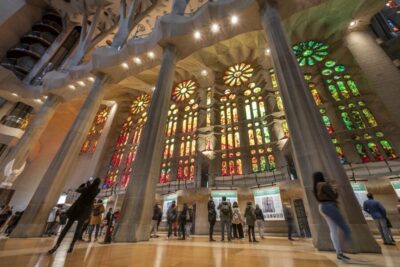
Sagrada Familia Entry Ticket with Audio Guide
Read our review →

Park Guell Guided Tour with Skip The Line Entry
Read our review →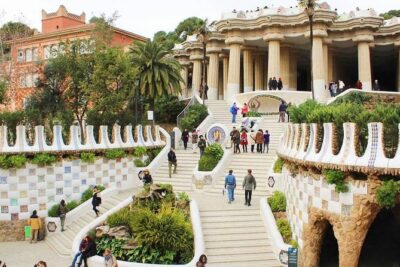
Barcelona in 1 Day: Sagrada Familia, Park Guell,Old Town & Pickup
Read our review →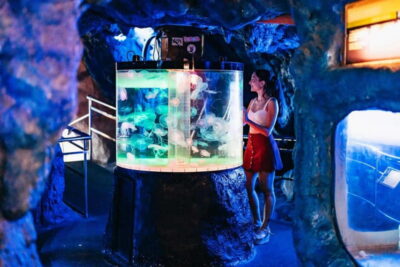
Sagrada Familia Skip-the-Line Entry Ticket & Tour
Read our review →