
Reviewed · CYCLING TOURS
Barcelona: Bike or eBike Tour, Top Sights & Local Insights
Barcelona reveals itself quickly from a bicycle. In three hours, you can pedal from the Arc de Triomf and Parc de la Ciutadella through El Born and the Gothic Quarter, then cross the grand Passeig de Gràcia for close looks at Gaudí’s famous façades. I especially like the mix of major sights and lesser-known streets, plus the chance to get useful restaurant advice from guides such as Marina, Igor, Dina, and Egor.
I also like that the ride is designed for sightseeing rather than speed. Guides pause to explain buildings, history, and local customs, and the optional tapas stop gives you a taste of Barcelona beyond its monuments. The main drawback is that you must be comfortable cycling in a large city, and the route includes a couple of inclines, so this is not a good pick if you have mobility limits or dislike urban riding.
Key points at a glance
- A big Barcelona overview in three hours: Cover the Gothic Quarter, Born, Passeig de Gràcia, Sagrada Familia, and several major landmarks without spending the day on foot.
- Gaudí from the street: Stop for photos at Casa Amatller, Casa Batlló, Casa Milà, and Sagrada Familia, but do not expect interior visits.
- Small groups help: A group of around six is easier to manage near busy streets and allows more time to hear the guide.
- Guides shape the outing: Marina, Igor, Dina, Egor, Victoria, and Sergei are among the guides praised for clear explanations, humor, safety, and local suggestions.
- Tapas are optional: You can stop at a local bar for a couple of tapas and a drink, but food and drinks cost extra.
- Bring practical gear: Wear comfortable shoes and sunscreen, and bring a hat and camera. Helmets are optional.
Why a bicycle is a smart way to see Barcelona
Barcelona’s central sights are spread across several districts. Walking between the Arc de Triomf, Gothic Quarter, Passeig de Gràcia, and Sagrada Familia can eat up much of a day, especially in warm weather. A bicycle lets you connect these areas while keeping the pace relaxed enough for explanations and photographs.
The route also gives you changing views of the city. You move from the formal avenues of the Eixample to narrow medieval lanes, then out to broad streets lined with Modernista architecture. That contrast is one of the best reasons to choose a bike tour instead of a bus ride.
The ride is not presented as a workout. Several riders found the pace manageable, and one noted only a couple of inclines. Still, Barcelona has traffic, pedestrians, bike lanes, and busy crossings. You need to know how to ride confidently and follow the guide closely. The guide sets the route and helps the group move through crowded areas, but you remain responsible for handling your bike.
The activity is open to people at least 150 centimeters tall, about 4 feet 11 inches. It is not suitable for wheelchair users, people with mobility impairments, babies under one year, or anyone who cannot ride a bicycle.
Other trips people book in Barcelona:
- Barcelona: Sagrada Familia Entry Ticket with Audio Guide
★ 4.6 · 105,312 reviews - Barcelona: Park Güell Admission Ticket
★ 4.4 · 76,534 reviews - Barcelona: Casa Batlló Entry with Self-Audioguide Tour
★ 4.7 · 25,359 reviews
Starting at Gran Via and reaching the Arc de Triomf
The meeting point is at Gran Via de les Corts Catalanes, 704, near the bike rental shop. Look for the Bike Rental when you arrive. The tour ends at the same place, which keeps the logistics simple and avoids figuring out a new return trip after three hours on the road.
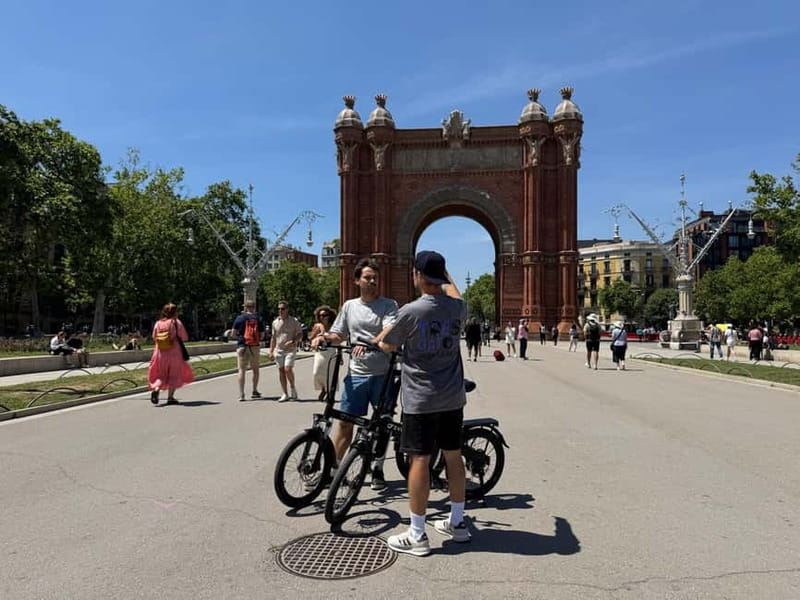
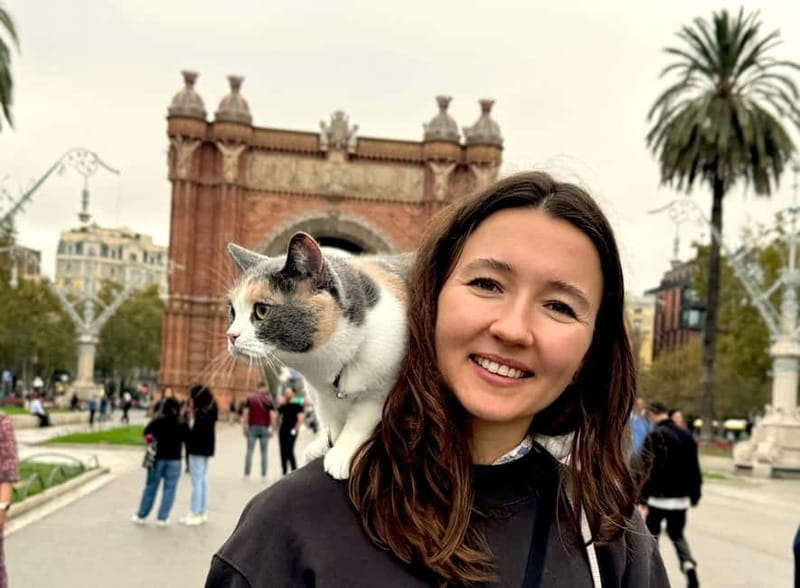
The first major stop is the Arc de Triomf. Built for the 1888 Barcelona Universal Exposition, the red-brick arch makes a useful introduction to the city’s grand civic spaces. It also sets up the change of scenery that follows, as the group rides toward Parc de la Ciutadella.
At this stage, the guide explains how the modern city grew around older quarters. This is a good moment to ask for recommendations, since guides often share practical advice about food, drinks, and places to visit later.
Parc de la Ciutadella and El Born
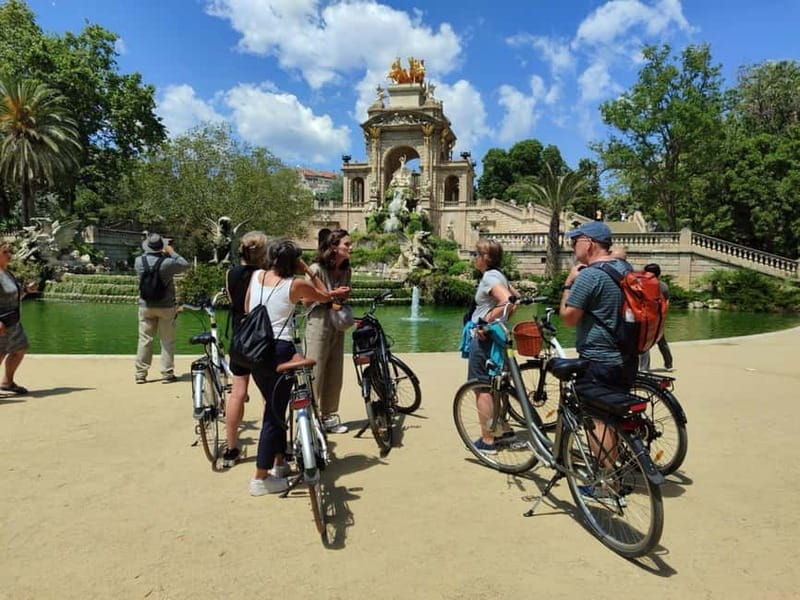
Parc de la Ciutadella offers a break from Barcelona’s dense avenues. The route includes a guided visit and sightseeing here, so you can expect time to look around rather than simply pass through. The park is also close to El Born, one of the city’s most appealing areas for a walk after the tour.
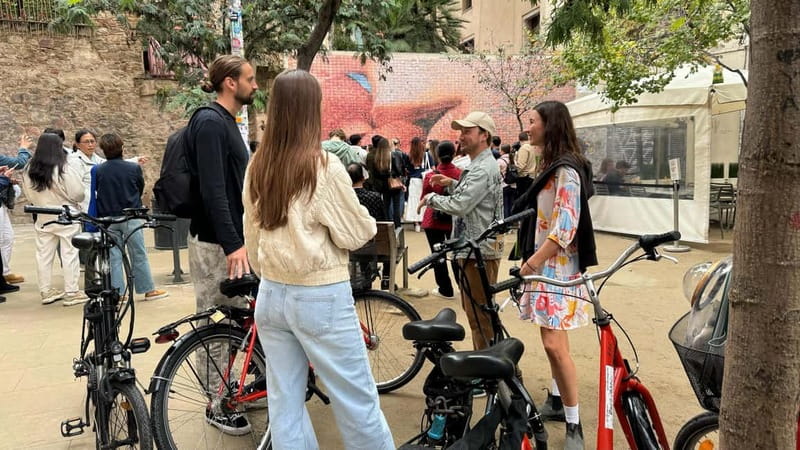
El Born brings a different feel from the broad Eixample streets. Its lanes and older buildings make the district a natural bridge between Barcelona’s medieval past and its modern food and cultural life. On a bicycle, you see more of the district than you would by walking directly between only its best-known landmarks.
The tour does not try to turn every stop into a long museum visit. Instead, the guide gives context, points out details, and keeps the group moving. That tradeoff works well if you want orientation on your first day, but less so if you prefer to spend twenty minutes examining each building.
Inside the Gothic Quarter
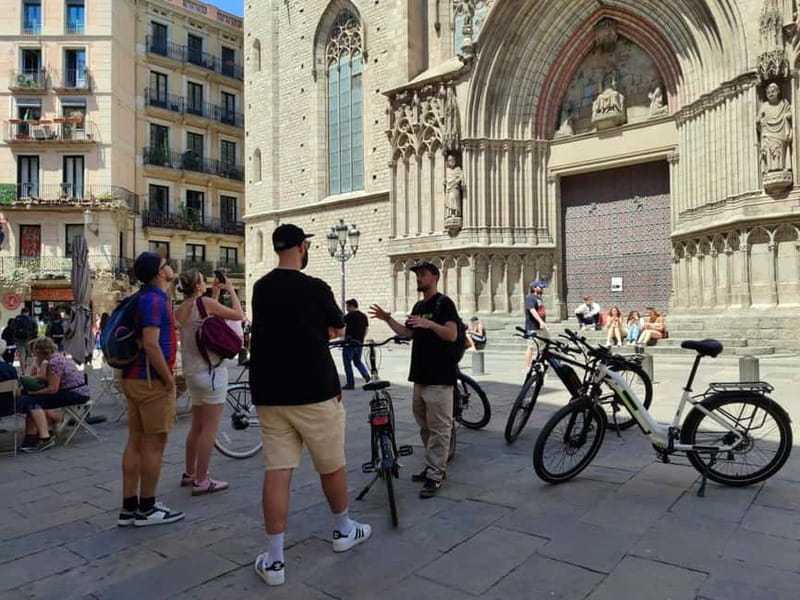
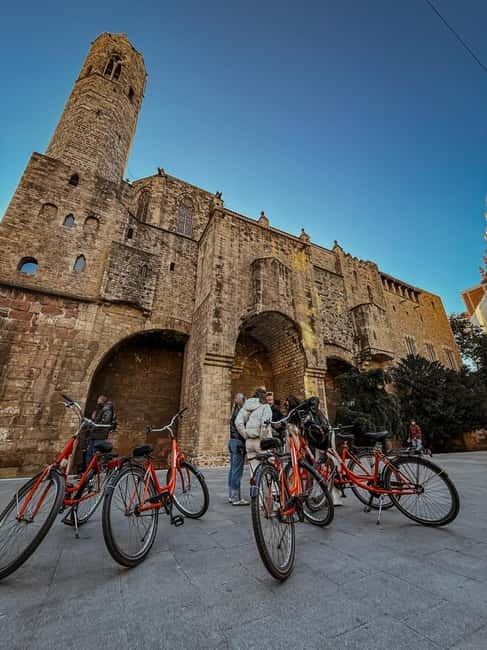
The Gothic Quarter is one of the most rewarding parts of the route. Its narrow lanes can feel confusing when you explore alone, while a local guide helps connect the streets to Barcelona’s past and points out corners you might otherwise walk past.
The tour includes the Barcelona Cathedral, one of the district’s major landmarks. You will see it as part of the guided route and sightseeing portion, but the activity does not include a stated interior visit. Plan to return later if you want a slower look inside.
Cycling in this part of the city requires care. Medieval streets are not built for fast riding, and pedestrians may appear suddenly. The guide’s job is especially useful here, helping the group stay together and move safely. Keep your speed under control and expect to get off the bike briefly if conditions call for it.
This section gives the tour much of its local character. The monuments are important, but the real value comes from hearing stories about Barcelona’s residents, traditions, and past while moving through the streets where those stories unfolded.
Same base, a different kind of day out:
- Barcelona: 24 or 48-Hour Hop-On Hop-Off Bus Tour
★ 4.4 · 20,872 reviews - Barcelona: Park Guell Guided Tour with Skip The Line Entry
★ 4.7 · 17,563 reviews - Barcelona in 1 Day: Sagrada Familia, Park Guell,Old Town & Pickup
★ 5.0 · 13,541 reviews - Barcelona Aquarium: Entry Ticket
★ 4.3 · 13,335 reviews
Passeig de Gràcia and Barcelona’s Modernista façades
The route then reaches Passeig de Gràcia, one of Barcelona’s grandest avenues. Here the city shifts from medieval lanes to wide urban planning and some of its most famous architecture.
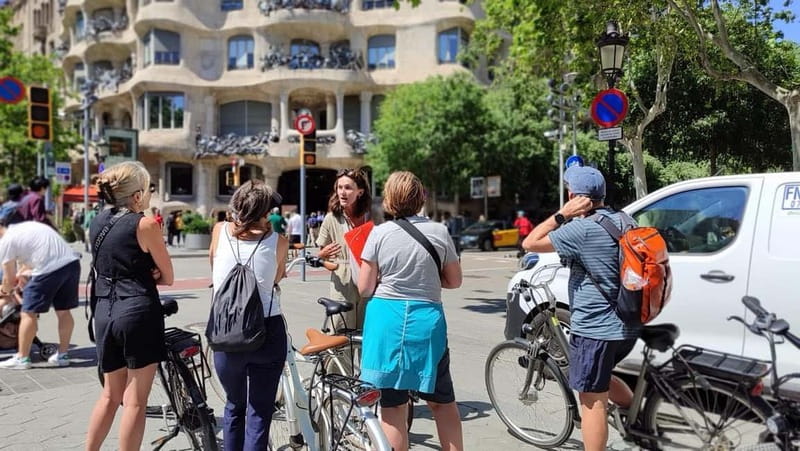
You stop for photographs at Casa Amatller, Casa Batlló, and Casa Milà. These façades make the bike tour particularly useful for first-time visitors because you can see several major Modernista buildings in one stretch without arranging separate transport.
Casa Amatller has a distinctive stepped roof and detailed exterior. Casa Batlló is famous for its flowing shapes and colorful surface. Casa Milà, often called La Pedrera, is more restrained from a distance but has an unmistakable stone façade and curving roofline.
The practical point is that these are photo stops, not full admissions. The tour helps you decide which buildings deserve a return visit, but entry tickets and interior time are not part of the three-hour ride. If you want to explore Casa Batlló or Casa Milà inside, save another part of your schedule.
The avenue can be busy, so this is one place where group size matters. A small group is easier to keep together and gives you a better chance of hearing the guide before moving on.
Sagrada Familia and La Monumental
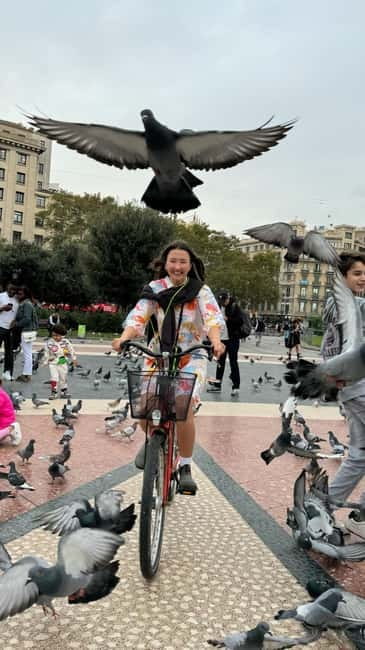
Sagrada Familia is the route’s biggest architectural stop. You get a photo opportunity and an explanation of the building, its designer, and its place in Barcelona’s story. It is a strong choice for a first orientation because the church is one of the city’s defining sights.
Again, the tour does not include admission inside Sagrada Familia. The outside view alone is impressive, but the interior requires a separate visit and more time. Use the guide’s advice to decide when to return and how to fit it into your plans.
The final sightseeing stop is La Monumental, Barcelona’s former bullring. Its ornate exterior adds another layer to the city’s architectural story. It also shows how Barcelona’s public buildings can reflect changing traditions and uses over time.
After La Monumental, the group returns to Gran Via de les Corts Catalanes, 704. Ending where you began is handy, especially if you are using the tour to get your bearings on the first day.
The guides make the difference
The strongest part of this outing is the guiding. Marina is praised for combining facts with humor and for offering useful food and bar suggestions. Igor and Egor are described as friendly, engaging, and strong on local history. Dina receives credit for explaining each stop clearly and maintaining a comfortable pace. Victoria is noted for excellent English and broad knowledge of Barcelona and Spain, while Sergei is praised for being accommodating.
That range matters because a three-hour city ride can feel dry if the guide only recites dates. Here, the emphasis is on stories about buildings, famous residents, Catalan traditions, and daily life. You also get a chance to ask what to do after the tour, which can be more valuable than another list of facts.
Language options are English, French, Spanish, and Russian. Private and small-group departures are available, though the exact group size depends on the departure you choose. If personal attention matters to you, choose a small group when possible.
Bikes, helmets, and the question of e-bikes
A classic bicycle is included, and the bikes are described as comfortable and in good condition. Some departures also offer standard bikes and e-bikes, but the supplied details do not promise an e-bike for every booking. If you want electric assistance, confirm that option before paying.
Helmets are optional. I would still consider wearing one, especially if you are not used to cycling in city traffic. Comfortable shoes are more important than special cycling clothing, and a hat, sunscreen, and camera are sensible additions.
The route is described as not too difficult, but it is not completely flat. One rider noted a couple of inclines. You should also expect the mental work of watching traffic, bike lanes, pedestrians, and the group. If you regularly ride a bicycle, this should be manageable. If you rarely cycle, an e-bike may make the hills easier, but it will not remove the need for confidence and attention.
The optional tapas stop
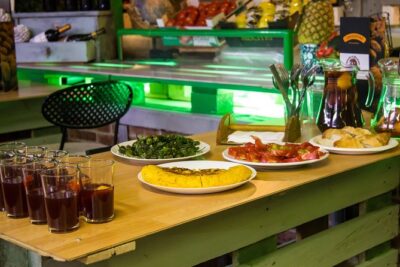
The tour includes the option of a short stop at a local tapas bar. You can order a couple of traditional tapas and a drink, but those costs are not included in the $27 price.
This stop is valuable because it changes the rhythm of the outing. You get a chance to rest, ask the guide for restaurant advice, and try a small taste of local food rather than simply photographing buildings. The timing and exact bar are not specified, so treat it as an optional pause, not a full meal.
If you want a longer lunch or have dietary needs, plan another meal separately. The activity is primarily a sightseeing ride, and the tapas stop is brief.
Is $27 good value?
At $27 per person, this is a strong value if you want a broad first look at Barcelona. The tour covers several districts and major sights in three hours, includes a bicycle and guide, and ends back at the starting point. Buying separate transport between all these areas would cost time, while a self-guided ride would require more route planning.
The price is less compelling if you already know the city well or want long visits inside the monuments. You will see Sagrada Familia, Casa Batlló, Casa Milà, and the cathedral from the outside, then need separate tickets and visits for the interiors.
The best value comes when you take the tour early in your stay. You can use the guide’s food suggestions, return to the buildings that interest you, and recognize the city’s districts as you explore on foot later.
Timing, cancellation, and practical planning
The ride lasts three hours, with starting times shown according to availability. Since Barcelona can be hot and sunny, consider choosing a time that suits your energy and comfort. Bring sunscreen, a hat, comfortable shoes, and water for your own use.
You can cancel up to 24 hours in advance for a full refund. A reserve-now, pay-later option is also available, which helps if your plans are still changing.
The tour runs in English, French, Spanish, and Russian. Private and small-group formats are available. Since the activity returns to the starting point, you can plan another central visit afterward without arranging a separate transfer.
Who should book this bike tour?
I would choose this for a first or second day in Barcelona, especially if you want orientation, architecture, and local advice in one outing. It suits couples, friends, and families with older children who meet the height requirement and can ride confidently.
It is also a good match for anyone who finds long walking tours tiring. The bicycle carries you between districts while the guide supplies the context. Small groups are best for people who want to ask questions and keep the ride personal.
I would skip it if you want a quiet, slow architectural study, a full meal, or interior access to the monuments. It is also the wrong choice if urban cycling makes you nervous or if mobility limits make mounting and handling a bicycle difficult.
Should you book it?
Book this tour if you want to see a large share of central Barcelona quickly, hear useful local stories, and leave with a plan for the rest of your visit. The mix of Gothic lanes, Born streets, Gaudí façades, parks, and broad avenues gives you a well-rounded first look for a modest price.
Choose a small group if possible, ask about e-bike availability if you prefer electric assistance, and treat the tapas stop as a pleasant extra rather than a full lunch. For confident cyclists who want both famous sights and neighborhood context, this is one of the more efficient ways to get oriented.
FAQ
Where does the Barcelona bike tour start?
It starts at Gran Via de les Corts Catalanes, 704. Look for the Bike Rental.
Where does the tour end?
The activity ends back at the same meeting point on Gran Via de les Corts Catalanes, 704.
How long does the tour last?
The sightseeing tour lasts three hours. Starting times depend on availability.
What landmarks are included?
The route includes the Arc de Triomf, Parc de la Ciutadella, El Born, the Gothic Quarter, Barcelona Cathedral, Passeig de Gràcia, Casa Amatller, Casa Batlló, Casa Milà, Sagrada Familia, and La Monumental.
Is food included?
No. The tour offers an optional short stop at a local tapas bar, but food and drinks cost extra.
Are e-bikes available?
Some departures offer standard bikes and e-bikes, but an e-bike is not guaranteed for every booking. Confirm the available bike type when you choose your departure.
Do I need to know how to ride a bike?
Yes. Participants must know how to ride a bicycle, and the activity is intended for people at least 150 centimeters tall.
What languages are available?
The live guide may lead the tour in English, French, Spanish, or Russian.
Just added in Barcelona
- Welcome to Barcelona: Private Tour with a Local★ 4.6 · 200 reviews
- Barcelona: White Rabbit Catalonia’s Top Immersive Experience★ 4.7 · 359 reviews
- Bean to Bar Chocolate Workshop in Barcelona★ 5.0 · 172 reviews
- Barcelona: Walking tour with Montjuic Castle & Cable Car★ 4.7 · 832 reviews
- Barcelona: Welcome to Barcelona Segway Tour★ 4.9 · 153 reviews
- Barcelona: Helicopter Flight with Optional Yacht Cruise★ 4.7 · 224 reviews
- Barcelona: The Original Barcelona Boat Party★ 3.9 · 254 reviews
- Barcelona Wine Tasting: Catalan and Spanish Wines★ 4.8 · 625 reviews
Cycling Tours, compared.
Barcelona 3-hour Bike or E-Bike Tour: Highlights and Hidden Gems
Read our review →
Best of Madrid: 3-Hour Guided Bike Tour in Small Groups
Read our review →
Highlights Bike Tour with Optional E-Bike or Tapas
Read our review →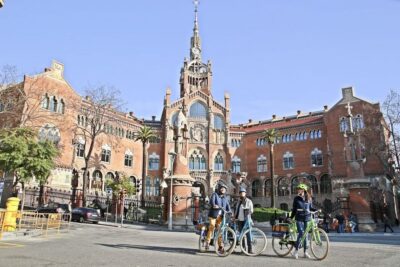
Browse the lists this tour appears in