
Reviewed · SPAIN
Almería: Visit to the shelters of the Spanish Civil War
Almería’s Spanish Civil War shelters take you below the city into a tunnel system built to protect about 40,000 people from bombing. You walk nearly one kilometer of the surviving galleries, then see a small underground hospital, operating room, pantry, and a room where children left drawings on the walls. It is a sober, highly atmospheric look at wartime life.
I like the clear physical sense of the shelters, since the narrow passages and lack of natural light make the story feel close and real. I also like the guide-led format, especially because some guides have been able to explain parts in English to non-Spanish speakers. The main drawback is that the tour is conducted in Spanish, and the underground setting will not suit anyone with claustrophobia or limited mobility.
Key things to know before you go
- Nearly one kilometer underground: Walk through part of Almería’s original 4.5-kilometer shelter network.
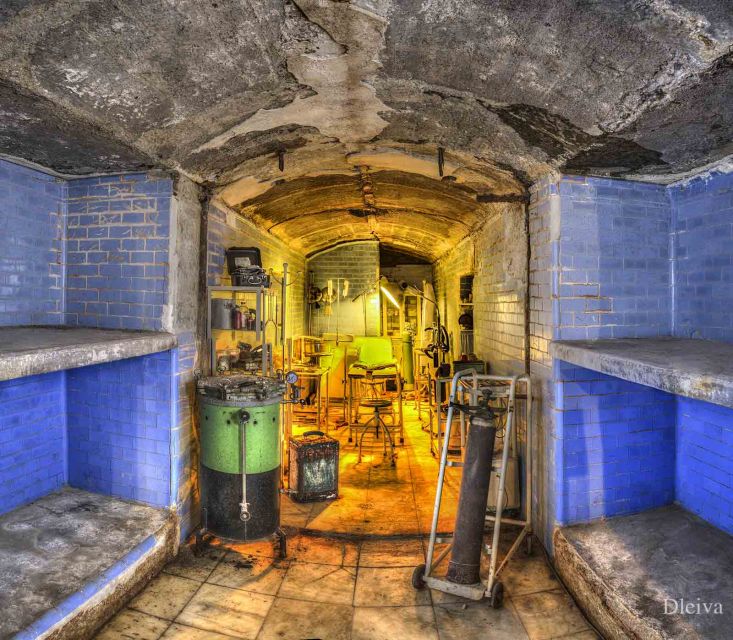
- A hospital inside the tunnels: See the operating room and one of the private rooms used during the war.
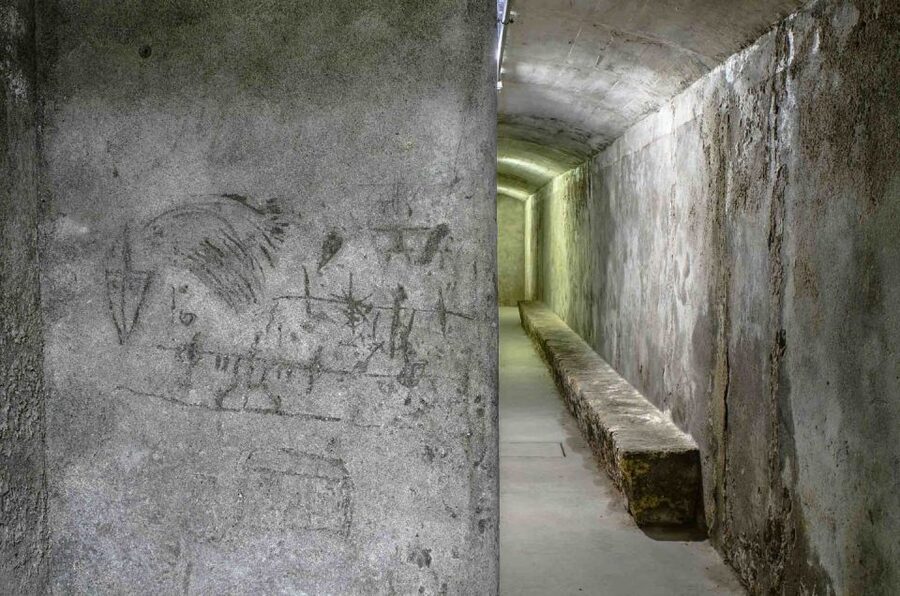
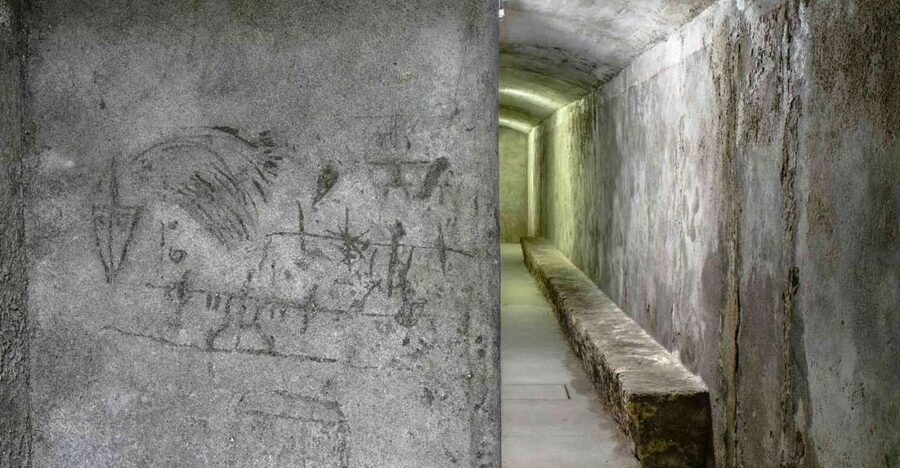
- Children’s artwork on the walls: Look closely in the private room for drawings left behind by children.
- Two underground levels: The route reaches about 9 meters below ground, with an optional-feeling experience down to 16 meters in the old pantry area.
- Spanish-speaking guide: The tour is in Spanish, but some guides can provide useful English explanations.
- Good value at $14: For 75 minutes and access to one of Almería’s major historic monuments, the price is modest.
Why Almería built these long underground shelters
The shelters were built during the Spanish Civil War as protection from air raids. The full network extended for about 4.5 kilometers, with space for roughly 40,000 people. This was not a small basement refuge. It was a planned underground system intended to serve a large part of the city.
That scale is what gives the visit its weight. You are not simply looking at a wartime display behind glass. You are walking through the kind of space where families gathered during bombing attacks, waited in darkness, and tried to keep daily life going below street level.
The surviving section covers nearly one kilometer. That is long enough to show how the galleries were laid out, but short enough to fit into a 75-minute visit without taking over your day in Almería. I would plan it as a focused history stop, then leave time afterward to explore the city above ground.
The setting also helps you understand the practical problem of an air raid. The galleries have no natural light, and the underground environment is enclosed. You should expect a genuine shelter atmosphere rather than a bright, polished museum visit.
Other trips people book in Spain:
- Barcelona: Sagrada Familia Entry Ticket with Audio Guide
★ 4.6 · 105,312 reviews - Barcelona: Park Güell Admission Ticket
★ 4.4 · 76,534 reviews - Seville: Royal Alcázar Entry Ticket
★ 4.6 · 28,378 reviews
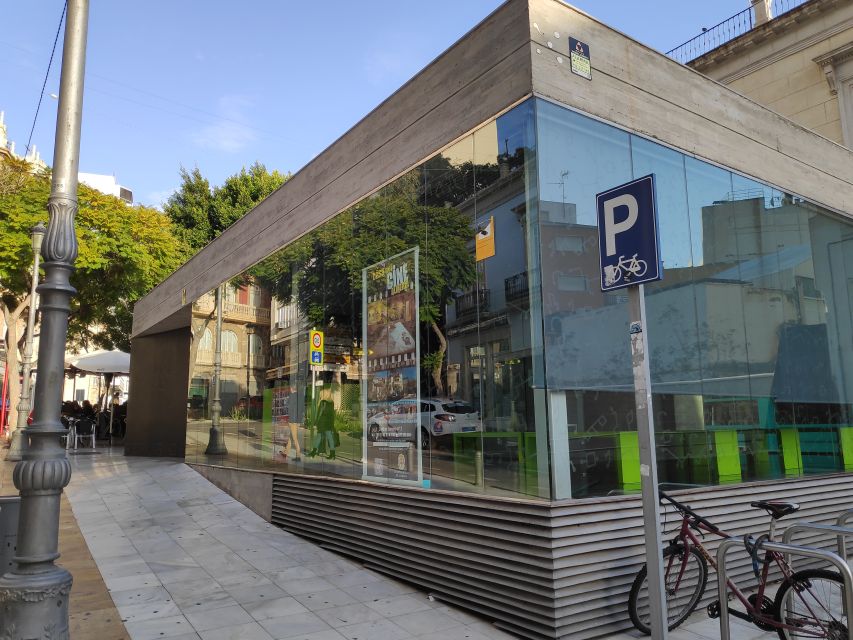
Entering beside Manuel Pérez García Square
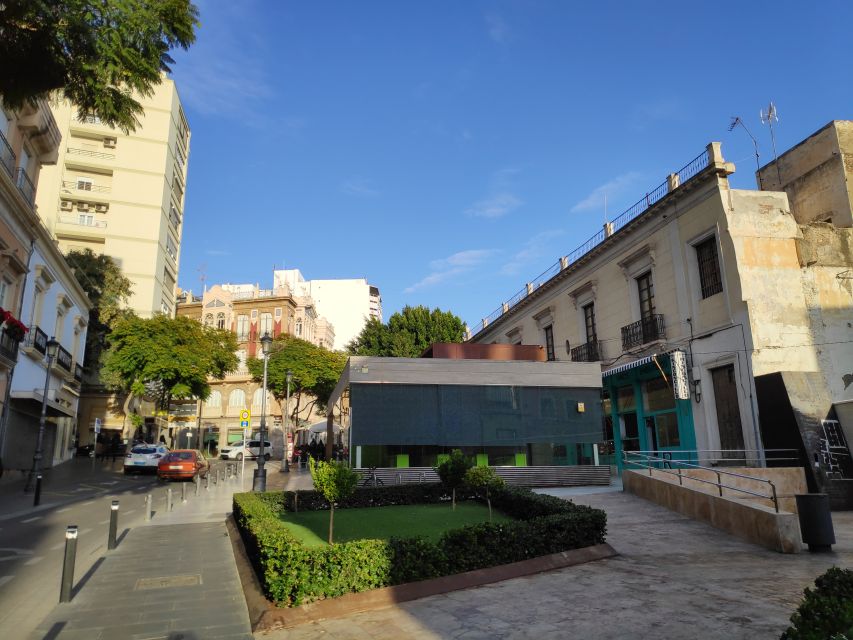
The meeting point is at the entrance to the monument beside Manuel Pérez García Square. You should arrive 10 minutes before the scheduled start, since the visit begins at the entrance and there is no transport included.
That simple meeting arrangement is useful if you are already sightseeing in central Almería. You do not need to arrange a separate transfer, and the tour ends back at the same point. Just make sure you have the entrance location clear before setting off, especially if you are working around a tight schedule.
The experience includes admission, a local guide, and insurance. Food, drinks, and transport are not included, so you should handle those before or after the visit rather than expecting a stop during the tour.
Walking the first nine meters underground
Once inside, you descend below the city and begin along the galleries. The route reaches about 9 meters underground, giving you a clear sense of how far removed the shelter was from the streets above.
I like this part because the descent is not just a dramatic opening. It explains why the refuge could offer protection. As you move farther below ground, the modern city becomes less present, and the shelter’s original purpose becomes easier to picture.
The guide adds the human side through anecdotes about the hidden history of the galleries. Since the tour is in Spanish, your ability to follow those stories will depend on your language skills. The information boards in the tunnels include English, which helps, and some guides have offered additional English explanations when needed.
That English help is not presented as a guaranteed separate tour, so I would not book this expecting a full English-language experience. If your Spanish is limited, ask the guide politely at the start. One guide has been described as speaking very good English, and another made an effort to explain key points in English to an English-speaking participant.
The hospital, operating room, and private room
The hospital section gives the shelters a more personal scale. Instead of thinking only about crowds moving through tunnels, you see how the underground complex also dealt with illness and injury.
You will see a small hospital with an operating room. It is a compact space, but that is part of its impact. The room shows that the shelters were meant to support people beyond the first moments of an air raid. They were places where the city tried to maintain basic care under difficult conditions.
The private room offers a different kind of detail. Look at the walls, where children left artwork behind. Those drawings are a small and unexpectedly intimate trace of the people who spent time below ground. They help you picture families waiting in the refuge, not just an abstract wartime population.
This is one of the strongest parts of the visit for me. Military history can feel distant when it is reduced to dates and events. A child’s drawing on a shelter wall makes the experience immediate without needing a long explanation.
Same base, a different kind of day out:
- Barcelona: Casa Batlló Entry with Self-Audioguide Tour
★ 4.7 · 25,359 reviews - Seville: Cathedral and La Giralda Entry Ticket
★ 4.5 · 24,592 reviews - Madrid: Tour Bernabéu Entry Ticket
★ 4.5 · 21,573 reviews - Barcelona: 24 or 48-Hour Hop-On Hop-Off Bus Tour
★ 4.4 · 20,872 reviews
The deeper section and old pantry
The route can reach as far as about 16 meters underground, where you discover an old pantry. The change in depth adds another layer to the visit, since you see that the shelter system was more than a single corridor.
The pantry is an especially useful stop because it points to the practical side of survival. People needed supplies, not just a place to hide. The visit does not turn this into a reconstructed daily-life exhibit, but the pantry helps you think about how the refuge functioned as part of a wider system.
You should take the depth seriously if you dislike enclosed spaces. The tunnels are underground, have no natural light, and include confined areas. The experience is not suitable for people with claustrophobia, wheelchair users, or people with mobility impairments.
Comfortable shoes are important. This is a walking tour through underground galleries, and practical footwear will make the route easier. Large bags and luggage are not allowed, and pets cannot join the visit.
What the Spanish-language guiding adds
The guide is not just there to lead you through the corridors. The stories and anecdotes give meaning to spaces that could otherwise look like a series of bare passageways.
The tour language is Spanish. That matters when the guide is explaining the events of the Spanish Civil War and the role of the shelters, since the spoken commentary carries much of the context. English information boards provide support, but they will not replace every part of the live explanation.
I would still consider the tour if you do not speak Spanish, especially if you are interested in the physical site. The English signs help, and there is a real chance that the guide can offer some English assistance. But you should book with realistic expectations rather than assuming the visit will be bilingual.
For Spanish speakers, the language format is a clear advantage. You receive the stories directly from a local guide, and the 75-minute length gives enough time to cover the galleries, hospital, deeper sections, and wartime background without turning the visit into a long lecture.
Is $14 a fair price?
At $14 per person, this is good value if you want a serious historical stop in Almería. The fee covers entry, a live local guide, and insurance. You get 75 minutes inside one of the city’s most unusual monuments, including areas that would be difficult to understand without context.
The value is strongest for people who care about the Spanish Civil War, local history, architecture, or unusual city sights. The shelters are not simply a place to walk through. The full network once extended for miles, and the visit gives you access to a substantial surviving section.
The price is less compelling if you want a general sightseeing activity with wide appeal. This is a focused visit. It is dark, underground, and history-based. There is no food, transport, entertainment program, or panoramic view to balance the subject.
You can also keep your plans flexible by reserving now and paying later. Cancellation is free up to 24 hours in advance for a full refund. Those terms are useful if your Almería schedule may change, but the main reason to book is the quality and rarity of the site, not the booking flexibility.
How long the 75-minute visit feels
The official duration is 75 minutes. That is enough time for a substantial look at the galleries without requiring half a day.
I would allow extra time around the tour for finding the entrance and arriving 10 minutes early. The visit itself ends at the original meeting point, so you can continue exploring Almería immediately afterward.
The compact format also makes this easy to fit between other activities. You do not need to plan a full-day outing, and there is no transport time to a distant attraction. Still, do not schedule it so tightly that you have to rush across the city. The meeting point and starting time matter.
Because the route is underground and the light is controlled, you may find that the 75 minutes feel more concentrated than a normal walking tour. The lack of natural light keeps your attention on the guide, the walls, and the shape of the refuge.
Who should book this experience?
I would recommend it to you if you enjoy places where history is preserved in the actual setting where events took place. The shelters offer more than a standard museum display. You walk through the galleries, enter the hospital, see the operating room, and notice the children’s artwork in the private room.
It is especially suited to:
- People interested in the Spanish Civil War
- Visitors who want a major historical monument in Almería
- Spanish speakers who can follow a live guide
- English speakers comfortable using information boards and asking for added help
- Anyone who enjoys unusual underground architecture
- Visitors looking for a short activity priced below many full sightseeing tours
I would think twice if you use a wheelchair, have a mobility impairment, or dislike enclosed spaces. The lack of natural light and underground setting are central to the experience, not minor details you can avoid.
Families may find the children’s artwork meaningful, but the subject is wartime shelter and bombing. The tour is best for families whose children can manage a serious historical setting and a 75-minute underground walk.
Practical tips for a smoother visit
Wear comfortable shoes and leave luggage or large bags behind. Pets are not allowed, and the underground galleries do not have natural light.
Arrive 10 minutes early at the monument entrance beside Manuel Pérez García Square. Since transport is not included, you are responsible for getting to the meeting point.
If you need English, ask at the beginning of the tour. The official language is Spanish, but some guides have been able to speak very good English or provide selected explanations in English. The tunnel information boards also include English.
Keep the visit focused. This is not the place for a rushed photo stop. Pay attention to the hospital, operating room, private room, children’s artwork, and pantry, since each adds a different piece to the story.
Should you book the Almería shelters tour?
Book it if you want to understand Almería through a place built for fear, protection, and community life. The hospital rooms and children’s drawings give the visit a human edge, while the long galleries show the scale of the city’s wartime response.
The best reason to go is the combination of access and price: $14 buys a guided 75-minute visit through nearly one kilometer of a major underground monument. The main cautions are the Spanish-only format, enclosed setting, lack of natural light, and walking requirements.
If those limits work for you, this is one of Almería’s most worthwhile history experiences. If you need a fully English-language tour or cannot manage underground passages, choose a different sight instead.
FAQ
Where does the tour start?
It starts at the entrance to the monument beside Manuel Pérez García Square.
Where does the activity end?
The tour ends back at the original meeting point.
How long does the visit last?
The visit lasts 75 minutes.
What language is the tour in?
The live tour is in Spanish. English information boards are available, and some guides may be able to provide additional explanations in English.
How far underground does the route go?
The galleries reach about 9 meters underground, with a deeper section extending to about 16 meters.
How many people could the shelters protect?
The shelter system was built to protect around 40,000 people.
How long was the original underground network?
The full network covered about 4.5 kilometers. This visit includes nearly one kilometer of galleries.
Is the tour suitable for wheelchair users?
No. The experience is not suitable for wheelchair users or people with mobility impairments.
Are pets and large bags allowed?
No. Pets and luggage or large bags are not allowed.
What should I bring?
Bring comfortable shoes and arrive 10 minutes before the scheduled start.
Just added in Spain
- Bizkaia Bridge, Gaztelugatxe, Bermeo and Gernika from Bilbao★ 4.5 · 299 reviews
- Benalmadena: City Sightseeing Hop-On Hop-Off Bus Tour★ 3.5 · 379 reviews
- Welcome to Barcelona: Private Tour with a Local★ 4.6 · 200 reviews
- Barcelona: White Rabbit Catalonia’s Top Immersive Experience★ 4.7 · 359 reviews
- Bean to Bar Chocolate Workshop in Barcelona★ 5.0 · 172 reviews
- Barcelona: Walking tour with Montjuic Castle & Cable Car★ 4.7 · 832 reviews
- Barcelona: Welcome to Barcelona Segway Tour★ 4.9 · 153 reviews
- Barcelona: Helicopter Flight with Optional Yacht Cruise★ 4.7 · 224 reviews