
Reviewed · WALKING TOURS
Walking Tour in Bilbao
Bilbao’s story makes most sense on foot. This two-hour walk takes you from the old Seven Streets and La Ribera Market through the nineteenth-century Ensanche to the Guggenheim area, showing how a traditional Basque city changed into a modern cultural center.
I like the small groups of up to 10 and the way guides such as Beatriz, Miguel, José, and Adur explain local language, food, architecture, and history in a personal way. I also like that the walk gives you useful restaurant and bar tips for the rest of your stay. The main drawback is time: two hours gives you a strong introduction, but not a full visit to the Guggenheim or Bilbao’s museums.
Key points at a glance
- La Ribera Market and the Seven Streets: Begin in the old city, where Bilbao’s food traditions and medieval street plan come into focus.
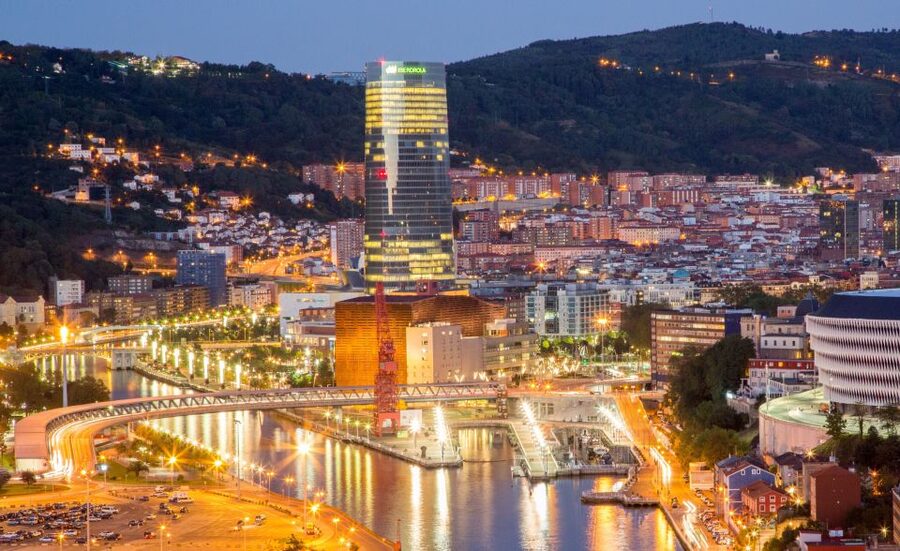
- A clear old-to-new route: Move from Casco Viejo to the Ensanche and then toward the Zubizuri Bridge and Guggenheim area.
- Guides with local range: Beatriz, Miguel, José, Adur, and other guides bring in Basque language, family stories, politics, food, and city life.
- A genuinely small group: With no more than 10 participants, you can ask questions without shouting across a crowd.
- Useful first-day advice: Guides can suggest affordable local food, pintxos bars, tabernas, and places to visit later.
- Good value for a city introduction: At $41, the tour is most useful when you want context before exploring Bilbao on your own.
Bilbao in two hours, from medieval streets to modern icons
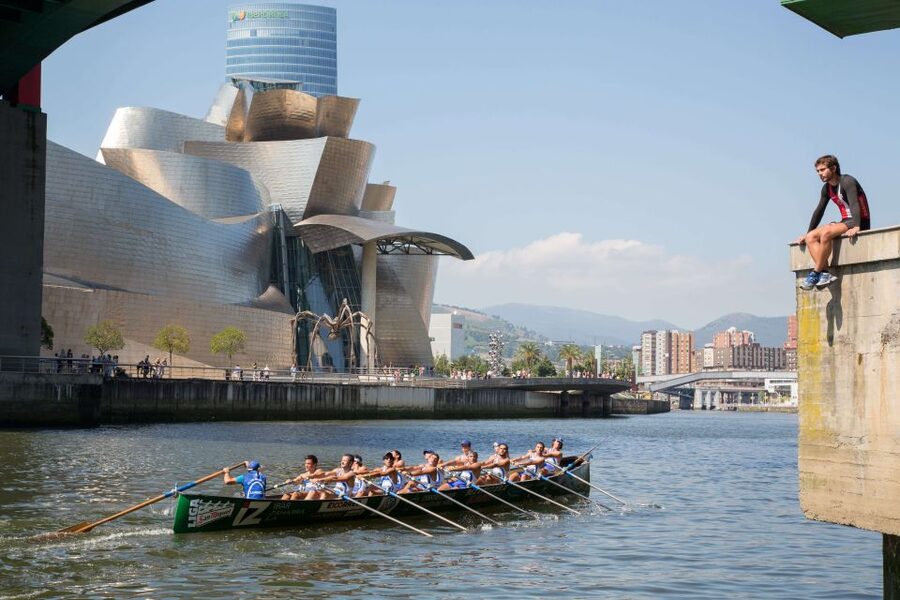
I see this tour as a city orientation with substance. It is not simply a checklist of buildings. The route connects three versions of Bilbao: the old trading city in the Casco Viejo, the industrial and financial city of the Ensanche, and the modern city linked with the Guggenheim Museum.
That structure matters. Bilbao can seem like several different cities placed side by side. The old town has narrow streets and historic churches. The Ensanche has broader avenues and bourgeois architecture. Near the river, bold bridges and museums point to the city’s modern renewal. A guide helps you understand how those pieces fit together.
The tour starts outside the main entrance of the Arriaga Theater. That is a practical meeting point in central Bilbao, close to the Old Town and the river. Arrive ready to walk, since the experience is entirely on foot and rain clothing is not provided.
A few more things to do in Bilbao worth a look
- Bilbao Walking Small Group Tour
★ 5.0 · 203 reviews - Bilbao old town walking tour
★ 4.6 · 151 reviews - Bilbao: San Juan de Gaztelugatxe and Walk along Basque Coast
★ 4.9 · 114 reviews
Casco Viejo and the Seven Streets
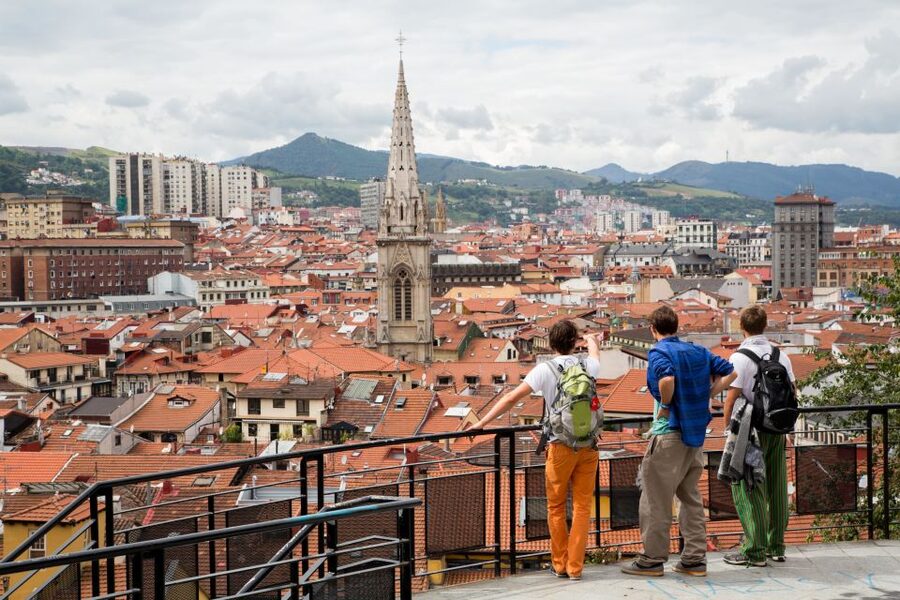
The first section takes you into Casco Viejo, Bilbao’s Old Town. Its historic core is built around the Seven Streets, a compact group of streets that form the heart of the original city.
This is the part of the walk where a guide earns the price. You can wander these lanes alone, but it is harder to understand why they are arranged as they are or how daily life developed around them. The guide can point out details you might pass without noticing and explain how Bilbao grew from its older center.
Santiago Cathedral is one of the key stops. It gives the route a strong historical anchor and helps place Bilbao within the wider Basque Country. The Church of San Antón adds another important landmark near the old city and the river.
Do not expect an extended interior visit at every church. The tour is designed as a walking introduction, so the emphasis is on the setting, the story, and the way the buildings relate to the city around them. If you want a detailed museum-style examination of religious art, you will need separate time.
The guides also bring in the Basque language and cultural identity. Beatriz, in particular, has been praised for speaking Basque fluently and for explaining the role of the language in local life. That is valuable because Basque is not simply a translation detail. It is a key part of understanding the region’s sense of place.
La Ribera Market and Bilbao’s food culture
La Ribera Market is one of the most appealing stops for anyone who plans to eat well in Bilbao. The market represents the practical side of the city: food, shopping, local habits, and the riverfront setting that supported Bilbao’s growth.
The stop is not presented as a cooking class or a tasting experience, so do not book this expecting food samples to be included. Its value is the context. You see where food culture fits into city life, then you can use the guide’s suggestions later when choosing restaurants, bars, or tabernas.
Food advice is one of the tour’s strongest practical features. José has given specific suggestions for food and drink, while Beatriz and Miguel have helped visitors find good, affordable places for local cuisine. That kind of advice can save you from choosing a restaurant only because it sits on the busiest square.
If you take the tour early in your stay, keep a note on your phone for recommendations. Guides can tailor suggestions to your interests and answer questions about where to eat after the walk. The activity does not include meals, so budget separately for anything you order at the market or later in the city.
The Ensanche and Bilbao’s nineteenth-century expansion
From the Old Town, the route continues into the Ensanche. This district reflects Bilbao’s nineteenth-century transformation, when industrial and financial growth pushed the city beyond its older center.
The change in architecture is part of the lesson. Casco Viejo feels enclosed and historic. The Ensanche opens into a more planned, cosmopolitan district, with grander buildings and a different urban rhythm. A guide can explain why the city expanded and how the new district reflected the ambitions of the period.
This section may appeal most to you if you enjoy architecture and city planning. It is less about one famous monument and more about reading the streets as evidence of economic change. The guide’s explanation helps you see Bilbao as a working city shaped by trade and industry, not only as a museum destination.
The tour also gives room for local stories. José has explained the importance of the river and shared details about figures and customs such as the sirgueras and txikiteros. These details bring the city down to human scale. Instead of hearing only dates and building names, you get a sense of how people worked, drank, gathered, and moved through Bilbao.
Same base, a different kind of day out:
- Bilbao: 1- or 2-Hour Sightseeing Boat Tour
★ 4.2 · 1,723 reviews - Bilbao: San Mamés Museum and Stadium Tour
★ 4.8 · 1,464 reviews - Bilbao: Gaztelugatxe, Bermeo, Mundaka, Gernika, & Wine Tour
★ 4.5 · 1,407 reviews - From Bilbao: Gaztelugatxe, Gernika, and Mundaka Group Tour
★ 4.8 · 1,112 reviews
The river, Zubizuri Bridge, and modern Bilbao
The final part points toward contemporary Bilbao, including the Zubizuri Bridge and the Guggenheim Museum area. These landmarks represent the city’s modern cultural direction and its change in image.
The Zubizuri is a memorable crossing and a good place to consider the relationship between Bilbao’s river and its newer architecture. The walk uses the bridge and riverfront to show how public spaces connect the older districts with the modern city.
You should be clear about what is included. This is a guided walking tour, not a ticketed Guggenheim visit. The museum is part of the route and the city story, but the tour does not list museum admission. If you want to see the collections, schedule a separate visit and allow more time.
That limitation is not a serious flaw, as long as you understand the format. In two hours, the guide can give you the setting and explain why the Guggenheim matters to Bilbao’s modern identity. You then decide how much time to spend inside.
The modern section also makes a useful contrast with the Old Town. You see that Bilbao’s renewal did not erase the historic center. Instead, the city now presents its medieval streets, industrial past, and contemporary architecture as parts of one story.
The guides make the difference
The strongest part of this experience is the guide. The provider uses several local guides, so your exact style will vary. Names connected with this tour include Beatriz or Beatrice, Miguel, José, Adur, and Victoria.
Beatriz has been especially effective for visitors interested in Basque culture and language. She is described as warm, lively, and able to explain the region with clear English. Miguel often begins by asking what the group wants to learn, then adjusts the walk around interests such as history, politics, architecture, food, or local language.
José brings a strong sense of pride in Bilbao and has helped people with practical plans after the tour, including restaurant choices and transport questions. Adur has handled group requests with flexibility and has been praised for explaining the Basque Country in an entertaining way. Victoria has also been noted for her personal approach and helpful directions around the city.
Those differences matter. You are not getting a recorded script delivered at every stop. The experience can change depending on the guide and the questions in your group. That is a benefit if you like conversation, but it also means the exact balance between architecture, history, food, and culture is not fixed.
A small group helps. With a maximum of 10 people, you have a better chance to ask about the Basque language, local customs, food, or places you want to visit later. It also makes it easier for the guide to adjust the pace and focus.
Pace, accessibility, and weather
The advertised duration is two hours, though one group received a longer walk when the guide adapted the experience to its interests. You should plan on two hours, with a little flexibility if the conversation continues.
The pace has been described as comfortable and suitable for seeing many highlights without feeling rushed. Still, this is an urban walking tour, so wear practical shoes and be prepared to spend the full time on city streets.
The activity is listed as wheelchair accessible. If you use a wheelchair or have specific mobility needs, it is sensible to confirm the route details with the local partner before booking, especially because the walk includes historic streets and several districts.
Bilbao’s weather can change, and rain clothing is not included. Bring your own waterproof layer if the forecast looks uncertain. A rainy day does not automatically ruin the tour, since the guide can still explain the city, but wet streets and poor visibility may make the walk less comfortable.
The minimum group size is two people. If that number is not reached, the activity may be canceled with an offer of another date or a full refund. You should receive notice 24 hours before the activity in that situation.
Is $41 a fair price?
At $41 per person, this is not the cheapest way to walk around Bilbao. You can see the outside of many landmarks without paying anything. The question is what the guide adds.
I think the price is fair if you want context, local advice, and a focused route in your first days. You are paying for a live guide, a small group, and a two-hour explanation that links the Old Town, Ensanche, river, bridge, and Guggenheim area.
The value is stronger for a first visit or a short stay. If you have only a day or two, a guided orientation can help you decide where to return. It can also prevent you from spending your limited time in Bilbao without understanding the city’s sharp change from old industrial center to modern cultural destination.
The value is weaker if you already know Bilbao well or plan to spend several hours inside the Guggenheim. In that case, use your money for museum admission or a separate specialist visit. This walk works best as an introduction, not as a complete substitute for independent sightseeing.
You can cancel up to 24 hours ahead for a full refund, and the reserve-now, pay-later option keeps your plans flexible. Hotel pickup and drop-off are not included, but the central meeting point makes those services unnecessary for most people staying in Bilbao.
Who should book this Bilbao walk?
I would choose this tour for a first-time visitor who wants the city to make sense quickly. It also suits solo visitors, couples, families with older children, and small groups who prefer asking questions rather than following a large crowd.
It is a good fit if you care about:
- Basque language and culture
- The link between Bilbao’s river and its growth
- Old Town architecture
- Local food and affordable places to eat
- A clear overview before visiting the Guggenheim
- Personal stories instead of a dry list of dates
I would be more cautious if you want long interior visits, a food tasting, or a specialist art tour. None of those is the main purpose here.
Should you book it?
Book this walking tour if you want a friendly, well-paced introduction to Bilbao with a local voice. The route gives you the city’s essential shape, from the Seven Streets and La Ribera Market to the Ensanche, Zubizuri Bridge, and Guggenheim area.
The best plan is to take it near the start of your stay, then use the guide’s restaurant, bar, and sightseeing suggestions afterward. At $41, it earns its keep through explanation and practical advice. Just remember that it is an overview, not a full museum visit, and pack rain protection.
FAQ
Where does the walking tour meet?
Meet your guide in front of the main entrance of the Arriaga Theater.
How long does the tour last?
The advertised duration is two hours.
What languages are available?
The tour is offered in English and Spanish.
How much does the tour cost?
The price is $41 per person.
How many people can join the group?
The group is limited to a maximum of 10 participants.
Is the tour suitable for solo visitors?
Solo visitors are welcome, subject to availability.
Is the walking tour wheelchair accessible?
Yes, the activity is listed as wheelchair accessible.
Does the tour include entry to the Guggenheim Museum?
The route includes the Guggenheim area, but museum admission is not listed as included.
Are hotel pickup and drop-off provided?
No. Hotel pickup and drop-off are not included.
What happens if fewer than two people book?
If the minimum group size of two people is not reached, the tour may be canceled. You would be offered an alternative date or a full refund, with contact expected 24 hours before the activity.
Can I cancel for a refund?
Yes. You can cancel up to 24 hours in advance for a full refund.
Just added in Bilbao
- Semi-Private Rioja Tour of 3 Premium Wineries from Bilbao★ 5.0 · 128 reviews
- PRIVATE San Sebastian and Basque Coast Tour from Bilbao★ 5.0 · 103 reviews
- Bilbao Highlights 3-hour E-Bike tour: Small Group or Private Tour★ 5.0 · 202 reviews
- Biarritz, Saint-Jean-de-Luz and San Sebastián from Bilbao★ 4.5 · 144 reviews
- Rioja Wine Tour: 2 Wineries From Bilbao★ 5.0 · 111 reviews
- Gaztelugatxe Access, Bermeo & Gernika guided tour from Bilbao★ 4.5 · 103 reviews
- Basque Best Bites – #1 Food & Wine tour of Bilbao★ 5.0 · 268 reviews
- Gaztelugatxe, Mundaka and Gernika Tour from Bilbao★ 5.0 · 706 reviews
Walking Tours, compared.
Barcelona Tapas and Wine Experience Small-Group Walking Tour
Read our review →
Tapas Walking Tour with Food, Wine, and History
Read our review →
Albaicín and Sacromonte Guided Sunset Walking Tour
Read our review →
Madrid Old Town & Royal Palace Walking Tour Skip the Line Ticket
Read our review →
Gothic Quarter Ghosts and Legends Walking Tour
Read our review →
Spanish Inquisition and Legends Evening Walking Tour
Read our review →Browse the lists this tour appears in