
Reviewed · DOLPHIN & WHALE WATCHING
Whale Watching Eco-Adventure from Costa Adeje
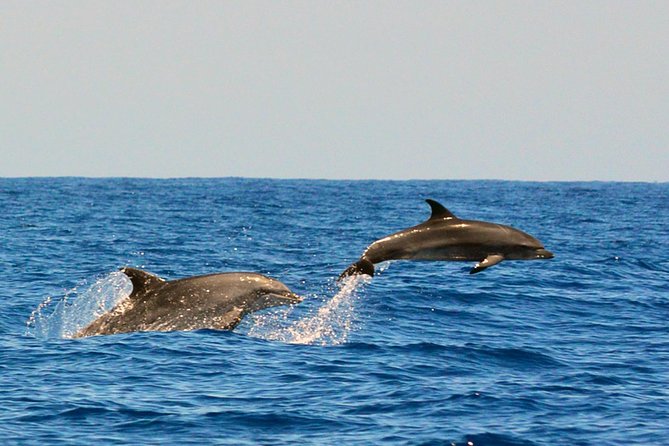
Pilot whales are the stars of this two-hour trip from Costa Adeje, but dolphins, sea turtles, flying fish, and even a Portuguese Man of War may appear along the way. You head into the Teno-Rasca Marine Protected Area on a fast eight-meter rigid inflatable boat, where the small group keeps the outing personal and gives you a good view from the boat.
I like two things right away. First, the boat carries no more than 10 people, a big improvement over the crowded, noisy feel of larger whale-watching boats. Second, guides such as John and Ion explain the animals, conservation, and island waters while using a hydrophone so you can listen to whales and dolphins below the surface. The main drawback is the boat itself: a rigid inflatable boat is practical and nimble, but this is an open-water ride with movement and spray, not a calm cruise.
Key details before you book
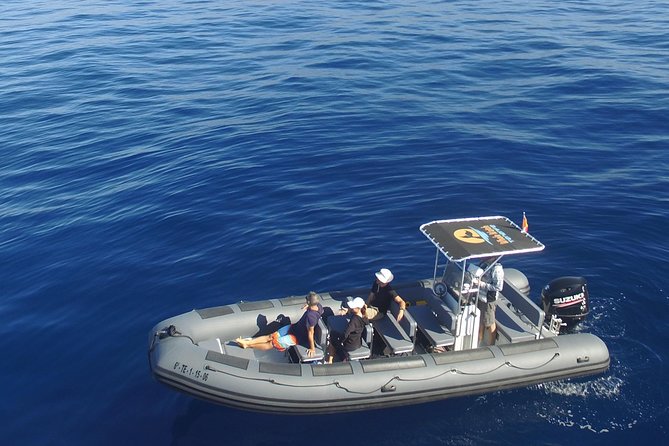
- Small boat, maximum 10 people: You get a more direct view of the animals and easier access to the guide.
- Pilot whales are a strong possibility: The waters off Costa Adeje are known for regular sightings, though no wildlife trip can promise animals.
- Hydrophone included: You can listen to whale and dolphin sounds as part of the experience.
- Biologist guides lead the trip: John and Ion are among the guides praised for their clear explanations and strong care for marine life.
- Free wildlife photos: Images of the cetaceans seen during the trip are sent by email after the outing.
- Two hours from Puerto Colón: The tour leaves and returns to Pantalán Number 3 at Costa Adeje’s marina.
Why the small boat changes the experience
This is not a sightseeing cruise with whale watching added as a side activity. The boat is an eight-meter rigid inflatable vessel designed for finding cetaceans, and the group size is capped at 10. That matters when a whale surfaces. You are less likely to be looking over several rows of heads, and the guide can speak to the whole group without shouting across a large deck.
The boat also gives the crew flexibility when animals are spread out. One account describes seeing whales within about 20 minutes, followed later by dolphins jumping and swimming alongside the boat. That kind of encounter is never guaranteed, but a smaller, faster craft can make it easier to move through the protected area and respond to sightings.
The tradeoff is comfort. You are sitting close to the water in an open boat, so expect a more active ride than you would get on a large catamaran. Anyone with back or neck problems, mobility problems, a recent surgery, or a pregnancy should not book this activity. The operator also excludes infants and children under three, as well as people weighing more than 130 kilograms.
More Dolphin and Whale Watching Trips in Tenerife
- Tenerife: Eco-Yacht Whale and Dolphin Watching and Swimming
★ 4.7 · 15,619 reviews - Los Cristianos Respectful No-Chase Whale and Dolphin Safari
★ 4.6 · 12,782 reviews - Costa Adeje: Whale & Dolphin Eco-Cruise with Snacks & Drinks
★ 4.6 · 5,096 reviews
Leaving Puerto Colón for Teno-Rasca
Your meeting point is Whale Watch Tenerife at Puerto Colón Marina, Pantalán Number 3, 38660 Costa Adeje. The activity ends at the same place, and the marina is near public transportation. If you are driving, one useful detail is that some departures take place early enough for parking to be easier than later in the day.
Once everyone is aboard, the guide gives safety information and introduces the plan for the outing. The guides speak English and Spanish. Their role is not simply to point at an animal and name it. John, Ion, and other biologist staff explain what you are seeing, how the animals behave, and why keeping a respectful distance matters.
The trip heads toward the Teno-Rasca Marine Protected Area, a significant stretch of sea off southwestern Tenerife. The protected status adds meaning to the outing. You are not being taken to a tank or an enclosed show. You are looking for free-ranging animals in their own habitat, with the boat’s approach shaped around reducing stress.
Bring a light layer and protect your phone or camera from spray. Food and non-alcoholic drinks are not included, but you may bring your own. The experience lasts about two hours, so there is no need to pack a full meal.
Searching for pilot whales and dolphins
The first part of the trip is a search across open water. Conditions can change, and the guide may need time to locate animals, so it is best to board with realistic expectations. A wildlife tour is not a performance with a fixed schedule. Some days bring pilot whales quickly. On other days, the search may take longer.
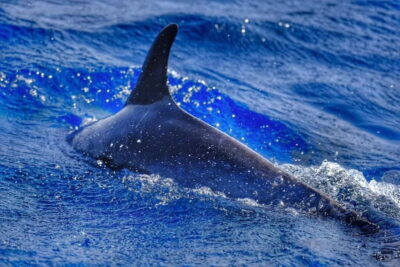
Pilot whales are the animal most often associated with this outing. Several accounts describe seeing large groups, sometimes multiple pods, and getting a clear view from the smaller boat. Pilot whales are actually large dolphins, which gives the guide a useful chance to explain the difference between everyday names and scientific classification.
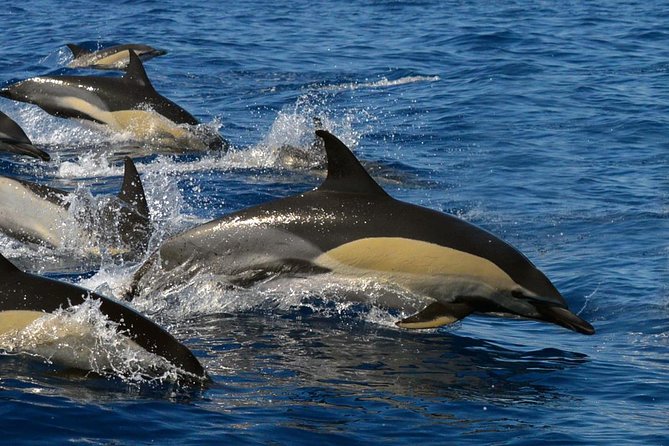
Dolphins can add a burst of energy to the trip. Atlantic spotted dolphins and bottlenose dolphins have been seen, sometimes in the same outing. Bottlenose dolphins may be harder to locate, so the crew stays in contact with other boats to share information about sightings. That cooperation can help the search, but it also means you should not expect every trip to follow the same route.
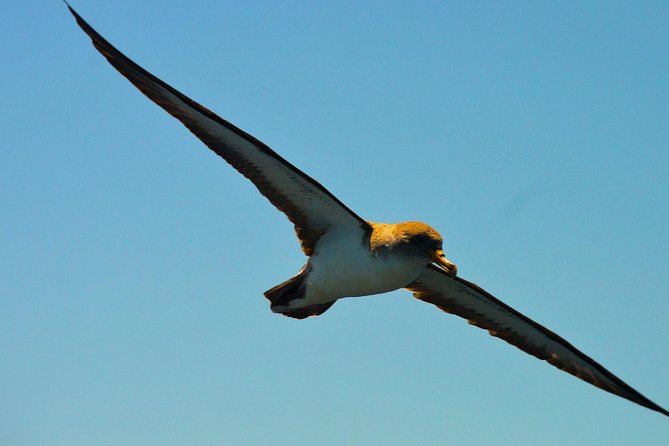
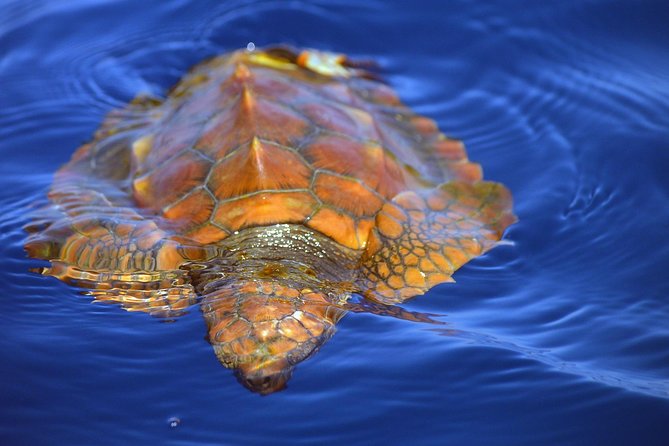
You may also see animals that are not the main target. Flying fish have appeared in surprising numbers, and sea turtles have been spotted during the return journey. One outing included a Portuguese Man of War. These sightings are bonuses, not promises, but they show why it pays to keep watching the water instead of focusing only on the horizon.
Listening beneath the surface with a hydrophone
The hydrophone is one of the best details here. Seeing a whale surface is memorable, but listening to sounds beneath the boat gives the encounter another layer. The guide can use the underwater microphone to help you hear whales and dolphins, then explain what those sounds mean in context.
This is especially useful for children and anyone who wants more than a quick photograph. You begin to understand that the animals are communicating and moving through a living marine environment. The guide’s commentary also covers wildlife and conservation, so the trip has an educational side without turning into a classroom lecture.
The quality of that explanation depends partly on the guide on your departure. John and Ion are both praised for their passion, clear safety briefings, and ability to explain marine life in an engaging way. If you enjoy asking questions, the small group makes it easier to have a real conversation instead of relying on a recorded narration.
Other wildlife boats from Tenerife:
- Los Gigantes: Dolphin & Whale Watching Cruise with Swim Stop
★ 4.7 · 4,539 reviews - Costa Adeje: Whale Watching Catamaran Tour with Drinks
★ 4.7 · 3,653 reviews - Tenerife: Whale & Dolphin Watching with Drinks and Snacks
★ 4.4 · 2,929 reviews - No chase Whale & Dolphin tour putting Marine Life first – we care
★ 4.5 · 2,168 reviews
Responsible viewing in a protected marine area
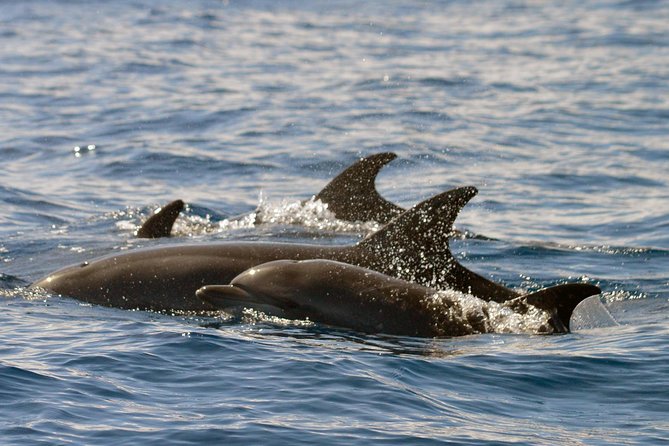
The strongest theme running through this experience is restraint. The boat is intended to watch animals without chasing them aggressively or forcing close approaches. Guides give the animals space and monitor their behavior, rather than treating proximity as the only measure of success.
That approach can mean you do not always get the closest possible photograph. I see that as a fair exchange. A whale-watching trip should leave you with the feeling that you observed something wild, not that the boat controlled the encounter.
The protected area also makes the guide’s explanation more valuable. You learn why the waters matter and why careful boat handling is important. The goal is not only to see pilot whales and dolphins, but to understand that their welfare comes first.
One difficult possibility is worth noting. Marine wildlife tours can occasionally encounter an injured or dead animal. A sea turtle was seen dead during one outing, which was upsetting for the people aboard. That is part of seeing nature as it is, rather than visiting a managed attraction. If you want a completely controlled experience, this may not suit you. If you value honest contact with the natural world, it is an uncomfortable but real part of the setting.
Free photos and what they add
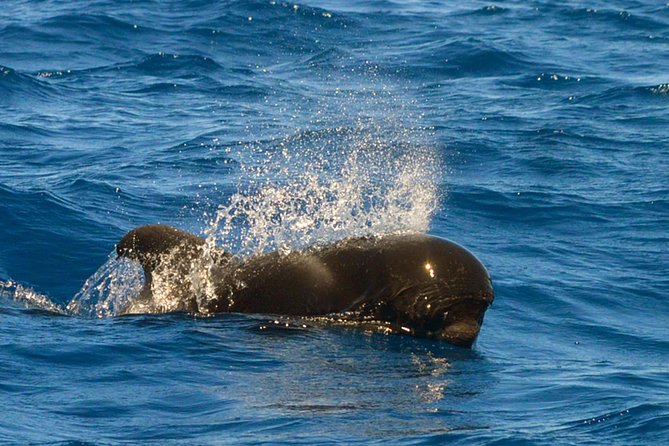
After the trip, photos of the cetaceans seen during your outing are sent by email at no extra charge. This is a useful touch because photographing a moving whale from a bouncing boat is difficult, especially when you are trying to watch rather than stare through a screen.
The images also help you remember details you may miss in the moment. You might be busy watching one pilot whale when another surfaces farther away. High-resolution photos have been provided, though the number and variety of images will depend on what the crew sees and captures that day.
Do not book this solely for the photos. Their value comes from the outing itself. Think of them as a practical souvenir and a record of the animals you actually encountered, rather than a guaranteed gallery of perfect close-ups.
Is $72.56 good value?
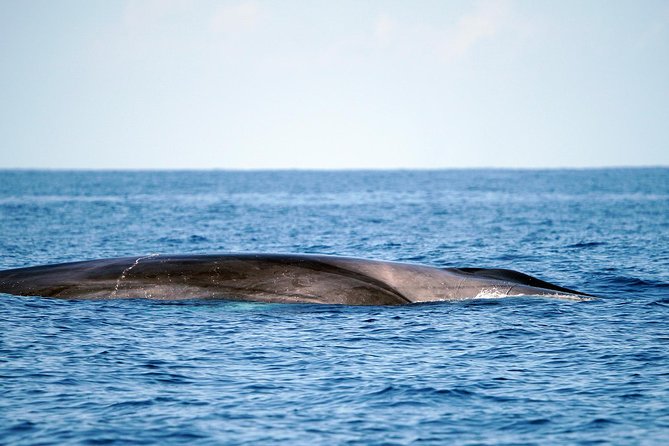
At $72.56 per person, the price is reasonable for a two-hour marine wildlife outing with a maximum of 10 people, live commentary, a hydrophone, and free wildlife photos. The small group is the main value point. You are paying for a more focused experience, not just a seat on a large boat.
The biologist-led commentary also matters. A cheaper boat trip may take you out to the same general waters, but the quality of the explanation, the care taken around animals, and the ability to hear them underwater can change the experience.
Still, value depends on your priorities. If you mainly want a comfortable ride, food, and a broad view of the coastline, a larger sightseeing cruise may suit you better. Food and drinks are not included here, and the rigid inflatable boat is built for wildlife watching rather than lounging.
For someone who specifically wants whales and dolphins, the price feels justified. The outing gives you two hours on the water, a small group, an experienced guide, and a more careful approach to wildlife. You also avoid the extra cost of buying photographs afterward.
Timing, weather, and cancellations
Confirmation is automatic when you book. The operator may need to change the date if weather is poor or if too few people sign up, and will call you to arrange an alternative. If bad weather cancels the trip, you can choose another date or receive a full refund.
You can cancel for a full refund up to 24 hours before the start time. Changes or cancellations inside 24 hours are not accepted and are not refunded. Keep the local time in mind when counting backward from your departure.
Weather matters for more than comfort. Wind and sea conditions affect the boat ride, the safety of the group, and the ability to watch animals properly. A postponement is frustrating, but it is the right call for an open-water trip.
Who will enjoy this whale-watching trip?
I would choose this outing if you care about marine life and prefer a small, purposeful boat trip over a large cruise. It suits couples, families with children aged three and older, and solo visitors who want a guide-led experience with room to ask questions.
It is also a good fit for people who want a more responsible wildlife encounter. The company’s approach is to give the animals space, and the biologist guides make conservation part of the conversation. You should be comfortable with the chance of spray, boat movement, and changing conditions.
I would not choose it if you have back or neck problems, limited mobility, a recent surgery, or a pregnancy. It is also not available to infants or children under three, and the operator lists a 130-kilogram weight limit. Most people who meet the restrictions can participate, but the boat’s active nature deserves honest consideration.
Practical tips for a better outing
Arrive at Puerto Colón with enough time to find Pantalán Number 3. The meeting point is straightforward, but marinas can be confusing if you arrive at the last minute.
Bring water and a non-alcoholic drink if you want one, since food and drinks are not included. Wear clothing suitable for an open boat and keep valuable electronics protected from spray.
Listen to the safety briefing and pay attention to the guide’s instructions around the animals. The best sightings may happen on either side of the boat, so stay alert and avoid spending the whole trip looking only through your phone.
Most important, keep your expectations flexible. Pilot whales and dolphins are regularly seen on this route, but they are wild animals. The guides can search well, share information with other boats, and read the conditions, but they cannot order a pod to appear.
Should you book it?
Book this whale-watching eco-adventure if you want a small, wildlife-focused trip with a strong educational side. The combination of no more than 10 people, biologist guides, a hydrophone, and free photos gives it more substance than a basic boat ride.
The best reason to choose it is the respectful approach. You may see pilot whales, Atlantic spotted dolphins, bottlenose dolphins, turtles, or flying fish, but the animals are never guaranteed. If you are comfortable with that uncertainty and with an open RIB boat, this is a thoughtful way to experience Tenerife’s marine life.
FAQ
Where does the whale-watching tour start?
The tour starts at Whale Watch Tenerife, Puerto Colón Marina, Pantalán Number 3, 38660 Costa Adeje, Santa Cruz de Tenerife, Spain.
Where does the activity finish?
The activity ends back at the meeting point at Puerto Colón Marina.
How long is the whale-watching experience?
The tour lasts approximately two hours.
How many people can join the boat?
The boat has a maximum capacity of 10 people.
What animals might I see?
The main sightings are pilot whales and dolphins. Depending on the day, you might also see Atlantic spotted dolphins, bottlenose dolphins, sea turtles, flying fish, or a Portuguese Man of War.
Is food included?
No. Food and drinks are not included, but you may bring food and non-alcoholic drinks.
Is the tour available in English?
Yes. The guides speak English and Spanish.
What happens if the tour is canceled because of weather?
If poor weather causes a cancellation, you can choose an alternative date or receive a full refund. A full refund is also available if you cancel at least 24 hours before the experience start time.
Just added in Tenerife
- Adeje: 3.5–Hour Professional Fishing Experience★ 4.3 · 107 reviews
- Abades: Guided Snorkeling Tour with Photos★ 4.8 · 344 reviews
- Tenerife: Sailboat Tour with Food and Snorkeling★ 4.8 · 621 reviews
- Quad Bike Safari★ 4.5 · 232 reviews
- Tenerife: Catamaran Cruise with Brunch and Unlimited Drinks★ 4.5 · 607 reviews
- Tenerife: Quad Adventure Teide Tour★ 4.5 · 305 reviews
- Tenerife: Teide National Park Guided Buggy Tour★ 4.6 · 299 reviews
- Tenerife : Jet Ski Tour with option for Quad Trip★ 4.5 · 447 reviews
Dolphin & Whale Watching, compared.
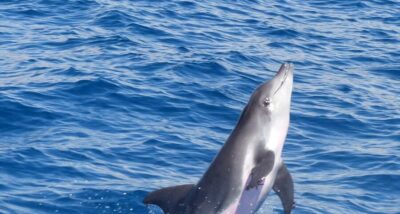
Los Cristianos Respectful No-Chase Whale and Dolphin Safari
Read our review →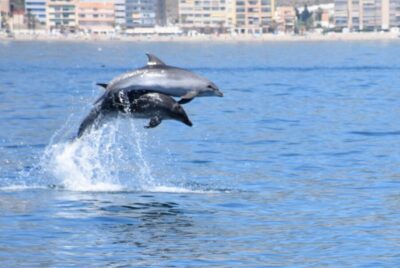
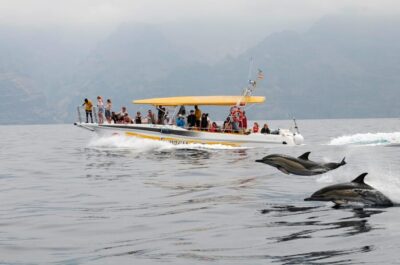
Dolphin & Whale Watching Cruise with Swim Stop
Read our review →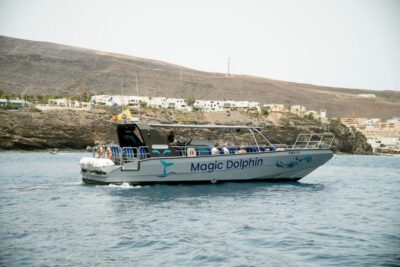
Dolphin & Whale Watching Cruise, Drinks & Swim
Read our review →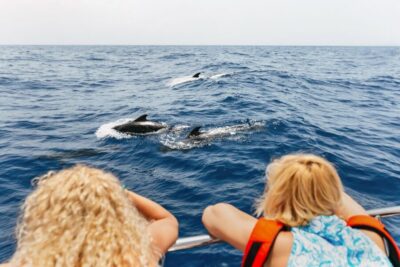
Whale & Dolphin Watching with Drinks and Snacks
Read our review →
Whale and Dolphin Watching Catamaran with Transfer and Buffet
Read our review →Browse the lists this tour appears in