
Reviewed · DRINKING TOURS
Bean to Bar Chocolate Workshop in Barcelona
The most interesting part of this Barcelona workshop is that you do not begin with a neat square of chocolate. You begin with a cocoa pod and raw beans, then roast, peel, grind, and taste your way toward the finished product. That makes the chocolate on your plate feel like the end of a long chain of work, not just a sweet snack.
I like the hands-on process, especially the chance to make a cocoa paste and a chocolate bar to take home. I also like the clear human side of the lesson: the workshop explains cocoa cultivation, the lives of producing communities, and why bean-to-bar chocolate can be a fairer, more careful approach.
The main consideration is that this is partly a class and tasting, not two hours of making chocolate entirely on your own. You will take part in key stages, but the guide leads much of the process. At $47 per person, it is good value for a small, focused activity, especially if you care as much about learning as eating.
Key points to know before booking
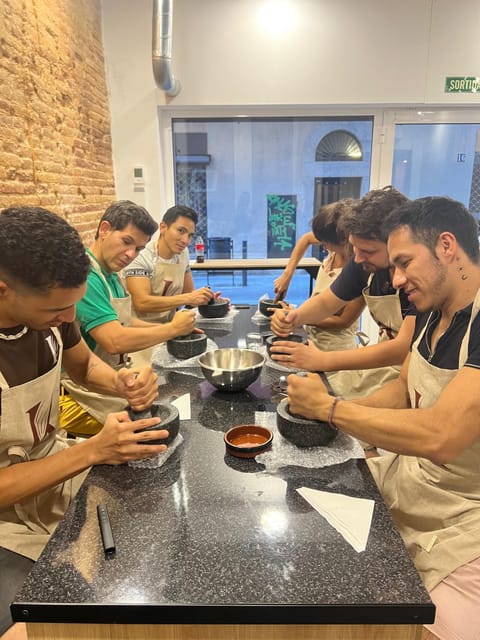
- You start with the cocoa bean: See a cocoa pod, learn how beans are grown, then roast, peel, and grind them yourself.
- You make one bar to take home: The finished bar is a personal souvenir, though Barcelona’s heat can make chocolate hard to transport.
- The tasting goes beyond candy: Try cocoa-based drinks, cocoa products, and chocolate made from beans linked to different climates.
- The guides make the difference: Oscar, Oskar, Renee, and Franklin are praised for their warmth, humor, clear explanations, and strong passion for chocolate.
- The group is capped at eight people: That small size gives you room to ask questions and handle the ingredients.
- It suits older children and teenagers: The workshop works well for families, but it is best for children who can follow a two-hour lesson and enjoy new flavors.
Starting with a cocoa pod at Kina Chocolates
You meet at Local Kina Chocolates, where the workshop begins with the raw material rather than the finished treat. The guide shows you a cocoa pod and explains what happens in the fields before cocoa reaches a chocolate maker.
That opening matters. Most people know chocolate as a bar, spread, drink, or dessert, but far fewer have seen the fruit that contains the beans. Here, you begin to connect the glossy product in a shop window with farming, fermentation, drying, transport, roasting, and grinding.
The setting is a small artisan chocolate shop, not a large factory or a theatrical attraction. I see that as a plus if you want a direct introduction to craft production. You are close to the tools and ingredients, and the group size means the presentation should not feel like a lecture delivered from across a room.
Guides named Oscar and Oskar appear often in the workshop’s recent sessions, with Renee and Franklin also leading groups. Their styles differ, but the important point is that the experience depends heavily on the person at the front. Expect a host who explains the subject, answers questions, and keeps the class moving with stories and humor.
The teaching is available in Spanish and English. Some content may be shown in its original language, so if you need every explanation in one language, confirm that when booking.
A few more things to do in Barcelona worth a look
- Barcelona: Nougat and Chocolate Museum Tour with Tasting
★ 4.5 · 232 reviews
Roasting, peeling, and grinding the beans
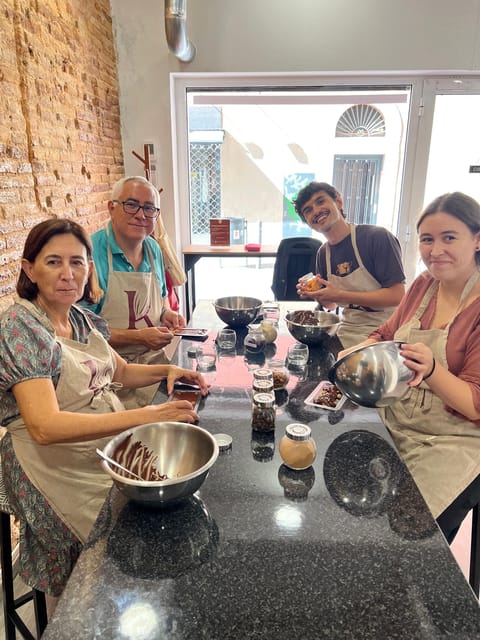
The practical work begins with the beans. You roast the cocoa, peel it, and grind it, following the main steps that turn a hard agricultural product into something usable for chocolate making.
Roasting is not just a button-pushing demonstration. It gives you a chance to notice how the smell and character of the cocoa change. Peeling shows how much preparation sits between the bean and the smooth chocolate most of us buy. Grinding is the point where the pieces begin to become cocoa paste, and it gives you a better feel for why chocolate making takes time and care.
This is the part I would value most if you like food workshops that explain why a product tastes the way it does. You are not simply decorating a premade bar. You handle real cocoa and see several stages for yourself.
Still, keep the format in perspective. One participant found the class more focused on learning and tasting than on making chocolate independently from start to finish. That is a fair description. The guide organizes the technical work, and you participate in selected stages rather than running a complete professional production line.
That balance makes the workshop suitable for beginners. You get the satisfaction of doing real work without needing prior equipment or chocolate-making skills. You also avoid spending the entire two hours on repetitive preparation.
Tasting cocoa in several forms
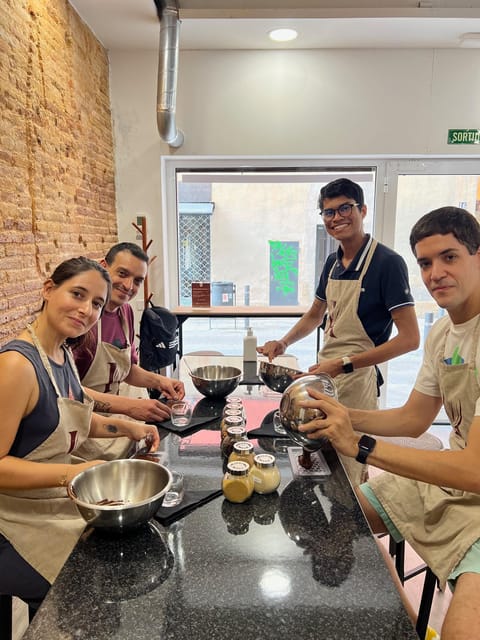
The tasting is not limited to finished chocolate. You prepare different cocoa-based drinks and sample cocoa products along the way. You may taste cocoa nibs, cocoa bean shells, and chocolate made with beans from different climates, depending on the session’s presentation.
This is where the lesson becomes useful for your palate. The workshop teaches you to notice differences in flavor and texture instead of treating all chocolate as one sugary category. Several participants found the drinks and samples a major part of the experience, and that makes sense: comparing forms of cocoa helps explain what roasting, grinding, sugar, and other steps contribute.
The class also discusses chocolate in ancient times and the many ways cocoa has been consumed. That historical section gives the tasting some context. You are not only asking if something is sweet or bitter. You are considering how cocoa became a drink, a food, and eventually the familiar bar sold around the world.
Do not expect an unlimited chocolate buffet. The value is in the guided comparison and the explanation behind each taste. If you want a large quantity of dessert, $47 could be better spent at a chocolate shop. If you want to understand what is in front of you, the tasting earns its place in the workshop.
Making your own chocolate bar
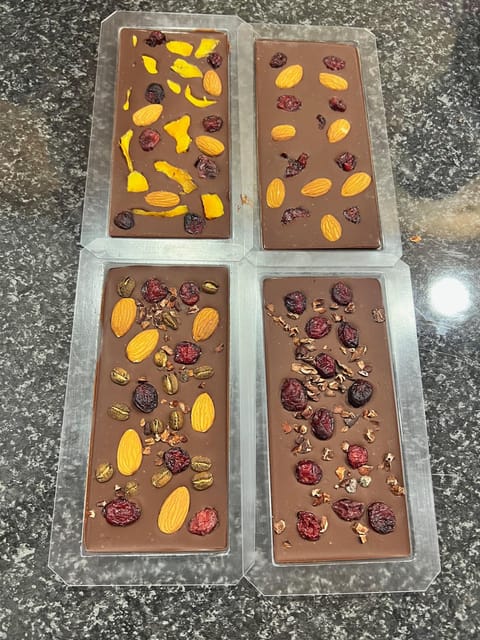
Near the end, you make a chocolate bar to take home. This is the most obvious souvenir, and it gives the workshop a satisfying finish.
The bar is more meaningful than a standard shop purchase because you have followed the material from cocoa bean to chocolate. It also gives you a physical reminder of the steps you learned, along with the personalized certificate and workshop summary provided after the session.
Plan for Barcelona’s weather when carrying it afterward. One participant found that the heat damaged the bar, so treat it as a perishable souvenir rather than something to leave in a warm bag all afternoon. If you are visiting during hot weather, make your plans with that in mind.
The workshop may also leave you tempted by the shop’s other products. Cocoa bean shell tea, caramel cocoa beans, and additional chocolate bars have been mentioned as appealing purchases. You are not required to buy anything, and the focus remains on the class, but browsing afterward makes sense if you want to support the local maker or take home something less fragile.
Same base, a different kind of day out:
- Barcelona: Sagrada Familia Entry Ticket with Audio Guide
★ 4.6 · 105,312 reviews - Barcelona: Park Güell Admission Ticket
★ 4.4 · 76,534 reviews - Barcelona: Casa Batlló Entry with Self-Audioguide Tour
★ 4.7 · 25,359 reviews - Barcelona: 24 or 48-Hour Hop-On Hop-Off Bus Tour
★ 4.4 · 20,872 reviews
Bean-to-bar chocolate and the people behind it
The strongest part of the workshop is its attempt to connect technique with the people who grow cocoa. The final discussion covers bean-to-bar production and how cocoa-producing communities live. It also addresses the work required in the fields and the importance of treating farmers fairly.
That discussion keeps the workshop from becoming a simple sugar-and-samples activity. Chocolate has an agricultural cost, and the bean-to-bar movement asks more questions about origin, traceability, ingredients, and the relationship between producer and maker.
You will not leave as a professional chocolate maker after two hours. You should, however, have a clearer idea of why small-batch chocolate can taste different and why a short ingredient list does not tell the whole story. Good beans, careful roasting, and skilled processing all matter.
I also appreciate that the workshop can make you more alert to what you buy afterward. It is easy to compare a mass-market bar and an artisan bar only by price. After this class, you have more reasons to consider cocoa origin, added sugar, flavor, and the work behind the product.
Why the guides receive so much praise
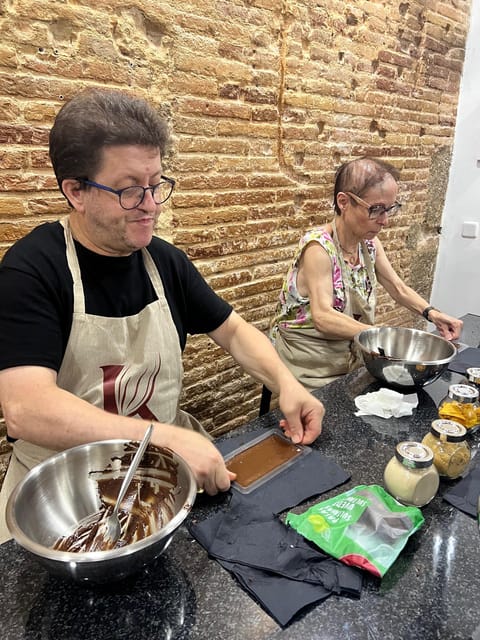
The class is structured, but the guide’s personality shapes the experience. Renee is repeatedly described as warm, enthusiastic, and clear. Oscar and Oskar are praised for their passion, humor, and ability to explain complicated steps in an approachable way. Franklin is also noted for his thoughtful answers and engaging presentation.
That matters in a small workshop. A dry explanation of fermentation or cocoa geography could make two hours feel long. A lively host can turn the same material into a story you remember.
The guides also appear to adjust to the group. Families with children around ten and older have found the class enjoyable, and teenagers who are not usually keen on educational activities have responded well to the mix of tasting and practical work. The workshop has enough movement and flavor changes to keep it from feeling like a school lesson.
You should still arrive ready to participate. This is not a passive tasting where you sit back while someone else does everything. You will handle cocoa, taste unfamiliar forms of it, and take part in the preparation. That is exactly why it works for curious adults, couples, families, and older children.
Is $47 a fair price for two hours?
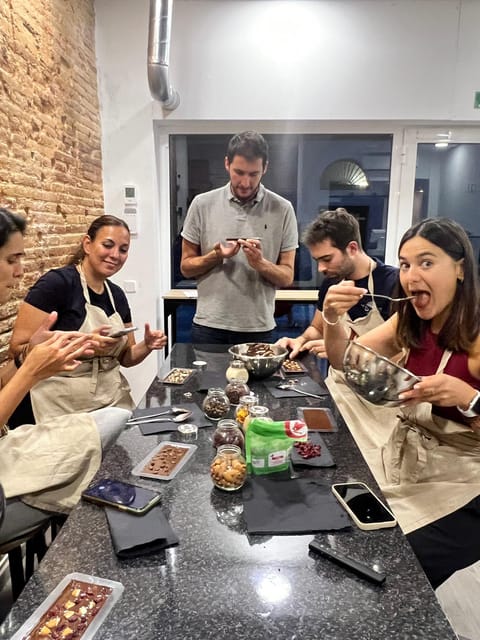
At $47 per person, the cost sits above a basic chocolate tasting but below a full cooking class with a meal. You are paying for a small group, a guide, ingredients, equipment, tastings, your handmade bar, an apron and hat, a certificate, and a written summary of the workshop.
The small group is important. With no more than eight participants, you have a better chance to see the demonstrations, ask questions, and get your hands on the cocoa. A larger class might offer a lower price, but it would likely feel less personal during the practical steps.
The value is strongest if you enjoy food culture, want a rainy-day indoor activity, or like taking home something you made yourself. It is also a useful choice for a family seeking an activity that mixes education with a treat.
The price is less compelling if your only goal is to eat premium chocolate. You can spend less on bars or pastries. This purchase makes sense because it includes the story, the work, the tasting, and the chance to understand the product.
Who should book this Barcelona workshop?
I would recommend it to chocolate lovers, curious food shoppers, couples, and families with children or teenagers who can stay engaged for two hours. It is especially good for people who like knowing where food comes from and how it is made.
It can also fill a practical gap in a Barcelona itinerary. The workshop is indoors, lasts two hours, and works well on a rainy day. It does not replace the city’s major sights, but it gives you a different connection to Catalonia through a local chocolate business rather than another large attraction.
You should think twice if you dislike bitter flavors, have little interest in food production, or expect to make a complete batch of chocolate without guidance. The tasting includes cocoa in several forms, and not every sample will resemble a sweet commercial bar.
Tell Kina Chocolates about allergies or intolerances before you attend so the workshop can be adapted. The activity is wheelchair accessible, offered in Spanish and English, and allows free cancellation up to 24 hours in advance. You can also reserve and pay later, which helps if your Barcelona plans are still shifting.
Final call: book it if you want to understand chocolate
I would book this workshop if you want more than a box of sweets. The best parts are the raw cocoa pod, the roasting and grinding, the guided tasting, and the discussion of farmers and bean-to-bar production. You leave with a handmade bar, but the bigger souvenir is a better sense of what that bar represents.
At $47, it is fair value for a two-hour small-group class with materials and tastings included. Book it for a hands-on food lesson with a strong guide, not for a free-form chocolate-making session or an all-you-can-eat dessert stop.
FAQ
Where does the Bean to Bar Chocolate Workshop take place?
The meeting point is Local Kina Chocolates in Catalonia, Spain, in Barcelona.
How long does the workshop last?
The workshop lasts two hours. Starting times depend on availability when you book.
What will I do during the workshop?
You will learn about cocoa cultivation and chocolate production, observe a cocoa pod, roast and peel cocoa beans, grind them, prepare cocoa paste, make cocoa-based drinks, taste chocolate, and create one chocolate bar to take home.
Is the workshop offered in English?
Yes. The workshop is offered in English and Spanish. Some content may be shown in its original language.
Is the activity suitable for children?
The workshop is designed for adults and teenagers. Families with children around ten years old and older have found the activity suitable.
What is included in the $47 price?
The price includes all materials and utensils, an apron and hat, a personalized completion certificate, a workshop summary, tastings, and one chocolate bar to take home.
More Workshops in Barcelona
- Barcelona Paella Cooking Class with Market Visit, Tapas & Sangria
★ 5.0 · 2,531 reviews - Barcelona: Cocktail Master Class by Mixologist with Tapas
★ 4.7 · 959 reviews - Barcelona: Paella Cooking Class with Market Visit and More
★ 4.9 · 711 reviews - Barcelona: Cocktail Making Class with Tapas
★ 4.7 · 310 reviews
More Drinking Tours in Barcelona
- Barcelona: Unique Sunset Sailing Tour with Tapas & Open Bar
★ 4.7 · 959 reviews - Barcelona: El Born and Gothic Quarter Wine & Tapas Bar Tour
★ 4.8 · 674 reviews - Barcelona: Sunset Sailing Tour with Open Bar & Snacks
★ 4.8 · 189 reviews - Barcelona: Estrella Damm Old Brewery Tour with Tasting
★ 4.5 · 179 reviews
Just added in Barcelona
- Welcome to Barcelona: Private Tour with a Local★ 4.6 · 200 reviews
- Barcelona: White Rabbit Catalonia’s Top Immersive Experience★ 4.7 · 359 reviews
- Barcelona: Walking tour with Montjuic Castle & Cable Car★ 4.7 · 832 reviews
- Barcelona: Welcome to Barcelona Segway Tour★ 4.9 · 153 reviews
- Barcelona: Helicopter Flight with Optional Yacht Cruise★ 4.7 · 224 reviews
- Barcelona: The Original Barcelona Boat Party★ 3.9 · 254 reviews
- Barcelona Wine Tasting: Catalan and Spanish Wines★ 4.8 · 625 reviews
- Barcelona: Banksy Museum, Permanent Exhibition Ticket★ 4.7 · 392 reviews
Drinking Tours, compared.
Guided Pub Crawl Madrid Experience and Club Entry
Read our review →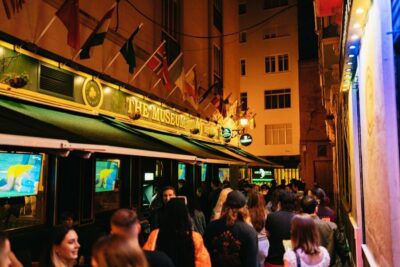

Unique Sunset Sailing Tour with Tapas & Open Bar
Read our review →
El Born and Gothic Quarter Wine & Tapas Bar Tour
Read our review →
Midday or Sunset Sailing with Snacks and Open Bar
Read our review →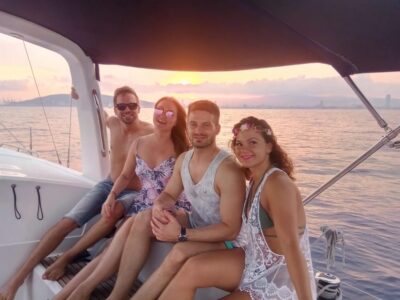
Browse the lists this tour appears in