
Reviewed · TAPAS & FOOD TOURS
Madrid Ultimate Spanish Cuisine Food Tour
Madrid’s best food lesson may be the one that puts a calamari sandwich in your hand outside a bar near Plaza Mayor. This three-hour walk moves from thick hot chocolate and churros to market olives, Spanish ham, regional cheese, vermouth, croquettes, and pastry, showing you how ordinary Madrileños eat.
I like the small group of no more than 12, which matters in tiny delis and crowded food stops. I also like the range: this is not just a tapas crawl, but a breakfast-to-lunch tour with food from bakeries, markets, bars, and old family businesses.
The main drawback is that the pace and menu are built around eating a lot. Vegetarians, pescatarians, people avoiding dairy, and non-drinkers can be accommodated with advance notice, but this tour is not suitable for vegans or people with celiac disease. The 5 pm departure also changes the opening churros stop.
Key points at a glance
- Start with chocolate and churros: Morning departures begin with Madrid’s famously thick hot chocolate, while the 5 pm version begins at a tapas bar with two local bites and a beer.
- A real market stop: At Mercado de Antón Martín, you taste olives, cured meats, produce, olive oil, and red vermouth while watching locals shop.
- A full meal in small bites: The 15-plus tastes cover breakfast, snacks, drinks, a main bite, and dessert.
- The group stays small: A maximum of 12 people makes it easier to fit into compact food shops and ask questions.
- Guides make the difference: David, Flo, Mitzi, José, Dani, Isabel, Arantxa, and others have been praised for clear food explanations, humor, and helpful Madrid tips.
- Wear comfortable shoes: The walking is moderate, but you will be on your feet between several central Madrid stops.
Why this food tour works as a first morning in Madrid
Food is a quick way to understand Madrid. You learn the city’s habits by seeing when people drink vermouth, how they buy bread, which foods are eaten standing up, and why a simple sandwich can become a local institution.
This tour does that well because it avoids putting every bite in a formal restaurant. You visit a café, bakery, market, deli, tapas bar, sandwich shop, and pastry store. Each stop has a different rhythm, and the food gives you a reason to pay attention to the streets between them.
I would schedule it early in your Madrid stay. You get a useful list of places to revisit, along with ideas for ordering ham, cheese, wine, olive oil, and tapas later in the trip. The tour ends at Plaza Mayor, so you are already near a central sightseeing area.
The price is about $95.53 per person. That is not cheap for a three-hour walk, but the value is stronger than the price of a standard guided stroll because the cost includes a large amount of food, drinks, and a guide. The tastings are described as enough for breakfast and lunch, and several people found the portions surprisingly generous.
You should not book this expecting a light sampler. By the middle of the route, you may already feel full. That is part of the appeal, but it also means the tour suits people who want food to be the main event.
More Tapas and Food Tours in Madrid
- Madrid: Small Group of Prado Museum Tour & Optional Tapas
★ 4.6 · 2,437 reviews - Madrid: Tapas & Wine Tasting Tour with Local Guide
★ 4.8 · 2,171 reviews - Madrid Tapas & Wine Tour with Rooftop Views and Local Guide
★ 5.0 · 2,047 reviews
Thick chocolate, churros, and the first Madrid lesson
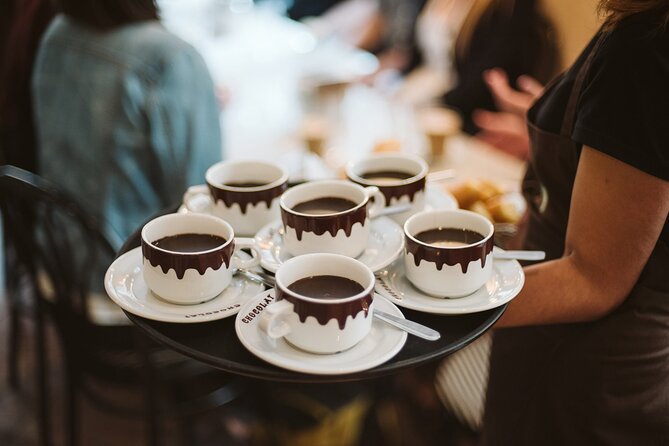
Morning tours begin at Chocolat, a popular neighborhood café. The opening serving is hot chocolate with churros, but this is not the thin drinking chocolate familiar in many places. Madrid-style chocolate is famously thick, almost pudding-like, and designed for dunking.
This first stop gives the guide a natural chance to explain the origins of chocolate and the Spanish approach to churros. It also works as a gentle start to a food-heavy morning. You sit down, eat something warm, and get a first look at the local café routine before walking farther into the center.
The stop lasts about 30 minutes. That is enough time to enjoy the dish without turning the tour into a long breakfast.
If you choose the 5 pm departure, you do not get this chocolate and churros stop. Instead, the evening route begins at a tapas bar, where you try two local tapas with a beer. That may suit you better if you prefer savory food or want a late-day introduction to Madrid, but the morning and evening versions are not identical experiences.
Moega’s chorizo-filled bread
The next stop is MOEGA Empanadas y pan gallego, a tiny bakery run by a young baker from northern Spain. Here, you taste homemade bread in the form of a roll filled with chorizo.
This is a small but useful part of the route. Bread is often treated as background food, yet it tells you a lot about daily life and regional cooking. The stop also brings in Galicia, showing that Madrid’s food culture is shaped by people and recipes from across Spain.
The shop is small, so the limited group size matters. A party of 12 is much easier to manage than a large coach group in a narrow storefront.
The chorizo roll adds another savory bite soon after the sweet opening. If you are planning to eat every sample, pace yourself here. This is not the last substantial item.
Shopping at Mercado de Antón Martín
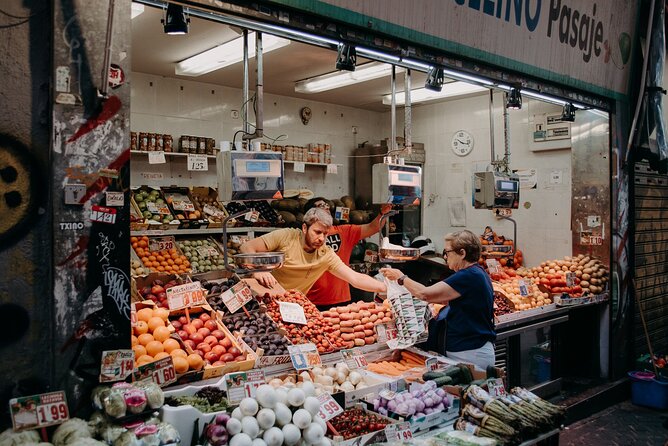
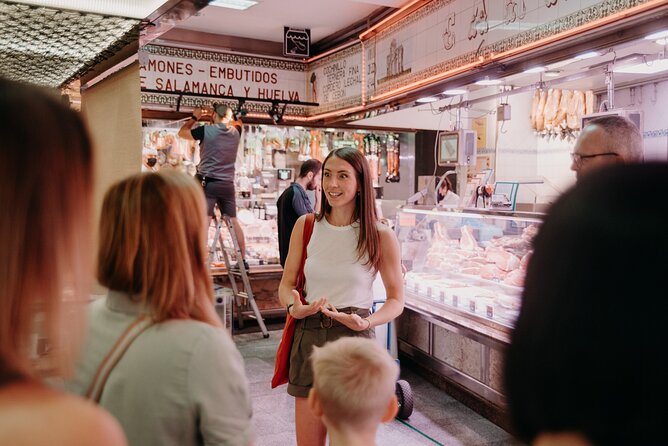
Mercado de Antón Martín is one of the most useful stops because you are not simply shown a market from the outside. You walk among the stalls and taste products that form the foundation of Spanish cooking.
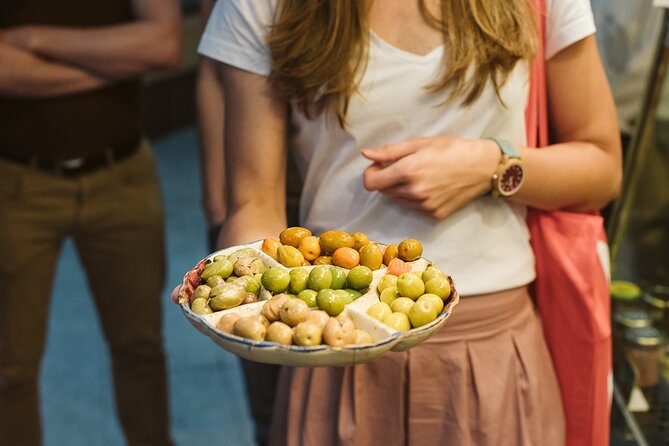
The samples include olives, cured meats, locally sourced produce, and extra virgin olive oil. You also try Spanish red vermouth, an aperitif often enjoyed before a meal. The guide explains how the oil is made and why extra virgin oil differs from regular and virgin varieties. That knowledge helps when you are choosing bottles to take home or deciding what to order in a restaurant.
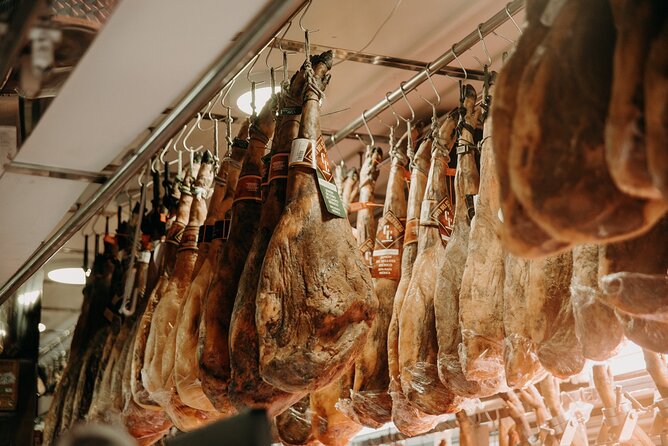
The ham tasting is another strong point. Spanish cured ham comes from different regions and production methods, and the guide helps you notice the differences rather than treating all jamón as the same product.
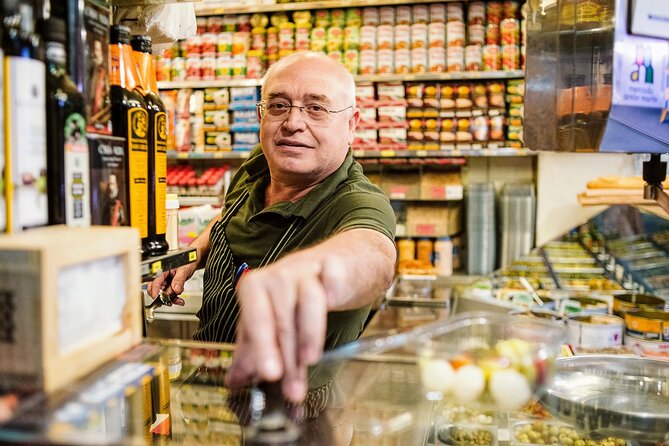
Antón Martín also gives the tour a sense of local routine. People come here to buy food, not simply to pose for photographs. You see produce, prepared foods, and neighborhood commerce in action. It is a better window into everyday Madrid than a polished food hall built mainly for sightseeing.
The market visit lasts about 40 minutes. That is long enough to sample several things but short enough to keep the morning moving. It is also one of the places where you may want to buy something. The tour does not require you to shop, but there is an opportunity to purchase food and drinks along the way.
Other eating and drinking walks in Madrid:
- Madrid by Night Small Group Tour: Stories, Sights and Tapas Bites
★ 5.0 · 1,956 reviews - Spanish Cooking Class Paella Tapas and Sangria in Madrid
★ 5.0 · 1,340 reviews - Madrid: Highlights Guided Vintage Bike Tour and Tapas Option
★ 4.9 · 962 reviews - Madrid: 3 hour Guided Highlights Bike Tour with Optional Tapas
★ 5.0 · 443 reviews
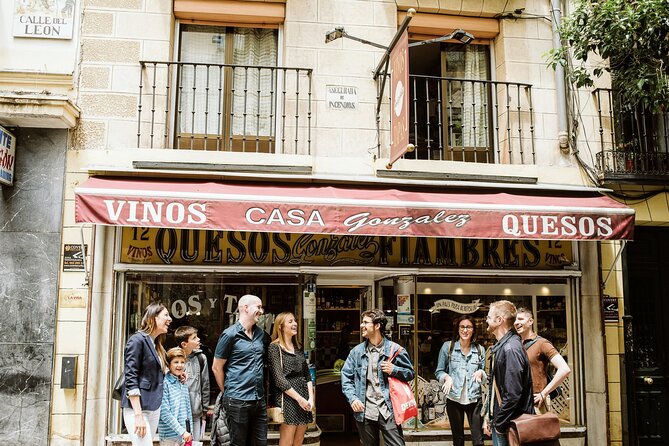
Cheese and wine at Casa González
Casa González looks like an unassuming deli, which is part of its charm. Inside, the group sits for a tasting of cheeses from different parts of Spain, paired with two wines.
The guide explains where the cheeses come from and how to order wine in Spain. That practical advice is especially useful if Spanish wine lists feel confusing. You learn that ordering wine is not simply a matter of choosing red or white, and the tasting gives you a chance to compare styles without committing to a full bottle.
Casa González also has a notable political past. The owner’s father held secret meetings there in opposition to Spain’s dictatorship in the 1930s. That story turns an ordinary deli into a place with a personal connection to Madrid’s past.
The seated break is welcome after the market. It also slows the pace and gives you time to ask questions. Guides such as David and Mitzi have been praised for balancing food facts with stories, while Flo is known for bringing more humor and energy to the conversation. The exact style depends on who leads your group, but the guide is central to the experience.
Wine is included at this stop, but alternatives are available for people who do not drink. Tell the company about dietary needs or drink preferences after booking, rather than waiting until the morning of the tour.
Tapas culture and croquettes
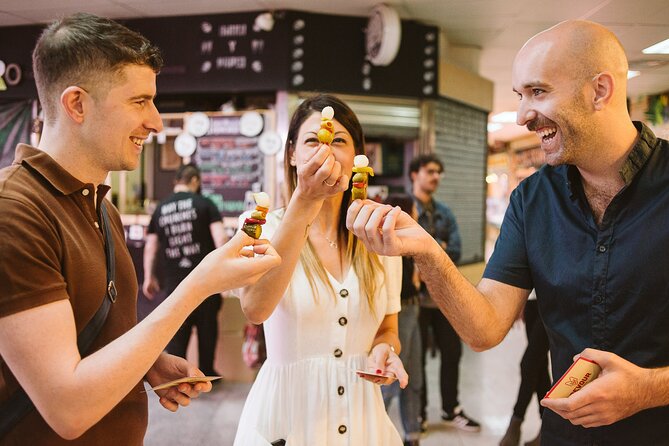
Tapas are not just small plates. They are part of how people socialize, move between bars, and build a meal one bite at a time. The route includes a local tapas stop with croquettes and an ice-cold beer.
Croquettes are a good choice for explaining Spanish comfort food. Crisp on the outside and soft inside, they can be filled in different ways and are often served as a shared bar snack. Your guide can connect this simple dish to the broader habit of ordering several plates instead of one large main course.
The stop is also a useful point for comparing the morning and evening tours. The evening departure begins with two tapas and a beer, while the morning route reaches tapas later. If you prefer the social bar side of Madrid, the evening option may appeal to you, though it leaves out the churros café.
A practical note: the food keeps coming. The route may include eight tasting stops and more than 15 individual tastes, depending on the day’s arrangements. The exact order can vary, and you may be offered more food than you expect from the word tasting.
The calamari sandwich near Plaza Mayor
The calamari sandwich is the tour’s most distinctly Madrid bite. Near Plaza Mayor, you stop at Bar La Campana for fried calamari served in a roll.
You eat it standing outside the bar, as locals do. That detail matters. The point is not only the sandwich itself, but the way it fits into the neighborhood. Around Plaza Mayor, calamari sandwiches are a familiar quick meal, and La Campana is known for its crisp, lightly battered rings.
The portion can be large for a tasting. One useful bit of advice is not to force yourself to finish it if you are already full. Some people find the sandwich a little salty, while others enjoy the generous serving and simple combination. Your guide may also explain why seafood in a central inland city became such a familiar Madrid food tradition.
This stop brings the tour into a highly visited part of the city, but the food keeps it from feeling like a standard square-and-photo stop. You are eating something tied to local habit rather than simply looking at the architecture.
A sweet finish and Plaza Mayor
The final food stop is a historic pastry shop, where you finish with a sweet dessert and coffee or tea. The dessert may be marzipan cake or another pastry depending on the day, and it provides a clear finish after the salty foods, cheese, wine, and sandwich.
By this stage, you will probably have had enough to count the tour as lunch. The coffee or tea is a welcome pause, especially if you took the morning route and started with chocolate.
The walk ends at Plaza Mayor, the city’s central square. Your guide may explain the square’s role in Madrid’s public life and major events. You are then well placed to continue sightseeing on foot.
Do not expect the tour to end at your hotel. There is no hotel pickup or drop-off. The start is near Plaza de Santa Ana, by the Monument to Calderón de la Barca, and the finish is at Plaza Mayor. Both are central and near public transportation, but you should arrive 15 minutes early at the starting point.
How the guides shape the experience
The food is the reason to book, but the guide decides how much you take away. David is praised for linking history, wine, cheese, and food origins, while Flo brings lively humor and strong energy. Mitzi is described as friendly and attentive, and José has been praised for helping a group feel included while handling dietary needs.
Dani is especially associated with passion for Madrid’s food and culture, along with practical tips such as ordering tap water. Isabel and Arantxa have also been praised for combining city history with food explanations. These names suggest a strong guide team, but you cannot select a particular guide unless the booking system specifically allows it.
I like that the tour is not limited to definitions of dishes. The best guides explain where foods come from, how traditions changed, and how to order them in real life. That turns the experience into a tool for the rest of your trip.
Dietary needs, walking, and group size
The tour can adapt for vegetarians, pescatarians, gluten-free diets that are not celiac, dairy-free diets, pregnant people, and those avoiding alcohol. You must email the Guest Experience team after booking so arrangements can be made.
There may not be a replacement food at every stop. The tour is not suitable for vegans or people with celiac disease, so do not book it hoping the guide can improvise around every dish.
You should be able to walk at a moderate pace without difficulty. The route includes regular stops, and one person described the walking as manageable, but comfortable shoes are still the sensible choice. You will be standing at some food stops and may eat outside near the calamari bar.
The group maximum is 12. That is a real advantage at a market and in small shops. It also gives you a better chance to ask about olive oil, jamón, cheese, wine, or the next place to eat.
Is $95.53 a fair price?
For Madrid, $95.53 is a significant food-tour price. The value depends on how much you want from the experience.
If you want only a few tapas and a drink, you can spend less on your own. If you want to understand the food, visit several small businesses, taste enough for two meals, and have a guide handle the route and explanations, the price is easier to justify.
The tour includes 15-plus tastes and at least one drink, with wine, beer, vermouth, coffee, tea, and non-alcoholic alternatives appearing across the route. It also includes the guide and all listed tastings. You are paying for variety and context, not just calories.
I would consider it good value for a first visit, especially if you would otherwise spend time guessing which market stalls, bakeries, and bars are worth trying. It is less useful for someone who already knows Madrid’s food scene and prefers to choose every dish independently.
Should you book the Madrid Ultimate Spanish Cuisine Food Tour?
Book it if you want a generous introduction to Madrid through everyday food. You will taste far more than tapas, visit the Antón Martín market, learn how Spanish olive oil and ham differ, and finish with a famous calamari sandwich near Plaza Mayor.
Choose the morning tour if chocolate and churros are high on your list. Choose the 5 pm departure if you prefer an evening bar start with tapas and beer. Either way, arrive hungry, wear good shoes, and tell the company about dietary restrictions in advance.
Skip it if you are vegan, have celiac disease, dislike eating a large amount in a short time, or want a quiet sit-down meal. For everyone else, this is a practical, social way to get your Madrid bearings through food, with enough local detail to guide your next several meals.
FAQ
How long does the Madrid food tour last?
The tour lasts approximately three hours.
Where does the tour start and finish?
It starts near the Monument to Calderón de la Barca at Plaza de Santa Ana in central Madrid. It finishes at Plaza Mayor.
What food and drinks are included?
The tastings include chocolate and churros on morning tours, chorizo-filled bread, olives, cured meats, jamón, produce, extra virgin olive oil, vermouth, regional cheeses, wine, croquettes, a calamari sandwich, and dessert with coffee or tea. The tour includes more than 15 tastes and at least one drink.
Does the 5 pm tour include chocolate and churros?
No. The churros stop is available only on morning tours. The 5 pm tour instead visits a tapas bar for two local tapas and a beer.
Can the tour accommodate dietary restrictions?
The tour can adapt for vegetarians, pescatarians, gluten-free diets that are not celiac, dairy-free diets, non-alcoholic preferences, and pregnancy. You must contact the Guest Experience team after booking. The tour is not suitable for vegans or people with celiac disease.
How many people are in each group?
The tour has a maximum of 12 participants. You should arrive 15 minutes before the selected start time, and you should be comfortable walking at a moderate pace.
More Food & Drink in Madrid
- Madrid: Live Flamenco Show with Food and Drinks Options
★ 4.5 · 9,901 reviews - Toledo Tour & Vineyard Walk with Wine Tasting from Madrid
★ 5.0 · 2,546 reviews - Madrid Countryside Wineries Guided Tour with Wine Tasting
★ 5.0 · 740 reviews - Montserrat & Cogwheel Train, Gourmet Wine Tasting & Tapas/Lunch
★ 5.0 · 6,290 reviews
Just added in Madrid
- Banksy Museum Madrid: Entrance Ticket★ 4.7 · 335 reviews
- From Madrid: Day Trip to Ávila and Salamanca w/ Guided Tour★ 4.5 · 456 reviews
- Madrid Countryside Wineries Guided Tour with Wine Tasting★ 5.0 · 740 reviews
- Madrid: Iconic Retiro Park Segway Tour★ 4.9 · 848 reviews
- Madrid Segway Private Tour in Retiro Park★ 5.0 · 336 reviews
- Madrid Private Segway tour. Retiro Park – Centro Historico★ 4.9 · 636 reviews
- Madrid Segway Tour★ 4.5 · 364 reviews
- Paella Workshop with Bottomless Sangria in Central Madrid★ 5.0 · 763 reviews
Tapas & Food Tours, compared.

Montserrat Half-Day Tour with Tapas and Gourmet Wines
Read our review →
Montserrat & Cogwheel Train, Gourmet Wine Tasting & Tapas/Lunch
Read our review →
Barcelona Tapas and Wine Experience Small-Group Walking Tour
Read our review →
Montserrat with Black Madonna & Medieval Winery with Tapas/Lunch
Read our review →
Montserrat and Winery Tour with Tapas or Lunch
Read our review →
Tapas Walking Tour with Food, Wine, and History
Read our review →
Sevilla Food Tour: Tapas, Wine, History & Traditions
Read our review →
Valencia Old Town Tour with Wine & Tapas in 11th Century Historic Monument
Read our review →Browse the lists this tour appears in