
Reviewed · TOURS IN GIRONA
Medieval Three Villages Small Group Day Trip from Barcelona
Besalú’s stone bridge, Rupit’s wooden hanging bridge, and Tavertet’s cliff-top views give this day trip a fine mix of history and countryside. You see three very different Catalan villages, rather than three versions of the same old-town stroll. The drive between them is part of the appeal, with forests, hills, and broad views far beyond Barcelona.
I like the small-group format, which keeps the day more personal than a big coach trip. I also like the balance between short guided walks and free time, so you can listen to the story of a place, then wander off for a coffee, photographs, or a quiet lane on your own.
The main consideration is the length: this is a full 10.5-hour day, with plenty of driving. Tavertet is a brief final stop, and lunch in Rupit is not included. Bring a jacket, since the mountain villages can be cooler than Barcelona, and plan ahead if you want a particular restaurant.
Key points to know before booking
- Besalú gives you the strongest history lesson, with a 12th-century Jewish bath, medieval streets, a Romanesque bridge, and the remains of a Jewish quarter.
- Castellfollit de la Roca is a photo stop from the road, not one of the three main village visits. Its tiny settlement sits on a basalt cliff.
- Rupit is your lunch and wandering stop, with cobbled lanes, 16th-century houses, a wooden suspension bridge, and ruins of a hilltop castle.
- Tavertet delivers the best big view, looking toward Sau lake and the Ter River valley from the Cingles de Tavertet cliffs.
- The day works well with a strong guide, and guides including Sergio, Berta, Rod, Carme, Nuria, Xavi, and Rodrigo have been praised for history, restaurant help, and calm driving.
- The $119.72 price is reasonable for a long guided day, especially if you value door-to-door transport between places that are awkward to connect by public transport.
Why this Catalan day trip is worth your time
Barcelona can easily fill several days, but Catalonia makes more sense when you get beyond the capital. This tour takes you into the province of Girona and the countryside north of Barcelona, where stone villages cling to hills and old roads still follow medieval routes.
You spend about ten and a half hours on the outing, beginning at 8:15 a.m. near the Palau de la Música and returning to Barcelona around 6:45 p.m. The early start matters. It gives you enough daylight for three villages, but it also makes this a serious commitment rather than a casual half-day escape.
The trip is conducted in English and limited to a maximum of 20 people. Actual groups may be smaller, with one reported family traveling in a van with only a handful of other people. That smaller setting makes it easier to ask about Catalan culture, restaurants, and the places you are passing through.
Your guide also handles the driving, which is a major advantage. You can watch the countryside instead of worrying about rural roads, parking, or how to connect Besalú, Rupit, and Tavertet in one day.
A few more things to do in Spain worth a look
- Barcelona in 1 Day: Sagrada Familia, Park Guell,Old Town & Pickup
★ 5.0 · 13,541 reviews - Three Cities in One Day: Segovia, Avila and Toledo from Madrid
★ 5.0 · 8,402 reviews - From Madrid: Guided Day Trip to Toledo by Bus
★ 4.1 · 5,280 reviews
8:15 a.m. at the Palau de la Música
The meeting point is the Explore Catalunya office at C/ Palau de la Música, 1, beside Barcelona’s famous concert hall. You meet the guide there, use the restrooms, and have time for a quick coffee before departure.
At 8:30 a.m., the vehicle leaves through the Eixample district. The guide gives you a short introduction to Barcelona and explains the plan for the day before the roughly 90-minute drive to Besalú.
The transport is an air-conditioned vehicle rather than a large coach. That usually suits this route, since the villages have narrow streets and limited space for big buses. Still, expect a full day in a vehicle. The journey is not wasted time, though. It carries you from the dense city into wooded hills and open Catalan countryside.
Besalú: the day’s best history stop
Besalú is the first village, and it receives about two hours. This is the place where the guide’s historical explanation matters most.
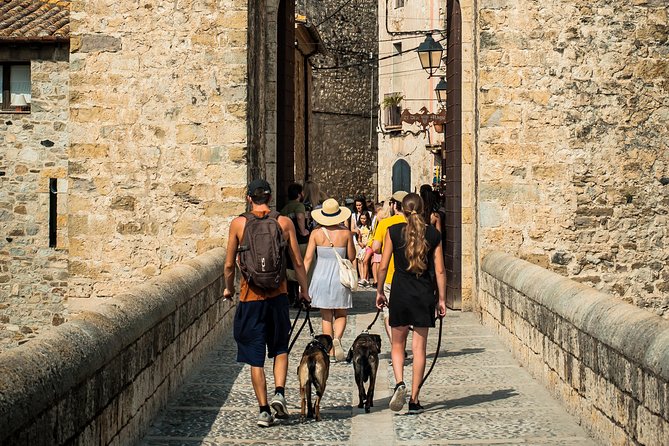
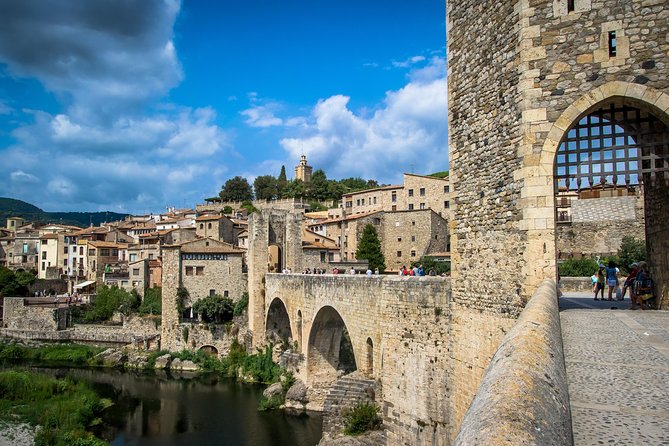
The approach begins with the 12th-century Romanesque bridge, one of the town’s defining sights. Its stone arches give you a clear sense of how the settlement once controlled movement across the river. It is also an excellent place for photographs, especially when you look back toward the old town.
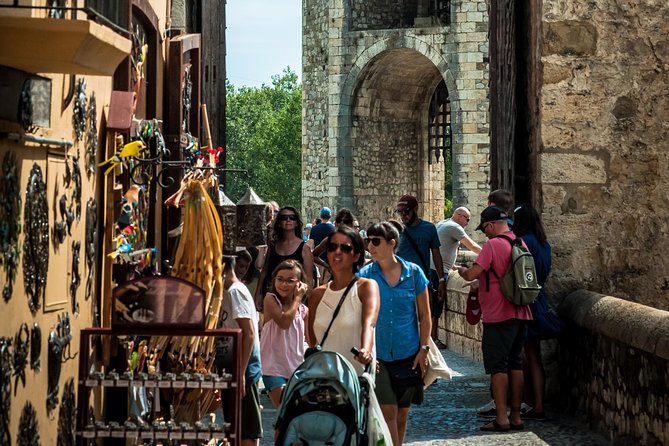
From there, you walk through lanes lined with medieval buildings. Besalú is larger and more substantial than Tavertet, so you get a better feel for how a historic Catalan town functioned as a real community rather than simply as a preserved monument.
A key stop is the 12th-century mikveh, or Jewish bath. The site connects Besalú to its medieval Jewish community and adds depth to the visit. You also hear about the former synagogue and the town’s Jewish quarter. These details turn the narrow streets into more than attractive scenery. You begin to see how different religious communities lived and worked within the same town.
The 11th-century Monastery of St. Pere is another important landmark. You may also have some time to wander without the guide, look in shops, or sit at a café. That free time is useful, but two hours can pass quickly here. If Besalú is your main reason for booking, ask how the time will be divided between the guided walk and independent exploring.
Of the three main villages, Besalú offers the most material for a serious history lesson. It also has the most obvious medieval-town atmosphere. The tradeoff is that the stop can feel more structured than Rupit, since you spend part of it following the guide through specific sites.
Castellfollit de la Roca: a tiny town on a basalt edge
The vehicle continues toward Rupit, passing Castellfollit de la Roca. This is an important distinction: it is included as a scenic sight along the route, not as a full village visit with a scheduled walking tour.
Castellfollit is built on the edge of a basalt precipice and has about 1,000 residents in an area described as roughly 1,000 square meters. From the road, its tightly packed houses and dramatic position make it an arresting sight.
You should think of this part as a quick visual highlight rather than a stop where you explore. If you want a close look at Castellfollit, you would need a separate visit. On this tour, its value is the contrast it adds to the day: Besalú spreads across a historic town center, while Castellfollit appears compressed onto a narrow volcanic cliff.
Same base, a different kind of day out:
- Barcelona: Sagrada Familia Entry Ticket with Audio Guide
★ 4.6 · 105,312 reviews - Barcelona: Park Güell Admission Ticket
★ 4.4 · 76,534 reviews - Seville: Royal Alcázar Entry Ticket
★ 4.6 · 28,378 reviews - Barcelona: Casa Batlló Entry with Self-Audioguide Tour
★ 4.7 · 25,359 reviews
Rupit: two hours for lunch and old lanes
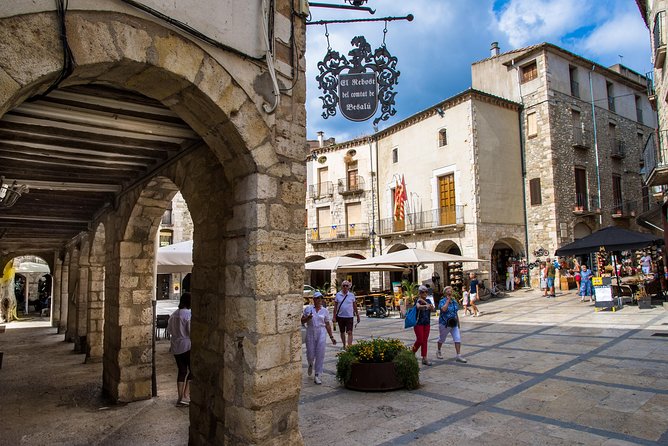
Rupit receives about two hours and thirty minutes, making it the most flexible stop of the day. The first portion is usually an orientation from the guide, followed by time to explore on your own and eat lunch.
Rupit’s streets are lined with stone houses dating from the 16th century. The village feels compact and easy to walk, but the cobbles and uneven surfaces call for sensible shoes. You cross its hanging wooden bridge, one of the most memorable features of the visit. It is not a grand engineering work, but it gives the village a playful, old-world character.
The Baroque Church of Sant Miquel is another worthwhile stop. The tour also points you toward the ruins of Rupit Castle, set on a rocky rise above the village. You can use part of your free time for the castle area, though the schedule gives you room to choose your pace rather than forcing every person into the same route.
Lunch is at your own expense. Traditional restaurants are available, and the guide can suggest a place or help make a reservation. This is useful because the lunch window is limited and the restaurants may fill up. One practical approach is to ask about lunch as soon as you arrive, rather than spending the first hour browsing and then discovering that tables are scarce.
You can also bring a picnic and eat outdoors, according to the tour details. That gives you more control over cost and timing, though you must arrange the food yourself.
Rupit is a good middle stop because it lets you shift gears. Besalú is guide-led and history-heavy. Rupit gives you time to choose between lunch, church, castle ruins, photographs, and quiet walking. If you prefer a relaxed day rather than constant commentary, this part will likely suit you best.
The road to Tavertet and the Cingles cliffs
After Rupit, the route turns toward the sandstone cliffs of Cingles de Tavertet. The scenery becomes one of the day’s main attractions, with high ground, wooded slopes, and views toward the Ter River valley.
The route also passes references to a megalithic tomb and an Iberian Wall. These details widen the historical frame beyond the medieval period. The area was shaped by human settlement long before the villages you see today.
At this point, the drive itself deserves attention. You are not simply being transported from one attraction to the next. The road shows why these villages developed where they did, with defensible rocky positions, water nearby, and access through the hills.
Tavertet: a short final stop with the biggest views
Tavertet is the last village and the briefest stop, scheduled for about 30 minutes. That is enough for a short walk, a look at the village, and the main viewpoint, but not enough for a long independent visit.
The village preserves 48 homes from the 16th and 17th centuries. Your guide explains some of Tavertet’s past before showing you the 11th-century Romanesque Church of Sant Cristòfol.
The main reason to save room in your day for Tavertet is the view. A short walk takes you toward the overlook above Pantà de Sau lake. From the cliffs, you look across the water and the Ter River valley, with the hills unfolding beyond it.
This is a good place to pause rather than rush. If the weather is clear, the viewpoint gives the trip its broadest scene. If rain or mist arrives, the view may be less rewarding, and there is little free time to wait for conditions to improve. The tour can still work in unsettled weather, but bring an umbrella or waterproof layer.
Tavertet is also the stop most likely to disappoint someone expecting another large medieval center. It is smaller, quieter, and more about architecture and views than shops or a long list of monuments. That is part of its charm, but it is worth knowing before you book.
The return through Catalan countryside
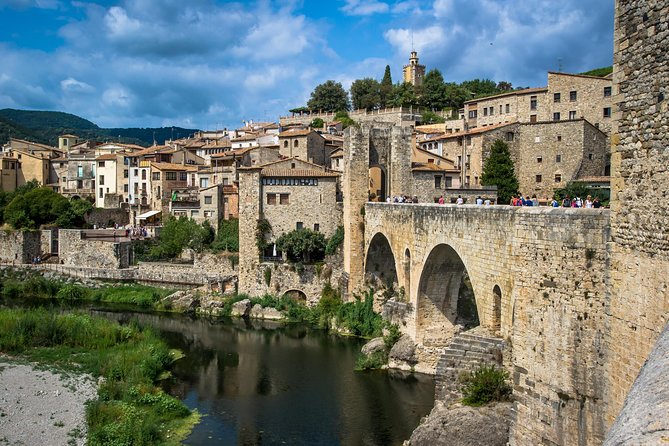
The drive back begins around 5:30 p.m. and reaches Barcelona around 6:45 p.m. The route includes forests such as Magatalls and the El Montseny natural park, which is recognized by UNESCO as a Man and Biosphere site.
You will not have a separate walking visit in El Montseny. Its role is scenic, giving you more countryside to watch from the vehicle as the day winds down.
The return time works well if you have evening plans in Barcelona, but allow for traffic. The listed arrival is around 6:45 p.m., not a guarantee of reaching a particular dinner reservation. You finish near Arc de Triomf, not back at your hotel, and the guide can help you find a taxi, reach the metro, or choose a restaurant.
Guides, group size, and the human side of the day
The guide can make a large difference on this trip because the villages are small and the history is easy to miss without context. Guides named Sergio, Berta, Rod, Carme, Nuria, Xavi, Rodrigo, and others have been praised for clear explanations, friendly conversation, safe driving, and practical restaurant suggestions.
The strongest guide style for this route is not nonstop lecturing. You want someone who explains the Jewish bath in Besalú, points out the reason for Rupit’s hilltop castle, gives useful context about Catalan culture, then lets you explore without hovering.
The small group also helps with timing. A guide can adjust the order or length of stops when weather changes, as one guide did during a rainy forecast. That flexibility is harder to achieve with a large bus group.
There is one minor practical issue to watch for: if you sit at the back of the vehicle, it may be harder to hear when the guide is speaking without a microphone. If the vehicle is filling up, choose a forward seat when possible.
Is $119.72 a fair price?
At $119.72 per person, the tour is not the cheapest way to see a village outside Barcelona. But the price includes a local English-speaking guide and air-conditioned transport for a 10.5-hour day.
The value comes from the route. Besalú, Rupit, and Tavertet are not a simple trio to connect independently in one day, especially if you do not have a car. You would need to manage rural driving, parking, directions, and the timing of three separate places.
The price does not include lunch, drinks, or hotel pickup and drop-off. Budget separately for the meal in Rupit and perhaps a coffee in Tavertet. Since the guide can recommend a restaurant, you gain local help, but you do not get a prepaid meal.
I consider the tour good value if you want three distinct villages in one day and prefer someone else to handle the driving. It is less attractive if you want to spend half a day in one place, shop extensively, or avoid a long return journey.
Who should book this day trip?
This tour suits you if you enjoy old stone architecture, local history, scenic drives, and small-group travel. It works particularly well as an extra day after you have seen Barcelona’s main sights and want a taste of rural Catalonia.
Families with older teenagers can enjoy it, since the day mixes walking, bridges, castle ruins, viewpoints, and food. Couples and solo visitors also benefit from the easy transport and the chance to join a small English-speaking group.
You should have moderate physical fitness. The route includes walking on cobbled streets, uneven surfaces, bridges, village lanes, and short paths to viewpoints. The tour is not built around strenuous hiking, but it is not a sit-down sightseeing day either.
It may not suit you if you dislike early starts, long drives, independent lunch planning, or cool and changeable mountain weather. The final Tavertet stop is short, and Castellfollit de la Roca is viewed along the route rather than explored on foot.
Should you book it?
Book this tour if you want to trade one day in Barcelona for a well-organized look at Catalonia’s medieval villages and countryside. Besalú gives you the best historical detail, Rupit gives you the most freedom, and Tavertet gives you the finest view.
Go prepared: wear comfortable shoes, carry a jacket and umbrella, and ask about lunch early in Rupit. If you want a slower, deeper visit to one village, choose a different outing. If you want a broad, scenic day with a good guide, manageable walking, and transport handled for you, this is a strong choice.
FAQ
Where does the tour start?
The tour starts at the Explore Catalunya office at C/ Palau de la Música, 1, in Barcelona, next to the Palau de la Música. The meeting time is 8:15 a.m., with departure at 8:30 a.m.
Where does the tour end?
The tour ends near Arc de Triomf in Barcelona, at approximately 6:45 p.m. The guide can help you find a taxi, reach the metro, or choose a restaurant.
Which villages do you visit?
The main village visits are Besalú, Rupit, and Tavertet. You also pass Castellfollit de la Roca, a small town built on the edge of a basalt cliff.
Is lunch included?
No. Lunch in Rupit is at your own expense. The guide can suggest a traditional restaurant or help make a reservation.
Is the tour offered in English?
Yes. This experience operates in English and includes an English-speaking local guide.
How large is the group?
The maximum group size is 20 people. The transport is an air-conditioned vehicle, and some departures may be much smaller.
Can I cancel for a refund?
You can cancel at least 24 hours before the experience starts for a full refund. Cancellations or changes made less than 24 hours before the start time are not refunded or accepted.
Just added in Spain
- Bizkaia Bridge, Gaztelugatxe, Bermeo and Gernika from Bilbao★ 4.5 · 299 reviews
- Benalmadena: City Sightseeing Hop-On Hop-Off Bus Tour★ 3.5 · 379 reviews
- Barcelona: White Rabbit Catalonia’s Top Immersive Experience★ 4.7 · 359 reviews
- Bean to Bar Chocolate Workshop in Barcelona★ 5.0 · 172 reviews
- Welcome to Barcelona: Private Tour with a Local★ 4.6 · 200 reviews
- Barcelona: Walking tour with Montjuic Castle & Cable Car★ 4.7 · 832 reviews
- Barcelona: Welcome to Barcelona Segway Tour★ 4.9 · 153 reviews
- Barcelona: Helicopter Flight with Optional Yacht Cruise★ 4.7 · 224 reviews
Tours in Girona, compared.

Browse the lists this tour appears in