
Reviewed · SPAIN
guided night tour
Cuenca is at its most atmospheric after sunset, when the Cathedral, hanging houses, ravines, and old stone streets take on a softer glow. This two-hour guided walk gives you a useful first look at the hilltop old town without the midday heat or the daytime crowds. I like the way it links major sights with the small lanes between them, rather than treating Cuenca as a string of isolated monuments.
I also like the price: $9.88 per person is a small outlay for two hours of orientation and local history. Guides including Carlos, Guillermo, and Hugo have been praised for clear explanations, humor, and lively stories. The main consideration is the group size, which can reach 50 people. That is fine for a broad introduction, but you may not get the intimate feel of a private walk.
Key points at a glance
- The city after dark: See Cuenca’s Cathedral, Casas Colgadas, Parador, and gorge edges under evening lighting.
- A useful first orientation: The route connects the Plaza Mayor, churches, castle ruins, bridges, and old lanes.
- Guides who tell stories: Carlos, Guillermo, and Hugo are among the named guides associated with especially warm feedback.
- Good value: Two hours of guided sightseeing cost $9.88 per person.
- Mostly an outdoor walk: You see landmarks from the streets rather than spending the tour inside museum galleries.
- Simple timing: Meet at 8 p.m. on Calle Alfonso VIII and finish near the Spanish Abstract Art Museum.
Why Cuenca works so well after sunset
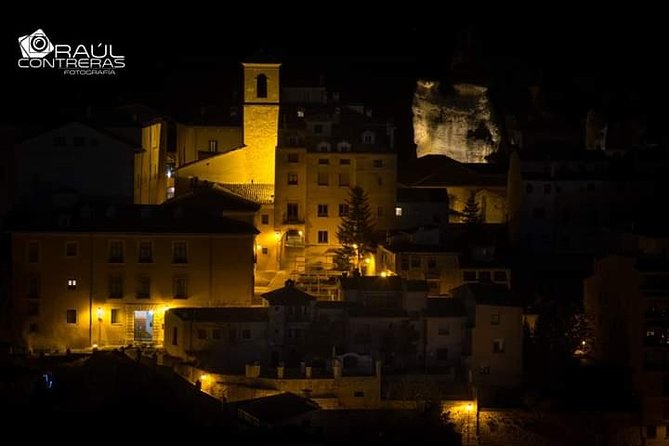
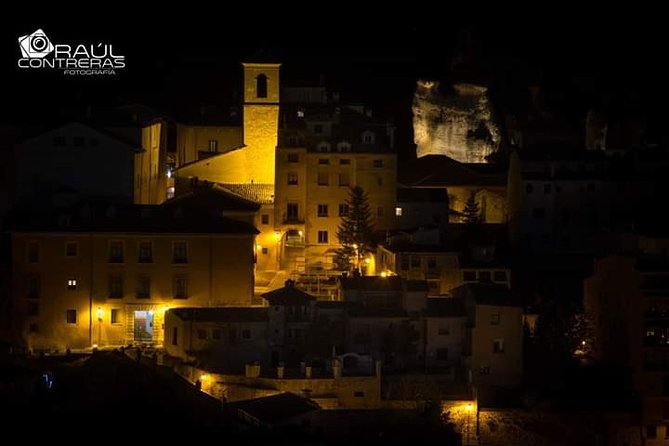
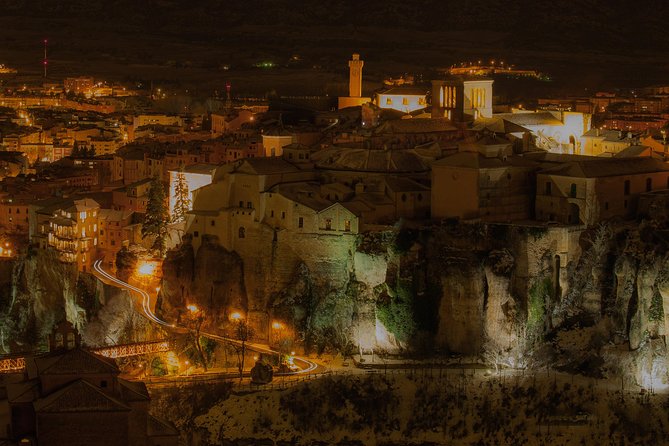
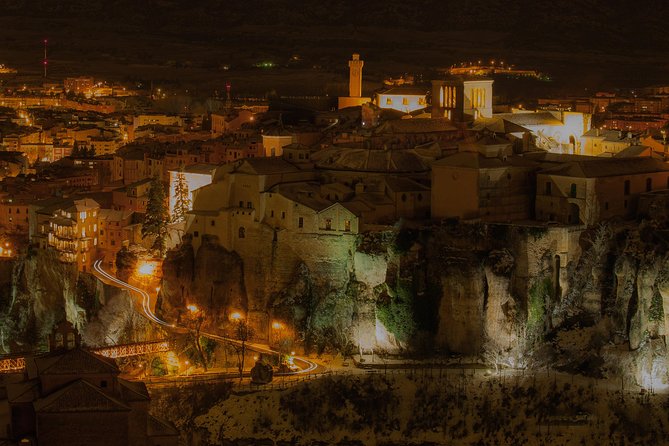
Cuenca is an unusual city to explore at night. Its historic center occupies a narrow ridge between the Huécar and Júcar gorges, so the streets, walls, churches, and houses often appear at the edge of a dramatic drop. Daylight helps you read the geography, but night lighting brings out the shapes and shadows.
The tour is designed around that change in mood. You walk through old lanes as the sun fades, then watch key buildings become more visible under their evening lights. It is not simply a daytime tour moved to a later hour. The views, especially around the hanging houses and ravines, feel different once the crowds thin out.
You should still expect a walking tour rather than a relaxed drive-by sightseeing trip. The route takes about two hours and includes narrow historic streets, old steps, and viewpoints near steep edges. One useful point from the feedback is that the walk is not considered especially tiring and includes few major climbs, though Cuenca’s old town is never completely flat.
A few more things to do in Spain worth a look
- Barcelona: Sagrada Familia Entry Ticket with Audio Guide
★ 4.6 · 105,312 reviews - Barcelona: Park Guell Guided Tour with Skip The Line Entry
★ 4.7 · 17,563 reviews - Málaga: Caminito del Rey Guided Tour with Transportation
★ 4.8 · 12,183 reviews
Starting near the Plaza Mayor
The meeting point is Calle Alfonso VIII, 1, in the historic center, with an 8 p.m. start. The route begins around the Plaza Mayor, one of the best places to get your bearings in Cuenca.
The square is framed by colorful, leaning houses and the illuminated facades of the Cathedral and City Hall. This gives the tour a strong opening: you see the city’s most recognizable architectural setting before moving into the narrower streets.
Listen closely here, because the guide uses the opening stop to explain how the old center fits together. If you arrive early, the Plaza Mayor is also a practical place to orient yourself before the walk begins. The meeting point is central, but you should still allow time to find Calle Alfonso VIII, especially if you are approaching through the twisting old town.
A large group may gather at this point. The maximum is 50 people, so stand near the guide when possible. In a group that size, you may need to move forward to hear every explanation clearly.
San Pedro and the churches of the old ridge
One stop is the Church of San Pedro, an octagonal church raised on a limestone cornice. Its setting matters as much as its shape. Cuenca’s churches were built into a town where solid rock, ravines, and steep streets determined almost every building decision.
At night, the church takes on a more striking outline than it might during a busy afternoon. The guide also has room here to explain details of the building and its place in the old center. This is the sort of stop that benefits from commentary, since the exterior alone does not tell you why its position is so unusual.
The route also passes other churches and religious buildings in the upper part of the historic center. You should not expect long indoor visits or a full art-history lecture at each one. Instead, the tour gives you the context to notice façades, foundations, doorways, and their relationship to the streets.
That approach suits anyone who wants an overview before exploring independently. If you are hoping to enter every church, you will need a separate daytime plan.
The former convent and Covarrubias connection
The walk continues to a former 17th-century convent, also associated with the palace of Sebastián de Covarrubias. This is one of the less obvious stops, and that is part of its appeal.
A guide can point out layers of Cuenca that are easy to miss when you focus only on the Cathedral and hanging houses. The reference to Covarrubias adds a personal and architectural thread to the walk, showing how religious buildings and private residences shaped the old city.
This stop also reflects the tour’s wider purpose. You are not only checking off famous sights. You are being shown how the historic center developed through convents, palaces, churches, defensive buildings, and homes packed into a narrow ridge.
Same base, a different kind of day out:
- Barcelona: Park Güell Admission Ticket
★ 4.4 · 76,534 reviews - Seville: Royal Alcázar Entry Ticket
★ 4.6 · 28,378 reviews - Barcelona: Casa Batlló Entry with Self-Audioguide Tour
★ 4.7 · 25,359 reviews - Seville: Cathedral and La Giralda Entry Ticket
★ 4.5 · 24,592 reviews
Castle ruins at the narrowest point
The ruins of Cuenca Castle date from the 13th century and occupy the narrowest part of the old center, between the two gorges. Even in a ruined state, the location explains the site’s importance.
This is one of the best places to understand Cuenca as a fortified medieval town. The position gives the old city a defensive advantage and also creates strong views toward the surrounding ravines. At night, the ruins and walls can feel more atmospheric than polished, fully preserved monuments.
The walk does not turn the castle into a long archaeological visit. You will hear what the site was and why it mattered, then continue through the historic center. That works well for a first visit, but anyone wanting detailed information about every surviving wall or stone should set aside extra time during the day.
The route through the upper streets is one of the parts I find most useful. It gives you a sense of the old town’s rabbit warren of lanes, a layout linked to Moorish-era streets and later medieval development. You will probably want to return without the group once you know the way.
The former Inquisition court and prison
Another stop is the former court of the Inquisition, later used as a prison until relatively recently. It dominates the historic center from the edge of the Hoz del Huécar.
This is a sobering contrast to the prettiness of the illuminated squares and houses. The building’s position is impressive, but its former use adds a harder edge to Cuenca’s story. A good guide can connect the building to the city’s systems of power, punishment, and religion without turning the walk into a dry chronology.
The guide commentary is a major part of the value here. Carlos, in particular, is associated with explanations about the city’s monuments, construction, and less obvious stories. Other named guides, including Guillermo and Hugo, are also described as warm and engaging. The assigned guide can vary, so you should treat those names as examples rather than a guarantee.
The Casas Colgadas under evening lights
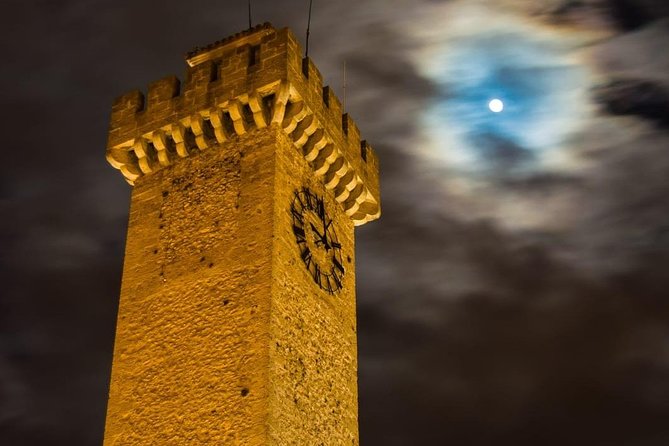
The Casas Colgadas, or hanging houses, are the symbol of Cuenca. More than 600 years old, they project over the gorge and appear to defy the drop below.
They are the visual payoff of the route. The tour reaches them near the end, when the houses are specially lit. That timing matters. You first learn how the city’s ridge, ravines, and buildings fit together, then see the most famous example of Cuenca’s dramatic construction.
The guide also explains how the houses were built and points out details you may overlook from a quick viewpoint visit. The best commentary turns the Casas Colgadas from a photo stop into a lesson in how people adapted to scarce, steep building space.
The tour ends at the Spanish Abstract Art Museum, Juan March Foundation, at Casas Colgadas, C. Canónigos, 3. You should confirm the exact finishing position with the guide if you have evening plans, but the stated endpoint places you right beside one of Cuenca’s main sights.
The iron bridge and the story behind it
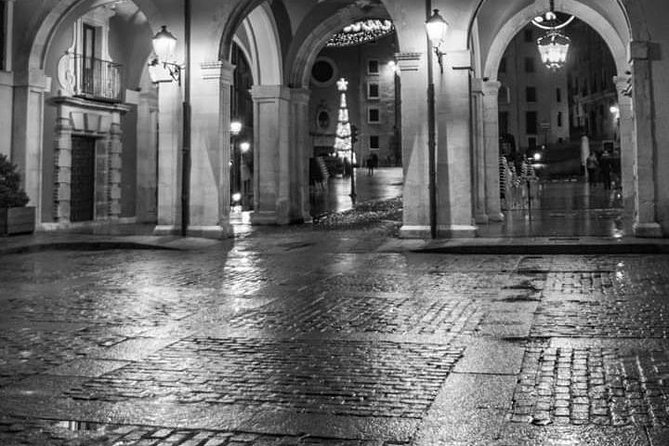
The walk also reaches the bridge that replaced an earlier stone crossing. The current iron bridge dates from 1903, and the guide explains what happened to the old bridge and why this replacement was needed.
This is a small detail, but it adds useful texture. Cuenca’s dramatic setting makes bridges essential, not decorative. A bridge connects the old center to the views, buildings, and ravines around it, while also showing how the city had to update its infrastructure over time.
This is another example of why a guided route can be more rewarding than simply following a map. Without the explanation, you might photograph the bridge and move on. With the story, it becomes part of Cuenca’s changing urban life.
The Parador above the ravine
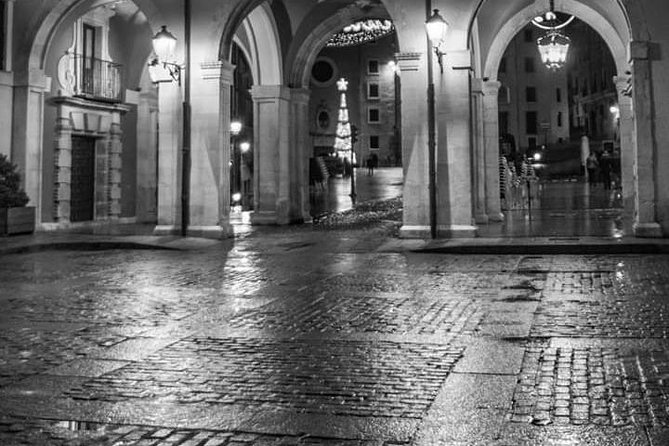
The final major sight is the Parador, a former historic building now used as a hotel. It has careful lighting and a striking position on rock above the ravine.
You see it from the outside as part of the evening route. The location gives you one more chance to appreciate how Cuenca’s buildings occupy the edges of the gorges rather than spreading across a broad, level plain.
By this point, the route has shown you the city from several angles: public squares, churches, defensive walls, former institutions, bridges, hanging houses, and a building perched above the Huécar gorge. That mix gives you a better mental map for the rest of your stay.
What the guides add to the walk
The strongest feature of this experience is the quality of the storytelling. The route itself is appealing, but Cuenca’s architecture can be hard to read without context. You need someone to explain why a church sits on a limestone ledge, why the castle occupies the narrowest part of the ridge, and how the hanging houses relate to the gorge.
Carlos is repeatedly singled out for being professional, funny, attentive, and original. Guillermo is praised for making construction details easy to understand, while Hugo is described as friendly and interesting. The guide’s style can shape the evening, so you may get more humor or more formal history depending on who leads your group.
The commentary is delivered in a way that suits a mixed audience. You can expect anecdotes, answers to questions, and practical suggestions for what to see on your own afterward. One useful detail is that the night walk can complement a daytime monumental tour because the two routes may highlight different parts of Cuenca.
Price, group size, and practical value
At $9.88 per person, this is inexpensive for a two-hour guided introduction to Cuenca. I would consider it especially good value if you have only one evening in town or if you want help deciding which sights deserve a second look.
The price does not represent a full museum tour or a private guide. You are paying for a group walk through the historic center, with exterior explanations and evening views. The group can reach 50 people, which is the main tradeoff. A large group may feel less personal, and you will need to stay close enough to hear.
The tour is booked an average of 13 days ahead, so advance planning makes sense during busy periods. Confirmation is provided at booking, and free cancellation is available until 24 hours before the start time. Changes or cancellations inside that 24-hour window are not refunded.
Service animals are allowed, and the activity is near public transportation. Most people can participate, though anyone concerned about hills, old paving, or steep edges should keep Cuenca’s rugged historic setting in mind.
Who should book this night tour
I would choose this walk if you want a clear first look at Cuenca, prefer cooler evening sightseeing, or enjoy architecture explained through stories rather than labels. It is also a good fit if you have already seen the main sights by day and want to view them under different lighting.
Families and mixed-age groups may appreciate the short, story-led format. The humor and anecdotes help break up the history, while the route gives you plenty of memorable views. You will need to stay with the group, but the walk is described as manageable rather than exhausting.
I would be more cautious if you want extended time inside monuments, a small private group, or specialist-level architectural analysis. The maximum group size is substantial, and the tour is designed as an overview. You may also want to bring a light layer, since the evening route passes exposed viewpoints near the gorges.
Should you book it?
Yes, if you want a low-cost, well-paced introduction to Cuenca after dark. The illuminated Cathedral, castle ruins, Casas Colgadas, iron bridge, and Parador give the walk plenty of visual interest, while guides such as Carlos, Guillermo, and Hugo add the stories that make the buildings easier to understand.
Book it as an orientation, not as a substitute for every museum and interior visit. Arrive ready for a two-hour walk, stay near the guide in the larger group, and use the route to mark places you want to revisit in daylight. For $9.88, it is a sensible way to meet Cuenca’s old center before exploring it on your own.
FAQ
Where does the Cuenca night tour start?
The meeting point is C. Alfonso VIII, 1, 16001 Cuenca, Spain.
What time does the tour begin?
The stated start time is 8:00 p.m.
How long does the tour last?
The tour lasts approximately two hours.
Where does the tour finish?
It ends at the Spanish Abstract Art Museum, Juan March Foundation, beside the Casas Colgadas at C. Canónigos, 3.
What sights are included?
The route includes the Plaza Mayor, Church of San Pedro, former convent and Covarrubias palace, Cuenca Castle ruins, former Inquisition court and prison, Casas Colgadas, the 1903 iron bridge, and the Parador.
Is the tour conducted at night?
Yes. It is designed to show Cuenca after sunset, including illuminated historic buildings and the Casas Colgadas.
How much does the tour cost?
The listed price is $9.88 per person.
How many people can join the tour?
The activity has a maximum capacity of 50 people.
Are service animals allowed?
Yes, service animals are allowed.
What is the cancellation policy?
You can cancel at least 24 hours before the start time for a full refund. Cancellations or changes made less than 24 hours before the tour are not accepted for a refund.
Just added in Spain
- The Red Canyon Tour – Small Group Trip with Local Food Tasting ツ★ 5.0 · 798 reviews
- Full Day Rainforest Tour with Tasting and Swimming Time ツ★ 5.0 · 607 reviews
- Full Day Ticket at Perchel Beach Club with Lunch★ 5.0 · 316 reviews
- 3 Wheel Motorcycle like Quad/Buggy Tour Gran Canaria (Maspalomas)★ 5.0 · 237 reviews
- Arucas, Teror, Viewpoint Roque Nublo – Highlights Gran Canaria★ 4.5 · 170 reviews
- Gran Canaria Highlights Private Tour VIP★ 5.0 · 106 reviews
- Full day Hiking Gran Canaria Peaks of Gran Canaria★ 5.0 · 130 reviews
- Coastering in Gran Canaria (Aquatic Route in the ocean cliffs)★ 5.0 · 135 reviews