
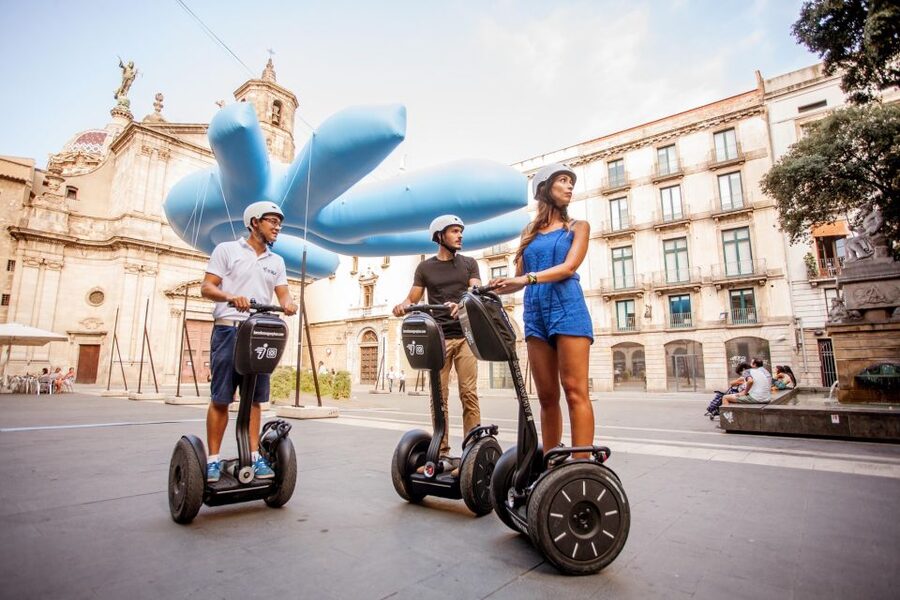
Reviewed · SEGWAY TOURS
Barcelona: Montjuïc Segway Tour
Barcelona is easiest to understand when you connect its old center, waterfront, parks, and hilltop viewpoints in one sweep. This three-hour Segway tour does exactly that, beginning near the Gothic Quarter before heading through Port Vell, the Olympic Port, Parc de la Ciutadella, and up Montjuïc.
I like the way a Segway lets you cover ground without the effort of a bike, especially on Montjuïc, where walking between the castle, Olympic sites, gardens, and museums takes time. I also like the small groups of two to six people per guide, plus the short training session that helps first-time riders settle in.
The main caution is that the route description is broad, and the exact balance between the old city, seaside, and Montjuïc can vary. One past booking expected more of the Gothic Quarter but spent most of the time on Montjuïc, while another missed a cemetery because of a road closure. If Sagrada Família is your main goal, confirm the route before booking, since it is mentioned in the general description but not in the detailed stop list.
Key points at a glance
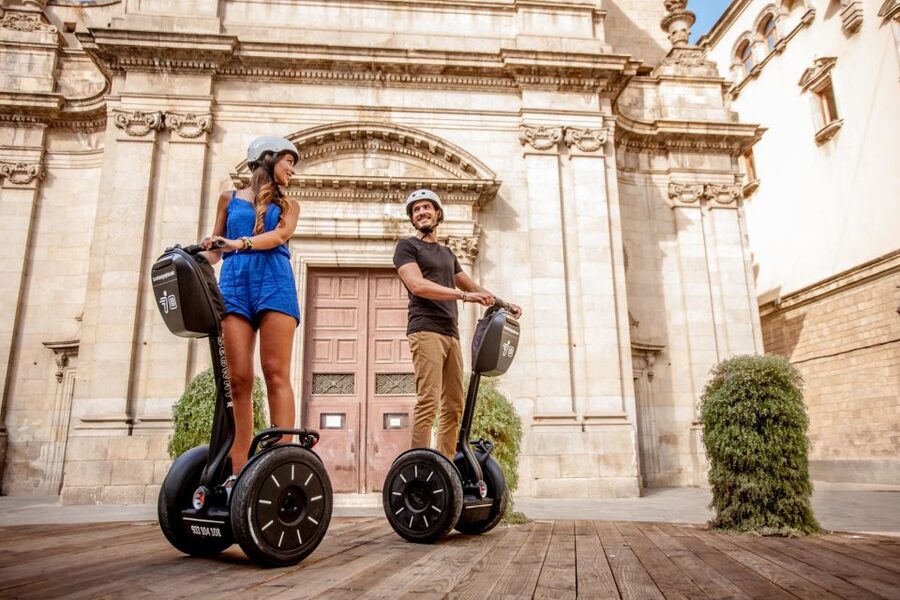
- Three hours on a Segway: Cover the old center, waterfront, parks, and Montjuïc more quickly than on foot.
- Montjuïc is the big payoff: Reach Montjuïc Castle, the Olympic Stadium, Joan Miró Foundation, and MNAC viewpoints without a long uphill walk.
- Port and beach scenery: Ride past Port Vell, the Columbus Monument, the old fishermen’s district, Olympic Port, and the city beach.
- Small-group instruction: Groups are limited to two to six people per guide, with training and safety equipment included.
- Strong guide element: Guides including Alex, Maria A, Étienne, Klara, and João have been praised for clear history, patience, photos, and local suggestions.
- Age and fitness rules matter: Riders must be at least 16, weigh between 35 and 120.20 kilograms, and handle stair-like movements without help.
Why a Segway works well in Barcelona
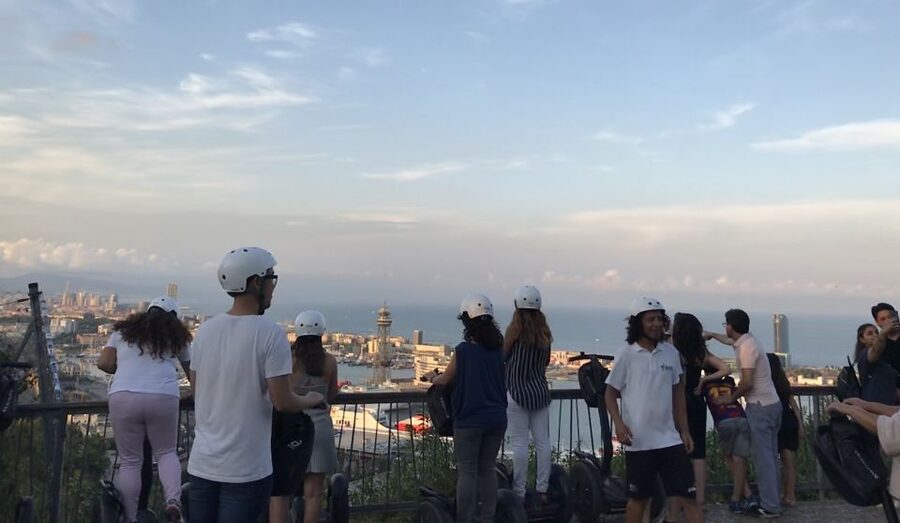
Barcelona has two different sightseeing problems. The old center is compact but crowded and easy to explore slowly. Montjuïc is spread across a hill, with viewpoints and major sights separated by roads, gardens, and slopes. A Segway bridges those two experiences.
You begin with a safety briefing and practice session at the provider’s office on Passeig de Lluís Companys 10. That is useful even if you have ridden before. The Segway responds to your body position, so you lean slightly forward to move and shift your weight to slow or stop. The training gives the guide a chance to check that everyone can control the machine before the group enters city streets.
The tour uses Segway i2 machines, helmets, and other safety equipment. Insurance and one drink are included. You should wear comfortable shoes and clothes. In winter, bring warm, water-resistant layers and gloves, since the ride spends time outdoors and can feel cooler on exposed viewpoints.
The machines are not a substitute for a walking tour in every part of Barcelona. Narrow lanes, pedestrians, and uneven medieval streets can limit the pace. Their real advantage appears when you need to move between districts or climb toward Montjuïc without spending much of your day on foot.
Other easy ways to cover Barcelona:
- Barcelona Segway Tour
★ 5.0 · 680 reviews - Barcelona Segway Tour
★ 4.7 · 630 reviews - Barcelona: City Highlights Guided Segway Tour
★ 4.9 · 624 reviews
From Passeig de Lluís Companys to the old city
The meeting point is beside the long promenade of Passeig de Lluís Companys, near the Arc de Triomf and Parc de la Ciutadella. This is a practical starting place because it puts you close to both the old city and the park.
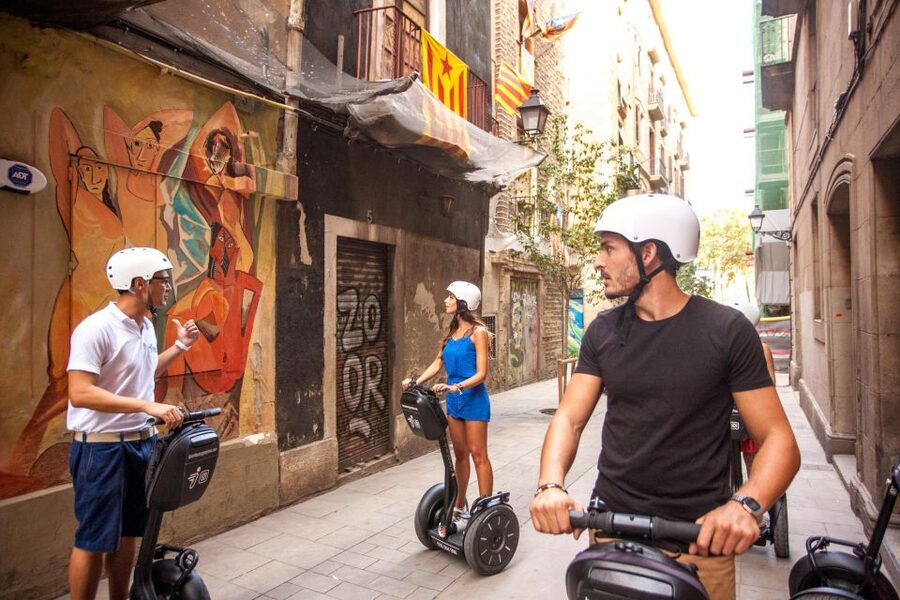
After training, the guide takes you toward the Gothic Quarter and the ancient city center. Expect streets lined with medieval palaces, old churches, small shops, artists’ studios, and boutique storefronts. The guide provides the context, so you are not simply rolling past old stone without knowing what you are seeing.
The Gothic Quarter is best appreciated in short bursts on a Segway. Some lanes are narrow, and pedestrians can make riding slower than walking. Still, the machine gives you a quick introduction to the district and lets you reach the waterfront without committing to a long walking circuit.
The route also brings in Roman remains and older layers of Barcelona. These are easy to miss if you spend your day focused only on Gaudí buildings. I would treat this section as an orientation ride rather than a replacement for a detailed Gothic Quarter walking tour.
Parc de la Ciutadella and the Arc de Triomf
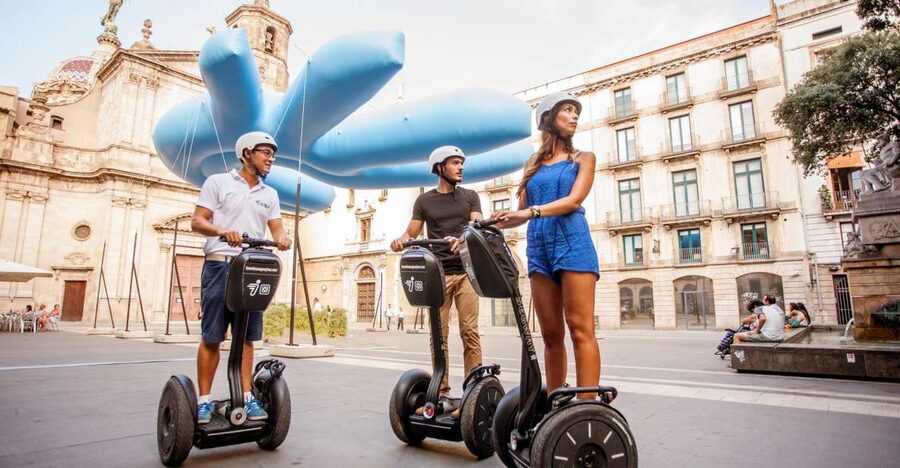
Parc de la Ciutadella is one of the most pleasant parts of the route. The park occupies the site of an old fortress and includes palm trees, Mediterranean plants, lakes, exhibition buildings, older structures, and a large ornamental fountain.
The open paths make the Segway feel more relaxed here than in the medieval lanes. Your guide can point out the park’s role in the 1888 world exhibition and explain how the surrounding monuments fit into Barcelona’s growth.
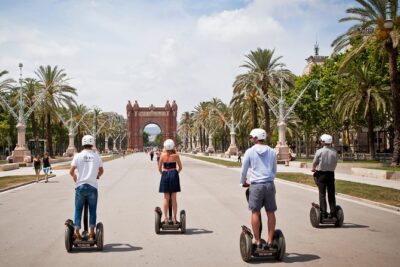
The nearby Arc de Triomf was built as the main entrance to that same 1888 exhibition. Unlike many triumphal arches, it was designed as a civic gateway rather than a military victory monument. It makes a good photo stop and gives you a clear sense of how Barcelona used grand public projects to present itself to the world.
This is also one of the tour’s more useful orientation points. From here, you can understand the relationship between the old center, the park, the Eixample grid, and the routes leading toward the sea.
Port Vell, the fishermen’s district, and the beach
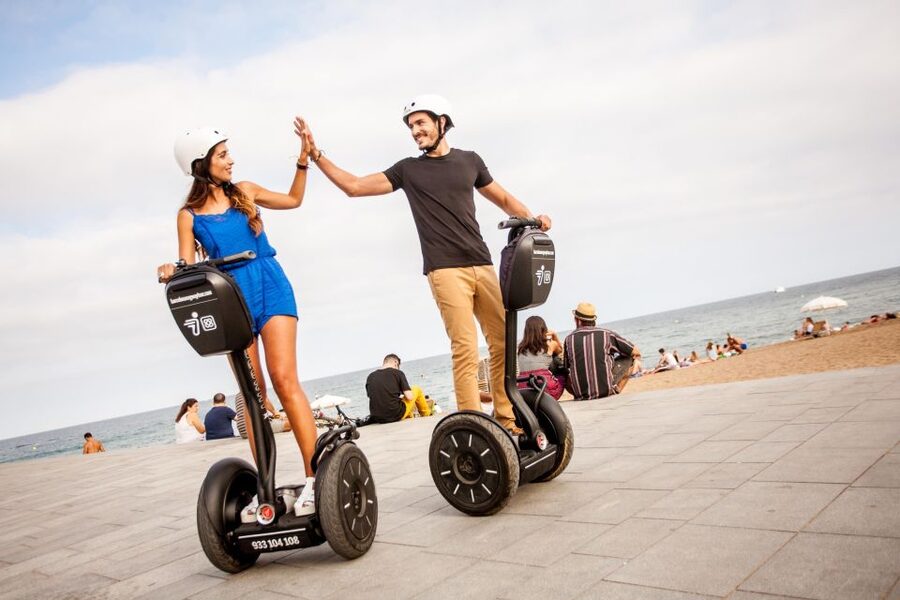
The ride continues through the historic harbor area toward Port Vell and the Columbus Monument. The harbor section shows a more open, modern side of Barcelona after the tighter streets of the old city.
At the foot of the Columbus Monument, the guide points out the view toward Barcelona’s surrounding mountains: Montjuïc, Tibidabo, and Collserola. The stop is brief, listed at about five minutes, but it gives you a useful visual map of the city. You can see how the waterfront sits below the hills and how Montjuïc rises beside the port.
The route then moves through the old fishermen’s district, along the seafront, and toward the city beach and Olympic Port. This stretch gives you broad views and more room to ride. It also lets you compare Barcelona’s historic port with the areas reshaped for the 1992 Olympic Games.
The seaside portion is scenic, but keep your expectations realistic. This is not a beach day or a long waterfront stop. You are riding through the area, pausing for views and photographs, while the guide adds local and historical detail.
Same base, a different kind of day out:
- Barcelona: Sagrada Familia Entry Ticket with Audio Guide
★ 4.6 · 105,312 reviews - Barcelona: Park Güell Admission Ticket
★ 4.4 · 76,534 reviews - Barcelona: Casa Batlló Entry with Self-Audioguide Tour
★ 4.7 · 25,359 reviews - Barcelona: 24 or 48-Hour Hop-On Hop-Off Bus Tour
★ 4.4 · 20,872 reviews
Climbing Montjuïc without losing your afternoon
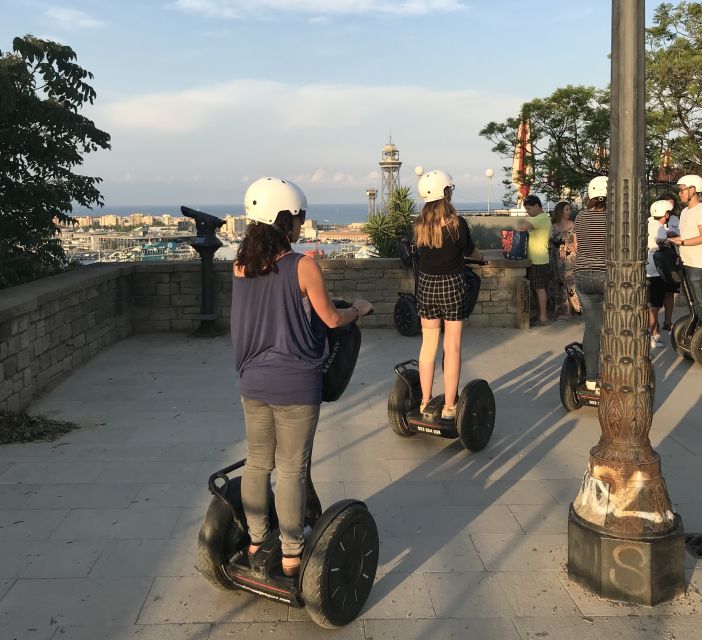
Montjuïc is where the Segway earns its keep. The hill holds several major sights, gardens, sports sites, and viewpoints, but they are not packed into one easy walking route. The tour carries you between them with less strain.
The exact order can change, but the Montjuïc section includes the Joan Miró Foundation, Jardins de Joan Brossa, Montjuïc Castle, the Lluís Companys Olympic Stadium, and the Museu Nacional d’Art de Catalunya. You pass through planted areas and open spaces, with views back over the city and port.
The Joan Miró Foundation is primarily a photo and guided sight on this experience, not a full museum visit. If you want to see the interior collection, set aside separate time. The same rule applies to the Museu Nacional d’Art de Catalunya. The tour gives you the building, setting, and outlook, but admission and a museum visit are not listed as part of the ride.
Jardins de Joan Brossa adds a quieter stretch between the busier monuments. Montjuïc Castle provides the strongest historic viewpoint, though the stop is also listed at about five minutes. That is enough for an introduction and photographs, not enough for a thorough castle visit.
The Olympic Stadium brings a different kind of Barcelona story. It connects the hill with the 1992 Olympics and shows why Montjuïc is more than a collection of scenic overlooks. You get a sense of the area’s sports and exhibition role as the tour links it with the castle, gardens, and art institutions.
At MNAC, the broad view back toward the city is one of the route’s highlights. The building itself is impressive, and the elevated position helps you make sense of the streets and waterfront below. Again, this is a sightseeing stop rather than an included museum tour.
How the guides shape the experience
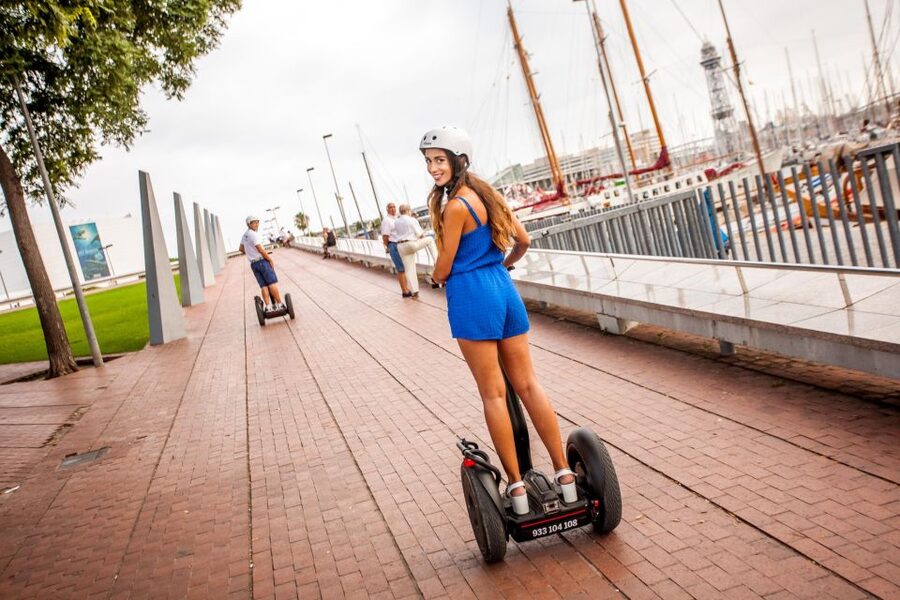
The guide makes a large difference on a ride like this. You are moving quickly, so clear commentary matters. The strongest guide feedback centers on patience, humor, useful history, and help with photos and local plans.
Alex has been praised for explaining details even to someone who had already visited Barcelona. Maria A was described as patient, energetic, and fun, while Étienne combined historical information with local customs and answered questions along the way. Klara was especially effective during the first lesson, easing nerves before leading the group through the city.
João also offered practical suggestions for an afternoon walk after the tour. That sort of advice is worth asking for at the end. Tell your guide what you plan to do next, and you may get ideas for picturesque squares or areas that fit your schedule.
Languages include Dutch, English, French, German, Italian, Russian, Spanish, and Portuguese. Private and small-group options are available. A small group is especially helpful in the Gothic Quarter, where a compact line is easier to manage around pedestrians and corners.
What $52 buys you
At $52 per person, this is not the cheapest way to see one Barcelona neighborhood. It becomes better value if you want a city overview and plan to visit several districts in one outing.
The price includes the Segway, helmet, training, guide, safety equipment, insurance, and one drink. You are also paying for the time saved on Montjuïc. A walking route covering the port, Ciutadella, Arc de Triomf, and hilltop sights would require more energy and careful transport planning.
The value is weaker if you want deep visits inside the castle, museums, or monuments. Those are introduced from the outside or through short stops. You will still need separate tickets and time for the interiors that interest you.
I would place this tour early in a Barcelona visit. It gives you a working map of the city, shows you areas to revisit, and provides guide suggestions for later walks. It is less useful on your final afternoon if you already know the city and want a slow, focused museum visit.
The practical limits you should know
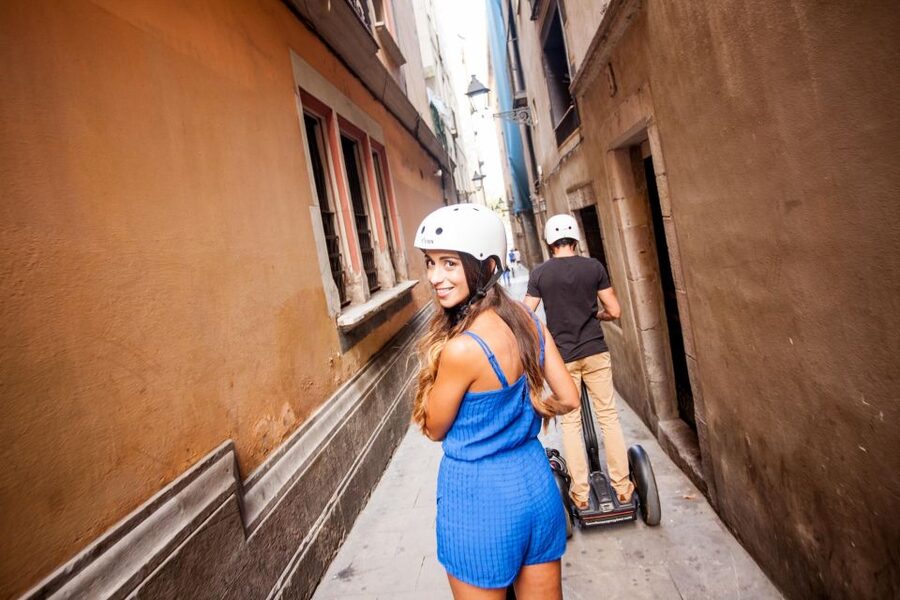
Barcelona requires Segway riders to be at least 16 years old. Younger participants can join on high-end electric bicycles at discounted rates, according to the activity rules.
You must be able to make movements similar to climbing and descending stairs without assistance. The stated weight range is 35 to 120.20 kilograms, or about 265 pounds, and the minimum height is 110 centimeters. The experience is not suitable for pregnant women, people with mobility impairments, or anyone over the listed weight limit.
The tour can operate in small groups of two to six per guide. Larger bookings are split among several guides for safety and to comply with local regulations. That is good for control, but it means a larger party may not ride as one single group.
Weather matters. Barcelona sunshine can make the outing pleasant, but rain and wind change the feel of an open-air ride. One past booking encountered light rain. Bring layers and water-resistant clothing in cooler months, and wear shoes that feel secure on your feet.
The detailed route includes Montjuïc, while the broader description also refers to Eixample, Gràcia, and the Sagrada Família. Those places are not all clearly represented in the detailed stop sequence. Ask the provider what your departure time will cover if one particular district or monument matters to you.
Who should book this ride?
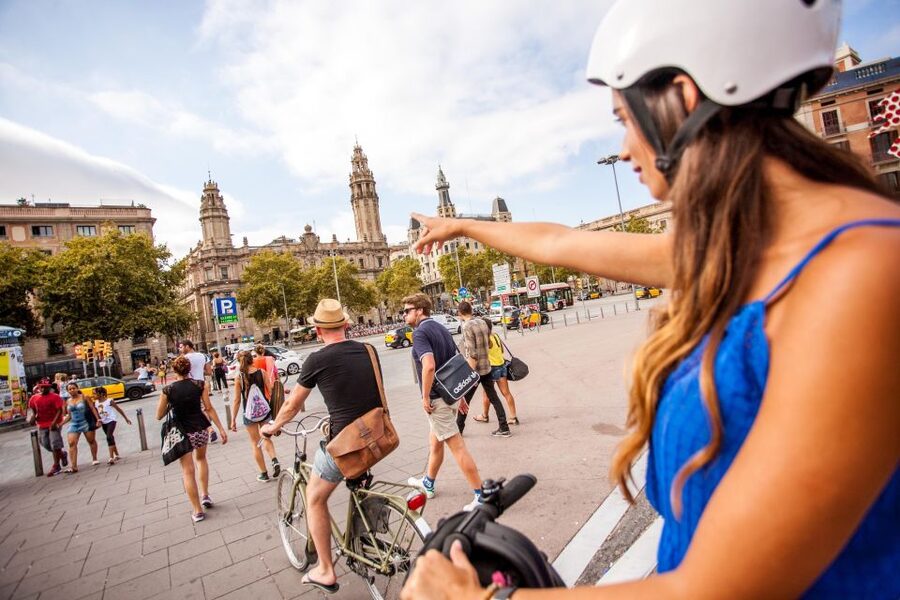
I would choose it for a first or second day in Barcelona, especially if you want a broad look at the city before deciding where to spend more time. It suits active adults, families with riders aged 16 and over, and anyone who finds long uphill walks tiring but still wants Montjuïc views.
It also works well for people who like a guide’s stories but do not want to sit on a bus. You stay outdoors, change scenery often, and get time at several photo stops.
I would skip it if you dislike standing for three hours, feel uncertain about balance, or want a slow visit inside Barcelona’s major museums. You should also skip it if the Sagrada Família is your top priority unless the provider confirms that it is part of your particular route.
Should you book the Barcelona Montjuïc Segway Tour?
Book it if you want to connect Barcelona’s old streets, harbor, beach, parks, and Montjuïc in one active outing. The hilltop section is the strongest reason to choose it, and the guides add enough history and local advice to make the ride more than simple transport.
At $52, the tour offers fair value when you count the equipment, instruction, guide, insurance, and time saved. Go in expecting a lively overview, not full museum visits or a detailed tour of every Gothic lane. Confirm the route, wear comfortable shoes, and ask for a small group if you want the easiest ride.
FAQ
Where does the Barcelona Segway tour begin?
Meet the guide at the activity provider’s office at Passeig de Lluís Companys 10.
How long does the Segway tour last?
The tour lasts three hours. Starting times depend on availability.
What sights are included?
The route includes parts of the Gothic Quarter, Port Vell, the old fishermen’s district, the waterfront, Parc de la Ciutadella, Arc de Triomf, Montjuïc, Joan Miró Foundation, Jardins de Joan Brossa, Montjuïc Castle, the Olympic Stadium, and the Museu Nacional d’Art de Catalunya.
Is Sagrada Família included?
Sagrada Família appears in the general tour description, but it is not included in the detailed stop sequence. Confirm the exact route before booking if you want to see it.
What is included in the price?
The experience includes a Segway i2, helmet, guide, training, safety equipment, insurance, and one drink.
What languages are available?
Guides may conduct the tour in Dutch, English, French, German, Italian, Russian, Spanish, or Portuguese.
What is the minimum age?
Participants must be at least 16 years old for the Segway tour. Younger participants may be able to join on high-end electric bicycles at discounted rates.
Are there weight and height requirements?
Riders must be at least 110 centimeters tall and weigh between 35 and 120.20 kilograms. Riders must also be able to make movements similar to climbing and descending stairs without assistance.
Can I cancel or pay later?
You can cancel up to 24 hours in advance for a full refund. Reserve-now, pay-later booking is available, subject to the booking terms.
Just added in Barcelona
- Welcome to Barcelona: Private Tour with a Local★ 4.6 · 200 reviews
- Barcelona: White Rabbit Catalonia’s Top Immersive Experience★ 4.7 · 359 reviews
- Bean to Bar Chocolate Workshop in Barcelona★ 5.0 · 172 reviews
- Barcelona: Walking tour with Montjuic Castle & Cable Car★ 4.7 · 832 reviews
- Barcelona: Welcome to Barcelona Segway Tour★ 4.9 · 153 reviews
- Barcelona: Helicopter Flight with Optional Yacht Cruise★ 4.7 · 224 reviews
- Barcelona: The Original Barcelona Boat Party★ 3.9 · 254 reviews
- Barcelona Wine Tasting: Catalan and Spanish Wines★ 4.8 · 625 reviews
Segway Tours, compared.
Malaga City Tour 2 Hours Monumental Segway Tour
Read our review →
Madrid Private Segway tour. Retiro Park – Centro Historico
Read our review →
Seville City Tour 2 Hour Monumental Segway Tour
Read our review →
Browse the lists this tour appears in