
Reviewed · HISTORICAL TOURS
Tarragona and Sitges Small Group Tour – Roman History & Culture
Tarragona gives this day trip its real punch. You can walk across a nearly 2,000-year-old Roman aqueduct, pass through ancient walls, and look down toward an amphitheater where gladiatorial contests once took place. Then the mood shifts completely in Sitges, with beach time, whitewashed lanes, cafes, and shops.
I like the strong mix of Roman sites and sea views, and I like that the minivan lets you cover three very different places without wrestling with regional trains. Guides such as Sergio, Rod, Xavier, Henrique, Stephen, and Jordi have been praised for lively explanations and good local suggestions.
The main drawback is time. Tarragona has enough Roman remains for a full day, but this tour gives you about two hours there. If you want to enter every monument or study the archaeological sites at length, you may find the stop too brief. Sitges can also be very busy on Sundays.
Key points to know before booking
- Walk across the Devil’s Bridge aqueduct: The Pont del Diable is a striking first stop, and you can cross the top of the Roman structure.
- See Tarragona’s Roman core on foot: The route includes the old walls, cathedral area, forum, circus passageways, and amphitheater views.
- Enjoy three different coastal moods: Roc de Sant Gaieta is quiet and intimate, while Sitges is more social, stylish, and beach-focused.
- Travel in a small air-conditioned minivan: The group is limited to a small number, with the additional tour information listing a maximum of eight.
- Keep food and entry fees separate: Lunch, drinks, and museum or monument admission are not included in the $119.48 price.
- Pack for walking and swimming: Comfortable shoes, sun protection, a swimsuit, and a beach towel will make the day easier.
Why Tarragona makes this more than a beach day
Many Barcelona day trips chase the biggest names. This one heads south to Tarragona, the Roman city of Tarraco, and gives you a close look at how ancient remains sit inside a modern Catalan town.
The day begins at 8:15 a.m. at C/ Palau de la Música, beside the Palau de la Música. You have a little time for a restroom stop or quick coffee before leaving at 8:30. As the minivan passes through Barcelona’s Eixample district, your guide gives a short introduction to the city and the area ahead.
The drive to Tarragona takes about 90 minutes. That is a fair stretch in the vehicle, but the air-conditioned minivan is more comfortable than a crowded bus, and the small group makes it easier to ask questions. Guides have included Sergio, Rod, Xavier, Henrique, Stephen, and Jordi. The strongest praise has gone to their clear historical explanations, friendly manner, careful driving, and practical advice during free time.
You should think of the guide as an important part of the experience. Tarragona’s remains are scattered through a living city. Without context, a stone wall or underground corridor can feel disconnected. With a good explanation, the forum, circus, and amphitheater begin to make sense as parts of one Roman capital.
A few more things to do in Barcelona worth a look
- Barcelona: Tapas Walking Tour with Food, Wine, and History
★ 4.8 · 4,261 reviews - Barcelona Tapas Walking Tour: Food, Wine & History
★ 4.5 · 1,928 reviews - Barcelona: 2.5-Hour Bike or E-Bike Historical Tour
★ 4.5 · 1,262 reviews
Pont del Diable: your first Roman surprise
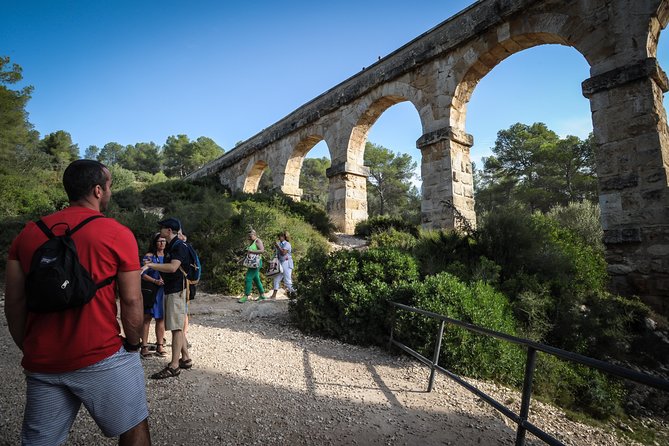
Around 10 a.m., the minivan reaches the Pont del Diable, also called Les Ferreres Aqueduct. It dates to the first century BC and once formed part of Tarragona’s water supply system.
The aqueduct is free to visit, and the best feature is simple: you can walk across the top from one side to the other. That short crossing gives you a direct sense of the structure’s scale and age. It is not just an object to photograph from below. You are standing on a Roman engineering work built nearly 2,000 years ago.
You have about 40 minutes here. That is enough to walk the aqueduct and take photos, but not enough for a long woodland walk or a slow architectural study. One useful tip is to wear shoes with a secure grip. The tour specifically asks you to bring suitable footwear, and the day includes plenty of walking on old surfaces.
This is one of the strongest parts of the tour for anyone interested in Roman engineering. It also works for visitors who are less excited by formal museums, since the setting is open and the experience is physical. If the aqueduct is your main reason for booking, keep in mind that the time is focused and fairly short.
Tarragona’s old quarter, cathedral, forum, and circus
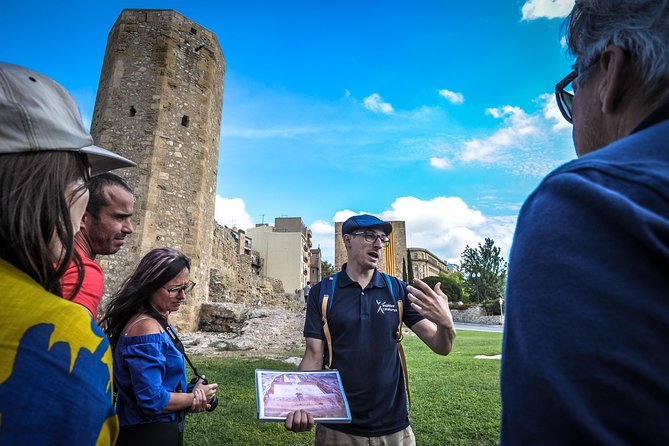
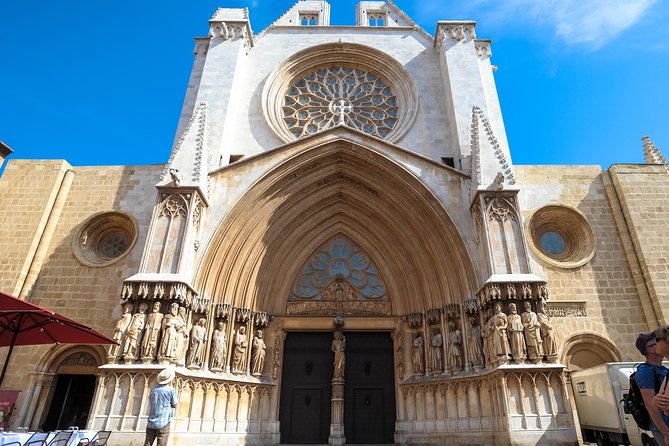
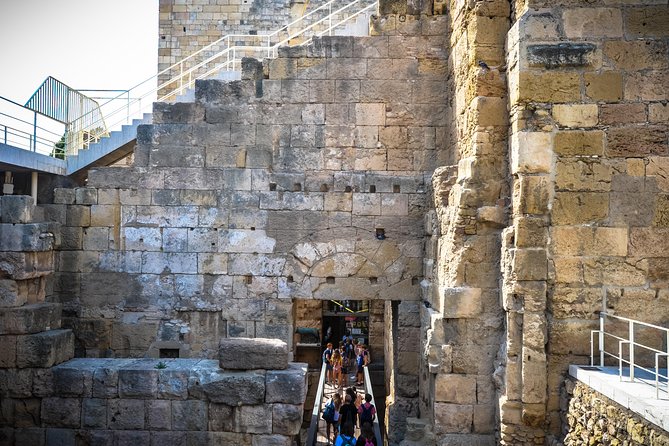
After returning to Tarragona, the walking section begins around 11 a.m. You enter the old part of town through a narrow opening in the ancient walls. From the start, the appeal is the contrast between the present-day city and the Roman foundations beneath it.
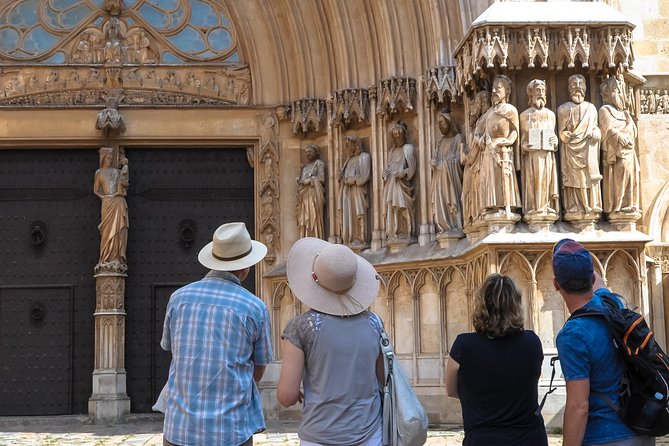
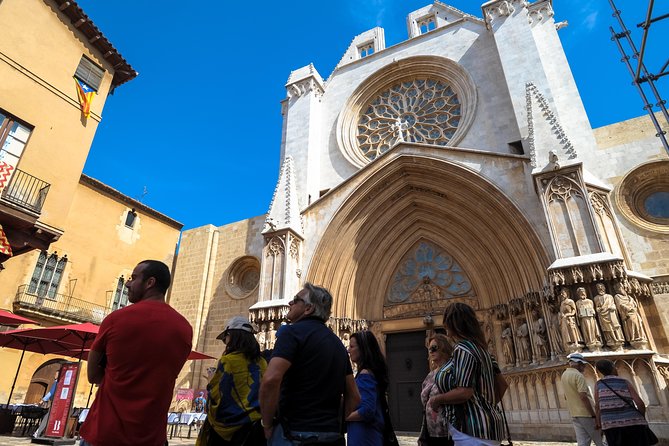
The route follows an archaeological walkway beside surviving stone walls. You pass the medieval hospital and continue toward the cathedral. On Sunday mornings, an antique market can add extra color around the cathedral area, though the market is not a guaranteed feature on every day of operation.
From there, the route heads downhill through the old quarter to the Roman Forum and circus. Tarragona’s Roman circus is especially interesting because later buildings grew around and over it. The remains do not sit in a wide, isolated park. Instead, you find pieces of the ancient structure mixed into ordinary streets and squares.
A highlight is the underground passageways that once helped support access and movement around the circus stands. The route continues to Plaça de la Font, a popular square located within the former circus area. It takes a little imagination to picture chariots racing through a place now filled with city life, but that collision of old and new is exactly what makes Tarragona worthwhile.
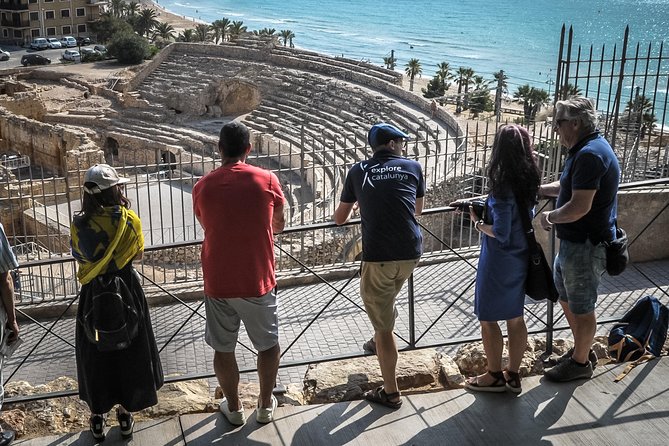
The final Roman view is the amphitheater beside the sea. From above, you can look down toward the arena and imagine the public spectacles held there. A Christian church was later built in the middle of the arena using blocks from the amphitheater, adding another layer to the site’s story.
The walking portion lasts about two hours and is included in the tour, but entrance fees for museums and monuments are not. That distinction matters. You see the principal areas and receive a guided explanation, but you should not assume that every interior or paid archaeological space is covered. One of the clearest tradeoffs is that some visitors would prefer to skip Sitges and use that time to enter more of Tarragona’s Roman sites.
Roc de Sant Gaieta, a short coastal pause
At about 1:30 p.m., the minivan stops at Roc de Sant Gaieta on the way to Sitges. This is a brief 20-minute visit, so treat it as a photo stop and a chance to stretch your legs rather than a major sightseeing block.
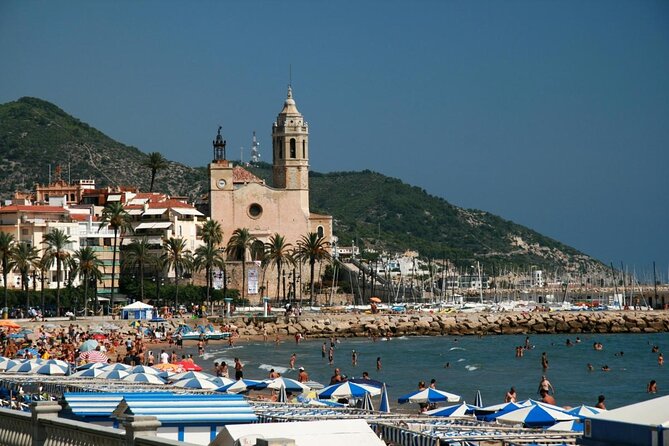
The small coastal community is built along rocky shoreline, with tiny white houses and an unusual style inspired by Mediterranean and Roman-Greek forms. It has a quieter feel than Sitges and gives the day a useful change of pace after Tarragona’s ruins.
You will not have time here for a long meal, swim, or extended wandering. That is the limitation. Still, the stop breaks up the drive and offers a different kind of coastal setting. If you enjoy architecture and small-scale places, you will likely appreciate the contrast between Roc de Sant Gaieta and the larger resort town later in the day.
Same base, a different kind of day out:
- Barcelona: Sagrada Familia Entry Ticket with Audio Guide
★ 4.6 · 105,312 reviews - Barcelona: Park Güell Admission Ticket
★ 4.4 · 76,534 reviews - Barcelona: Casa Batlló Entry with Self-Audioguide Tour
★ 4.7 · 25,359 reviews - Barcelona: 24 or 48-Hour Hop-On Hop-Off Bus Tour
★ 4.4 · 20,872 reviews
Three hours in Sitges for lunch, shops, and the sea
The final major stop begins around 2:30 p.m., with departure scheduled for about 5:30. Sitges was once a fishing village and is now a fashionable seaside town with whitewashed former fishermen’s houses, narrow lanes, boutiques, cafes, bars, and a long sandy waterfront.
This is your flexible part of the day. You can follow your guide’s food suggestions, choose a restaurant by the water, walk the shaded side streets, browse shops, or head to one of the town’s 17 beaches. Swimming is possible, so bring a swimsuit and beach towel if that appeals to you.
I like the balance here. After a morning of guided history, you get time to set your own pace. A quick swim can be a welcome reset after walking through Tarragona, while lunch by the water gives the day a relaxed finish. The food is not included, so you can choose according to your budget rather than being tied to a set restaurant.
Sitges is also where the tour’s broad appeal becomes clear. Couples may prefer the cafes and seafront. Families can use the beach time. Shoppers can browse boutiques. History fans can continue exploring the old whitewashed streets and local sights.
The tradeoff is crowding. Sunday afternoons can make Sitges quite busy, and a long restaurant stop can eat into beach or shopping time. Plan your priorities before arriving. If swimming is your goal, do not spend the entire three hours over lunch. If food is your priority, ask your guide for a recommendation early.
How the small-group format affects the day
The tour is sold as a small-group experience, with the additional information listing a maximum of eight participants. The highlights also describe a maximum of 15, so the exact vehicle size may vary by departure information, but you should expect a much smaller group than a standard coach tour.
That matters on a day with several short stops. A compact group can usually gather quickly, and you can ask the guide about the Roman sites, local food, or where to spend your free time. Guides such as Sergio and Xavier have been praised for answering questions, while Rod and Henrique have received especially strong comments for keeping the explanations interesting and personal.
The minivan includes air conditioning and transport between all four locations. Hotel pickup and drop-off are not included. You begin near Palau de la Música and finish around Plaça de Catalunya, usually between 7 and 7:15 p.m. Depending on group size and traffic, the vehicle may return to the office or stop near Arc de Triomf, about a 10-minute walk away.
The central ending is convenient if you want dinner or an easy metro connection. It also means you should not plan a tight evening reservation before 8 p.m. Traffic can affect the return time.
Is the $119.48 price fair?
At $119.48 per person, the value comes from the amount of ground covered and the guide-led context. You receive round-trip transport, an English-speaking professional guide, and a full day visiting Tarragona, Roc de Sant Gaieta, and Sitges.
The price does not include food, drinks, hotel transfers, or admission to paid museums and monuments in Tarragona. Those costs are easy to manage, but they should be part of your day-trip budget.
I consider the price reasonable if you want convenience and interpretation. Arranging Tarragona and Sitges independently would require planning transport, timing the aqueduct stop, navigating the Roman sites, and finding your way between the coastal towns. The tour removes that work and gives you a coherent day.
It is less compelling if you want a slow archaeological visit. Independent transport or a private guide would give you more control over how long you spend at the amphitheater, circus, or forum. This tour is designed for variety, not exhaustive study.
What to pack and who should book
Wear comfortable walking shoes. The day includes the aqueduct crossing, old stone streets, archaeological paths, and Tarragona’s sloping lanes. Bring sun protection, especially in warmer months, along with water and clothing suited to a long day outdoors.
A swimsuit and towel are worthwhile if you want to swim in Sitges. The swimming opportunity is optional, but the beach stop is long enough to make it realistic.
The tour is offered in English only. It is not recommended for children aged four and under, and most older participants can take part. Since the day includes walking and uneven historic surfaces, anyone with mobility concerns should assess the route carefully before booking.
This tour suits you best if you want:
- Roman history without spending an entire day inside museums
- A small vehicle instead of a large coach
- A guide who can explain Tarragona’s scattered ruins
- A mix of archaeology, architecture, beaches, cafes, and shopping
- Free time rather than a fully scheduled group lunch
- A full day outside Barcelona without arranging several connections
It may not suit you if Tarragona is your only priority. The city deserves more time, and the tour’s three-hour Sitges stop takes away time that could otherwise be used for additional Roman sites.
Should you book this Tarragona and Sitges tour?
Book it if you want a well-rounded day beyond Barcelona, especially if you like the idea of walking on a Roman aqueduct in the morning and swimming in Sitges in the afternoon. The combination is unusual, and the air-conditioned minivan makes the long route manageable.
Skip it if you want a specialist archaeology tour, long museum visits, or complete control over your schedule. For most people seeking variety, strong guiding, and easy transport, the $119.48 cost is justified. Just arrive ready for an early start, plenty of walking, a quick stop at Roc de Sant Gaieta, and a lively Sitges afternoon.
Free cancellation is available up to 24 hours before the start time. The tour also requires a minimum number of participants, so a cancellation for that reason leads to an alternative date or a full refund.
FAQ
Where does the tour begin?
It begins at 8:30 a.m. at C/ Palau de la Música, 1, in Barcelona’s Ciutat Vella, beside the Palau de la Música. You can arrive from 8:15 for restrooms and a quick coffee.
Where does the tour end?
The planned end point is Plaça de Catalunya around 7 to 7:15 p.m. Depending on traffic and group size, the vehicle may instead return to the tour office or stop near Arc de Triomf.
How long is the tour?
The experience lasts approximately 10 hours and 30 minutes, from the morning departure in Barcelona until the evening return.
Is transportation included?
Yes. Transport between Barcelona, Tarragona, Roc de Sant Gaieta, and Sitges is provided in an air-conditioned minivan. Hotel pickup and drop-off are not included.
Are food and drinks included?
No. You pay separately for lunch, snacks, and drinks in Sitges or elsewhere during the day.
Are entrance fees included?
No. Admission fees for museums and monuments in Tarragona are not included. The guided outdoor sightseeing described for the aqueduct and city areas does not carry an additional tour admission charge.
Is the tour offered in languages other than English?
No. This experience operates in English only.
Just added in Barcelona
- E-Bike tour in Barcelona with English Guide★ 5.0 · 128 reviews
- Barcelona: Wine Tasting and 5 Course Tapas Pairing Dinner★ 4.5 · 129 reviews
- Barcelona Gothic Quarter Walking Tour with Tapas★ 5.0 · 248 reviews
- Barcelona Luxury Yacht Cruise – Day or Sunset, Open Bar & Snacks★ 5.0 · 154 reviews
- Andorra Original History and Sightseeing Tour (Private, Pickup)★ 5.0 · 350 reviews
- Wine Tasting Experience in Barcelona★ 5.0 · 172 reviews
- Barcelona Wax Museum Admission Ticket★ 4.5 · 237 reviews
- Entrance to the Mirador Torre Glories Barcelona★ 4.5 · 193 reviews
Historical Tours, compared.

Madrid Essential: Historic Center, Plaza Mayor & Royal Palace
Read our review →
Tapas Walking Tour with Food, Wine, and History
Read our review →
Sevilla Food Tour: Tapas, Wine, History & Traditions
Read our review →
Valencia Old Town Tour with Wine & Tapas in 11th Century Historic Monument
Read our review →
Ultimate Seville Tapas, Wine & History Small Group Tour
Read our review →
Skip-the-Line Great Mosque-Cathedral History Tour
Read our review →

Taste of Malaga Tour : Tapas, History and Local Customs
Read our review →Browse the lists this tour appears in