
Reviewed · GOTHIC & JEWISH QUARTER WALKING TOURS
Private Barcelona Old Town and Gothic Quarter Walking Tour
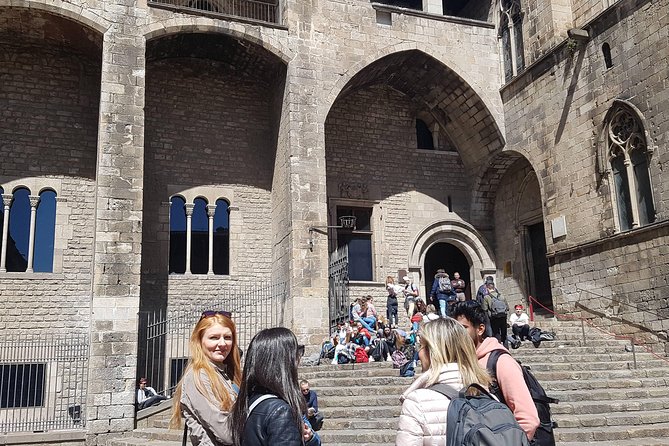
Barcelona’s oldest streets are best read on foot, and this private tour gives you the city’s main story in one concentrated walk. You move from Roman Barcelona to medieval royal courts, Catalan Gothic churches, political squares, food stalls, and lively lanes, with a guide filling in the links.
I like the private format, since your group can ask questions, slow down, or focus on places that catch your eye. I also like the guides’ practical touch: Montse has helped visitors find local tapas and authentic flamenco, while Olga, Isabel, and others have adjusted routes to match a group’s interests. The main drawback is the $96.75 per-person price, which makes the tour a better buy for a small group than for one or two people on a tight budget.
Key points to know before you book
- Roman ruins and medieval lanes: Ciutat Vella and the Gothic Quarter reveal Barcelona’s earliest city walls, columns, alleys, and political center.
- Private attention: Only your group takes part, so you can ask questions and set a comfortable walking pace.
- Nine major stops: The route covers the Gothic Quarter, La Rambla, La Boqueria, Barcelona Cathedral, Santa Maria del Mar, and several historic squares.
- Strong guide feedback: Isabel, Montse, Olga, Baggio, Juan, Alba, and others are praised for warmth, humor, local context, and flexible pacing.
- Useful first-day orientation: The tour links major sights with neighborhood advice, food tips, and suggestions for the rest of your stay.
Why this walking tour works as a Barcelona introduction
Barcelona can feel confusing at first. The city’s old center is not one tidy district, but a set of overlapping neighborhoods: Ciutat Vella, the Gothic Quarter, El Born, and the streets around La Rambla. A guide helps you see how these pieces fit together.
This experience lasts about two and a half hours and is conducted in English. It begins near Plaça de Catalunya, at Carrer de Fontanella 2, then works south through the old city before ending near Passeig del Born. The route gives you a useful first look without asking you to spend a full day on your feet.
I especially like this kind of tour early in a Barcelona stay. You get names, landmarks, and a basic sense of direction before returning on your own. The guide can also help you decide which places deserve a longer visit later.
The private setup matters here. A large group often has to stop wherever the guide finds space, while a private group can ask about Catalan politics, Roman ruins, food, architecture, or local customs as they come up. Several guides are praised for making the walk feel like an outing with an informed local rather than a fixed speech.
Still, keep the price in perspective. At $96.75 per person, the cost is high for a short walking tour if you are traveling alone or as a couple. For a family or group splitting the cost of a private guide, the value improves, particularly if you make good use of the questions and personalized advice.
More Old Town Walking Tours in Barcelona
- Barcelona in 1 Day: Sagrada Familia, Park Guell,Old Town & Pickup
★ 5.0 · 13,541 reviews - Barcelona: Sagrada Familia, Modernism, and Old Town Tour
★ 4.7 · 1,621 reviews - Barcelona Gothic Quarter Tapas & Taverns Food & Wine Tour
★ 5.0 · 1,470 reviews
Ciutat Vella: where Barcelona begins
The first section takes you into Ciutat Vella, Barcelona’s old city. This is the part of town where Roman Barcelona began, and the narrow lanes make a strong contrast with the broad modern streets outside the historic center.
Expect roughly 30 minutes here. The appeal is not a single ticketed sight. It is the accumulated feel of old walls, tight passages, reused buildings, and layers of construction from different periods.
A guide can point out traces that are easy to pass without noticing. The walk may include Roman remains, old city walls, columns, and other fragments that make the city’s early form easier to picture. One guide has also explained how the old ground level and street surfaces changed over time, a small detail that helps you understand why parts of the Gothic Quarter feel enclosed and uneven.
This is where the tour’s storytelling matters most. Without context, an old stone wall is simply an old stone wall. With a guide, it becomes part of a story about Roman settlement, medieval expansion, and the city’s changing shape.
The Gothic Quarter: ruins, shops, and daily life
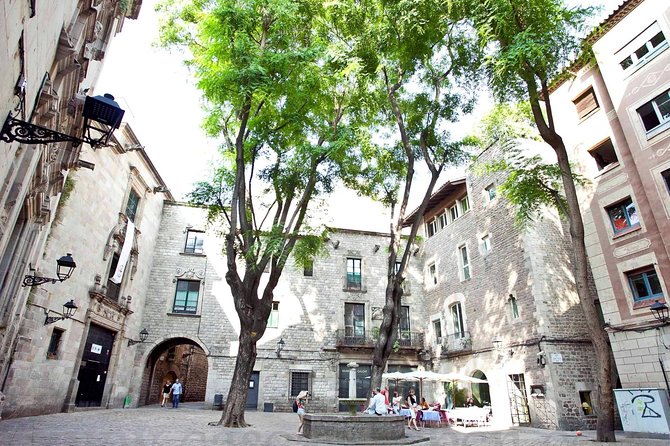
The Barri Gòtic is the tour’s central stage. It grew from the Roman settlement and now mixes old structures with newer buildings, cafés, bars, small shops, and restaurants. That mixture is part of its appeal, but it also means the district is not a perfectly preserved medieval set.
You will walk through lanes that can feel almost maze-like, then emerge into small squares and larger public spaces. A good guide helps you separate genuine medieval fabric from later additions and explains why the neighborhood looks older than some of its buildings actually are.
The strongest guide comments focus on context. Montse has explained the ancient wall, Roman columns and aqueduct remains, Catalan identity, and the relationship between Catalonia and Madrid. Other guides, including Alba and Katty, have been praised for taking groups away from the most obvious crowd routes and pointing out details they would likely miss alone.
You may also see the tile mosaic wall near the old quarter, St. Jordi’s door, and a former Picasso restaurant with drawings displayed inside, depending on the guide’s route and the group’s interests. These details give the walk a more personal feel than simply checking off the cathedral and the main squares.
The Gothic Quarter is also a working neighborhood. You will encounter places to eat, drink, shop, and pause. That makes the tour useful beyond sightseeing, since your guide can suggest where to return later.
La Rambla and La Boqueria: Barcelona’s famous public face
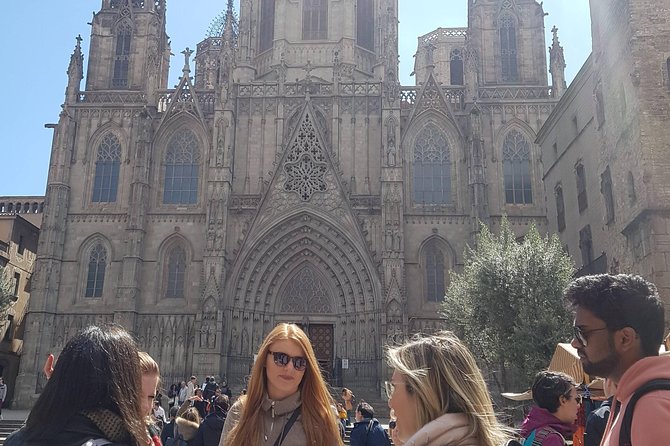
The route continues along La Rambla, Barcelona’s best-known pedestrian boulevard. Street performers, cafés, food shops, and constant movement give it a different mood from the quiet lanes of the Gothic Quarter.
La Rambla is famous, but it is not necessarily the place where you will find the most local-feeling experience. Its importance lies in how it connects the old center with the waterfront and in the way it has served as a public artery for generations.
The guide can help you read the street rather than simply walk down it. You may hear about Catalan food traditions, local products, and the role of La Boqueria in Barcelona’s everyday food culture. Keep your attention on your surroundings, since the busy street can be distracting.
You pass in front of Mercat de la Boqueria, the city’s best-known open market. The colorful stalls display produce, cured meats, sweets, seafood, and prepared foods. The tour does not include food or drinks, and passing the market is not the same as having time for a full meal, so plan separately if you want to browse or eat there.
A food-focused guide may add extra value here. Berta, for example, has combined historic sights with stops at four tapas restaurants, explaining both the food and the places along the route. That is not the standard promise of this walking tour, but it shows how much a private guide may be able to adapt when food is a major interest.
More old-quarter walks in Barcelona:
- Barcelona Helicopter, Sailboat & Old Town Private Walking Tour
★ 5.0 · 1,395 reviews - Barcelona: Old Town and Gothic Quarter Walking Tour
★ 4.8 · 1,393 reviews - Barcelona Old Town & Gothic Quarter Small Group Tour
★ 5.0 · 1,308 reviews - Barcelona e-Bike Tour: Gaudí & Old Town Small Group
★ 5.0 · 769 reviews
Barcelona Cathedral and Plaça de Sant Jaume
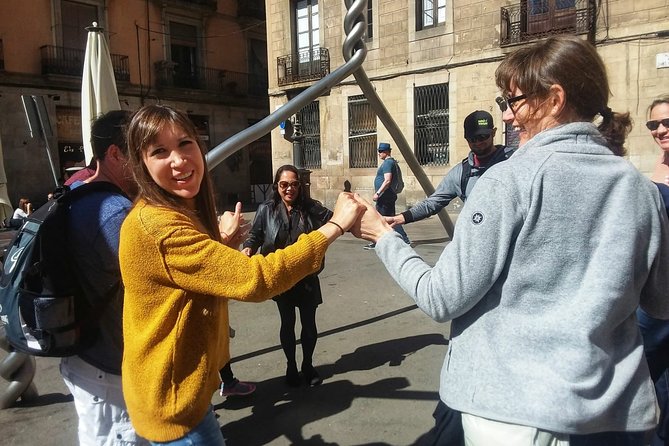
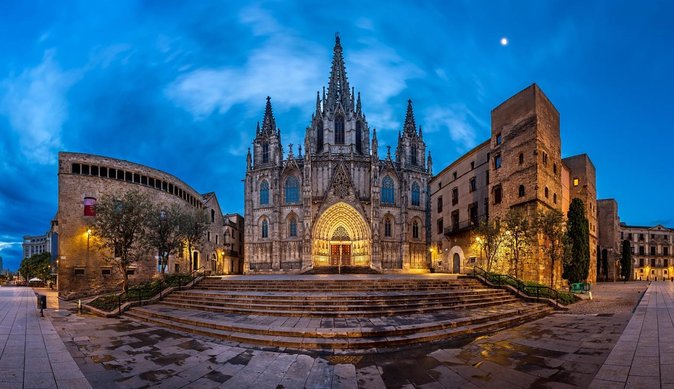
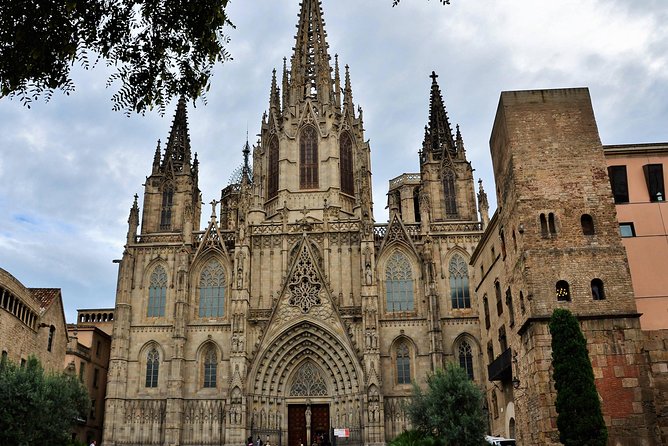
Barcelona Cathedral is another key sight along the route. You can admire its Gothic exterior and the gargoyles high on the towers. The cathedral is dedicated to Saint Eulalia and serves as the seat of Barcelona’s archbishopric.
The tour passes by the cathedral rather than promising a full interior visit. That distinction matters if you want to study the cloister, chapels, or interior in detail. You may want to return on your own, depending on opening hours and admission arrangements.
From there, the walk reaches Plaça de Sant Jaume. This is one of the city’s oldest and most important squares, and it remains a center of Catalan political life. The square gives a useful bridge between architecture and modern identity.
A guide can explain why Catalonia’s relationship with the rest of Spain remains such an important part of local conversation. This is one of the tour’s best opportunities to move beyond dates and buildings and understand how the city sees itself.
Plaça del Rei and Barcelona’s medieval center
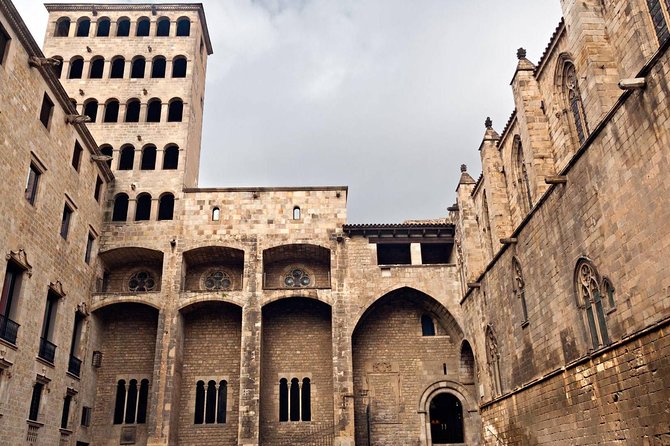
Plaça del Rei offers one of the clearest pictures of medieval Barcelona. The Royal Palace and surrounding structures enclose a quieter space where the city’s medieval power is easier to imagine.
After the noise of La Rambla and the movement of the Gothic lanes, this square feels calmer. The setting gives the guide room to explain the monarchy, city government, and the role of Barcelona during the Middle Ages.
This stop is especially valuable if you enjoy architecture but do not want a lecture detached from the place itself. You can look at the buildings while hearing how the square functioned, rather than simply memorizing names.
The route includes free admission to the outdoor stops, but it is not an attraction-ticket tour. The value comes from interpretation, route planning, and access to a guide’s local knowledge. If you expect lengthy indoor visits, this experience may not meet that goal.
Santa Maria del Mar and El Born
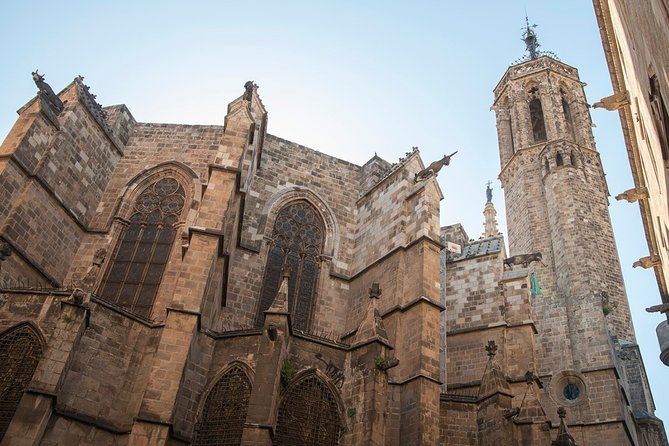
The walk continues toward the Basilica de Santa Maria del Mar and the Born district. Santa Maria del Mar is one of the finest examples of Catalan Gothic architecture and an essential sight in this part of Barcelona.
The basilica is often associated with the citizens who helped raise it, which gives the building a different character from a royal or episcopal foundation. The church’s broad Gothic form and connection to the old neighborhood make it a natural high point of the walk.
The tour includes the Born district in its old-town coverage and ends at Passeig del Born. This is a practical finish. You are left in an attractive part of the city with access to more restaurants, shops, and nearby sights.
I would not count on an extended interior visit unless your guide specifically arranges one. The supplied details promise a pass by and visit to the major highlights, not admission to every church or museum. Ask at the start if Santa Maria del Mar is a priority for you.
What the guides add to the experience
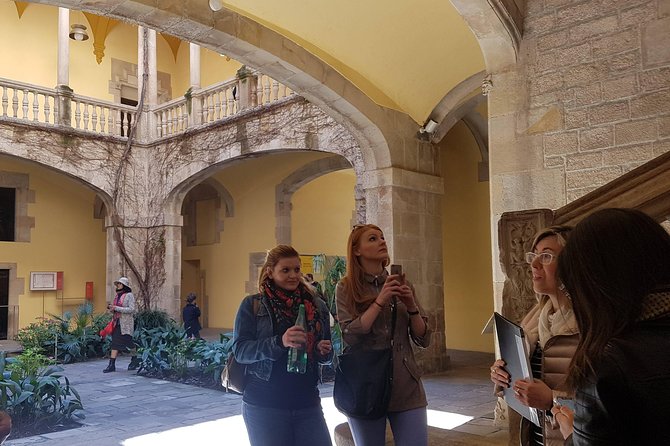
The most praised feature is the quality of the individual guides. Names that appear repeatedly in the feedback include Isabel, Montse, Olga, Baggio, Juan, Alba, Miguel, Stephanie, Antonio, Katty, Ane, and others.
Their strengths are similar but not identical. Isabel is described as warm, patient, and especially good with families and quieter personalities. Baggio has made the history accessible for children without making it childish. Olga has been praised for humor, clear explanations, and adapting a private walk for two people.
Montse’s strength is breadth. She has connected architecture with Catalan politics, local families, food, flamenco, and the city’s cultural identity. Juan brings energy and enthusiasm, while Alba is noted for steering away from crowds and using emotion and humor to make the past easier to remember.
The private arrangement lets these differences work in your favor. You can tell the guide what you already know, mention sights you have visited, or ask to spend more time on a particular subject. Antonio, for example, has adjusted a route for people who had already seen some of Barcelona’s major sights.
There is one practical point to watch. The stated meeting information has included a start time discrepancy, with one piece of information indicating 9:00 and another guide explaining that the tour began at 9:30. Confirm the exact start time and meeting point before the day of the walk. The listed start address is Carrer de Fontanella 2, near Plaça de Catalunya.
Pace, family comfort, and practical details
Most people can take part, and children must be accompanied by an adult. The first child is free when sharing with two paying adults, with a 50 percent reduction for additional children under the stated child-rate rules.
A private walk is a good choice for families because the guide can adjust the pace and explain difficult subjects in a way children can follow. Baggio and Isabel have been especially praised for making younger or quieter participants feel included.
You will be walking for about two and a half hours, so eat beforehand and wear comfortable shoes. One piece of feedback specifically warns that the walk feels long if you begin hungry. There are no food or drinks included.
The tour is near public transportation, but hotel pickup and drop-off are not included. Service animals are allowed. Other languages may be available if requested, while English is the standard language described here.
Cancellation is free up to 24 hours before the local start time. Changes or cancellations made inside that 24-hour window are not accepted for a refund.
Is the $96.75 price worth it?
The answer depends on how many people share the booking and how much guidance you want. If you are paying alone, $96.75 is a serious price for a 2.5-hour walk. If you have a family or small group, the private format can make the cost more reasonable, especially when compared with booking several separate guided visits.
You are paying for more than a route. You get a professional local guide, a private group, the chance to ask unlimited questions, and advice that can shape the rest of your Barcelona visit. The strongest value comes when you use the guide actively rather than simply following along.
The tour does not include cathedral or museum admissions, meals, hotel transport, or a full food tasting. If you want interior access, tapas, or a market meal built into the experience, you may need another tour or a separate plan.
Should you book this Barcelona walking tour?
Book it if you want a focused first look at Barcelona’s old center, prefer private attention, and care about context as much as photographs. It is especially well suited to families, small groups, first-time visitors, and anyone who wants practical advice about food and neighborhoods along with the history.
Skip it if your budget is tight, you prefer to explore independently, or you want long indoor visits at the cathedral and basilica. You can walk many of these streets for free.
For most people who do book, I would schedule it near the beginning of your stay and arrive ready with questions. Ask about Catalan identity, the best places to return for food, which buildings deserve an interior visit, and how to avoid repeating sights you have already seen. That is where the private format earns its keep.
FAQ
How long does the Barcelona Old Town and Gothic Quarter tour last?
The tour lasts approximately 2 hours and 30 minutes.
Where does the tour begin?
The listed start point is Carrer de Fontanella, 2, Ciutat Vella, 08002 Barcelona, Spain, near Plaça de Catalunya.
Where does the tour end?
The tour ends at Passeig del Born, in Barcelona’s Ciutat Vella.
Is this a private tour?
Yes. Only your group participates in the activity.
What language is the tour offered in?
The tour is offered in English. Other languages may be available upon request.
Does the tour include hotel pickup?
No. Hotel pickup and drop-off are not included.
Are food and drinks included?
No. Food and drinks are not included.
Which areas does the tour cover?
The tour covers Barcelona’s Old Town, including Ciutat Vella, the Gothic Quarter, La Rambla, La Boqueria, Barcelona Cathedral, Plaça de Sant Jaume, Plaça del Rei, Plaça Reial, Santa Maria del Mar, and the Born district.
Are children allowed on the tour?
Yes. Children must be accompanied by an adult. The first child is free when sharing with two paying adults, and additional children receive a 50 percent discount under the stated child-rate conditions.
Can I cancel for a full refund?
Yes. You can cancel at least 24 hours before the local start time for a full refund. Cancellations or changes made less than 24 hours before the start time are not refunded.
More Walking Tours in Barcelona
- Barcelona Tapas and Wine Experience Small-Group Walking Tour
★ 5.0 · 5,804 reviews - Barcelona: Tapas Walking Tour with Food, Wine, and History
★ 4.8 · 4,261 reviews - Barcelona Tapas Walking Tour: Food, Wine & History
★ 4.5 · 1,928 reviews - Barcelona: Tapas Food Crawl Walking Tour with Tastings
★ 4.9 · 1,798 reviews
Just added in Barcelona
- E-Bike tour in Barcelona with English Guide★ 5.0 · 128 reviews
- Barcelona: Wine Tasting and 5 Course Tapas Pairing Dinner★ 4.5 · 129 reviews
- Barcelona Gothic Quarter Walking Tour with Tapas★ 5.0 · 248 reviews
- Barcelona Luxury Yacht Cruise – Day or Sunset, Open Bar & Snacks★ 5.0 · 154 reviews
- Andorra Original History and Sightseeing Tour (Private, Pickup)★ 5.0 · 350 reviews
- Wine Tasting Experience in Barcelona★ 5.0 · 172 reviews
- Entrance to the Mirador Torre Glories Barcelona★ 4.5 · 193 reviews
- Barcelona Wax Museum Admission Ticket★ 4.5 · 237 reviews
Gothic & Jewish Quarter Walking Tours, compared.
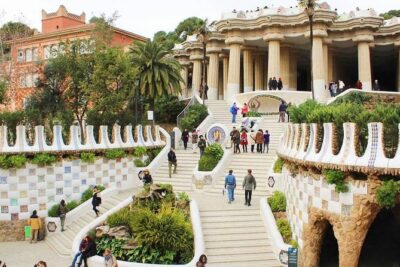
Barcelona in 1 Day: Sagrada Familia, Park Guell,Old Town & Pickup
Read our review →
Valencia Old Town Tour with Wine & Tapas in 11th Century Historic Monument
Read our review →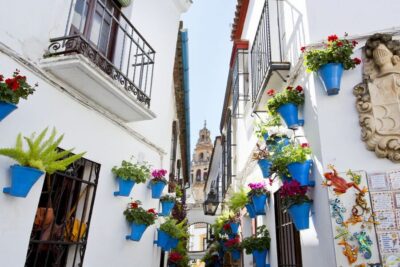
Cordoba Mosque & Jewish Quarter Tour with Tickets
Read our review →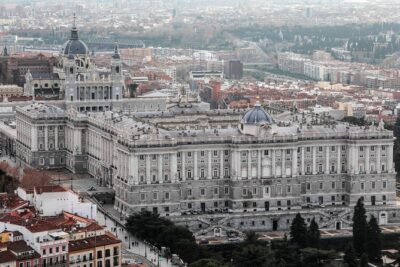
Madrid Old Town & Royal Palace Walking Tour Skip the Line Ticket
Read our review →
Old Town Tour, Wine & Tapas in an 11th c. Monument
Read our review →
Sagrada Familia, Modernism, and Old Town Tour
Read our review →
Barcelona Gothic Quarter Tapas & Taverns Food & Wine Tour
Read our review →Browse the lists this tour appears in