
Reviewed · GOTHIC & JEWISH QUARTER WALKING TOURS
Barcelona Old Town & Gothic Quarter Small Group Tour
Barcelona’s oldest streets make more sense with someone who knows where the Roman walls end, where medieval Barcelona took shape, and why a market stall matters. This walking tour links the Gothic Quarter, La Rambla, and El Born in about two and a half hours, so you get a useful first look without spending a full day on your feet.
I like the small-group format, which gives you room to ask questions, and I like the range of guides, including Alba, Isabel, Joris, Miguel, and Steven, who bring different stories and local tips. The main drawback is the brisk schedule: 15-minute stops are enough for an introduction, but not enough for a full visit inside every church or landmark.
Key points at a glance
- Roman Barcelona in the Gothic Quarter: See surviving traces of the city’s earliest period among narrow medieval lanes.
- A practical first-day orientation: The route connects the Old City’s major areas, making later exploring easier.
- Boqueria Market included: You can look around, try fresh juice, and return later with a better sense of where you are.
- Two historic churches from the outside: Barcelona Cathedral and Santa Maria del Mar are visited as sights, but entry is not included.
- Small groups with room for questions: The usual format is limited to 12 people, with a published maximum of 15.
- Strong guide lineup: Alba, Isabel, Joris, Miguel, Steven, Tatiana, and others are praised for clear explanations, humor, and helpful local advice.
Why this route works for a first look at Barcelona
This is a city orientation on foot, not a museum tour. You move from Roman remains to medieval alleys, from the broad sweep of La Rambla to the more intimate streets of El Born. I like that progression because it shows how Barcelona changed over time while keeping the walking area compact.
At $22.15 per person, the price is modest for a professional guide and roughly 150 minutes of walking. You are paying for context and direction rather than admission tickets, food, or transport. That makes the tour especially useful early in a stay, when you want to understand the Old City before exploring it on your own.
The route is offered in English, with morning and afternoon times. Children under two can join free, and children from three to eight receive a 30 percent discount. Children must be with an adult.
More Old Town Walking Tours in Barcelona
- Barcelona in 1 Day: Sagrada Familia, Park Guell,Old Town & Pickup
★ 5.0 · 13,541 reviews - Barcelona: Sagrada Familia, Modernism, and Old Town Tour
★ 4.7 · 1,621 reviews - Barcelona Gothic Quarter Tapas & Taverns Food & Wine Tour
★ 5.0 · 1,470 reviews
Meeting the city in the Gothic Quarter
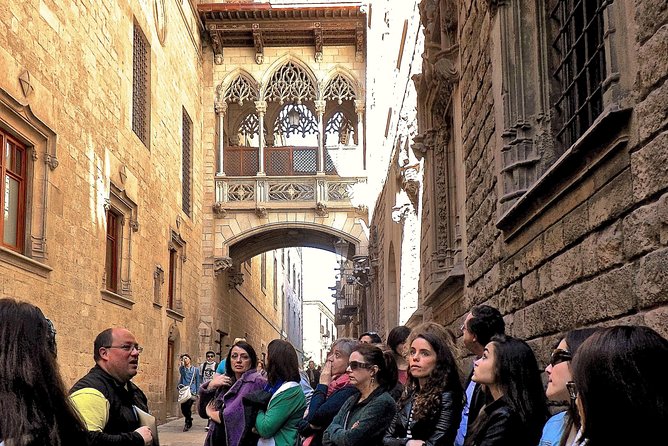
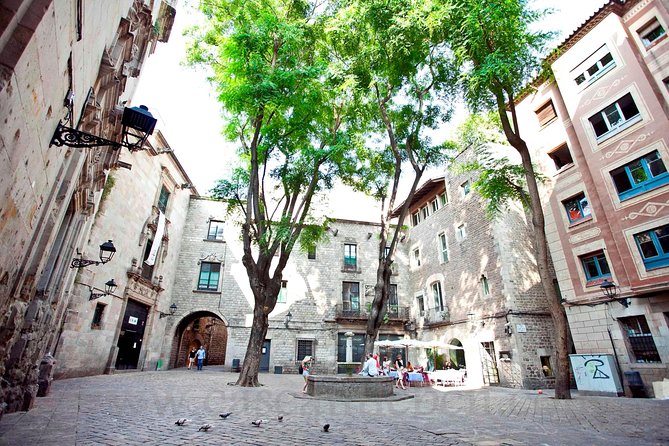
The tour begins at Carrer de Fontanella, 2, in Ciutat Vella. From there, you enter the Gothic Quarter, where narrow lanes and small squares can make independent wandering feel like a pleasant maze one minute and a confusing one the next.
The guide explains the Roman foundation beneath the medieval city. Roman remains can still be seen in parts of the quarter, and this early layer gives the crooked streets more meaning. You are not simply looking at old stone. You are seeing a city that grew over an earlier settlement, then took on its medieval and Gothic character.
The Gothic Quarter is the strongest part of the tour for anyone who wants stories tied to specific corners. The route gives you a basic map of the area while pointing out details you could easily pass without noticing. Guides such as Alba, Isabel, Joris, and Nilo have been praised for turning facts into stories and for keeping the pace comfortable.
You should expect plenty of standing and walking on uneven urban surfaces. The schedule lists about 45 minutes here, though the total tour lasts about two and a half hours. That difference suggests the route is not a stopwatch exercise. Guides may spend more or less time in each area depending on the group and street conditions.
Ciutat Vella and the shape of old Barcelona
Ciutat Vella means Old City in Catalan, and the tour uses this area to connect the Gothic Quarter with the wider story of Barcelona. You get about 15 minutes of guided explanation here, enough to put the surrounding streets into context before moving toward La Rambla.
This part matters because the Old City is not one single neighborhood with one single mood. The Gothic Quarter feels medieval and enclosed. El Born has a different blend of historic buildings, local life, and newer shops. La Rambla is broad, public, and theatrical. A guide helps you recognize those changes instead of seeing them as one long stretch of old Barcelona.
I find this kind of orientation more valuable than a list of dates. You learn how the neighborhoods relate to one another, then you can return to the ones that suit your interests. The tour ends near Palau de la Música Catalana, so you finish in a central location with more city exploring within easy reach.
La Rambla and the everyday theater of the boulevard
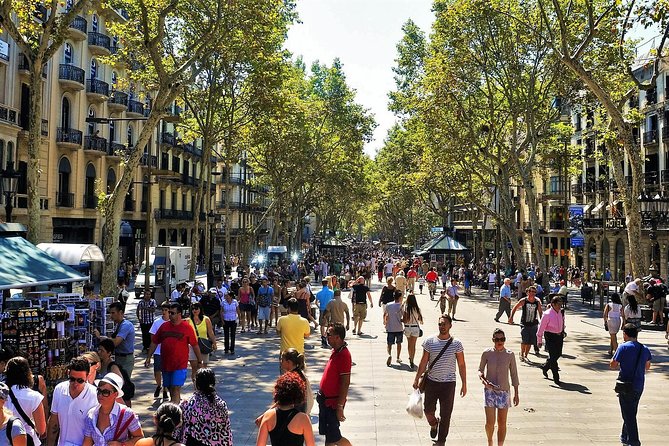
La Rambla is Barcelona’s best-known avenue, lined with bars, restaurants, street performers, and constant movement. The tour gives you about 15 minutes here, which is enough to understand its role without allowing the boulevard to take over the entire outing.
The guide also explains that the avenue follows the line of an old sandy river that once marked the edge of the walled city. That detail helps you see La Rambla as more than a shopping and dining corridor. Its modern public life sits on top of an older defensive boundary.
La Rambla can be crowded, so this is one place where staying with the group matters. One guide, Miguel, was especially praised for keeping everyone together and using a phone to reconnect with people who became separated. A small group helps, but you should still pay attention at crossings and busy corners.
Do not expect much time for browsing shops or watching performers. This is a guided pass through the avenue, not a leisurely afternoon there. If you want photographs or a long look at the street life, plan to return after the tour.
More old-quarter walks in Barcelona:
- Barcelona Helicopter, Sailboat & Old Town Private Walking Tour
★ 5.0 · 1,395 reviews - Barcelona: Old Town and Gothic Quarter Walking Tour
★ 4.8 · 1,393 reviews - Barcelona: El Born and Gothic Quarter Wine & Tapas Bar Tour
★ 4.8 · 674 reviews - Barcelona: Gothic Quarter Walking Tour
★ 4.9 · 383 reviews
A useful pause at La Boqueria Market
Mercat de la Boqueria is one of the route’s most practical stops. You enter the market from La Rambla and get about 15 minutes to look at the stalls, architecture, colors, and food traditions.
You can use the stop in two ways. Take a quick look at the produce and cured meats, perhaps buy a fresh fruit juice, or treat it as a preview and come back later when you have more time. One participant specifically valued being able to return after the tour, which is good advice for anyone who wants to browse without keeping a group waiting.
The market is also a helpful place to ask questions about Catalan food. The guide can point out where Iberian cured ham fits into local eating traditions and explain the role of market shopping in the city. Food and drinks are not included, so budget separately if you want a snack.
The short stop is both its strength and its limit. You get a quick introduction and useful bearings, but you will not have time for a serious food crawl. Keep your expectations modest, then return later if the market catches your interest.
Plaça Reial and the Gothic Quarter’s open room
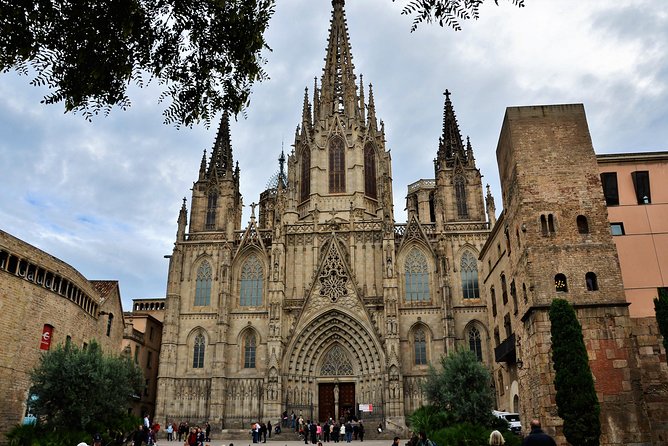
Plaça Reial gives the walking route a welcome change of pace. After tight lanes, this large square opens up with palm trees, terraces, an elegant fountain called the Three Graces, and distinctive lamps designed by a young Antoni Gaudí for one of his early public commissions.
The square has long attracted artists, bohemians, and visitors, and its Napoleonic design gives it a different feel from the medieval lanes nearby. You get about 15 minutes here, enough to hear why the plaza became an important meeting point and to take in its layout.
I like this stop because it makes the neighborhood easier to read. Barcelona’s Old City is not only a collection of dark alleys and old façades. It also has broad public spaces where people pause, eat, meet, and watch the city pass.
Barcelona Cathedral and the limits of a walking visit
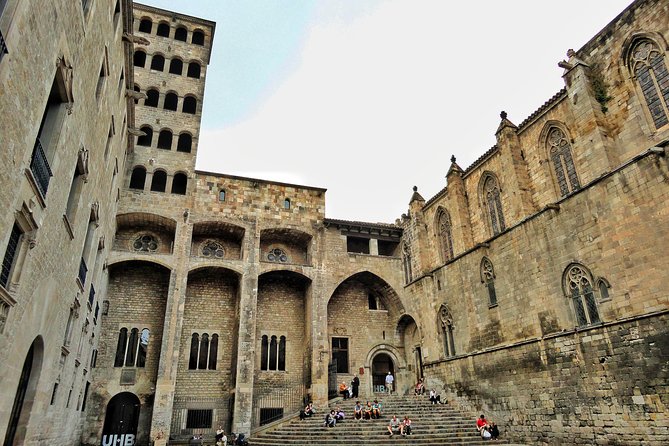
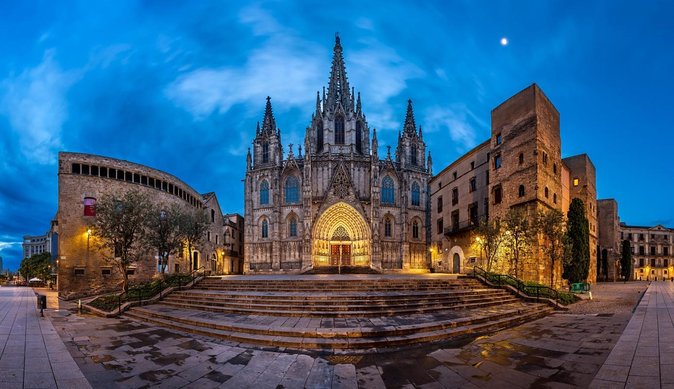
The route passes Barcelona Cathedral, known for its gargoyles, tall towers, bright interior, columns, and courtyard. The building is dedicated to Saint Eulalia and serves as the seat of the city’s archbishopric.
The scheduled time is about 15 minutes, and admission is not included. That means you should think of this as an exterior introduction unless you choose to pay for entry separately. The guide can explain the cathedral’s place in Barcelona’s religious and civic story, but you will not get a full interior visit as part of the tour.
This is a common tradeoff with a low-cost city walk. You see more places in one outing, but you do not spend enough time inside each one to study the art or architecture closely. If the cathedral is a priority, note the location and return later.
El Born, where old and new meet
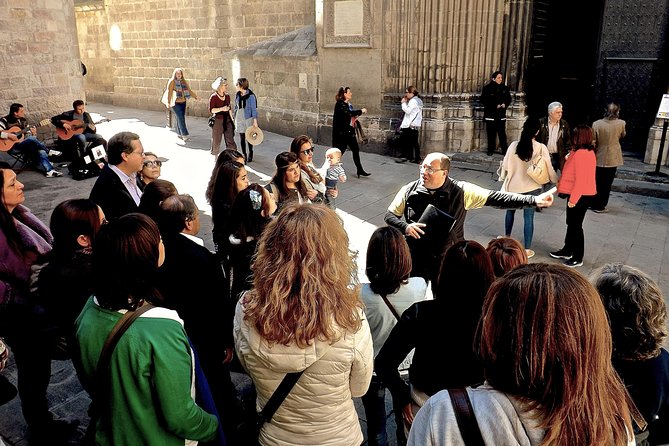
The route then moves into El Born, a neighborhood with narrow streets, historic buildings, newer additions, and popular squares. The schedule allows about 15 minutes, so this is an introduction rather than a detailed neighborhood walk.
El Born is valuable because it gives you a contrast with the Gothic Quarter. You can hear how the area developed, see how old and new buildings sit side by side, and get suggestions for further exploring. The route also points toward major cultural sights, including Santa Maria del Mar and Palau de la Música Catalana.
The guide’s local advice can be especially useful here. Laura, for example, was praised for recommendations involving gelato and paella. Miguel also helped with restaurant planning and lunch reservations during a private version of the experience. You should not expect every guide to arrange bookings, but this shows why it pays to ask questions about food and evening plans while you have a local in front of you.
Santa Maria del Mar and Catalan Gothic design
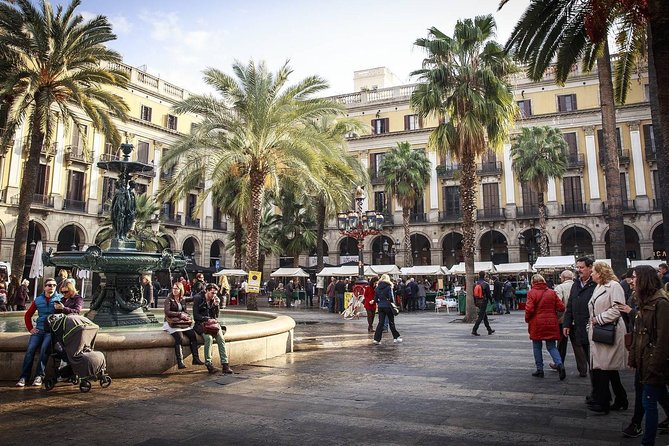
The Basilica of Santa Maria del Mar is presented as a major symbol of Catalan Gothic architecture. It was built in medieval times by people from the neighborhood, which gives it a strong connection to the community around it.
You get about 15 minutes at this stop, and admission is not included. The guide can explain why the basilica is often called the real cathedral of the Old Town, but you will need to pay separately if you want to go inside.
This is another place where I would use the tour as a preview. Note the setting, listen to the explanation, then decide if you want to return for a fuller visit. Trying to force every attraction into one short walk would make the tour tiring and rushed.
Finishing near Palau de la Música Catalana
The walk ends near Palau de la Música Catalana on Carrer del Palau de la Música. This is a smart endpoint. You finish in central Barcelona rather than at a distant hotel or transport stop, and you are left near one of the city’s most striking modernist buildings.
Palau de la Música Catalana was designed by Lluís Domènech i Montaner, who taught Gaudí. It combines sculpture, mosaic, stained glass, and wrought iron, and it is the only concert hall designated a UNESCO World Heritage Site.
The tour does not include entry, so treat the building as a final exterior sight unless you arrange a separate visit. Ending here also gives you a chance to continue through El Born, return to the market, find a meal, or make your way back toward other parts of Ciutat Vella.
Guides, group size, and the feel of the walk
The advertised small group is limited to 12 people, while the additional booking information gives a maximum of 15. Either way, this is far more manageable than a large coach group. You can hear the guide more easily, ask questions, and stay connected in narrow streets.
The guides named in the feedback include Alba, Isabel, Joris, Steven, Nilo, Miguel, Tatiana, Anna, José Carlos, Adria, Ane, Stephanie, and Laura. The most praised qualities are clear explanations, humor, warmth, patience, and a strong command of Barcelona’s past and present.
Alba and Isabel receive especially warm attention for making the walk engaging for families and teenagers. Joris is often described as friendly and patient with questions. Steven adds local customs and politics to the historical material, while Miguel is praised for practical help and good orientation.
The style may vary with the guide. That is normal for a tour led by several people, and it can be a benefit. One guide may focus more on Roman Barcelona, another on Catalan culture, and another on food and local recommendations.
Who will get the most from this tour?
I would choose this walk if you are visiting Barcelona for the first time, have limited time, or want help finding your way around the Old City. It is also a good first activity for families because children can join free under two, young children receive a discount, and guides such as Alba and Isabel have kept younger members engaged with stories and small details.
It suits people who prefer a guided overview to independent map reading. The route is stroller friendly according to one family account, and most people can participate. Service animals are allowed, and the meeting point is near public transportation.
You may want something else if your main goal is extended time inside churches, a market tasting tour, or a private photography walk. The churches are not included for admission, food costs extra, and the short stops favor breadth over detailed study.
Free cancellation is available up to 24 hours before the start time for a full refund. Changes or cancellations made within 24 hours are not refunded, and hotel pickup or drop-off is not included.
Is the $22.15 price a good deal?
For $22.15, I consider this good value if you use it as a city introduction. You get a professional local guide, a route through several major districts, and the chance to ask questions in a small group. You also finish in a useful central location rather than losing time on transport.
The value drops if you expect included admissions or a food experience. You will need to pay separately for the cathedral, Santa Maria del Mar, food, drinks, and any visit inside Palau de la Música Catalana. Still, the tour can save you from wandering past important places without understanding them.
Book it early if your schedule is fixed. The activity is booked an average of 41 days in advance, which suggests popular departure times may fill before a Barcelona trip.
Should you book this Barcelona Old Town walk?
Book this tour if you want a friendly, reasonably priced orientation to Barcelona’s oldest districts, especially at the start of your stay. I would use the walk to mark places for later visits, ask about Catalan food and customs, and learn the basic shape of the Gothic Quarter, La Rambla, and El Born.
Skip it if you want long interior visits or a slower food-focused outing. For most first-time visitors, though, the combination of Roman remains, medieval lanes, Boqueria Market, Gaudí’s early lamps, Catalan Gothic churches, and Palau de la Música Catalana makes this a practical introduction to the city.
FAQ
How long does the Barcelona Old Town and Gothic Quarter tour last?
The tour lasts approximately 2 hours and 30 minutes.
What language is the tour offered in?
The tour is offered in English.
How much does the tour cost?
The listed price is $22.15 per person.
Where does the tour begin?
It begins at Carrer de Fontanella, 2, Ciutat Vella, Barcelona.
Where does the tour end?
It ends near Palau de la Música Catalana on Carrer del Palau de la Música in the Born District.
Is hotel pickup included?
No. Hotel pickup and drop-off are not included.
Are food and drinks included?
No. Food and drinks are not included, though you can buy items such as fresh fruit juice at Boqueria Market.
Are admission fees included for the cathedral and basilica?
No. Admission to Barcelona Cathedral and the Basilica of Santa Maria del Mar is not included.
How large is the group?
The tour is advertised as a small group of up to 12 people. Additional booking information gives a maximum of 15 participants.
Can children join the tour?
Yes. Children must be accompanied by an adult. Children under two can join free, and children from three to eight receive a 30 percent discount.
Can I cancel for a full refund?
Yes. You can cancel at least 24 hours before the start time for a full refund. Cancellations or changes made within 24 hours are not refunded.
Just added in Barcelona
- Welcome to Barcelona: Private Tour with a Local★ 4.6 · 200 reviews
- Barcelona: White Rabbit Catalonia’s Top Immersive Experience★ 4.7 · 359 reviews
- Bean to Bar Chocolate Workshop in Barcelona★ 5.0 · 172 reviews
- Barcelona: Walking tour with Montjuic Castle & Cable Car★ 4.7 · 832 reviews
- Barcelona: Welcome to Barcelona Segway Tour★ 4.9 · 153 reviews
- Barcelona: Helicopter Flight with Optional Yacht Cruise★ 4.7 · 224 reviews
- Barcelona: The Original Barcelona Boat Party★ 3.9 · 254 reviews
- Barcelona Wine Tasting: Catalan and Spanish Wines★ 4.8 · 625 reviews
Gothic & Jewish Quarter Walking Tours, compared.
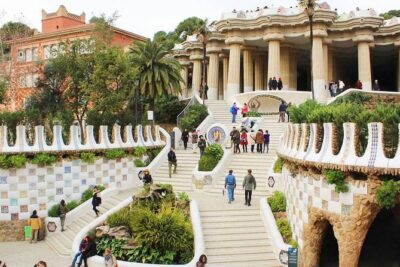
Barcelona in 1 Day: Sagrada Familia, Park Guell,Old Town & Pickup
Read our review →
Valencia Old Town Tour with Wine & Tapas in 11th Century Historic Monument
Read our review →
Cordoba Mosque & Jewish Quarter Tour with Tickets
Read our review →
Madrid Old Town & Royal Palace Walking Tour Skip the Line Ticket
Read our review →
Old Town Tour, Wine & Tapas in an 11th c. Monument
Read our review →
Sagrada Familia, Modernism, and Old Town Tour
Read our review →
Barcelona Gothic Quarter Tapas & Taverns Food & Wine Tour
Read our review →Browse the lists this tour appears in