
Reviewed · GOTHIC & JEWISH QUARTER WALKING TOURS
Barcelona Historical Walking Tour: Gothic Quarter and El Born
Barcelona’s oldest quarters are best explored on foot, where Roman walls, narrow medieval lanes, quiet squares, and grand churches appear one turn at a time. This tour links the Gothic Quarter with El Born, showing you places a bus cannot reach and explaining the stories behind them.
I like the compact two-hour route, which gives you a useful first look without taking up half a day. I also like the guide-led storytelling, especially the links to Picasso, Gaudí, Catalan identity, Jewish Barcelona, and the Spanish Civil War. The main drawback is that the experience depends heavily on your guide. Most are praised for energy and clear explanations, but one poor report describes a guide who spoke too softly for the group to hear.
Key points to know before you book
- Roman Barcelona appears beneath the medieval city: See remains of Barcino, Roman walls, aqueducts, and old routes.
- The route covers two historic districts: Walk from the Gothic Quarter into El Born, ending at Santa Maria del Mar.
- Guide quality is usually a major strength: Juan, Lidia, Jordan, Vanesa, Darren, Petra, and others are praised for humor, warmth, local stories, and clear explanations.
- The price is $30.25 per person: That is fair for a small-group introduction to central Barcelona, especially if you use the advice on food and sights afterward.
- Morning is a smart choice: One guide specifically recommends going early, when the streets are cooler and less crowded.
- The group can reach 20 people: Large enough for social energy, but possibly less intimate than a private walk.
Why this two-hour walk works well in Barcelona
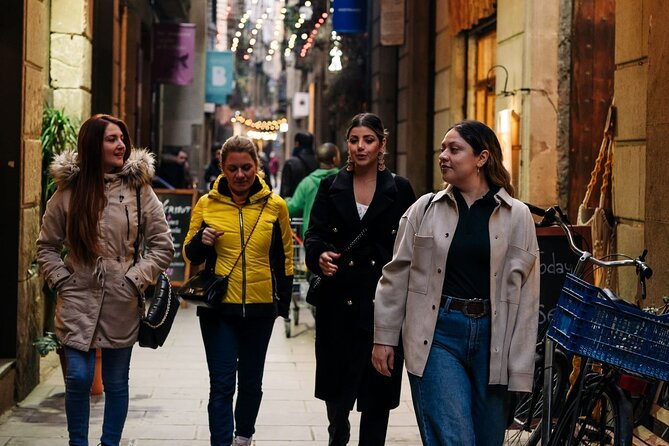
Barcelona can feel confusing at first. Roman foundations sit below Gothic churches, government buildings occupy medieval squares, and modern cafés share streets that once carried grain, worshippers, soldiers, and merchants.
I like this walk because it gives that jumble a clear shape. You start near Plaça del Vuit de Març in Ciutat Vella and finish at the Basilica de Santa Maria del Mar. Along the way, the guide connects buildings and events instead of treating each stop as an isolated photo opportunity.
The tour costs $30.25 per person. For that price, you are paying mainly for interpretation and direction. The listed stops are mostly free, although entry to Barcelona Cathedral and Santa Maria del Mar is not included. If you want a quick orientation before exploring on your own, the price is reasonable.
The route is described as an easy walk that most people can manage. It lasts about two hours and includes ten-minute visits at each stop. You will need comfortable shoes, but this is not presented as a strenuous hike. The pace can also leave time for photographs, an important detail in narrow streets where you may want to stop often.
More Old Town Walking Tours in Barcelona
- Barcelona in 1 Day: Sagrada Familia, Park Guell,Old Town & Pickup
★ 5.0 · 13,541 reviews - Barcelona: Sagrada Familia, Modernism, and Old Town Tour
★ 4.7 · 1,621 reviews - Barcelona Gothic Quarter Tapas & Taverns Food & Wine Tour
★ 5.0 · 1,470 reviews
Starting with artists at Els 4 Gats
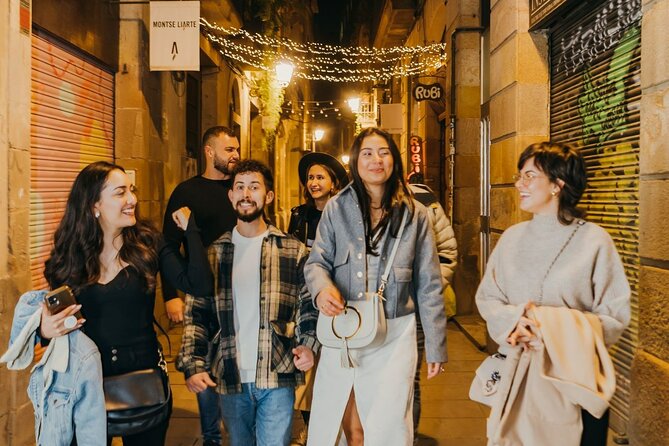
The first stop, Els 4 Gats, gives the tour an appealing artistic opening. This historic café and restaurant was a meeting place for artists, intellectuals, and modernists. Pablo Picasso and Antoni Gaudí are linked to the café, making it a useful place to discuss the creative world that shaped Barcelona around the turn of the twentieth century.
You spend about ten minutes here, and admission is free. Do not expect a long indoor visit based on the tour details. The value is the setting and the story: you begin by seeing Barcelona not only as an old city, but as a place where artists gathered, argued, worked, and built new ideas.
This is also a good moment to ask your guide about Gaudí or Picasso. Guides such as David and Juan have been especially praised for their explanations of Gaudí and for answering questions with extra details.
Catalan identity at the kissing mural
The next stop is El Mon Neix En Cada Besada, a large photomosaic installed in 2014. Its name refers to the idea that a world begins with every kiss, but the artwork also carries a serious political meaning.
The image is connected to Catalonia’s defeat on September 11, 1714, during the War of the Spanish Succession. That date later became La Diada, or Catalonia Day. The mural represents what freedom means to many people in Barcelona.
I like this stop because it gives you a quick way to understand Catalan identity. You are not simply looking at a colorful wall. You are hearing how public art can connect personal life, memory, and politics.
The visit lasts about ten minutes and costs nothing. It is a short stop, but it adds context that you might miss if you only focus on architecture.
Barcelona Cathedral and the story of Saint Eulalia
Barcelona Cathedral rises at the center of the Gothic Quarter. It is a Gothic church dedicated to Saint Eulalia, the city’s patron saint, who was tortured and killed by the Romans.
The exterior and surrounding streets are part of the walking experience, but admission to the cathedral is not included. That distinction matters. If you want to go inside, plan to pay separately according to the cathedral’s own admission arrangements.
A guide can help you read the building in a short visit, pointing out why this church matters to Barcelona and how the city’s Christian story connects with its Roman past. The scheduled stop is about ten minutes, so you should not expect a full interior tour.
For me, this is a good example of the tour’s purpose. It introduces major places and supplies the background, then leaves you with the option of returning later for a longer visit.
More old-quarter walks in Barcelona:
- Barcelona Helicopter, Sailboat & Old Town Private Walking Tour
★ 5.0 · 1,395 reviews - Barcelona: Old Town and Gothic Quarter Walking Tour
★ 4.8 · 1,393 reviews - Barcelona Old Town & Gothic Quarter Small Group Tour
★ 5.0 · 1,308 reviews - Barcelona e-Bike Tour: Gaudí & Old Town Small Group
★ 5.0 · 769 reviews
Roman walls at Casa de l’Ardiaca
Casa de l’Ardiaca is one of the more unusual stops. The building mixes Gothic and Renaissance elements and incorporates part of Barcelona’s Roman wall and aqueducts.
This is where the city’s layers become especially clear. Medieval architecture did not erase Roman Barcelona. Instead, later buildings grew around, over, and into the older remains.
You spend about ten minutes here, with no admission fee listed. The stop is valuable for anyone who wants to understand how the old city developed. It also gives the guide a chance to explain Barcino, the Roman settlement that preceded modern Barcelona.
If you have never studied Barcelona’s early history, this section can make the rest of the route easier to follow. The Roman wall is no longer an abstract idea on a map. You can see how it fits into the streets around you.
The Bishop’s Bridge and a local superstition
Carrer de Bisbe, or Bishop Street, follows one of the main routes through Roman-occupied Barcino. Its famous Neo-Gothic bridge, Pont del Bisbe, is one of the most photographed details in the Gothic Quarter.
The bridge is also tied to a superstitious legend. The exact story is part of the guide’s presentation, and it gives the stop a lighter touch after the more serious material about war, religion, and death.
This is a good spot for photographs, but it can also be a place where a group bunches together. Listen closely when the guide explains the legend, then take your picture without blocking the narrow passage.
Plaça Sant Felip Neri and the marks of war

Plaça Sant Felip Neri is one of the most affecting places on the route. It is a quiet square in the Gothic Quarter, but its walls carry scars linked to the Spanish Civil War.
The setting can seem peaceful at first. That contrast is what gives the stop its force. The guide explains the tragedy connected with the square, allowing you to read the damaged walls as part of Barcelona’s modern past rather than as decorative old masonry.
This is not a place for a rushed photo stop. Give yourself time to look closely and listen. The tour allocates about ten minutes, enough for a brief explanation and a pause.
I appreciate that the route includes difficult history alongside the lighter stories. Barcelona is not only cafés, churches, and legends. Its streets also carry memories of violence and loss.
El Call and Barcelona’s Jewish past

The walk then reaches MUHBA El Call, the former Jewish quarter. Its narrow streets and medieval buildings offer a view of Barcelona’s Jewish past, including a synagogue and local legends.
This section helps correct the common impression that the Gothic Quarter is simply a collection of old Christian buildings. The area also reflects the communities that lived, worked, worshipped, and traded here.
The stop is free and lasts about ten minutes. The guide’s explanation is particularly useful because narrow lanes can be hard to interpret on your own. Without context, you may see only old stone and tight passages. With context, the street plan begins to suggest how a historic community lived within the city.
Government and medieval power at Plaça de Sant Jaume
Plaça de Sant Jaume is one of Barcelona’s main public squares. It remains a center of government activity and is surrounded by important historic buildings.
This stop brings the route into the political heart of the city. After hearing about artists, Roman settlers, religious communities, and war, you see where civic power continues to operate.
The square can feel more open and active than the enclosed lanes nearby. That change of scale helps you understand the layout of the Gothic Quarter. It also makes a useful pause for the guide to explain Barcelona’s government and public life.
The visit is free and lasts about ten minutes. Keep your attention on the buildings around the square, not just the open space in front of you.
Plaça del Rei and the darker side of royal Barcelona
Plaça del Rei has a handsome appearance and houses the Royal Palace. It offers a glimpse of Barcelona’s royal past, but the guide also connects it with a darker part of the city’s story.
This is another stop where the tour moves beyond surface beauty. A palace square can look polished and impressive, yet the events associated with it may involve conflict, punishment, or political struggle.
The Royal Palace area also helps explain Barcelona’s importance during the medieval period. You see how religious, royal, and civic power occupied nearby spaces.
The stop is free, with about ten minutes for explanation. If you enjoy architecture, this may be one of the strongest parts of the Gothic Quarter route. If you prefer a longer palace visit, remember that this walking tour is an introduction, not an extended museum experience.
Plaça de l’Àngel and a heavenly name
The route continues to Plaça de l’Àngel, once known as Wheat Square because grain was traded there. Its current name, Angel’s Square, comes from a local heavenly legend.
This is a small but useful example of how place names preserve old work and old stories. The former market activity tells you about daily commerce, while the angel legend gives the square a more dramatic identity.
I like these brief stops because they keep the walk moving. You are not spending the entire two hours inside one formal monument. Instead, you are learning how ordinary streets and squares acquired their names.
Ending at Santa Maria del Mar in El Born
The final stop is the Basilica of Santa Maria del Mar, a celebrated Catalan Gothic church in El Born. Its location reflects Barcelona’s maritime past, and the building gives the walk a strong visual finish.
Admission is not included, so you should treat the church visit as an optional extra rather than part of the paid tour. The walk ends at Plaça de Santa Maria, 1, making it easy to continue exploring El Born afterward.
Ending here is practical. You have moved from the Gothic Quarter into a different old-city district, and the basilica gives you a clear landmark for continuing your day. You can use the guide’s suggestions to find food, drinks, attractions, or nearby streets to explore.
Several guides are praised for offering practical recommendations at the end. Juan has provided suggestions for restaurants, bars, food, and attractions, while Tammy sent detailed food and drink advice after the walk. That kind of follow-up can make the tour more useful than a simple two-hour history lesson.
Guide style, group size, and the real value
The tour accepts up to 20 people. That is not a private experience, but it is small enough to keep the group together in the old streets. A larger group can make it harder to hear, especially near traffic or in busy squares, so stay close to the guide.
The strongest pattern in the guide feedback is the range of effective personalities. Juan is praised for energy, historical detail, trivia, and answering questions. Lidia is described as warm, lively, and funny. Jordan uses comedy to keep the history moving, while Vanesa has been especially good with children. Darren has helped hold a teenager’s attention, and Petra is praised for an enthusiastic presentation.
There is one clear caution. A poor experience involved a guide who spoke so softly that people could not hear and some left the tour. That appears to be an exception among the supplied feedback, but it is still worth noting. If you cannot hear, say so early rather than waiting until the tour is half over.
The overall score is 4.9 from 217 ratings, with 97 percent recommending the experience. Those figures point to a strong track record, but the guide remains the key variable.
Who should book this Barcelona walk?
I would choose this tour if you want a well-organized introduction to Barcelona’s oldest districts in a short time. It suits first-time visitors, families, older adults who prefer an easy pace, and anyone who wants history explained rather than simply photographed.
It is also useful for repeat visitors. One person who had been to Barcelona several times still found new information through the guide’s explanations. That makes sense because the route focuses on stories, connections, and overlooked details.
You may want something else if you prefer long interior visits, a private guide, or a highly specialized architecture tour. The cathedral and Santa Maria del Mar are not included admissions, and each stop receives only about ten minutes.
Book a morning departure if you can. The streets are likely to feel cooler and less crowded, and an early start leaves the rest of the day open for El Born, museums, shopping, or a longer church visit.
Free cancellation is available if you cancel at least 24 hours before the start time. Changes or cancellations inside that window are not accepted for a refund. Confirmation arrives when you book, and the meeting point is near public transportation.
Should you book it?
Yes, if you want a friendly, focused introduction to the Gothic Quarter and El Born for $30.25. The route covers far more than the headline sights, from Roman walls and Jewish Barcelona to Catalan identity, Civil War scars, legends, artists, and maritime Gothic architecture.
I would book it early in a Barcelona visit, preferably in the morning. Use the walk to learn the city’s shape, note the guide’s food and attraction suggestions, then return to the places that deserve more time. Just remember that this is a walking orientation with stories, not a series of long monument visits.
FAQ
How long does the Barcelona Historical Walking Tour last?
The tour lasts approximately two hours.
Where does the tour begin?
It begins at Plaça del Vuit de Març in Ciutat Vella, Barcelona.
Where does the tour end?
The walk ends at the Basilica of Santa Maria del Mar, at Plaça de Santa Maria, 1.
Is the tour offered in English?
Yes. The experience is offered in English.
How many people can join the tour?
The maximum group size is 20 people.
Are admission fees included?
The guided walking tour and city highlights are included. Admission to Barcelona Cathedral and the Basilica de Santa Maria del Mar is not included. The other listed stops have free admission.
Can I cancel for a full refund?
Yes. You can cancel up to 24 hours before the experience begins for a full refund. Cancellations or changes made less than 24 hours before the start time are not accepted for a refund.
More Walking Tours in Barcelona
- Barcelona Tapas and Wine Experience Small-Group Walking Tour
★ 5.0 · 5,804 reviews - Barcelona: Tapas Food Crawl Walking Tour with Tastings
★ 4.9 · 1,798 reviews - Barcelona: Helicopter Flight, Boat Ride, and Walking Tour
★ 4.7 · 1,334 reviews - Barcelona: City Walking Tour with Local Guide
★ 4.9 · 980 reviews
More Historical Tours in Barcelona
- Barcelona: Tapas Walking Tour with Food, Wine, and History
★ 4.8 · 4,261 reviews - Barcelona Tapas Walking Tour: Food, Wine & History
★ 4.5 · 1,928 reviews - Barcelona: 2.5-Hour Bike or E-Bike Historical Tour
★ 4.5 · 1,262 reviews - Barcelona Erotic Museum – Explore Art, History & Fun
★ 4.4 · 450 reviews
Just added in Barcelona
- E-Bike tour in Barcelona with English Guide★ 5.0 · 128 reviews
- Barcelona: Wine Tasting and 5 Course Tapas Pairing Dinner★ 4.5 · 129 reviews
- Barcelona Gothic Quarter Walking Tour with Tapas★ 5.0 · 248 reviews
- Barcelona Luxury Yacht Cruise – Day or Sunset, Open Bar & Snacks★ 5.0 · 154 reviews
- Andorra Original History and Sightseeing Tour (Private, Pickup)★ 5.0 · 350 reviews
- Wine Tasting Experience in Barcelona★ 5.0 · 172 reviews
- Entrance to the Mirador Torre Glories Barcelona★ 4.5 · 193 reviews
- Barcelona Wax Museum Admission Ticket★ 4.5 · 237 reviews
Gothic & Jewish Quarter Walking Tours, compared.
Barcelona in 1 Day: Sagrada Familia, Park Guell,Old Town & Pickup
Read our review →
Valencia Old Town Tour with Wine & Tapas in 11th Century Historic Monument
Read our review →
Cordoba Mosque & Jewish Quarter Tour with Tickets
Read our review →
Madrid Old Town & Royal Palace Walking Tour Skip the Line Ticket
Read our review →
Old Town Tour, Wine & Tapas in an 11th c. Monument
Read our review →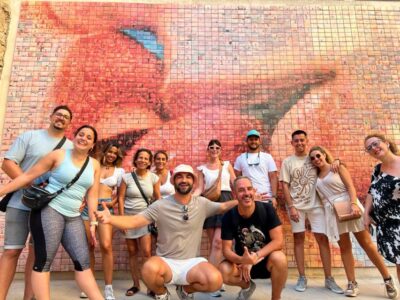
Sagrada Familia, Modernism, and Old Town Tour
Read our review →
Barcelona Gothic Quarter Tapas & Taverns Food & Wine Tour
Read our review →Browse the lists this tour appears in