Reviewed · TOURS IN BARCELONA
Barcelona Markets Tour
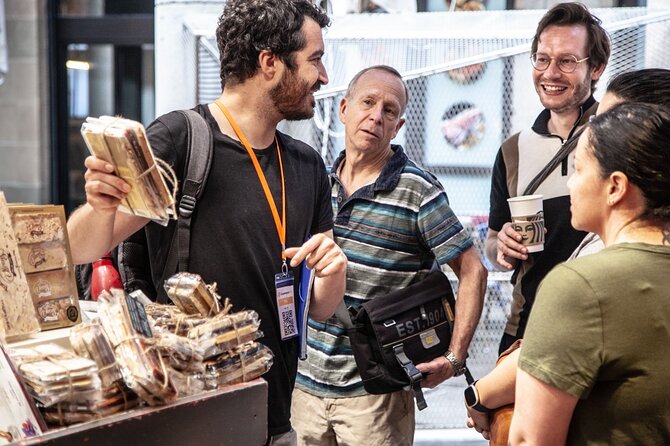
Barcelona’s food markets are more than places to buy lunch. They are working parts of the city, full of local produce, old customs, quick meals, and neighborhood gossip. This two to three hour walking tour links La Boquería, Santa Caterina, and El Born with the Gothic quarter, giving you a useful first look at Barcelona’s food culture and old streets.
I like the small group limit of 15, which matters in crowded La Boquería. I also like the mix of tastings and history: you sample food and olive oil, then learn why these market buildings and old streets matter. The main drawback is that the tour moves through busy areas and includes a fair amount of walking, while the tastings are small and any extra food must be purchased separately.
Key points to know before booking
- La Boquería begins the food story: You get two small tastings and advice on local flavors.
- Three markets give you useful contrast: La Boquería, Santa Caterina, and El Born each serve a different purpose in Barcelona’s story.
- The route adds more than food: Las Ramblas, the Gothic quarter, Santa Maria del Mar, and Caganer.com bring in street life, trade, religion, and Catalan humor.
- Guides shape the experience: Alberto, Zeynep, Cal, Eoghan, Valentina, Daria, and others have been praised for clear explanations and an easy manner.
- The olive oil tasting comes at El Born: This gives the tour a proper finish rather than ending after the first market.
- The price is reasonable for a guided introduction: At $35.09, you are paying mainly for the guide, route, tastings, and local orientation.
La Boquería: a lively start at Barcelona’s best-known market
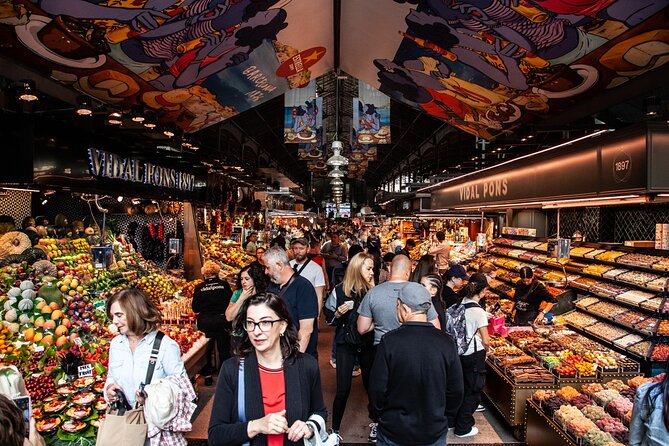
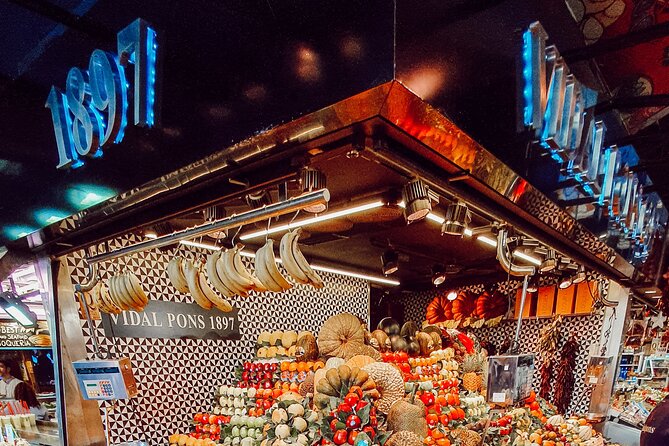
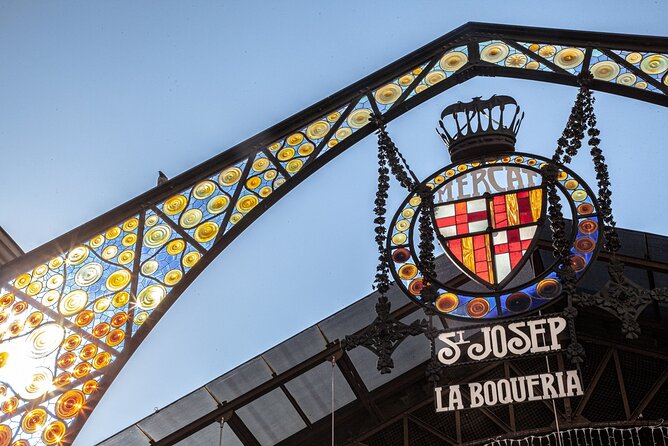
The tour begins at Rambla de Sant Josep, 89, at 10:00 a.m. That puts you directly beside Mercat de la Boqueria, Barcelona’s oldest market. The first 30 minutes are spent inside, with small food samples included.
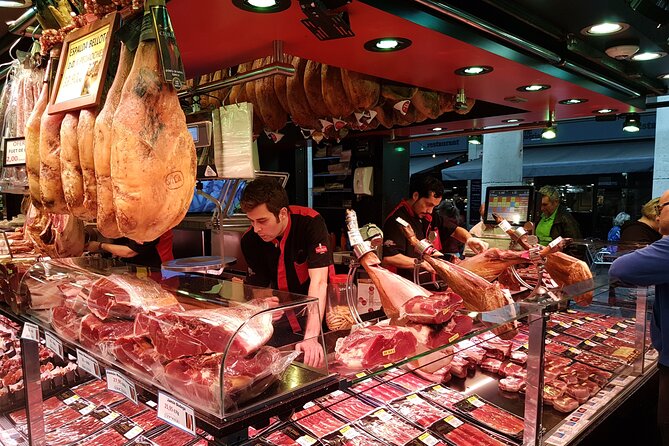
La Boquería can be confusing on your own. There are polished displays, prepared food counters, fruit juices, sweets, cured products, and plenty of places competing for your attention. A guide gives the market some order. You learn what you are looking at, what may be worth buying, and how to avoid spending your whole lunch budget on the first attractive counter.
The included tastings are modest, so think of them as introductions rather than a meal. That is useful. You can try something without committing to a full purchase, then use the remaining time to buy a favorite item if you wish. The guide can point you toward local flavors and better value.
This is also the part of the route where the group size matters most. A maximum of 15 people is not the same as a private tour, but it is far easier to hear and keep together than a large coach group. One particularly useful point from the tour feedback is that a very small group made it easier to follow the guide through the crowded market.
Give yourself room for the market’s noise and movement. If you prefer a quiet, sit-down food tour, this will feel hectic. If you want to see how a major city market actually works, the disorder is part of the lesson.
Other trips people book in Barcelona:
- Barcelona: Sagrada Familia Entry Ticket with Audio Guide
★ 4.6 · 105,312 reviews - Barcelona: Park Güell Admission Ticket
★ 4.4 · 76,534 reviews - Barcelona: Casa Batlló Entry with Self-Audioguide Tour
★ 4.7 · 25,359 reviews
Las Ramblas: seeing past the famous promenade
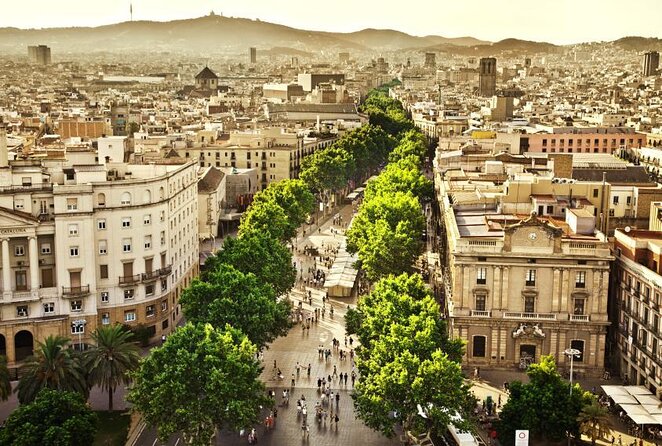
After La Boquería, the route spends about 20 minutes along Las Ramblas. This broad, tree-lined promenade is lined with cafés, shops, and flower stalls. Many visitors simply walk through it on the way to somewhere else. Here, it becomes part of the city story.
The stop is short, but it helps connect the market to the wider center of Barcelona. You are not only learning about food counters. You are seeing how commerce, public space, and tourism meet in the old city.
Do not expect an in-depth tour of every building along Las Ramblas. Twenty minutes is enough for orientation, a few stories, and a look at the changing street scene. The real value is that your guide keeps the route from becoming a series of disconnected stops.
Santa Caterina: a modern roof over an old foundation
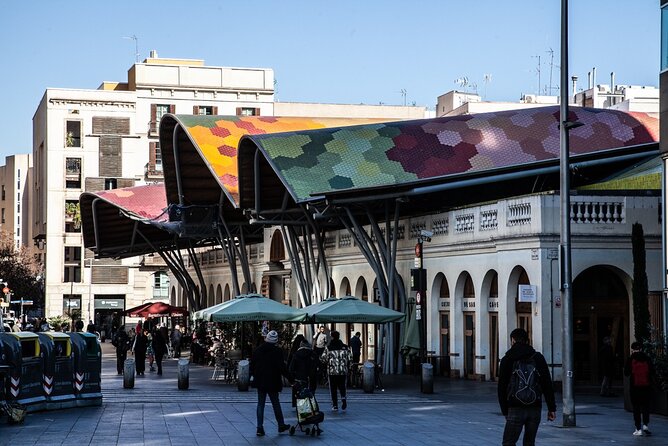
Mercado de Santa Caterina is the next major market, with about 20 minutes inside. Its most noticeable feature is the colorful, undulating roof. The building looks very different from La Boquería, and that contrast makes the route more interesting than a simple tour of similar food halls.
Inside, you visit the ruins of an ancient monastery. That small detail changes the mood. You move from modern market design to older layers of Barcelona, with food shopping taking place above remains from a very different period.
I like this stop because it shows how Barcelona handles old and new spaces together. You are not just looking at a market ceiling or taking a quick photograph. You are getting a sense of how the city’s past remains part of daily life.
The time is limited, so the visit is more of a guided introduction than a full architectural study. If Santa Caterina catches your interest, note it as a place to revisit later. The tour gives you a reason to return, but not enough time to examine every detail.
The Gothic quarter and Santa Maria del Mar
The route continues through the old center toward the Basílica de Santa Maria del Mar. You spend about 10 minutes at the Gothic church, and admission is not included.
This church is linked to Barcelona’s Mediterranean trade and to the story made widely known by the Netflix series Cathedral of the Sea. Your guide uses the church to explain how commerce, shipping, religion, and city life connected in medieval Barcelona.
Ten minutes is enough to view the exterior and hear the main story. It is not enough for a full church visit, and the tour does not include entry. If seeing the interior is important to you, you should plan a separate visit and check the admission arrangements yourself.
This short stop is still worthwhile because it broadens the tour. You are learning that Barcelona’s food culture did not appear by accident. The port, merchants, trade routes, religious institutions, and market neighborhoods all helped shape the city.
Same base, a different kind of day out:
- Barcelona: 24 or 48-Hour Hop-On Hop-Off Bus Tour
★ 4.4 · 20,872 reviews - Barcelona: Park Guell Guided Tour with Skip The Line Entry
★ 4.7 · 17,563 reviews - Barcelona in 1 Day: Sagrada Familia, Park Guell,Old Town & Pickup
★ 5.0 · 13,541 reviews - Barcelona Aquarium: Entry Ticket
★ 4.3 · 13,335 reviews
Caganer.com and the humor of Catalan tradition
One of the route’s more unusual stops is Botiga Caganer.com, described as the world’s largest seller of a distinctive Catalan tradition. You spend about 10 minutes there.
The shop sells caganer figures, a Catalan Christmas tradition featuring a small crouching figure. The subject may strike you as odd at first, which is exactly why it is memorable. This is a quick cultural stop that adds humor and shows a side of Catalonia you would not find in a standard sightseeing route.
You do not need to be interested in shopping to enjoy the visit. The point is the tradition and the explanation behind it. It also gives the walking tour a change of pace after the markets and churches.
El Born Centre: the tour’s best historical finish
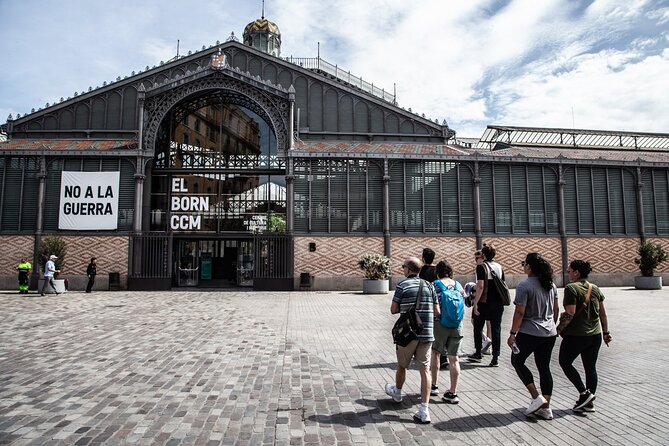
The final stop is El Born Centre de Cultura i Memòria, about 20 minutes from the route’s end. It was once the largest covered market in Europe and now serves as a cultural center.
This is where the different parts of the morning come together. You have seen an active food market, a market with monastery ruins, and a former market that now preserves and presents Barcelona’s past. The building itself makes the point: markets can change function while remaining important parts of city life.
The included olive oil tasting takes place in El Born. That gives you a second food lesson after La Boquería, with a different focus. You can compare the quick market samples at the start with a more specific tasting at the end.
The tour finishes at Mercat del Born, Plaça Comercial, 12. That is a useful location for continuing through the Born area, though the supplied details do not specify a planned meal, extra shopping time, or onward transport arrangement.
What the guide adds to the route
The guide is the main reason to choose this tour instead of walking between the markets with a map. The route itself is easy to locate, but the meaning behind each stop is harder to assemble on your own.
Several guides have received especially warm praise. Alberto is described as friendly and good at explaining what to eat in Spain. Zeynep led a version that included three markets, local stories, food, and wine. Cal has been praised for his relaxed manner, market knowledge, and ability to make people feel at home.
Eoghan, whose name is pronounced Owen, has been noted for clear explanations of Spanish and Barcelona history, as well as for helping a small group move through crowded spaces. Valentina is known for using visual aids while discussing Catalan food and Barcelona’s past. Daria, Andres, Paul, Carlos Andres, and others have also been singled out for friendly, patient guiding.
Guide assignments can change, so you cannot book a particular person based on these names. Still, the pattern is clear: this experience depends heavily on the guide’s storytelling and practical advice. A strong guide turns a market walk into a lesson in food, architecture, neighborhoods, and local custom.
Food tastings, optional purchases, and the real value
The listed price is $35.09 per person. For that amount, you receive a professional guide, a guided walking route, two small tastings at La Boquería, and an olive oil tasting at El Born.
That is fair value if you want orientation and context. You are not paying for a large meal. You are paying to understand what you see, move through the markets with less guesswork, and get useful suggestions before making your own purchases.
The tour gives you time to buy food along the way, but those purchases are not included. This is both a benefit and a limit. You control your spending, but the final cost depends on your appetite and shopping habits.
I would budget extra money if you want to sample more than the included tastings. The guide can recommend local foods and explain how to get better value, but you should not expect a full market lunch to be covered by the $35.09 fee.
Some versions of the experience may offer an optional food and wine upgrade, as reflected in the tour title connected with one of the guide experiences. The basic details provided here include the three tastings described above, so check the exact option you select before paying for an upgrade.
Timing, walking, and group size
The tour lasts about two to three hours and starts at 10:00 a.m. That morning schedule works well for a market visit. You see the food areas early in the day, then finish in El Born with time left for lunch or further sightseeing.
You will walk between several old-city stops. One rating specifically describes the route as involving a bit of walking, and that is the right expectation. The tour is not presented as strenuous, but you should be comfortable walking on city streets and keeping pace with a group.
The old center can be crowded, especially around La Boquería and Las Ramblas. Stay close to the guide and keep track of the meeting point. A group of up to 15 is manageable, yet you still need to listen for instructions when crossing streets or moving through a market entrance.
The activity is offered in English. Confirmation is provided at booking, service animals are allowed, and the route is near public transportation. Most people can take part according to the supplied details, though anyone concerned about walking should consider the length and pace before booking.
Who should book this market walk?
I would choose this tour for a first visit to Barcelona, especially if you want food advice without giving up the city’s wider story. It suits solo visitors, couples, and families who prefer a guided introduction to local eating customs and old neighborhoods.
It is also a good fit if you are unsure what to buy in a Spanish market. The guide can help you identify local specialties, suggest flavors, and explain what is worth the price. You can then return later with more confidence.
History-minded visitors will get more from the route than people seeking only tastings. Santa Maria del Mar, the former Born market, the monastery remains beneath Santa Caterina, and the old market districts all receive attention.
I would be less likely to choose it if you want a long, leisurely meal, extensive time at each market, or a private itinerary. The tastings are small, the schedule is shared, and the route has several short stops. It is a city orientation with food, not a restaurant tour.
Should you book the Barcelona Markets Tour?
Book it if you want to see three important markets, sample a few local foods, and learn how Barcelona’s food culture connects with trade, religion, architecture, and Catalan tradition. The $35.09 price is sensible for a small-group route with a guide and four tasting portions spread across the morning.
Go in expecting modest samples, city walking, and busy market spaces. Bring room in your budget for anything you want to buy, and consider returning to Santa Caterina or El Born after the tour if you want more time.
For many visitors, this is a smart early-in-the-trip activity. It gives you a map of the old center, a short list of foods to try, and enough local context to make later market visits more rewarding. Free cancellation is available up to 24 hours before the 10:00 a.m. start time, which gives you some flexibility while planning.
FAQ
Where does the Barcelona Markets Tour begin?
It begins at Rambla de Sant Josep, 89, in Barcelona’s Ciutat Vella district.
What time does the tour start?
The start time is 10:00 a.m.
Where does the tour end?
The tour ends at Mercat del Born, Plaça Comercial, 12, in Ciutat Vella.
How long does the tour last?
The experience lasts approximately two to three hours.
Which markets are included?
The route includes Mercat de la Boqueria, Mercado de Santa Caterina, and El Born Centre de Cultura i Memoria.
Are food tastings included?
Yes. The tour includes two small tastings at La Boquería and an olive oil tasting in El Born.
Is additional food included?
No. Food you choose to purchase at the markets is not included in the tour price.
Is admission to Santa Maria del Mar included?
No. Admission to the basilica is not included.
How large is the group?
The tour has a maximum of 15 participants.
What is the cancellation policy?
You can cancel up to 24 hours before the experience starts for a full refund. Changes or cancellations made less than 24 hours before the start time are not accepted for a refund.
Just added in Barcelona
- E-Bike tour in Barcelona with English Guide★ 5.0 · 128 reviews
- Barcelona: Wine Tasting and 5 Course Tapas Pairing Dinner★ 4.5 · 129 reviews
- Barcelona Gothic Quarter Walking Tour with Tapas★ 5.0 · 248 reviews
- Barcelona Luxury Yacht Cruise – Day or Sunset, Open Bar & Snacks★ 5.0 · 154 reviews
- Andorra Original History and Sightseeing Tour (Private, Pickup)★ 5.0 · 350 reviews
- Wine Tasting Experience in Barcelona★ 5.0 · 172 reviews
- Entrance to the Mirador Torre Glories Barcelona★ 4.5 · 193 reviews
- Barcelona Wax Museum Admission Ticket★ 4.5 · 237 reviews
Tours in Barcelona, compared.
Sagrada Familia Entry Ticket with Audio Guide
Read our review →
Park Guell Guided Tour with Skip The Line Entry
Read our review →
Barcelona in 1 Day: Sagrada Familia, Park Guell,Old Town & Pickup
Read our review →
Sagrada Familia Skip-the-Line Entry Ticket & Tour
Read our review →