
Reviewed · TOURS IN MADRID
Madrid: Street Art Tour with Local Graffiti Hunter
Madrid’s best street art is not behind museum doors. It is painted, pasted, and stenciled across the walls of Lavapiés, Embajadores, and La Latina, where old neighborhood streets meet Madrid’s modern creative culture. This two-hour walk takes you to La Tabacalera, Esta es una Plaza, Plaza del Sombrerete, and other changing outdoor works with a guide who works close to the city’s graffiti scene.
I like two things here: you get the art explained by a local graffiti writer, and you also get a useful introduction to the neighborhoods around it. Guides such as Julien, Esther, Santiago, and Javier have been praised for making the tour conversational, clear, and fun. The main drawback is that street art changes quickly, so a piece you hope to see may be painted over, moved, or hidden by construction.
Key points about Madrid’s street art walk
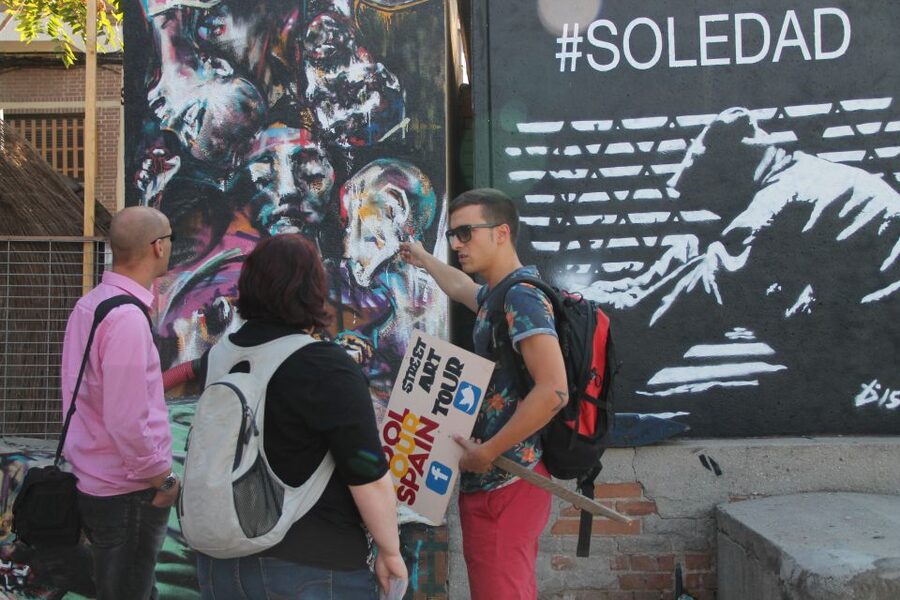
- La Tabacalera’s old walls: See urban art around the former tobacco factory and learn about its free community workshops.
- Three central neighborhoods: Walk through Lavapiés, Embajadores, and La Latina rather than staying on Madrid’s main sightseeing routes.
- A local artist’s viewpoint: Guides work with street art festivals and often explain technique, ethics, and the difference between legal murals and illegal graffiti.
- Small-group feel: Past departures have often allowed time for questions and discussion rather than a nonstop lecture.
- A changing outdoor gallery: Murals, stencils, stickers, and tags can look different from one visit to the next.
- Easy practical setup: The tour lasts two hours, starts beside Teatro Valle-Inclán, and is offered in English.
Why Lavapiés is the right place to look for Madrid street art
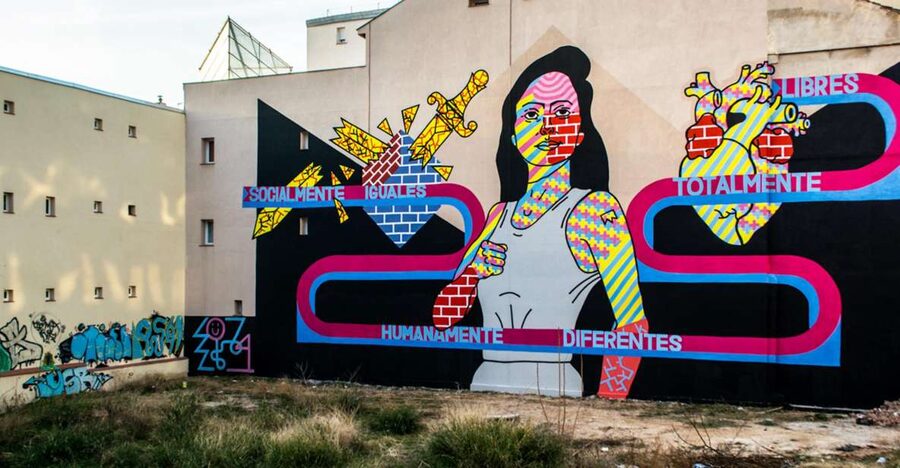
Lavapiés gives this walk more substance than a simple hunt for colorful walls. It is a multicultural district with narrow streets, neighborhood squares, older buildings, and a long connection to community activity. As you walk, the guide links individual works to the people and places around them.
That context matters. Street art is not just decoration here. It can comment on local life, claim neglected walls, support community projects, or challenge the way public space is controlled. You will hear about artists, techniques, legal walls, festivals, and the occasional argument over what belongs on a building.
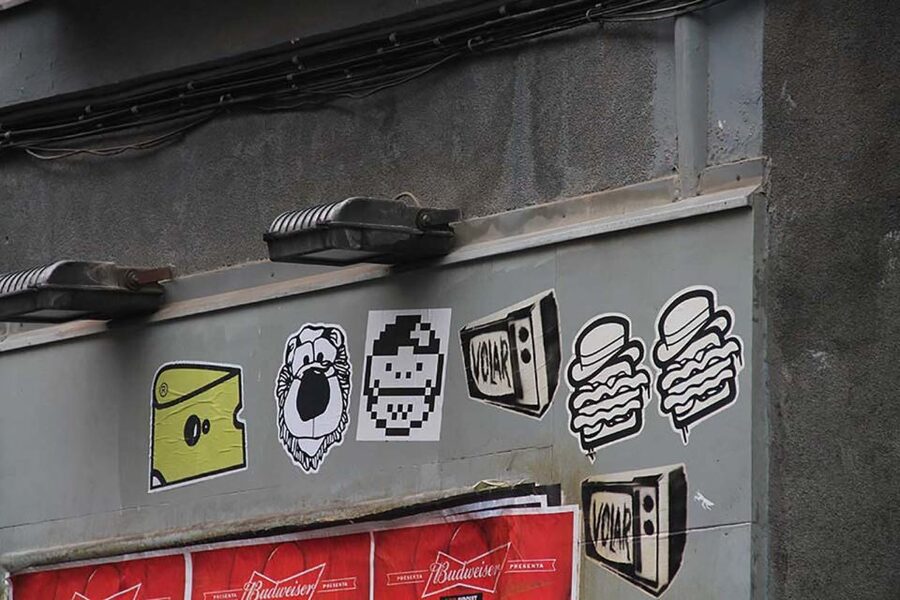
The guide may ask you to look closely at a stencil, sticker, or painted letter rather than simply pointing out a large mural. That is one of the walk’s strengths. You begin to notice how artists use scale, layering, color, repetition, and found surfaces. A tiny sticker tucked beside a doorway can be part of the same creative conversation as a huge wall painting.
The tour is led in English, and the guides have varied backgrounds. Julien and Esther have received especially warm praise for their clear explanations and easy manner, while Santiago, Javier, Yago, Hector, Ana, Mario, and others have also led departures. Several guides are active artists themselves, which gives them a direct connection to the methods and working culture behind the pieces.
A few more things to do in Madrid worth a look
- Barcelona Street Art and Graffitti Bicycle Tour
★ 5.0 · 361 reviews - Barcelona Street Art Tour with Exclusive Artist Studios Visit
★ 5.0 · 152 reviews
Starting at Teatro Valle-Inclán and entering Embajadores
The meeting point is outside the entrance of Teatro Valle-Inclán at Calle de Valencia, 1. Lavapiés metro station is the closest station, so you can reach the start without a complicated transfer through central Madrid.
From there, expect a walking route through Lavapiés and Embajadores. The pace is generally relaxed, with frequent stops to look at a wall or discuss an artist. That makes the tour manageable for anyone who wants time to take photographs, but you should still wear comfortable shoes. This is a neighborhood walk on city streets, not a seated presentation.
The guide also keeps the group aware of local residents and passing traffic. That is a small but important detail. A street art tour can easily become intrusive if a group blocks a doorway or crowds a narrow pavement. The better approach is to look, listen, and move along without treating the neighborhood as a stage set.
As the route develops, you get a sense of how different forms of public art share the same streets. A legal mural may cover an entire wall, while a quick tag appears on a shutter. A stencil can carry a clear political message in only a few shapes. Stickers and pasted images create another layer, often at eye level or around street furniture.
La Tabacalera and the value of community space
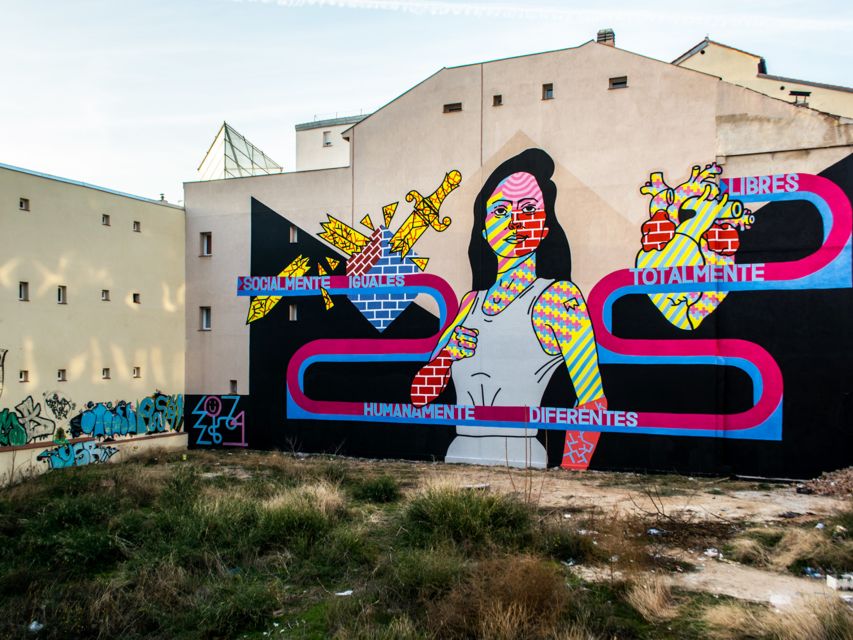
One of the key stops is the former tobacco factory known as La Tabacalera. Its walls are closely linked with Madrid’s urban art scene, and the surrounding area gives the guide a good place to explain how abandoned or underused buildings can become centers for local activity.
The art here is only part of the story. You will also hear about free workshops connected with photography, dance, yoga, cycling, longboarding, and other activities. This helps explain why the site matters beyond its murals. It is a place where creative work and neighborhood participation meet.
I find this part especially useful for understanding the difference between street art as a photo opportunity and street art as a social practice. The paintings catch your eye, but the workshops show how a building can support skills, friendships, and local projects. The guide may also discuss how public art can affect a district, including questions about permission, ownership, tourism, and change.
Do not expect a formal museum with labels beside every work. The value comes from the guide’s explanations and from looking carefully at the walls themselves. The pieces can be weathered, layered, or partly covered. That imperfection is part of the setting, but it also means the experience depends on what is visible on the day.
Esta es una Plaza, where art meets local life
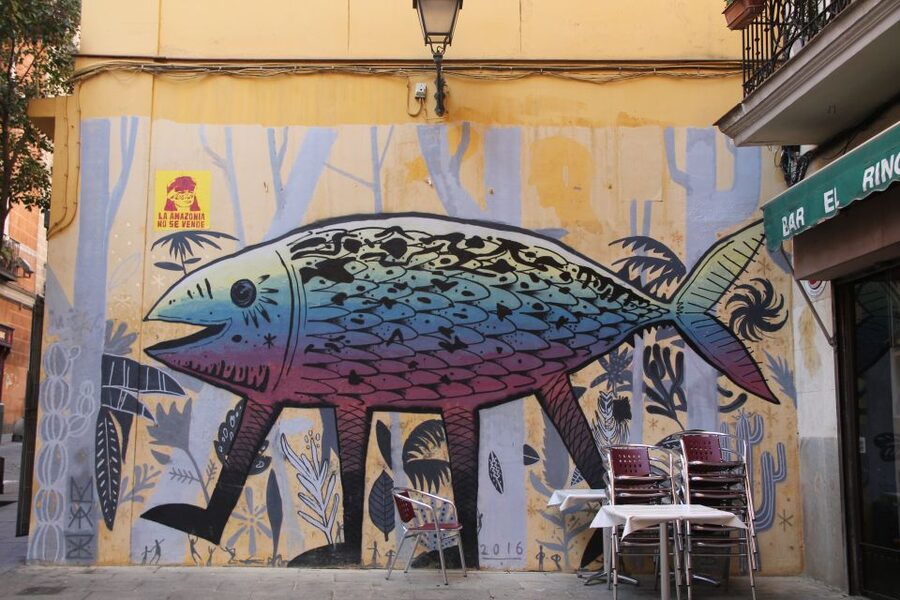
Esta es una Plaza is another important stop. The name refers to a community-managed square, and the site offers a different mood from the larger walls around La Tabacalera. Here, you may see work by established artists alongside contributions from newer talents.
The guide uses the square to explain how art can be shaped by a specific place. Instead of viewing a mural as an isolated object, you can consider who uses the square, how the space is maintained, and how creative projects fit into everyday neighborhood life.
This is also where the tour can become more interactive. Guides often invite questions about meaning, technique, and the line between graffiti and commissioned urban art. You do not need a background in art to take part. If you are new to the subject, the guide gives you a useful vocabulary. If you already follow graffiti, you can ask about artists, festivals, and methods.
The atmosphere will depend on the day and on what is happening in the square. It is an active public space, not a private exhibit, so you should expect ordinary neighborhood use around the art. That makes the stop more authentic, though it may not offer the uninterrupted photo conditions of a gallery.
Same base, a different kind of day out:
- Madrid: Tour Bernabéu Entry Ticket
★ 4.5 · 21,573 reviews - Madrid: Prado Museum Entry Ticket
★ 4.6 · 17,509 reviews - Madrid: “Emociones” Live Flamenco Performance
★ 4.8 · 12,866 reviews - Madrid: Panoramic Route City Tour
★ 4.1 · 12,259 reviews
Plaza del Sombrerete and Madrid’s changing walls
The route continues toward Plaza del Sombrerete, where the guide points out work by veteran artists and newer names. This is a good place to think about how Madrid’s street art scene changes over time.
A large mural can become a landmark, but it is never guaranteed to last. New artists paint over old work, buildings are repaired, and stickers disappear. The tour teaches you to see the city as a changing collection of layers rather than a fixed outdoor museum.
You may also have the chance to see Madrid’s largest mural in the Center District. The exact view depends on the current route and condition of the artwork, but the scale gives you a useful contrast with the smaller pieces encountered earlier.
Some tours have even passed artists while they were working. Meeting an artist is not promised, but it can happen, and the guides are well placed to explain who is painting and why the piece matters. The personal connection is one reason an artist-led walk can feel different from a standard sightseeing route.
What the guide adds to the experience
The guide is the main reason to book this instead of simply walking through Lavapiés with a map. A search for Madrid street art will show you where to look, but it will not necessarily explain the technique, local politics, or community setting behind what you see.
The strongest guides combine three roles. They explain the artwork, introduce the neighborhood, and keep the group engaged. Esther has been praised for connecting graffiti technique with local history. Julien is known for clear English, humor, and practical suggestions about Madrid nightlife. Other guides, including Hector and Stefan, have been active artists who can offer first-hand insight into how urban art is made.
The tone is informal rather than academic. You can expect questions, conversation, and time to discuss what you see. One departure included teenagers who were encouraged to think about art, ethics, and community, which shows that the subject can work well for families with older children.
The English is generally clear, but the tour depends on spoken explanation. If you have hearing difficulties, stay near the guide, especially during stops beside busy streets. One useful detail from past departures is that guides with strong voices have remained easy to follow even when people spread out to take photos.
Is two hours enough for the route?
Two hours is a sensible length for this subject. It gives you a real look at several districts without turning the walk into an exhausting half-day outing. The route has enough stops to show different styles, while the short duration leaves room in your Madrid schedule for a museum, market, or evening meal.
The pace has generally been described as comfortable. You will not be rushed from wall to wall, and there should be time for questions. At the same time, this is an overview rather than an exhaustive survey of Lavapiés graffiti. You will see selected works and learn how to read the scene, but you will not cover every mural or side street.
That limitation is actually useful on a first visit. After the walk, you can return to the neighborhood and explore at your own pace. You may notice pieces you missed during the tour, or spot new layers that make more sense after the guide’s explanation.
Plan for weather as you would with any outdoor activity. A past booking note indicates that rain did not cancel the tour, so take a light rain layer if wet weather is forecast. There are no beverages included, and you should bring water if you need it during the walk.
Who will get the most from this tour?
I would choose this walk if you want to see a side of Madrid beyond the Prado, Thyssen-Bornemisza, and Royal Palace. It works particularly well for people who enjoy photography, design, illustration, contemporary art, or local neighborhoods.
It is also a good choice for first-time visitors who want a quick orientation to Lavapiés. The guide gives you reasons to return, including suggestions about places to see and things to do in the area. It can be a useful early-trip activity because it helps you understand the neighborhood before exploring it independently.
Families with teenagers may find the subject more engaging than a traditional art lecture. The tour invites discussion about who controls public walls, when graffiti becomes art, and how creative work affects a community.
You may want to skip it if you need guaranteed access to specific artworks. Street art is temporary, and the route can change with the city. You should also choose another activity if you dislike walking outdoors or prefer quiet, formal museum spaces.
Is $29 a fair price?
At $29 per person, the tour offers good value if you want interpretation rather than just directions to painted walls. You are paying for two hours with an English-speaking guide who understands Madrid’s graffiti culture and can place the art within the neighborhoods.
The value is strongest when the guide is active in the local scene. You get details about technique, festivals, artists, and community spaces that would be difficult to gather from a guidebook. The chance to hear about CALLE Lavapiés, Urvanity, and Muros Tabacalera also connects the walk with the wider urban art calendar.
The price does not include drinks, but that is easy to plan around. Bring your own water or buy one before starting. Free cancellation up to 24 hours ahead and the option to reserve now and pay later also make it easier to fit the tour into a changing Madrid schedule.
Practical details before you book
The tour is in English and lasts two hours. Meet at Teatro Valle-Inclán, Calle de Valencia, 1, near Lavapiés metro station.
Bring comfortable shoes and a passport or other ID card. The experience is wheelchair accessible, though the route takes place through public neighborhood streets, so you may want to confirm route details if you have specific mobility needs.
Keep your group together at street crossings and listen when the guide asks you to move. The tour aims to respect local residents, and good street art etiquette means not blocking entrances, touching artwork, or treating private walls as props.
The exact guide may vary. Names connected with past departures include Julien, Esther, Santiago, Javier, Yago, Hector, Ana, Mario, Maria, Stefan, Diego, Patricia, and others. The common thread is a local focus and a strong interest in urban art, but the style may differ from one guide to another.
Should you book the Lavapiés street art tour?
Book it if you want an informal, local view of Madrid and like the idea of learning from someone close to the graffiti scene. The walk combines large murals with small stickers and stencils, then adds useful context about community spaces, neighborhood change, and the limits of public art.
I especially recommend it early in your stay, when you can use the guide’s suggestions to return to Lavapiés, Embajadores, or La Latina later. Just keep your expectations realistic: the route is outdoors, the art changes, and no specific mural can be guaranteed.
At $29, the tour is a solid choice for curious visitors, art fans, families with older children, and anyone who wants Madrid to feel like more than a collection of famous monuments.
FAQ
How long does the Madrid street art tour last?
The tour lasts two hours.
What neighborhoods does the tour visit?
The route explores Lavapiés, Embajadores, and La Latina.
Where does the tour meet?
The meeting point is at the entrance of Teatro Valle-Inclán, Calle de Valencia, 1, 28012 Madrid, Spain. Lavapiés is the nearest metro station.
What language is the tour offered in?
The tour is operated in English with a live English-speaking guide.
What street art locations are included?
The tour includes urban art around the former tobacco factory of La Tabacalera, Esta es una Plaza, Plaza del Sombrerete, and a large mural in Madrid’s Center District.
What should I bring?
Bring comfortable shoes and a passport or ID card.
Is the tour wheelchair accessible?
Yes, the activity is listed as wheelchair accessible.
Can I cancel the booking?
You can cancel up to 24 hours in advance for a full refund. A reserve now and pay later option is also available.
Just added in Madrid
- Madrid: Don Quixote de la Mancha Windmills & Toledo Tour★ 4.9 · 254 reviews
- Tour Madrid: Secrets in a Electric Tuk Tuk★ 4.6 · 155 reviews
- Madrid: Toledo Day Trip with Winery Visit and Wine Tasting★ 4.4 · 177 reviews
- Madrid: Guided Tour of Toledo with Cathedral Visit★ 4.3 · 399 reviews
- Madrid: 6-Hour Day Trip to Toledo with Guided Walking Tour★ 4.0 · 865 reviews
- Madrid: Tasty Tapas Tour & Visit to a Terrace with Views★ 4.5 · 118 reviews
- Madrid: Flamenco Show&Drink at Tablao 1911 (World’s Oldest)★ 4.7 · 253 reviews
- Madrid: Afternoon Prado Museum Tour with Skip-the-Line Entry★ 4.4 · 491 reviews
Tours in Madrid, compared.




Live Flamenco Show with Food and Drinks Options
Read our review →
Avila & Segovia Tour with Tickets to Monuments from Madrid
Read our review →
Three Cities in One Day: Segovia, Avila and Toledo from Madrid
Read our review →
Segovia and Toledo Tour, Alcazar, and Cathedral
Read our review →
Royal Palace Expert Guided Tour with Skip-the-Line
Read our review →Browse the lists this tour appears in