
Reviewed · TOURS IN SEVILLE
Seville: Hospital de los Venerables Ticket with Audio Guide
The best part of this visit is the way one compact building brings together Seville’s 17th-century charitable past, Baroque church art, and major paintings by Velázquez and Murillo. I like the orange-tree courtyard and the fresco-filled church, two very different spaces that make the visit feel more than a quick gallery stop.
The main thing to know is that the Hospital de los Venerables is now presented chiefly as an art and architecture visit. If you expect a detailed museum about daily hospital life, you may find the collection more focused on paintings, sculpture, and the building itself. The audio guide helps explain the setting, but this is still a self-paced stop.
Key points to know before you go
- A 17th-century setting: Walk through a former home for elderly priests founded by Canon Justino de Neve.
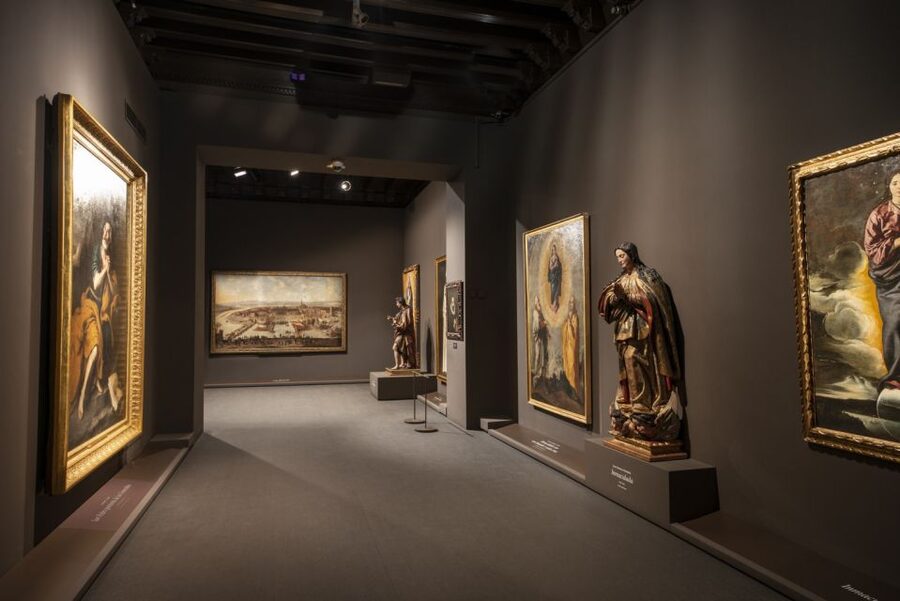
- The Centro Velázquez: See works connected with Diego de Silva y Velázquez and Bartolomé Esteban Murillo.
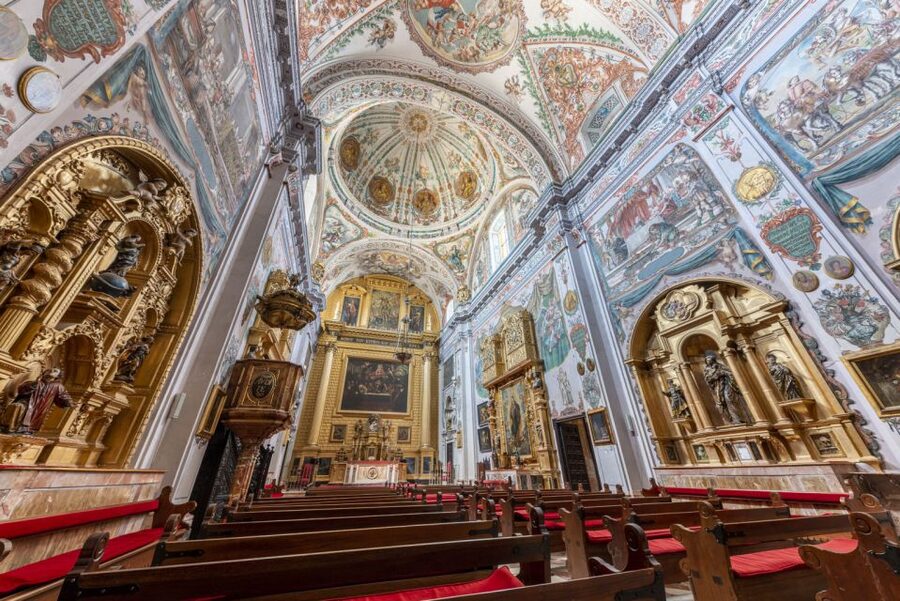
- A striking Baroque church: Look for the painted walls, many arches, sacristy, and sculpture by Pedro Roldán.
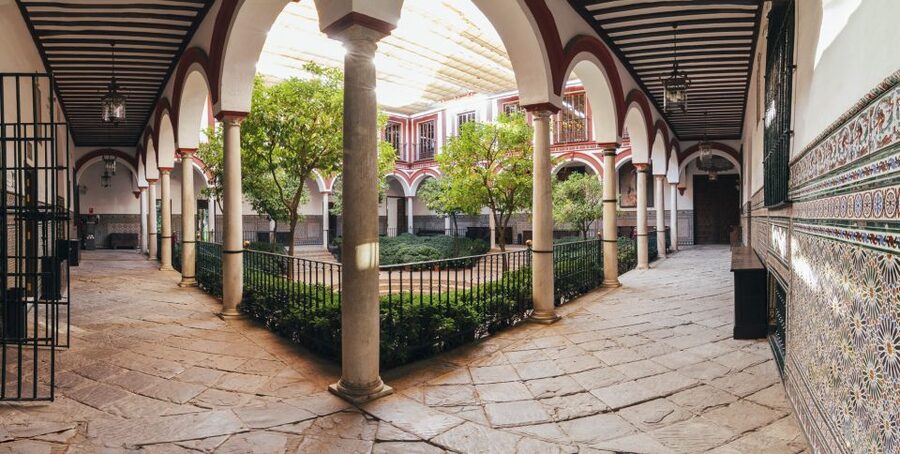
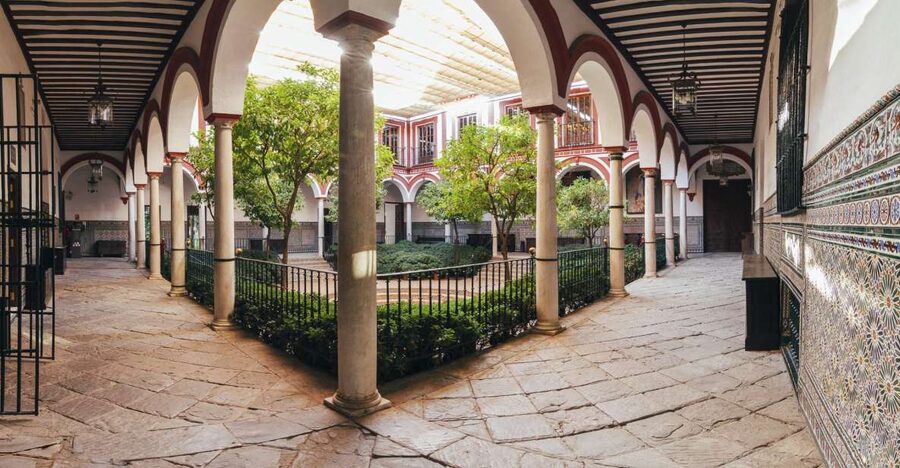
- A classic Sevillian patio: Orange trees, old wooden gates, and arches give the courtyard its strongest sense of place.
- Two ways to take in the visit: Use the audio guide or move at your own pace, then add the VR360º presentation.
- Good value at $14: The ticket covers the courtyard, church, sacristy, art center, audio guide, and virtual experience.
Entering the Hospital de los Venerables
The Hospital de los Venerables Sacerdotes was founded by Canon Justino de Neve to care for elderly priests. That purpose gives the building a different feel from Seville’s grand royal palaces and cathedral spaces. It was made for care and residence, even though its Baroque decoration is far from plain.
You begin with a building that rewards slow looking. The architecture is organized around a traditional Sevillian patio, a layout that lets you understand the place before you study the art. Arches, pale walls, woodwork, and open air create a calm center within the complex.
I would not rush straight to the paintings. Take a few minutes to look at the patio first. Its old wooden gates are especially appealing, and the orange trees provide the kind of small local detail that can be lost if you treat the visit as only an art gallery.
The courtyard has also been used for theatrical performances, including plays connected with Miguel de Cervantes and others. That detail helps explain why the space still works so well for theater and music. It is not simply an attractive passageway. It was built with a sense of ceremony and gathering.
A few more things to do in Seville worth a look
- Casa de Salinas Entry Ticket with Audio Guide
★ 4.5 · 202 reviews - Barcelona: Sagrada Familia Entry Ticket with Audio Guide
★ 4.6 · 105,312 reviews - Granada: Alhambra Entry Ticket with Audio Guide
★ 4.1 · 5,950 reviews
The Centro Velázquez and its small-scale art focus
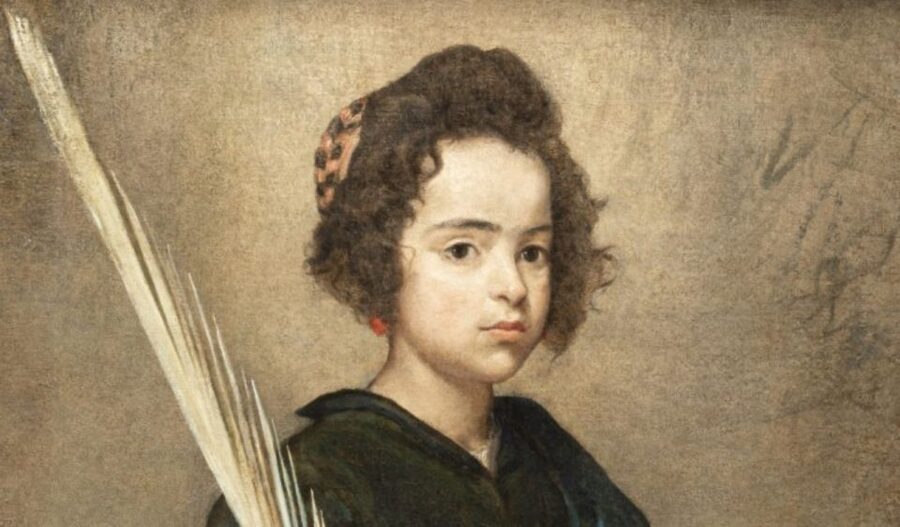
The Centro Velázquez is the main reason many people add this stop to a Seville sightseeing day. The center presents works by important Sevillian painters, including Diego de Silva y Velázquez and Bartolomé Esteban Murillo.
At $14, the ticket makes the most sense if you care about Spanish painting or want to see major art in a quieter setting. You are not paying only to enter a church. The ticket also includes the art center, courtyard, sacristy, audio guide, and VR360º presentation.
I like the combination because the art feels tied to its setting. You see paintings inside a historic religious foundation rather than in a large modern museum detached from the building’s original purpose. That connection does not turn the visit into a full history lesson, but it gives the works a useful frame.
Expect a focused collection rather than a huge museum. The information provided does not specify the number of works or the exact display arrangement, so plan for a compact art stop instead of an all-day gallery. If you want to see every major painting at length, use the audio guide and give yourself room to pause.
The chance to see Velázquez’s work in person is a real draw. His paintings are often discussed in broad terms, but seeing one directly lets you judge the surface, scale, and handling of light for yourself. Murillo adds another important Sevillian voice to the collection.
I would pair this part of the visit with the church rather than treating them as separate attractions. The paintings, sculpture, frescoes, and architecture all belong to the same religious and artistic world. That makes the building more useful for understanding Seville’s Baroque culture than a quick look at one isolated painting.
The church, frescoes, and Pedro Roldán’s sculpture
The church dates from the end of the 17th century and is the visual high point for many people. Its arches give the interior a formal rhythm, while fresco paintings cover the walls with scenes designed and made by the Valdés family.
Look up and look sideways. The church is not just about an altar or a single famous object. The decoration works across the walls and architecture, so you need to take in the full room before concentrating on individual details.
The frescoes are one of the strongest reasons to use the audio guide. Painted religious scenes can blur together when you move through churches quickly, especially after several days in Andalusia. A clear explanation helps you notice how the decoration fits the building.
The church also includes works by the sculptor Pedro Roldán. His sculpture adds a different texture and presence from the painted walls. I like the contrast: the frescoes spread across the interior, while sculpture gives you a more immediate sense of form and volume.
The number of arches is another simple pleasure. They frame the space and make the church feel more elaborate than its compact scale might suggest. If you have already visited Seville’s largest churches, you may find this one more intimate, but that is part of its appeal.
The sacristy is included in the entry. Its architecture continues the same careful Baroque approach, but it also feels more functional and enclosed than the main church. Do not skip it. The sacristy helps you see how the religious complex operated behind the main ceremonial space.
Why the patio may be your favorite stop
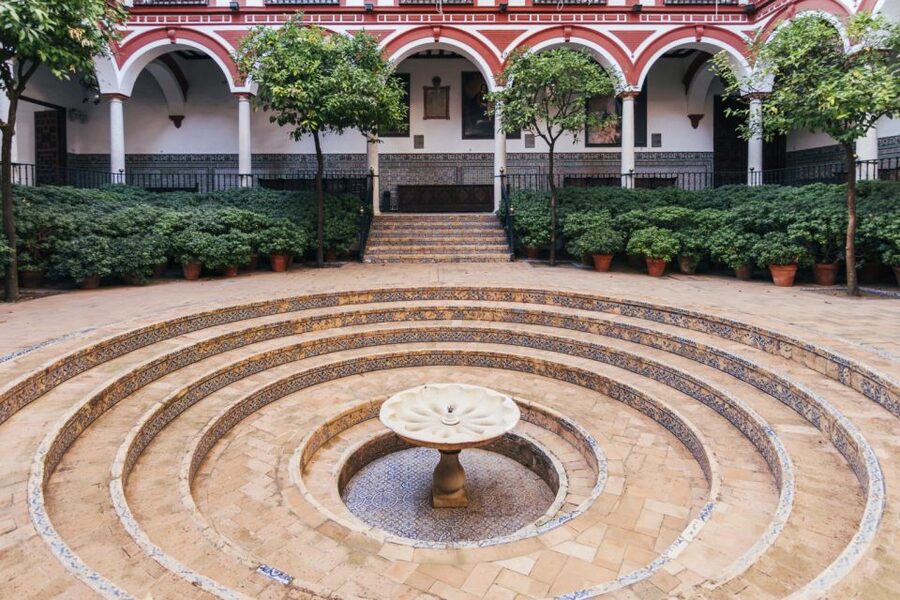
The patio offers a welcome change after the church’s painted interior. You move from frescoes and sculpture into open light, orange trees, arches, and wooden doors.
I find courtyards like this especially useful in Seville because they show how local architecture handles heat and movement. The building does not present one grand room and then end. It gives you a sequence of shaded and open spaces, with the courtyard acting as the center.
The old wooden gates deserve a close look. They are practical objects, but they also carry much of the building’s character. This is the sort of detail that gives the place a lived-in feeling, even though your visit is mainly cultural.
The courtyard’s connection with theater adds another layer. A space once used for great plays by Cervantes and others would have been designed to hold attention. Today, it remains suited to performances and musical events. You can picture how voices and movement would work beneath the surrounding arches.
One useful expectation to set: the courtyard is beautiful, but it may be the part you finish fastest if you are focused only on famous art. Slow down here. The visit is at its best when you allow the building to be more than a container for paintings.
Same base, a different kind of day out:
- Seville: Live Flamenco Dancing Show Ticket at the Theater
★ 4.7 · 16,396 reviews - Seville: 1-Hour Guadalquivir River Sightseeing Eco Cruise
★ 4.2 · 10,281 reviews - Seville: Cathedral, Giralda, and Royal Alcázar Guided Tour
★ 4.7 · 9,165 reviews - Seville: Setas de Sevilla Entry Ticket
★ 4.6 · 8,901 reviews
The audio guide and the new VR360º presentation
The included audio guide is available in Spanish, French, German, and Italian. It gives you structure without forcing you to move at a fixed pace. That matters in a place where you may want to spend longer in the church than in the art center, or the reverse.
The guide is described as easy to use and detailed enough to explain the building and its art. I would use it selectively rather than listening to every word while walking. Stand in the courtyard first, then start the sections for the church and Centro Velázquez when you are ready to look closely.
A live guide named Alvaro has also led an especially enjoyable visit for some bookers. The standard details here center on the included audio guide, so do not assume a personal guide is part of every entry. If your visit includes Alvaro or another live guide, the format may be different from the usual self-guided arrangement.
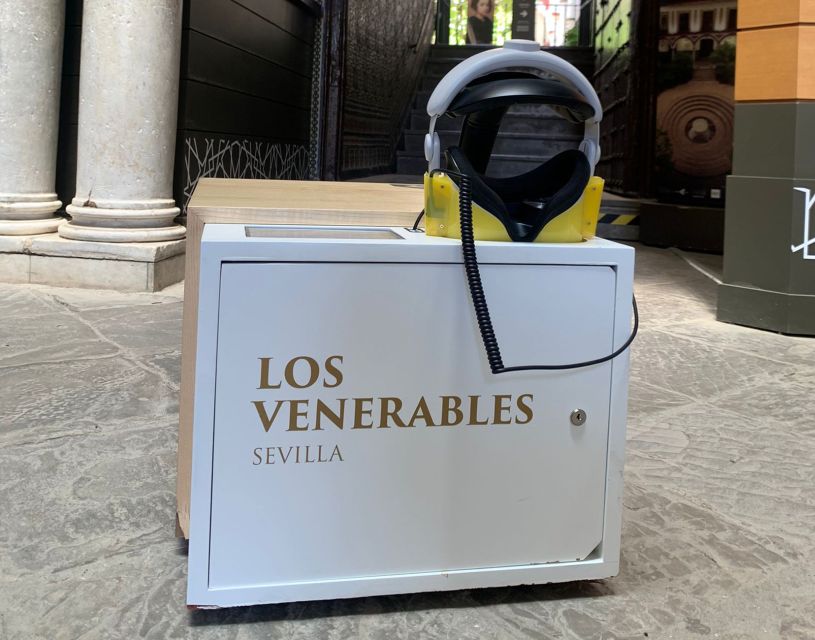
The new VR360º virtual experience is included with the ticket. It offers another way to see the Hospital de los Venerables, presenting the building from a digital viewpoint rather than only from the floor of the courtyard or church.
The information provided does not explain the exact length or technology setup of the VR360º section. Treat it as an extra feature, not the main reason to book. The physical building, paintings, and frescoes are the core of the visit. The virtual presentation adds variety, particularly if you enjoy digital interpretation.
What the $14 ticket really gets you
At $14 per person, this is a reasonably priced cultural stop in central Seville. The value depends on your interests. If you want a large collection with many galleries, this will feel limited. If you want a compact place combining art, architecture, and a traditional courtyard, the ticket covers a lot.
Your entry includes:
- The Hospital’s church
- The sacristy
- The Sevillian courtyard
- The Centro Velázquez
- The audio guide
- The VR360º virtual experience
That list matters because you are not buying access to just one room. The visit moves through several types of space, and each one takes a different amount of time.
The biggest value comes from the building and church. The art center strengthens the case for the ticket, especially if Velázquez and Murillo are high on your list. The audio guide is useful for putting the artwork and foundation into context.
I would be more cautious if your main interest is the hospital’s social history. The site was founded to care for elderly priests, but the visit focuses largely on the building and art. You may learn about its purpose without getting an extensive account of hospital routines or institutional life.
The visit is valid for one day, with available starting times shown when you check. That gives you some flexibility around a Seville itinerary. Free cancellation up to 24 hours in advance and a reserve-now, pay-later option also make it easier to fit into changing plans.
How much time to allow and who will enjoy it
No fixed visit length is provided, so I would plan enough time to see the courtyard, church, sacristy, art center, audio guide material, and VR360º presentation without racing. Your pace will depend on how closely you study the paintings and frescoes.
This stop suits you best if you:
- Enjoy Spanish Baroque art
- Want to see Velázquez and Murillo in a smaller setting
- Like historic courtyards and church interiors
- Prefer self-guided visits
- Want a cultural attraction that fits into a day of Seville sightseeing
- Appreciate architecture as much as individual artworks
Families and mixed-interest groups may also find the visit manageable because it does not depend on a long walking route. The courtyard gives non-art specialists something to enjoy, while the virtual section may appeal to people who prefer interactive displays.
You may want to skip it if you are looking for a detailed hospital museum, a large collection, or a long guided tour with a fixed narrative. The building is compact, and the emphasis is clearly on art, decoration, and architecture.
The site is wheelchair accessible. The audio guide is offered in Spanish, French, German, and Italian, so check that the language suits your needs before booking.
A practical order for your visit
I would begin in the courtyard. It gives you a quick sense of the building’s plan and lets you notice the arches, orange trees, and wooden gates before the indoor decoration competes for your attention.
Next, enter the church and look at the entire interior before starting the most detailed audio sections. Notice the arches, then study the Valdés family frescoes and Pedro Roldán’s sculpture.
After that, visit the sacristy. It is easy to overlook because it is not the main church, but it extends the architectural story and shows how much care went into the less public rooms.
Continue to the Centro Velázquez for the paintings. With the setting already in mind, the works by Velázquez and Murillo have more context than they would in a quick gallery visit.
Finish with the VR360º experience. It gives the visit a change of pace and lets you see the Hospital from a viewpoint different from the one you had while walking through it. If the virtual presentation is busy, the physical collection remains the essential part of your visit.
Should you book the Hospital de los Venerables?
Book it if you want a modestly priced cultural stop with a strong church interior, a classic Sevillian patio, and works by major Spanish painters. The combination is unusually tidy: you get the courtyard, sacristy, church, art center, audio guide, and VR360º presentation under one ticket.
Go with realistic expectations. This is not chiefly a museum about hospital life, and it is not a vast Velázquez collection. It is a compact Baroque complex where art and architecture share the same address.
At $14, I think it earns its place on your Seville list, particularly if you have already seen the city’s major monuments and want something quieter and more focused. Give the courtyard and church your full attention, then use the art center and virtual presentation to round out the visit.
FAQ
What is included with the Hospital de los Venerables ticket?
The ticket includes entry to the church, sacristy, courtyard, and Velázquez Art Center. It also includes an audio guide and the VR360º virtual experience.
How much does the ticket cost?
The listed price is $14 per person.
How long is the ticket valid?
The ticket is valid for one day. Available starting times are shown when you check availability.
Is an audio guide included?
Yes. The audio guide is included with the ticket and is available in Spanish, French, German, and Italian.
Is the Hospital de los Venerables wheelchair accessible?
Yes, the experience is listed as wheelchair accessible.
Can I cancel the booking?
Yes. You can cancel up to 24 hours in advance for a full refund.
Is the visit guided by a live person?
The ticket includes an audio guide rather than guaranteeing a live guide. A guide named Alvaro has led some visits, but the standard activity details describe a self-guided visit with audio commentary.
Just added in Seville
- Seville: Sunset Roof Top Walking Tour★ 4.5 · 122 reviews
- Seville: Authentic and Romantic Horse-Drawn Carriage Ride★ 4.5 · 341 reviews
- Seville: VIP Exclusive Early Access Tour of The Alcazar★ 4.8 · 276 reviews
- Seville: Tapas, Taverns and History Guided Walking Tour★ 4.9 · 515 reviews
- Seville: Flamenco Show at Tablao Almoraima in Triana★ 4.6 · 483 reviews
- Seville: Tapas, Taverns, and History Walking Tour★ 4.9 · 676 reviews
- Seville: Stand Up Paddle Board Rental★ 4.6 · 134 reviews
- Seville: Small-Group Cathedral and Giralda Tour with Tickets★ 4.9 · 203 reviews
Tours in Seville, compared.
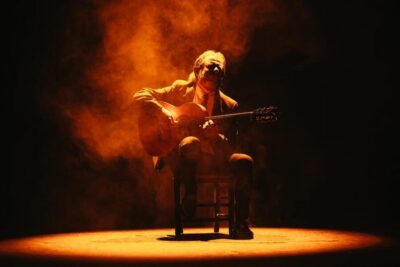
Live Flamenco Dancing Show Ticket at the Theater
Read our review →
1-Hour Guadalquivir River Sightseeing Eco Cruise
Read our review →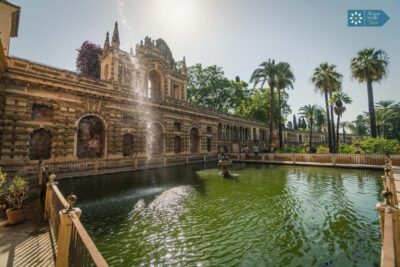
Cathedral, Giralda, and Royal Alcázar Guided Tour
Read our review →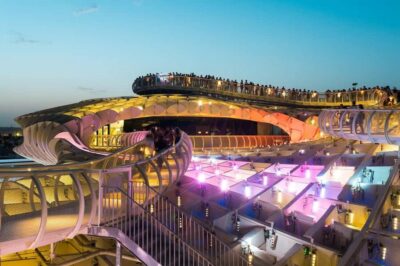
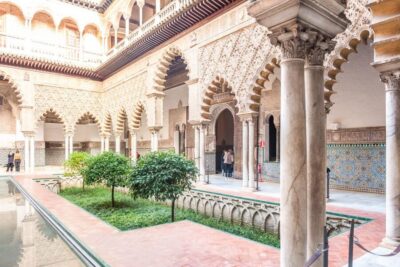
Cathedral, Giralda & Alcazar Entry With Guided Tour
Read our review →
Priority Access Cathedral, Giralda & Alcázar Tour
Read our review →
Puro Flamenco Show with Optional Museum Ticket
Read our review →Browse the lists this tour appears in