
Reviewed · TOURS IN SEVILLE
Seville: Casa de Pilatos Ground Floor Entry Ticket
Casa de Pilatos is one of Seville’s most rewarding smaller sights: a private palace where Islamic, Gothic, and Renaissance design meet in a single courtyard. You move from Roman sculpture to glazed tiles, carved ceilings, quiet gardens, and rooms shaped by the Enríquez de Ribera family.
I like the peaceful pace and the chance to study details without the crowds often found at the Royal Alcázar. I also like the audio guide, which gives useful context as you move through the palace. The main limitation is clear: this $14 ticket covers only the ground floor, and the audio commentary can feel too long or confusing if you try to listen to every word.
Key points at a glance
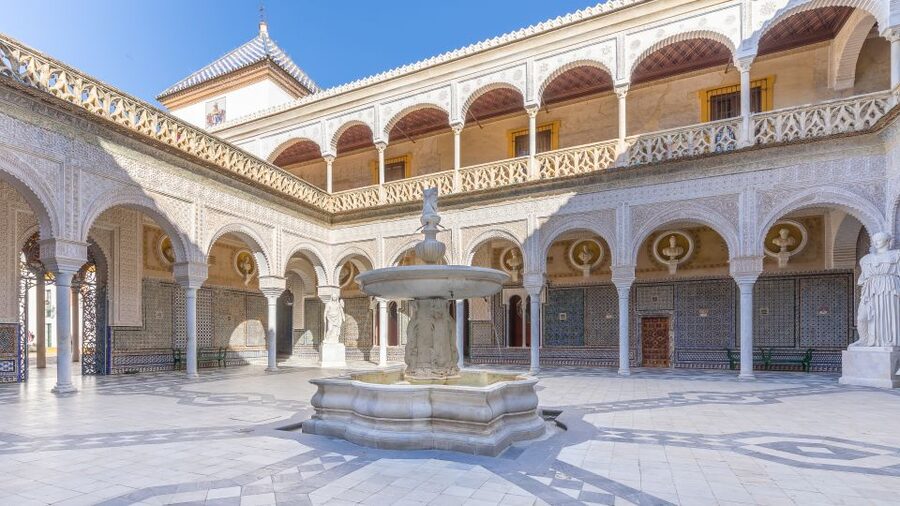
- Roman sculpture in the main courtyard: See 24 busts of Roman emperors, along with figures such as Hadrian, Aphrodite, and Apollo.
- A striking meeting of styles: Mudejar-Gothic forms sit beside Renaissance sculpture, Italian-inspired art, and traditional Andalusian tilework.
- The Chapel of Flagellation: Visit the oldest part of the palace, with a basket-handle arch and an unusual blend of Christian and Islamic influences.
- A calm alternative to Seville’s major monuments: The palace is smaller and often quieter than the Royal Alcázar, especially in the morning or around 2 PM.
- Ground floor only: The ticket includes courtyards, rooms, artwork, sculpture, and gardens, but not the upper floor.
- Useful timing detail: From Tuesday through Sunday, the last entry is at 5:30 PM. Monday admission is free from 3 PM to 5:30 PM.
Why Casa de Pilatos deserves a place in your Seville plan
Seville is packed with grand monuments, but Casa de Pilatos works because it feels more personal. This was a private residence rather than a royal complex, and its rooms are arranged around courtyards in a way that lets you see how a powerful Seville family lived and displayed its status.
The palace began in the 15th century under the Enríquez de Ribera family and grew into the largest private residence in Seville at the time. Its importance is not just its age. The building shows the moment when Seville’s older Islamic and Gothic traditions met the new Renaissance taste arriving from Italy and elsewhere in Europe.
I find the result more interesting than a palace built in a single style. You might be looking at a finely patterned tile wall one moment, then turn toward a classical bust, a Renaissance painting, or a ceiling with elaborate carved decoration. Casa de Pilatos rewards slow looking rather than a quick checklist visit.
The ticket costs $14 per person. That is a fair price if you care about architecture, sculpture, decorative arts, or Seville’s social history. It is less attractive if you expect a full palace visit, since the upper floor is not included. Think of this as a focused ground-floor experience, not an all-access pass.
A few more things to do in Seville worth a look
- Seville: Live Flamenco Dancing Show Ticket at the Theater
★ 4.7 · 16,396 reviews - Seville: Setas de Sevilla Entry Ticket
★ 4.6 · 8,901 reviews - Seville: Puro Flamenco Show with Optional Museum Ticket
★ 4.8 · 6,088 reviews
Entering through the marble gate
The visit begins at a detailed Renaissance-style marble entrance. It sets the tone at once: Casa de Pilatos is not plain, modest, or purely medieval. The family wanted visitors to understand its wealth and connections before they even reached the central courtyard.
From the entrance, the palace unfolds through courtyards, drawing rooms, smaller passages, and garden areas. The route gives you a steady change of scale. Some spaces feel formal and ceremonial, while others are more intimate and domestic.
The audio guide helps explain why the building looks the way it does. It is available in Spanish, French, English, Portuguese, German, Japanese, and Italian. The site also provides QR codes with clear signs showing which section of the guide belongs to each part of the palace, making it easier to listen as you go.
You should not expect a live guide as part of this ticket. The host or greeter language is Spanish, while the main interpretation comes through the audio guide. That is useful for independent visitors, though anyone who prefers questions and conversation may find the format less satisfying.
The main courtyard and its Roman faces
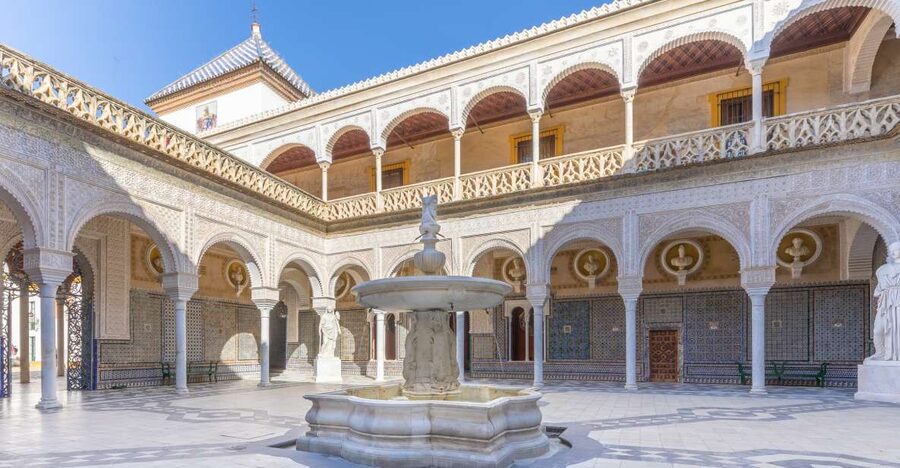
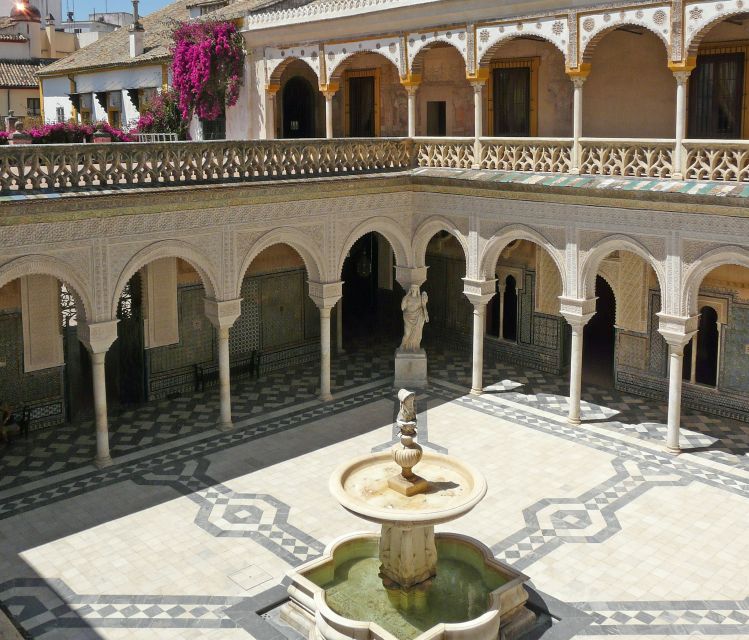
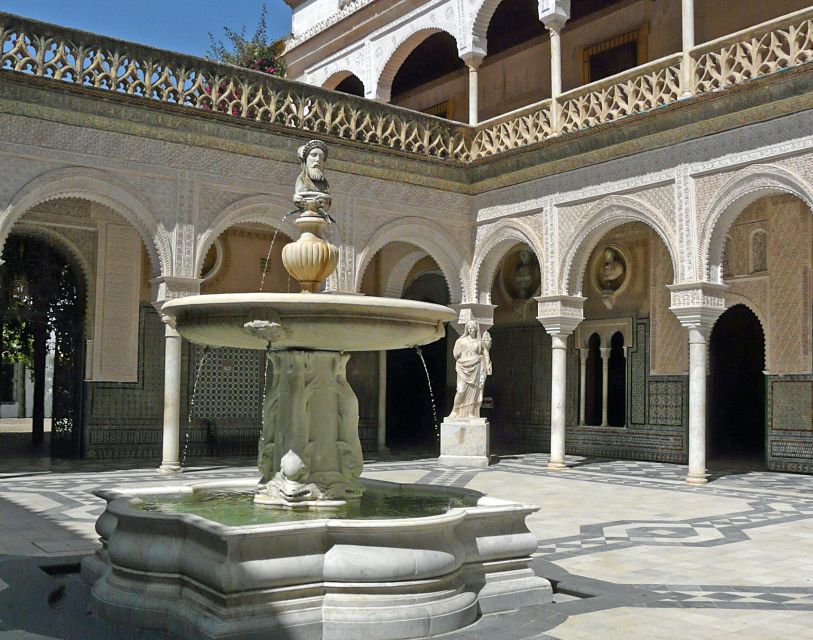
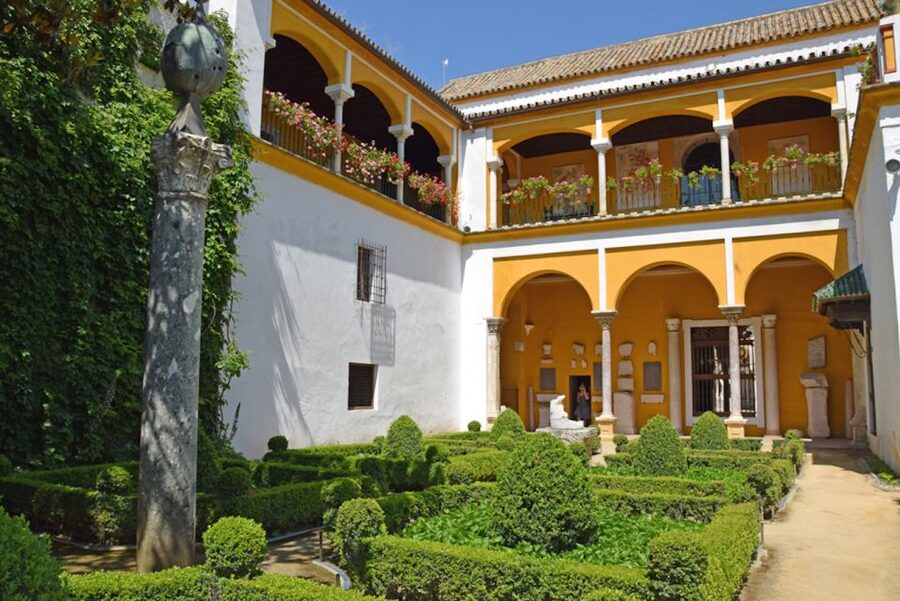
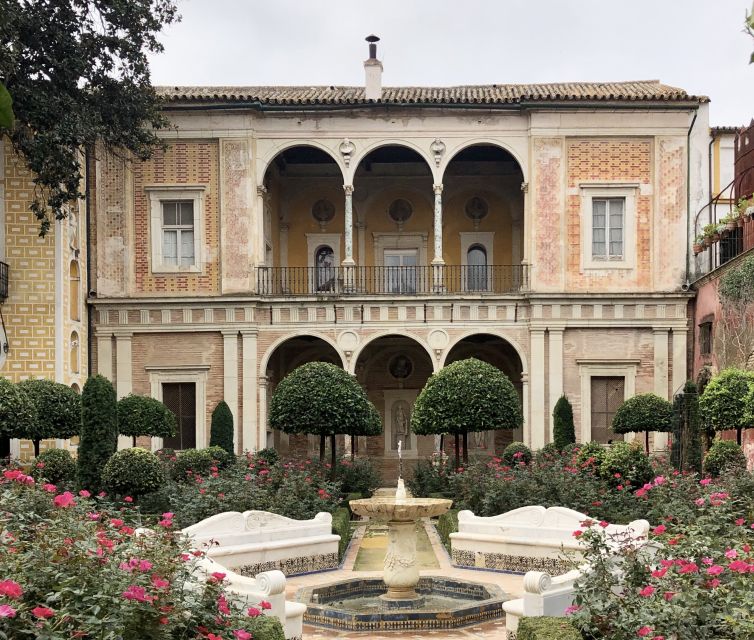
The central Andalusian courtyard is the visual heart of the visit. Fountains, columns, patterned tiles, and sculpture come together in a space designed to impress from every angle.
The 24 busts of Roman emperors are among the most memorable features. They give the courtyard a formal, museum-like quality, but the setting keeps it from feeling like a bare sculpture gallery. Look for the busts of Emperor Hadrian, Aphrodite, and Apollo, the god associated with music, poetry, and art.
This collection of classical figures was part of the palace’s statement of learning and status. Renaissance nobles often used Roman art to connect themselves with the ideals of the ancient world. At Casa de Pilatos, those sculptures sit comfortably beside Andalusian tilework and Islamic-influenced architectural details.
Take a few minutes to look down as well as up. The tiles are not background decoration. They cover walls and floors with repeated geometric patterns and strong color, giving the courtyard its cool, ordered appearance. Many people come mainly for the tiles and end up spending just as much time studying the sculpture.
The fountain adds a gentle sound and a sense of calm. This is one of the places where I would put the audio guide aside for a moment. Let the courtyard work visually before moving to the next stop.
Pallas Pacifera and the palace’s symbolic details
Casa de Pilatos is full of objects that carry a message, not just decoration. Among the details to notice are the war ornaments of Pallas Pacifera, including a stone-carved shield and helmet.
Pallas Pacifera presents a more peaceful aspect of the classical goddess Minerva, linking wisdom, strength, and peace. You do not need a long background lecture to appreciate the point. The palace uses classical symbols to present its owners as cultured, powerful, and connected to the ideals of Renaissance society.
This is where the audio guide can add real value. Without explanation, a shield and helmet may look like attractive carved objects. With context, they become part of the family’s carefully planned image.
At the same time, the guide is not always perfectly easy to follow. Some sections are very detailed, and the descriptions can feel overworked. You may hear more information than you want while standing in a small room with several things competing for your attention.
My advice is simple: use the guide selectively. Listen to the introduction and the sections that interest you, then pause it when you want to enjoy the building quietly. You do not need to complete every audio track to get your money’s worth.
Same base, a different kind of day out:
- Seville: 1-Hour Guadalquivir River Sightseeing Eco Cruise
★ 4.2 · 10,281 reviews - Seville: Cathedral, Giralda, and Royal Alcázar Guided Tour
★ 4.7 · 9,165 reviews - Seville: Cathedral, Giralda & Alcazar Entry With Guided Tour
★ 4.6 · 8,560 reviews - Seville: Priority Access Cathedral, Giralda & Alcázar Tour
★ 4.8 · 7,563 reviews
The Chapel of Flagellation and mixed traditions
The Chapel of Flagellation is the oldest part of Casa de Pilatos. It is a particularly useful stop for understanding why the palace feels unlike a standard Renaissance mansion.
Look for the ornate basket-handle arch and the blend of Christian and Islamic design. Mudejar-Gothic features sit beside Renaissance elements, showing how styles in Seville overlapped rather than replacing one another overnight.
The chapel is valuable even if you are not deeply interested in architectural history. It gives the palace a sense of age and continuity. The grander rooms reflect ambition and display, while this older section connects the building to Seville’s earlier traditions.
You will notice the same mixture throughout the ground floor. Christian themes, classical mythology, Islamic-influenced geometry, and Italian Renaissance taste all share the same building. That combination is the main reason I would choose Casa de Pilatos over a less varied historic house.
Tiles, ceilings, and the Salón del Pretorio
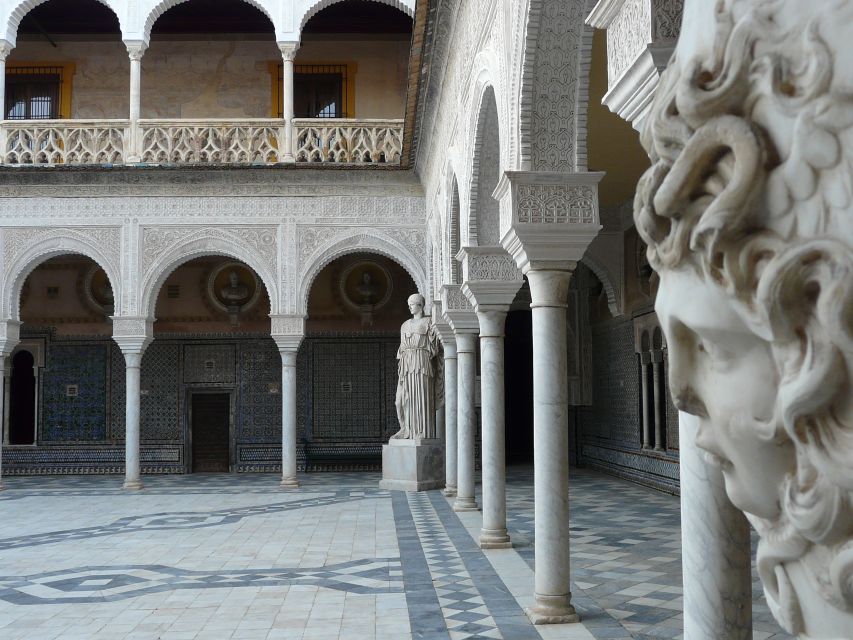
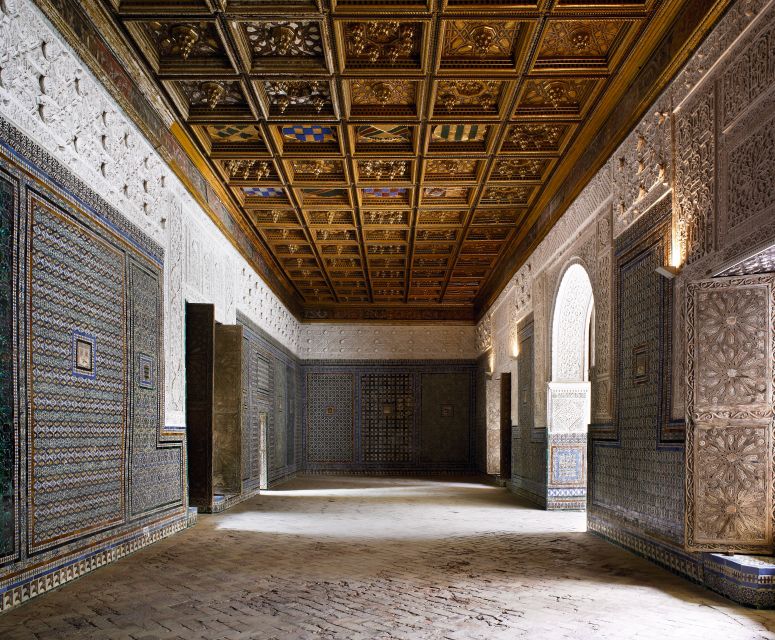
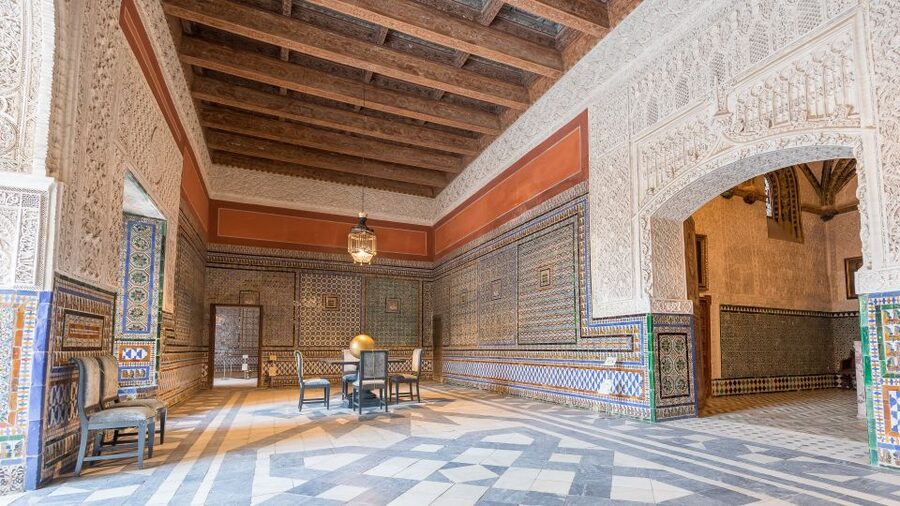
Traditional glazed tiles are used throughout the palace, and they are among its strongest visual features. Walls and floors carry repeating patterns that change from room to room. The work is decorative, but it also creates a clear link to Andalusian design.
If you enjoy photographing architectural detail, plan to move slowly. The tiles are easy to admire in a broad view, but the smaller patterns reward a closer look. A morning visit or an early afternoon visit can give you more room to pause, though the palace becomes busier when tour groups arrive later in the day.
The Salón del Pretorio brings your attention upward. Its coffered ceiling is decorated with ornamental bows and carefully arranged detail. This is one of those rooms where a quick walk-through wastes the best part. Look at the ceiling from several positions and notice how the design changes as the light reaches it.
The palace also contains Renaissance artwork collected by the Duke of Alcalá. This collection helps explain the building’s role in introducing Renaissance taste to Seville. It is not only a pretty house. It is a record of how elite culture in the city was changing.
The audio commentary gives you more information about construction, collecting, and the family. Some people will appreciate that level of detail. If you prefer a light visit, select the shorter sections and spend more time looking.
Gardens that slow the visit down
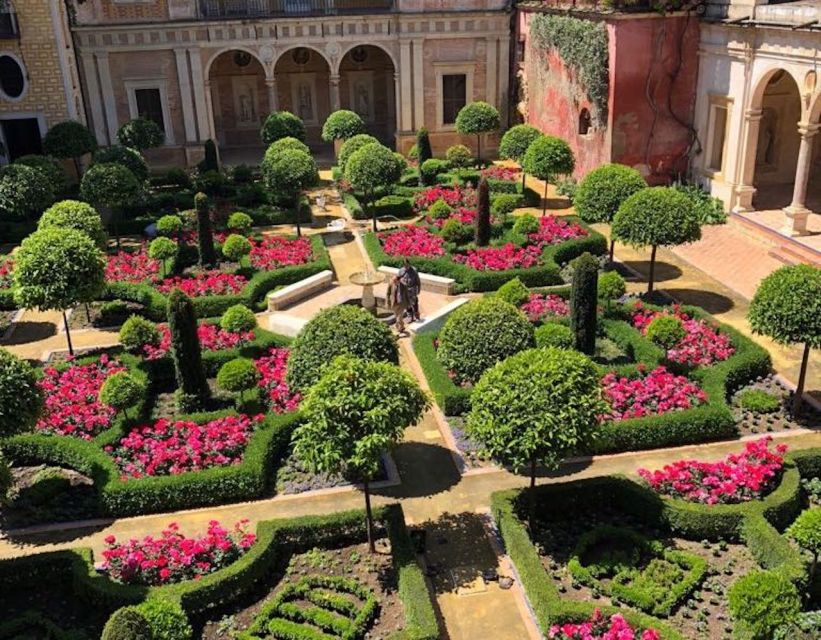
The gardens are a strong reason to buy the ground-floor ticket. They are designed in the Renaissance style, with sculptures, planted areas, and spaces that make a useful break from the palace rooms.
The gardens are not vast. That is part of their appeal. You can stroll without committing to a long walk, then return to the architecture while the details are still fresh in your mind. A rose garden is also part of the experience, adding seasonal color to the stone and tile.
The garden areas are especially welcome in Seville’s heat. One August visit at around 3 PM was quiet and uncrowded, though the weather was very hot. If you visit in summer, you may appreciate the calm more than the temperature. The palace offers shade in places, but you should still plan your timing sensibly.
I would not rush through the gardens at the end. Sit for a moment if space allows, look back toward the building, and compare the formal palace design with the softer garden setting. This is where Casa de Pilatos feels like a home rather than a museum route.
How long to allow and when to go
The ticket is valid for one day, but no fixed visit length is provided. Your time will depend on how closely you listen to the audio guide and how long you spend with the tiles, sculpture, rooms, and gardens.
I would allow at least an hour for a brisk visit and longer if you enjoy decorative detail. The palace can easily take more time than expected because there are many small features rather than one single showpiece.
Morning visits are often a smart choice if you want quiet rooms and easier photographs. Around 2 PM has also been a calm period, while tour groups may appear later in the afternoon. From Tuesday through Sunday, make sure you arrive before the 5:30 PM last entry.
Monday offers a useful budget option. Admission is free between 3 PM and 5:30 PM, according to the stated schedule. That can make a paid ticket unnecessary if your plans fit that narrow window, but check the current availability when arranging your day.
Casa de Pilatos also works well before a visit to the Royal Alcázar. The palace gives you a smaller, more focused introduction to Seville’s blend of Islamic-influenced design, Gothic forms, Renaissance art, and gardens. Afterward, the Alcázar’s larger scale is easier to understand.
The audio guide: helpful, but use it your way
The audio guide is included, which improves the value of the ticket. It is available in seven languages and gives you information about the palace’s construction, artwork, family, and architectural styles.
The QR-code system is designed for self-guided use, with signs indicating which part of the commentary belongs to each room or section. You can move at your own pace rather than staying with a group.
Still, the audio guide is not perfect. Some explanations are so detailed that they slow the visit. A few descriptions can also be confusing when the commentary asks you to track several windows, ceiling ornaments, or symbolic features at once.
I suggest listening in short sections. Start with the palace introduction, then choose the stops that interest you most. If you become lost in the details, stop the audio and look at the room on your own. The building is strong enough to carry part of the visit without narration.
Who will get the most from this ticket
I recommend Casa de Pilatos to anyone who enjoys architecture, tilework, sculpture, gardens, or the overlap of Spanish and Italian Renaissance culture. It is also a good choice if you want a quieter historic site between Seville’s major attractions.
It suits independent visitors particularly well. You can enter with an e-ticket, follow the marked route, use the audio guide when useful, and take your time in the courtyard and gardens.
Families and casual sightseers may enjoy the courtyard, Roman busts, and gardens even without listening to every explanation. Art and architecture enthusiasts will want more time, especially in the chapel and the Salón del Pretorio.
The ticket is less suitable if you want a live guide, access to the entire palace, or a large royal complex. The ground floor is beautiful, but the upper floor is not included. You may be able to add an upstairs tour on arrival, but that is separate from this admission.
Should you book Casa de Pilatos?
I would book it if you want a calm, detail-filled palace visit and you are happy with ground-floor access. At $14, the combination of sculpture, Renaissance art, exceptional tilework, historic rooms, and gardens offers solid value, especially compared with the time and crowds required at Seville’s largest monuments.
Before booking, check your schedule against the last entry time and consider Monday’s free period from 3 PM to 5:30 PM. Choose the morning or early afternoon if quiet rooms and photographs matter to you.
The best approach is to treat Casa de Pilatos as a focused architectural visit, not a substitute for the Royal Alcázar. Listen to the audio guide selectively, look closely at the tiles and ceilings, and leave time for the gardens. If that sounds like your kind of Seville afternoon, this palace deserves a place on your list.
FAQ
What does the Casa de Pilatos ticket include?
The ticket includes entry to the ground floor and an audio guide.
Is the upper floor included?
No. The upper floor is not included in this ticket.
Which parts of the palace can I see?
You can see the ground-floor rooms, courtyards, sculpture, artwork, Chapel of Flagellation, coffered ceilings, and gardens included in the ground-floor route.
Is an audio guide included?
Yes. An audio guide is included with the ticket.
Which languages are available for the audio guide?
The audio guide is available in Spanish, French, English, Portuguese, German, Japanese, and Italian.
Is there a live guide?
No live guide is included with this activity. The listed host or greeter language is Spanish, and the visit uses the audio guide.
What is the last entry time?
From Tuesday through Sunday, the last entry is at 5:30 PM.
Is entry free on Mondays?
Yes. Entry is free on Mondays between 3 PM and 5:30 PM.
How much does the ticket cost?
The listed price is $14 per person.
Can I cancel the booking?
Yes. You can cancel up to 24 hours in advance for a full refund.
Just added in Seville
- Seville: Alcázar Guided Palace Tour with Priority Access★ 4.4 · 994 reviews
- Seville Segway Guided Tour★ 5.0 · 367 reviews
- Seville City Tour 2 Hour Monumental Segway Tour★ 5.0 · 472 reviews
- Private Tour Jewish Quarter, center and Plaza de España★ 5.0 · 127 reviews
- Seville: Small-Group Jewish Quarter Discovery Walking Tour★ 4.9 · 499 reviews
- Seville: Small Group Jewish Quarter Tour with Tapas & Drinks★ 5.0 · 119 reviews
- VIP Guided Seville Alcazar Pre-Opening, Cathedral & Old Town★ 5.0 · 191 reviews
- Seville: 1, 2 or 3 Hour Segway Tour★ 4.9 · 674 reviews
Tours in Seville, compared.

Live Flamenco Dancing Show Ticket at the Theater
Read our review →
1-Hour Guadalquivir River Sightseeing Eco Cruise
Read our review →
Cathedral, Giralda, and Royal Alcázar Guided Tour
Read our review →
Cathedral, Giralda & Alcazar Entry With Guided Tour
Read our review →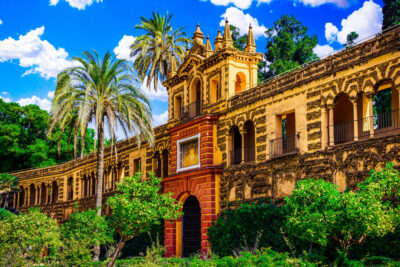
Priority Access Cathedral, Giralda & Alcázar Tour
Read our review →

Puro Flamenco Show with Optional Museum Ticket
Read our review →Browse the lists this tour appears in