
Reviewed · SPAIN
San Lorenzo de El Escorial: Monastery and Site Guided Tour
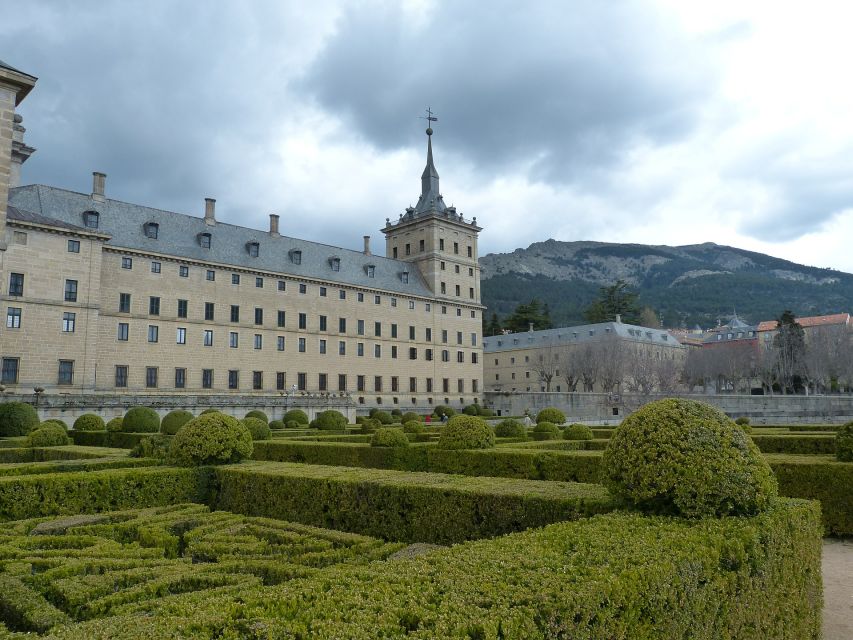
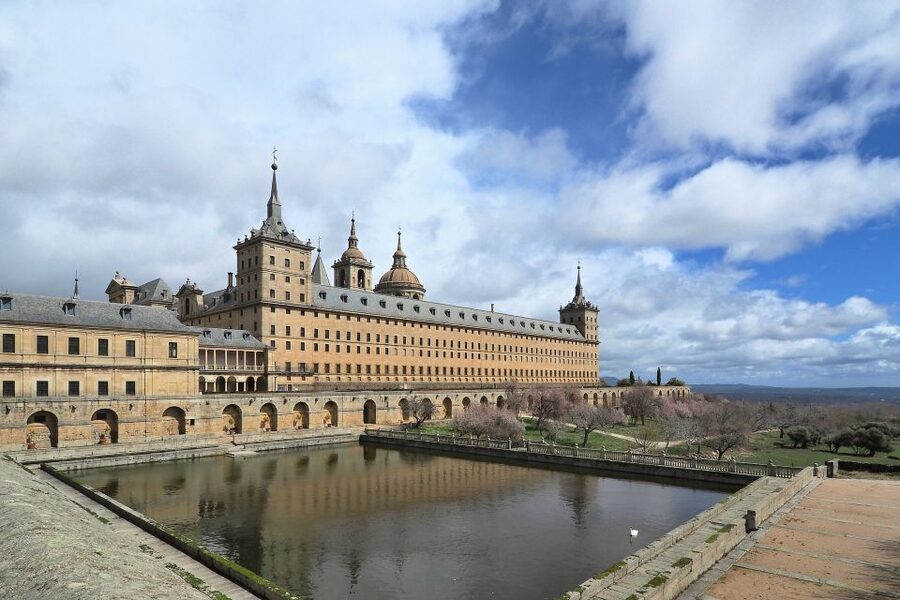
San Lorenzo de El Escorial is far more than a grand church outside Madrid. Built under Philip II in the 16th century, this vast royal monastery brings together a basilica, palace, burial church, library, and art-filled rooms in one severe Renaissance complex. The building’s grill-shaped plan even refers to Saint Lawrence, who was traditionally martyred on a gridiron.
I like this tour for two clear reasons: it takes you into the Royal Library, one of the most memorable rooms in the complex, and it gives the building a useful historical frame instead of leaving you to wander a maze alone. I also like the two-hour length, which is long enough for the major rooms without turning the visit into an all-day march.
The main drawback is that the tour is in Spanish, and the pace may feel brisk if you want to study every painting, tomb, or architectural detail. One visitor also found the experience more rushed on a repeat visit. Arrive early, listen closely, and save independent wandering for another visit if you want a slower look.
Key points to know before booking
- Philip II’s Royal Library is the intellectual highlight: Its books reflect the king’s interest in humanist learning and make the monastery feel like a center of power and study, not only a religious building.
- The two-hour route covers the essential rooms: Expect the basilica, Battle Hall, pantheon, palatial rooms, library, and other major parts of the monument.
- The guide adds real value: Alejandro, Isabella, Marta, and other Todo Tours guides have been praised for clear explanations, humor, energy, and strong command of the site.
- This is a UNESCO World Heritage Site: You are visiting one of Spain’s major Renaissance monuments, closely tied to the Spanish Golden Age and Philip II.
- The meeting point requires care: Look for the guide with a blue Todo Tour umbrella at the monastery’s main entrance, the doorway topped by the Spanish flag.
- Dress and luggage rules matter: Bring a passport or ID card, but leave large bags behind and avoid short skirts, sleeveless shirts, and swimwear.
Why El Escorial deserves a place in your Madrid plans
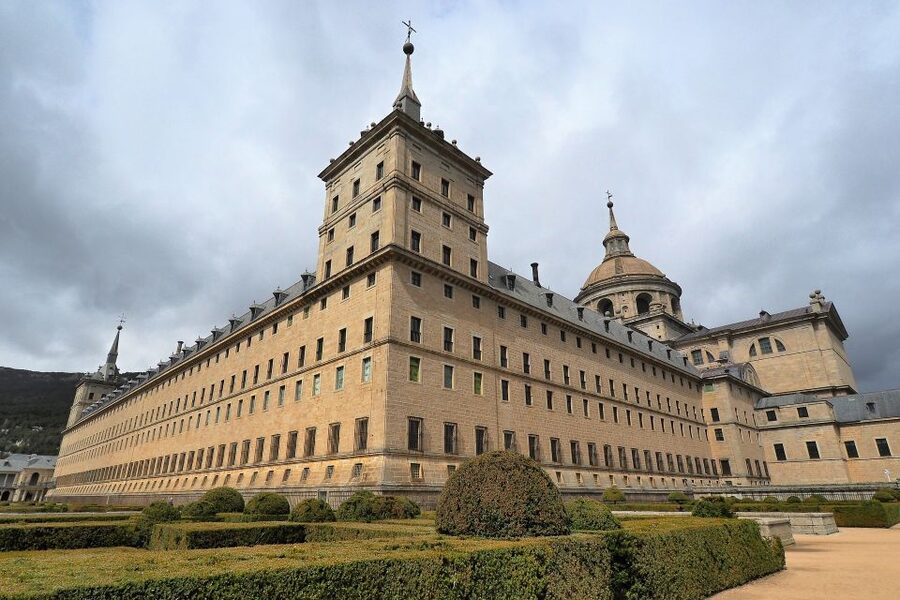
Madrid has plenty of grand royal sights, but El Escorial gives you a different view of Spain’s monarchy. This is not simply a palace with polished rooms. It is a carefully planned religious, royal, intellectual, and memorial complex created during the reign of Philip II.
The site belongs to the era often called the Spanish Golden Age, when Spain held enormous political power and its court supported religious, artistic, and scholarly work. El Escorial expresses all of those ambitions through stone. The building was designed to serve several purposes at once: monastery, royal residence, church, burial place, and center of learning.
That combination can be hard to grasp when you arrive and see only a huge formal facade. A guide helps connect the parts. The basilica is not just a church, the pantheon is not just a crypt, and the library is not just a room filled with old books. Each place explains something about how Philip II wanted Spain and the Catholic monarchy to be understood.
I especially like the fact that the tour treats the building as a cultural project rather than a collection of pretty interiors. You learn about the ideas behind it, including the religious and political goals of the Spanish court. That context makes the austere design easier to read.
A few more things to do in Spain worth a look
- Barcelona: Sagrada Familia Entry Ticket with Audio Guide
★ 4.6 · 105,312 reviews - Barcelona: Park Guell Guided Tour with Skip The Line Entry
★ 4.7 · 17,563 reviews - Málaga: Caminito del Rey Guided Tour with Transportation
★ 4.8 · 12,183 reviews
Meeting the blue Todo Tour umbrella
The meeting instructions are simple, but you should take them seriously. Arrive 15 minutes before the scheduled start and exchange your voucher at the meeting point. The guide waits at the access door to the monastery, specifically the main entrance with the Spanish flag above it, carrying a blue Todo Tour umbrella.
This detail matters because a large historic complex can have several approaches and open spaces around it. One visitor’s only criticism was the lack of a clearer sign identifying the start of the tour. The umbrella is the main marker, so do not arrive at the last minute and expect an obvious tour desk.
The activity provider is Todo Tours Gestion SL. The included entry ticket means you do not need to arrange a separate admission for the monastery. Bring your passport or ID card, as it is listed among the required items.
The tour is wheelchair accessible. Still, the building is large and the route includes several major interior areas, so it is sensible to confirm any specific mobility needs when booking rather than relying only on the general accessibility label.
The basilica and the power of Philip II
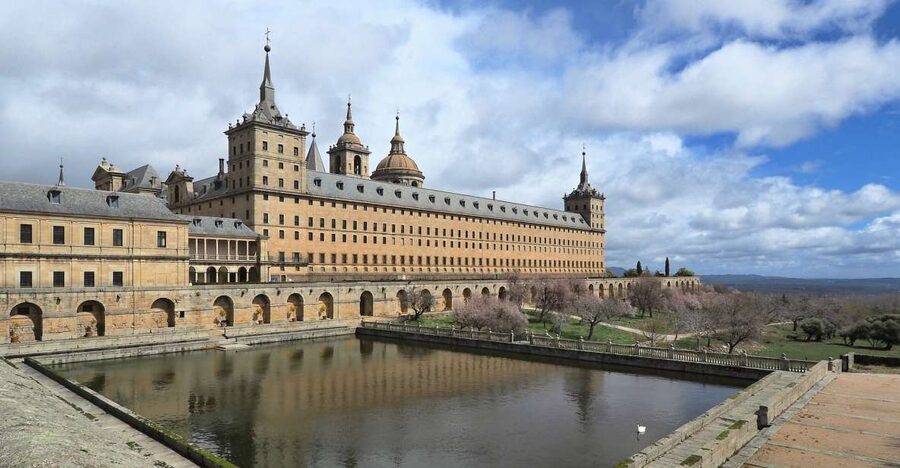
The basilica gives you the clearest first sense of the monastery’s scale and purpose. Here the religious heart of El Escorial meets the royal ambitions of Philip II. The tour uses this space to explain the king’s reign and the ideals that shaped the complex.
Expect the guide to focus on how the building served both devotion and monarchy. The basilica was not an isolated chapel tucked beside a residence. It was part of a vast plan in which religious authority, royal identity, and national power were closely linked.
I find this kind of explanation more useful than a list of dates. The architecture can feel stern and repetitive at first, but once you understand the aims behind it, those qualities become easier to interpret. The monument was meant to communicate discipline, order, Catholic conviction, and royal control.
Your guide’s delivery will shape this section. Alejandro has been praised for mixing humor with solid explanations, while Isabella has been singled out for energy and clear communication. Marta has also been described as well prepared, passionate, and careful to explain facts rather than invented stories. Since the activity is offered in Spanish, make sure that suits your group before you book.
The Battle Hall and Spain’s military memory
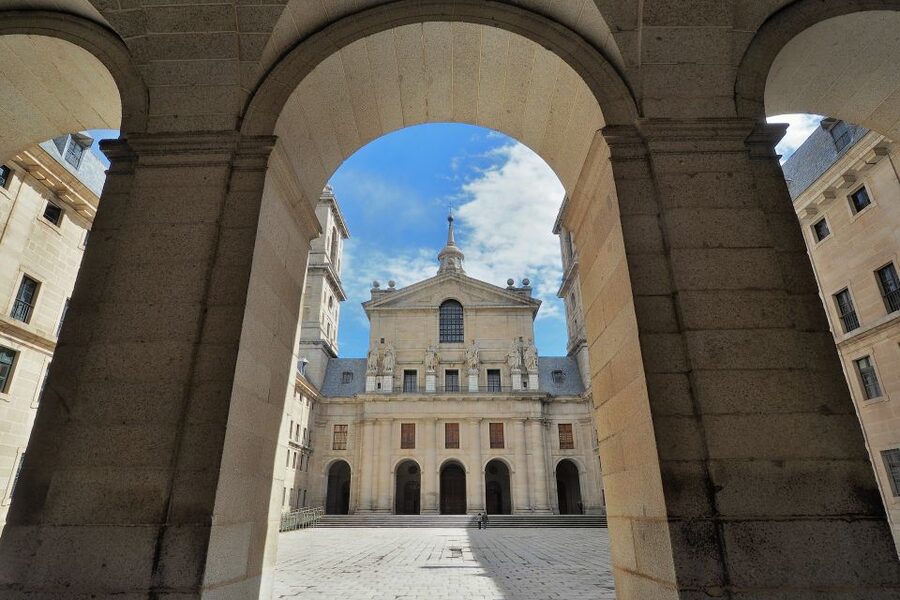
The Battle Hall adds a more direct connection to Spain’s military past. Its name tells you what kind of story the room presents, but the guide’s commentary gives the images and setting their place within the larger project of the monastery.
This stop is useful because it shifts the visit away from religion and court life. El Escorial also celebrates the power of the Spanish crown and its role in conflicts during the period. The room helps show how royal memory could be shaped through architecture and decoration.
You may find that the two-hour schedule allows only a focused explanation here. That is a fair trade if your goal is to understand the entire complex rather than spend the whole visit in one room. If you have a strong interest in military art, take mental notes and return to the area after the guided portion, if the visit conditions allow.
Same base, a different kind of day out:
- Barcelona: Park Güell Admission Ticket
★ 4.4 · 76,534 reviews - Seville: Royal Alcázar Entry Ticket
★ 4.6 · 28,378 reviews - Barcelona: Casa Batlló Entry with Self-Audioguide Tour
★ 4.7 · 25,359 reviews - Seville: Cathedral and La Giralda Entry Ticket
★ 4.5 · 24,592 reviews
The pantheon and Spain’s royal tombs
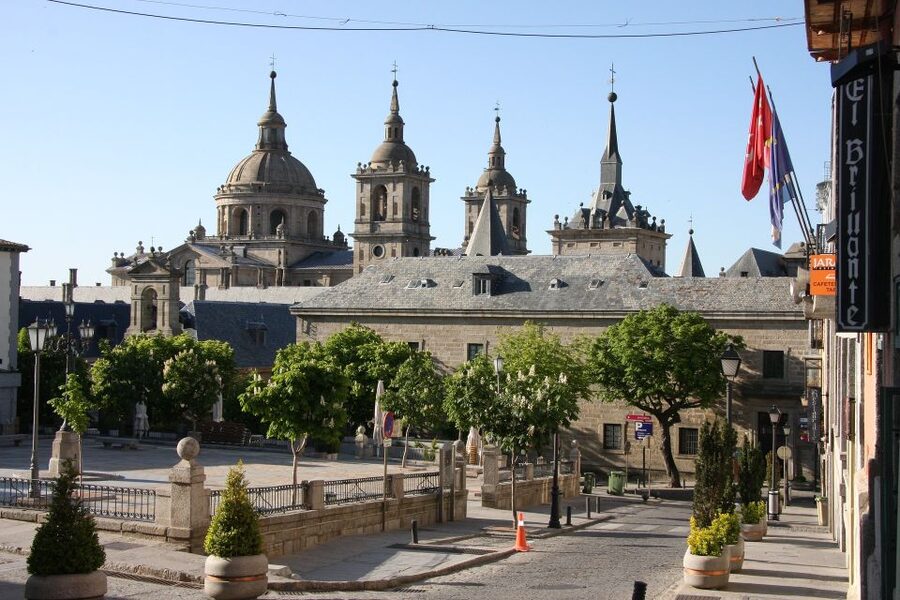
The pantheon is one of the most important stops on the route. It is the royal burial place associated with many of Spain’s monarchs, and it gives the building a solemn purpose that you cannot get from the palace rooms alone.
The setting connects Philip II’s reign with the longer story of the Spanish monarchy. You are not only seeing where kings were commemorated. You are seeing how a dynasty presented continuity, authority, and religious legitimacy.
This part of the tour may feel more serious than the library or palatial rooms. That is appropriate. The pantheon is a place for quiet attention, and the instructions specifically ask visitors not to make noise. Keep your voice low and follow the guide’s directions.
If royal history interests you, this is a strong reason to choose the guided route. A self-guided visit can show you the room, but the guide can explain why it matters within the full design of El Escorial.
Palatial rooms and the daily life of the court
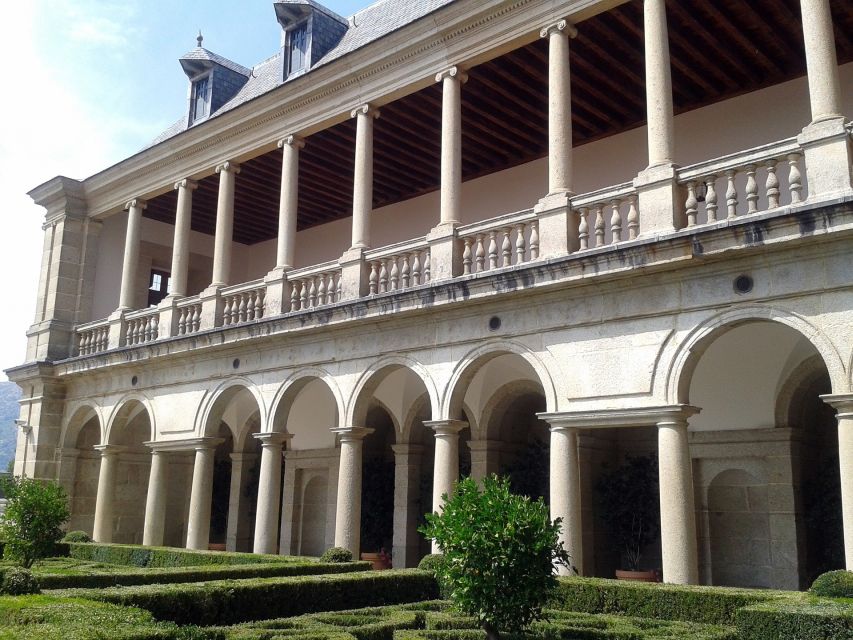
The palatial rooms provide a glimpse of the royal side of the complex. They help you picture El Escorial as a working court residence as well as a monastery and memorial.
Do not expect the warmth or decorative excess of every European palace. El Escorial is often described through its imposing scale and Renaissance design, and its appeal comes partly from the tension between royal grandeur and religious restraint. The palace rooms make that balance easier to see.
This is also where a guide can prevent the experience from becoming a blur of corridors. One visitor who toured independently with an electronic device found the complex confusing and had to walk much farther. A live guide keeps you on a planned route and tells you why each room deserves your attention.
The route can feel efficient rather than leisurely. That is helpful if you have limited time near Madrid, but less ideal if you want to stop for long periods. I would treat the tour as a strong first orientation, not necessarily the final word for a visitor who wants to inspect every object.
The Royal Library, Philip II’s intellectual statement
The Royal Library is the stop I would most want to protect time for. Philip II gathered its volumes to expand his humanist knowledge, and the room shows that the monastery was intended to be a place of study as well as prayer and royal ceremony.
This library changes your understanding of the entire site. El Escorial was not built only to project military or religious authority. It also presented the king as a learned ruler connected to books, scholarship, and the wider intellectual world of Renaissance Europe.
A guide is especially useful here because the significance is easy to miss if you focus only on the shelves and decoration. The library is a statement about what a monarch wanted to know and how knowledge could reinforce power.
The room is also one reason I would choose a live tour over an audio device. A local guide can point out the parts that matter, adjust the explanation to the group, and connect the library to Philip II’s wider aims. The strongest guide comments in this experience emphasize clear facts, humor, and an easy-to-follow explanation of complicated history.
What two hours feels like inside the monastery
Two hours is a practical length for this visit. El Escorial is large enough to overwhelm you, and a carefully guided route helps you use your time well. You will cover the main highlights without committing most of a day to one monument.
The schedule does mean you should expect a steady pace. You will move through several different types of spaces, from the basilica to the pantheon, from military decoration to royal rooms and the library. Give your attention to the guide rather than trying to photograph everything.
The route finishes beside the entrance after the major explanations are complete. That makes it easy to orient yourself again, especially if the building felt confusing at first.
Group size can vary. One visitor had an English-speaking group of only four people and found the personal format especially worthwhile, but that small group should not be treated as a guarantee. The main benefit of the guided format is the organized route and live explanation, regardless of the final group size.
Is $47 good value?
At $47 per person, the tour costs more than simply entering a monument on your own, but the ticket is included and the price covers a two-hour guided visit. The value depends on how you approach historic buildings.
If you already know El Escorial well, read Spanish comfortably, and enjoy moving at your own pace, independent entry may suit you better. You will have more control over how long you spend in each room.
For a first visit, I think the price is easier to justify. The complex has several functions and a large amount of historical meaning packed into its rooms. You are paying for a route through the essential areas, an explanation of Philip II’s aims, and help making sense of a building that can otherwise feel like a maze.
The strongest value comes from the guide. Isabella has been praised for enthusiasm and fluent English in one visit, but the listed activity language is Spanish, so do not assume English service is available. Alejandro and Marta have also received strong praise for their delivery and preparation. Guide assignments can change, so book for the content and format rather than expecting one particular person.
Flexible booking also helps. You can reserve now and pay later, and cancellation is free up to 24 hours before the activity for a full refund. That is useful when you are arranging a Madrid itinerary around changing plans.
Clothing, bags, and other practical details
Dress conservatively for the monastery. Short skirts, sleeveless shirts, and swimwear are not allowed. Comfortable, respectful clothing is the safest choice.
Large bags and luggage are not permitted. Do not arrive with your main suitcase or a bulky day bag and assume it can come inside. Bring your passport or ID card, and keep the rest of your belongings to a minimum.
Silence matters in parts of the complex. Making noise is prohibited, and the pantheon in particular calls for a quiet approach. This is not a casual sightseeing stop where you can talk loudly through every room.
The tour is offered in Spanish and is wheelchair accessible. Starting times vary, so you need to check availability when selecting your date.
Who should book this El Escorial tour?
I would recommend it to you if this is your first visit, you want historical context, or you prefer a clear route through a complex monument. It is also a good fit if you have only two hours and want to see the main parts without getting lost.
It suits people interested in Philip II, Renaissance architecture, royal history, Spanish religious culture, and the Spanish Golden Age. The Royal Library and pantheon alone give the visit more range than a standard palace tour.
I would hesitate if you need an English-language guide, dislike scheduled pacing, or want to spend a long time studying individual works. The listed language is Spanish, and the itinerary is designed to cover many spaces in two hours.
Should you book it?
Book this tour if you want El Escorial explained as a complete idea: monastery, royal residence, burial place, library, and political statement. The included admission and compact route make $47 reasonable for a first visit, especially when the building’s scale might otherwise work against you.
Skip it only if you are comfortable exploring independently in Spanish or already know the monument well. For most first-time visitors near Madrid, a live guide gives this imposing place a clearer shape and keeps two hours from disappearing in a maze of corridors.
FAQ
How long does the El Escorial guided tour last?
The guided tour lasts two hours.
What language is the tour offered in?
The listed live tour language is Spanish.
What is included in the price?
The price includes a tour guide and an entry ticket to the Monastery of San Lorenzo de El Escorial.
How much does the tour cost?
The listed price is $47 per person.
Where is the meeting point?
Meet at the monastery’s main entrance, the access door with the Spanish flag at the top. The Todo Tour guide will be waiting with a blue umbrella.
How early should I arrive?
Arrive 15 minutes before the activity begins so you have time to exchange your voucher and find the guide.
Do I need to bring identification?
Yes. A passport or ID card is listed as something you must bring.
Can I bring luggage or a large bag?
No. Luggage and large bags are not allowed.
What clothing is not permitted?
Short skirts, sleeveless shirts, and swimwear are not allowed. Making noise is also prohibited.
Is the tour wheelchair accessible?
Yes. The activity is listed as wheelchair accessible.
Can I cancel the booking?
Yes. You can cancel up to 24 hours in advance for a full refund.
Can I reserve now and pay later?
Yes. The reserve now and pay later option lets you hold a place without paying immediately.
Just added in Spain
- The Red Canyon Tour – Small Group Trip with Local Food Tasting ツ★ 5.0 · 798 reviews
- Full Day Rainforest Tour with Tasting and Swimming Time ツ★ 5.0 · 607 reviews
- Full Day Ticket at Perchel Beach Club with Lunch★ 5.0 · 316 reviews
- 3 Wheel Motorcycle like Quad/Buggy Tour Gran Canaria (Maspalomas)★ 5.0 · 237 reviews
- Arucas, Teror, Viewpoint Roque Nublo – Highlights Gran Canaria★ 4.5 · 170 reviews
- Gran Canaria Highlights Private Tour VIP★ 5.0 · 106 reviews
- Full day Hiking Gran Canaria Peaks of Gran Canaria★ 5.0 · 130 reviews
- Coastering in Gran Canaria (Aquatic Route in the ocean cliffs)★ 5.0 · 135 reviews