
Reviewed · GOTHIC & JEWISH QUARTER WALKING TOURS
Barcelona: Gothic Quarter Walking Tour
Barcelona’s old city is best read on foot, one crooked lane and worn stone at a time. This German-language walking tour links Roman Barcelona, medieval power, Jewish life, royal politics, and the scars of the 20th century without treating the Gothic Quarter like a dead museum.
I like the relaxed pace, with room for photos and bathroom breaks, and I like the practical side: guides such as Johannes have offered restaurant, shopping, and local food tips alongside the history. The main drawback is clear: interior visits and entry fees are mostly not included, so this is a street-level history walk, not a museum tour.
Key points at a glance
- Roman beginnings: See how Barcelona’s earliest water systems and luxury shaped the city.
- Medieval power: Follow the Crown of Aragon from a small city to a major maritime force.
- Jewish and royal history: Learn about the old Jewish Quarter, the Inquisition, kings, and political change.
- Barcelona’s legends: Hear stories of dragons, saints, dancing eggs, strange brotherhoods, and local heroes.
- Ribera finish: End near Passeig del Born and Santa Maria del Mar, in a district tied to commerce, war, and civic memory.
- German guidance: Ask for practical advice on restaurants, shopping, and Catalan specialties as you walk.
Starting at Plaça de Catalunya
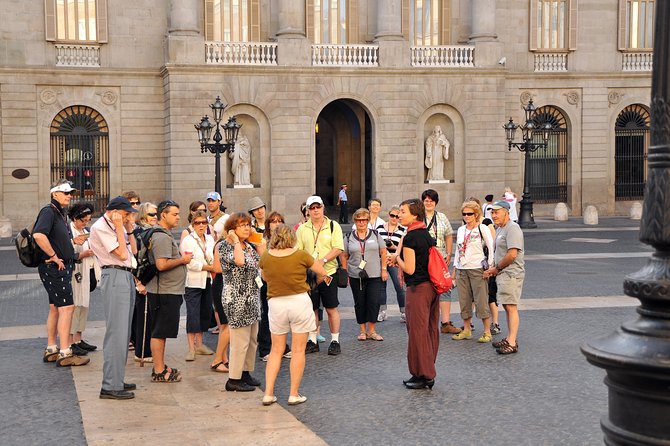
The meeting point is in front of Hotel Olivia Plaza at Plaça de Catalunya, 19. This is a useful place to begin because the square sits between the newer central city and the older quarters, giving you a quick sense of Barcelona’s layered plan.
From here, you move toward the Gothic Quarter and then through the Ribera area. The route is about 3.5 hours, with the listed walking portion taking roughly 3.25 hours. That sounds long on paper, but the pace is meant to be unhurried. You are not being marched from monument to monument.
I would arrive ready to walk on stone streets and pause often. The tour runs in sun, rain, wind, and strong showers, so comfortable shoes matter more than stylish ones. In summer, bring a hat, sunglasses, sunscreen, and water. In winter, a light jacket or thin coat should do.
The tour is wheelchair accessible, though old-city streets and historic surfaces can still affect how easy each stretch feels. If you need a specific route adjustment, raise it before setting off.
More Old Town Walking Tours in Barcelona
- Barcelona in 1 Day: Sagrada Familia, Park Guell,Old Town & Pickup
★ 5.0 · 13,541 reviews - Barcelona: Sagrada Familia, Modernism, and Old Town Tour
★ 4.7 · 1,621 reviews - Barcelona Gothic Quarter Tapas & Taverns Food & Wine Tour
★ 5.0 · 1,470 reviews
Reading Roman Barcelona in the old streets
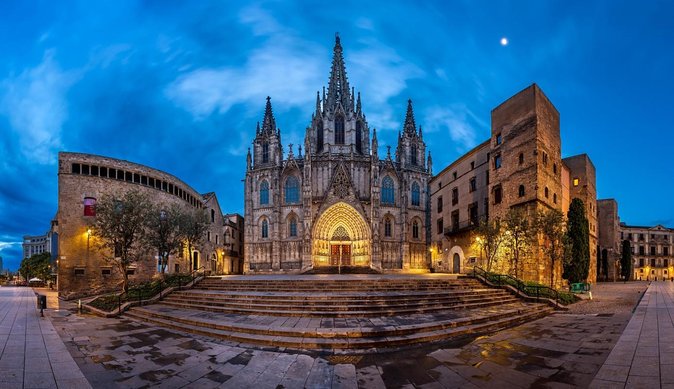
The first historical layer reaches back to Roman times. One topic concerns Roman luxury and flowing water for a convalescent colony. That detail helps you picture Barcelona as more than a medieval maze. Long before the Gothic Quarter gained its name, this was a planned Roman settlement with water, public life, and links to the wider empire.
I like this opening because it gives the old stones a starting point. Without it, the Gothic Quarter can seem to be one uninterrupted block of medieval walls. The Roman chapter shows that Barcelona has been rebuilt and reused many times.
The guide also uses the early history to explain how a holy city gained competition and how a local power base began to grow. These are not just dates. They show why Barcelona became important in Catalonia and why its old center carries such a strong sense of civic identity.
You will mostly see places from the outside. That keeps the route moving and lets the guide focus on streets, squares, and the way the old city fits together. If you want extended time inside Roman remains or archaeological displays, plan those separately.
Medieval Barcelona, power, and the Crown of Aragon
The Middle Ages form the heart of the walk. Barcelona’s story moves from a small city toward the reach of the Crown of Aragon, a maritime power with connections across the Mediterranean.
The route touches on the birth of a nation, political conflict, and periods of violence. The subject matter is not softened into a fairy tale. There are stories of bloody struggles, public advice, military force, and the gradual loss of local political control.
One especially useful thread concerns the city’s councils and public decision-making. The guide explains how ordinary civic voices once had a role, then how the death of King Martin marked the start of a decline in that shared power. You get a better sense of medieval Barcelona as a working city with arguments, interests, and competing groups, not just a backdrop for kings.
The history of the Crown of Aragon also gives meaning to the streets around you. Trade, shipping, religion, and government were tied together. As you walk, you can connect the narrow lanes to a city that once looked outward across the sea.
This section should suit you if you enjoy political history. It may feel dense if you prefer only architecture and photo stops. The guide’s storytelling approach helps, but there is a lot to absorb over several hours.
The Jewish Quarter and the memory of a lost community
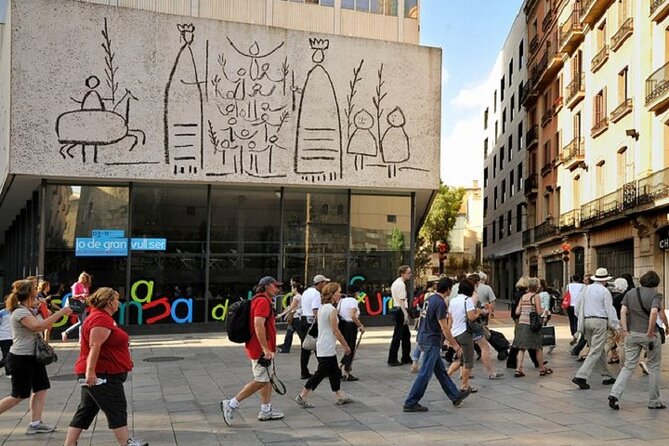
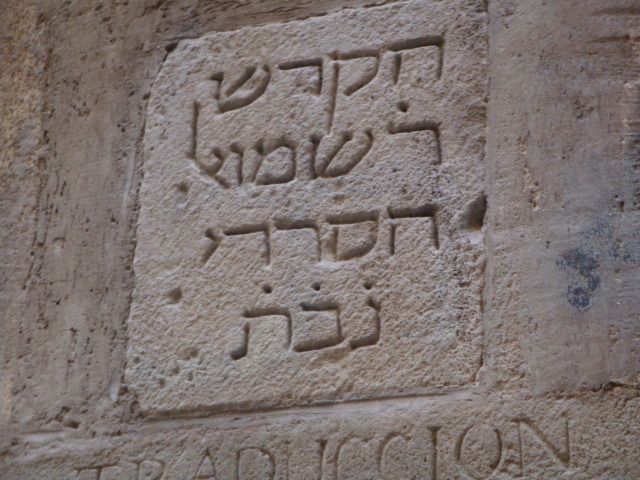
The old Jewish Quarter brings a more intimate and painful chapter. The route discusses the remains of a lost world, along with the Inquisition and the dangers faced by people who lived under religious suspicion.
This part matters because the Gothic Quarter is easy to admire only for its atmosphere. Its lanes are picturesque, but they also carry memories of exclusion, persecution, and forced change. A good explanation keeps the mood from becoming too romantic.
The walk also looks at the so-called hound kings and the way praise could become dangerous. These stories show how royal power, religious authority, and public reputation could shape a person’s fate.
You should expect this history to be told outdoors, through the pattern of streets and surviving structures rather than through a long museum visit. That is both the strength and the limit of the tour. You gain a clear sense of place, but you will not receive a full interior exhibition on the Jewish community.
More old-quarter walks in Barcelona:
- Barcelona Helicopter, Sailboat & Old Town Private Walking Tour
★ 5.0 · 1,395 reviews - Barcelona: Old Town and Gothic Quarter Walking Tour
★ 4.8 · 1,393 reviews - Barcelona Old Town & Gothic Quarter Small Group Tour
★ 5.0 · 1,308 reviews - Barcelona: El Born and Gothic Quarter Wine & Tapas Bar Tour
★ 4.8 · 674 reviews
Dragons, saints, and Barcelona’s stranger stories
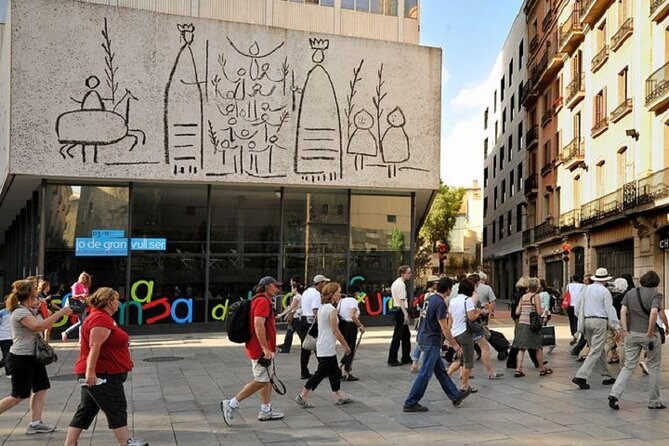
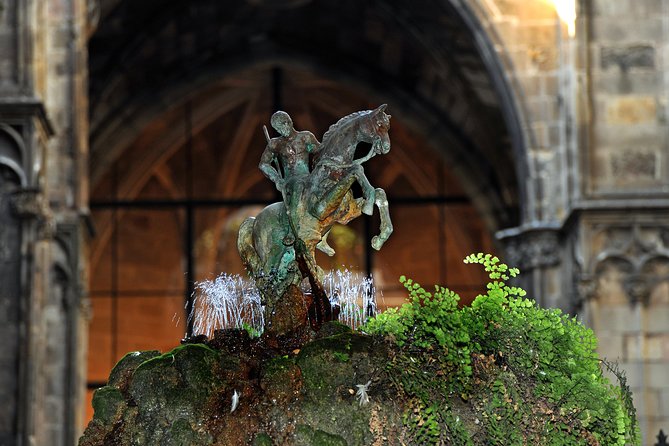
Not every stop is heavy. The tour includes local legends, including the question of how the dragon came to Barcelona, a young girl in the pines, and a French soldier’s bayonet.
There is also a slightly spooky brotherhood and the famous egg dance. These unusual subjects give the walk a change of pace. Barcelona’s old city is full of stories that sit somewhere between religion, folklore, politics, and neighborhood tradition.
The egg dance is especially useful as a reminder that local culture is not only found in grand monuments. A small ritual can tell you as much about the city’s calendar and customs as a royal building can tell you about power.
You may also hear about a romantic place marked by the scars of the Spanish Civil War. That pairing is very Barcelona: beauty beside conflict, old devotion beside modern politics. The guide’s job here is to show how the city keeps its past visible without freezing itself in it.
A Gothic Quarter that is not entirely medieval
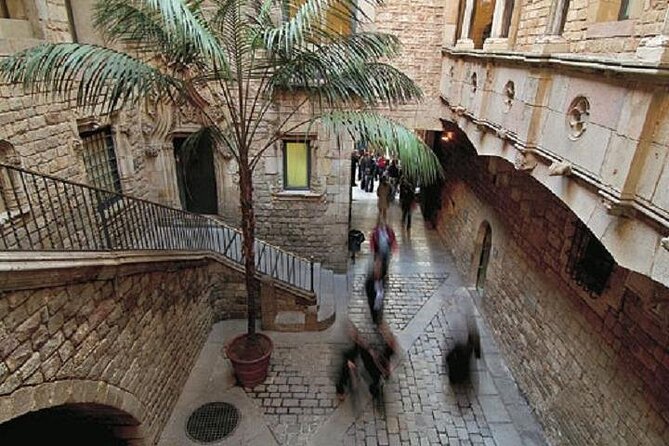
One of the tour’s sharper ideas is the Gothic Quarter as a kind of Gothic theme park. That phrase points to an important fact: not every building that looks medieval is genuinely medieval.
Some houses were moved, rebuilt, or altered stone by stone. The old center was shaped by later ideas about what a Gothic city should look like. Knowing this helps you look more carefully. Instead of assuming every pointed arch is untouched history, you can ask when and why a feature appeared.
I like this approach because it protects you from a common Barcelona mistake: confusing atmosphere with age. The neighborhood can feel ancient even when parts of it were arranged or restored much later.
The route still celebrates the visual effect. Small alleyways, shadowed walls, and romantic squares are part of the experience. But the guide adds a useful warning: old-looking does not always mean old. That makes the walk more honest and more interesting.
Royal decisions and the Columbus story
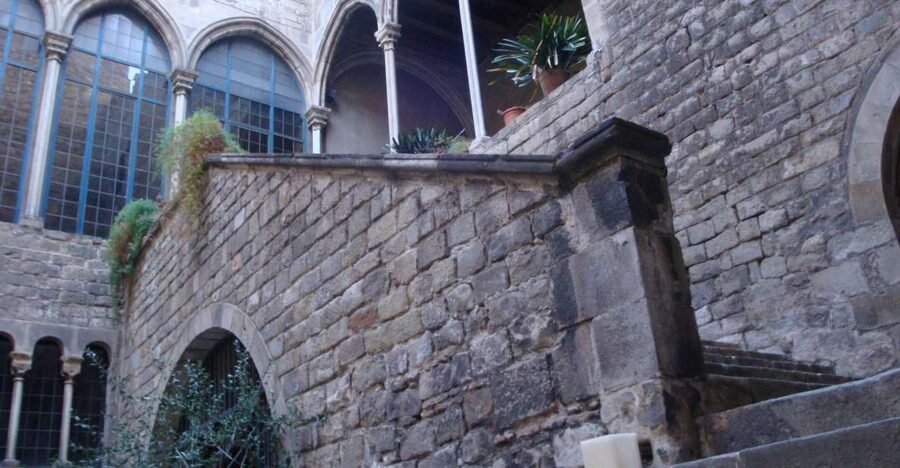
The royal palace section brings the story back to the crown. One episode concerns King Fernando, his fears, and the fact that he did not receive Columbus at home.
This is the sort of detail that makes a large historical figure feel human and limited. Royal authority did not mean total control, and even major events could unfold through awkward decisions and missed encounters.
You will see the palace area from outside rather than take a full interior tour. That means you should think of this stop as a place for explanation and orientation. The guide gives you the political setting, then connects it to the city beyond the palace walls.
If royal rooms and formal interiors are high on your list, set aside another visit. The walking tour gives you context, not an admission-based palace experience.
Santa Maria del Mar and the working city of Ribera
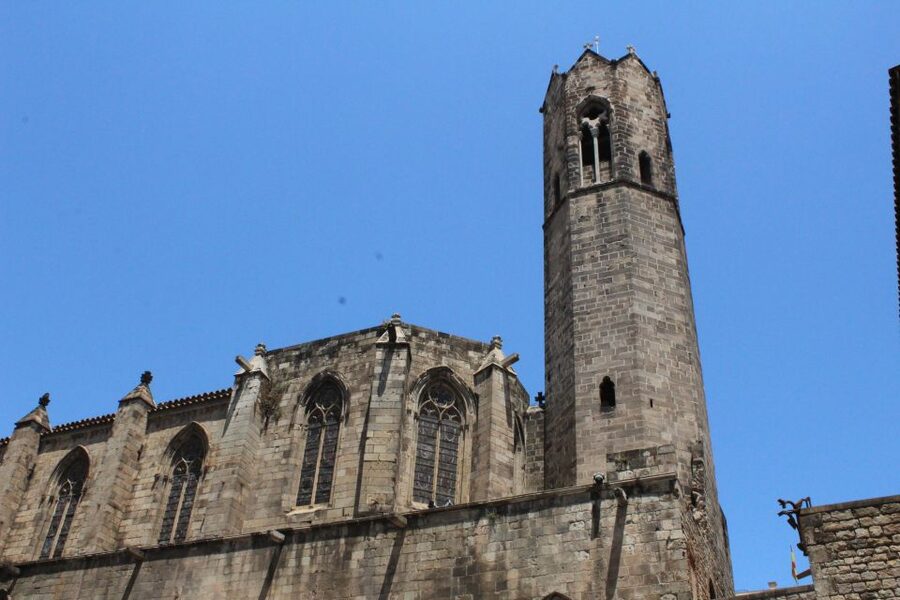
The route continues toward Santa Maria del Mar, one of the most meaningful stops on the walk. The church is presented as an early collaborative project, tied to legends and local heroes.
Its importance is not only religious. Santa Maria del Mar also fits the story of the Ribera district, where commerce, labor, shipping, and community life shaped Barcelona. The church becomes a symbol of what people could build together.
This is one of the places where an exterior visit still has real value. The building helps you understand the scale and confidence of medieval Barcelona, while the surrounding streets show how closely public life and trade were linked.
The guide also tells the story of the mulberry grave, the vengeance of the Bourbon kings, and the head of a general. It is a darker chapter, but it explains how the city’s political defeats were remembered in physical places.
The Ribera ending gives the tour a different feel from the opening in Plaça de Catalunya. You finish among old streets and civic memories, near Passeig del Born, 22. The change from central square to historic quarter helps you see Barcelona as a collection of districts, each with its own past.
What the pace and format mean for you
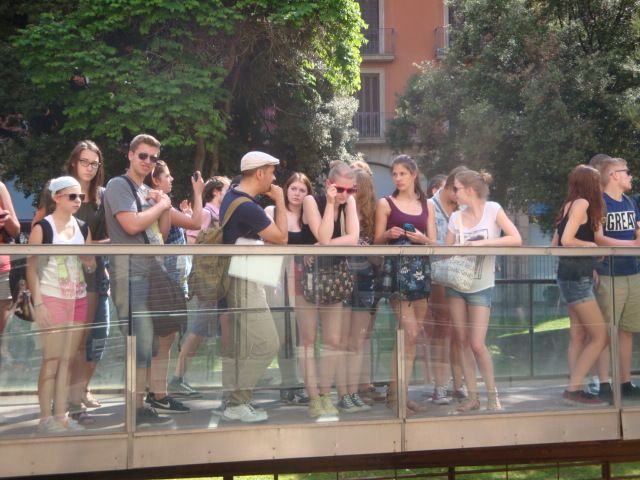
Three and a half hours is a serious walking session, but the tour is designed as a relaxed city walk. There is time for photos, pauses, and a bathroom break. That makes it suitable for people who want detail without being hurried from one sight to the next.
The route stays on streets and squares so you can experience the old city at ground level. You are not simply looking at isolated monuments. You are moving through the spaces where residents, merchants, soldiers, clergy, and political groups once lived and worked.
The tradeoff is that the tour covers a great deal. Roman origins, medieval government, Jewish life, the Inquisition, royal politics, the Spanish Civil War, legends, and architecture all appear within one outing. If you prefer one narrow subject, the range may feel broad.
A private group can make this format especially useful for families or friends who want to ask questions and set the pace. The stated price is $212 for up to four people, which works out to $53 per person if four people share the cost. For two people, the per-person price is much higher, but the private setting may still suit you if German-language guiding and personal attention matter.
The activity information also presents private or shared group options, while the booking details describe a private group. Check the exact format when you reserve, especially if you are comparing prices.
German-language guidance and practical tips
This tour is offered in German. That is the main reason to choose it over a general English-language walk. Complicated subjects such as Catalan identity, medieval government, religious conflict, and the Bourbon period are easier to follow in the language you use most comfortably.
Johannes is one guide associated with this experience. His approach, as reflected in the available feedback, includes extra photos and practical advice about restaurants, shopping, and local specialties. You should feel free to ask for that sort of help during the walk. It can be just as useful as a list of dates.
The guide may also adapt the route or explanation to your interests, but do not assume that every booking includes the same guide. If you specifically want Johannes, ask about guide availability before booking.
For the cloister visit, wear clothing that reaches at least the knees and covers your shoulders. This is a small detail, but it can prevent an awkward pause or a missed stop.
Who should book this Gothic Quarter walk?
I would choose this tour if you want a broad introduction to Barcelona’s old city, prefer German guidance, and like history presented through streets rather than display cases.
It suits you especially well if you:
- Want Roman, medieval, Jewish, royal, and modern history in one walk.
- Prefer a calm pace with time for photographs.
- Enjoy legends and unusual local stories alongside serious history.
- Want practical food and shopping tips from a local guide.
- Are visiting Barcelona early in your stay and want help getting oriented.
I would think twice if you want long interior visits, extensive archaeological viewing, or a short highlights-only walk. This is not a museum pass, and entry fees are not included. The monuments are mainly seen from the outside, with a couple of exceptions.
For summer, schedule it when you can handle several hours outdoors and bring water and sun protection. Since the tour runs in poor weather, bring suitable clothing if rain is possible.
Should you book it?
Book this walk if you want Barcelona’s Gothic Quarter explained as a living city, not just photographed as an old quarter. The combination of Roman foundations, medieval politics, Jewish history, legends, Santa Maria del Mar, and Ribera’s darker memories gives you plenty to think about after the walk ends.
The value is strongest for a group of four sharing the $212 price, especially if you want a private German-language experience. It is less compelling for anyone who mainly wants interior access or a quick list of famous sights. For the right audience, this is a thoughtful way to get your bearings and understand why Barcelona’s old stones still matter.
FAQ
Where does the tour begin?
It begins in front of Hotel Olivia Plaza at Plaça de Catalunya, 19, 08002 Barcelona.
Where does the tour finish?
It finishes at Passeig del Born, 22, 08003 Barcelona.
How long does the tour last?
The experience lasts 3.5 hours. The walking portion is listed as approximately 3.25 hours.
What language is the tour offered in?
The live tour guide speaks German.
Is this a private tour?
The activity details identify the group type as private. The overview also refers to private or shared group formats, so confirm the format selected when booking.
How much does the tour cost?
The stated price is $212 per group of up to four people.
Are interior visits included?
No. Interior visits and entry fees are not included, apart from a couple of exceptions noted in the tour information.
Is the tour wheelchair accessible?
Yes, the activity is described as wheelchair accessible.
Does the tour run in bad weather?
Yes. It runs in sun, rain, wind, and strong showers.
What should I wear for the cloister visit?
Wear clothing that reaches at least the knees and covers your shoulders.
More Walking Tours in Barcelona
- Barcelona Tapas and Wine Experience Small-Group Walking Tour
★ 5.0 · 5,804 reviews - Barcelona: Tapas Walking Tour with Food, Wine, and History
★ 4.8 · 4,261 reviews - Barcelona Tapas Walking Tour: Food, Wine & History
★ 4.5 · 1,928 reviews - Barcelona: Tapas Food Crawl Walking Tour with Tastings
★ 4.9 · 1,798 reviews
Just added in Barcelona
- Welcome to Barcelona: Private Tour with a Local★ 4.6 · 200 reviews
- Barcelona: White Rabbit Catalonia’s Top Immersive Experience★ 4.7 · 359 reviews
- Bean to Bar Chocolate Workshop in Barcelona★ 5.0 · 172 reviews
- Barcelona: Walking tour with Montjuic Castle & Cable Car★ 4.7 · 832 reviews
- Barcelona: Welcome to Barcelona Segway Tour★ 4.9 · 153 reviews
- Barcelona: Helicopter Flight with Optional Yacht Cruise★ 4.7 · 224 reviews
- Barcelona: The Original Barcelona Boat Party★ 3.9 · 254 reviews
- Barcelona Wine Tasting: Catalan and Spanish Wines★ 4.8 · 625 reviews
Gothic & Jewish Quarter Walking Tours, compared.
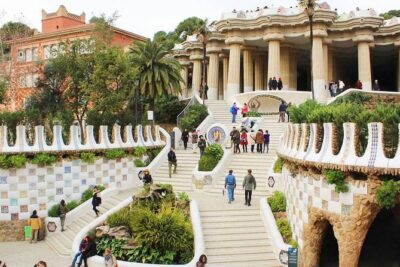
Barcelona in 1 Day: Sagrada Familia, Park Guell,Old Town & Pickup
Read our review →
Valencia Old Town Tour with Wine & Tapas in 11th Century Historic Monument
Read our review →
Cordoba Mosque & Jewish Quarter Tour with Tickets
Read our review →
Madrid Old Town & Royal Palace Walking Tour Skip the Line Ticket
Read our review →
Old Town Tour, Wine & Tapas in an 11th c. Monument
Read our review →
Sagrada Familia, Modernism, and Old Town Tour
Read our review →
Barcelona Gothic Quarter Tapas & Taverns Food & Wine Tour
Read our review →Browse the lists this tour appears in