
Reviewed · TOURS IN MALLORCA
Sóller: Jardines de Alfabia Entrance Ticket
Alfabia gives you two Mallorca experiences in one stop: a 500-year-old house filled with layers of decoration, and cool, water-fed gardens shaped by Arab, Mallorcan, and English ideas. The setting near Sóller, backed by the Tramontana mountains, makes the visit feel far removed from the island’s beach resorts.
I especially like the shaded avenue of plane trees and the traditional Mallorcan patio, two places where the estate’s design becomes easy to understand. The fountains and hydrangeas also give the gardens a refreshing quality, though the visit can feel less rewarding in winter or during a dry period when fewer flowers are showing and some trees may look unhealthy.
Key points to know before you go
- Three lanes of plane trees: A broad, shady approach leads from the entrance toward the traditional patio.
- A house shaped by many eras: Roman-Andalusian roots mix with Arabic, Gothic, Renaissance, Baroque, Rococo, and English details.
- Cool Arab-style gardens: Water fountains, mature planting, and shaded paths make this more than a quick photo stop.
- A UNESCO setting: Alfabia sits in Mallorca’s Serra de Tramuntana, a UNESCO World Heritage Site.
- Easy independent visit: Your $11 entrance ticket covers admission, with no guide or tour commentary specified.
- Useful transport choices: You can reach the estate from Palma on bus line 211 or by the Sóller Train.
Why Alfabia feels different from a standard garden visit
Many Mallorca gardens are pretty. Alfabia is more useful than pretty alone because the house explains the garden, and the garden explains the house. You are seeing a place shaped by several cultures and periods, not a single design imposed all at once.
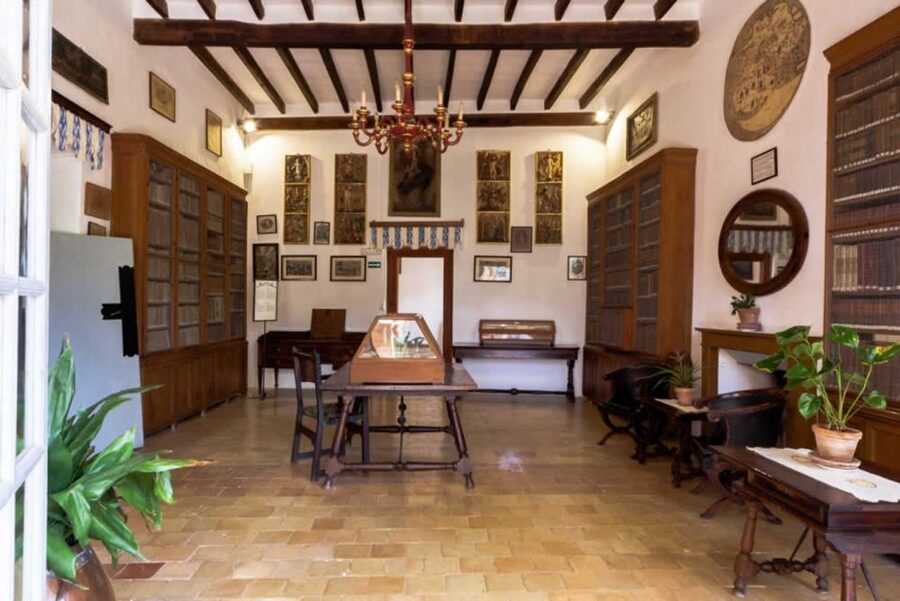
The estate reflects Roman-Andalusian roots, with later Arabic, Gothic, Renaissance, Baroque, Rococo, and English touches. That list sounds academic until you walk through the rooms and notice that the building does not behave like a frozen museum piece. Different generations changed it, but the complex kept enough balance to remain a coherent home and estate.
I like that quality. You can look for a pure example of one architectural style elsewhere, but Alfabia asks a more interesting question: how does a historic house keep changing without losing its identity? Here, the answer is visible in the mixture of old surfaces, decorative details, and later additions.
The estate is also part of the Serra de Tramuntana, the long mountain range that gives northwest Mallorca its character. Even if you spend only part of your day at Alfabia, the setting adds a strong sense of place. This is not an isolated decorative garden dropped into an urban area.
A few more things to do in Mallorca worth a look
- Palma: Cathedral of Mallorca Skip-the-Line Entry Ticket
★ 4.6 · 14,386 reviews - Porto Cristo: Caves of Hams Entry Ticket
★ 4.2 · 6,548 reviews - Mallorca: Palma Aquarium Entry Ticket w/ Optional 3D Cinema
★ 4.5 · 2,280 reviews
Walking the plane-tree avenue
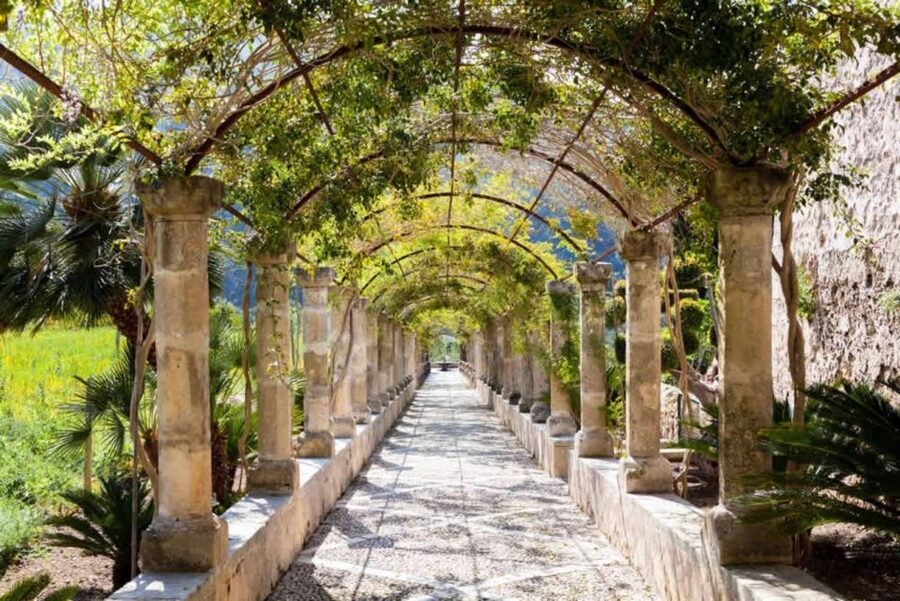
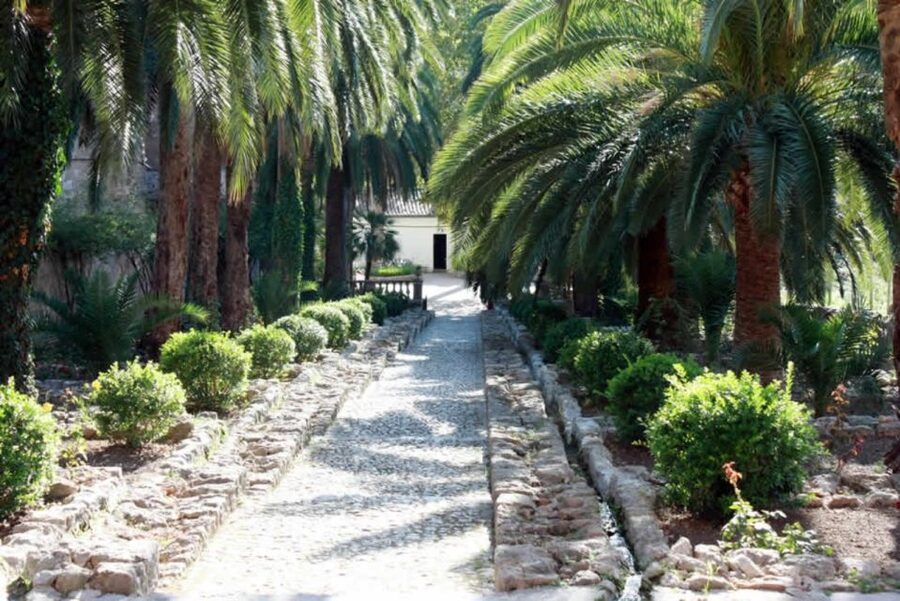
The first memorable part of the visit is the approach to the house. A wide avenue with three lanes of large plane trees leads you toward the traditional Mallorcan patio. The trees create shade and give the entrance a formal, almost theatrical quality.
This is a good place to slow down. Rather than rushing straight to the house, look at the structure of the avenue. Three parallel lanes of trees create depth, order, and a long view toward the estate. The design feels grand without being showy.
The shade matters, especially in Mallorca’s warmer months. It makes the approach more comfortable and gives you a pleasant change from exposed streets and sunny viewpoints. In February, the garden can still be attractive even without a full display of flowers. The mature trees carry much of the visual interest.
The avenue also prepares you for the contrast between the estate’s formal side and its more relaxed garden corners. Alfabia is not just a lawn with statues or a single scenic terrace. It works through changes in shade, water, planting, and architecture.
The traditional Mallorcan patio
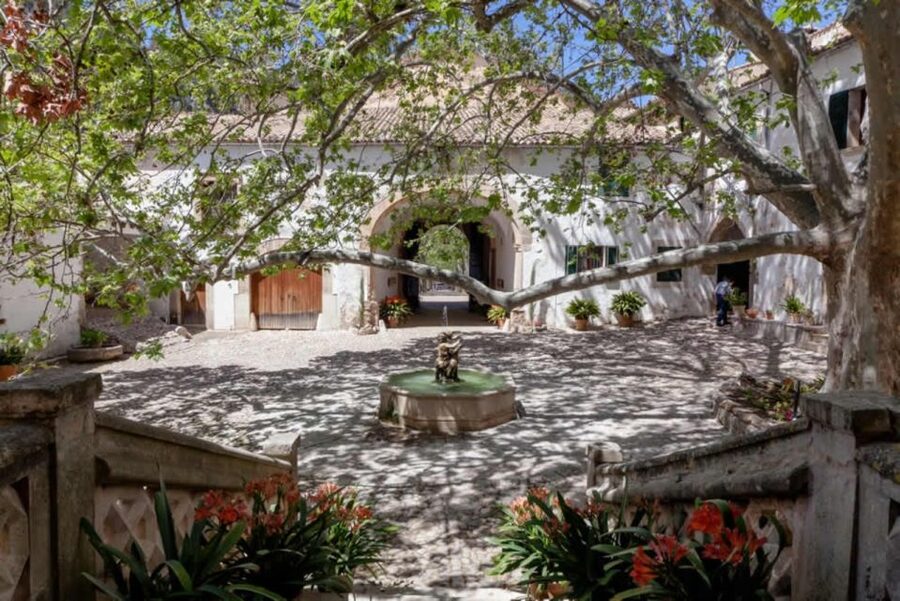
The avenue brings you to a traditional patio, one of the best places to understand the local character of the property. The patio provides a transition between the grand approach and the house itself.
Mallorcan patios are practical as well as decorative. They create a cooler central space and connect different parts of the home. At Alfabia, the patio helps the estate feel like a lived-in house rather than an empty monument.
Take time to notice how the patio relates to the garden. The transition is important. You move from the ordered avenue into a more enclosed domestic space, then into rooms shaped by centuries of use and decoration.
The patio is also a good stop for visitors who prefer atmosphere over a long architectural lecture. You do not need to identify every period to appreciate the proportions, shade, and traditional arrangement. The setting tells you how the building and garden were meant to work together.
The Arab-style gardens and their water
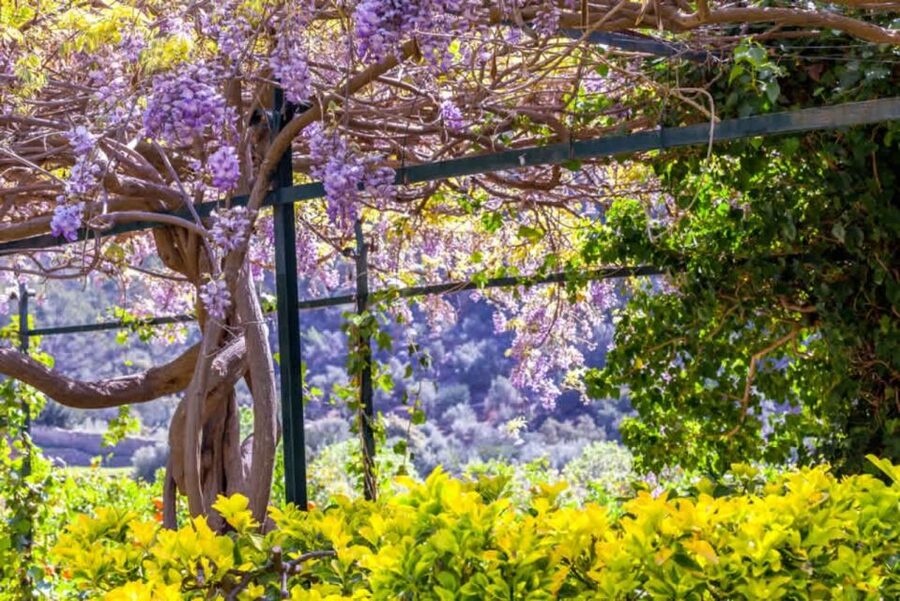
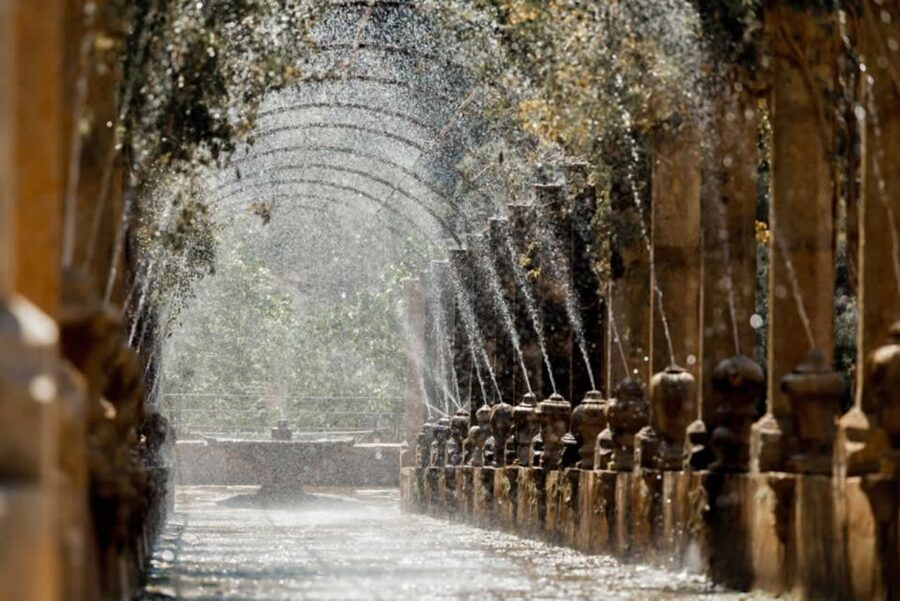
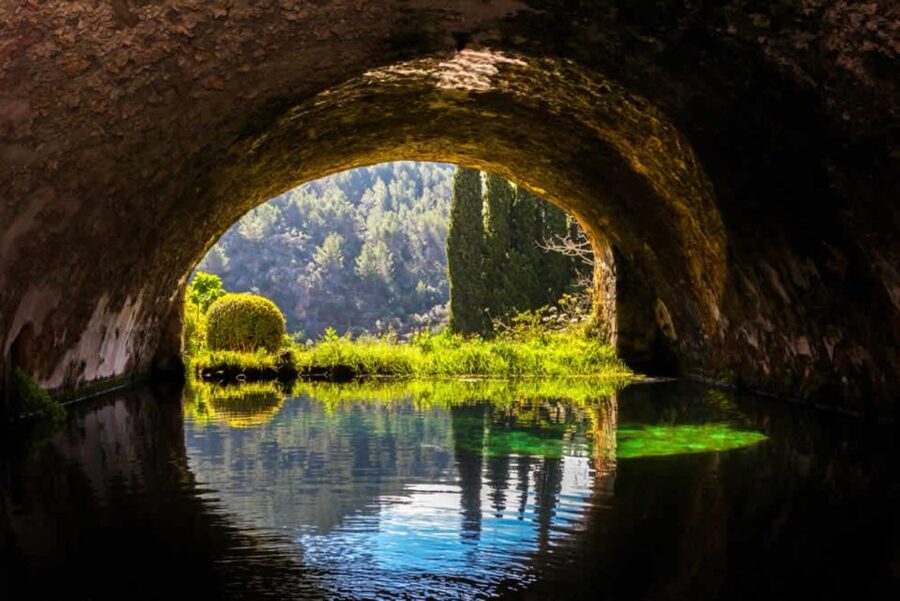
The gardens are the main reason many people choose Alfabia, and the water features give them their strongest character. Fountains and flowing water help create a cooler, calmer setting, with a clear connection to Arab garden design.
Water is not just decoration here. In a warm Mediterranean climate, it changes how a garden feels. Fountains provide sound, movement, and a sense of freshness. They also show why older garden design often focused on shade and water as much as on flowers.
The garden includes clear English landscaping influence as well. That makes Alfabia more varied than a strictly Arab-style garden. You may move from formal lines and water features into planting arrangements that feel less geometric and more shaped by later European taste.
Hydrangeas add another seasonal note. When they are in good condition and flowering, they give the gardens color and softness. The timing of your visit matters, though. A February visit can still be charming, but it will not offer the same flower display as a stronger growing season.
I would plan Alfabia around its trees, water, and historic setting, not only around blossoms. That approach makes the experience more dependable. If you arrive expecting a peak-season flower garden at any time of year, you may be disappointed.
Same base, a different kind of day out:
- Palma de Mallorca: 5-Hour Catamaran Cruise with Lunch & Swim
★ 4.5 · 9,957 reviews - Palma de Mallorca: City Sightseeing Hop-On Hop-Off Bus Tour
★ 4.1 · 4,450 reviews - Mallorca: Island Tour with Boat, Tram & Train from the South
★ 4.4 · 3,888 reviews - Palma: Catamaran Cruise with Swimming and Snorkelling
★ 4.3 · 2,859 reviews
Inside a house with five centuries of change
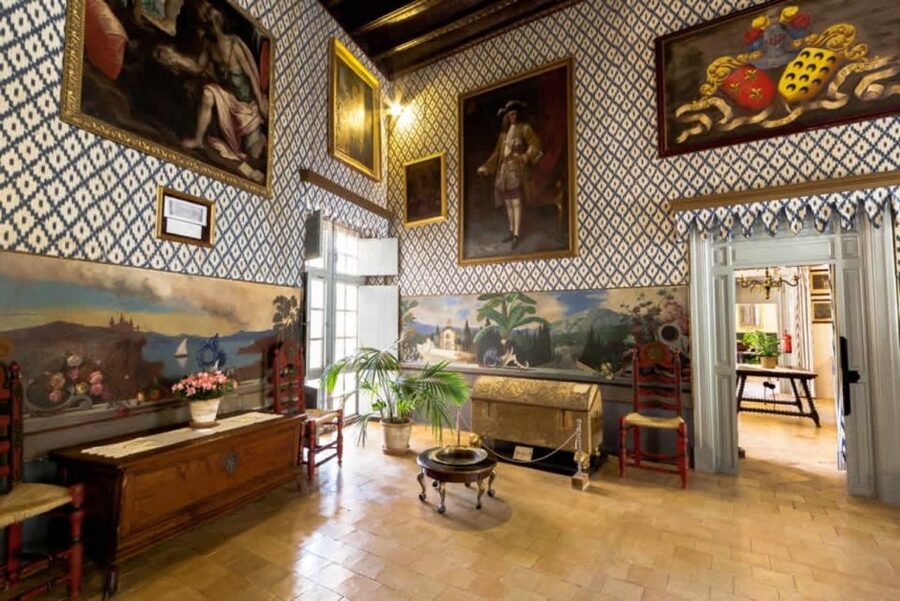
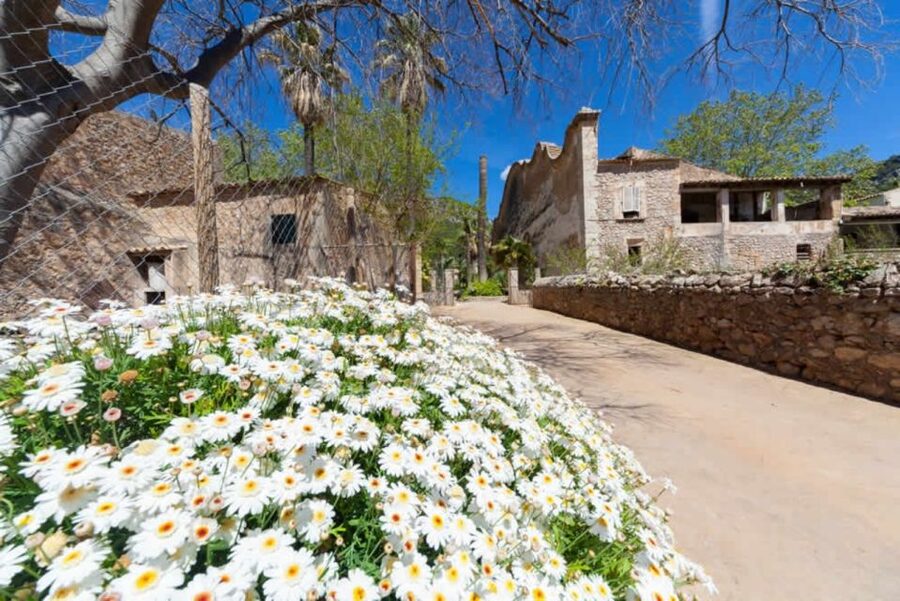
The house gives the visit its historical weight. It is described as one of Mallorca’s oldest buildings, with more than 500 years of history. Inside, you will find a traditional Mallorcan atmosphere mixed with decorative traces from many periods.
The appeal is not a single grand room. It is the accumulation of details. Roman elements sit alongside Andalusian influence, while Arabic, Gothic, Renaissance, Baroque, Rococo, and English decoration appear across the building.
That variety can be rewarding because it lets you read the house as a record of change. Each period left something behind. The building did not remain fixed, but later additions did not erase everything that came before.
There is a possible drawback. With so many influences, the house may feel less visually uniform than a palace built in one era. If you prefer a clean, consistent architectural style, the mixture could seem busy. I see that mixture as the point, but it does require a little patience.
The house also works best when you look for the relationship between rooms, patio, and garden. It is easy to treat the interior as a series of decorative corners. Instead, notice how the building reflects a long pattern of adaptation, conservation, and change.
What the changing seasons mean
Season affects the gardens more than the house. The February experience can still be worthwhile because the mature trees, paths, water, and architecture remain in place. You may simply find fewer flowers and a quieter, less colorful garden.
By October, the grounds can still feel clean and pleasant, and a fresh orange juice from local oranges is a particularly fitting refreshment if available during your visit. That small detail connects the stop to Mallorca’s agricultural side, not just its architecture.
The condition of the plants can vary. Some parts may look carefully maintained, while other trees may appear stressed or unhealthy. That is worth keeping in mind if garden upkeep is your main reason for coming.
I would choose the season based on your priorities:
- Choose a cooler or quieter period if you care most about the house, trees, water, and atmosphere.
- Choose a stronger flowering season if hydrangeas and colorful planting are central to your plans.
- Allow extra flexibility if you want the garden at its best, since flowers and plant condition depend on the time of year.
Getting there from Palma and Sóller
You have two named public transport options. From Palma, bus line 211 can take you toward the Alfabia area. Check the current departure information before setting out because the usefulness of a bus connection depends on the day and schedule.
You can also use the Sóller Train. This is an appealing choice if the rail journey already forms part of your Mallorca plans, but the available timetable should be checked before you travel. The transport information provided for the experience points you to the official Sóller Train schedule.
Because no transfer service is included, you should treat transportation as part of your own planning. The ticket covers entrance fees, not a guide, vehicle, or organized escort.
I would avoid arriving close to closing time. The last entrance is 60 minutes before closure, which gives you a firm cutoff. Since the ticket is valid for one day rather than tied to a stated tour departure, you have some flexibility, but you still need to confirm the available opening schedule for your date.
How much time and money should you allow?
The entrance price is $11 per person. That is a reasonable charge if you want a historic house, a formal approach, and gardens in a single stop, especially compared with paying separately for several short attractions.
The value depends on how you use the visit. If you walk quickly through the house and take only a few photographs in the garden, the ticket may feel less worthwhile. If you take time to compare the architectural periods, follow the water features, and enjoy the shaded avenue, the price works better.
The experience is listed as lasting one day, but that refers to ticket validity rather than a fixed guided duration. No exact visit length is provided. You should plan enough time to see both the house and gardens without rushing, while checking the opening and closing times for the day you choose.
Your ticket includes entrance fees. There is no stated guide, meal, transfer, or special activity included. Customers are asked to wear an identification bracelet during the visit, so expect a simple admission-control system once you enter.
Free cancellation is available up to 24 hours in advance for a full refund, and you can reserve now and pay later. Those terms are useful if your Mallorca plans depend on weather or transport.
Who will enjoy Alfabia most?
Alfabia suits you if you like historic homes, gardens, architecture, and places where several cultures have left visible marks. It is also a good choice if you want a quieter alternative to a crowded city sight.
Families may appreciate the open-air setting, shade, fountains, and changing scenery, although the material is more architectural and historical than entertainment-focused. Garden lovers should come with realistic expectations about season and upkeep.
The visit is less suited to you if you want a guided story with named experts, a tightly scheduled tour, or a large collection of clearly labeled exhibits. No guide or guided commentary is specified, and the exhibition may feel somewhat loose in its organization.
If your main goal is a perfect flower display, check the season first. Alfabia’s strongest features are its mature trees, water, architecture, and sense of continuity across time.
Should you book the Alfabia ticket?
I would book it if you are visiting Sóller or the Tramontana mountains and want a stop with both historic interiors and refreshing gardens. The $11 price is fair for access to a 500-year-old house, an Arab-influenced garden, and an estate shaped by several centuries of Mallorcan life.
I would be more cautious if your schedule allows only one attraction and you care mainly about immaculate planting or abundant flowers. In that case, the season and current garden condition matter a great deal.
For the best experience, go with enough time to walk slowly, look beyond the obvious photo spots, and treat the house and garden as one connected place. Alfabia is most satisfying when you appreciate its changes over time rather than expecting a single, perfectly preserved style.
FAQ
Where is the Alfabia complex located?
It is located in Spain, near Sóller, in Mallorca’s Serra de Tramuntana mountain range.
How much does entrance to Alfabia cost?
The listed price is $11 per person.
What does the ticket include?
The ticket includes entrance fees to the Alfabia complex.
How long is the ticket valid?
The ticket is valid for one day. Check availability for the starting times and opening information for your chosen date.
Is Alfabia inside the Serra de Tramuntana UNESCO World Heritage Site?
Yes. The complex is located in the Serra de Tramuntana, a UNESCO World Heritage Site.
Can I reach Alfabia by public transportation from Palma?
Yes. You can use Palma bus line 211. Departure details are available through the TIB website.
Can I use the Sóller Train to reach the location?
Yes. The Sóller Train is listed as another transport option. Check its current departure times before you travel.
What is the latest time I can enter?
The last entrance is 60 minutes before the complex closes.
Do I need to wear anything during the visit?
Customers are asked to wear an identification bracelet during the visit.
Can I cancel my booking?
Yes. You can cancel up to 24 hours in advance for a full refund. You can also reserve now and pay later.
Just added in Mallorca
- Cap de Formentor: Market, Beach, and Alcudia Tour★ 4.3 · 620 reviews
- Mallorca: Caves of Drach Tour from the North with Boat Trip★ 3.9 · 395 reviews
- Mallorca: Snorkeling in a Beautiful Nature Reserve★ 4.7 · 493 reviews
- Mallorca: Scenic Full-Day Tour from the North★ 4.6 · 632 reviews
- Mallorca: Sea Cave Kayaking Tour with Snorkeling and a Snack★ 4.7 · 502 reviews
- Santa Ponta/Peguera: Dragonera Island Cruise with Swim Stop★ 4.3 · 544 reviews
- Santa Ponsa: Snorkeling Tour in a Marine Reserve★ 4.5 · 134 reviews
- Mallorca: Dolphin Watching Cruise★ 4.5 · 997 reviews
Tours in Mallorca, compared.
Cathedral of Mallorca Skip-the-Line Entry Ticket
Read our review →

Island Tour with Boat, Tram & Train from the South
Read our review →
Catamaran Cruise with Swimming and Snorkelling
Read our review →
Caves of Drach Day Trip & Optional Caves of Hams
Read our review →
Quad Bike Tour, Snorkeling, and Cliff Jumping
Read our review →Browse the lists this tour appears in