
Reviewed · SPAIN
Almeria: Alcazaba Guided Tour
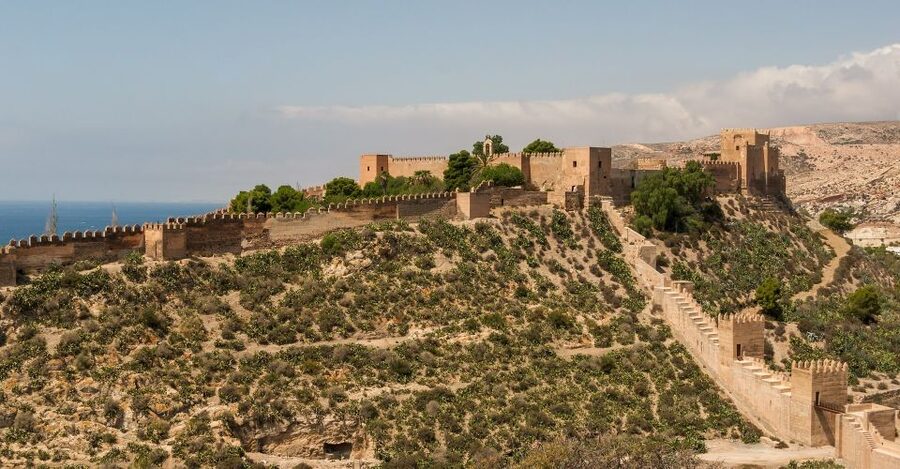
Almería’s Alcazaba is not a single castle building. It is a three-part Arab fortress, spread across the hill above the city, with walls, towers, gardens, waterworks, royal spaces, and a final lookout over the port. This tour gives you a clear route through that large site without making you guess which staircase or tower matters.
I like the two-hour length, which is enough time to cover the major areas without turning the visit into an all-day history class. I also like the $19 price, since entrance is included and a guide adds useful context to features such as the Muslim reservoirs, royal baths, and Wall of the Candle.
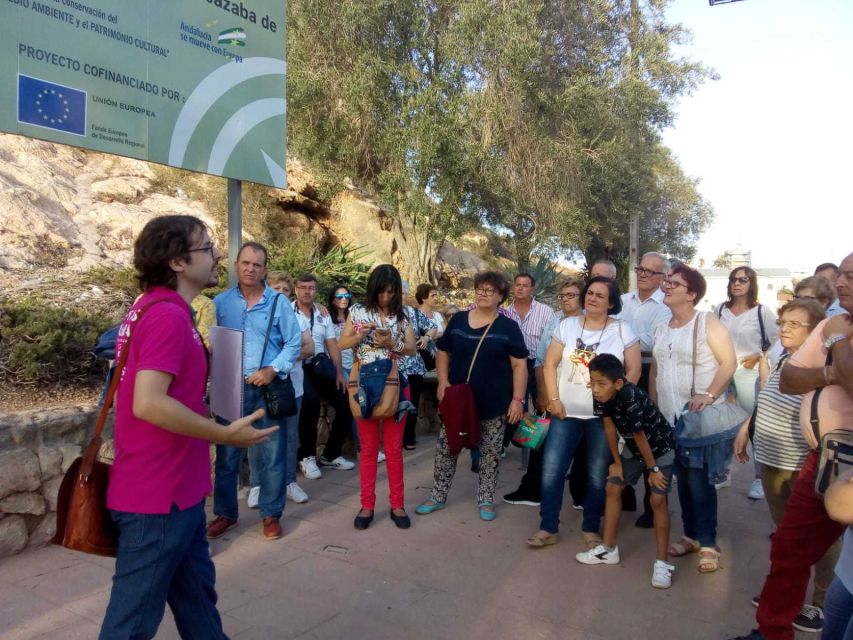
The main caution is language and reliability. The live tour is in Spanish, and two recent bookings reported that the guide did not appear, while other bookings praised guides such as María. Arrive early, find the pink umbrella or T-shirt, and keep your booking details handy.
Key points to know before you go
- Three internal enclosures: The route shows how the Alcazaba worked as a fortified complex rather than a simple palace.
- Spanish-speaking guide: The tour is conducted in Spanish, so it suits you best if you can follow spoken Spanish.
- Major fortress features: Expect the Towers of the Odalisque and Gunpowder, the Tower of Mirrors, the Wall of the Candle, and the Baluarte del Saliente.
- Water and gardens: Muslim reservoirs, royal baths, patios, and pools reveal the practical and decorative sides of the site.
- City and port views: The final viewpoint gives you a broad look across Almería and its seaport.
- Simple meeting system: Arrive 15 minutes early and look for the guide with a pink umbrella or pink T-shirt.
Why the Alcazaba deserves two hours
The Alcazaba of Almería rewards a guided visit because its size can be hard to grasp from a quick walk around. You are not simply entering a palace, looking at a few rooms, and leaving. The monument includes three internal enclosures, each adding another layer to the fortress story.
That arrangement matters. A large Arab citadel needed more than thick walls. It needed places for defense, storage, water, administration, private life, and movement between protected areas. As you walk from one section to the next, the site becomes easier to read as a working stronghold.
The tour lasts two hours, a sensible amount of time for a first visit. You get a guided walk through the main areas, then a short photo stop and a few minutes of free time before returning to the entrance area. You should expect a steady visit rather than a long pause at every feature.
I would choose this format if you want the site explained as you see it. If you prefer to wander alone and spend fifteen minutes photographing one wall, the brief free time may feel short. The tradeoff is that you cover more ground and leave with a stronger sense of how the Alcazaba fits together.
A few more things to do in Spain worth a look
- Barcelona: Sagrada Familia Entry Ticket with Audio Guide
★ 4.6 · 105,312 reviews - Barcelona: Park Guell Guided Tour with Skip The Line Entry
★ 4.7 · 17,563 reviews - Málaga: Caminito del Rey Guided Tour with Transportation
★ 4.8 · 12,183 reviews
Meeting the guide before the monument
The meeting point is before the entrance to the Conjunto Monumental de la Alcazaba de Almería. Arrive 15 minutes before the scheduled start. Look for a guide wearing a pink umbrella or pink T-shirt, a useful marker in a busy approach area.
That early arrival is not just a formality. The Alcazaba is a substantial monument, and a late start can affect the pace of the whole visit. You will want time to confirm that you have found the right guide before the group moves inside.
CLÁRITAS TURISMO provides the activity. The live tour is in Spanish. That point deserves attention when you book. One booking from the Netherlands noted that only part of the tour could be understood because it was in Spanish, while other Spanish-speaking participants found the guiding clear and enjoyable.
Guide quality can vary. María has been praised for being friendly, professional, well prepared, and good at keeping a comfortable pace. Another booking described a guide as very good with the planned material but less confident beyond the prepared script, and also found the speech too fast. If your Spanish is developing, ask the guide to slow down at the beginning.
There are also two reports of a guide not appearing. Those reports do not define every departure, but they are a practical reason to arrive at the marked meeting point early and keep the provider’s contact details available.
The first enclosure and the fortress structure
The opening part of the walk introduces the Alcazaba as an Arab stronghold. The guide’s role is most useful here because the walls and towers can look like a jumble of stone without a clear explanation of their purpose.
You will learn about the three internal enclosures and how they shaped movement through the complex. The first areas help you see the Alcazaba as a defensive site, not only a royal residence. Walls controlled access, towers gave protection, and the whole complex used the hill to its advantage.
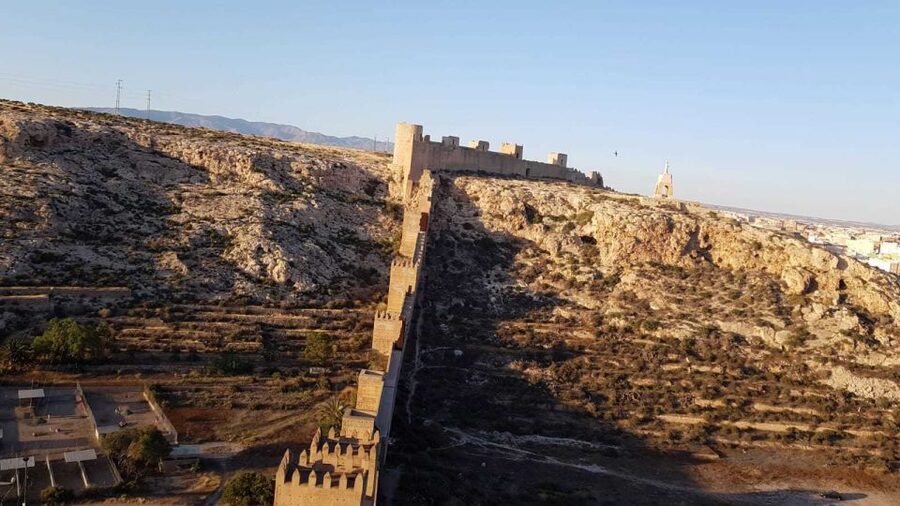
The Wall of the Candle is among the notable features included on the route. Its name gives the site a memorable landmark, but the bigger value is seeing how defensive walls connect the different sections of the citadel.
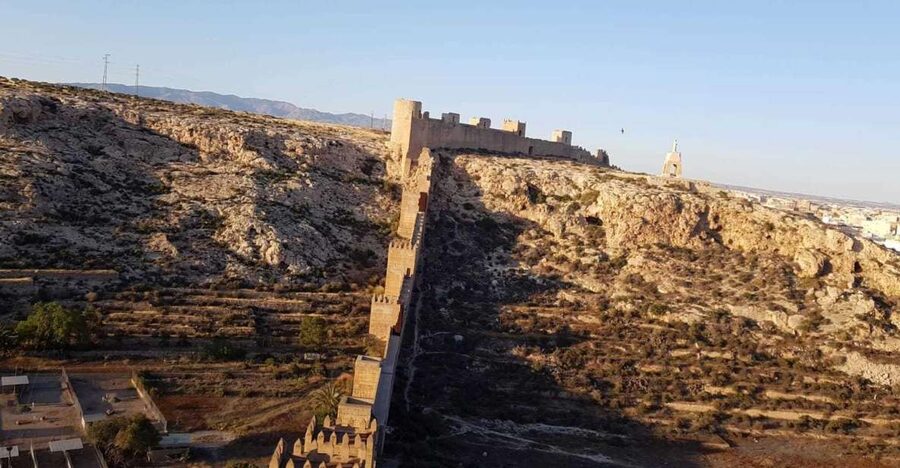
You will also hear about the walls of Jairán and the Cerro de San Cristóbal. These extend your understanding beyond the central buildings. They show that the Alcazaba was tied to a wider defensive system around the hill and city.
This is a good section for listening rather than rushing for pictures. The architecture makes more sense once you know where each enclosure sits and why the walls are arranged as they are.
Towers that give the fortress its character
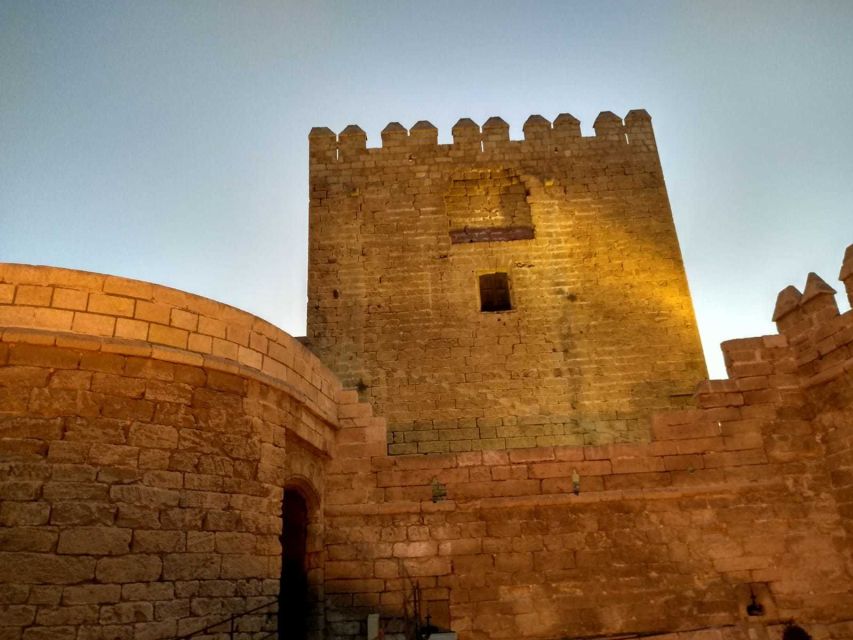
Several towers form the visual backbone of the visit. The Tower of the Odalisque and the Tower of Gunpowder offer different reminders of the Alcazaba’s military and residential sides. The names alone hint at the mixture of courtly life and defense within the complex.
The Tower of Mirrors adds another memorable stop. These towers are not all experienced in exactly the same way, but together they help you understand the height, thickness, and reach of the fortress.
A guided explanation is valuable here because a tower can seem like a short stop unless you connect it to the wider structure. Ask yourself what each tower protected, what it overlooked, and how it related to the walls around it. The guide helps turn separate stones into a plan you can follow.
Do not expect a long, private visit inside every tower. The tour is designed to cover the main features in a set period. If photography is important to you, note the spots you want to revisit during the five-minute photo stop and the short free period near the end.
Same base, a different kind of day out:
- Barcelona: Park Güell Admission Ticket
★ 4.4 · 76,534 reviews - Seville: Royal Alcázar Entry Ticket
★ 4.6 · 28,378 reviews - Barcelona: Casa Batlló Entry with Self-Audioguide Tour
★ 4.7 · 25,359 reviews - Seville: Cathedral and La Giralda Entry Ticket
★ 4.5 · 24,592 reviews
Muslim reservoirs and royal baths
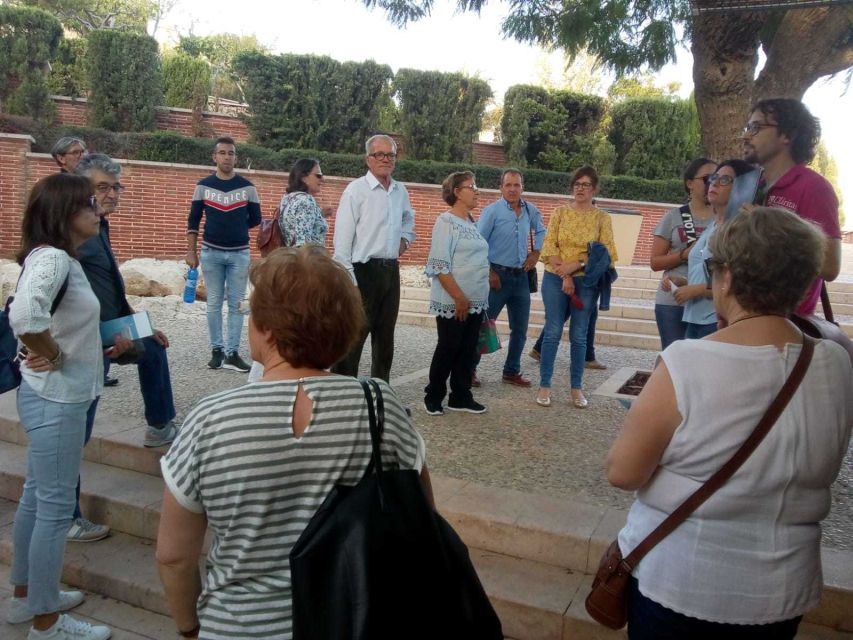
One of the strongest parts of this experience is the attention given to water. You will see the Muslim reservoirs and royal baths, two features that show how the Alcazaba supported daily life as well as military defense.
Water storage was a practical need for a hilltop fortress. Reservoirs helped the population withstand difficult periods, while baths point to hygiene, comfort, and the routines of people who lived or worked inside the complex.
These areas also give the guide a chance to explain the difference between infrastructure and decoration. A pool or water channel may look attractive, but it also reflects planning and resource management. This is one reason I prefer a guided visit here rather than a fast self-guided circuit.
The royal baths add another human scale to the monument. After seeing thick walls and high towers, rooms connected with bathing and court life help you picture the people who used the Alcazaba. The visit is not limited to battles and rulers. It also touches the ordinary systems that made life inside the fortress possible.
Domestic dwellings and the human side of the citadel
The domestic dwellings are another useful stop. They shift the focus from grand defensive structures to rooms associated with daily living.
You will not see the Alcazaba only as a military shell. The domestic areas help show that a fortified complex could also contain private quarters and working spaces. This makes the visit more balanced and gives the site a stronger sense of daily use.
The tour’s value here depends on the guide’s explanation. A prepared guide can point out how the rooms relate to the rest of the complex and explain what is known about their use. If the guide speaks quickly, this may be one of the sections where you need to listen closely.
The overall rating attached to this experience is 4.2 from 186 bookings, which fits the mixed picture: the monument itself is a strong attraction, and several guides have earned warm praise, but the Spanish-only format and a few service problems matter when deciding.
Patios, gardens, and water pools
After the stonework and defensive features, the patios and gardens bring a change of pace. You will see luxurious water pools and planted spaces within the fortress, adding a calmer side to the visit.
These areas are not just decorative breaks. They show how the Alcazaba combined protection with comfort and visual order. Water, shade, open courtyards, and enclosed gardens would have made the interior more pleasant than the severe outer walls suggest.
I like this part because it prevents the visit from becoming a march from tower to tower. The patios give you space to notice proportion, light, and the way the site is arranged around open areas.
The guide will also help connect the gardens to the wider design of the fortress. You can compare the formal interior spaces with the rugged defensive walls and see how the Alcazaba served several purposes at once.
The final view from the Baluarte del Saliente
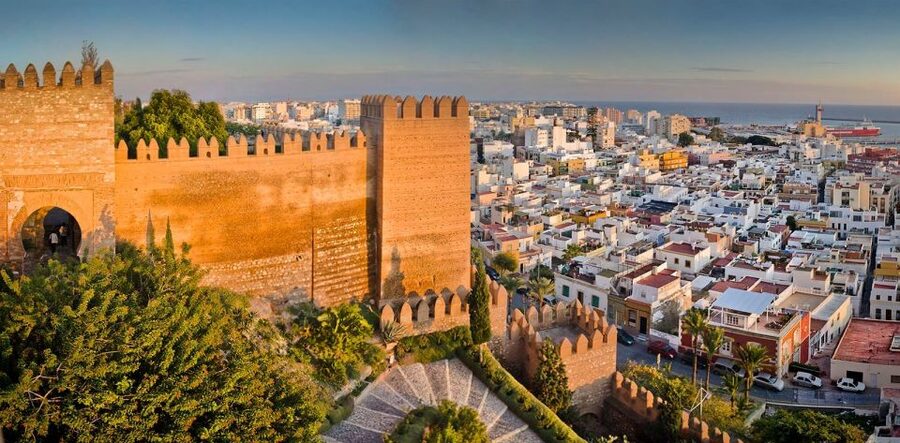
The tour ends with one of its best visual rewards at the Baluarte del Saliente. From here, you can look across Almería and toward the seaport.
This is the moment when the hilltop location makes complete sense. After walking through walls, towers, and courtyards, you finally see how the citadel relates to the city below. The view also gives you a useful orientation point for the rest of your time in Almería.
The planned photo stop lasts about five minutes, followed by roughly five minutes of free time. That is enough for a few photographs and a quick look around, but not enough for a relaxed photography session. If you want many pictures, use the walk itself to spot good angles and save your favorite views for this final pause.
The Baluarte del Saliente is also a good place to ask a final question. The guide has just led you through the fortress, and the city spread below helps tie the history of the monument to its setting.
Is $19 a fair price?
At $19 per person, this is a reasonable price for a two-hour guided visit with entrance fees included. You are paying for access plus a structured explanation of a large monument, not simply for a ticket and a quick orientation.
The value is strongest if you speak Spanish and want the Alcazaba explained in a logical order. The reservoirs, baths, walls, dwellings, and towers gain meaning when someone connects them. For a site with three internal enclosures, that guidance can save you from seeing a lot of impressive stone without understanding the plan.
The price is less attractive if you cannot follow Spanish. You may still enjoy the architecture and views, but part of what you are paying for is the guide’s spoken interpretation. Food and drinks are not included, so plan those separately.
The reserve-now-and-pay-later option also helps if your schedule is still changing. You can reserve a place without paying immediately, and cancellation is available up to 24 hours before the activity for a full refund.
Who will enjoy this tour most?
I would recommend this tour to you if you want a focused first visit to the Alcazaba and can follow Spanish conversation. It suits history-minded visitors, architecture fans, and anyone who prefers a clear route through a large monument.
It is also a good choice if you have limited time in Almería. Two hours covers the main areas without taking over your day, and the final city view gives you a strong sense of place.
Families may appreciate the towers, walls, gardens, and open views, though the guide’s pace and Spanish language may affect how much younger children get from the explanation. The short photo and free-time periods are useful, but do not expect a long unstructured wander.
I would think twice if you need an English-language tour or if you want extensive time for photographs. I would also arrive early because of the occasional report of a missing guide. That small bit of preparation costs nothing and makes the meeting process easier.
Should you book the Alcazaba guided tour?
Book it if you want the fortress’s water systems, royal spaces, defensive walls, and three enclosures explained in Spanish for $19, with admission included. The city and port view from the Baluarte del Saliente is a strong finish, and the two-hour format works well for a first look.
Skip it if you cannot follow Spanish and mainly want a slow, independent visit. In that case, the monument may still be worth seeing, but this particular experience gives its best value to people who can understand the live guide.
If you do book, arrive 15 minutes early, look for the pink umbrella or T-shirt, wear comfortable clothes, and keep your schedule flexible enough to enjoy the final viewpoint without rushing.
FAQ
Where does the tour begin?
It begins at the Conjunto Monumental de la Alcazaba de Almería, with the meeting point before the entrance to the monument.
How early should I arrive?
Arrive 15 minutes before the activity starts.
How will I identify the guide?
Look for a guide wearing a pink umbrella or pink T-shirt.
How long does the guided tour last?
The guided tour lasts two hours. There is also a five-minute photo stop and about five minutes of free time listed during the visit.
What language is the tour in?
The live tour guide speaks Spanish.
What does the $19 price include?
The price includes entrance fees.
Are food and drinks included?
No. Food and drinks are not included.
Can I cancel for a full refund?
Yes. You can cancel up to 24 hours in advance for a full refund.
What should I bring?
Bring comfortable clothes.
Just added in Spain
- Bizkaia Bridge, Gaztelugatxe, Bermeo and Gernika from Bilbao★ 4.5 · 299 reviews
- Benalmadena: City Sightseeing Hop-On Hop-Off Bus Tour★ 3.5 · 379 reviews
- Welcome to Barcelona: Private Tour with a Local★ 4.6 · 200 reviews
- Barcelona: White Rabbit Catalonia’s Top Immersive Experience★ 4.7 · 359 reviews
- Bean to Bar Chocolate Workshop in Barcelona★ 5.0 · 172 reviews
- Barcelona: Welcome to Barcelona Segway Tour★ 4.9 · 153 reviews
- Barcelona: Walking tour with Montjuic Castle & Cable Car★ 4.7 · 832 reviews
- Barcelona: Helicopter Flight with Optional Yacht Cruise★ 4.7 · 224 reviews